APIs for research and impurities
Active Pharmaceutical Ingredients (APIs) are the substances in drugs responsible for their therapeutic effects. In this section, you will find a wide variety of APIs intended for research use. These compounds are essential for the development, testing, and validation of new pharmaceutical formulations. CymitQuimica offers high-quality APIs to support research in drug discovery and development.
Subcategories of "APIs for research and impurities"
- Aminoacids and derivatives(12,440 products)
- Anthraquinones and derivatives(407 products)
- Benzimidazole and Imidazole Derivatives(10,464 products)
- Benzodiazepine Derivatives(335 products)
- Carbohydrates and glycoconjugates(5,389 products)
- Esters and Derivatives(42,306 products)
- Fatty Acids and Lypidic Derivatives(32,486 products)
- Flavonoids and Polyphenols(17,100 products)
- Free Radicals and Oxidant/Reducing Agents(214 products)
- Ketones and derivatives(2,693 products)
- Natural and semi-synthetic antibiotics(6,407 products)
- Nitriles and Cyano Derivatives(3,070 products)
- Nitrosamines and Derivatives(55 products)
- Nucleosides and Nucleotides(3,491 products)
- Organic Phosphates and Phosphonates(1,203 products)
- Organic Sulphonates and Sulphates(10,450 products)
- Organometallics(4,425 products)
- Others(6,338 products)
- Peptides and Proteins(3,164 products)
- Polymers and Derivatives(100 products)
- Purines and Pyrimidine Derivatives(8,972 products)
- Quinazoline and Quinoline Derivatives(66,203 products)
- Quinones and Derivatives(24,378 products)
- Salts and Derivatives of Active Pharmaceutical Ingredients (API)(92,917 products)
- Steroids and Derivatives(4,987 products)
- Sulfonamides and Derivatives(2,607 products)
- Terpenoids and Derivatives(3,860 products)
- Thiazolidinediones and Thiopyrans(2,755 products)
- β-Adrenergic Compounds(231 products)
Show 21 more subcategories
Found 66907 products of "APIs for research and impurities"
Sort by
Purity (%)
0
100
|
0
|
50
|
90
|
95
|
100
1,3-Bis[(p-chlorobenzylidene)amino]guanidine hydrochloride
CAS:1,3-Bis(p-chlorobenzylidene)amino]guanidine hydrochloride (1,3-BCBGAH) is a method for the determination of p-hydroxybenzoic acid in reaction solutions. It is used as an analytical reagent in the analysis of p-hydroxybenzoic acid in pharmaceuticals and other organic chemicals. The matrix effect can be reduced by adding quillaja saponaria to the extraction solution. The main application of this compound is for the detection of resistant mutants in infectious diseases such as liver lesions and tissue infection. 1,3-BCBGAH has also been shown to be effective against robenidine and polymyxin B., with a more favorable toxicity profile than maduramicin ammonium or anhydrous sodium.Formula:C15H14Cl3N5Purity:Min. 95%Color and Shape:White PowderMolecular weight:370.66 g/mol6-Hydroxy chlorzoxazone β-D-glucuronide lithium salt
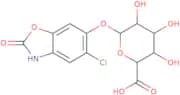
CAS:Please enquire for more information about 6-Hydroxy chlorzoxazone β-D-glucuronide lithium salt including the price, delivery time and more detailed product information at the technical inquiry form on this pageFormula:C13H12ClNO9Purity:Min. 95%Color and Shape:PowderMolecular weight:361.69 g/mol3-Amino-4-carbamoylpyrazole hemisulfate
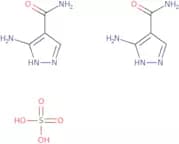
CAS:3-Amino-4-carbamoylpyrazole hemisulfate is a white to yellowish crystalline powder that is soluble in water and methanol. It is a condensation product of allopurinol and ethyl orthoformate with a molecular weight of 312.4. 3-Amino-4-carbamoylpyrazole hemisulfate can be used as an anti-inflammatory agent, but it has not been approved for medical use in the United States.Formula:C4H6N4OH2O4SPurity:Min. 95%Color and Shape:White PowderMolecular weight:175.16 g/mol4-Hydroxy-2-methyl-2H-1,2-benzothiazine-3-carboxylic acid, ethyl ester 1,1-dioxide
CAS:4-Hydroxy-2-methyl-2H-1,2-benzothiazine-3-carboxylic acid, ethyl ester 1,1-dioxide (4HMBC) is an organic compound that is used as a precursor in the synthesis of other chemicals. 4HMBC is used to produce xylene, sulfoxide and diethyl ether by reacting with magnesium and ethylene. It is also used in the production of dimethylformamide, a solvent that is useful for the manufacture of many products including pharmaceuticals. 4HMBC reacts with methyl iodide to form 4-(dimethylamino)pyridine which can be used for the synthesis of piroxicam. The chemical has been shown to be effective as an insecticide against ants and cockroaches. It can also be used to synthesize dyes or pigments. The chemical can be obtained by methylating 4HBC with methanol in the presenceFormula:C12H13NO5SPurity:Min. 95%Color and Shape:PowderMolecular weight:283.3 g/mol2-(3-(1-Benzylpiperidin-4-yl)-2-oxopropyl)-4,5-dimethoxybenzoic acid sodium salt
2-(3-(1-Benzylpiperidin-4-yl)-2-oxopropyl)-4,5-dimethoxybenzoic acid sodium salt is a white to off-white crystalline powder. It is soluble in water and sparingly soluble in alcohol. This product is used as an analytical standard and has been found to be a metabolite of the drug clozapine. 2-(3-(1-Benzylpiperidin-4-yl)-2-oxopropyl)-4,5-dimethoxybenzoic acid sodium salt has also been found to be an impurity in the drug product lamotrigine.Formula:C24H29NO5•NaPurity:Min. 95%Molecular weight:434.49 g/molAmiodarone N-oxide HCl
CAS:Amiodarone N-oxide HCl is a class III antiarrhythmic drug that acts by slowing the heart rate and prolonging the time between heartbeats. It has been shown to be effective in treating atrial fibrillation, ventricular fibrillation, and atrial flutter. Amiodarone N-oxide HCl has significant cytotoxicity, which can lead to cardiomyopathy and myocardial infarcts. Due to its long half life, amiodarone can accumulate in the body and cause side effects such as pulmonary toxicity, gastrointestinal bleeding, thyroid dysfunction, or liver damage. It is not recommended for use in patients with structural heart disease or those taking nonsteroidal anti-inflammatory drugs (NSAIDs) because of an increased risk of adverse events.Formula:C25H29I2NO4HClPurity:Min. 95%Color and Shape:Off-White To Yellow SolidMolecular weight:697.77 g/mol3-[Benzyl(methyl)amino]-1-phenylpropan-1-one
CAS:3-[Benzyl(methyl)amino]-1-phenylpropan-1-one is a glycol that has been optimized for synthesis. It is used in research to prepare nitrates, which are stoichiometric reagents. Dimethylformamide and dioxane are reagents that can be used for this purpose. The yields of 3-[Benzyl(methyl)amino]-1-phenylpropan-1-one depend on the irradiation time, so it is important to maximize this variable. Phase extraction can be used to purify the product after irradiation. 3-[Benzyl(methyl)amino]-1-phenylpropan-1-one may act as a receptor modulator by binding to G protein coupled receptors and activating them or inhibiting their activation. This drug has also been shown to inhibit the production of nitric oxide, which is an important mediator in inflammation and vascular diseases such as hypertension and atherosclerosis.Formula:C17H19NOPurity:Min. 95%Color and Shape:PowderMolecular weight:253.34 g/molDihydroergotamine mesylate impurity C
Dihydroergotamine mesylate impurity C is an analytical standard used for the determination of purity in Dihydroergotamine Mesylate drug products. The impurity is a metabolite that has been shown to be pharmacologically active and thus should not exceed the limit of detection.Formula:C33H37N5O6Purity:Min. 95%Molecular weight:599.68 g/molSemaglutide Impurity 101 (D-Glu 3)
D-Glu(3)-Semaglutide is a semaglutide impurity. The amino acid at position 3 has been replaced by the D-form of the amino acid D-glutamic acid (D-Glu). Semaglutide impurities are structurally related compounds that arise during synthesis, purification, or storage of semaglutide, a long-acting GLP-1 receptor agonist for managing type 2 diabetes and obesity.Formula:C187H291N45O59Molecular weight:4,113.64 g/molDes-Glu(3)-Semaglutide
Des-Glu(3)-semaglutide is a semaglutide-related impurity. This des-amino acid form has got the glutamic acid or glutamate (Glu) amino acid from position 3 removed from the peptide chain. Semaglutide impurities are structurally related compounds that arise during synthesis, purification, or storage of semaglutide, a long-acting GLP-1 receptor agonist used for managing type 2 diabetes and obesity.Formula:C182H284N44O56Molecular weight:3,984.53 g/molRitonavir Impurity G
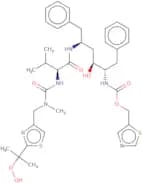
CAS:Ritonavir is a protease inhibitor that prevents HIV from replicating. It binds to the active site of the protease enzyme and inhibits its activity, which prevents the conversion of viral proteins into their respective functional forms. Ritonavir impurity G is a metabolite that is not present in the final drug product. This impurity standard has been characterized by HPLC and NMR spectroscopy.Formula:C37H48N6O7S2Purity:Min. 95%Molecular weight:752.9 g/molN-(1-Oxopentyl)-N-[[2'-(2H-tetrazol-5-yl)[1,1'-biphenyl]-4-yl]methyl]-D-valine
CAS:N-(1-Oxopentyl)-N-[[2'-(2H-tetrazol-5-yl)[1,1'-biphenyl]-4-yl]methyl]-D-valine is a potent and selective inhibitor of the enzyme lipase. It prevents the hydrolysis of triglycerides by competitively binding to the active site of lipase. This inhibition leads to an increase in serum levels of triglycerides, which are associated with cardiometabolic risk factors. Novartis developed this drug as an alternative to sacubitril/valsartan, which is used for the treatment of heart failure. The pharmacokinetics and pharmacodynamics of this drug are similar to those of sacubitril/valsartan. N-(1-Oxopentyl)-N-[[2'-(2H-tetrazol-5-yl)[1,1'-biphenyl]-4-yl]methyl]-D-Formula:C24H29N5O3Purity:Min. 95%Color and Shape:White To Off-White SolidMolecular weight:435.52 g/mol3-Amino-4,6-dihydro-1,2,6-thiadiazine-1,1-dioxide, hydrochloride
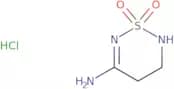
3-Amino-4,6-dihydro-1,2,6-thiadiazine-1,1-dioxide is an impurity that has been identified in the process of synthesizing a drug. The impurity is typically found in small quantities and is not expected to have any adverse effects on the drug product if present in concentrations below 0.1% (w/w). 3-Amino-4,6-dihydro-1,2,6-thiadiazine-1,1-dioxide can be synthesized from two other compounds: 4,6-Diaminohexane and thiosemicarbazide. The CAS number for this impurity is 53497–14–8.Formula:C3H8ClN3O2SPurity:Min. 95%Molecular weight:185.63 g/mol1,4-Dihydro-2,6-dimethyl-4-(3-nitrophenyl)-3,5-pyridinedicarboxylic acid diethyl ester
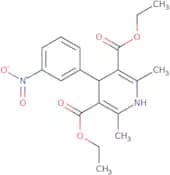
CAS:1,4-Dihydro-2,6-dimethyl-4-(3-nitrophenyl)-3,5-pyridinedicarboxylic acid diethyl ester is an API impurity. It is a white or cream powder with a melting point of about 135°C. This impurity can be used as an impurity standard for HPLC applications to determine the purity of drug products. It is also suitable for use as a pharmacopoeia analytical reference material and as a synthetic intermediate in research and development (R&D) studies.Formula:C19H22N2O6Purity:Min. 95%Color and Shape:Yellow PowderMolecular weight:374.39 g/molN-Methyl-3-(1-naphthalenyloxy)-3-(3-thienyl) propanamine tartrate
N-Methyl-3-(1-naphthalenyloxy)-3-(3-thienyl) propanamine tartrate is an impurity standard used for the quantitative analysis of norephedrine in pharmaceutical products. It is also a metabolite of methamphetamine, which has been shown to have anti-inflammatory activities.Formula:C18H19NOS·C4H6O6Purity:Min. 95%Molecular weight:447.5 g/molMethyl-3-[5-(2-methoxycarbonylethyl)pyrazin-2-yl]propionate
CAS:Methyl-3-[5-(2-methoxycarbonylethyl)pyrazin-2-yl]propionate is a hydrophobic, colorless liquid with a pungent odor. It is an additive that can be used in the manufacturing of epoxy resins to increase their light resistance and corrosion resistance. This product also has immunity properties and may be used as an immunotherapy agent for the treatment of viral infections. Methyl-3-[5-(2-methoxycarbonylethyl)pyrazin-2-yl]propionate has been shown to activate immune cells and promote cell immunity by increasing the production of cytokines. It may also be used as a virus transfer agent for the prevention of viral infection.Formula:C12H16N2O4Purity:Min. 95%Color and Shape:White to off-white powder.Molecular weight:252.27 g/molCefpodoxime proxetil impurity H
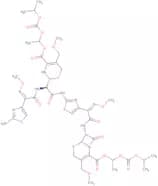
CAS:Cefpodoxime proxetil impurity H is an impurity of cefpodoxime proxetil, which is a prodrug that has been shown to be metabolized by esterases to the active form cefpodoxime. Cefpodoxime proxetil impurity H was found in the elution fraction when using liquid chromatography with reversed-phase as the separation method. It is thought that this impurity may arise from the use of methanol in the process of preparing cefpodoxime proxetil, although other mechanisms have not been ruled out. The mass spectrum for cefpodoxime proxetil impurity H shows peaks at m/z 812 and 682, which correspond to the parent drug and its hydrolysis product, respectively. The fragmentation pattern observed for cefpodoxime proxetil impurity H corresponds to that seen for cephalosporins.Formula:C42H54N10O18S4Purity:Min. 95%Molecular weight:1,115.2 g/mol
![1,3-Bis[(p-chlorobenzylidene)amino]guanidine hydrochloride](/_next/image/?url=https%3A%2Fstatic.cymitquimica.com%2Fproducts%2F3D%2Fthumb-webp%2FIB57827.webp&w=3840&q=75)


![3-[Benzyl(methyl)amino]-1-phenylpropan-1-one](/_next/image/?url=https%3A%2Fstatic.cymitquimica.com%2Fproducts%2F3D%2Fthumb-webp%2FIB158700.webp&w=3840&q=75)



![N-(1-Oxopentyl)-N-[[2'-(2H-tetrazol-5-yl)[1,1'-biphenyl]-4-yl]methyl]-D-valine](/_next/image/?url=https%3A%2Fstatic.cymitquimica.com%2Fproducts%2F3D%2Fthumb-webp%2FIO22697.webp&w=3840&q=75)


![Methyl-3-[5-(2-methoxycarbonylethyl)pyrazin-2-yl]propionate](/_next/image/?url=https%3A%2Fstatic.cymitquimica.com%2Fproducts%2F3D%2Fthumb-webp%2FIM07158.webp&w=3840&q=75)