APIs for research and impurities
Active Pharmaceutical Ingredients (APIs) are the substances in drugs responsible for their therapeutic effects. In this section, you will find a wide variety of APIs intended for research use. These compounds are essential for the development, testing, and validation of new pharmaceutical formulations. CymitQuimica offers high-quality APIs to support research in drug discovery and development.
Subcategories of "APIs for research and impurities"
- Aminoacids and derivatives(12,441 products)
- Anthraquinones and derivatives(407 products)
- Benzimidazole and Imidazole Derivatives(10,465 products)
- Benzodiazepine Derivatives(335 products)
- Carbohydrates and glycoconjugates(5,388 products)
- Esters and Derivatives(42,307 products)
- Fatty Acids and Lypidic Derivatives(32,488 products)
- Flavonoids and Polyphenols(17,101 products)
- Free Radicals and Oxidant/Reducing Agents(214 products)
- Ketones and derivatives(2,692 products)
- Natural and semi-synthetic antibiotics(6,411 products)
- Nitriles and Cyano Derivatives(3,070 products)
- Nitrosamines and Derivatives(55 products)
- Nucleosides and Nucleotides(3,492 products)
- Organic Phosphates and Phosphonates(1,205 products)
- Organic Sulphonates and Sulphates(10,452 products)
- Organometallics(4,425 products)
- Others(6,340 products)
- Peptides and Proteins(3,163 products)
- Polymers and Derivatives(100 products)
- Purines and Pyrimidine Derivatives(8,975 products)
- Quinazoline and Quinoline Derivatives(66,221 products)
- Quinones and Derivatives(24,379 products)
- Salts and Derivatives of Active Pharmaceutical Ingredients (API)(92,967 products)
- Steroids and Derivatives(4,987 products)
- Sulfonamides and Derivatives(2,607 products)
- Terpenoids and Derivatives(3,871 products)
- Thiazolidinediones and Thiopyrans(2,755 products)
- β-Adrenergic Compounds(232 products)
Show 21 more subcategories
Found 66884 products of "APIs for research and impurities"
Sort by
Purity (%)
0
100
|
0
|
50
|
90
|
95
|
100
Fluticasone furoate impurity I
Fluticasone furoate impurity I is a drug product that is custom synthesized for research and development. It is an analytical standard that is used in metabolism studies. The metabolite of this impurity has been identified as the natural product, 4-fluoro-5-hydroxybenzoic acid. Fluticasone furoate impurity I is a synthetic standard for HPLC that can be used to calibrate the equipment and prepare stock solutions.Purity:Min. 95%Levonorgestrel EP Impurity P
CAS:Soluble in Chloroform & in Methanol Confirmed
Insoluble in WatePurity:90% minColor and Shape:Off White or Beige SolidMolecular weight:312.45D-Val(10)-Semaglutide
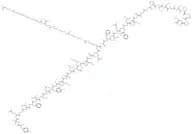
D-Val(10)-Semaglutide is a semaglutide impurity. The amino acid at position 10 has been replaced by the D-form of the amino acid D-valine (D-Val). Semaglutide impurities are structurally related compounds that arise during synthesis, purification, or storage of semaglutide, a long-acting GLP-1 receptor agonist for managing type 2 diabetes and obesity.Formula:C187H291N45O59Molecular weight:4,113.64 g/molD-Thr(5)-Semaglutide
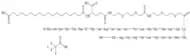
D-Thr(5)-Semaglutide is a semaglutide impurity. The amino acid at position 5 has been replaced by the D-form of the amino acid D-threonine (D-Thr). Semaglutide impurities are structurally related compounds that arise during synthesis, purification, or storage of semaglutide, a long-acting GLP-1 receptor agonist for managing type 2 diabetes and obesity.Formula:C187H291N45O59Molecular weight:4,113.64 g/molSemaglutide Impurity 56 (D-Glu 21)
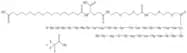
D-Glu(21)-Semaglutide is a semaglutide impurity. The amino acid at position 21 has been replaced by the D-form of the amino acid D-glutamic acid (D-Glu). Semaglutide impurities are structurally related compounds that arise during synthesis, purification, or storage of semaglutide, a long-acting GLP-1 receptor agonist for managing type 2 diabetes and obesity.Formula:C187H291N45O59Molecular weight:4,113.64 g/molSemaglutide Impurity 51 (D-Thr 7)
D-Thr(7)-Semaglutide is a semaglutide impurity. The amino acid at position 7 has been replaced by the D-form of the amino acid D-threonine (D-Thr). Semaglutide impurities are structurally related compounds that arise during synthesis, purification, or storage of semaglutide, a long-acting GLP-1 receptor agonist for managing type 2 diabetes and obesity.Formula:C187H291N45O59Molecular weight:4,113.64 g/molSemaglutide Impurity 60 (D-Arg 30)
D-Arg(30)-Semaglutide is a semaglutide impurity. The amino acid at position 30 has been replaced by the D-form of the amino acid D-arginine (D-Arg). Semaglutide impurities are structurally related compounds that arise during synthesis, purification, or storage of semaglutide, a long-acting GLP-1 receptor agonist for managing type 2 diabetes and obesity.Formula:C187H291N45O59Molecular weight:4,113.64 g/molCefpodoxime proxetil impurity H
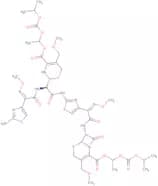
CAS:Cefpodoxime proxetil impurity H is an impurity of cefpodoxime proxetil, which is a prodrug that has been shown to be metabolized by esterases to the active form cefpodoxime. Cefpodoxime proxetil impurity H was found in the elution fraction when using liquid chromatography with reversed-phase as the separation method. It is thought that this impurity may arise from the use of methanol in the process of preparing cefpodoxime proxetil, although other mechanisms have not been ruled out. The mass spectrum for cefpodoxime proxetil impurity H shows peaks at m/z 812 and 682, which correspond to the parent drug and its hydrolysis product, respectively. The fragmentation pattern observed for cefpodoxime proxetil impurity H corresponds to that seen for cephalosporins.Formula:C42H54N10O18S4Purity:Min. 95%Molecular weight:1,115.2 g/mol2-Acetamido-9-[[2-(acetyloxy)ethoxy]methyl]-6,9-dihydro-1H-purin-6-one
CAS:2-Acetamido-9-[2-(acetyloxy)ethoxy]methyl-6,9-dihydro-1H-purin-6-one (ademetionine) is a prodrug that is metabolized in the liver to form ademetionine. Ademetionine is a potent inhibitor of guanosine deaminase, which is an enzyme that breaks down guanosine into guanine and ammonia. Ademetionine has shown efficacy in cancer treatment and may also be used to treat tuberculosis. The metabolism of this drug takes place in the liver, where it undergoes oxidation by cytochrome P450 enzymes to form the active metabolite ademetionine. Metabolism of this drug can be inhibited by drugs such as trifluoromethanesulfonic acid (TFMS), which are used for the treatment of malaria. TFMS inhibits the formation of ademetionine but does not affect the formationFormula:C12H15N5O5Purity:Min. 95%Color and Shape:White PowderMolecular weight:309.28 g/molDihydro-α-ergocryptine mesylate
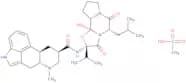
CAS:Dihydro-alpha-ergocryptine mesylate is a drug that inhibits the effects of ergotamine and other drugs. It is used in animals to treat drug reactions, such as those caused by morphine and penicillin. Dihydro-alpha-ergocryptine mesylate can be detected in urine samples for up to 72 hours after administration. The pharmacokinetic properties of this drug are not well understood, but there is a linear relationship between dose and plasma concentration. The clinical response to dihydro-alpha-ergocryptine mesylate has been shown to be dose dependent. This drug also has dopaminergic properties, which may be due to its ability to bind with dopamine receptors in the central nervous system. There are several symptoms that may be related to taking this drug, including drowsiness or fatigue, nausea or vomiting, dry mouth, muscle spasms, and involuntary shaking of a part of the body (tremor).Formula:C33H47N5O8SPurity:Min. 95%Molecular weight:673.82 g/mol5-Benzamidolevulinic acid
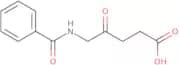
CAS:5-Benzamidolevulinic acid is an ethylamine derivative that inhibits the enzyme carbonic anhydrase. It is used as a synthetic intermediate in the production of other drugs, such as dopamine and remoxipride. 5-Benzamidolevulinic acid can be found as a metabolite in the urine of humans exposed to this chemical. The major urinary metabolites are 5-benzamidolevulinate, 5-benzamidoethanol, and 2,5-dihydroxybenzoic acid.Formula:C12H13NO4Purity:Min. 95%Molecular weight:235.24 g/molDecitabine impurity 11
CAS:Decitabine is a drug product that is used as an anti-cancer drug. It is a synthetic, natural, and research and development (R&D) metabolite with the CAS No. 909402-26-2. Decitabine has shown anticancer activity in vitro and in vivo against leukemia cells. This compound is an impurity of the API decitabine that is manufactured by a chemical synthesis process. The analytical impurities are 11 compounds that have been identified from the HPLC standard of this API. The metabolites of these compounds are also included in this standard. High purity decitabine should be obtained for pharmacopoeia studies and niche applications such as HPLC standards, pharmaceuticals, or research purposes.Formula:C9H13N3O5Purity:Min. 95%Molecular weight:243.22 g/mol



![[D-Phe6]-Tirzepatide](/_next/image/?url=https%3A%2Fstatic.cymitquimica.com%2Fproducts%2F3D%2Fthumb-webp%2FIP11027.webp&w=3840&q=75)
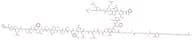
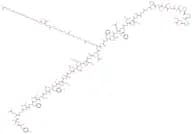
![D-[Pro]31-Tirzepatide](/_next/image/?url=https%3A%2Fstatic.cymitquimica.com%2Fproducts%2F3D%2Fthumb-webp%2FIP11028.webp&w=3840&q=75)

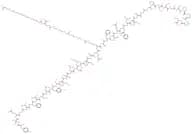
![[D-Phe22]-Tirzepatide](/_next/image/?url=https%3A%2Fstatic.cymitquimica.com%2Fproducts%2F3D%2Fthumb-webp%2FIP11026.webp&w=3840&q=75)
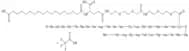
![D-[Ala]18-Tirzepatide](/_next/image/?url=https%3A%2Fstatic.cymitquimica.com%2Fproducts%2F3D%2Fthumb-webp%2FIA11851.webp&w=3840&q=75)
![2-Acetamido-9-[[2-(acetyloxy)ethoxy]methyl]-6,9-dihydro-1H-purin-6-one](/_next/image/?url=https%3A%2Fstatic.cymitquimica.com%2Fproducts%2F3D%2Fthumb-webp%2FIA58282.webp&w=3840&q=75)