APIs for research and impurities
Subcategories of "APIs for research and impurities"
- Aminoacids and derivatives(12,440 products)
- Anthraquinones and derivatives(407 products)
- Benzimidazole and Imidazole Derivatives(10,465 products)
- Benzodiazepine Derivatives(335 products)
- Carbohydrates and glycoconjugates(5,388 products)
- Esters and Derivatives(42,306 products)
- Fatty Acids and Lypidic Derivatives(32,487 products)
- Flavonoids and Polyphenols(17,101 products)
- Free Radicals and Oxidant/Reducing Agents(214 products)
- Ketones and derivatives(2,692 products)
- Natural and semi-synthetic antibiotics(6,410 products)
- Nitriles and Cyano Derivatives(3,070 products)
- Nitrosamines and Derivatives(55 products)
- Nucleosides and Nucleotides(3,492 products)
- Organic Phosphates and Phosphonates(1,205 products)
- Organic Sulphonates and Sulphates(10,451 products)
- Organometallics(4,425 products)
- Others(6,340 products)
- Peptides and Proteins(3,163 products)
- Polymers and Derivatives(100 products)
- Purines and Pyrimidine Derivatives(8,975 products)
- Quinazoline and Quinoline Derivatives(66,222 products)
- Quinones and Derivatives(24,379 products)
- Salts and Derivatives of Active Pharmaceutical Ingredients (API)(92,956 products)
- Steroids and Derivatives(4,987 products)
- Sulfonamides and Derivatives(2,607 products)
- Terpenoids and Derivatives(3,860 products)
- Thiazolidinediones and Thiopyrans(2,755 products)
- β-Adrenergic Compounds(231 products)
Found 66881 products of "APIs for research and impurities"
Bis-[[2-aminoethyl]thio]methane
CAS:Bis-[[2-aminoethyl]thio]methane is a custom synthesis, drug product, niche, Metabolite, Drug development, Natural, pharmacopoeia and API impurity. This chemical is CAS No. 22907-27-3 and has the molecular weight of 249.00 g/mol. It can be synthesized in the laboratory using the following methods: HPLC standard, Research and Development and Impurity standard. The chemical is an analytical standard with a purity of 99%. This chemical can be used as analytical reagent or in research and development of drugs.Formula:C5H14N2S2Purity:Min. 95%Color and Shape:Clear LiquidMolecular weight:166.31 g/mol7-(4-Bromobutoxy)-3,4-dihydroquinolin-2-one
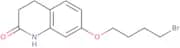
CAS:7-(4-Bromobutoxy)-3,4-dihydroquinolin-2-one is a palladium catalyst that can be used in a Buchwald reaction. This reaction is an industrially scalable process that has been developed to produce high yields of valuable organic compounds from inexpensive starting materials. The catalytic cycle involves the formation of the palladium species Pd(0) followed by its oxidative addition to an alkyl halide. This addition leads to the formation of a palladium(II) species and subsequent reductive elimination of hydrogen halide. 7-(4-Bromobutoxy)-3,4-dihydroquinolin-2-one is used as a catalyst in this process because it selectively reacts with electron rich aromatic substrates to form substituted benzoquinones or phenols. The product distribution is determined by the reactivity of the substrate and the relative rates of competing reactions. Impurities are formed during synthesis due toFormula:C13H16BrNO2Purity:Min. 95%Molecular weight:298.18 g/molLevonorgestrel EP Impurity O
CAS:Soluble in Chloroform & in Methanol Confirmed
Insoluble in WaterPurity:95.0% MinColor and Shape:Off White or Beige SolidMolecular weight:344.495-Aminolevulinic acid hydrochloride
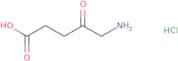
CAS:Photodynamic Therapy of Actinic Keratosis. Porphobilinogen synthase substrate that produces endogenous porphyrins useful for sensitizing cells in photodynamic therapy. Intermediate in heme and chlorophyll biosynthesis. Estimation of 5-aminolevulinic acid dehydratase. PBG formed in the assay is determined spectrophotometrically with Ehrlich's reagent. Used in Porphyrin test for differentiation of Haemophilus species. Enzymes that convert ALA to porphyrins in the biosynthesis of hemin (X factor) are not produced by H. influenzae, H.aegyptius and H. canis. These enzymes are produced by H. parainfluenzae, H. parahaemolyticus, H. gallinarum, H. parasuis, H. parahaemolyticus and H. aphrophilus. A positive reaction is indicated by an orange-red fluorescence.Formula:C5H10ClNO3Purity:Min. 98.0 Area-%Molecular weight:167.59 g/mol5-Methyl Zolpidem
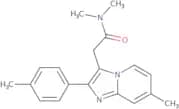
CAS:5-Methyl Zolpidem is a zolpidem tartrate that is used for the treatment of insomnia and as a sedative. It is an intermediate in the synthesis of zolpidem tartrate, which is synthesized from 5-methyl-1-(4-methoxybenzoyl)-1H-benzo[d]imidazole with potassium t-butoxide. The synthesis starts with the conversion of 5-methyl-1-(4-methoxybenzoyl)-1H-benzo[d]imidazole to 1-(4'-methylphenyl) benzene by reaction with methyl iodide followed by hydrolysis of the ester group to form 1-(4'-methylphenyl) benzene. The next step involves a nucleophilic substitution reaction using potassium t-butoxide to produce 1-(4'-methylphenyl) benzene t-butoxide, followed by reaction with methanolFormula:C19H21N3OPurity:Min. 95%Color and Shape:White/Off-White SolidMolecular weight:307.39 g/mol3-[Methyl(phenylmethyl)amino]-1-phenyl-1-propanone hydrochloride
CAS:Nisoxetine is a norepinephrine (NE) reuptake inhibitor that is used as an antidepressant. It has been shown to be a potent and selective NE reuptake inhibitor with a high affinity towards the NE transporter in rat brain synaptosomes, with potency several times higher than that of tricyclic antidepressants. Nisoxetine's major advantage over other antidepressants is its high efficiency, which makes it suitable for large-scale production. The synthesis of nisoxetine involves two steps: 1) reaction of 3-[methyl(phenylmethyl)amino]-1-phenyl-1-propanone hydrochloride with toluene to form the corresponding methyl ester and 2) hydrogenation of the methyl ester to form nisoxetine. This synthesis is efficient, stable, and chiral due to the use of bimetallic catalysts.Formula:C17H19NO•HClPurity:Min. 95%Color and Shape:PowderMolecular weight:289.8 g/molLansoprazole sulfone - Bio-X ™
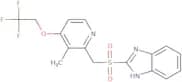
CAS:Lansoprazole is a proton pump inhibitor that is used in the treatment of gastrointestinal ulcers, symptoms of GERD and to eradicate Helicobacter pylori. This drug works by decreasing gastric acid secretion by targeting H+ and K+ ATPase. It offers pain relief from heartburn and reduces ulcer related pain.Formula:C16H14F3N3O3SPurity:Min. 95%Color and Shape:PowderMolecular weight:385.36 g/molDehydrocorybulbine chloride
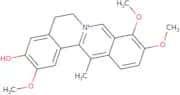
CAS:Dehydrocorybulbine chloride salt is a medicinal compound that has shown potential as an anticancer agent. It is an analog of the Chinese herb Corydalis yanhusuo and has been found to inhibit protein kinases, which are enzymes that play a key role in cancer cell growth and proliferation. Dehydrocorybulbine chloride salt has been shown to induce apoptosis (programmed cell death) in various types of cancer cells, including bladder, lung, and breast cancer cells. This compound also exhibits low toxicity towards normal human cells and has shown promise as a possible treatment for certain types of cancer.Formula:C21H22ClNO4Purity:Min. 95%Color and Shape:PowderMolecular weight:352.4 g/molSemaglutide Impurity 60 (D-Arg 30)
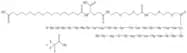
D-Arg(30)-Semaglutide is a semaglutide impurity. The amino acid at position 30 has been replaced by the D-form of the amino acid D-arginine (D-Arg). Semaglutide impurities are structurally related compounds that arise during synthesis, purification, or storage of semaglutide, a long-acting GLP-1 receptor agonist for managing type 2 diabetes and obesity.Formula:C187H291N45O59Molecular weight:4,113.64 g/mol3,5-Di-O-(4-chlorobenzoyl)-2-deoxy-a-D-ribofuranosyl isocyanate
3,5-Di-O-(4-chlorobenzoyl)-2-deoxy-a-D-ribofuranosyl isocyanate (CAS No. 53477) is a drug product that belongs to the class of drugs called nucleosides. 3,5-Di-O-(4-chlorobenzoyl)-2-deoxy-a-D-ribofuranosyl isocyanate has been shown to be metabolized through a number of metabolic transformations, including hydrolysis by esterases or glucuronidases, oxidation by cytochrome P450 enzymes, reduction by glutathione reductase, or conjugation with glucuronic acid. This product has been shown to have antiplasmodial activity and may be useful in the treatment of malaria.Formula:C20H15Cl2NO6Purity:Min. 95%Molecular weight:436.24 g/molTenofovir isoproxil monoester
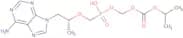
CAS:Tenofovir isoproxil monoester is a prodrug of Tenofovir, which is an antiviral drug. Tenofovir prevents the growth of HIV by interfering with the synthesis of viral DNA. The process development stage involves converting Tenofovir to its disoproxil monoester form, which has been shown to have greater antiviral activity than Tenofovir alone. This conversion process involves condensing one molecule of fumarate with two molecules of tenofovir, forming tenofovir disoproxil fumarate (TFD). TFD can be converted back to Tenofovir using hydrolysis and hydrogenation. Impurities in TFD include isopropyl tenofovir and unidentified impurities that are not present in the parent drug, tenofovir. Tenofovir Disoproxil Fumarate was also shown to be more potent than TFD and is undergoing clinical trials forFormula:C14H22N5O7PPurity:Min. 97 Area-%Color and Shape:White/Off-White SolidMolecular weight:403.33 g/molN,N-Dimethyl-2-(1-phenyl-1-(pyridin-2-yl)methoxy)ethanamine
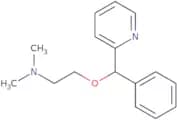
CAS:Controlled ProductN,N-dimethyl-2-(1-phenyl-1-(pyridin-2-yl)methoxy)ethanamine is a drug impurity that is produced as a result of the metabolism of the drug 1-[(2R)-2-phenylethyl]pyrrolidin-2-one. It is an analytical standard and an impurity in pharmaceutical products. It has been shown to be metabolized by CYP3A4, CYP1A2, and CYP2C19 and excreted unchanged in urine.Formula:C16H20N2OPurity:Min. 95%Color and Shape:Brown Clear LiquidMolecular weight:256.34 g/mol2-(3-Hydroxy-2,2-Dimethylpropoxy)-1-(6-Hydroxy-2-Naphthyl)Propan-1-One
The following is a description of an impurity standard for the metabolite 2-(3-Hydroxy-2,2-Dimethylpropoxy)-1-(6-Hydroxy-2-Naphthyl)Propan-1-One:
Purity:Min. 95%Desmethyl fondenafil
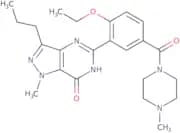
CAS:Fondenafil is a drug that belongs to the class of PDE-5 inhibitors. It is used for the treatment of erectile dysfunction and pulmonary hypertension. Fondenafil is chemically related to sildenafil, but lacks the ethyl group. Fondenafil has been shown to be effective in treating insulin resistance by increasing glucose uptake in adipose tissue and skeletal muscle cells. Fondenafil also reduces blood pressure, cholesterol, and triglyceride levels in patients with metabolic syndrome.Formula:C23H30N6O3Purity:Min. 95%Molecular weight:438.5 g/molLisinopril EP Impurity E
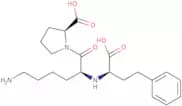
CAS:Lisinopril EP Impurity E is an impurity of lisinopril, which is a prescription drug used to treat high blood pressure. This impurity was found in a preparative high performance liquid chromatography (HPLC) and mass spectroscopy analysis of the drug. The molecular weight of Lisinopril EP Impurity E was determined to be 317.2 amu, which corresponds to the molecular formula C7H13NO2. The FT-IR spectrum showed that this impurity has an ammonium group at 1859 cm-1 and butanoic acid at 1647 cm-1.Formula:C21H31N3O5Purity:Min. 98 Area-%Color and Shape:PowderMolecular weight:405.49 g/mol2-Mercaptobenzimidazole
CAS:2-Mercaptobenzimidazole is a chemical compound that can be used for the treatment of infectious diseases. It has been shown to have antioxidative properties and inhibit the growth of bacteria. 2-Mercaptobenzimidazole also has an effect on human serum, which may be due to its ability to bind with proteins in serum and form hydrogen bonds. 2-Mercaptobenzimidazole is stable at high temperatures and has been shown as an effective antimicrobial agent against gram positive and gram negative bacteria.
Formula:C7H6N2SPurity:Min. 99 Area-%Color and Shape:White/Off-White SolidMolecular weight:150.19 g/mol2-(N-Methyl-propanamine)-3-(2-naphthyl) thiophene
CAS:2-(N-Methyl-propanamine)-3-(2-naphthyl) thiophene is a synthetic compound that has been used as an impurity standard for the drug product and API. It has also been used for the pharmacopoeia, research and development, and analytical purposes. This compound is a metabolite of erythromycin.Formula:C18H19NOSPurity:Min. 95%Color and Shape:White To Pink Or Yellow SolidMolecular weight:297.42 g/molPravastatin lactone
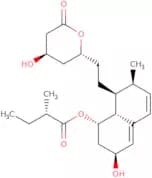
CAS:Pravastatin lactone is a prodrug of pravastatin that is hydrolyzed in vivo to its active form. It is used for the treatment of bowel disease and has been shown to have concentration-time curves that are linear and dose-dependent. Pravastatin lactone has an acidic pH, which may be due to the presence of carboxyl groups on the molecule. This drug also inhibits the activity of 3-hydroxy-3-methylglutaryl coenzyme A (HMG CoA) reductase, which is an enzyme that catalyzes the conversion of HMG CoA to mevalonate in order to produce cholesterol. Pravastatin lactone also suppresses the production of fatty acids by inhibiting their synthesis at the level of acetyl-coenzyme A (acetyl-CoA). The drug has not shown any evidence of toxicity when administered to rats at doses up to 10 mg/kg body weight per day
Formula:C23H34O6Purity:Min. 98 Area-%Color and Shape:PowderMolecular weight:406.51 g/mol(R)-3-(3-Fluoro-4-morpholin-4-ylphenyl)-2-oxo-5-oxazolidinyl)methyl methansulfonate
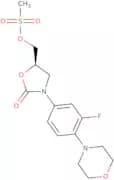
CAS:(R)-3-(3-Fluoro-4-morpholin-4-ylphenyl)-2-oxo-5-oxazolidinyl)methyl methansulfonate is a Custom synthesis, drug product, Metabolite, Synthetic, Drug development, Impurity standard, Metabolism studies, API impurity, Natural, pharmacopoeia, analytical and HPLC standard. It is CAS No. 174649-09-3.Formula:C15H19FN2O6SPurity:Min. 95%Molecular weight:374.39 g/mol3-Amino-4,6-dihydro-1,2,6-thiadiazine-1,1-dioxide, hydrochloride
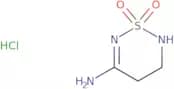
3-Amino-4,6-dihydro-1,2,6-thiadiazine-1,1-dioxide is an impurity that has been identified in the process of synthesizing a drug. The impurity is typically found in small quantities and is not expected to have any adverse effects on the drug product if present in concentrations below 0.1% (w/w). 3-Amino-4,6-dihydro-1,2,6-thiadiazine-1,1-dioxide can be synthesized from two other compounds: 4,6-Diaminohexane and thiosemicarbazide. The CAS number for this impurity is 53497–14–8.Formula:C3H8ClN3O2SPurity:Min. 95%Molecular weight:185.63 g/mol
![Bis-[[2-aminoethyl]thio]methane](/_next/image/?url=https%3A%2Fstatic.cymitquimica.com%2Fproducts%2F3D%2Fthumb-webp%2FIB57858.webp&w=3840&q=75)


![3-[Methyl(phenylmethyl)amino]-1-phenyl-1-propanone hydrochloride](/_next/image/?url=https%3A%2Fstatic.cymitquimica.com%2Fproducts%2F3D%2Fthumb-webp%2FIM58070.webp&w=3840&q=75)