APIs for research and impurities
Active Pharmaceutical Ingredients (APIs) are the substances in drugs responsible for their therapeutic effects. In this section, you will find a wide variety of APIs intended for research use. These compounds are essential for the development, testing, and validation of new pharmaceutical formulations. CymitQuimica offers high-quality APIs to support research in drug discovery and development.
Subcategories of "APIs for research and impurities"
- Aminoacids and derivatives(12,440 products)
- Anthraquinones and derivatives(407 products)
- Benzimidazole and Imidazole Derivatives(10,465 products)
- Benzodiazepine Derivatives(335 products)
- Carbohydrates and glycoconjugates(5,388 products)
- Esters and Derivatives(42,306 products)
- Fatty Acids and Lypidic Derivatives(32,487 products)
- Flavonoids and Polyphenols(17,101 products)
- Free Radicals and Oxidant/Reducing Agents(214 products)
- Ketones and derivatives(2,692 products)
- Natural and semi-synthetic antibiotics(6,410 products)
- Nitriles and Cyano Derivatives(3,070 products)
- Nitrosamines and Derivatives(55 products)
- Nucleosides and Nucleotides(3,492 products)
- Organic Phosphates and Phosphonates(1,205 products)
- Organic Sulphonates and Sulphates(10,451 products)
- Organometallics(4,425 products)
- Others(6,340 products)
- Peptides and Proteins(3,163 products)
- Polymers and Derivatives(100 products)
- Purines and Pyrimidine Derivatives(8,975 products)
- Quinazoline and Quinoline Derivatives(66,222 products)
- Quinones and Derivatives(24,379 products)
- Salts and Derivatives of Active Pharmaceutical Ingredients (API)(92,956 products)
- Steroids and Derivatives(4,987 products)
- Sulfonamides and Derivatives(2,607 products)
- Terpenoids and Derivatives(3,860 products)
- Thiazolidinediones and Thiopyrans(2,755 products)
- β-Adrenergic Compounds(231 products)
Show 21 more subcategories
Found 66881 products of "APIs for research and impurities"
Sort by
Purity (%)
0
100
|
0
|
50
|
90
|
95
|
100
N,N-Dimethyl-3-(4-methylbenzoyl)propionamide
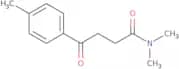
CAS:N,N-Dimethyl-3-(4-methylbenzoyl)propionamide is a metabolite of the antihistamine drug diphenhydramine. It is a natural impurity and an impurity standard for this drug. N,N-Dimethyl-3-(4-methylbenzoyl)propionamide can be used in pharmacopoeia to test for purity and quality of drugs, as well as for analytical purposes. It has also been used in drug development and metabolism studies.Formula:C13H17NO2Purity:Min. 95%Color and Shape:PowderMolecular weight:219.28 g/mol3-Oxo-1,2-benzisothiazole-2(3H)-acetic acid ethyl ester 1,1-dioxide
CAS:3-Oxo-1,2-benzisothiazole-2(3H)-acetic acid ethyl ester 1,1-dioxide is an impurity in the synthesis of a drug. It is not active and has no known therapeutic value. 3-Oxo-1,2-benzisothiazole-2(3H)-acetic acid ethyl ester 1,1-dioxide is used as a reference standard for HPLC and has been shown to be metabolized by cytochrome P450 enzymes.Formula:C11H11NO5SPurity:Min. 95%Color and Shape:White to off-white solid.Molecular weight:269.27 g/mol(3S,5S)-Atorvastatin sodium salt
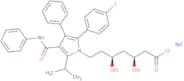
CAS:Atorvastatin is a statin drug that inhibits the enzyme HMG-CoA reductase, which is responsible for cholesterol synthesis. Atorvastatin is used to lower LDL cholesterol and total cholesterol levels in the blood. It also lowers triglyceride levels and raises HDL cholesterol levels. Atorvastatin has been shown to inhibit fibrinogen production, reduce TNF-α production, and improve body mass index (BMI) in obese patients. This drug has been shown to be effective in reducing the size of atherosclerotic lesions by decreasing the amount of cholesteryl esters transferred from high-density lipoprotein (HDL) to low-density lipoprotein (LDL). It has also been shown to inhibit collagen production and stimulate muscle cell proliferation.Formula:C33H34FN2NaO5Purity:Min. 95%Color and Shape:PowderMolecular weight:580.62 g/mol4-Keto 13-cis-retinoic acid
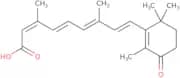
CAS:4-Keto 13-cis-retinoic acid is a synthetic retinoid that was first synthesized in the 1970s. It is used for the treatment of ichthyosiform erythroderma and other skin diseases. 4-Keto 13-cis-retinoic acid binds to the retinoic acid receptor, which may be responsible for its effects on epidermal growth factor and cytosolic calcium. Treatment with 4-keto 13-cis-retinoic acid has been shown to inhibit the proliferation of hl-60 cells and squamous carcinoma cells in vitro, as well as reduce tumor size and metastasis in vivo. >>ENDFormula:C20H26O3Purity:Min. 95%Color and Shape:PowderMolecular weight:314.42 g/molTyrosol glucuronide
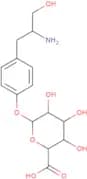
CAS:Tyrosol is a phenolic compound found in olive oil and other plant sources. It has been shown to have antioxidant, anti-inflammatory, and anti-cancer activities. Tyrosol glucuronide is the main form of tyrosol found in urine samples. The absorption process of tyrosols is due to their uptake by the liver cells, where they are converted into fatty acids and then conjugated with glucuronic acid. Tyrosols are also metabolized through a number of metabolic transformations, including hydrolysis by esterases or glucuronidases, oxidation by cytochrome P450 enzymes, reduction by glutathione reductase, or conjugation with glucuronic acid. Studies have shown that tyrosols can help lower blood pressure and improve insulin resistance in women.Formula:C14H18O8Purity:Min. 95%Color and Shape:PowderMolecular weight:314.29 g/mol7-(4-Bromobutoxy)-3,4-dihydroquinolin-2-one
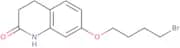
CAS:7-(4-Bromobutoxy)-3,4-dihydroquinolin-2-one is a palladium catalyst that can be used in a Buchwald reaction. This reaction is an industrially scalable process that has been developed to produce high yields of valuable organic compounds from inexpensive starting materials. The catalytic cycle involves the formation of the palladium species Pd(0) followed by its oxidative addition to an alkyl halide. This addition leads to the formation of a palladium(II) species and subsequent reductive elimination of hydrogen halide. 7-(4-Bromobutoxy)-3,4-dihydroquinolin-2-one is used as a catalyst in this process because it selectively reacts with electron rich aromatic substrates to form substituted benzoquinones or phenols. The product distribution is determined by the reactivity of the substrate and the relative rates of competing reactions. Impurities are formed during synthesis due toFormula:C13H16BrNO2Purity:Min. 95%Molecular weight:298.18 g/mol2-(4-Dibenzo[b,f][1,4]thiazepin-11-yl-piperazin-1-yl)-ethanol
CAS:2- (4-Dibenzo[b,f][1,4]thiazepin-11-yl-piperazin-1-yl)-ethanol is a pharmaceutical intermediate that is a potent inhibitor of the enzyme acetylcholinesterase. It has been used as a photolytic probe in chromatographic experiments. 2-(4-Dibenzo[b,f][1,4]thiazepin-11-yl-piperazin-1-yl)-ethanol has been synthesized by the reaction of 4-(benzo[b]thieno[2,3d]thiazol)piperazine with ethanol. The impurities present are quantified and their concentrations are reported as percent weight/volume (% w/v). Impurities that may be found in this product include acetonitrile, orthophosphate, and linearity.Formula:C19H21N3OSPurity:Min. 95%Color and Shape:PowderMolecular weight:339.46 g/molN-[1-(R)-(+)-(2-Naphthyl)ethyl]-3-[3-(trifluoromethyl)phenyl]-1-aminopropane hydrochloride
CAS:N-[1-(R)-(+)-(2-Naphthyl)ethyl]-3-[3-(trifluoromethyl)phenyl]-1-aminopropane hydrochloride is a metabolite that is produced by the metabolism of naphthalene. It is an impurity in the naphthalene standard, which is used as an API to assess the purity of other substances. N-[1-(R)-(+)-(2-Naphthyl)ethyl]-3-[3-(trifluoromethyl)phenyl]-1-aminopropane hydrochloride has been shown to be a substrate for CYP2D6. This metabolite is also found in pharmaceuticals and other drugs.Formula:C22H22F3N•HClPurity:Min. 95%Molecular weight:393.87 g/molEthyl 4-isopropenyl-2-propylimidazole-5-carboxylate
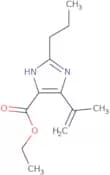
CAS:Ethyl 4-isopropenyl-2-propylimidazole-5-carboxylate is a custom synthesis. It is a metabolite of the drug product, ethyl 2-(5-isopropenyl-4-methylphenoxy)propanoate. Its CAS number is 157356-73-5.Formula:C12H18N2O2Purity:Min. 95%Color and Shape:PowderMolecular weight:222.28 g/mol5-Aminolevulinic acid hexyl ester hydrochloride
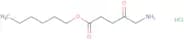
CAS:5-Aminolevulinic acid hexyl ester hydrochloride (5-ALA HCl) is a fluorescent probe that is used in the diagnosis of bladder and skin cancers. It is a prodrug that is converted to 5-aminolevulinic acid (ALA), which reacts with intracellular porphyrins to form an excited state. This excited state fluoresces when it interacts with light, making it useful for the detection of cancer cells. 5-ALA HCl has been shown to be effective in the diagnosis of multifocal urothelial carcinoma and cervical intraepithelial neoplasia.Formula:C11H22ClNO3Molecular weight:251.75 g/molSemaglutide Impurity 56 (D-Glu 21)
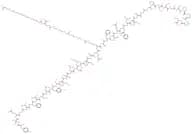
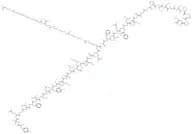
D-Glu(21)-Semaglutide is a semaglutide impurity. The amino acid at position 21 has been replaced by the D-form of the amino acid D-glutamic acid (D-Glu). Semaglutide impurities are structurally related compounds that arise during synthesis, purification, or storage of semaglutide, a long-acting GLP-1 receptor agonist for managing type 2 diabetes and obesity.Formula:C187H291N45O59Molecular weight:4,113.64 g/mol(3S)-3-[4-[(5-Bromo-2-chlorophenyl)methyl]phenoxy]tetrahydro-furan
CAS:Intermediate in the synthesis of empagliflozinFormula:C17H16BrClO2Purity:Min. 95%Color and Shape:White PowderMolecular weight:367.66 g/molAtorvastatin lactam sodium salt impurity
CAS:Atorvastatin is a drug used for the treatment of hypercholesterolemia and cardiovascular diseases. Atorvastatin lactam, which is an impurity formed during the synthesis of atorvastatin, has been shown to inhibit cholesterol biosynthesis in a rat model. The in vivo metabolism of atorvastatin lactam was studied by HPLC-MS/MS and was found to be identical to that of the parent molecule. This impurity may be useful as a research and development or custom synthesis product, or as an impurity standard for HPLC analysis.
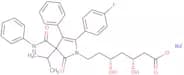
Formula:C33H34FN2NaO6Purity:Min. 95%Color and Shape:White PowderMolecular weight:596.62 g/mol5-Chloro-N-[[(5R)-2-oxo-3-[4-(3-oxo-4-morpholinyl)phenyl]-5-oxazolidinyl]methyl]-2-thiophenecarboxamide
CAS:5-chloro-N-[[(5R)-2-oxo-3-[4-(3-oxo-4-morpholinyl)phenyl]-5-oxazolidinyl]methyl]-2-thiophenecarboxamide (CTP) is a potent inhibitor of the cytochrome P450 enzyme CYP3A4. CTP has been shown to inhibit the metabolism of midazolam, an important drug for general anesthesia and sedation, in a study investigating the interaction between CYP3A4 inhibitors and midazolam. Ketoconazole, another inhibitor of CYP3A4, inhibited the metabolism of midazolam in vitro as well. In addition, CTP was shown to be a substrate for CYP2D6 and CYP1A2 in vitro.Formula:C19H18ClN3O5SPurity:Min. 95%Color and Shape:White PowderMolecular weight:435.88 g/molRitonavir Impurity G
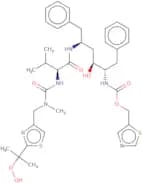
CAS:Ritonavir is a protease inhibitor that prevents HIV from replicating. It binds to the active site of the protease enzyme and inhibits its activity, which prevents the conversion of viral proteins into their respective functional forms. Ritonavir impurity G is a metabolite that is not present in the final drug product. This impurity standard has been characterized by HPLC and NMR spectroscopy.Formula:C37H48N6O7S2Purity:Min. 95%Molecular weight:752.9 g/mol(1R)-1-(3,4-Dihydroxyphenyl)-2-(methylamino)ethanesulfonic acid
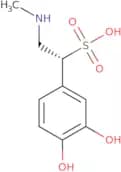
CAS:(1R)-1-(3,4-Dihydroxyphenyl)-2-(methylamino)ethanesulfonic acid is a synthetic compound that is used as an API impurity in the manufacture of a drug product. It is an analytical standard for HPLC and has been shown to be a metabolite of 1-methyl-3,4-dihydroxyphenylalanine. The CAS number for (1R)-1-(3,4-Dihydroxyphenyl)-2-(methylamino)ethanesulfonic acid is 78995-75-2 and it can be found in the pharmacopoeia.Formula:C9H13NO5SPurity:Min. 96 Area-%Color and Shape:White Off-White PowderMolecular weight:247.27 g/mol


![2-(4-Dibenzo[b,f][1,4]thiazepin-11-yl-piperazin-1-yl)-ethanol](/_next/image/?url=https%3A%2Fstatic.cymitquimica.com%2Fproducts%2F3D%2Fthumb-webp%2FID57870.webp&w=3840&q=75)
![N-[1-(R)-(+)-(2-Naphthyl)ethyl]-3-[3-(trifluoromethyl)phenyl]-1-aminopropane hydrochloride](/_next/image/?url=https%3A%2Fstatic.cymitquimica.com%2Fproducts%2F3D%2Fthumb-webp%2FIN58182.webp&w=3840&q=75)
![D-[Pro]31-Tirzepatide](/_next/image/?url=https%3A%2Fstatic.cymitquimica.com%2Fproducts%2F3D%2Fthumb-webp%2FIP11028.webp&w=3840&q=75)
![(3S)-3-[4-[(5-Bromo-2-chlorophenyl)methyl]phenoxy]tetrahydro-furan](/_next/image/?url=https%3A%2Fstatic.cymitquimica.com%2Fproducts%2F3D%2Fthumb-webp%2FIB75174.webp&w=3840&q=75)
![5-Chloro-N-[[(5R)-2-oxo-3-[4-(3-oxo-4-morpholinyl)phenyl]-5-oxazolidinyl]methyl]-2-thiophenecarbox…](/_next/image/?url=https%3A%2Fstatic.cymitquimica.com%2Fproducts%2F3D%2Fthumb-webp%2FIC71688.webp&w=3840&q=75)