APIs for research and impurities
Subcategories of "APIs for research and impurities"
- Aminoacids and derivatives(12,439 products)
- Anthraquinones and derivatives(407 products)
- Benzimidazole and Imidazole Derivatives(10,464 products)
- Benzodiazepine Derivatives(335 products)
- Carbohydrates and glycoconjugates(5,389 products)
- Esters and Derivatives(42,306 products)
- Fatty Acids and Lypidic Derivatives(32,486 products)
- Flavonoids and Polyphenols(17,100 products)
- Free Radicals and Oxidant/Reducing Agents(214 products)
- Ketones and derivatives(2,693 products)
- Natural and semi-synthetic antibiotics(6,406 products)
- Nitriles and Cyano Derivatives(3,070 products)
- Nitrosamines and Derivatives(55 products)
- Nucleosides and Nucleotides(3,491 products)
- Organic Phosphates and Phosphonates(1,203 products)
- Organic Sulphonates and Sulphates(10,450 products)
- Organometallics(4,425 products)
- Others(6,338 products)
- Peptides and Proteins(3,164 products)
- Polymers and Derivatives(100 products)
- Purines and Pyrimidine Derivatives(8,972 products)
- Quinazoline and Quinoline Derivatives(66,199 products)
- Quinones and Derivatives(24,378 products)
- Salts and Derivatives of Active Pharmaceutical Ingredients (API)(92,812 products)
- Steroids and Derivatives(4,987 products)
- Sulfonamides and Derivatives(2,607 products)
- Terpenoids and Derivatives(3,860 products)
- Thiazolidinediones and Thiopyrans(2,755 products)
- β-Adrenergic Compounds(231 products)
Found 66903 products of "APIs for research and impurities"
Sitagliptin Diamide impurity
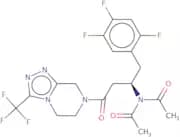
Sitagliptin Diamide Impurity is a drug product that is a white crystalline powder. It has been developed as an analytical standard for the impurity Sitagliptin Diamide. The impurity is a metabolite of sitagliptin, which is an oral antidiabetic drug used to treat type 2 diabetes. Sitagliptin Diamide Impurity can be used as a pharmaceutical intermediate and in research and development.Formula:C20H19F6N5O3Purity:Min. 95%Molecular weight:491.39 g/molN-(5-Aminopentyl) methotrexate amide
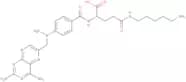
CAS:N-(5-Aminopentyl) methotrexate amide is a fluorescent probe that is used to study the transport of drugs across cell membranes. It binds to the plasma membrane of cells and can be visualized with a fluorescence microscope. N-(5-Aminopentyl) methotrexate amide has been shown to bind to leukemia cells in murine leukemia models. It has a high affinity for drug-resistant cells, which makes it useful for studying drug resistance mechanisms. This probe can be used at nanomolar concentrations for imaging studies, as well as for measuring the uptake of drugs into cancer cells by flow cytometry.
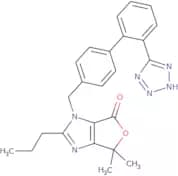
Formula:C25H34N10O4Purity:Min. 95%Color and Shape:Yellow PowderMolecular weight:538.6 g/molOlmesartan lactone impurity
CAS:Olmesartan lactone impurity is a high-purity, low-cost, and stable pharmaceutical intermediate. It is an ester of olmesartan and medoxomil. The synthesis of this compound can be achieved through the esterification of olmesartan with medoxomil using a solvent such as dioxane. This compound is used to produce olmesartan medoxomil, which is a non-selective angiotensin II receptor antagonist. Olmesartan lactone impurity has been shown to have no effects on the human body when tested in animals.Formula:C24H24N6O2Purity:Min. 95%Color and Shape:White PowderMolecular weight:428.49 g/mol4-Isobutyl-2-pyrrolidinone
CAS:4-Isobutyl-2-pyrrolidinone is a colorless liquid that belongs to the category of phosphites. It has a high boiling point, which makes it suitable for use in organic solvents and as a heat transfer agent. The thermodynamic properties of 4-Isobutyl-2-pyrrolidinone have been evaluated using the protonation theory. It can be protonated at either the nitrogen or the methyl group, and both forms are present in solution. This means that 4-Isobutyl-2-pyrrolidinone is acidic and can react with other compounds to form salts called lactams. There are two isomers of this compound: cis and trans. Both isomers exist in equilibrium; however, the cis isomer predominates at room temperature. The most common impurities of 4-Isobutyl-2-pyrrolidinone are dehydration products formed during synthesis orFormula:C8H15NOPurity:Min. 95%Color and Shape:White PowderMolecular weight:141.21 g/molCisplatin impurity A
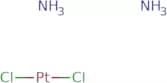
CAS:Cisplatin impurity A is a platinum-based chemotherapeutic agent that binds to DNA and inhibits the synthesis of cellular proteins. Cisplatin impurity A has been shown to inhibit the growth of cancer cells in vitro and in vivo. This compound also inhibits the production of epidermal growth factor, which may be due to its ability to bind dna at tetrazolium dye adducts. The coordination geometry of cisplatin impurity A is octahedral with two axial bidentate chelating ligands, which allows it to bind both DNA and tubule cells.Formula:(NH3)2Cl2PtColor and Shape:PowderMolecular weight:300.05 g/mol5-Aminolevulinic acid hydrochloride
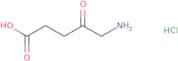
CAS:Photodynamic Therapy of Actinic Keratosis. Porphobilinogen synthase substrate that produces endogenous porphyrins useful for sensitizing cells in photodynamic therapy. Intermediate in heme and chlorophyll biosynthesis. Estimation of 5-aminolevulinic acid dehydratase. PBG formed in the assay is determined spectrophotometrically with Ehrlich's reagent. Used in Porphyrin test for differentiation of Haemophilus species. Enzymes that convert ALA to porphyrins in the biosynthesis of hemin (X factor) are not produced by H. influenzae, H.aegyptius and H. canis. These enzymes are produced by H. parainfluenzae, H. parahaemolyticus, H. gallinarum, H. parasuis, H. parahaemolyticus and H. aphrophilus. A positive reaction is indicated by an orange-red fluorescence.Formula:C5H10ClNO3Purity:Min. 98.0 Area-%Molecular weight:167.59 g/mol1-Phenyl-1-(2-pyridinyl)methanol
CAS:1-Phenyl-1-(2-pyridinyl)methanol is an organic compound that has a reactive, functional group. It is used as a solvent in the laboratory and industry. This chemical reacts with chloride to produce 1-chloro-1-phenylmethanol. It can also be reacted with basic groups such as sodium hydroxide to produce 1-phenyl-1-(2-hydroxy pyridinium) methanol. The reaction of 1-phenyl-1-(2-pyridinyl) methanol with carbon tetrachloride produces trichlorobenzene and carbon dioxide. Impurities in this compound include inorganic acids such as hydrochloric acid and sulfuric acid, which are found at levels below 0.5%. Alcohols found in this compound include ethanolamine, which is an impurity at levels exceeding 2%.Formula:C12H11NOPurity:Min. 95%Color and Shape:White PowderMolecular weight:185.22 g/molDihydroergotamine mesylate impurity C
Dihydroergotamine mesylate impurity C is an analytical standard used for the determination of purity in Dihydroergotamine Mesylate drug products. The impurity is a metabolite that has been shown to be pharmacologically active and thus should not exceed the limit of detection.Formula:C33H37N5O6Purity:Min. 95%Molecular weight:599.68 g/molDehydroxy bisoprolol
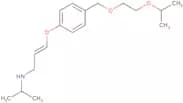
CAS:Dehydroxy bisoprolol is an impurity of the drug Bisoprolol that is used to make the drug product Metoprolol. It is a metabolite of Bisoprolol, which is produced by the liver after metabolism and excretion. Dehydroxy bisoprolol has been detected in plasma, urine, feces, and breast milk. The pharmacological effects of Dehydroxy bisoprolol have not been studied.
Formula:C18H29NO3Purity:Min. 95%Color and Shape:PowderMolecular weight:307.43 g/molVitamin A EP Impurity C
CAS:Soluble in Chloroform & in Methanol Confirmed
Insoluble in WatePurity:90% minColor and Shape:Off White or Beige SolidMolecular weight:312.45Daunorubicinol
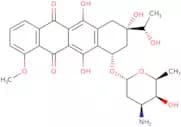
CAS:Daunorubicin metabolite
Formula:C27H31NO10Purity:Min. 95%Color and Shape:Red PowderMolecular weight:529.54 g/mol(5α)-17-(3-Pyridinyl)androst-16-en-3-one
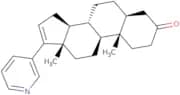
CAS:Controlled Product(5α)-17-(3-Pyridinyl)androst-16-en-3-one is a natural metabolite of testosterone that is produced in the liver. It has been identified as an impurity in API, which can be found in drugs used for the treatment of high blood pressure and prostate cancer. (5α)-17-(3-Pyridinyl)androst-16-en-3-one is not active as a drug itself, but it can be used as a standard to study the metabolism of testosterone and other steroids.Formula:C24H31NOPurity:Min. 98 Area-%Color and Shape:White PowderMolecular weight:349.51 g/mol4-(2,3,4-Trimethoxybenzyl)piperazine-1-carbaldehyde hydrochloride
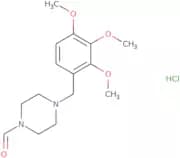
CAS:4-(2,3,4-Trimethoxybenzyl)piperazine-1-carbaldehyde hydrochloride is a custom synthesis that is used as a drug product, impurity standard and metabolic studies. The compound has been shown to be metabolized via oxidation by cytochrome P450 enzymes. It also binds to markers expressed at high levels in Mycobacterium tuberculosis strains (e.g., ESX-1 secretion system protein) and inhibits cell growth in culture.Formula:C15H22N2O4·HClPurity:Min. 98 Area-%Color and Shape:Off-White PowderMolecular weight:330.81 g/mol6-Epi pravastatin sodium
CAS:6-Epi pravastatin sodium salt is a synthetic compound with the same molecular formula and chemical structure as the natural product. It has been used in pharmacological studies, drug development, and research. 6-Epi pravastatin sodium salt is a metabolite of pravastatin.
Formula:C23H36O7•NaPurity:Min. 92.0 Area-%Molecular weight:447.51 g/mol3-[Methyl(phenylmethyl)amino]-1-phenyl-1-propanone hydrochloride
CAS:Nisoxetine is a norepinephrine (NE) reuptake inhibitor that is used as an antidepressant. It has been shown to be a potent and selective NE reuptake inhibitor with a high affinity towards the NE transporter in rat brain synaptosomes, with potency several times higher than that of tricyclic antidepressants. Nisoxetine's major advantage over other antidepressants is its high efficiency, which makes it suitable for large-scale production. The synthesis of nisoxetine involves two steps: 1) reaction of 3-[methyl(phenylmethyl)amino]-1-phenyl-1-propanone hydrochloride with toluene to form the corresponding methyl ester and 2) hydrogenation of the methyl ester to form nisoxetine. This synthesis is efficient, stable, and chiral due to the use of bimetallic catalysts.Formula:C17H19NO•HClPurity:Min. 95%Color and Shape:PowderMolecular weight:289.8 g/molRiboflavin EP Impurity C
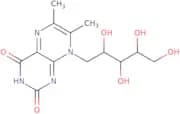
CAS:Riboflavin EP Impurity C is a synthetic compound that is used as an impurity standard in the manufacture of Riboflavin-5'-Phosphate. Riboflavin EP Impurity C is also a metabolite that can be found in human urine, and is used to study metabolism.Formula:C13H18N4O6Purity:90%MinColor and Shape:PowderMolecular weight:326.31 g/mol3-[[[2-[(Diaminomethylene)amino]thiazol-4-yl]methyl]sulphanyl]propanoic acid
CAS:3-[[[2-[(Diaminomethylene)amino]thiazol-4-yl]methyl]sulphanyl]propanoic acid is a pharmaceutical agent. It is used in the treatment of heartburn, gastroesophageal reflux disease (GERD), and other conditions. 3-[[[2-[(Diaminomethylene)amino]thiazol-4-yl]methyl]sulphanyl]propanoic acid is a prodrug that is hydrolyzed to famotidine, its active form, in the body. Famotidine has been shown to inhibit the H+/K+ ATPase enzyme from gastric parietal cells, which increases intracellular pH and reduces gastric acid secretion. 3-[[[2-[(Diaminomethylene)amino]thiazol-4-yl]methyl]sulphanyl]propanoic acid also inhibitsFormula:C8H12N4O2S2Purity:Min. 95%Color and Shape:PowderMolecular weight:260.34 g/molN-(((5S)-3-(4-(4-Morpholinyl)phenyl)-2-oxo-5-oxazolidinyl)methyl) acetamide
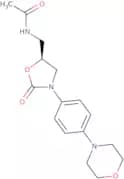
CAS:N-(((5S)-3-(4-(4-Morpholinyl)phenyl)-2-oxo-5-oxazolidinyl)methyl) acetamide is an impurity of the antibiotic linezolid. It is a contaminant that can be found in urine and blood samples. N-(((5S)-3-(4-(4-Morpholinyl)phenyl)-2-oxo-5-oxazolidinyl)methyl) acetamide has been shown to be amyloidogenic, meaning it can form plaques in the brain and lead to Alzheimer's disease.Formula:C16H21N3O4Purity:Min. 95%Color and Shape:White to off-white solid.Molecular weight:319.36 g/molFluticasone propionate EP Impurity F
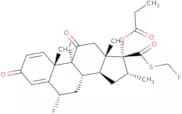
CAS:Fluticasone Propionate EP Impurity F is an impurity of Fluticasone Propionate. Fluticasone Propionate is a synthetic glucocorticoid used in the treatment of asthma and other allergic disorders. Impurity F is a metabolite of Fluticasone Propionate and has been detected in human plasma at low levels (5% of total fluticasone propionate). The metabolism of Fluticasone Propionate to Impurity F has been studied in rat, mouse, dog and man. br>br> The following table summarizes the metabolic pathways that have been identified for this impurity: br>br> Metabolism studies indicate that Impurity F is mainly metabolized by CYP3A4 to form conjugates with glucuronic acid or sulfates. It may also be hydrolyzed to form 5α-flurostan-3β,17β-dFormula:C25H29F3O5SPurity:Min. 95%Color and Shape:PowderMolecular weight:498.56 g/mol4-Hydroxy-2-methyl-2H-1,2-benzothiazine-3-carboxylic acid, ethyl ester 1,1-dioxide
CAS:4-Hydroxy-2-methyl-2H-1,2-benzothiazine-3-carboxylic acid, ethyl ester 1,1-dioxide (4HMBC) is an organic compound that is used as a precursor in the synthesis of other chemicals. 4HMBC is used to produce xylene, sulfoxide and diethyl ether by reacting with magnesium and ethylene. It is also used in the production of dimethylformamide, a solvent that is useful for the manufacture of many products including pharmaceuticals. 4HMBC reacts with methyl iodide to form 4-(dimethylamino)pyridine which can be used for the synthesis of piroxicam. The chemical has been shown to be effective as an insecticide against ants and cockroaches. It can also be used to synthesize dyes or pigments. The chemical can be obtained by methylating 4HBC with methanol in the presenceFormula:C12H13NO5SPurity:Min. 95%Color and Shape:PowderMolecular weight:283.3 g/mol






![3-[Methyl(phenylmethyl)amino]-1-phenyl-1-propanone hydrochloride](/_next/image/?url=https%3A%2Fstatic.cymitquimica.com%2Fproducts%2F3D%2Fthumb-webp%2FIM58070.webp&w=3840&q=75)
![3-[[[2-[(Diaminomethylene)amino]thiazol-4-yl]methyl]sulphanyl]propanoic acid](/_next/image/?url=https%3A%2Fstatic.cymitquimica.com%2Fproducts%2F3D%2Fthumb-webp%2FID58082.webp&w=3840&q=75)