APIs for research and impurities
Subcategories of "APIs for research and impurities"
- Aminoacids and derivatives(12,439 products)
- Anthraquinones and derivatives(407 products)
- Benzimidazole and Imidazole Derivatives(10,464 products)
- Benzodiazepine Derivatives(335 products)
- Carbohydrates and glycoconjugates(5,389 products)
- Esters and Derivatives(42,306 products)
- Fatty Acids and Lypidic Derivatives(32,486 products)
- Flavonoids and Polyphenols(17,100 products)
- Free Radicals and Oxidant/Reducing Agents(214 products)
- Ketones and derivatives(2,693 products)
- Natural and semi-synthetic antibiotics(6,406 products)
- Nitriles and Cyano Derivatives(3,070 products)
- Nitrosamines and Derivatives(55 products)
- Nucleosides and Nucleotides(3,491 products)
- Organic Phosphates and Phosphonates(1,203 products)
- Organic Sulphonates and Sulphates(10,450 products)
- Organometallics(4,425 products)
- Others(6,338 products)
- Peptides and Proteins(3,164 products)
- Polymers and Derivatives(100 products)
- Purines and Pyrimidine Derivatives(8,972 products)
- Quinazoline and Quinoline Derivatives(66,199 products)
- Quinones and Derivatives(24,378 products)
- Salts and Derivatives of Active Pharmaceutical Ingredients (API)(92,812 products)
- Steroids and Derivatives(4,987 products)
- Sulfonamides and Derivatives(2,607 products)
- Terpenoids and Derivatives(3,860 products)
- Thiazolidinediones and Thiopyrans(2,755 products)
- β-Adrenergic Compounds(231 products)
Found 66903 products of "APIs for research and impurities"
Lisdexamfetamine dimesylate impurity B
Lisdexamfetamine dimesylate impurity B is a high purity, synthetic, custom synthesis drug product. Lisdexamfetamine dimesylate impurity B is a metabolite of lisdexamfetamine and the impurity standard for lisdexamfetamine dimesylate. It is used in pharmacopoeia to develop drugs. Lisdexamfetamine dimesylate impurity B is also used in analytical studies such as HPLC standards.Purity:Min. 95%Tenofovir isoproxil monoester
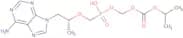
CAS:Tenofovir isoproxil monoester is a prodrug of Tenofovir, which is an antiviral drug. Tenofovir prevents the growth of HIV by interfering with the synthesis of viral DNA. The process development stage involves converting Tenofovir to its disoproxil monoester form, which has been shown to have greater antiviral activity than Tenofovir alone. This conversion process involves condensing one molecule of fumarate with two molecules of tenofovir, forming tenofovir disoproxil fumarate (TFD). TFD can be converted back to Tenofovir using hydrolysis and hydrogenation. Impurities in TFD include isopropyl tenofovir and unidentified impurities that are not present in the parent drug, tenofovir. Tenofovir Disoproxil Fumarate was also shown to be more potent than TFD and is undergoing clinical trials forFormula:C14H22N5O7PPurity:Min. 97 Area-%Color and Shape:White/Off-White SolidMolecular weight:403.33 g/mol3-[[p-(2-Pyridylsulfamoyl)phenyl]azo]salicylic acid
CAS:3-[[p-(2-Pyridylsulfamoyl)phenyl]azo]salicylic acid is a chemical compound that is an impurity standard for HPLC. It is also used as a pharmacopoeia, drug development, and analytical reference standard. The CAS number for this compound is 66364-71-4. This compound has been shown to be metabolized by microsomal oxidation, glucuronidation, or sulfation pathways in humans. 3-[[p-(2-Pyridylsulfamoyl)phenyl]azo]salicylic acid can also be found in natural sources such as plants and animals.Formula:C18H14N4O5SPurity:Min. 95%Color and Shape:PowderMolecular weight:398.39 g/molN,N'-Bis(4-chlorobenzylidene)hydrazine
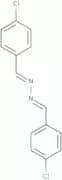
CAS:N,N'-Bis(4-chlorobenzylidene)hydrazine is an organic nitrogen compound that is used as a reagent in organic chemistry. It can be used to synthesize hydrazones, toluenes, and carbonyls. This reagent also has the ability to catalyze olefinations. N,N'-Bis(4-chlorobenzylidene)hydrazine can be crystallized from its aryldiazomethanes.
Formula:C14H10Cl2N2Purity:Min. 95%Molecular weight:277.15 g/molBortezomib intermediate I
CAS:Bortezomib intermediate I is a metabolite of bortezomib, which is a research and development drug product. Bortezomib intermediate I is an impurity standard for bortezomib. Bortezomib intermediate I can be synthesized from the corresponding compound. It is an analytical standard used in pharmacopoeia and can be used as an API impurity or synthetic material in drug development. Bortezomib intermediate I has a high purity, natural origin, and a niche application. CAS No. 1248339-44-7Formula:C25H36BN5O4Purity:Min. 95%Color and Shape:White PowderMolecular weight:481.4 g/mol6'-Methoxy-2'-acetonaphthone
CAS:6'-Methoxy-2'-acetonaphthone is a reactive chemical that can be used as a reagent in organic synthesis. It is an electron-rich aromatic compound and its reactivity is enhanced by electron-donating groups such as -OH, -NH2, or -SH. 6'-Methoxy-2'-acetonaphthone can be used to form new carbon-carbon bonds in the presence of metal catalysts. This reaction can be done in either the presence or absence of a solvent, although the yield is better when carried out in organic solvents. Oxime derivatives are formed as oxidation products during this reaction. Acetylation may also occur, which would produce acetophenones or phenylacetones.Formula:C13H12O2Purity:Min. 95%Color and Shape:Off-White PowderMolecular weight:200.23 g/mol3,5-Di-O-(4-chlorobenzoyl)-2-deoxy-a-D-ribofuranosyl isocyanate
3,5-Di-O-(4-chlorobenzoyl)-2-deoxy-a-D-ribofuranosyl isocyanate (CAS No. 53477) is a drug product that belongs to the class of drugs called nucleosides. 3,5-Di-O-(4-chlorobenzoyl)-2-deoxy-a-D-ribofuranosyl isocyanate has been shown to be metabolized through a number of metabolic transformations, including hydrolysis by esterases or glucuronidases, oxidation by cytochrome P450 enzymes, reduction by glutathione reductase, or conjugation with glucuronic acid. This product has been shown to have antiplasmodial activity and may be useful in the treatment of malaria.Formula:C20H15Cl2NO6Purity:Min. 95%Molecular weight:436.24 g/molMethyl 2-deoxy-3,4-di-O-toluoyl-D-ribopyranoside
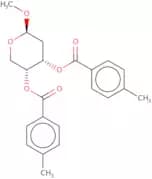
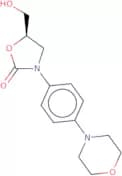
CAS:Methyl 2-deoxy-3,4-di-O-toluoyl-D-ribopyranoside is a synthetic impurity standard for the drug product. It has been used in studies on metabolism and as an analytical reference material. Methyl 2-deoxy-3,4-di-O-toluoyl-D-ribopyranoside is also available as a custom synthesis at high purity.Formula:C22H24O6Purity:Min. 95%Color and Shape:White powder.Molecular weight:384.42 g/mol3-(4-(4-Morpholinyl)phenyl)-5-(hydroxymethyl)oxazolidin-2-one
CAS:3-(4-(4-Morpholinyl)phenyl)-5-(hydroxymethyl)oxazolidin-2-one is an impurity in the drug development process. It is used as a standard for HPLC testing and a synthetic intermediate. It has been shown to have niche use in the pharmaceutical industry. 3-(4-(4-Morpholinyl)phenyl)-5-(hydroxymethyl)oxazolidin-2-one has been found to be metabolized through oxidation and reduction reactions, leading to the formation of metabolites such as 2,6-dihydroxypyridine (DHP). Further metabolism studies are required for this substance.
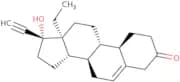
Formula:C14H18N2O4Purity:Min. 95%Color and Shape:White to off-white solid.Molecular weight:278.3 g/mol(17a)-13-Ethyl-17-hydroxy-18,19-dinorpregn-5-en-20-yn-3-one
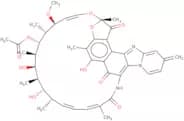
CAS:Controlled Product(17a)-13-Ethyl-17-hydroxy-18,19-dinorpregn-5-en-20-yn-3-one is a progestin that acts as an inhibitor of the P450 enzyme. It has been used in the treatment of women with fertility problems. (17a)-13-Ethyl-17-hydroxy-18,19-dinorpregn-5-en--20--yn--3--one has shown inhibitory effects on voltage dependent calcium channels and thus may have contraceptive properties. It has also been shown to be effective in the long term treatment of intrauterine devices. Low bioavailability is a disadvantage of this drug.br>br>Formula:C21H28O2Purity:Min. 95%Color and Shape:PowderMolecular weight:312.45 g/molRifaximin Impurity 2
CAS:Rifaximin Impurity 2 is a custom synthesis that is made to the customer's specifications. This compound is used as an impurity standard for drug product. It has a high purity and follows the pharmacopoeia standards. Rifaximin Impurity 2 is used in research and development of new drugs, which includes drug metabolism studies. This compound can be synthesized with natural or synthetic methods, and can be analyzed using HPLC.
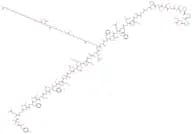
Purity:Min. 95%D-Ala(24)-Semaglutide
D-Ala(24)-Semaglutide is a semaglutide impurity. The amino acid at position 24 has been replaced by the D-form of the amino acid D-alanine (D-Ala). Semaglutide impurities are structurally related compounds that arise during synthesis, purification, or storage of semaglutide, a long-acting GLP-1 receptor agonist for managing type 2 diabetes and obesity.Formula:C187H291N45O59Molecular weight:4,113.64 g/molRemdesivir impurity 12
CAS:Remdesivir impurity 12 is a drug product that is used in research and development. It is a synthetic impurity standard for HPLC analytical methods. Remdesivir impurity 12 is an impurity of the drug, remdesivir, which has antiviral activity against HIV-1. Metabolism studies have been conducted to investigate how this impurity affects the pharmacokinetics of remdesivir. The use of synthetic material ensures high purity and quality for this product.Formula:C21H31N6O8PPurity:Min. 95%Molecular weight:526.48 g/mol6’-Hydroxy simvastatin acid
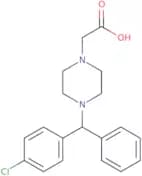
CAS:6’-Hydroxy simvastatin acid is a metabolite of simvastatin. It has an analytical purity of at least 98% and is used as an impurity standard in the preparation of high purity drug product. 6’-Hydroxy simvastatin acid is also used for research and development, such as drug discovery, new drug development, and analytical method validation. This compound has a CAS number of 1217529-34-4 and can be synthesized from natural or synthetic sources.Formula:C25H40O7Purity:Min. 95%Molecular weight:452.58 g/molCetirizine impurity B dihydrochloride
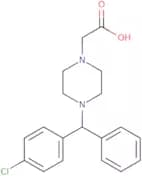
CAS:Cetirizine impurity B dihydrochloride is a minor impurity of cetirizine, which is a non-sedating antihistamine. The purity of the compound was determined by high performance liquid chromatography (HPLC) and its bioequivalence to cetirizine was assessed in a population pharmacokinetic study. Cetirizine impurity B dihydrochloride has been shown to have a similar pharmacokinetic profile to cetirizine and can be used as an alternative for the treatment of allergic rhinitis.Formula:C19H21ClN2O2•(HCl)2Purity:Min. 90 Area-%Color and Shape:PowderMolecular weight:417.76 g/mol5-(2-Ethoxyphenyl)-1-methyl-3-n-propyl-1,6-dihydro-7H-pyrazolo[4,3-d]pyrimidin-7-one
CAS:Sildenafil is a selective PDE-5 inhibitor that is used in the treatment of erectile dysfunction. It has been shown to have anticancer activity in vitro and in vivo. Sildenafil inhibits the activity of cyclic guanosine monophosphate (cGMP) phosphodiesterase type 5 (PDE-5), which is found in the corpus cavernosum of the penis and inhibits cGMP degradation, leading to vasodilation and increased blood flow. Sildenafil has been shown to inhibit cancer cell proliferation by blocking the synthesis of both DNA and protein, as well as inhibiting the expression of genes encoding for anti-apoptotic proteins. Sildenafil binds to PDE-5 with high affinity, but does not bind to other PDEs or ion channels at therapeutic concentrations.Formula:C17H20N4O2Purity:Min. 95%Color and Shape:White To Off-White SolidMolecular weight:312.37 g/molCetirizine Impurity B
CAS:Cetirizine Impurity B is a custom synthesis impurity. It is a product of the metabolism of cetirizine, an anti-allergic drug. Cetirizine Impurity B is used as an impurity standard for drug development and analytical HPLC studies. It has been assigned CAS number 113740-61-7 by the Chemical Abstracts Service. The purity of this compound is greater than 99%.
Formula:C19H21ClN2O2Purity:Min. 90 Area-%Color and Shape:PowderMolecular weight:344.8 g/molL-138,037
CAS:Please enquire for more information about L-138,037 including the price, delivery time and more detailed product information at the technical inquiry form on this pageFormula:C28H34N4Purity:Min. 95%Color and Shape:PowderMolecular weight:426.6 g/molAmoxicillin impurity 33
CAS:Amoxicillin impurity 33 is a drug product that is used as an analytical standard for impurities in amoxicillin. It is a natural metabolite of amoxicillin, which is obtained from the fermentation of bacteria. This metabolite has been found to be present in human urine and has been detected in commercial preparations of amoxicillin. Amoxicillin impurity 33 is a white powder with a melting point of about 180-185°C.Purity:Min. 95%

![3-[[p-(2-Pyridylsulfamoyl)phenyl]azo]salicylic acid](/_next/image/?url=https%3A%2Fstatic.cymitquimica.com%2Fproducts%2F3D%2Fthumb-webp%2FIP27943.webp&w=3840&q=75)



![5-(2-Ethoxyphenyl)-1-methyl-3-n-propyl-1,6-dihydro-7H-pyrazolo[4,3-d]pyrimidin-7-one](/_next/image/?url=https%3A%2Fstatic.cymitquimica.com%2Fproducts%2F3D%2Fthumb-webp%2FNE16544.webp&w=3840&q=75)