APIs for research and impurities
Subcategories of "APIs for research and impurities"
- Aminoacids and derivatives(12,331 products)
- Anthraquinones and derivatives(404 products)
- Benzimidazole and Imidazole Derivatives(10,435 products)
- Benzodiazepine Derivatives(333 products)
- Carbohydrates and glycoconjugates(5,047 products)
- Esters and Derivatives(42,250 products)
- Fatty Acids and Lypidic Derivatives(32,401 products)
- Flavonoids and Polyphenols(17,080 products)
- Free Radicals and Oxidant/Reducing Agents(212 products)
- Ketones and derivatives(2,400 products)
- Natural and semi-synthetic antibiotics(6,371 products)
- Nitriles and Cyano Derivatives(3,068 products)
- Nitrosamines and Derivatives(55 products)
- Nucleosides and Nucleotides(3,470 products)
- Organic Phosphates and Phosphonates(1,199 products)
- Organic Sulphonates and Sulphates(10,430 products)
- Organometallics(4,421 products)
- Others(6,295 products)
- Peptides and Proteins(3,143 products)
- Polymers and Derivatives(100 products)
- Purines and Pyrimidine Derivatives(8,934 products)
- Quinazoline and Quinoline Derivatives(65,934 products)
- Quinones and Derivatives(24,356 products)
- Salts and Derivatives of Active Pharmaceutical Ingredients (API)(80,667 products)
- Steroids and Derivatives(4,946 products)
- Sulfonamides and Derivatives(2,587 products)
- Terpenoids and Derivatives(3,843 products)
- Thiazolidinediones and Thiopyrans(2,753 products)
- β-Adrenergic Compounds(230 products)
Found 58049 products of "APIs for research and impurities"
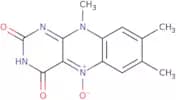
Lumiflavin 5-oxide
CAS:Lumiflavin 5-oxide is a metabolite of lumiflavin. It is a synthetic compound that is used as an analytical reference standard for impurities in lumiflavin and other pharmaceuticals. Lumiflavin 5-oxide has been shown to be metabolized through the cytochrome P450 system, with oxidative metabolites being formed by CYP1A2 and CYP3A4. Lumiflavin 5-oxide has also been shown to be a competitive inhibitor of NAD+-dependent enzymes such as glycerol kinase, phosphofructokinase, lactate dehydrogenase, alcohol dehydrogenase, and glucose 6-phosphate dehydrogenase.
Formula:C13H12N4O3Purity:Min. 95%Molecular weight:272.26 g/molRef: 3D-LBA99593
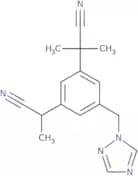
Discontinued productAlpha-Desmethyl anastrozole
CAS:Alpha-Desmethyl anastrozole is a synthetic chemical that has been used as an impurity standard for the drug product, Anastrozole (Arimidex). This compound is metabolized in humans and is a metabolite of Arimidex. Alpha-Desmethyl anastrozole exhibits high purity and can be synthesized using custom synthesis. The CAS number for this compound is 1215780-15-6.
Formula:C16H17N5Purity:Min. 95%Molecular weight:279.34 g/molRef: 3D-ID21236
Discontinued productMinocycline EP Impurity H
CAS:Please enquire for more information about Minocycline EP Impurity H including the price, delivery time and more detailed product information at the technical inquiry form on this page
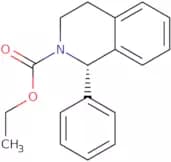
Formula:C23H25N3O7Purity:Min. 95%Molecular weight:455.47 g/molEthyl (S)-1-phenyl-1,2,3,4-tetrahydro-2-isoquinolinecarboxylate
CAS:Ethyl (S)-1-phenyl-1,2,3,4-tetrahydro-2-isoquinolinecarboxylate is an analytical standard used to identify impurities in drug products. It is a metabolite of the drug product and has been shown to be safe for human consumption. The compound is a synthetic chemical that is not found naturally in the environment. CAS No. 180468-42-2
Formula:C18H19NO2Purity:Min. 95%Molecular weight:281.35 g/molRef: 3D-IE71486
Discontinued productDoxylamine N-oxide
CAS:Doxylamine N-oxide is a drug product that is custom synthesized to meet the specific needs of the customer. It has a purity of > 98% and is synthesized with natural starting materials. Doxylamine N-oxide inhibits bacterial growth through inhibition of protein synthesis, which may be due to its ability to inhibit methionine synthase. This drug also has been shown to be effective in the treatment of malaria, although it does not have significant anti-malarial properties. Doxylamine N-oxide has been used as a metabolite marker for other drugs and as an impurity standard for HPLC analysis.
Formula:C17H22N2O2Purity:Min. 95%Molecular weight:286.37 g/mol[1-Hydroxy-3-(methylisopentylamino)propylidene] bisphosphonic acid monosodium (ibandronic acid impurity)
CAS:[1-Hydroxy-3-(methylisopentylamino)propylidene] bisphosphonic acid monosodium (ibandronic acid impurity) is a metabolite of ibandronate, which is used in the treatment of osteoporosis. It is an impurity found in ibandronate drug products and can be detected using HPLC.
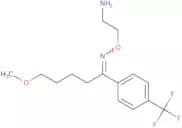
Formula:C9H22NNaO7P2Purity:Min. 95%Molecular weight:341.21 g/mol(Z)-Fluvoxamine - EP
CAS:Controlled Product(Z)-Fluvoxamine-EP is a drug product that is used as an analytical standard. It is a synthetic metabolite of fluvoxamine, which is a drug used for the treatment of depression. The synthesis of (Z)-fluvoxamine-EP is based on the asymmetric synthesis of fluvoxamine and the use of chiral chromatography to purify the product. This synthetic process allows for the production of high-purity (Z)-fluvoxamine-EP with a purity greater than 99%.
Formula:C15H21F3N2O2Purity:Min. 95%Molecular weight:318.33 g/molRef: 3D-IF23523
Discontinued producto-Acetyl silodosin
CAS:O-Acetyl silodosin is a synthetic, natural metabolite of silodosin. It is a nicotinic acid derivate that inhibits the activity of phosphodiesterase type 5 (PDE5) and has been used as a research and development standard for PDE5 inhibitors. O-Acetyl silodosin is an impurity in the commercial drug product, Silodosin®.
Formula:C27H34F3N3O5Purity:Min. 95%Molecular weight:537.60 g/molRef: 3D-KGA97086
Discontinued productAdefovir dipivoxil dimer
CAS:Adefovir dipivoxil dimer is a synthetic and natural product that is used as an analytical standard for HPLC, as well as in the development of new drug products. It is also used to identify impurities in API. Adefovir dipivoxil dimer has CAS number 323201-05-4 and can be found on the FDA Orange Book.
Formula:C41H64N10O16P2Purity:Min. 95%Molecular weight:1,014.95 g/molRef: 3D-YMA20105
Discontinued productRosuvastatin anhydro lactone
CAS:Rosuvastatin anhydro lactone is a pure chemical compound that is used as an analytical reference standard for high-performance liquid chromatography (HPLC) for the determination of purity and identification of impurities in pharmaceuticals. It is also utilized as a drug development, API impurity, and HPLC standard. Rosuvastatin anhydro lactone is a metabolite of rosuvastatin and is chemically designated as C22H29NO3. The CAS number for rosuvastatin anhydro lactone is 1246665-85-9.
Formula:C22H24FN3O4SPurity:Min. 95%Molecular weight:445.50 g/molRef: 3D-WZB66585
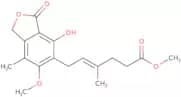
Discontinued productMethyl mycophenolate impurity E
CAS:Methyl mycophenolate impurity E is a reactive, propargylamine-containing, monosodium salt with immunosuppressive properties. It is used in the treatment of cancer by inhibiting the production of white blood cells, which are needed to fight infection. Methyl mycophenolate impurity E has shown antitumor activity and can be used for the treatment of some types of cancer. It is metabolized in vivo to methyl mycophenolate and inhibits protein synthesis by alkylating DNA.
Formula:C18H22O6Purity:Min. 95%Color and Shape:White PowderMolecular weight:334.36 g/molRef: 3D-IM25526
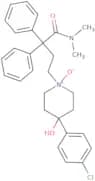
Discontinued productLoperamide N-oxide
CAS:Loperamide N-oxide is an analog of loperamide, which is commonly used as an anti-diarrheal medication. It has been shown to have potential anti-cancer properties by inducing apoptosis in cancer cells. Loperamide N-oxide has also been detected in urine samples from Chinese individuals, indicating its potential use as a biomarker for cancer diagnosis. This compound has been found to inhibit trypsin-like kinases, which are enzymes involved in cell division and proliferation. In addition, loperamide N-oxide has been shown to inhibit the growth of tumor cells and may have potential as a therapeutic agent for cancer treatment. However, it should be noted that rifampicin and other inhibitors can reduce the effectiveness of loperamide N-oxide against cancer cells. Further research is needed to fully understand the potential benefits and limitations of this compound.
Formula:C29H33ClN2O3Purity:Min. 95%Molecular weight:493 g/molRef: 3D-SIA47103
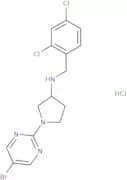
Discontinued productLy 2389575 hydrochloride
CAS:Ly 2389575 hydrochloride is a drug product for the treatment of rheumatoid arthritis, psoriatic arthritis, and plaque psoriasis. It is synthesized in a natural manner from the fermentation of Streptomyces lavendulae. The compound has been shown to be metabolized through a number of metabolic transformations including hydrolysis by esterases or glucuronidases, oxidation by cytochrome P450 enzymes, reduction by glutathione reductase, or conjugation with glucuronic acid. Ly 2389575 hydrochloride also specifically binds to markers expressed at high levels in Mycobacterium tuberculosis strains (e.g., ESX-1 secretion system protein) and inhibits cell growth in culture.
Formula:C15H16BrCl3N4Purity:Min. 95%Molecular weight:438.6 g/molRef: 3D-KKB10409
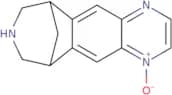
Discontinued productVarenicline N-oxide
CAS:Varenicline N-oxide is a synthetic drug product. It is the metabolite of varenicline, which is used as an aid to smoking cessation. Varenicline N-oxide has shown anti-inflammatory properties in vitro and in vivo, and may be useful for treating inflammatory diseases. Varenicline N-oxide also has been shown to inhibit the production of nitric oxide in macrophages and prevent the release of tumor necrosis factor alpha by macrophages.
Formula:C13H13N3OPurity:Min. 95%Molecular weight:227.26 g/molRef: 3D-IV177544
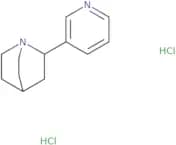
Discontinued productRjr 2429 dihydrochloride
CAS:Rjr 2429 dihydrochloride is a tumor promoter that has been shown to induce tumor growth in tissues and in cell culture. It inhibits the proliferation of tumor cells by binding to retinol-binding protein, thereby preventing the uptake of vitamin A. Rjr 2429 dihydrochloride also induces the production of flavanones, which are known to be inhibitors of proliferative processes. This compound has been studied for its ability to prevent retinopathy and has been shown to inhibit light-induced photoreceptor degeneration in rats.
Formula:C12H18Cl2N2Purity:Min. 95%Molecular weight:261.19 g/molRef: 3D-WQB41853
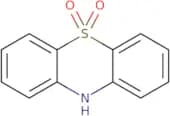
Discontinued productPhenothiazine S,S-dioxide
CAS:Phenothiazine S,S-dioxide is a fluorescent anion that can be used as a buffer. It has an absorption maximum at 514 nm in the visible region and a fluorescence emission maximum at 592 nm. Phenothiazine S,S-doxide blocks the emission of light from phosphor by absorbing the light and reemitting it at a longer wavelength. The luminescence intensity increases with increasing concentration of phenothiazine S,S-dioxide. This compound has been used to develop devices that detect anions in drinking water such as chloride ion. Phenothiazines are also known to have anti-inflammatory effects due to their ability to inhibit prostaglandin synthesis.
Formula:C12H9NO2SPurity:Min. 95%Molecular weight:231.27 g/molRef: 3D-BAA20966
Discontinued productN-4,5[Acetylamino)methyl]desmopressin
N-4,5[Acetylamino)methyl]desmopressin is a synthetic drug product that is used as an analytical standard for the identification and quantitation of desmopressin in pharmaceutical preparations. It is also used as an impurity standard for HPLC analysis. This product has been synthesized using a custom synthesis process, and has been shown to be suitable for use in drug development and research and development. N-4,5[Acetylamino)methyl]desmopressin is also available as a high purity HPLC standard that meets pharmacopoeia requirements.
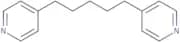
Purity:Min. 95%1,5-Bis(4-pyridyl)pentane
CAS:1,5-Bis(4-pyridyl)pentane is a coordination polymer that can be used in the preparation of polymers. It is bifunctional and has coordination properties. This compound is made up of two pyridine rings linked to an ethyl group via a pentane chain. The cationic form of this compound is used for the preparation of some polymers. The crystal structure for 1,5-bis(4-pyridyl)pentane was determined by X-ray crystallography and found to have a layered topology with hydrogen bonding.
Formula:C15H18N2Purity:Min. 95%Molecular weight:226.32 g/molRef: 3D-ABA38233
Discontinued productAlbendazole sulfone
CAS:Albendazole sulfone is a metabolite of the drug albendazole. It is used as an analytical standard to measure the concentration of albendazole in human plasma and urine samples. The concentration-time curve for albendazole sulfone can be determined using a nonlinear regression analysis, with the rate constant being calculated from the slope and intercept. This method has been shown to be accurate for predicting pharmacokinetic parameters in humans. Albendazole sulfone is also used as a probe in wastewater treatment studies, where it binds to colloidal gold particles that are used to visualize the removal of small particles by microorganisms.
Formula:C12H15N3O4SPurity:Min. 95 Area-%Color and Shape:PowderMolecular weight:297.33 g/molRef: 3D-IA17258
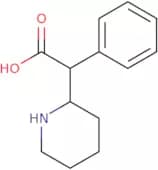
Discontinued productDL-threo-Ritalinic acid
CAS:Controlled ProductDL-threo-Ritalinic Acid is a dopamine receptor agonist that has been shown to be effective in treating hyperactivity, or attention deficit disorder (ADHD). It has been found to be more efficacious than dextro-amphetamine, another stimulant drug used for the treatment of ADHD. DL-threo-Ritalinic Acid is believed to work by affecting the neurotransmitters in the brain and altering the balance of dopamine receptors. In a two-way crossover study, preschool children were given either 0.5mg/kg of DL-threo-Ritalinic Acid or placebo for three days. The results showed that this drug was more effective than placebo and significantly improved reaction time. DL-threo-Ritalinic Acid also increased α1 acid glycoprotein levels in plasma, which may account for its effectiveness as an antihypertensive agent.
Formula:C13H17NO2Purity:Min. 95%Molecular weight:219.28 g/mol


![[1-Hydroxy-3-(methylisopentylamino)propylidene] bisphosphonic acid monosodium (ibandronic acid imp…](/_next/image/?url=https%3A%2Fstatic.cymitquimica.com%2Fproducts%2F3D%2Fthumb-webp%2FXWC98436.webp&w=3840&q=75)

![N-4,5[Acetylamino)methyl]desmopressin](/_next/image/?url=https%3A%2Fstatic.cymitquimica.com%2Fproducts%2F3D%2Fthumb-webp%2FIA173214.webp&w=3840&q=75)