APIs for research and impurities
Subcategories of "APIs for research and impurities"
- Aminoacids and derivatives(12,331 products)
- Anthraquinones and derivatives(404 products)
- Benzimidazole and Imidazole Derivatives(10,435 products)
- Benzodiazepine Derivatives(333 products)
- Carbohydrates and glycoconjugates(5,047 products)
- Esters and Derivatives(42,250 products)
- Fatty Acids and Lypidic Derivatives(32,401 products)
- Flavonoids and Polyphenols(17,080 products)
- Free Radicals and Oxidant/Reducing Agents(212 products)
- Ketones and derivatives(2,400 products)
- Natural and semi-synthetic antibiotics(6,371 products)
- Nitriles and Cyano Derivatives(3,068 products)
- Nitrosamines and Derivatives(55 products)
- Nucleosides and Nucleotides(3,470 products)
- Organic Phosphates and Phosphonates(1,199 products)
- Organic Sulphonates and Sulphates(10,430 products)
- Organometallics(4,421 products)
- Others(6,295 products)
- Peptides and Proteins(3,143 products)
- Polymers and Derivatives(100 products)
- Purines and Pyrimidine Derivatives(8,934 products)
- Quinazoline and Quinoline Derivatives(65,934 products)
- Quinones and Derivatives(24,356 products)
- Salts and Derivatives of Active Pharmaceutical Ingredients (API)(80,667 products)
- Steroids and Derivatives(4,946 products)
- Sulfonamides and Derivatives(2,587 products)
- Terpenoids and Derivatives(3,843 products)
- Thiazolidinediones and Thiopyrans(2,753 products)
- β-Adrenergic Compounds(230 products)
Found 58049 products of "APIs for research and impurities"
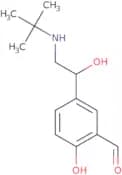
Salbutamol Impurity D
CAS:Salbutamol Impurity D is a chiral, metal chelator impurity of the drug substance Salbutamol. It is a prodrug that is hydrolyzed to its active form, salbutamol sulfate, in vivo. Salbutamol Impurity D binds to chloride ions and has been shown to be an interferent for many analytical methods. The reversed-phase chromatography retention time for Salbutamol Impurity D is about 10 minutes shorter than for Salbutamol sulfate.
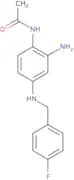
Formula:C13H19NO3Purity:Min. 95%Molecular weight:237.29 g/molN-Acetyl N-descarboxyethyl retigabine d4
CAS:N-Acetyl N-descarboxyethyl retigabine (D4) is a pharmaceutical drug that is used for the treatment of epilepsy. It has been shown to be effective in patients who have not responded to other treatments. D4 binds to voltage-gated potassium channels and inhibits their opening, which leads to a decrease in neurotransmitter release from nerve cells. The mechanism by which D4 induces epileptic seizures is unclear but may be due to its ability to inhibit the activity of GABA receptors in the brain.Formula:C15H16FN3OPurity:Min. 95%Molecular weight:273.3 g/molRef: 3D-EJA97068
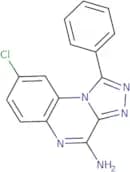
Discontinued productCp-66713 mesylate
CAS:Cp-66713 mesylate is a synthetic drug product with a molecular formula of C17H19NO2 and a molecular weight of 269.34. It has the following CAS number: 91896-58-1. The purity of this compound is >99% (HPLC).
Formula:C15H10ClN5Purity:Min. 95%Molecular weight:295.72 g/molRef: 3D-RDA89658
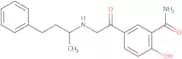
Discontinued productrac-Keto labetalol
CAS:Rac-keto labetalol is an active substance that belongs to the group of pyrazole derivatives. It is a racemic mixture of two enantiomers, (+)-labetalol and (-)-labetalol. Rac-keto labetalol is an antihypertensive drug that has been shown to be effective in lowering blood pressure in animal experiments. Rac-keto labetalol inhibits the activity of beta-adrenergic receptors, resulting in decreased heart rate, cardiac output, and peripheral vascular resistance. Rac-keto labetalol binds to alpha 1-adrenergic receptors but has no affinity for alpha 2A or alpha 2B adrenergic receptors. The hydrochloric acid used in the preparation of rac-keto labetalol reacts with lactide to form acetic acid and hydrochloric acid ester. This reaction is catalyzed by triphosgene, which also serves as a solvent for the
Formula:C19H22N2O3Purity:Min. 95%Molecular weight:326.4 g/molRef: 3D-KDA66585
Discontinued productXanthoxin
CAS:Xanthoxin is a medicinal compound with potent anticancer properties. It has been shown to induce apoptosis, or programmed cell death, in cancer cells. Xanthoxin has been tested in various cancer cell lines, including Chinese and human cells, and has demonstrated strong inhibitory effects on the tumor cycle. This compound works by inhibiting kinases and other proteins involved in cancer cell growth and proliferation. Xanthoxin is also known to be an inhibitor of certain urinary proteins that are associated with cancer progression. Overall, Xanthoxin shows great potential as a natural product for the development of novel anticancer therapies.
Formula:C15H22O3Purity:Min. 95%Molecular weight:250.33 g/molRef: 3D-IAA06607
Discontinued product1-[[3-Methyl-4-(2,2,2-trifluoroethoxy)-2-pyridinyl]methyl]-2-[[[3-methyl-4-(2,2,2-trifluoroethoxy)-2-pyridinyl]methyl]sulfinyl]-1H-b enzimidazole
CAS:1-[[3-Methyl-4-(2,2,2-trifluoroethoxy)-2-pyridinyl]methyl]-2-[[[3-methyl-4-(2,2,2-trifluoroethoxy)-2-pyridinyl]methyl]sulfinyl]-1H-b enzimidazole is an impurity of a drug product. It is a metabolite that has been shown to be present in human plasma and urine. This compound is synthetically produced and is not found in nature. It has been shown to have niche applications in both analytical chemistry and pharmacopoeia.
Formula:C25H22F6N4O3SPurity:Min. 95%Molecular weight:572.52 g/molRef: 3D-IM25689
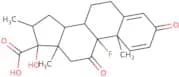
Discontinued product11-Oxo-betamethasone-17-carboxylic acid
CAS:Controlled ProductPlease enquire for more information about 11-Oxo-betamethasone-17-carboxylic acid including the price, delivery time and more detailed product information at the technical inquiry form on this page
Formula:C21H25FO5Purity:Min. 95%Molecular weight:376.4 g/molRef: 3D-EDA57810
Discontinued productAmoxicillin EP Impurity L
CAS:Amoxicillin EP Impurity L is an impurity standard for amoxicillin. It is a synthetic compound that is used to ensure the quality of amoxicillin drug products. Amoxicillin EP Impurity L has been shown to be metabolized through a number of metabolic transformations, including hydrolysis by esterases or glucuronidases, oxidation by cytochrome P450 enzymes, reduction by glutathione reductase, or conjugation with glucuronic acid. This impurity has also been shown to have anti-inflammatory properties and may be due to its inhibition of prostaglandin synthesis.
Formula:C24H29N5O7S2Purity:Min. 95%Molecular weight:563.65 g/molRef: 3D-IA180686
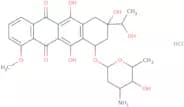
Discontinued productDaunorubicinol hydrochloride
CAS:Daunorubicin metabolite
Formula:C27H31NO10•HClPurity:Min. 95 Area-%Color and Shape:PowderMolecular weight:566 g/molRef: 3D-ID165374
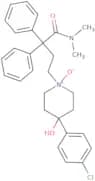
Discontinued productLoperamide N-oxide
CAS:Loperamide N-oxide is an analog of loperamide, which is commonly used as an anti-diarrheal medication. It has been shown to have potential anti-cancer properties by inducing apoptosis in cancer cells. Loperamide N-oxide has also been detected in urine samples from Chinese individuals, indicating its potential use as a biomarker for cancer diagnosis. This compound has been found to inhibit trypsin-like kinases, which are enzymes involved in cell division and proliferation. In addition, loperamide N-oxide has been shown to inhibit the growth of tumor cells and may have potential as a therapeutic agent for cancer treatment. However, it should be noted that rifampicin and other inhibitors can reduce the effectiveness of loperamide N-oxide against cancer cells. Further research is needed to fully understand the potential benefits and limitations of this compound.
Formula:C29H33ClN2O3Purity:Min. 95%Molecular weight:493 g/molRef: 3D-SIA47103
Discontinued productBrexpiprazole impurity 10
CAS:Brexpiprazole impurity 10 is a drug product that is used as an analytical reference standard for the quality control of brexpiprazole. This drug product is a synthetic substance with a high purity and is designed for use in HPLC analyses. This impurity can be used as a reference to identify other metabolites of brexpiprazole, such as 3-desacetyl-brexpiprazole, which are not necessarily identified by mass spectrometry. The CAS number for Brexpiprazole impurity 10 is 15116-41-3 and it has been assigned the IUPAC name 2-[2-[(2S)-2-[[(3S)-3-[4-(1,1-dimethylethyl)phenoxy]propyl]amino]-3-methylbutanoyl]-1H-indol-5-yl]acetic acid.
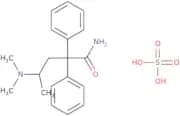
Formula:C16H15NO2Purity:Min. 95%Molecular weight:253.3 g/molAminopentamide sulfate
CAS:Aminopentamide sulfate is a pharmaceutical dosage form that is a polymeric matrix containing glycol ether, fatty acid ester, and glycol ester. It is used as a local anesthetic to numb the skin and other tissues. Aminopentamide sulfate can be administered topically or by injection into the body. It has been shown to have therapeutic effects on animals with pain-related conditions such as arthritis and neuropathy. The intramolecular hydrogen bonds in aminopentamide sulfate are thought to be formed between the carbonyl group of atropine sulfate and the hydroxyl groups of benzimidazole derivatives. These functional groups form hydrogen bonds with fatty alcohols in the matrix, which may help stabilize it.
Formula:C19H26N2O5SPurity:Min. 95%Molecular weight:394.5 g/molRef: 3D-VAA70177
Discontinued product1,4-Bis[(tetrahydro-2-furanyl)carbonyl]-piperazine
CAS:1,4-Bis[(tetrahydro-2-furanyl)carbonyl]-piperazine is a synthetic drug product. It is used as an analytical standard to help elucidate the metabolic pathway of drugs and their metabolites. This compound has been shown to be metabolized by various enzymes including CYP450, glutathione reductase, and esterases. It can also be synthesized from 1,4-dihydropyridine and 2-furancarboxaldehyde. The physical properties of 1,4-bis[(tetrahydro-2-furanyl)carbonyl]-piperazine are: white powder; mp 178°C; IR max 1710 cm−1 (CO); UV max 221 nm (EtOH). The impurities in this product are: 1-(2H)-Quinolinone (CAS No. 2467-94-1) which may have a maximum concentration
Formula:C14H22N2O4Purity:Min. 95%Molecular weight:282.34 g/molN-Desbispropyl-N-pentyl-2-methyl ropinirole
CAS:N-Desbispropyl-N-pentyl-2-methyl ropinirole is an analytical reference standard. This product is a high purity, drug development, and API impurity. It is a CAS No. 249622-60-4 and has a niche, drug product, and impurity standard. This item is for Research and Development, High purity, Drug development, API impurity, HPLC standard, CAS No. 249622-60-4, niche, drug product, Impurity standard, Metabolite, pharmacopoeia Custom synthesis of natural or synthetic origin.
Formula:C16H24N2OPurity:Min. 95%Molecular weight:260.37 g/molRef: 3D-ZJA62260
Discontinued productN-(2-Hydroxyethyl)-P,P-bisaziridinyl thiophosphamide
CAS:N-(2-Hydroxyethyl)-P,P-bisaziridinyl thiophosphamide (HEPBTP) is a metabolite of the drug product. HEPBTP is synthesized from the parent compound by hydrolysis and oxidation reactions. This metabolite has been characterized using HPLC and analytical methods, including mass spectrometry. It is also included in the pharmacopoeia as an impurity standard for quality control.
Formula:C6H15N3O4PSPurity:Min. 95%Molecular weight:256.24 g/molRef: 3D-IH180621
Discontinued product2-[[4-(2-Pyridylsulfamoyl)phenyl]azo]hydroxybenzene
CAS:2-[[4-(2-Pyridylsulfamoyl)phenyl]azo]hydroxybenzene is an impurity found in sulfasalazine. It is a metabolite that is formed by the P450 system in the liver. The metabolic process of 2-[[4-(2-Pyridylsulfamoyl)phenyl]azo]hydroxybenzene has been studied in detail and has been shown to be a major contributor to the pharmacokinetic profile of sulfasalazine. This substance also exhibits antimicrobial activity and inhibits the growth of bacteria, fungi, and viruses.
Formula:C17H14N4O3SPurity:Min. 95%Molecular weight:354.38 g/molRef: 3D-IP27340
Discontinued productFR900359
CAS:FR900359 is a drug product that is custom synthesized and characterized. It has a purity of 99% and CAS No. 107530-18-7. This product is used in metabolism studies, natural drug development, pharmacopoeia, and research and development. The impurity standard for this product is HPLC standard.
Formula:C49H75N7O15Purity:Min. 95%Molecular weight:1,002.20 g/molRef: 3D-HEA53018
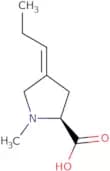
Discontinued product(trans)-4-Propyl-1-methyl-L-proline
CAS:(trans)-4-Propyl-1-methyl-L-proline is a synthetic compound that has been used in the past as an impurity standard in the synthesis of several drugs, including metaxalone and aminopyrine. It is also found to have pharmacological effects on its own and was used as a drug product for the treatment of rheumatoid arthritis. (trans)-4-Propyl-1-methyl-L-proline is not listed in any pharmacopoeia or international list of approved drugs.
Formula:C9H17NO2Purity:Min. 95%Color and Shape:White/Off-White SolidMolecular weight:171.24 g/molRef: 3D-FP27224
Discontinued productDoxorubicin Impurity 15
CAS:Doxorubicin impurity 15 is a natural product that is used as an analytical reference standard in pharmacopoeia. It has been synthesized for use in drug development and research and development, and is available as a high-purity HPLC standard. Doxorubicin impurity 15 has a CAS number of 131086-18-5.
Formula:C31H38BrNO11Purity:Min. 95%Molecular weight:680.54 g/molRef: 3D-ID163220
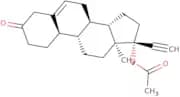
Discontinued productNorethindrone acetate impurity
CAS:Norethindrone acetate impurity is a drug product that is used in the development and research of drugs. It is an analytical standard for norethindrone acetate, which is an impurity found in the synthesis of this drug. Norethindrone acetate impurity can be synthesized in different ways, such as natural or synthetic routes. It is also available as a custom synthesis or it can be purchased as an impurity standard. This compound's CAS number is 1175129-26-6 and it has a purity level of 99%.
Formula:C22H28O3Purity:Min. 95%Color and Shape:PowderMolecular weight:340.46 g/mol


![1-[[3-Methyl-4-(2,2,2-trifluoroethoxy)-2-pyridinyl]methyl]-2-[[[3-methyl-4-(2,2,2-trifluoroethoxy)…](/_next/image/?url=https%3A%2Fstatic.cymitquimica.com%2Fproducts%2F3D%2Fthumb-webp%2FIM25689.webp&w=3840&q=75)
![1,4-Bis[(tetrahydro-2-furanyl)carbonyl]-piperazine](/_next/image/?url=https%3A%2Fstatic.cymitquimica.com%2Fproducts%2F3D%2Fthumb-webp%2FIB63853.webp&w=3840&q=75)
![2-[[4-(2-Pyridylsulfamoyl)phenyl]azo]hydroxybenzene](/_next/image/?url=https%3A%2Fstatic.cymitquimica.com%2Fproducts%2F3D%2Fthumb-webp%2FIP27340.webp&w=3840&q=75)