APIs for research and impurities
Subcategories of "APIs for research and impurities"
- Aminoacids and derivatives(12,319 products)
- Anthraquinones and derivatives(402 products)
- Benzimidazole and Imidazole Derivatives(10,390 products)
- Benzodiazepine Derivatives(326 products)
- Carbohydrates and glycoconjugates(5,046 products)
- Esters and Derivatives(42,242 products)
- Fatty Acids and Lypidic Derivatives(32,374 products)
- Flavonoids and Polyphenols(17,073 products)
- Free Radicals and Oxidant/Reducing Agents(211 products)
- Ketones and derivatives(2,399 products)
- Natural and semi-synthetic antibiotics(6,324 products)
- Nitriles and Cyano Derivatives(3,068 products)
- Nitrosamines and Derivatives(55 products)
- Nucleosides and Nucleotides(3,445 products)
- Organic Phosphates and Phosphonates(1,194 products)
- Organic Sulphonates and Sulphates(10,419 products)
- Organometallics(4,417 products)
- Others(6,269 products)
- Peptides and Proteins(3,132 products)
- Polymers and Derivatives(99 products)
- Purines and Pyrimidine Derivatives(8,898 products)
- Quinazoline and Quinoline Derivatives(65,683 products)
- Quinones and Derivatives(24,341 products)
- Salts and Derivatives of Active Pharmaceutical Ingredients (API)(81,260 products)
- Steroids and Derivatives(4,923 products)
- Sulfonamides and Derivatives(2,564 products)
- Terpenoids and Derivatives(3,835 products)
- Thiazolidinediones and Thiopyrans(2,753 products)
- β-Adrenergic Compounds(227 products)
Found 58629 products of "APIs for research and impurities"
Hydrocotarnine hydrochloride
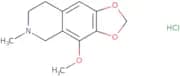
CAS:Hydrocotarnine hydrochloride is a medicinal compound that has been found to have anticancer properties. It is an inhibitor of protein kinases, which are enzymes that play a key role in regulating cell cycle progression and apoptosis. Hydrocotarnine hydrochloride has been shown to induce apoptosis in cancer cells, making it a promising candidate for the development of novel cancer therapies. This compound has also been identified as a potential inhibitor of tumor growth in Chinese medicine. In vitro studies have demonstrated that hydrocotarnine hydrochloride inhibits the proliferation of various cancer cell lines, suggesting its potential as a therapeutic agent for the treatment of cancer.
Formula:C12H16ClNO3Purity:Min. 95%Molecular weight:257.71 g/molRef: 3D-FAA98555
Discontinued productBoc-3-hydroxy-1-adamantyl-glycine
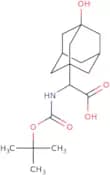
CAS:Boc-3-hydroxy-1-adamantyl-glycine is a catalytic, nucleophilic, chiral amino acid that is used in the synthesis of oximes. Boc-3-hydroxy-1-adamantyl-glycine has been shown to be an effective substitute for hydroxylamine in reductive amination reactions and can be used to synthesize some pharmaceuticals, including saxagliptin. This compound is stable under standard conditions and can be easily synthesized. It is also a powerful nucleophile that reacts with electrophiles such as chloroformates and sulfonyl chlorides.
Formula:C17H27NO5Purity:Min. 95%Molecular weight:325.4 g/molRef: 3D-JDC32139
Discontinued product1-[2-[2-Hydroxy-3-[[2-hydroxy-3-[2-(3-phenylpropanoyl)phenoxy]propyl]-propylamino]propoxy]phenyl]-3-phenylpropan-1-one
CAS:Arbidol is a drug molecule that interacts with protease enzymes. It has been shown to inhibit human erythrocyte chymotrypsin, trypsin, and elastase. Arbidol is also able to inhibit the growth of bacteria such as Staphylococcus aureus, Escherichia coli, and Pseudomonas aeruginosa. The molecular modelling of arbidol suggests that it binds to the active site of the enzyme by blocking hydrophobic pockets on the surface of the enzyme. The conformational change in the protease enzyme activates arbidol's binding site for an extended period of time. This prolonged interaction prevents substrate from binding to the catalytic site of the enzyme and inhibits its activity.
Formula:C39H45NO6Purity:Min. 95%Molecular weight:623.78 g/molRef: 3D-IP63820
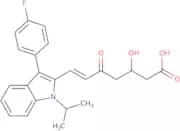
Discontinued productrac 5-Keto Fluvastatin
CAS:Rac5-Keto Fluvastatin is a synthetic, natural and custom synthesis drug product. It's CAS number is 1160169-39-0. Rac5-Keto Fluvastatin is a metabolite of fluvastatin. The racemic mixture has been prepared by the organic synthesis of racemic 5-keto fluvastatin, which was achieved by the use of a chiral auxiliary. Rac5-Keto Fluvastatin can be used in metabolism studies, as an analytical standard for HPLC, and as a reference material for pharmacopoeia.
Formula:C24H24FNO4Purity:Min. 95%Color and Shape:Yellow PowderMolecular weight:409.45 g/molRef: 3D-IK162498
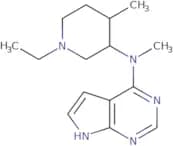
Discontinued productTofacitinib impurity 69
CAS:Please enquire for more information about Tofacitinib impurity 69 including the price, delivery time and more detailed product information at the technical inquiry form on this page
Formula:C15H23N5Purity:Min. 95%Molecular weight:273.38 g/molRef: 3D-IMD51970
Discontinued product2-[[4-(2-Pyridylsulfamoyl)phenyl]azo]hydroxybenzene
CAS:2-[[4-(2-Pyridylsulfamoyl)phenyl]azo]hydroxybenzene is an impurity found in sulfasalazine. It is a metabolite that is formed by the P450 system in the liver. The metabolic process of 2-[[4-(2-Pyridylsulfamoyl)phenyl]azo]hydroxybenzene has been studied in detail and has been shown to be a major contributor to the pharmacokinetic profile of sulfasalazine. This substance also exhibits antimicrobial activity and inhibits the growth of bacteria, fungi, and viruses.
Formula:C17H14N4O3SPurity:Min. 95%Molecular weight:354.38 g/molRef: 3D-IP27340
Discontinued productMinocycline EP Impurity H
CAS:Please enquire for more information about Minocycline EP Impurity H including the price, delivery time and more detailed product information at the technical inquiry form on this page
Formula:C23H25N3O7Purity:Min. 95%Molecular weight:455.47 g/molN-Formyl Saxagliptin
N-Formyl Saxagliptin is an analytical standard for HPLC. It is used as a drug development and API impurity in the pharmaceutical industry. It was synthesized by reacting formaldehyde with the amino acid L-glutamic acid, followed by purification to remove any other contaminants. The CAS number for this chemical is 57847-82-0.
Purity:Min. 95%Ref: 3D-IF162360
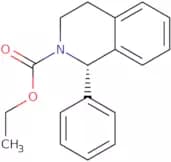
Discontinued productEthyl (S)-1-phenyl-1,2,3,4-tetrahydro-2-isoquinolinecarboxylate
CAS:Ethyl (S)-1-phenyl-1,2,3,4-tetrahydro-2-isoquinolinecarboxylate is an analytical standard used to identify impurities in drug products. It is a metabolite of the drug product and has been shown to be safe for human consumption. The compound is a synthetic chemical that is not found naturally in the environment. CAS No. 180468-42-2
Formula:C18H19NO2Purity:Min. 95%Molecular weight:281.35 g/molRef: 3D-IE71486
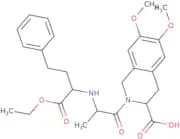
Discontinued productMoexipril-d5
CAS:Please enquire for more information about Moexipril-d5 including the price, delivery time and more detailed product information at the technical inquiry form on this page
Formula:C27H34N2O7Purity:Min. 95%Molecular weight:503.6 g/molRef: 3D-GEC92949
Discontinued product2-Amino-N-(2-benzoyl-4-chlorophenyl)-N-methylacetamide
CAS:2-Amino-N-(2-benzoyl-4-chlorophenyl)-N-methylacetamide is an impurity in the drug product, which is a metabolite of the active drug. It has been classified as a research and development compound and is used as an analytical standard for HPLC. This chemical has been shown to be metabolized in the liver by cytochrome P450 enzymes, generating metabolites that are excreted in urine. 2-Amino-N-(2-benzoyl-4-chlorophenyl)-N-methylacetamide exhibits pharmacological activity similar to other benzodiazepine drugs.
Formula:C16H15ClN2O2Purity:Min. 95%Molecular weight:302.75 g/molRef: 3D-LBA02094
Discontinued productDioctyl carbonate
CAS:Dioctyl carbonate is a pharmaceutical preparation used to treat skin conditions. It is a fatty acid ester of carbonic and carbonyl groups in which the two esters are in the same molecule. Dioctyl carbonate is a reaction product obtained by reacting an inorganic acid, such as hydrochloric acid or sulfuric acid, with an alcohol containing two hydroxyl groups and one double bond. This reaction may be facilitated by heating. The film-forming polymer may be polyvinylpyrrolidone, polyvinyl alcohol, or polyacrylic acid. Dioctyl carbonate has been shown to stimulate colony-stimulating factor production and inhibit the proliferation of human epidermal keratinocytes.
Formula:C17H34O3Purity:Min. 95%Color and Shape:Clear LiquidMolecular weight:286.4 g/mol5-(4-Methoxyphenyl)-3-methyl-1-oxa-3-azaspiro[5.5]undecane
CAS:5-(4-Methoxyphenyl)-3-methyl-1-oxa-3-azaspiro[5.5]undecane is an analytical standard used in HPLC and GC. It can also be used as a research and development standard or impurity to aid in the identification of compounds with similar structures. 5-(4-Methoxyphenyl)-3-methyl-1-oxa-3-azaspiro[5.5]undecane has a purity of 99% and a melting point of 80°C. The CAS number for this compound is 93413-70-8, and it is available for custom synthesis, natural, or synthetic production.
Formula:C17H25NO2Purity:Min. 95%Molecular weight:275.39 g/molOlsalazine sodium EP impurity F
Olsalazine sodium EP impurity F
CAS No.:
Natural: Yes
API Impurity: Yes
Custom Synthesis: Yes
Impurity Standard: Yes
Synthetic: Yes
Drug Development: Yes
Research and Development: Yes
Niche Product: Yes
HPLC Standard: Yes
High Purity Product: Yes
Pharmacopoeia Product: NoFormula:C21H14N2O9Purity:Min. 95%Molecular weight:438.34 g/molDesisobutyl-N-butyl bortezomib
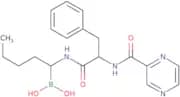
CAS:Desisobutyl-N-butyl bortezomib is a drug product that has been custom synthesized for the purpose of research and development. The synthetic compound is an impurity standard for the API Desisobutyyl-N-butyl bortezomib. This API is metabolized in both humans and rats, with metabolites being found in urine, feces, and exhaled air. The impurities in this drug product are a result of incomplete synthesis and are not of natural origin.
Formula:C19H25BN4O4Purity:Min. 95%Molecular weight:384.2 g/molRef: 3D-EUB01135
Discontinued productErlotinib-3-vinyl hydrochloride
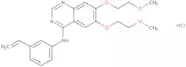
CAS:Erlotinib-3-vinyl hydrochloride is a drug product that is used in the treatment of cancer, including non-small cell lung cancer. It is an impurity standard for HPLC and analytical testing. Erlotinib-3-vinyl hydrochloride is also used as an API impurity and metabolite in metabolism studies. Erlotinib-3-vinyl hydrochloride can be synthesized from 4-(4'-vinylphenoxy)butanal, which is a natural compound obtained from plants like apple trees. This synthetic process can be done by the reduction of 4-(4'-vinylphenoxy)butanal with sodium borohydride, followed by reaction with vinyl chloride. The compound is also found as a metabolite in humans after oral administration of erlotinib, which has been shown to inhibit protein synthesis and DNA synthesis.
Formula:C22H26ClN3O4Purity:Min. 95%Molecular weight:431.9 g/molRef: 3D-ZPC29438
Discontinued productValganciclovir related compound G
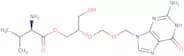
CAS:Valganciclovir related compound G is a drug product. It has been synthesized in our lab. Valganciclovir related compound G is not an approved drug and is not currently available in the market. Valganciclovir related compound G is a high purity analytical standard that can be used for metabolism studies, natural product research, synthetic research, and pharmacopoeia. Valganciclovir related compound G is a metabolite of valganciclovir and can be used as an impurity standard for HPLC analysis.
Formula:C15H24N6O6Purity:Min. 95%Molecular weight:384.39 g/molVandetanib N-oxide
CAS:Vandetanib N-oxide is a drug product that is custom synthesized for research and development purposes. It has been shown to have high purity, analytical, and natural properties. Vandetanib N-oxide can be used as a metabolite or impurity standard in pharmacopoeias, such as the USP. The compound also has niche use in drug development and metabolism studies.
Formula:C22H24BrFN4O3Purity:Min. 95%Molecular weight:491.40 g/molRef: 3D-XWC03022
Discontinued productMethyl 2-sulfinobenzoate
CAS:Methyl 2-sulfinobenzoate (MSB) is an analytical, research and development, and drug development impurity that is used as an API impurity and HPLC standard. It is a metabolite of sulfadiazine, which belongs to the family of drugs known as sulfonamides. MSB has been shown to have pharmacopoeia activity for the treatment of bacterial infections. It is a natural product found in plants, such as garlic and onion, or it can be synthesized from benzene and sulfur chloride.
Formula:C8H8O4SPurity:Min. 95%Molecular weight:200.21 g/molAzelastine N-oxide, mixture of diastereomers
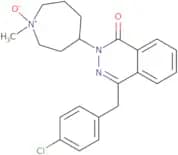
CAS:Azelastine N-oxide is a racemic form of azelastine, an antihistamine. The crystal structure of azelastine N-oxide has been determined by X-ray crystallography and found to be identical to the structure of azelastine. Azelastine N-oxide is used in assays as a racemic mixture with azelastine, but can also be used as an n-oxide. Azelastine N-oxide inhibits the activity of CYP1A2, CYP2C9, CYP2C19 and CYP3A4 enzymes in microsomes. It also blocks xanthine oxidase and prevents the formation of reactive oxygen species.Formula:C22H24ClN3O2Purity:Min. 95%Molecular weight:397.9 g/molRef: 3D-QAB27988
Discontinued product

![1-[2-[2-Hydroxy-3-[[2-hydroxy-3-[2-(3-phenylpropanoyl)phenoxy]propyl]-propylamino]propoxy]phenyl]-…](/_next/image/?url=https%3A%2Fstatic.cymitquimica.com%2Fproducts%2F3D%2Fthumb-webp%2FIP63820.webp&w=3840&q=75)
![2-[[4-(2-Pyridylsulfamoyl)phenyl]azo]hydroxybenzene](/_next/image/?url=https%3A%2Fstatic.cymitquimica.com%2Fproducts%2F3D%2Fthumb-webp%2FIP27340.webp&w=3840&q=75)

![5-(4-Methoxyphenyl)-3-methyl-1-oxa-3-azaspiro[5.5]undecane](/_next/image/?url=https%3A%2Fstatic.cymitquimica.com%2Fproducts%2F3D%2Fthumb-webp%2FIM28679.webp&w=3840&q=75)