


APIs for research and impurities
Subcategories of "APIs for research and impurities"
- Aminoacids and derivatives(12,331 products)
- Anthraquinones and derivatives(405 products)
- Benzimidazole and Imidazole Derivatives(10,444 products)
- Benzodiazepine Derivatives(335 products)
- Carbohydrates and glycoconjugates(5,017 products)
- Esters and Derivatives(42,242 products)
- Fatty Acids and Lypidic Derivatives(32,403 products)
- Flavonoids and Polyphenols(17,087 products)
- Free Radicals and Oxidant/Reducing Agents(213 products)
- Ketones and derivatives(2,404 products)
- Natural and semi-synthetic antibiotics(6,388 products)
- Nitriles and Cyano Derivatives(3,067 products)
- Nitrosamines and Derivatives(55 products)
- Nucleosides and Nucleotides(3,433 products)
- Organic Phosphates and Phosphonates(1,202 products)
- Organic Sulphonates and Sulphates(10,435 products)
- Organometallics(4,422 products)
- Others(6,294 products)
- Peptides and Proteins(3,154 products)
- Polymers and Derivatives(100 products)
- Purines and Pyrimidine Derivatives(8,950 products)
- Quinazoline and Quinoline Derivatives(66,011 products)
- Quinones and Derivatives(24,351 products)
- Salts and Derivatives of Active Pharmaceutical Ingredients (API)(79,811 products)
- Steroids and Derivatives(4,977 products)
- Sulfonamides and Derivatives(2,596 products)
- Terpenoids and Derivatives(3,846 products)
- Thiazolidinediones and Thiopyrans(2,752 products)
- β-Adrenergic Compounds(230 products)
Found 57078 products of "APIs for research and impurities"
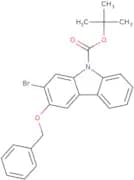
3-Benzyloxy-2-bromo-9H-carbazole N-carboxylic acid tert-butyl ester
CAS:This compound is an analytical reference standard that is used in drug development, research and analysis. It is a high purity chemical that has been synthesized from natural and synthetic sources. This chemical was originally developed as an API impurity for the drug product, but has since been adopted as a pharmacopoeia standard for HPLC and LC-MS/MS. The CAS number for this compound is 1798043-12-5.Formula:C24H22BrNO3Purity:Min. 95%Molecular weight:452.3 g/molAzithromycin impurity J
CAS:Azithromycin impurity J, also known as Azithromycin P-Toluenesulfonate, is an impurity of the drug azithromycin. It is an antibiotic that has been shown to be effective in the treatment of protozoal infections, cancer and parasites. Azithromycin impurity J has been shown to bind to DNA gyrase and topoisomerase IV enzymes, which are necessary for bacterial replication. Azithromycin impurity J is a protozoan inhibitor that acts by blocking the synthesis of RNA and DNA. This impurity binds to DNA gyrase and topoisomerase IV enzymes, which are necessary for bacterial replication. Azithromycin impurity J is a protozoan inhibitor that acts by blocking the synthesis of RNA and DNA.
Formula:C30H58N2O9Purity:Min. 95%Color and Shape:Off-White PowderMolecular weight:590.79 g/molDeltan-benzyloxycarbonyl aliskiren
CAS:Deltan-benzyloxycarbonyl aliskiren is a drug product that is custom synthesized for research and development purposes. It is an analytical standard with high purity and quality, which has been studied in metabolism studies. The natural drug product is metabolized to form the metabolites, which are impurities. Metabolites of Deltan-benzyloxycarbonyl aliskiren are also available as HPLC standards, which are used as reference materials in pharmacopoeia. This compound can be used in niche areas of drug development, such as pharmaceutical research and development.
Formula:C38H59N3O8Purity:Min. 95%Molecular weight:685.90 g/molTazarotene sulfoxide
CAS:Tazarotene is a synthetic retinoid that is used in the treatment of psoriasis and acne vulgaris. Tazarotene sulfoxide is the active metabolite of tazarotene. It has been shown to have an acidic pH, and it can be photolysed by exposure to light. Tazarotene sulfoxide has been shown to be reproducible and reliable for analytical purposes and can be used as an additive for medicines.Formula:C21H21NO3SPurity:Min. 95%Molecular weight:367.5 g/mol17-o-(Acetyl-d3)-6-methylprednisolone
CAS:Controlled Product17-o-(Acetyl-d3)-6-methylprednisolone is a drug product that belongs to the group of corticosteroids. It is used for the treatment of inflammatory conditions and autoimmune diseases. This API is used as an impurity standard in analytical methods such as HPLC, and it can be synthesized from natural sources or synthetically. 17-o-(Acetyl-d3)-6-methylprednisolone can also be used in R&D for the development of drugs targeting niche markets, such as those with high purity requirements.
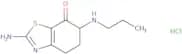
Formula:C24H29D3O6Purity:Min. 95%Molecular weight:419.53 g/molrac-7-Oxo-pramipexole hydrochloride
CAS:Please enquire for more information about rac-7-Oxo-pramipexole hydrochloride including the price, delivery time and more detailed product information at the technical inquiry form on this page
Formula:C10H16ClN3OSPurity:Min. 95%Molecular weight:261.77 g/mol(R)-L 888607
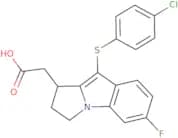
CAS:Please enquire for more information about (R)-L 888607 including the price, delivery time and more detailed product information at the technical inquiry form on this pageFormula:C19H15ClFNO2SPurity:Min. 95%Molecular weight:375.8 g/molL-Piperacillin
Please enquire for more information about L-Piperacillin including the price, delivery time and more detailed product information at the technical inquiry form on this pageFormula:C23H27N5O7SPurity:Min. 95%Molecular weight:517.56 g/mol1-[4-(4-Amino-6,7-dimethoxy-2-quinazolinyl)-1-piperazinyl]-5-hydroxy-1-pentanone
CAS:1-[4-(4-Amino-6,7-dimethoxy-2-quinazolinyl)-1-piperazinyl]-5-hydroxy-1-pentanone is a drug product that is used as an HPLC standard. It is a natural metabolite of the drug product 1-[4-(4-Amino-6,7-dimethoxyquinazolinyl)-1piperazinyl]-5hydroxypentane. The synthesis of this compound has been reported in the literature.
The impurity content of this compound meets the pharmacopoeia requirements for an analytical reference standard for API impurities.Formula:C19H27N5O4Purity:Min. 95%Molecular weight:389.45 g/mol3’-Hydroxytyrosol 3’-glucuronide
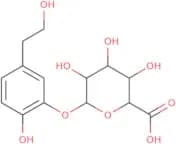
CAS:3’-Hydroxytyrosol 3’-glucuronide is a metabolite of tyrosol that has been found in human urine. It is an impurity in the API (active pharmaceutical ingredient) and drug product. The analytical purity of this compound should be at least 98%. This substance can be synthesized from tyrosol and 3'-hydroxy-D-glucuronic acid, according to the following chemical equation: 3' - Hydroxytyrosol + 3'-Hydroxy-D-Glucuronic Acid → 3' - Hydroxytyrosol 3' - Glucuronide
Formula:C14H18O9Purity:Min. 95%Molecular weight:330.29 g/molUrea nitrate
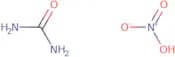
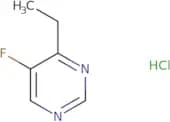
CAS:Urea nitrate is an analog of urea that has been shown to have potent anticancer activity. It acts as a kinase inhibitor, specifically targeting the chitin kinase pathway, which is involved in cell growth and apoptosis. Urea nitrate has been tested in Chinese hamster ovary cells and has demonstrated significant tumor inhibition. It has also been shown to be effective against various types of cancer cells, including those resistant to other inhibitors such as heparin. Urea nitrate can be found in urine and is a potential candidate for the development of new cancer therapies. However, caution should be taken when handling urea nitrate as it can form explosive mixtures with potassium and other oxidizing agents.Formula:CH4N2O·HNO3Purity:Min. 95%Molecular weight:123.07 g/mol4-Ethyl-5-fluoropyrimidine hydrochloride
CAS:Please enquire for more information about 4-Ethyl-5-fluoropyrimidine hydrochloride including the price, delivery time and more detailed product information at the technical inquiry form on this pageFormula:C6H8ClFN2Purity:Min. 95%Molecular weight:162.59 g/mol3-[2-[(5-Ethyl-2-pyridinyl)ethoxy]phenyl] Pioglitazone Impurity
CAS:3-[2-[(5-Ethyl-2-pyridinyl)ethoxy]phenyl] Pioglitazone Impurity is a drug product that is used for analytical purposes and as a research and development standard. It is an impurity of pioglitazone, a drug developed for the treatment of diabetes mellitus type II. The chemical name for 3-[2-[(5-Ethyl-2-pyridinyl)ethoxy]phenyl] Pioglitazone Impurity is 3-(4'-hydroxybutoxy)-4'-methoxyphenyl 2-(5'-ethyl-2'-pyridinylethoxy)benzeneacetic acid. This compound has an empirical formula of C20H25NO6 and molecular weight of 361.39 g/mol. The CAS number is 952187-99-4.Formula:C34H35N3O4SPurity:Min. 95%Molecular weight:581.73 g/molVarioxepine A
CAS:Varioxepine A is a research and development drug that has been proven to be a high purity, pharmacopoeia grade, custom synthesis, and synthetic. It is being developed as an impurity standard for analytical purposes. Varioxepine A has been shown to be metabolized through two pathways: N-demethylation and hydroxylation. The metabolites of this compound have not been fully characterized.
Formula:C26H29N3O5Purity:Min. 95%Molecular weight:463.50 g/molAlfuzosin hydrochloride EP Impurity F hydrochloride
CAS:Alfuzosin EP Impurity F hydrochloride is a drug product that is used as an analytical standard for Alfuzosin hydrochloride. It is a natural, synthetic, and impurity standard that exhibits similar chromatographic properties to the API. The CAS number of this impurity is 19216-68-3. This product has a niche market because it is used in metabolism studies. It also exhibits high purity and pharmacopoeia grade quality.
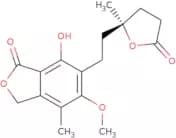
Formula:C12H16N4O2•HClPurity:Min. 95%Molecular weight:284.74 g/molMycophenolic acid lactone - EP
CAS:Mycophenolic acid lactone (MPA) is an analytical standard for HPLC, used as a reference material in drug development. It is also a metabolite of mycophenolate mofetil and mycophenolic acid, which are used to treat immunodeficiency disorders. MPA is not active by itself but it can be converted into the active form, mycophenolic acid, by esterases. MPA has been shown to have anti-inflammatory activities and can inhibit the production of prostaglandins in animals. Mycophenolic acid lactone is a metabolite of drugs that are used for the treatment of immunodeficiency disorders, such as mycophenolate mofetil and mycophenolic acid. The chemical structure of MPA is closely related to that of these drugs and it has been shown to have similar anti-inflammatory properties in animal studies.Formula:C17H20O6Purity:Min. 95%Molecular weight:320.34 g/mol1,3-Dihydro-6-methylfuro[3,4-c]pyridin-7-ol
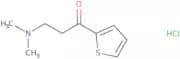
CAS:1,3-Dihydro-6-methylfuro[3,4-c]pyridin-7-ol is a compound that contains impurities such as fatty acids and uridine. It has been found to be an inhibitor of α-mangostin adduct formation with fatty acids. Additionally, it has been shown to inhibit the activity of GSK-3β, an enzyme involved in various cellular processes. This compound also exhibits inhibitory effects on monascus and safranal, two enzymes involved in the production of certain compounds. Furthermore, it has been found to inhibit calpain, an enzyme responsible for protein degradation. The compound can be used in various research applications involving electrode modification and polylysine immobilization. It may also have potential interactions with other drugs such as cefdinir.Formula:C8H9NO2Purity:Min. 95%Molecular weight:151.16 g/mol3-(Dimethylamino)-1-(2-thienyl)propanone hydrochloride
CAS:3-(Dimethylamino)-1-(2-thienyl)propanone hydrochloride is a sulfoxide that is used as a solvent. It has been used in the synthesis of benzylsulfoxides and solvents for the manufacture of pharmaceuticals. 3-(Dimethylamino)-1-(2-thienyl)propanone hydrochloride is also a potent compound, which is structurally similar to benzene but with an additional methyl group. 3-(Dimethylamino)-1-(2-thienyl)propanone hydrochloride has been used in the synthesis of melphalan and elemental analysis. The chloride group on its structure makes it soluble in water and organic solvents such as acetonitrile. 3-(Dimethylamino)-1-(2-thienyl)propanone hydrochloride can be synthesized by reacting nitric acid with 2-aminothiophenol and dimethylanilFormula:C9H14ClNOSPurity:Min. 95%Molecular weight:219.73 g/molPteroic acid, min95%
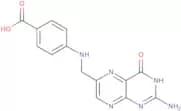
CAS:Pteroic acid is a naturally occurring substance found in plants and animals. It has inhibitory activities against enzymes such as butyrate kinase, acetyl-CoA synthetase, and glutamate dehydrogenase. Pteroic acid is used to synthesize quinoxalines, which are used for the treatment of cancer. Pteroic acid also inhibits cell growth by inhibiting protein synthesis. This is done by conjugating with amino acids and inhibiting their uptake into the ribosome. The inhibition of glutamate dehydrogenase may be due to its ability to reduce levels of glutathione, which is an inhibitor of this enzyme.
Formula:C14H12N6O3Purity:Min. 95%Color and Shape:Slightly Yellow PowderMolecular weight:312.28 g/mol7-Hydroxydibenz[b,f][1,4]oxazepin-11(10H)-one
CAS:Please enquire for more information about 7-Hydroxydibenz[b,f][1,4]oxazepin-11(10H)-one including the price, delivery time and more detailed product information at the technical inquiry form on this page
Formula:C13H9NO3Purity:Min. 95%Molecular weight:227.21 g/mol



![1-[4-(4-Amino-6,7-dimethoxy-2-quinazolinyl)-1-piperazinyl]-5-hydroxy-1-pentanone](/_next/image/?url=https%3A%2Fstatic.cymitquimica.com%2Fproducts%2F3D%2Fthumb-webp%2FIA63845.webp&w=3840&q=75)
![3-[2-[(5-Ethyl-2-pyridinyl)ethoxy]phenyl] Pioglitazone Impurity](/_next/image/?url=https%3A%2Fstatic.cymitquimica.com%2Fproducts%2F3D%2Fthumb-webp%2FIE165312.webp&w=3840&q=75)

![1,3-Dihydro-6-methylfuro[3,4-c]pyridin-7-ol](/_next/image/?url=https%3A%2Fstatic.cymitquimica.com%2Fproducts%2F3D%2Fthumb-webp%2FID27319.webp&w=3840&q=75)
![7-Hydroxydibenz[b,f][1,4]oxazepin-11(10H)-one](/_next/image/?url=https%3A%2Fstatic.cymitquimica.com%2Fproducts%2F3D%2Fthumb-webp%2FKCA28711.webp&w=3840&q=75)