APIs for research and impurities
Subcategories of "APIs for research and impurities"
- Aminoacids and derivatives(12,331 products)
- Anthraquinones and derivatives(405 products)
- Benzimidazole and Imidazole Derivatives(10,444 products)
- Benzodiazepine Derivatives(335 products)
- Carbohydrates and glycoconjugates(5,017 products)
- Esters and Derivatives(42,242 products)
- Fatty Acids and Lypidic Derivatives(32,403 products)
- Flavonoids and Polyphenols(17,087 products)
- Free Radicals and Oxidant/Reducing Agents(213 products)
- Ketones and derivatives(2,404 products)
- Natural and semi-synthetic antibiotics(6,388 products)
- Nitriles and Cyano Derivatives(3,067 products)
- Nitrosamines and Derivatives(55 products)
- Nucleosides and Nucleotides(3,433 products)
- Organic Phosphates and Phosphonates(1,202 products)
- Organic Sulphonates and Sulphates(10,435 products)
- Organometallics(4,422 products)
- Others(6,294 products)
- Peptides and Proteins(3,154 products)
- Polymers and Derivatives(100 products)
- Purines and Pyrimidine Derivatives(8,950 products)
- Quinazoline and Quinoline Derivatives(66,011 products)
- Quinones and Derivatives(24,351 products)
- Salts and Derivatives of Active Pharmaceutical Ingredients (API)(79,811 products)
- Steroids and Derivatives(4,977 products)
- Sulfonamides and Derivatives(2,596 products)
- Terpenoids and Derivatives(3,846 products)
- Thiazolidinediones and Thiopyrans(2,752 products)
- β-Adrenergic Compounds(230 products)
Found 57078 products of "APIs for research and impurities"
L-Piperacillin
Please enquire for more information about L-Piperacillin including the price, delivery time and more detailed product information at the technical inquiry form on this pageFormula:C23H27N5O7SPurity:Min. 95%Molecular weight:517.56 g/mol2-Amino-N-(2-benzoyl-4-chlorophenyl)-N-methylacetamide
CAS:2-Amino-N-(2-benzoyl-4-chlorophenyl)-N-methylacetamide is an impurity in the drug product, which is a metabolite of the active drug. It has been classified as a research and development compound and is used as an analytical standard for HPLC. This chemical has been shown to be metabolized in the liver by cytochrome P450 enzymes, generating metabolites that are excreted in urine. 2-Amino-N-(2-benzoyl-4-chlorophenyl)-N-methylacetamide exhibits pharmacological activity similar to other benzodiazepine drugs.
Formula:C16H15ClN2O2Purity:Min. 95%Molecular weight:302.75 g/mol4-Acetyloxy-N-despropyl N-tert-butyloxycarbonyl ropivacaine
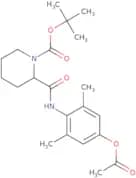
CAS:Please enquire for more information about 4-Acetyloxy-N-despropyl N-tert-butyloxycarbonyl ropivacaine including the price, delivery time and more detailed product information at the technical inquiry form on this pageFormula:C21H30N2O5Purity:Min. 95%Molecular weight:390.5 g/molPSB-1584
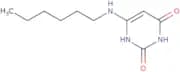
CAS:PSB-1584 is a medicinal analog that acts as an inhibitor of Chinese hamster ovary (CHO) cell tumor kinase (CHK). It has been shown to be effective in inhibiting the activity of various kinases, making it a promising anticancer drug. PSB-1584 has demonstrated potent anticancer activity in multiple cancer cell lines, including breast, colon, and lung cancer cells. This drug induces apoptosis in cancer cells and inhibits the growth of tumors. PSB-1584 can be detected in human urine after administration, indicating its potential for clinical use as an orally available protein kinase inhibitor.
Formula:C10H17N3O2Purity:Min. 95%Molecular weight:211.26 g/molN,N'-Dimethyl-N,N'-bis(2-pyridylmethyl)ethane-1,2-diamine
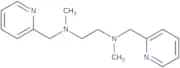
CAS:The labile character of N,N'-dimethyl-N,N'-bis(2-pyridylmethyl)ethane-1,2-diamine (DMPD) is due to its high reactivity with peroxide. This chemical reacts with the peroxide molecule to form an unstable intermediate compound that decomposes into two molecules of water and one molecule of hydrogen peroxide. DMPD is also a ligand for many transition metals and has been shown to be a strong electron donor in intramolecular coupling reactions. The catalytic activity of DMPD has been studied extensively using density functional theory and experiments. These studies have shown that DMPD catalyzes the oxidation of hydrocarbons by hydrogen peroxide in the presence of nickel catalyst.Formula:C16H22N4Purity:Min. 95%Molecular weight:270.37 g/molMetformin EP Impurity B Dinitrate
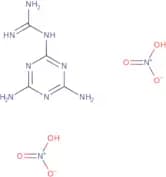
CAS:Metformin EP Impurity B Dinitrate is a metabolite of metformin. Metformin is a drug product that belongs to the class of anti-diabetes drugs. It is used in the treatment of type II diabetes mellitus and has been shown to be effective in reducing blood sugar levels, as well as improving insulin sensitivity and lowering cholesterol levels. Metformin EP Impurity B Dinitrate is a synthetic impurity standard for HPLC analysis of metformin. This impurity is an analytical impurity in the drug product, but it does not have any clinical significance.Formula:C4H8N8·2HNO3Purity:Min. 95%Molecular weight:294.19 g/mol5-(4-Methoxyphenyl)-3-methyl-1-oxa-3-azaspiro[5.5]undecane
CAS:5-(4-Methoxyphenyl)-3-methyl-1-oxa-3-azaspiro[5.5]undecane is an analytical standard used in HPLC and GC. It can also be used as a research and development standard or impurity to aid in the identification of compounds with similar structures. 5-(4-Methoxyphenyl)-3-methyl-1-oxa-3-azaspiro[5.5]undecane has a purity of 99% and a melting point of 80°C. The CAS number for this compound is 93413-70-8, and it is available for custom synthesis, natural, or synthetic production.
Formula:C17H25NO2Purity:Min. 95%Molecular weight:275.39 g/molVarioxepine A
CAS:Varioxepine A is a research and development drug that has been proven to be a high purity, pharmacopoeia grade, custom synthesis, and synthetic. It is being developed as an impurity standard for analytical purposes. Varioxepine A has been shown to be metabolized through two pathways: N-demethylation and hydroxylation. The metabolites of this compound have not been fully characterized.
Formula:C26H29N3O5Purity:Min. 95%Molecular weight:463.50 g/mol3,5-Bis[2-[[[2-[(aminoiminomethyl)amino]thiazol-4-yl]methyl]sulphanyl]ethyl]-4H-1,2,4,6-thiatriazine-1,1-dioxide
CAS:Famotidine is a pharmaceutical agent that belongs to the class of H2-receptor antagonists. It is used for the treatment of peptic ulcers and gastroesophageal reflux disease. Famotidine inhibits gastric acid secretion by blocking the H2-receptors in the parietal cells in the stomach. There are two major impurities, 4-amino-N-[(4-[[[2-(aminosulphonyl)thiazol-4-yl]methyl]sulphanyl]ethyl]-3,5-bis[[2-[(aminoiminomethyl)amino]thiazol-4-yl]methyl]sulphanyl]ethyl]-1,2,4,6-thiatriazine 1,1 dioxide and 2-[(aminoiminomethyl)amino]-N-[(4-[[2-(aminosulphonyl)thiazol-4-ylFormula:C16H23N11O2S5Purity:Min. 95%Molecular weight:561.76 g/molSacubitril impurity 3
CAS:Sacubitril impurity 3 is a custom synthesis that is available in high purity. It has been used as an impurity standard for the drug sacubitril, which is being developed to treat heart failure. Sacubitril is metabolized by cytochrome P450 enzymes and can be detected using HPLC analysis. Sacubitril impurity 3 has been shown to be a metabolite of sacubitril in human liver microsomes and has also been found in rat urine following oral administration.
Formula:C18H19NOPurity:Min. 95%Molecular weight:265.30 g/molDecyclohexanol-ethoxycarbonyl-o-desmethyl venlafaxine
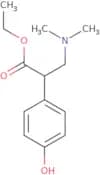
CAS:Please enquire for more information about Decyclohexanol-ethoxycarbonyl-o-desmethyl venlafaxine including the price, delivery time and more detailed product information at the technical inquiry form on this page
Formula:C13H19NO3Purity:Min. 95%Molecular weight:237.29 g/mol2,4-Diamino-7-pteridinemethanol
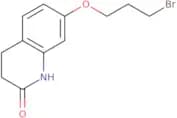
CAS:2,4-Diamino-7-pteridinemethanol (2,4-DPPM) is a drug product and an impurity found in the synthesis of 2,4-diamino-7-(2H)-pteridinone. 2,4-DPPM is a synthetic product that can be used as an analytical standard for the determination of aminopyrine in pharmaceuticals and other organic compounds. This compound has been used in pharmacological studies to investigate its effects on various enzymes associated with metabolism. It has also been used as an impurity standard for HPLC analysis of aminopyrine.Formula:C7H8N6OPurity:Min. 95%Molecular weight:192.18 g/mol7-(3-Bromopropoxy)-3,4-dihydrocarbostyril
CAS:7-(3-Bromopropoxy)-3,4-dihydrocarbostyril is a white crystalline powder that is soluble in ethanol and ether. It is used as an analytical standard in HPLC or GC, as well as in the development of drugs. 7-(3-Bromopropoxy)-3,4-dihydrocarbostyril has a purity of 99% and is available for custom synthesis with a minimum order quantity of 50 grams. This compound can be synthesized from natural or synthetic sources.Formula:C12H14BrNO2Purity:Min. 95%Molecular weight:284.15 g/mol(S)-4-(2-Methylpropyl)-2-pyrrolidinone
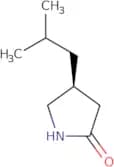
CAS:Controlled Product(S)-4-(2-Methylpropyl)-2-pyrrolidinone is a lactam that has been synthesized in the laboratory. It is an organic solvent that is used in the synthesis of other compounds. The compound has a potential for producing impurities, such as isopropyl and phosphite, during synthesis. (S)-4-(2-Methylpropyl)-2-pyrrolidinone can be synthesized by reacting 2-methylpropionic acid with one equivalent of methylamine. This reaction takes place in an organic solvent and requires kinetic control to avoid side reactions.
Formula:C8H15NOPurity:Min. 95%Color and Shape:PowderMolecular weight:141.21 g/molcis-Tadalafil
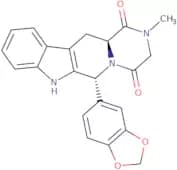
CAS:Cis-Tadalafil is a potent inhibitor of phosphodiesterase 5, which is used to treat erectile dysfunction (ED) and primary pulmonary hypertension (PPH). It works by increasing blood flow to the penis, allowing men with ED to achieve and maintain an erection. Cis-Tadalafil is also used to treat symptoms of prostatic hyperplasia (enlarged prostate) in men. This drug has been shown to be effective in treating PPH by reducing pulmonary arterial pressure and improving exercise capacity. Cis-Tadalafil belongs to the carboline class of drugs and is a phosphodiesterase 5 inhibitor that selectively inhibits cGMP-specific phosphodiesterase type 5 (PDE5). This drug has been shown to be highly effective in treating both ED and PPH with minimal side effects.
Formula:C22H19N3O4Purity:Min. 95%Color and Shape:White/Off-White SolidMolecular weight:389.4 g/molDerquantel
CAS:nicotinic acetylcholine receptor antagonistFormula:C28H37N3O4Purity:98%Color and Shape:SolidMolecular weight:479.613,5-Diiodo-4’-O-methyl Thyroacetic Acid Ethyl Ester
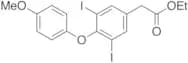
CAS:Applications 3,5-Diiodo-4’-O-methyl Thyroacetic Acid Ethyl Ester is a derivative of 3,5-Diiodo Thyroacetic Acid (D455140), the acetic acid analog of Thyroxine (T425601). It is a reactant in the preparation of bifunctional thyrointegrin inhibitors, thyroxine (T425601) and triiodothyronine (T795380).
References Bridoux, A. et al.: J. Enz. Inh. Med. Chem., 26, 871 (2011); Wilkinson, J.: Biochem. J., 63, 601 (1956); Wilkinson, J.: Chem. Ind., 1352 (1955)Formula:C17H16I2O4Color and Shape:White SolidMolecular weight:538.124-Deschloro-2-Chloro Chlorhexidine Hydrochloride
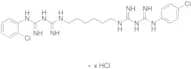
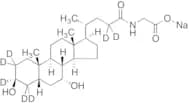
Controlled ProductFormula:C22H30Cl2N10·x(HCl)Color and Shape:NeatMolecular weight:505.45 + x(36.46)epi-Glycochenodeoxycholic Acid Sodium Salt-d7
CAS:Controlled ProductApplications epi-Glycochenodeoxycholic Acid Sodium Salt-d7 is a labelled epimer analogue of Glycochenodeoxycholic Acid Sodium Salt (G641255), which is a bile salt formed in the liver from chenodeoxycholate and glycine. It acts as a detergent to solubilize fats for absorption and is itself absorbed. It is a cholagogue and choleretic.
References Ollila, F., et al.: Langmuir, 17, 7107 (2001); Uekama, K., et al.: Chem. Pharm. Bull., 52, 900 (2004); Tongiani, S., et al.: J. Pharm. Sci., 94, 2380 (2005);Formula:C26D7H35NNaO5Color and Shape:NeatMolecular weight:478.6482',3'-Di-O-acetyl-5'-deoxy-5-fluorocytidine
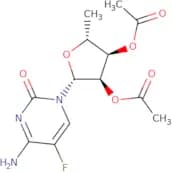
CAS:2',3'-Di-O-acetyl-5'-deoxy-5-fluorocytidine is a cytosine analog that is used as an industrial chemical. It is prepared by the reaction of 5'-deoxycytidine with acetic anhydride in the presence of sodium bicarbonate, followed by a purification procedure. 2',3'-Di-O-acetyl-5'-deoxy-5-fluorocytidine reacts with toluene and trifluoromethanesulfonic acid to form 2',3'-di-O-acetyl 5'-deoxyfluorocytidine. This compound can be converted to 5'-deoxyfluorocytosine by heating in the presence of sodium tetrachloride. The yield for this process is high.
Formula:C13H16FN3O6Purity:Min. 95%Molecular weight:329.29 g/mol


![5-(4-Methoxyphenyl)-3-methyl-1-oxa-3-azaspiro[5.5]undecane](/_next/image/?url=https%3A%2Fstatic.cymitquimica.com%2Fproducts%2F3D%2Fthumb-webp%2FIM28679.webp&w=3840&q=75)
![3,5-Bis[2-[[[2-[(aminoiminomethyl)amino]thiazol-4-yl]methyl]sulphanyl]ethyl]-4H-1,2,4,6-thiatriazi…](/_next/image/?url=https%3A%2Fstatic.cymitquimica.com%2Fproducts%2F3D%2Fthumb-webp%2FIB58080.webp&w=3840&q=75)