


APIs for research and impurities
Subcategories of "APIs for research and impurities"
- Aminoacids and derivatives(12,335 products)
- Anthraquinones and derivatives(405 products)
- Benzimidazole and Imidazole Derivatives(10,456 products)
- Benzodiazepine Derivatives(334 products)
- Carbohydrates and glycoconjugates(5,047 products)
- Esters and Derivatives(42,252 products)
- Fatty Acids and Lypidic Derivatives(32,417 products)
- Flavonoids and Polyphenols(17,085 products)
- Free Radicals and Oxidant/Reducing Agents(213 products)
- Ketones and derivatives(2,402 products)
- Natural and semi-synthetic antibiotics(6,395 products)
- Nitriles and Cyano Derivatives(3,068 products)
- Nitrosamines and Derivatives(55 products)
- Nucleosides and Nucleotides(3,486 products)
- Organic Phosphates and Phosphonates(1,201 products)
- Organic Sulphonates and Sulphates(10,436 products)
- Organometallics(4,421 products)
- Others(6,310 products)
- Peptides and Proteins(3,149 products)
- Polymers and Derivatives(100 products)
- Purines and Pyrimidine Derivatives(8,949 products)
- Quinazoline and Quinoline Derivatives(66,071 products)
- Quinones and Derivatives(24,366 products)
- Salts and Derivatives of Active Pharmaceutical Ingredients (API)(80,417 products)
- Steroids and Derivatives(4,962 products)
- Sulfonamides and Derivatives(2,603 products)
- Terpenoids and Derivatives(3,851 products)
- Thiazolidinediones and Thiopyrans(2,754 products)
- β-Adrenergic Compounds(231 products)
Found 57707 products of "APIs for research and impurities"
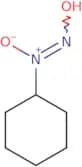
N-Nitroso N-hydroxy cyclohexanamine
CAS:N-Nitroso N-hydroxy cyclohexanamine is an analog of betamethasone and a potent inhibitor of kinases. It has been shown to have anticancer properties by inducing apoptosis in cancer cells. This compound is excreted in urine and has been studied extensively in Chinese populations for its potential as an anticancer agent. N-Nitroso N-hydroxy cyclohexanamine inhibits the activity of kinases, which are important enzymes involved in cell signaling pathways that regulate cell growth and division. This inhibition leads to the suppression of tumor growth and the induction of apoptosis in cancer cells. Additionally, this compound has been found to be a potent inhibitor of vitamin D receptor (VDR) and may play a role in regulating VDR-mediated gene expression.
Formula:C6H12N2O2Purity:Min. 95%Molecular weight:144.17 g/mol((E)-5-((M-[(2-Carboxyethyl)carbamoyl]phenyl)azo)-2-salicylic acid)
CAS:((E)-5-((M-[(2-Carboxyethyl)carbamoyl]phenyl)azo)-2-salicylic acid) is a drug product. It is a synthetic, white to off-white powder that has a molecular weight of 246.9 g/mol and an assay of 99%. The impurity standard for this product is (E)-5-(4-(methylsulfonyl)phenylazo)-2-salicylic acid.
Formula:C17H15N3O6Purity:Min. 95%Molecular weight:357.32 g/molClopidogrel Impurity A
CAS:Clopidogrel Impurity A is a medicine that is used for the prevention of heart attacks, strokes, and blood clots in people with an increased risk of these events. It is not intended to be used for immediate relief from sudden symptoms. Clopidogrel Impurity A is a substance that may be found in some preparations of clopidogrel. The presence of this substance can be detected by liquid chromatography-mass spectrometry (LC-MS/MS) methods. The structural analysis of this substance was determined using enantiomeric resolution and chromatographic methods. This impurity has been shown to have no effect on the bioavailability of the parent drug, clopidogrel, when given orally to Sprague-Dawley rats.Formula:C15H15Cl2NO2SPurity:Min. 95%Molecular weight:344.26 g/mol(S)-(+)-Hydroxy chloroquine diphosphate
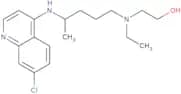
CAS:(S)-(+)-Hydroxy chloroquine diphosphate is a drug that can be used to treat chronic kidney disease. It is a prodrug of hydroxychloroquine, which is also an anti-inflammatory agent. (S)-(+)-Hydroxychloroquine diphosphate has been shown to inhibit the growth of cancer cells in vitro and in vivo by inducing autophagy. This drug inhibits the tyrosine kinase receptor on cancer cells and blocks the downstream signaling pathways that lead to tumor cell proliferation. (S)-(+)-Hydroxychloroquine diphosphate has been shown to have a higher activity than hydroxychloroquine when tested against skin tumors in animals. The liposomal formulation of this drug allows for high concentrations to be achieved at the site of inflammation, making it more effective for treatment of cutaneous lesions.Formula:C18H26ClN3OPurity:Min. 95%Molecular weight:335.9 g/molLamivudine S-oxide
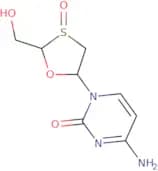
CAS:Lamivudine is an antiviral drug that belongs to the group of nucleoside analogues. It is a prodrug that is activated by intracellular phosphorylation to form the active compound, lamivudine triphosphate (L-TTP). L-TTP inhibits viral replication by competing with natural substrates for incorporation into viral DNA. The antiviral activity of L-TTP has been shown in animals and humans with hepatitis B virus or human immunodeficiency virus type 1 (HIV-1) infections. Lamivudine S-oxide is a stereoselective form of lamivudine, which can be used for chemoprophylaxis against the pandemic H1N1 virus. This drug has shown to have a lower toxicity profile than other drugs used for this purpose.
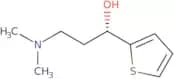
Formula:C8H11N3O4SPurity:Min. 95%Molecular weight:245.26 g/mol(S)-3-(Dimethylamino)-1-(2-thienyl)propan-1-ol
CAS:(S)-3-(Dimethylamino)-1-(2-thienyl)propan-1-ol is a polymerase chain reaction (PCR) reagent that is used as a building block for the synthesis of five membered ring lactams and dihedral polymers. This compound is synthesized by chemoenzymatic coupling of propanamine with trifluoroacetic acid in the presence of methyl groups, followed by catalytic hydrogenation to yield the desired product. The asymmetric synthesis of this compound was achieved through chiral resolution using NMR spectroscopy.Formula:C9H15NOSPurity:Min. 95%Molecular weight:185.29 g/molOlmesartan methyl ketone
CAS:Olmesartan methyl ketone is a synthetic drug product that is used as an analytical reference standard. It has been shown to be metabolized in vivo to its active form, olmesartan. The chemical structure of this compound is similar to the active metabolite of other angiotensin II receptor blockers, such as losartan and valsartan. This compound is an impurity in the API Olmesartan medoxomil, which is a potent angiotensin II receptor blocker used for the treatment of hypertension (high blood pressure).Formula:C25H28N6O2Purity:Min. 95%Molecular weight:444.5 g/molN-(2,6-Dichlorophenyl)-carbonimidic dichloride
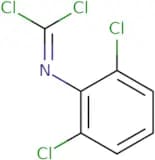
CAS:2,6-Dichlorophenyl carbonimidic dichloride is an analytical reference material that is used as a high purity and drug development API impurity standard. The compound has been found to be a metabolite of the anti-inflammatory drug ibuprofen. It is also used as a pharmacopoeia impurity standard in the United States, Japan, and Europe. CAS No. 21709-18-2 is the assigned number for this compound.Formula:C7H3Cl4NPurity:Min. 95%Molecular weight:242.9 g/molN-(2,2,2-Trichloroethoxy)carbonyl] bisnor-(cis)-tilidine
CAS:N-(2,2,2-Trichloroethoxy)carbonyl] bisnor-(cis)-tilidine is an analog of dabigatran that has been shown to be a potent inhibitor of human kinases. It has demonstrated anticancer activity by inducing apoptosis in cancer cells and inhibiting tumor growth. This compound has been found in urine samples from Chinese patients with cancer, suggesting that it may have potential as an anticancer agent. N-(2,2,2-Trichloroethoxy)carbonyl] bisnor-(cis)-tilidine acts as a protein kinase inhibitor and may be useful in the development of new cancer therapies. Its mechanism of action is thought to involve the inhibition of various kinases involved in cell proliferation and survival pathways. Overall, this compound holds great promise for its potential use in the treatment of cancer.Formula:C18H20Cl3NO4Purity:Min. 95%Molecular weight:420.7 g/molN-Demethyl pazopanib
CAS:N-Demethyl pazopanib is a synthetic drug that has been researched and developed for the treatment of cancer. It is an impurity standard, custom synthesis, and drug product. Synthetic N-demethyl pazopanib is used in clinical trials as a research and development tool to explore the metabolism of this drug and its metabolites. High purity N-demethyl pazopanib is used as a pharmacopoeia reference material for HPLC analysis in pharmacological studies. The metabolite of N-demethyl pazopanib has been found to be carcinogenic in animal studies. Metabolism studies have shown that N-demethyl pazopanib undergoes extensive hydroxylation and glucuronidation, which are detoxification pathways for xenobiotics in mammals.Formula:C20H21N7O2SPurity:Min. 95%Molecular weight:423.5 g/molN-(3-Trifluoromethylphenyl)-phenylamine
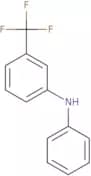
CAS:N-(3-Trifluoromethylphenyl)-phenylamine is a research and development drug product that is used as an analytical impurity standard. It has a CAS number of 101-23-5 and is classified under the trade name 3TFPPA. The chemical formula for N-(3-Trifluoromethylphenyl)-phenylamine is C12H8F3NO. This compound can be synthesized from phenylamine, 3-trifluoromethylaniline, and hydrochloric acid. The molecular weight of this compound is 197.19 g/mol, which falls within the range of 195 to 200 g/mol. N-(3-Trifluoromethylphenyl)-phenylamine can be found in the following pharmacopoeia: USP (United States Pharmacopeia), EP (European Pharmacopoeia), JP (Japanese Pharmacopeia), BPFormula:C13H10F3NPurity:Min. 95%Molecular weight:237.22 g/molMethyl 4-methyl-3-[2-(propylamino)acetamido)thiophene-2-carboxylate
CAS:Methyl 4-methyl-3-[2-(propylamino)acetamido]thiophene-2-carboxylate is an impurity that can be found in the drug product. It is a metabolite of clozapine, which is used to treat schizophrenia and other psychiatric disorders. This impurity can be detected by HPLC or LC/MS analysis and quantified using a calibration curve generated from standards. Methyl 4-methyl-3-[2-(propylamino)acetamido]thiophene-2-carboxylate may also be found in the urine as an indicator of clozapine use.Formula:C12H18N2O3SPurity:Min. 95%Molecular weight:270.35 g/mol9-Demethyl FR-901235
CAS:9-Demethyl FR-901235 is a synthetic compound that is used as an impurity standard for the synthesis of drugs. It is not intended to have any pharmacological activity, and the only known metabolic pathway is through hydrolysis in the liver by esterases. 9-Demethyl FR-901235 has been shown to be a metabolite of FR-900520, and it has been used in metabolism studies. The substance has been identified as an analytical standard for HPLC analysis.Formula:C17H14O7Purity:Min. 95%Molecular weight:330.29 g/molWarfarin alcohol, mixture of diastereomers
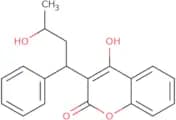
CAS:Warfarin is a clinically used drug that is an anticoagulant and has been shown to have anticancer activity. Warfarin has been shown to inhibit the synthesis of unsaturated ketones by carbonyl reduction and asymmetric synthesis. It also inhibits the growth of cancer cells in animals and human liver cells. Warfarin reduces the production of coagulation factors II, VII, IX, and X by inhibiting protein synthesis in the liver. The anticoagulant effect of warfarin is due to inhibition of the synthesis of vitamin K-dependent clotting factors II, VII, IX, and X. Warfarin also binds to a cytosolic protein called matrix metalloproteinase-9 (MMP-9) which inhibits its proteolytic activity.Formula:C19H18O4Purity:Min. 95%Molecular weight:310.3 g/mol(4R)-1-(4-O-b-D-Galactopyranosyl-b-D-glucopyranosyl)-4-(2-methylpropyl)-2-pyrrolidinone
CAS:(4R)-1-(4-O-b-D-Galactopyranosyl-b-D-glucopyranosyl)-4-(2-methylpropyl)-2-pyrrolidinone is a synthetic, impurity standard and research and development compound. (4R)-1-(4-O-b-D-Galactopyranosyl-b-D-glucopyranosyl)-4-(2-methylpropyl)-2pyrrolidinone is used as an analytical reference in the synthesis of other compounds. It is also used in drug development for the treatment of tuberculosis. This product has a high purity level and is pharmacopoeia grade.Formula:C20H35NO11Purity:Min. 95%Molecular weight:465.49 g/molDiclofenac alcohol
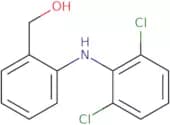
CAS:COX inhibitor; non-steroidal anti-inflammatory drug
Formula:C13H11Cl2NOPurity:Min. 95%Molecular weight:268.14 g/molDMAC-PDB
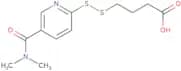
CAS:DMAC-PDB is an aromatic cleavable linker commonly used in protein and drug conjugation. It enables controlled release of payloads under specific chemical conditions.
Formula:C12H16N2O3S2Purity:Min. 95%Molecular weight:300.4 g/molFexofenadine Impurity G
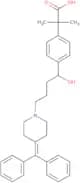
CAS:Fexofenadine Impurity G is an impurity that is found in the drug Fexofenadine. This impurity can be identified and quantified using HPLC with a UV detector at 254 nm. Fexofenadine Impurity G has been classified as a natural metabolite of Fexofenadine. It is also considered to be a synthetic impurity because it can be synthesized in the laboratory.Formula:C32H37NO3Purity:Min. 95%Molecular weight:483.6 g/mol2-Hydroxy-5-[2-[4-[[(6-methyl-2-pyridinyl)amino]sulfonyl]phenyl]diazenyl]benzoic acid
CAS:2-Hydroxy-5-[2-[4-[[(6-methyl-2-pyridinyl)amino]sulfonyl]phenyl]diazenyl]benzoic acid is a synthetic drug product that has not been approved for clinical use. 2-Hydroxy-5-[2-[4-[[(6-methyl-2-pyridinyl)amino]sulfonyl]phenyl]- diazenyl]benzoic acid is a metabolite of the drug product, 3-(2,4,6,-trimethoxybenzoyl)-1-(pyridinium methyl) piperidine. This metabolite was isolated and characterized using high performance liquid chromatography (HPLC), gas chromatography (GC), and nuclear magnetic resonance spectroscopy.Formula:C19H16N4O5SPurity:Min. 95%Molecular weight:412.42 g/mol4',4'''-[(4'-Methyl-2'-propyl[2,6'-bi-1H-benzimidazole]-1,1'-diyl)bis(methylene)]bis[1,1'-biphenyl]-2-carboxylic acid
CAS:4',4'''-[(4'-Methyl-2'-propyl[2,6'-bi-1H-benzimidazole]-1,1'-diyl)bis(methylene)]bis[1,1'-biphenyl]-2-carboxylic acid is an analytical reagent that is used in research and development as a drug product impurity standard. This compound has been shown to be metabolized by cytochrome P450 1A1 and 2C8 to form 4-hydroxybenzoic acid and 4,4''-[(4'-methyl-2' propyl-[2,6']bi-1H-benzimidazol-1,1' diyl)bis(methylene)]bis[3-(4-hydroxyphenyl)-propionic acid], respectively. 4',4''-[(4'-Methyl-2' propyl-[2,6']bi-1Formula:C46H38N4O4Purity:Min. 95%Molecular weight:710.82 g/mol

![((E)-5-((M-[(2-Carboxyethyl)carbamoyl]phenyl)azo)-2-salicylic acid)](/_next/image/?url=https%3A%2Fstatic.cymitquimica.com%2Fproducts%2F3D%2Fthumb-webp%2FYWC39596.webp&w=3840&q=75)

![N-(2,2,2-Trichloroethoxy)carbonyl] bisnor-(cis)-tilidine](/_next/image/?url=https%3A%2Fstatic.cymitquimica.com%2Fproducts%2F3D%2Fthumb-webp%2FWZB81995.webp&w=3840&q=75)

![2-Hydroxy-5-[2-[4-[[(6-methyl-2-pyridinyl)amino]sulfonyl]phenyl]diazenyl]benzoic acid](/_next/image/?url=https%3A%2Fstatic.cymitquimica.com%2Fproducts%2F3D%2Fthumb-webp%2FIH145662.webp&w=3840&q=75)
![4',4'''-[(4'-Methyl-2'-propyl[2,6'-bi-1H-benzimidazole]-1,1'-diyl)bis(methylene)]bis[1,1'-biphenyl…](/_next/image/?url=https%3A%2Fstatic.cymitquimica.com%2Fproducts%2F3D%2Fthumb-webp%2FIM28023.webp&w=3840&q=75)