APIs for research and impurities
Subcategories of "APIs for research and impurities"
- Aminoacids and derivatives(12,334 products)
- Anthraquinones and derivatives(404 products)
- Benzimidazole and Imidazole Derivatives(10,446 products)
- Benzodiazepine Derivatives(334 products)
- Carbohydrates and glycoconjugates(5,049 products)
- Esters and Derivatives(42,251 products)
- Fatty Acids and Lypidic Derivatives(32,415 products)
- Flavonoids and Polyphenols(17,083 products)
- Free Radicals and Oxidant/Reducing Agents(213 products)
- Ketones and derivatives(2,401 products)
- Natural and semi-synthetic antibiotics(6,382 products)
- Nitriles and Cyano Derivatives(3,068 products)
- Nitrosamines and Derivatives(55 products)
- Nucleosides and Nucleotides(3,480 products)
- Organic Phosphates and Phosphonates(1,201 products)
- Organic Sulphonates and Sulphates(10,433 products)
- Organometallics(4,421 products)
- Others(6,305 products)
- Peptides and Proteins(3,148 products)
- Polymers and Derivatives(100 products)
- Purines and Pyrimidine Derivatives(8,948 products)
- Quinazoline and Quinoline Derivatives(66,032 products)
- Quinones and Derivatives(24,363 products)
- Salts and Derivatives of Active Pharmaceutical Ingredients (API)(80,551 products)
- Steroids and Derivatives(4,955 products)
- Sulfonamides and Derivatives(2,595 products)
- Terpenoids and Derivatives(3,848 products)
- Thiazolidinediones and Thiopyrans(2,753 products)
- β-Adrenergic Compounds(231 products)
Found 57830 products of "APIs for research and impurities"
(+)-SHIN1
CAS:(+)-SHIN1 is an analog of a compound found in human urine that has shown promising results in the fight against cancer. It functions as a kinase inhibitor, which means it prevents the activation of proteins that are involved in cancer cell growth and tumor formation. Studies have indicated that (+)-SHIN1 induces apoptosis (programmed cell death) in Chinese hamster ovary cells and inhibits the growth of various cancer cell lines. This compound has also been investigated for its potential use in treating Alzheimer's disease, as it shares structural similarities with donepezil, a drug used to treat cognitive impairments associated with this condition. (+)-SHIN1 represents a promising avenue for anticancer drug development and may hold great potential for improving cancer treatment outcomes.Formula:C24H24N4O2Purity:Min. 95%Molecular weight:400.5 g/molPBT Impurity 2
CAS:Please enquire for more information about PBT Impurity 2 including the price, delivery time and more detailed product information at the technical inquiry form on this page
Formula:C36H38O13Molecular weight:678.69 g/molPNU-176798
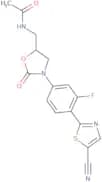
CAS:Please enquire for more information about PNU-176798 including the price, delivery time and more detailed product information at the technical inquiry form on this pageFormula:C16H13FN4O3SPurity:Min. 95%Molecular weight:360.4 g/molPruvanserin hydrochloride
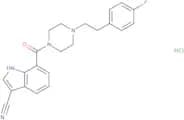
CAS:Pruvanserin hydrochloride is a synthetic compound that belongs to the group of drugs called selective serotonin reuptake inhibitors (SSRIs). It is used for research and development purposes. Pruvanserin hydrochloride has not been marketed as a drug product. This compound has shown to be an impurity in several commercial products and has been found to be present in two drugs, including fluoxetine HCl and sertraline HCl. Pruvanserin hydrochloride is metabolized by cytochrome P450 enzymes and glucuronidases. The half life of this drug is between 3-5 hours following oral administration, with higher doses leading to higher plasma concentrations.
Formula:C22H22ClFN4OPurity:Min. 95%Molecular weight:412.9 g/mol2-Acetoxy-1,4-naphthoquinone
CAS:2-Acetoxy-1,4-naphthoquinone is a potent inhibitor of kinases and has shown to have anticancer properties. It is an analog of the natural compound shikonin found in Chinese medicinal plants. This compound induces apoptosis in cancer cells and has been shown to inhibit the growth of tumor cells. 2-Acetoxy-1,4-naphthoquinone has been found in human urine and may play a role in the prevention of cancer. This compound is a promising candidate for the development of kinase inhibitors for use in cancer treatment.Formula:C12H8O4Purity:Min. 95%Molecular weight:216.19 g/molIothalamic acid-d3
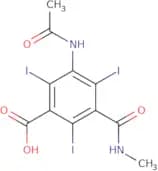
CAS:Iothalamic acid-d3 is a drug product that is a natural, synthetic, and API impurity. It is used as an analytical standard in metabolism studies and for the quality control of natural Iothalamic acid-d4. Iothalamic acid-d3 also has pharmacopoeia standards for HPLC and high purity.
Formula:C11H9I3N2O4Purity:Min. 95%Molecular weight:616.93 g/mol3-[4-(4-Chlorobenzoyl)phenoxy]-2-butanone
CAS:3-[4-(4-Chlorobenzoyl)phenoxy]-2-butanone is an impurity in the drug product, N-{3-[4-(4-chlorobenzoyl)phenoxy]-2-butenyl}acetamide. It can be used as an analytical reference standard for determining the presence of impurities in pharmaceutical products. 3-[4-(4-Chlorobenzoyl)phenoxy]-2-butanone is not a natural component of the API and is typically synthesized with high purity. This compound has been shown to be metabolized by human liver microsomes and rat lung microsomes. The metabolic pathways are unknown but may include oxidation, hydrolysis, or conjugation reactions.Formula:C17H15ClO3Purity:Min. 95%Molecular weight:302.75 g/mol5-[(2-Chloroethyl)(2-hydroxyethyl)amino]-1-methyl-1H-benzimidazole-2-butanoic acid ethyl ester
CAS:Bendamustine is a drug that belongs to the class of alkylating agents. It is used in the treatment of cancer and chronic lymphocytic leukemia. Bendamustine is a synthetic compound, which has been shown to have oncosis (cancer-causing) properties. Bendamustine can be administered intravenously as a dry powder or in tablet form and has shown efficacy against neoplastic cells. Its mechanism of action involves binding to DNA and inhibiting the synthesis of RNA and DNA, thereby interfering with cell division. The drug also binds to erythrocytes, leading to methemoglobinemia. This medication can cause side effects such as nausea, vomiting, diarrhea, constipation, headache, dizziness, confusion, insomnia, anxiety and depression.Formula:C18H26ClN3O3Purity:Min. 95%Molecular weight:367.9 g/mol2- (Diethylboryl)pyridine
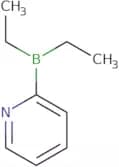
CAS:2- (Diethylboryl)pyridine is a custom synthesis drug product that is used in research and development for the treatment of cancer. 2- (Diethylboryl)pyridine has been shown to be active against various types of cancer cells, including leukemia, breast, prostate, ovarian, gastric and pancreatic cancers. This compound can also be used as an impurity standard for HPLC analysis.Formula:C9H14BNPurity:Min. 95%Molecular weight:147.03 g/mol9α-Fluoro-6α-methylprednisolone 21-acetate
CAS:Controlled Product9α-Fluoro-6α-methylprednisolone 21-acetate is an analog of the hormone cortisol and has potent anti-inflammatory and immunosuppressive properties. It is also being studied for its potential anticancer activity. This compound inhibits cyclin-dependent kinases, which are involved in regulating cell division and growth. It has been shown to induce apoptosis in cancer cells and inhibit tumor growth in animal models. Additionally, it has been found in human urine, indicating that it may have potential as a biomarker for cancer diagnosis or monitoring.Formula:C24H31FO6Purity:Min. 95%Molecular weight:434.5 g/molOlmesartan methyl ketone
CAS:Olmesartan methyl ketone is a synthetic drug product that is used as an analytical reference standard. It has been shown to be metabolized in vivo to its active form, olmesartan. The chemical structure of this compound is similar to the active metabolite of other angiotensin II receptor blockers, such as losartan and valsartan. This compound is an impurity in the API Olmesartan medoxomil, which is a potent angiotensin II receptor blocker used for the treatment of hypertension (high blood pressure).Formula:C25H28N6O2Purity:Min. 95%Molecular weight:444.5 g/mol2-Ethoxy-4-[2-oxo-2-[[2-phenyl-1-[2-(1-piperidinyl)phenyl]ethyl]amino]ethyl]benzoic acid
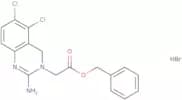
CAS:2-Ethoxy-4-[2-oxo-2-[[2-phenyl-1-[2-(1-piperidinyl)phenyl]ethyl]amino]ethyl]benzoic acid is a drug product that has not yet been approved for use in humans. It is currently undergoing research and development to determine its safety, efficacy, and optimal dosage range. 2EtOBA has shown pharmacological activity in animal models of inflammation and pain. 2EtOBA is metabolized by esterases, glutathione reductase, cytochrome P450 enzymes, reduction by glutathione reductase or conjugation with glucuronic acid. The metabolite of 2EtOBA is the parent compound with a different side chain. This impurity standard can be used in HPLC methods to measure the concentration of this metabolite.Formula:C30H34N2O4Purity:Min. 95%Molecular weight:486.6 g/mol2-Amino-5,6-dichloro-3(4H)-quinazoline acetic acid benzyl ester hydrobromide
CAS:2-Amino-5,6-dichloro-3-(4H)-quinazoline acetic acid benzyl ester hydrobromide is a drug product that is used as an analytical reference standard for the identification of impurities in aminoglycosides. 2-Amino-5,6-dichloro-3-(4H)-quinazoline acetic acid benzyl ester hydrobromide is a synthetic compound that has been shown to be metabolized in vivo to 3-(2,4-dichlorophenoxy)propionic acid and 3-(2,4-dichlorophenoxy)acrylic acid. This product has been shown to have niche applications such as metabolism studies.
Formula:C17H15Cl2N3O2Purity:Min. 95%Molecular weight:364.23 g/molGentamicin B1
CAS:Gentamicin B1 is a gentamicin antibiotic that is used to treat skin cancer. It inhibits bacterial growth by binding to the 50S ribosomal subunit and blocking protein synthesis. Gentamicin B1 has shown clinical response in patients with wild-type strains of Streptococcus faecalis, but not in those with a mutant strain. The mechanism of action for this drug may involve its ability to inhibit epidermal growth factor (EGF) production. Gentamicin B1 also has been shown to inhibit the proliferation of human cancer cells and induce apoptosis in some tumor cells.Formula:C20H40N4O10Purity:Min. 95%Color and Shape:SolidMolecular weight:496.55 g/mol3-[2-[(5-Ethyl-2-pyridinyl)ethoxy]phenyl] Pioglitazone Impurity
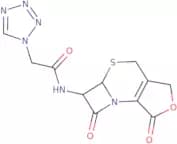
CAS:3-[2-[(5-Ethyl-2-pyridinyl)ethoxy]phenyl] Pioglitazone Impurity is a drug product that is used for analytical purposes and as a research and development standard. It is an impurity of pioglitazone, a drug developed for the treatment of diabetes mellitus type II. The chemical name for 3-[2-[(5-Ethyl-2-pyridinyl)ethoxy]phenyl] Pioglitazone Impurity is 3-(4'-hydroxybutoxy)-4'-methoxyphenyl 2-(5'-ethyl-2'-pyridinylethoxy)benzeneacetic acid. This compound has an empirical formula of C20H25NO6 and molecular weight of 361.39 g/mol. The CAS number is 952187-99-4.Formula:C34H35N3O4SPurity:Min. 95%Molecular weight:581.73 g/molCefazolin EP Impurity G
CAS:Cefazolin EP Impurity G is a synthetic, impure drug product of cefazolin. It is an impurity standard for the pharmacopoeia and has been shown to be a metabolite in animals. The purity of this compound is unknown. Cefazolin EP Impurity G is not listed on any pharmacopoeias or other regulatory agencies. CAS No.: 1172998-53-6Formula:C11H10N6O4SPurity:Min. 95%Molecular weight:322.3 g/mol2-Hydroxy-5-[2-[4-(2-imino-1(2H)-pyridinyl)phenyl]diazenyl]-benzoic acid
CAS:2-Hydroxy-5-[2-[4-(2-imino-1(2H)-pyridinyl)phenyl]diazenyl]-benzoic acid (DPC) is a drug product that is used in pharmaceutical research and development. It is an impurity standard for HPLC analysis. DPC has been shown to be a metabolite of the drug product 2,6-dimethoxy-N-(3-methylphenyl)pyrimidine-4,6-diamine (DMX), which is used in the treatment of cancer. Impurities standards are important for ensuring the quality of drugs and ensuring that they are safe for human use. This product can also be synthesized from commercially available amino acids.Formula:C18H14N4O3Purity:85%MinMolecular weight:334.33 g/molN,N-Bis[2-(2-hydroxyethoxy)ethyl] quetiapine chloride
N,N-Bis[2-(2-hydroxyethoxy)ethyl] quetiapine chloride is a synthetic drug product with a purity of >98% and low impurity content, which is used in research and development. It can be custom synthesized to meet the needs of a particular research or development project. This compound has an analytical purity of >98% and low impurity content, making it suitable for use as an API impurity standard. N,N-Bis[2-(2-hydroxyethoxy)ethyl] quetiapine chloride is not currently regulated by any pharmacopoeia.Formula:C25H34ClN3O4SPurity:Min. 95%Molecular weight:508.07 g/molApoatropine
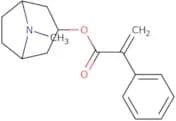
CAS:Apoatropine is a quaternary ammonium compound that is used as an antidote for the treatment of anticholinesterase poisoning. Apoatropine binds to acetylcholine receptors and prevents further stimulation by acetylcholine, which will eventually lead to paralysis and death. The drug product is available as an HPLC standard, with analytical standards available for impurities such as apoatropine sulfate and apoatropine hydrochloride. Apoatropine is metabolized in vivo to atropine and scopolamine, which are also present as impurities in this drug product.Formula:C17H21NO2Purity:Min. 95%Molecular weight:271.35 g/mol4-Epiminocycline
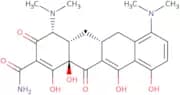
CAS:4-Epiminocycline is a pharmaceutical preparation that belongs to the class of antibiotics. It is a drug substance that is used in the manufacture of other drugs and as an individual drug for the treatment of various skin conditions and for the prevention of malaria. 4-Epiminocycline has been shown to be effective against bacteria by binding to DNA, preventing transcription and replication. The drug binds to plasma proteins and erythrocytes with high affinity, but it does not bind well to intestinal cells or lung tissue. 4-Epiminocycline has been shown to be effective against Mycobacterium tuberculosis, Mycobacterium avium complex, Staphylococcus aureus, Streptococcus pyogenes, and Enterococcus faecalis. This antibiotic also prevents the formation of biofilms by these bacteria.Formula:C23H27N3O7Purity:Min. 95%Color and Shape:Yellow PowderMolecular weight:457.48 g/mol


![3-[4-(4-Chlorobenzoyl)phenoxy]-2-butanone](/_next/image/?url=https%3A%2Fstatic.cymitquimica.com%2Fproducts%2F3D%2Fthumb-webp%2FIC20198.webp&w=3840&q=75)
![5-[(2-Chloroethyl)(2-hydroxyethyl)amino]-1-methyl-1H-benzimidazole-2-butanoic acid ethyl ester](/_next/image/?url=https%3A%2Fstatic.cymitquimica.com%2Fproducts%2F3D%2Fthumb-webp%2FYKB22495.webp&w=3840&q=75)

![2-Ethoxy-4-[2-oxo-2-[[2-phenyl-1-[2-(1-piperidinyl)phenyl]ethyl]amino]ethyl]benzoic acid](/_next/image/?url=https%3A%2Fstatic.cymitquimica.com%2Fproducts%2F3D%2Fthumb-webp%2FIE21210.webp&w=3840&q=75)

![3-[2-[(5-Ethyl-2-pyridinyl)ethoxy]phenyl] Pioglitazone Impurity](/_next/image/?url=https%3A%2Fstatic.cymitquimica.com%2Fproducts%2F3D%2Fthumb-webp%2FIE165312.webp&w=3840&q=75)
![2-Hydroxy-5-[2-[4-(2-imino-1(2H)-pyridinyl)phenyl]diazenyl]-benzoic acid](/_next/image/?url=https%3A%2Fstatic.cymitquimica.com%2Fproducts%2F3D%2Fthumb-webp%2FIH145665.webp&w=3840&q=75)
![N,N-Bis[2-(2-hydroxyethoxy)ethyl] quetiapine chloride](/_next/image/?url=https%3A%2Fstatic.cymitquimica.com%2Fproducts%2F3D%2Fthumb-webp%2FIB76470.webp&w=3840&q=75)