APIs for research and impurities
Subcategories of "APIs for research and impurities"
- Aminoacids and derivatives(12,335 products)
- Anthraquinones and derivatives(405 products)
- Benzimidazole and Imidazole Derivatives(10,451 products)
- Benzodiazepine Derivatives(334 products)
- Carbohydrates and glycoconjugates(5,048 products)
- Esters and Derivatives(42,251 products)
- Fatty Acids and Lypidic Derivatives(32,417 products)
- Flavonoids and Polyphenols(17,084 products)
- Free Radicals and Oxidant/Reducing Agents(213 products)
- Ketones and derivatives(2,402 products)
- Natural and semi-synthetic antibiotics(6,387 products)
- Nitriles and Cyano Derivatives(3,068 products)
- Nitrosamines and Derivatives(55 products)
- Nucleosides and Nucleotides(3,484 products)
- Organic Phosphates and Phosphonates(1,201 products)
- Organic Sulphonates and Sulphates(10,435 products)
- Organometallics(4,421 products)
- Others(6,307 products)
- Peptides and Proteins(3,148 products)
- Polymers and Derivatives(100 products)
- Purines and Pyrimidine Derivatives(8,948 products)
- Quinazoline and Quinoline Derivatives(66,044 products)
- Quinones and Derivatives(24,363 products)
- Salts and Derivatives of Active Pharmaceutical Ingredients (API)(80,490 products)
- Steroids and Derivatives(4,958 products)
- Sulfonamides and Derivatives(2,600 products)
- Terpenoids and Derivatives(3,849 products)
- Thiazolidinediones and Thiopyrans(2,754 products)
- β-Adrenergic Compounds(231 products)
Found 57768 products of "APIs for research and impurities"
Pemetrexed related impurity 2
Pemetrexed related impurity 2 is a drug product that is an analytical impurity found in the metabolite of pemetrexed. It has been shown to be naturally occurring and is not toxic at high doses. This impurity has been synthesized as an impurity standard for HPLC. Pemetrexed related impurity 2 is used in research and development studies for drug development, such as pharmacopoeia testing for high purity standards.Formula:C20H21N5O8Purity:Min. 95%Molecular weight:459.41 g/molAmoxicillin trihydrate impurity G
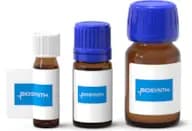
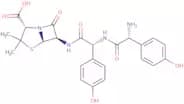
CAS:Amoxicillin trihydrate impurity G is an analytical standard, a high purity API impurity, and an HPLC standard. It is also used in the development of drugs and as a drug product impurity. Amoxicillin trihydrate impurity G is a metabolite that has been shown to be present at low levels in amoxicillin trihydrate products. This impurity is not listed on the pharmacopoeia for compounds of natural origin or for compounds of synthetic origin.Formula:C24H26N4O7SPurity:Min. 95%Color and Shape:PowderMolecular weight:514.55 g/molSolifenacin Impurity D
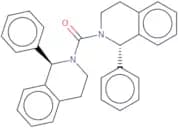
CAS:Solifenacin Impurity D is a synthetic impurity of solifenacin. Solifenacin is an anti-cholinergic drug used to treat overactive bladder and urinary incontinence. The purity of this product is 99%. It is soluble in methanol, ethanol, chloroform, and acetone. Solifenacin Impurity D can be used as a reference material for analytical purposes or as an impurity standard in the development of new drugs.Formula:C31H28N2OPurity:Min. 96 Area-%Color and Shape:White PowderMolecular weight:444.57 g/molClarithromycin impurity O
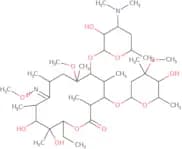
CAS:Clarithromycin impurity O is a crystalline form of clarithromycin that is obtained by the sulfation of the free base. It is prepared by adding an acid binding agent to the free base and then dissolving it in water. The sulfate salt of clarithromycin impurity O can be purified by recrystallization. Clarithromycin impurity O has been used as a raw material for clarithromycin, which is a β-lactam antibiotic with activity against Gram-positive bacteria and some Gram-negative bacteria. Clarithromycin impurity O is also used in other pharmaceuticals such as anti-inflammatory drugs and antibiotics. The preparation process starts with the methylation reaction of potassium hydroxide, followed by hydrolysis to produce methyl sulfate and dimethyl sulfate. The methylated product is purified through distillation, vacuum drying, or crystallization, yielding a pure form of methylated product that can be further processed into otherFormula:C39H72N2O13Purity:Min. 95%Molecular weight:776.99 g/molLisinopril diketopipirazine
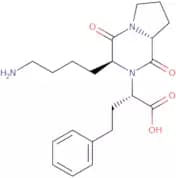
CAS:Lisinopril diketopipirazine is an analytical drug product. The CAS number for this product is 219677-82-4. This product requires a custom synthesis and impurity standard. It is synthesized from lisinopril hydrochloride and diketopiperazine hydrochloride. Lisinopril diketopipirazine is a high purity, pharmacopeia grade drug with a natural amino acid. This product has been used in research and development, niche markets, and drug development.Formula:C21H29N3O4Purity:90%MinColor and Shape:White To Off-White SolidMolecular weight:387.47 g/mol3’-o-Benzyl-(1R)-hydroxy tapentadol
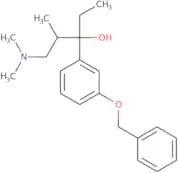
CAS:Please enquire for more information about 3’-o-Benzyl-(1R)-hydroxy tapentadol including the price, delivery time and more detailed product information at the technical inquiry form on this pageFormula:C21H29NO2Purity:Min. 95%Molecular weight:327.5 g/mol10-{3-[4-(2-Chloro-ethyl)-piperazin-1-yl]-propyl}-2-trifluoromethyl-10H-phenothiazine
CAS:10-{3-[4-(2-Chloro-ethyl)-piperazin-1-yl]-propyl}-2-trifluoromethyl-10H-phenothiazine is a nonselective, competitive antagonist of glutamate and quinpirole. It has been shown to block the glutamate receptors in the brain and reduce dopamine release. 10-[3-[4-(2-Chloro-ethyl)-piperazin-1-yl]-propyl]-2-trifluoromethylphenothiazine has a high affinity for the ryanodine receptor, which is found in the sarcoplasmic reticulum of striatal neurons. This drug also binds to calmodulin with high affinity, which may account for its ability to inhibit covalent adducts of dopamine to proteins. 10-[3-[4-(2-Chloro-ethyl)-piperazin-1-ylFormula:C22H26Cl2F3N3SPurity:Min. 95%Molecular weight:492.4 g/molButanilicaine hydrochloride
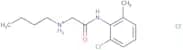
CAS:Butanilicaine hydrochloride is a molecular weight heparin that is structurally related to the natural pentasaccharide sequence of heparin. Its anticoagulant activity is due to its ability to form a coordination complex with calcium in the presence of magnesium and other cations. Butanilicaine hydrochloride has been shown to have anti-inflammatory and angiogenic properties, which may be due to its inhibition of pro-inflammatory factors such as TNF-α and IL-1β. It also inhibits production of angiogenic factors, such as VEGF and HGF.Formula:C13H20Cl2N2OPurity:Min. 95%Molecular weight:291.21 g/molMethocarbamol-d5 β-D-glucuronide
CAS:Methocarbamol-d5 β-D-glucuronide is a synthetic drug product. It has CAS number 56305-74-9. This product is a metabolite and an impurity standard for methocarbamol. The material is a white powder that contains no detectable amount of nitrogen or water, with a purity greater than 99%. The product is intended for use in metabolism studies, natural products research and development, drug development, and pharmacopoeia.
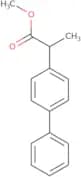
Formula:C17H18D5NO11Purity:Min. 95%Molecular weight:422.4 g/molMethyl 2-(4-biphenylyl)propionate
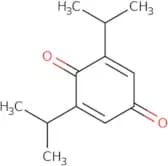
CAS:Methyl 2-(4-biphenylyl)propionate is a custom synthesis that is used for metabolism studies. It is a natural product, although it can be synthesized. Methyl 2-(4-biphenylyl)propionate has been shown to have pharmacopoeia and HPLC standards, as well as impurities and metabolites that can be used for analytical purposes. Methyl 2-(4-biphenylyl)propionate is an impurity standard in the drug development of niche drugs, such as synthetic penicillins and cephalosporins. Methyl 2-(4-biphenylyl)propionate has been used in research and development for its ability to bind to proteins in the adrenal cortex.Formula:C16H16O2Purity:Min. 95%Molecular weight:240.3 g/mol2,6-Diisopropyl-1,4-benzoquinone
CAS:2,6-Diisopropyl-1,4-benzoquinone is a diphenol that reacts with a variety of organic compounds in the presence of heat. It has been used as a mesoporous material to adsorb hydrogen gas and carbon dioxide in the water treatment process. 2,6-Diisopropyl-1,4-benzoquinone is also able to react with oxygen to form an n-oxide. This compound is most often used for the manufacture of phenolic antioxidants such as dibenzoyl peroxide and pentafluorobenzoic acid. The active site on this molecule is thought to be at the double bond between carbons 6 and 7. Impurities may include anisidine and other aromatic amines that can cause reactions with hydrogen peroxide when exposed to light or certain wavelengths of radiation.Formula:C12H16O2Purity:Min. 95%Molecular weight:192.25 g/molDesoxyquinocetone
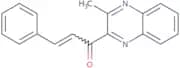
CAS:Desoxyquinocetone is a specific antibody that recognizes and binds to the quinoline ring of desoxyquinocetone. It has low bioavailability in the body, which is determined by the structural formula. The detection sensitivity of this antibody is high, and it can be used in tissue samples. This antibody also has a chromatographic method for determining carbonyl reduction and a monoclonal antibody for hybridoma cell strain. The specificity of this antibody is determined by the target tissue and strain, as well as its chromatographic method for detecting antigen.
Formula:C18H14N2OPurity:Min. 95%Molecular weight:274.3 g/molDiamidafos
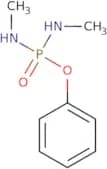
CAS:Diamidafos is a potent anticancer drug that has been used in Chinese traditional medicine to treat tumors. It acts as a protein kinase inhibitor, preventing the phosphorylation of proteins involved in cell growth and survival. Diamidafos is an analog of staurosporine, one of the first protein kinase inhibitors discovered. It has been shown to induce apoptosis in cancer cells by inhibiting the activity of various kinases. Diamidafos has also been found to inhibit the growth of human cancer cells and reduce tumor size in animal models. In addition, it can be administered orally and is excreted primarily through urine. To improve its efficacy, diamidafos can be combined with chitosan, a natural polymer that enhances drug delivery and bioavailability.Formula:C8H13N2O2PPurity:Min. 95%Molecular weight:200.17 g/mol4-Oxo diazepam open ring impurity
CAS:4-Oxo diazepam is an impurity that is found in the production of 4-oxodiazepam, a drug product. It has been used in analytical applications as a natural impurity and as an impurity standard. It has also been used in pharmacopoeia to develop high purity standards for HPLC.
Formula:C16H14ClNO2Purity:Min. 95%Molecular weight:287.74 g/molMontelukast acyl-b-D-glucuronide acetic acid salt
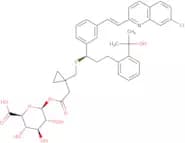
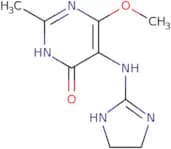
CAS:Metabolite of montelukastFormula:C41H44ClNO9S·CH3CO2HPurity:Min. 95%Color and Shape:Off-White PowderMolecular weight:822.36 g/mol4-Hydroxy moxonidine
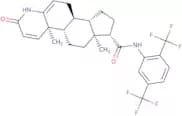
CAS:4-Hydroxy moxonidine (4HM) is a metabolite of moxonidine. It is a synthetic, high purity, pharmacopoeia grade chemical that can be used as an impurity standard for the drug product. Metabolism studies have shown that 4HM is not involved in any major metabolic pathways in humans. The CAS number for 4HM is 352457-34-2.Formula:C9H13N5O2Purity:Min. 95%Molecular weight:223.23 g/mol5,6-Dehydro-17beta-dutasteride
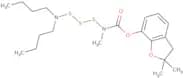
CAS:5,6-Dehydro-17beta-dutasteride is a synthetic drug product that is used as an analytical standard for the determination of metabolites and impurities in pharmaceuticals. It also has been used as a natural metabolite, which can be found in human urine. 5,6-Dehydro-17beta-dutasteride is a metabolite of dutasteride, which is an antiandrogen medication for the treatment of benign prostatic hyperplasia (BPH). It is also known to inhibit the metabolism of other drugs such as ketoconazole and metoprolol.Formula:C27H28F6N2O2Purity:Min. 95%Molecular weight:526.51 g/molCarbofuran N,N-dibutyl-3λ1-trisulfan-1-amine
CAS:Please enquire for more information about Carbofuran N,N-dibutyl-3λ1-trisulfan-1-amine including the price, delivery time and more detailed product information at the technical inquiry form on this page
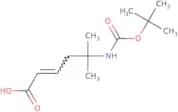
Formula:C20H32N2O3S3Purity:Min. 95%Molecular weight:444.7 g/mol(2E)-5-(tert-Butyloxycarbonylamino)-5-methylhex-2-enoic acid
CAS:Please enquire for more information about (2E)-5-(tert-Butyloxycarbonylamino)-5-methylhex-2-enoic acid including the price, delivery time and more detailed product information at the technical inquiry form on this pageFormula:C12H21NO4Purity:Min. 95%Molecular weight:243.3 g/mol(+)-SHIN1
CAS:(+)-SHIN1 is an analog of a compound found in human urine that has shown promising results in the fight against cancer. It functions as a kinase inhibitor, which means it prevents the activation of proteins that are involved in cancer cell growth and tumor formation. Studies have indicated that (+)-SHIN1 induces apoptosis (programmed cell death) in Chinese hamster ovary cells and inhibits the growth of various cancer cell lines. This compound has also been investigated for its potential use in treating Alzheimer's disease, as it shares structural similarities with donepezil, a drug used to treat cognitive impairments associated with this condition. (+)-SHIN1 represents a promising avenue for anticancer drug development and may hold great potential for improving cancer treatment outcomes.Formula:C24H24N4O2Purity:Min. 95%Molecular weight:400.5 g/mol

![10-{3-[4-(2-Chloro-ethyl)-piperazin-1-yl]-propyl}-2-trifluoromethyl-10H-phenothiazine](/_next/image/?url=https%3A%2Fstatic.cymitquimica.com%2Fproducts%2F3D%2Fthumb-webp%2FDAA89278.webp&w=3840&q=75)