APIs for research and impurities
Active Pharmaceutical Ingredients (APIs) are the substances in drugs responsible for their therapeutic effects. In this section, you will find a wide variety of APIs intended for research use. These compounds are essential for the development, testing, and validation of new pharmaceutical formulations. CymitQuimica offers high-quality APIs to support research in drug discovery and development.
Subcategories of "APIs for research and impurities"
- Aminoacids and derivatives(12,328 products)
- Anthraquinones and derivatives(405 products)
- Benzimidazole and Imidazole Derivatives(10,441 products)
- Benzodiazepine Derivatives(335 products)
- Carbohydrates and glycoconjugates(5,017 products)
- Esters and Derivatives(42,240 products)
- Fatty Acids and Lypidic Derivatives(32,400 products)
- Flavonoids and Polyphenols(17,087 products)
- Free Radicals and Oxidant/Reducing Agents(213 products)
- Ketones and derivatives(2,404 products)
- Natural and semi-synthetic antibiotics(6,385 products)
- Nitriles and Cyano Derivatives(3,067 products)
- Nitrosamines and Derivatives(55 products)
- Nucleosides and Nucleotides(3,432 products)
- Organic Phosphates and Phosphonates(1,202 products)
- Organic Sulphonates and Sulphates(10,435 products)
- Organometallics(4,422 products)
- Others(6,294 products)
- Peptides and Proteins(3,159 products)
- Polymers and Derivatives(100 products)
- Purines and Pyrimidine Derivatives(8,948 products)
- Quinazoline and Quinoline Derivatives(65,987 products)
- Quinones and Derivatives(24,349 products)
- Salts and Derivatives of Active Pharmaceutical Ingredients (API)(79,737 products)
- Steroids and Derivatives(4,976 products)
- Sulfonamides and Derivatives(2,595 products)
- Terpenoids and Derivatives(3,846 products)
- Thiazolidinediones and Thiopyrans(2,752 products)
- β-Adrenergic Compounds(230 products)
Show 21 more subcategories
Found 57049 products of "APIs for research and impurities"
Sort by
Purity (%)
0
100
|
0
|
50
|
90
|
95
|
100
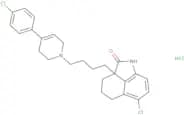
Dr 4485 hydrochloride
CAS:<p>Dr 4485 hydrochloride is a synthetic, semi-synthetic drug product that is used as an analytical reference material and in the development of drugs. Dr 4485 hydrochloride is also a metabolite of Dr 4485. The compound has been found to have natural origin from plants, but can also be synthetically made. It is not on the current USP/BP/EP monographs and does not have a CAS number. Dr 4485 hydrochloride has been shown to be metabolized through N-dealkylation, oxidation, and hydroxylation reactions. Dr 4485 hydrochloride may show various impurities that are related to the synthesis process or its metabolism. This compound has been studied for its ability to affect the growth of cancer cells via inhibition of protein synthesis by binding to ribosomes in the cytoplasmic membrane of cancer cells.</p>Formula:C26H29Cl3N2OPurity:Min. 95%Molecular weight:491.9 g/molFluorobexarotene
CAS:Fluorobexarotene is a fatty acid that has been shown to induce the expression of inflammatory genes in animal models. It has also been shown to inhibit the growth of human cancer cells in vitro and in vivo. Fluorobexarotene is used for the diagnosis of x-linked adrenoleukodystrophy and is currently being studied as a treatment for liver cancer. This molecule is also an agonist of retinoic acid receptors, which may be responsible for its effects on gene transcription.Formula:C24H27FO2Purity:Min. 95%Molecular weight:366.5 g/mol1-Hydroxy-ibuprofen - Mixture of diastereoisomers
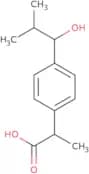
CAS:<p>Ibuprofen is a nonsteroidal anti-inflammatory drug that is used to treat arthritis, rheumatoid arthritis, menstrual cramps and pain. Ibuprofen is a racemic mixture of two enantiomers, ibuprofen and S (+) -ibuprofen. The dextran sulfate method is an analytical method used to determine the concentration of ibuprofen in biological fluids such as human serum or urine. This test can be done by first treating the sample with trifluoroacetic acid (TFA) to convert ibuprofen to its glucuronide conjugate. The glucuronide conjugates are then deproteinized with hydrochloric acid, which converts them into their corresponding carboxylated derivatives. This conversion allows for the separation of ibuprofen from interfering substances using preparative hplc and quantification using mass spectrometry. Toxicity studies have been conducted on bacteria strains and inflammatory bowel</p>Formula:C13H18O3Purity:Min. 95%Color and Shape:White PowderMolecular weight:222.28 g/mol7-Aminopyrazolo[1,5-a]pyrimidine-3,6-dicarboxylic acid 3,6-diethyl ester
CAS:7-Aminopyrazolo[1,5-a]pyrimidine-3,6-dicarboxylic acid 3,6-diethyl ester is an impurity in the synthesis of drugs. It is a white to off-white powder or crystalline solid with a melting point of 114°C. 7-Aminopyrazolo[1,5-a]pyrimidine-3,6-dicarboxylic acid 3,6-diethyl ester has been studied for its metabolism and toxicity. It is not naturally occurring and was synthesized in the laboratory. It may be used as a reference material for pharmacopoeia standards.Formula:C12H14N4O4Purity:Min. 95%Molecular weight:278.26 g/molCarbamazepine-10,11-epoxide-d10 (rings-d10)
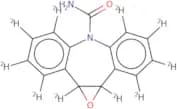
CAS:Controlled ProductCarbamazepine-10,11-epoxide-d10 (rings-d10) is a metabolite of carbamazepine that has been shown to have pharmacological properties similar to those of the parent compound. It is used in drug development, metabolism studies, and as an impurity standard for pharmaceutical products. Carbamazepine-10,11-epoxide-d10 (rings-d10) is not found in nature and can be synthesized from carbamazepine. This metabolite has a purity of at least 98% and may be used as an analytical standard or as a research and development compound for pharmacopoeia.Formula:C15H2D10N2O2Purity:Min. 95%Molecular weight:262.33 g/molL-693,403 Maleate
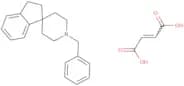
CAS:<p>L-693,403 Maleate is an analytical and research chemical with a purity of > 99%. L-693,403 Maleate is used as an impurity standard for HPLC analysis and drug development. It can also be used as a reference standard in the production of APIs. L-693,403 Maleate is an impurity in the synthesis of several drugs, including clozapine, fluoxetine, and loratadine. The natural form of L-693,403 Maleate can be found in the leaves of the plant Acacia holosericea. Synthetic L-693,403 Maleate can be synthesized from 3-(4'-chlorophenyl)propionic acid.</p>Formula:C24H27NO4Purity:Min. 95%Molecular weight:393.5 g/mol1-(3'-Pyridylmethyl)-3-(4'-nitrophenyl)urea
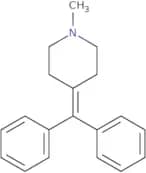
CAS:<p>1-(3'-Pyridylmethyl)-3-(4'-nitrophenyl)urea is a medicinal compound that has been used in Chinese traditional medicine for its tumor-fighting properties. It acts as a potent inhibitor of protein kinases, which are enzymes involved in cell signaling and proliferation. This analog has been shown to induce apoptosis, or programmed cell death, in cancer cells by inhibiting the activity of specific kinases. The compound has also demonstrated anticancer activity in human cancer cell lines and may have potential as a therapeutic agent for the treatment of various types of cancer. Additionally, 1-(3'-Pyridylmethyl)-3-(4'-nitrophenyl)urea can be detected in urine and may serve as a biomarker for kinase inhibitor activity.</p>Formula:C13H11N3O4Purity:Min. 95%Molecular weight:273.24 g/mol4-(Diphenylmethylene)-1-methylpiperidine
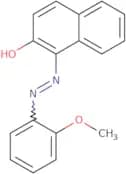
CAS:<p>Please enquire for more information about 4-(Diphenylmethylene)-1-methylpiperidine including the price, delivery time and more detailed product information at the technical inquiry form on this page</p>Formula:C19H21NPurity:Min. 95%Molecular weight:263.4 g/molSudan R- d3
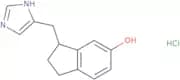
CAS:<p>Sudan R-d3 is a medicinal compound that acts as a kinase inhibitor, targeting kinases involved in cancer cell growth and proliferation. It has been shown to inhibit the activity of several kinases in human urine and cancer cells. Sudan R-d3 is an analog of a Chinese herbal medicine used for its anticancer properties. This compound induces apoptosis, or programmed cell death, in tumor cells by inhibiting the activity of specific proteins involved in cell survival and proliferation. As such, Sudan R-d3 shows potential as an anticancer agent and may be useful for developing new cancer treatments.</p>Formula:C17H14N2O2Purity:Min. 95%Molecular weight:281.32 g/molFadolmidine hydrochloride
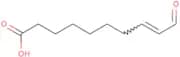
CAS:Fadolmidine hydrochloride is a drug that has been shown to increase the movement of bowel contents in people with constipation. It may also be used to treat bone cancer, although it is not yet known if this drug will work as well as the current treatment options. Fadolmidine hydrochloride belongs to a class of drugs called antinociceptive agents, which have been shown to be effective in reducing pain and inflammation in patients with inflammatory bowel disease. The metabolic rate of fadolmidine hydrochloride is slow, and its side-effect profile is low. Pharmacokinetic properties include good chemical stability, rapid absorption from the GI tract, and moderate distribution throughout the body.Formula:C13H15ClN2OPurity:Min. 95%Molecular weight:250.72 g/mol10-Oxo-trans-8-decenoic acid
CAS:10-Oxo-trans-8-decenoic acid is a potent inhibitor that has been found to have anticancer properties. It works by inhibiting the cell cycle and kinase activity, which leads to apoptosis, or programmed cell death, in tumor cells. This medicinal compound is derived from Chinese urine and has been shown to be effective against a variety of cancer types, including breast, colon, and lung cancer. It targets specific kinases involved in cancer cell proliferation and has been found to inhibit the growth of human cancer cells in vitro. 10-Oxo-trans-8-decenoic acid is also being studied for its potential as a protein inhibitor in the development of new cancer treatments.Formula:C10H16O3Purity:Min. 95%Molecular weight:184.23 g/molN-[2-(Diphenylmethoxy)ethyl]-N,N',N'-trimethyl-ethylenediamine dimaleate
CAS:<p>N-[2-(Diphenylmethoxy)ethyl]-N,N',N'-trimethyl-ethylenediamine dimaleate is a drug product that is used as an analytical standard. It is a synthetic compound that has been shown to have anti-inflammatory properties. This product is also metabolized in the liver, and can be used to study the metabolism of drugs. CAS No. 2718-46-9, API impurity, Synthetic, Metabolism studies, niche, High purity</p>Formula:C28H36N2O9Purity:Min. 95%Molecular weight:544.59 g/molAcetamido-5-benzylthio-1,3,4-thiadiazole
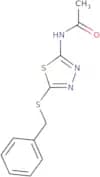
CAS:Acetamido-5-benzylthio-1,3,4-thiadiazole is an impurity that is found in the drug product acetamido-5-(2,6-dichlorobenzyl)thio-1,3,4-thiadiazole. It has been used as an analytical standard for HPLC and as a pharmacopoeia impurity standard. Acetamido-5-benzylthio-1,3,4-thiadiazole is also a metabolite of acetamido-5-(2,6 dichlorobenzyl)thio-1,3,4 thiadiazole. This compound has been detected in natural sources such as plants and animals. Acetamido-5-(2,6 dichlorobenzyl)thio 1,3,4 thiadiazole can be synthesized by reacting 2 chloroacetFormula:C11H11N3OS2Purity:Min. 95%Molecular weight:265.4 g/mol4-Hydroxy azithromycin
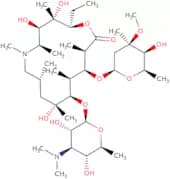
CAS:<p>4-Hydroxy azithromycin is an impurity of Azithromycin that is a metabolite of the drug. 4-Hydroxy azithromycin is a synthetic product, which has been synthesized for use as an analytical standard for HPLC and LC-MS/MS. It has also been used as a pharmacopoeia standard for testing antibiotic purity and quality. Metabolism studies have shown that 4-hydroxy azithromycin is not absorbed from the gastrointestinal tract, but is found in the urine and feces.</p>Formula:C38H72N2O13Purity:Min. 95%Molecular weight:764.98 g/mol6,7-Dehydrohyoscyamine
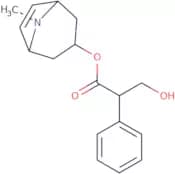
CAS:<p>6,7-Dehydrohyoscyamine (6,7DHHA) is a synthetic alkaloid that is produced by the dehydration of hyoscyamine. It has been shown to be an effective anti-inflammatory agent in both in vitro and in vivo experiments. 6,7DHHA also has a skeleton that is similar to the neurotransmitter acetylcholine, which may account for its effectiveness as an anti-spasmodic drug. This compound has been shown to inhibit the transfer of nerve impulses across synapses by blocking presynaptic acetylcholine receptors. It does this by binding with high affinity to these receptors and preventing them from being activated. 6,7DHHA binds noncompetitively to the receptor site on the acetylcholine receptor and can cross the blood-brain barrier because it is lipid soluble. The biosynthesis of 6,7DHHA starts with two molecules of L-phenylalanine condensed together with one molecule of L-</p>Formula:C17H21NO3Purity:Min. 95%Molecular weight:287.35 g/molPNU-176798
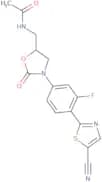
CAS:Please enquire for more information about PNU-176798 including the price, delivery time and more detailed product information at the technical inquiry form on this pageFormula:C16H13FN4O3SPurity:Min. 95%Molecular weight:360.4 g/molPravastatin diol lactone
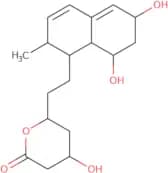
CAS:<p>Pravastatin diol lactone is a lipase inhibitor that prevents the hydrolysis of triglycerides in the intestines. It also inhibits the synthesis of cholesterol by inhibiting hydroxymethylglutaryl-coenzyme A (HMG-CoA) reductase. Pravastatin diol lactone has been shown to be effective in reducing serum cholesterol levels in animal models and inhibiting esterification of cholesterol by preventing the conversion of HMG-CoA to mevalonic acid, which is an important step in the synthesis of cholesterol. Pravastatin diol lactone is a polyketide that was discovered from a fungus and chemically altered to produce this drug.</p>Formula:C18H26O5Purity:Min. 95%Molecular weight:322.4 g/molOrnidazole-hydroxy
CAS:<p>Ornidazole-hydroxy is a drug product that is manufactured using HPLC. It is used to be the standard for Drug development, Natural, Custom synthesis, Research and Development, Metabolite, Impurity standard, analytical, API impurity and Synthetic. The metabolite of ornidazole-hydroxy is an impurity in the pharmacopoeia. Ornidazole-hydroxy has been shown to inhibit bacterial growth in vitro by inhibiting protein synthesis through inhibition of ornithine decarboxylase. Ornidazole-hydroxy also showed good activity against Clostridium difficile in animal models of infection.</p>Formula:C7H10ClN3O4Purity:Min. 95%Molecular weight:235.62 g/molPD-166285-d4
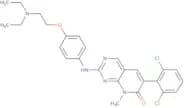
CAS:Please enquire for more information about PD-166285-d4 including the price, delivery time and more detailed product information at the technical inquiry form on this pageFormula:C26H27Cl2N5O2Purity:Min. 95%Molecular weight:516.5 g/molGanciclovir mono-o-propionate
CAS:Ganciclovir mono-o-propionate is an analytical reference standard for HPLC analysis. It is also a drug development intermediate, an API impurity, and a metabolite of ganciclovir. Ganciclovir mono-o-propionate is a crystalline solid with a melting point of 119°C and a molecular weight of 312.5. This compound can be found in the USP/NF (2009) as an impurity in the ganciclovir product. Ganciclovir mono-o-propionate has been used by companies to synthesize ganciclovir or other analogues for research purposes. The natural form of this compound can be found in plants such as apple leaves and grape leaves, but it can also be synthesized from chloroacetic acid and propionic acid.Formula:C12H17N5O5Purity:Min. 95%Molecular weight:311.29 g/mol


![7-Aminopyrazolo[1,5-a]pyrimidine-3,6-dicarboxylic acid 3,6-diethyl ester](/_next/image/?url=https%3A%2Fstatic.cymitquimica.com%2Fproducts%2F3D%2Fthumb-webp%2FTBA02467.webp&w=3840&q=75)

![N-[2-(Diphenylmethoxy)ethyl]-N,N',N'-trimethyl-ethylenediamine dimaleate](/_next/image/?url=https%3A%2Fstatic.cymitquimica.com%2Fproducts%2F3D%2Fthumb-webp%2FCAA71846.webp&w=3840&q=75)