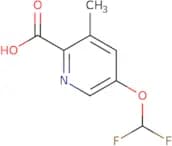
APIs for research and impurities
Active Pharmaceutical Ingredients (APIs) are the substances in drugs responsible for their therapeutic effects. In this section, you will find a wide variety of APIs intended for research use. These compounds are essential for the development, testing, and validation of new pharmaceutical formulations. CymitQuimica offers high-quality APIs to support research in drug discovery and development.
Subcategories of "APIs for research and impurities"
- Aminoacids and derivatives(12,328 products)
- Anthraquinones and derivatives(405 products)
- Benzimidazole and Imidazole Derivatives(10,441 products)
- Benzodiazepine Derivatives(335 products)
- Carbohydrates and glycoconjugates(5,017 products)
- Esters and Derivatives(42,240 products)
- Fatty Acids and Lypidic Derivatives(32,400 products)
- Flavonoids and Polyphenols(17,087 products)
- Free Radicals and Oxidant/Reducing Agents(213 products)
- Ketones and derivatives(2,404 products)
- Natural and semi-synthetic antibiotics(6,385 products)
- Nitriles and Cyano Derivatives(3,067 products)
- Nitrosamines and Derivatives(55 products)
- Nucleosides and Nucleotides(3,432 products)
- Organic Phosphates and Phosphonates(1,202 products)
- Organic Sulphonates and Sulphates(10,435 products)
- Organometallics(4,422 products)
- Others(6,294 products)
- Peptides and Proteins(3,159 products)
- Polymers and Derivatives(100 products)
- Purines and Pyrimidine Derivatives(8,948 products)
- Quinazoline and Quinoline Derivatives(65,987 products)
- Quinones and Derivatives(24,349 products)
- Salts and Derivatives of Active Pharmaceutical Ingredients (API)(79,737 products)
- Steroids and Derivatives(4,976 products)
- Sulfonamides and Derivatives(2,595 products)
- Terpenoids and Derivatives(3,846 products)
- Thiazolidinediones and Thiopyrans(2,752 products)
- β-Adrenergic Compounds(230 products)
Show 21 more subcategories
Found 57049 products of "APIs for research and impurities"
Sort by
Purity (%)
0
100
|
0
|
50
|
90
|
95
|
100
Pyridine-2-methanol methiodide
CAS:Pyridine-2-methanol methiodide is a drug product that is used as an HPLC standard. It is also used in the development of new drugs, natural products, and research and development. Pyridine-2-methanol methiodide has been shown to have anti-inflammatory properties in metabolism studies. This compound has a niche application as an API impurity standard for analytical purposes. The CAS number for this compound is 3313-51-7. Synthetic methods are required to produce this substance. It is a high purity chemical with pharmacopoeia applications.Formula:C7H10INOPurity:Min. 95%Molecular weight:251.06 g/mol3-(Formylamino)-1H-pyrazole-4-carboxamide
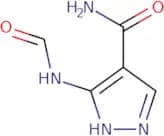
CAS:<p>This product is an organic compound that has a molecular formula of C6H7N3O2. It is a white solid with a melting point of 76.5 °C and an elution time of 7 minutes (range, 1-10 minutes). The detection method is based on the color change from yellow to blue in the presence of dimethylformamide (DMF). This product is used as a solvent for various chemical reactions and can be used in the synthesis of other products. 3-(Formylamino)-1H-pyrazole-4-carboxamide is used in analytical chemistry to determine substances such as pH, ionic strength, and concentration. In addition, this product can be used to quantify substances such as drugs or pharmaceuticals.</p>Formula:C5H6N4O2Purity:Min. 95%Color and Shape:White To Off-White SolidMolecular weight:154.13 g/mol3-HABA kanamycin A sulfate
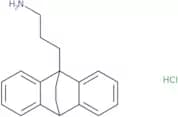
CAS:Please enquire for more information about 3-HABA kanamycin A sulfate including the price, delivery time and more detailed product information at the technical inquiry form on this pageFormula:C22H43N5O13•(H2SO4)xPurity:Min. 95%Desmethylmaprotiline hydrochloride
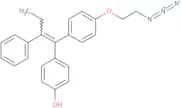
CAS:<p>Desmethylmaprotiline hydrochloride is a drug product that is used in the manufacture of other drugs. It is an impurity standard for analytical purposes and an API impurity for pharmacopoeia. Desmethylmaprotiline hydrochloride is also a metabolite of maprotiline, which is used in the treatment of depression. The chemical structure of Desmethylmaprotiline hydrochloride can be found under CAS No. 92202-51-2 and it has been shown to be synthesized from maprotiline.</p>Formula:C19H22ClNPurity:Min. 95%Molecular weight:299.8 g/mol(E/Z)-N,N-Didesmethyl-4-hydroxy tamoxifen 2’-azide
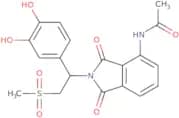
CAS:<p>(E/Z)-N,N-Didesmethyl-4-hydroxy tamoxifen 2’-azide is a metabolite of tamoxifen. It is an impurity that can be found in the drug product. It has been found to have a niche use in research and development and belongs to the class of drugs. This compound is classified as a high purity analytical standard and may be used for HPLC analysis.</p>Formula:C24H23N3O2Purity:Min. 95%Molecular weight:385.5 g/molO4-Desmethyl O3-desethyl apremilast
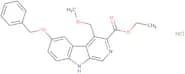
CAS:Please enquire for more information about O4-Desmethyl O3-desethyl apremilast including the price, delivery time and more detailed product information at the technical inquiry form on this pageFormula:C19H18N2O7SPurity:Min. 95%Molecular weight:418.4 g/molZk 93423 hydrochloride
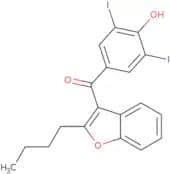
CAS:<p>Zk 93423 hydrochloride is a drug product that is used as an analytical standard for HPLC. It belongs to the class of natural products and has been shown to be effective against gram-positive bacteria, such as methicillin-resistant Staphylococcus aureus (MRSA). Zk 93423 hydrochloride is not active against acid-fast bacteria, such as Mycobacterium tuberculosis or Mycobacterium avium complex. Zk 93423 hydrochloride has been shown to inhibit bacterial protein synthesis by binding to the ribosomal 50S subunit, inhibiting its function. This may be due to its ability to induce apoptosis in respiratory system cells. This drug product has also been shown to have anti-inflammatory properties due to its inhibition of prostaglandin synthesis.</p>Formula:C23H23ClN2O4Purity:Min. 95%Molecular weight:426.9 g/mol2-Butyl-3-(3,5-diiodo-4-hydroxybenzoyl)benzofuran
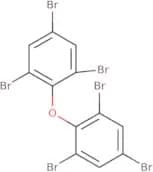
CAS:2-Butyl-3-(3,5-diiodo-4-hydroxybenzoyl)benzofuran is a benzofuran. It is a yellow solid that can be dissolved in water and alcohol.Formula:C19H16I2O3Purity:Min. 95%Molecular weight:546.14 g/molPBDE 155
CAS:<p>PBDE 155 is an analog of PBDE, a kinase inhibitor that has shown potential as an anticancer agent. It induces apoptosis in cancer cells and inhibits the activity of kinases involved in tumor growth. PBDE 155 has been studied extensively in Chinese hamster ovary cells and human urine samples, where it has demonstrated potent anticancer activity. It has also been shown to be effective against a variety of cancer types and may be useful as a therapeutic agent for the treatment of cancer. Additionally, PBDE 155 has been found to have cysteamine-like properties, which may contribute to its ability to inhibit protein kinases and induce apoptosis.</p>Formula:C12H4Br6OPurity:Min. 95%Molecular weight:643.6 g/mol7-Aminopyrazolo[1,5-a]pyrimidine-3,6-dicarboxylic acid 3,6-diethyl ester
CAS:7-Aminopyrazolo[1,5-a]pyrimidine-3,6-dicarboxylic acid 3,6-diethyl ester is an impurity in the synthesis of drugs. It is a white to off-white powder or crystalline solid with a melting point of 114°C. 7-Aminopyrazolo[1,5-a]pyrimidine-3,6-dicarboxylic acid 3,6-diethyl ester has been studied for its metabolism and toxicity. It is not naturally occurring and was synthesized in the laboratory. It may be used as a reference material for pharmacopoeia standards.Formula:C12H14N4O4Purity:Min. 95%Molecular weight:278.26 g/molOlodaterol benzyl ether
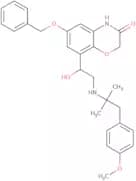
CAS:Olodaterol is a drug product that has been synthesized using natural and synthetic methods. It is an API impurity that is present in the CAS No. 869478-13-7, which is a custom synthesis of olanzapine. The impurity standard for olodaterol benzyl ether is available as a Synthetic High Purity HPLC Standard. The purity of this product has been tested by HPLC and found to be > 98%. Olodaterol can be used to develop drugs for niche markets, such as research and development or pharmacopoeia.Formula:C28H32N2O5Purity:Min. 95%Molecular weight:476.6 g/molQuinovin
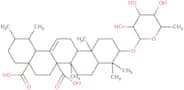
CAS:Quinovin is a Chinese medicinal compound that has been shown to have potent anticancer properties. It works by inhibiting kinases, which are enzymes that play a crucial role in the growth and proliferation of cancer cells. Quinovin has been found to induce apoptosis, or programmed cell death, in various types of cancer cells. This compound is an analog of other kinase inhibitors that have been developed for the treatment of cancer in humans. Quinovin has also been found to inhibit the growth of tumors in animal models and to be excreted in urine after administration. Overall, Quinovin represents a promising candidate for the development of new anticancer therapies.Formula:C36H56O9Purity:Min. 95%Molecular weight:632.8 g/molFluorobexarotene
CAS:Fluorobexarotene is a fatty acid that has been shown to induce the expression of inflammatory genes in animal models. It has also been shown to inhibit the growth of human cancer cells in vitro and in vivo. Fluorobexarotene is used for the diagnosis of x-linked adrenoleukodystrophy and is currently being studied as a treatment for liver cancer. This molecule is also an agonist of retinoic acid receptors, which may be responsible for its effects on gene transcription.Formula:C24H27FO2Purity:Min. 95%Molecular weight:366.5 g/molSecologanin acetal
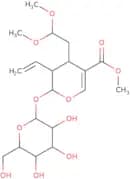
CAS:<p>Secologanin acetal is a lonicerae japonicae schisandrae fruit extract that is used in traditional Chinese medicines. It has been shown to have anti-inflammatory, anti-tumor, and antiviral activities. Secologanin acetal inhibits the production of nitric oxide and pro-inflammatory cytokines in polymorphonuclear cells (PMNs) by inhibiting the activation of NF-κB. Structural formula:</p>Formula:C19H30O11Purity:Min. 95%Molecular weight:434.4 g/molDr 4485 hydrochloride
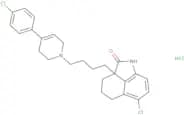
CAS:<p>Dr 4485 hydrochloride is a synthetic, semi-synthetic drug product that is used as an analytical reference material and in the development of drugs. Dr 4485 hydrochloride is also a metabolite of Dr 4485. The compound has been found to have natural origin from plants, but can also be synthetically made. It is not on the current USP/BP/EP monographs and does not have a CAS number. Dr 4485 hydrochloride has been shown to be metabolized through N-dealkylation, oxidation, and hydroxylation reactions. Dr 4485 hydrochloride may show various impurities that are related to the synthesis process or its metabolism. This compound has been studied for its ability to affect the growth of cancer cells via inhibition of protein synthesis by binding to ribosomes in the cytoplasmic membrane of cancer cells.</p>Formula:C26H29Cl3N2OPurity:Min. 95%Molecular weight:491.9 g/molPf9 tetrasodium
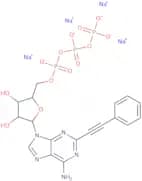
CAS:<p>Pf9 tetrasodium is a high purity, HPLC standard. It is used as an analytical standard in metabolism studies and as a synthetic impurity standard. Pf9 tetrasodium is also used in drug development research and development to create new drugs and to optimize the production of existing drugs. This product is sold in quantities of 100 grams or more. Pf9 tetrasodium has CAS number 851265-78-6.</p>Formula:C18H16N5Na4O13P3Purity:Min. 95%Molecular weight:695.2 g/molo-Acetamidodiphenyl ether
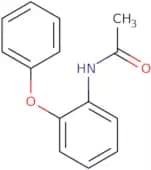
CAS:<p>Acetamidodiphenyl ether (AEP) is a toxic environmental chemical that is used in the manufacture of plastics, rubber and pesticides. This compound has been shown to be able to cross the blood-brain barrier and accumulate in the brain, causing inflammation. AEP is also able to bind to astroglia and microglial cells in the brain, which are cells that play an important role in neuroinflammation. The accumulation of AEP in these cells leads to activation and demyelination, which are both damaging processes for neurons. Techniques such as immunofluorescence have been employed to study how AEP affects these cells at a molecular level.</p>Formula:C14H13NO2Purity:Min. 95%Molecular weight:227.26 g/mol1,3-Bis(9H-carbazol-4-yloxy)-2-propanol(carvedilol impurity)
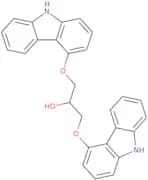
CAS:<p>1,3-Bis(9H-carbazol-4-yloxy)-2-propanol is a metabolite of carvedilol. It is not active as a drug, but may have pharmacological effects. 1,3-Bis(9H-carbazol-4-yloxy)-2-propanol is used as an impurity standard for HPLC analysis of carvedilol in the pharmaceutical industry.</p>Formula:C27H22N2O3Purity:Min. 95%Molecular weight:422.5 g/mol3-(Cyanomethyl)-N-methyl-1H-indole-5-methanesulfonamide
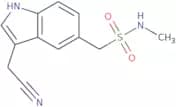
CAS:<p>3-(Cyanomethyl)-N-methyl-1H-indole-5-methanesulfonamide is an analytical standard, used for HPLC analysis of impurities. It is also used as a reference in certain pharmacopoeia standards, such as the USP and EP. 3-(Cyanomethyl)-N-methyl-1H-indole-5-methanesulfonamide has a purity of 99% and can be found in the drug product Impurity Standard.</p>Formula:C12H13N3O2SPurity:Min. 95%Molecular weight:263.32 g/molo-Acetyl silodosin
CAS:<p>O-Acetyl silodosin is a synthetic, natural metabolite of silodosin. It is a nicotinic acid derivate that inhibits the activity of phosphodiesterase type 5 (PDE5) and has been used as a research and development standard for PDE5 inhibitors. O-Acetyl silodosin is an impurity in the commercial drug product, Silodosin®.</p>Formula:C27H34F3N3O5Purity:Min. 95%Molecular weight:537.60 g/mol

![7-Aminopyrazolo[1,5-a]pyrimidine-3,6-dicarboxylic acid 3,6-diethyl ester](/_next/image/?url=https%3A%2Fstatic.cymitquimica.com%2Fproducts%2F3D%2Fthumb-webp%2FTBA02467.webp&w=3840&q=75)