APIs for research and impurities
Active Pharmaceutical Ingredients (APIs) are the substances in drugs responsible for their therapeutic effects. In this section, you will find a wide variety of APIs intended for research use. These compounds are essential for the development, testing, and validation of new pharmaceutical formulations. CymitQuimica offers high-quality APIs to support research in drug discovery and development.
Subcategories of "APIs for research and impurities"
- Aminoacids and derivatives(12,328 products)
- Anthraquinones and derivatives(405 products)
- Benzimidazole and Imidazole Derivatives(10,441 products)
- Benzodiazepine Derivatives(335 products)
- Carbohydrates and glycoconjugates(5,017 products)
- Esters and Derivatives(42,240 products)
- Fatty Acids and Lypidic Derivatives(32,400 products)
- Flavonoids and Polyphenols(17,087 products)
- Free Radicals and Oxidant/Reducing Agents(213 products)
- Ketones and derivatives(2,404 products)
- Natural and semi-synthetic antibiotics(6,385 products)
- Nitriles and Cyano Derivatives(3,067 products)
- Nitrosamines and Derivatives(55 products)
- Nucleosides and Nucleotides(3,432 products)
- Organic Phosphates and Phosphonates(1,202 products)
- Organic Sulphonates and Sulphates(10,435 products)
- Organometallics(4,422 products)
- Others(6,294 products)
- Peptides and Proteins(3,159 products)
- Polymers and Derivatives(100 products)
- Purines and Pyrimidine Derivatives(8,948 products)
- Quinazoline and Quinoline Derivatives(65,987 products)
- Quinones and Derivatives(24,349 products)
- Salts and Derivatives of Active Pharmaceutical Ingredients (API)(79,737 products)
- Steroids and Derivatives(4,976 products)
- Sulfonamides and Derivatives(2,595 products)
- Terpenoids and Derivatives(3,846 products)
- Thiazolidinediones and Thiopyrans(2,752 products)
- β-Adrenergic Compounds(230 products)
Show 21 more subcategories
Found 57049 products of "APIs for research and impurities"
Sort by
Purity (%)
0
100
|
0
|
50
|
90
|
95
|
100
4'-Acetyl simvastatin
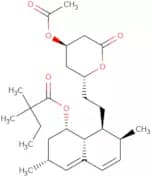
CAS:4'-Acetyl simvastatin is a synthetic statin that inhibits cholesterol synthesis by competitively inhibiting the enzyme HMG-CoA reductase. The reaction yield of 4'-acetyl simvastatin is high, and it has been shown to be effective at a lower dose than other statins. Impurities are not detected in this drug, and it has a low toxicity profile. Some impurities may be formed during the synthesis process due to reactions with acid catalysts, esterases, or expressed chloride. Other impurities such as hydroxyanisole and amination reaction products can be found in this drug due to its manufacturing process, which includes methyl alcohol and chemoenzymatic reactions.Formula:C27H40O6Purity:Min. 95%Color and Shape:PowderMolecular weight:460.6 g/molSunitinib impurity G
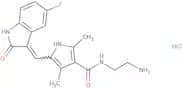
CAS:<p>Sunitinib impurity G is a research and development impurity that is found in the process of synthesizing sunitinib. Sunitinib impurity G is an analytical standard that is soluble in methanol and is suitable for HPLC analysis. It has been shown to have high purity, excellent stability, and a low level of toxicity.</p>Formula:C18H20ClFN4O2Purity:Min. 95%Molecular weight:378.8 g/molLisinopril (8R,S)-diketopiperazine
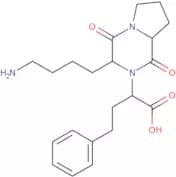
CAS:<p>Lisinopril is a drug product that is used to treat high blood pressure, heart failure and other conditions. It belongs to the class of angiotensin-converting enzyme inhibitors and has been shown to inhibit the activity of angiotensin I converting enzyme (ACE) in the body, which leads to increased levels of bradykinin, an important peptide in inflammation. Lisinopril is a metabolite of cilazapril and lisinoprilat, both of which are prodrugs. Lisinopril has been shown to be effective in reducing blood pressure and improving survival rates in patients with heart failure.</p>Formula:C21H29N3O4Purity:Min. 95%Molecular weight:387.5 g/molLevovirin
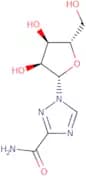
CAS:Controlled ProductLevovirin is an antiviral agent that belongs to the class of ribonucleotide reductase inhibitors. It is a potent inhibitor of hepatitis C virus replication and has been shown to be active against HIV in vitro. Levovirin acts as a competitive inhibitor of the NS3 protease, which is responsible for processing viral proteins. This inhibition prevents the production of new virus particles and the spread of infection. Levovirin also has immunomodulatory effects, which may provide therapeutic benefits in autoimmune diseases such as rheumatoid arthritis or Crohn's disease.Formula:C8H12N4O5Purity:Min. 95%Molecular weight:244.2 g/molrac Enterodiol-d6
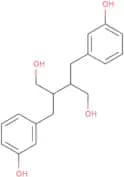
CAS:<p>Racemic Enterodiol-d6 is a high purity synthetic racemic compound that is used as an impurity standard for use in HPLC. The CAS number for Racemic Enterodiol-d6 is 104411-12-3. Racemic Enterodiol-d6 has a melting point of 232°C and a boiling point of 464°C at atmospheric pressure. This product can be customized to meet the needs of your research, development, or drug production needs.</p>Formula:C18H22O4Purity:Min. 95%Molecular weight:308.4 g/molEthyl 2-(6-amino-2,3-dichlorobenzyl)glycine
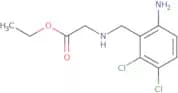
CAS:<p>Ethyl 2-(6-amino-2,3-dichlorobenzyl)glycine is a drug product with a CAS number of 70406-92-7. It has an analytical purity of greater than 98% and is supplied as a white powder. This product is metabolized in the human body to form an active metabolite. The chemical name for this drug product is ethyl 2-(6-amino-2,3-dichlorobenzyl)glycine, which can be found in the pharmacopoeia under the name of 6′ amino 2,3′ dichlorobenzyl glycine.</p>Formula:C11H14Cl2N2O2Purity:Min. 95%Molecular weight:277.15 g/molMidostaurin Impurity 2
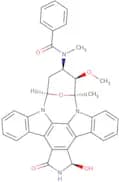
CAS:<p>Midostaurin Impurity 2 is a drug product that has been custom synthesized by our scientists. It is of high purity, and is used in analytical studies to understand its metabolism. This impurity also plays a role in drug development and pharmacopoeia. It can be found under CAS No. 155848-20-7, and has the molecular formula C10H16N4O2S. This compound has an analytical standard at HPLC, which can be used to make sure that it's purity meets FDA standards for research and development purposes.</p>Purity:Min. 95%4-Hydroxy mepivacaine
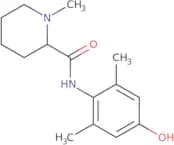
CAS:<p>4-Hydroxy mepivacaine is a drug product that belongs to the group of local anesthetics. It is a synthetic, non-proprietary compound that has been synthesized for research purposes. 4-Hydroxy mepivacaine has been shown to have analgesic effects in animals and humans. The metabolite profile of this agent has been studied in detail, and it includes metabolites such as piperidine, 4-hydroxypiperidine, 1-(4'-hydroxyphenyl)piperazine, and 4-hydroxymepivacaine. Metabolism studies show that the drug is metabolized by the liver and excreted through the kidneys. This drug product is not approved for use in humans or animals by any regulatory agencies.</p>Formula:C15H22N2O2Purity:Min. 95%Color and Shape:PowderMolecular weight:262.35 g/mol2'-(2,3-Epoxypropoxy)-3-phenylpropiophenone
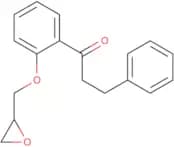
CAS:<p>2'-(2,3-Epoxypropoxy)-3-phenylpropiophenone is a research and development impurity standard. It is used as an impurity standard for HPLC analysis of the drug product, in pharmacopoeia, and in drug development. This compound has been shown to be metabolized by cytochrome P450 enzymes into unidentified metabolites. 2'-(2,3-Epoxypropoxy)-3-phenylpropiophenone may also act as a substrate for human epoxide hydrolase or for erythrocyte esterases.</p>Formula:C18H18O3Purity:Min. 95%Color and Shape:PowderMolecular weight:282.33 g/molCerivastatin lactone
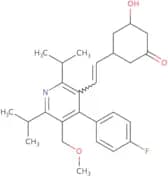
CAS:<p>Cerivastatin lactone is a statin that inhibits the enzyme HMG-CoA reductase, which is involved in the synthesis of cholesterol. It also has anti-inflammatory properties. Cerivastatin lactone is used for the treatment of cardiovascular diseases and hypercholesterolemia. The drug can be administered orally and has been shown to have good bioavailability, with serum concentrations being detectable within 30 minutes after oral administration. Cerivastatin lactone has been shown to reduce serum concentration of total cholesterol, low-density lipoprotein cholesterol (LDL-C), and triglycerides, while increasing high-density lipoprotein cholesterol (HDL-C).</p>Formula:C27H34FNO3Purity:Min. 95%Molecular weight:439.6 g/molAlbendazole sulfone
CAS:<p>Albendazole sulfone is a metabolite of the drug albendazole. It is used as an analytical standard to measure the concentration of albendazole in human plasma and urine samples. The concentration-time curve for albendazole sulfone can be determined using a nonlinear regression analysis, with the rate constant being calculated from the slope and intercept. This method has been shown to be accurate for predicting pharmacokinetic parameters in humans. Albendazole sulfone is also used as a probe in wastewater treatment studies, where it binds to colloidal gold particles that are used to visualize the removal of small particles by microorganisms.</p>Formula:C12H15N3O4SPurity:Min. 95 Area-%Color and Shape:PowderMolecular weight:297.33 g/molSodium sulfoxone
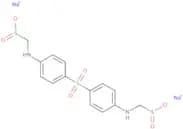
CAS:<p>Sodium sulfoxone is a sulfa drug that is used in the treatment of a number of conditions, including cancer and inflammatory skin diseases. It works by blocking the synthesis of DNA and RNA in bacterial cells, thereby inhibiting cell growth. Sodium sulfoxone has been shown to be effective against a wide variety of microorganisms, including Escherichia coli, Pseudomonas aeruginosa, Staphylococcus aureus, Streptococcus pyogenes and Enterococcus faecalis. Sodium sulfoxone can also be used as an eye drop to treat eye disorders such as choroidal neovascularization.</p>Formula:C14H14N2Na2O6S3Purity:Min. 95%Molecular weight:448.5 g/molTrandolapril acyl-β-D-glucuronide
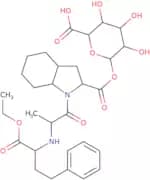
CAS:Trandolapril acyl-β-D-glucuronide (TAPG) is a drug product that is used for research and development. It is a metabolite of the drug trandolapril, which is used for hypertension and heart failure. TAPG has been found to be an impurity in some batches of trandolapril. TAPG has been shown to have the same pharmacological properties as trandolapril, but at a lower dose.Formula:C30H42N2O11Purity:Min. 95%Molecular weight:606.7 g/molIndacaterol impurity 3
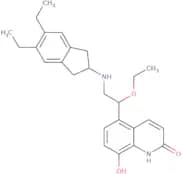
CAS:Indacaterol is a drug product that belongs to the class of drugs known as beta-adrenergic agonists. It is used for the treatment of asthma and COPD. Indacaterol impurity 3 (ID3) is an impurity found in indacaterol, which has been identified as a metabolite of indacaterol. ID3 is not active against bacteria. ID3 has been shown to be synthesized by human liver microsomes and erythrocytes in vitro. ID3 can be purified from indacaterol by HPLC with a purity greater than 99%.Formula:C26H32N2O3Purity:Min. 95%Molecular weight:420.5 g/molMidostaurin Impurity 1
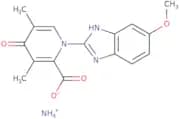
CAS:<p>Midostaurin Impurity 1</p>Formula:C35H30N4O5Purity:Min. 95%Molecular weight:586.64 g/mol1,4-Dihydro-1-(5-methoxy-1H-benzimidazol-2-yl)-3,5-dimethyl-4-oxo-2-pyridinecarboxylic acid ammonium salt
CAS:1,4-Dihydro-1-(5-methoxy-1H-benzimidazol-2-yl)-3,5-dimethyl-4-oxo-2-pyridinecarboxylic acid ammonium salt is a drug product that is custom synthesized to meet the requirements of our customers. It has high purity and analytical properties. Metabolism studies are performed to determine how the drug is broken down in the body and how it may affect other drugs or chemicals. The natural form of this chemical is found in plants and animals. Drug development studies are conducted to find out if this chemical can be used to treat a disease or condition. Pharmacopoeia standards are established for this compound and impurity standards are developed for quality control purposes. CAS No. 2227107-89-1Formula:C16H18N4O4Purity:Min. 95%Molecular weight:330.34 g/mol8-Methyl etodolac
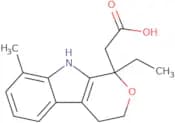
CAS:<p>8-Methyl etodolac is an impurity of etodolac that is used in the drug development and analytical chemistry industry. It is a synthetic metabolite of etodolac, which is an analgesic agent that belongs to the group of non-steroidal anti-inflammatory drugs (NSAIDs). 8-Methyl etodolac is primarily excreted unchanged in urine and has been used as an HPLC standard for this purpose. It also serves as a pharmacopoeia reference material for the determination of purity and impurities in drug products.</p>Formula:C16H19NO3Purity:Min. 95%Molecular weight:273.33 g/mol2-(2,3-Dichlorophenyl)-2-(guanidinoimino) acetonitrile
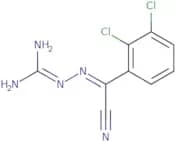
CAS:Lamotrigine is a chemically unrelated compound, which is the active ingredient of a new class of adjuvant drugs for epilepsy. This drug has been found to be effective against seizures in patients with partial seizures and generalized seizures. Lamotrigine is an orally administered suspensoid that can be mixed with water or other liquids to form a suspension. It has been used as a flavouring agent and an adjuvant in pharmaceuticals, including tablets and capsules. The chemical structure of lamotrigine includes two 2,3-dichlorophenyl groups connected by an amino group (guanidinoimino). This structure gives lamotrigine its chemical name: 2-(2,3-dichlorophenyl)-2-(guanidinoimino) acetonitrile.Formula:C9H7Cl2N5Purity:Min. 95%Molecular weight:256.09 g/molN-Benzyl N-demethyl trimebutine
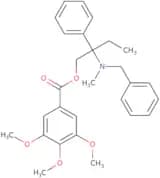
CAS:<p>N-Benzyl N-demethyl trimebutine is an analytical standard that is used in the development of new drugs. It is a synthetic compound and has not been found in any natural sources. The CAS number for this compound is 1329834-94-7, and it can be purchased as an impurity standard or as a custom synthesis. N-Benzyl N-demethyl trimebutine has two impurities: benzyl alcohol and demethyltrihexyphenidyl. This compound can be used as a pharmacopoeia or HPLC standard.</p>Formula:C28H33NO5Purity:Min. 95%Molecular weight:463.6 g/molImazamox methyl ester
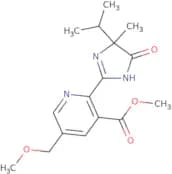
CAS:Imazamox methyl ester is a sulphonate herbicide that is used as an intermediate in the synthesis of other herbicides. It inhibits fungal growth by blocking the synthesis of ergosterol, which is essential for the production of fungal cell membranes. Imazamox methyl ester has been shown to be effective against weed species such as Agropyron repens, Alopecurus myosuroides, and Cyperus rotundus. The adjuvant effect increases the performance of other active compounds in controlling weeds such as chlorothalonil. Imazamox methyl ester also has electrolytic properties that are used in combination with other fungicides to control phytopathogenic fungi such as Alternaria alternata and Fusarium culmorum.Formula:C16H21N3O4Purity:Min. 95%Molecular weight:319.36 g/mol