APIs for research and impurities
Active Pharmaceutical Ingredients (APIs) are the substances in drugs responsible for their therapeutic effects. In this section, you will find a wide variety of APIs intended for research use. These compounds are essential for the development, testing, and validation of new pharmaceutical formulations. CymitQuimica offers high-quality APIs to support research in drug discovery and development.
Subcategories of "APIs for research and impurities"
- Aminoacids and derivatives(12,328 products)
- Anthraquinones and derivatives(405 products)
- Benzimidazole and Imidazole Derivatives(10,441 products)
- Benzodiazepine Derivatives(335 products)
- Carbohydrates and glycoconjugates(5,017 products)
- Esters and Derivatives(42,240 products)
- Fatty Acids and Lypidic Derivatives(32,400 products)
- Flavonoids and Polyphenols(17,087 products)
- Free Radicals and Oxidant/Reducing Agents(213 products)
- Ketones and derivatives(2,404 products)
- Natural and semi-synthetic antibiotics(6,385 products)
- Nitriles and Cyano Derivatives(3,067 products)
- Nitrosamines and Derivatives(55 products)
- Nucleosides and Nucleotides(3,432 products)
- Organic Phosphates and Phosphonates(1,202 products)
- Organic Sulphonates and Sulphates(10,435 products)
- Organometallics(4,422 products)
- Others(6,294 products)
- Peptides and Proteins(3,159 products)
- Polymers and Derivatives(100 products)
- Purines and Pyrimidine Derivatives(8,948 products)
- Quinazoline and Quinoline Derivatives(65,987 products)
- Quinones and Derivatives(24,349 products)
- Salts and Derivatives of Active Pharmaceutical Ingredients (API)(79,737 products)
- Steroids and Derivatives(4,976 products)
- Sulfonamides and Derivatives(2,595 products)
- Terpenoids and Derivatives(3,846 products)
- Thiazolidinediones and Thiopyrans(2,752 products)
- β-Adrenergic Compounds(230 products)
Show 21 more subcategories
Found 57049 products of "APIs for research and impurities"
Sort by
Purity (%)
0
100
|
0
|
50
|
90
|
95
|
100
R-Amisulpride
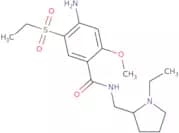
CAS:Controlled ProductR-Amisulpride is an antipsychotic drug that has been shown to be effective in the treatment of schizophrenia. It is used as a long-term treatment for depression and other neurodegenerative diseases. R-Amisulpride also binds to gamma-aminobutyric acid (GABA) receptors, which are located on the outer surface of cells in the brain. This binding reduces the activity of these cells and leads to an increase in neurotransmitter release from presynaptic neurons, resulting in a sedative effect. R-Amisulpride is soluble in water and alcohol, but insoluble in ether or chloroform. It is metabolized by conjugation with glucuronic acid and sulphate, which results in its elimination from the body through urine. R-Amisulpride can be found as white crystals or crystalline powder with a slightly bitter taste and odor. The drug is only available for oral administration at this timeFormula:C17H27N3O4SPurity:Min. 95%Molecular weight:369.5 g/mol3-(Dimethylamino)-1-(2-thienyl)propanone hydrochloride
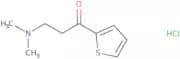
CAS:<p>3-(Dimethylamino)-1-(2-thienyl)propanone hydrochloride is a sulfoxide that is used as a solvent. It has been used in the synthesis of benzylsulfoxides and solvents for the manufacture of pharmaceuticals. 3-(Dimethylamino)-1-(2-thienyl)propanone hydrochloride is also a potent compound, which is structurally similar to benzene but with an additional methyl group. 3-(Dimethylamino)-1-(2-thienyl)propanone hydrochloride has been used in the synthesis of melphalan and elemental analysis. The chloride group on its structure makes it soluble in water and organic solvents such as acetonitrile. 3-(Dimethylamino)-1-(2-thienyl)propanone hydrochloride can be synthesized by reacting nitric acid with 2-aminothiophenol and dimethylanil</p>Formula:C9H14ClNOSPurity:Min. 95%Molecular weight:219.73 g/mol2- (Diethylboryl)pyridine
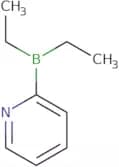
CAS:<p>2- (Diethylboryl)pyridine is a custom synthesis drug product that is used in research and development for the treatment of cancer. 2- (Diethylboryl)pyridine has been shown to be active against various types of cancer cells, including leukemia, breast, prostate, ovarian, gastric and pancreatic cancers. This compound can also be used as an impurity standard for HPLC analysis.</p>Formula:C9H14BNPurity:Min. 95%Molecular weight:147.03 g/molN,N-Dimethyl-2-[(3-methylphenyl)phenylmethoxy]ethanamine
CAS:Controlled ProductN,N-dimethyl-2-[(3-methylphenyl)phenylmethoxy]ethanamine is a metabolite of amphetamine. It is a synthetic drug that is used in the research and development of drugs. Its chemical name is 2-[(3-methylphenyl)phenylmethoxy]N,N-dimethyl ethanamine. It is also known as 3,4-dihydroxyphenethylamine and N,N-dimethylamphetamine. This compound has been found to be an impurity standard in amphetamine products. The CAS number for this compound is 21945-86-8.Formula:C18H23NOPurity:Min. 95%Color and Shape:PowderMolecular weight:269.4 g/molN-[Ethyl-(2-pyridyl-5-ethyl) pioglitazone
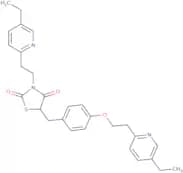
CAS:N-[Ethyl-(2-pyridyl-5-ethyl) pioglitazone] is a drug that belongs to the class of tetracyclic compounds. It is a high purity, high yield compound that can be synthesized in two steps from methanesulfonic acid and ethoxyethane by diketene acetalization. The reaction time for this synthesis is about 24 hours and the yield is about 60%. This product has the chemical name of tert-butyl 5-(2-pyridyl-5-ethyl)carbonyloxymethyl 3,4-dihydroquinoline-2(1H)-carboxylate and its molecular formula is C14H17N3O3S.Formula:C28H31N3O3SPurity:Min. 95%Molecular weight:489.63 g/molPantoprazole sulfone N-oxide
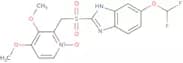
CAS:<p>Pantoprazole sulfone N-oxide is a prodrug that is converted to the active form pantoprazole in the stomach where it inhibits gastric acid secretion. Pantoprazole sulfone N-oxide has been shown to be genotoxic, and can cause polyvinyl chloride to degrade when stored together. Reconstituted solution of this drug should be used within 24 hours after reconstitution, as the chemical stability of this drug decreases rapidly. Validation studies have been conducted on different analytical methods for determining pantoprazole concentrations in reconstituted solutions, and these methods have been harmonized with those published by the United States Pharmacopeia (USP). The pump inhibitor activity of pantoprazole sulfone N-oxide has been demonstrated in dogs, and it is also useful for treating acid reflux disease in humans. Pantoprazole sulfone N-oxide is unstable at high temperatures (>25°C), so should not be refrigerated or</p>Formula:C16H15F2N3O6SPurity:Min. 95%Molecular weight:415.37 g/mol1-(3'-Pyridylmethyl)-3-(4'-nitrophenyl)urea
CAS:<p>1-(3'-Pyridylmethyl)-3-(4'-nitrophenyl)urea is a medicinal compound that has been used in Chinese traditional medicine for its tumor-fighting properties. It acts as a potent inhibitor of protein kinases, which are enzymes involved in cell signaling and proliferation. This analog has been shown to induce apoptosis, or programmed cell death, in cancer cells by inhibiting the activity of specific kinases. The compound has also demonstrated anticancer activity in human cancer cell lines and may have potential as a therapeutic agent for the treatment of various types of cancer. Additionally, 1-(3'-Pyridylmethyl)-3-(4'-nitrophenyl)urea can be detected in urine and may serve as a biomarker for kinase inhibitor activity.</p>Formula:C13H11N3O4Purity:Min. 95%Molecular weight:273.24 g/mol3-[2-[4-(5-Fluoro-1,2-benzisoxazol-3-yl)-1-piperidinyl]ethyl]-6,7,8,9-tetrahydro-2-methyl-4H-pyrido[1,2-a]pyrimidin-4-one
CAS:<p>3-[2-[4-(5-Fluoro-1,2-benzisoxazol-3-yl)-1-piperidinyl]ethyl]-6,7,8,9-tetrahydro-2-methyl-4H-pyrido[1,2-a]pyrimidin-4-one is a drug product that can be used as an analytical reference standard. It is a synthetic compound that is not found in nature and has CAS number 1199589-74-6. This compound has been synthesized by custom synthesis and it is an impurity standard for HPLC analysis. 3-[2-[4-(5-Fluoro-1,2-benzisoxazol-3 -yl)-1 -piperidinyl]ethyl]-6,7,8,9 -tetrahydro - 2 methyl - 4H - pyrido[1,2 -a]p</p>Formula:C23H27FN4O2Purity:Min. 95%Molecular weight:410.48 g/molPyrene-13C6
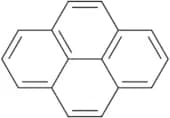
CAS:Pyrene-13C6 is a medicinal compound that has been shown to be an effective inhibitor of apoptosis in tumor and leukemia cells. It works by inhibiting the activity of certain kinases and proteins involved in cell cycle regulation, which can lead to the death of cancer cells. Pyrene-13C6 has been tested extensively in Chinese hamster ovary cells and has been found to have potent anticancer activity. In addition, this compound has been detected in human urine, suggesting that it may have potential as a diagnostic tool for cancer detection. Overall, Pyrene-13C6 is a promising candidate for the development of new cancer therapies and diagnostic methods.Formula:C16H10Purity:Min. 95%Molecular weight:202.25 g/molAnhydrovinblastine N’B-oxide sulfate salt
CAS:Please enquire for more information about Anhydrovinblastine N’B-oxide sulfate salt including the price, delivery time and more detailed product information at the technical inquiry form on this pageFormula:C46H58N4O13SPurity:Min. 95%Molecular weight:907 g/mol25-Hydroxy vitamin d3 3-sulfate sodium salt
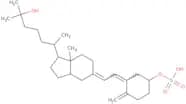
CAS:25-Hydroxy vitamin D3 3-sulfate sodium salt is a unique compound that exhibits various characteristics and functions. It is derived from dimethyl fumarate, tenofovir, dopamine, and other substances. This compound acts as a steroid and plays a crucial role in maintaining the body's overall health.Formula:C27H44O5SPurity:Min. 95%Molecular weight:480.7 g/molEthyl 3,6-dioxocyclohexa-1,4-diene-1-sulfonate
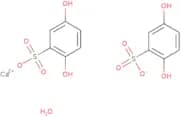
CAS:Ethyl 3,6-dioxocyclohexa-1,4-diene-1-sulfonate is an analog that has shown potential as an anticancer agent. It works by inhibiting kinases that are involved in cancer cell growth and proliferation. Studies have shown that this compound induces apoptosis in human tumor cells, making it a promising candidate for cancer treatment. Ethyl 3,6-dioxocyclohexa-1,4-diene-1-sulfonate has also been found to be a potent inhibitor of protein kinase D (PKD), which plays a key role in cancer cell survival and proliferation. This compound has been compared to the well-known kinase inhibitor saxagliptin and found to be more effective at inhibiting PKD activity. Additionally, Chinese hamster ovary cells treated with Ethyl 3,6-dioxocyclohexa-1,4-diene-1-sulfonate showed reduced levels of urinary exFormula:C12H12CaO11S2Purity:Min. 95%Molecular weight:436.4 g/molDeiodo amiodarone hydrochloride
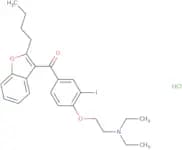
CAS:Deiodo amiodarone hydrochloride is an analog of the drug amiodarone, which is used to treat cardiac arrhythmias. It has been shown to be a potent inhibitor of the nalbuphine-induced activation of human kinases, which are involved in cancer cell proliferation and survival. Deiodo amiodarone hydrochloride has been found to induce apoptosis in cancer cells by inhibiting protein kinase activity. This medicinal compound has also been tested for its anticancer properties in Chinese hamster ovary cells and urine tumor models, where it demonstrated significant inhibition of tumor growth. Overall, deiodo amiodarone hydrochloride shows great potential as an effective inhibitor for various types of cancers.Formula:C25H31ClINO3Purity:Min. 95%Molecular weight:555.9 g/molBMS 326412
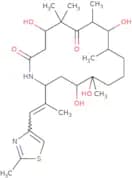
CAS:BMS 326412 is an analog inhibitor of several kinases that have been implicated in cancer. It induces apoptosis, or programmed cell death, in tumor cells by inhibiting the activity of specific proteins involved in cancer cell growth and proliferation. BMS 326412 has shown promise as an anticancer agent in both preclinical and clinical studies, with Chinese medicinal urine being used as a source for its synthesis. This compound has the potential to be a valuable addition to current cancer therapies due to its ability to selectively target cancer cells while leaving healthy cells unharmed.Formula:C27H44N2O6SPurity:Min. 95%Molecular weight:524.7 g/molDibenzazepine-10,11-dione
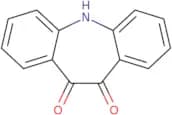
CAS:Dibenzazepine-10,11-dione is a dibenzazepine that has been used as a solvent in pharmacopoeias. It has been shown to stabilize the solvents and increase the rate of dissolution of other compounds. Dibenzazepine-10,11-dione can be sublimed or recrystallized from solvents such as chloroform, acetone, ethanol, benzene, ethers, and halogenated hydrocarbons. The compound is orthorhombic at room temperature and can be converted to monoclinic by heating or cooling. This compound has not been extensively studied because it is insoluble in water.Formula:C14H9NO2Purity:Min. 95%Molecular weight:223.23 g/mol(S)-Mirabegron
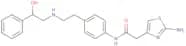
CAS:<p>(S)-Mirabegron is a drug development, API impurity, and HPLC standard. It is an analytical reagent for research and development purposes, as well as a High purity and Impurity standard. This product is also used in the synthesis of drugs or drug products. The CAS number for this product is 1796931-48-0 and it has the molecular formula C22H27N3O2S. (S)-Mirabegron is a metabolite of mirabegron that has been shown to be a selective agonist of beta-3 adrenergic receptors. Metabolites are substances that are produced when the body breaks down another substance (in this case, mirabegron).</p>Formula:C21H24N4O2SPurity:Min. 95%Molecular weight:396.51 g/molDiclofenac dimer impurity
CAS:<p>Diclofenac dimer impurity is a synthetic impurity that is used as a research and development, impurity standard, custom synthesis, drug product, and analytical standard. It is a high purity, CAS No. 1609187-30-5, pharmacopoeia (USP), Drug development (DSD), Metabolite (MET), niche, analytical standard. Diclofenac dimer impurity is a natural metabolite of diclofenac in humans and other animals. The chemical name for the metabolite is 2-(dichlorophenyl) propionic acid or 2-[2-chloro-4-(2,2-dichlorovinyl)phenoxy]propanoic acid. Diclofenac dimer impurity may be synthesized by reacting diclofenac with paraformaldehyde followed by hydrolysis with sodium hydroxide or potassium hydroxide. HPLC analysis</p>Formula:C28H20Cl4N2O4Purity:Min. 95%Molecular weight:590.30 g/mol[6-Hydroxy-2-(4-hydroxyphenyl)-benzo[b]thien-7-yl][4-[2-(1-piperidinyl)ethoxy]phenyl]methanone
CAS:6-Hydroxy-2-(4-hydroxyphenyl)-benzo[b]thien-7-yl][4-[2-(1-piperidinyl)ethoxy]phenyl]methanone is a synthetic impurity standard that is used as a reference material in the analytical, natural and drug development, and metabolite studies. 6-Hydroxy-2-(4-hydroxyphenyl)-benzo[b]thien-7-yl][4-[2-(1-piperidinyl)ethoxy]phenyl]methanone has a molecular weight of 390.27 and chemical formula C26H28N2O3S. It is also referred to by its CAS number 1391054-73-1.6Formula:C28H27NO4SPurity:Min. 95%Molecular weight:473.58 g/molN-Formyl Saxagliptin
<p>N-Formyl Saxagliptin is an analytical standard for HPLC. It is used as a drug development and API impurity in the pharmaceutical industry. It was synthesized by reacting formaldehyde with the amino acid L-glutamic acid, followed by purification to remove any other contaminants. The CAS number for this chemical is 57847-82-0.</p>Purity:Min. 95%Leuprolide acetate ep impurity F
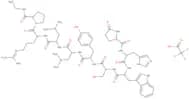
CAS:<p>Leuprolide acetate ep impurity F is a drug product that is an impurity standard for the leuprolide acetate API. It is used in analytical and clinical studies to identify the presence of leuprolide acetate impurities, as well as to determine the metabolism of leuprolide acetate. Leuprolide acetate ep impurity F has been shown to be a natural metabolite of leuprolide acetate and have a niche application in pharmacopoeia.</p>Formula:C61H85F3N16O14Purity:Min. 95%Molecular weight:1,323.4 g/mol

![N,N-Dimethyl-2-[(3-methylphenyl)phenylmethoxy]ethanamine](/_next/image/?url=https%3A%2Fstatic.cymitquimica.com%2Fproducts%2F3D%2Fthumb-webp%2FWAA94586.webp&w=3840&q=75)

![3-[2-[4-(5-Fluoro-1,2-benzisoxazol-3-yl)-1-piperidinyl]ethyl]-6,7,8,9-tetrahydro-2-methyl-4H-pyrid…](/_next/image/?url=https%3A%2Fstatic.cymitquimica.com%2Fproducts%2F3D%2Fthumb-webp%2FIF23360.webp&w=3840&q=75)

![[6-Hydroxy-2-(4-hydroxyphenyl)-benzo[b]thien-7-yl][4-[2-(1-piperidinyl)ethoxy]phenyl]methanone](/_next/image/?url=https%3A%2Fstatic.cymitquimica.com%2Fproducts%2F3D%2Fthumb-webp%2FIH45348.webp&w=3840&q=75)