APIs for research and impurities
Subcategories of "APIs for research and impurities"
- Aminoacids and derivatives(12,336 products)
- Anthraquinones and derivatives(405 products)
- Benzimidazole and Imidazole Derivatives(10,445 products)
- Benzodiazepine Derivatives(335 products)
- Carbohydrates and glycoconjugates(5,028 products)
- Esters and Derivatives(42,248 products)
- Fatty Acids and Lypidic Derivatives(32,405 products)
- Flavonoids and Polyphenols(17,087 products)
- Free Radicals and Oxidant/Reducing Agents(213 products)
- Ketones and derivatives(2,404 products)
- Natural and semi-synthetic antibiotics(6,391 products)
- Nitriles and Cyano Derivatives(3,068 products)
- Nitrosamines and Derivatives(55 products)
- Nucleosides and Nucleotides(3,468 products)
- Organic Phosphates and Phosphonates(1,202 products)
- Organic Sulphonates and Sulphates(10,437 products)
- Organometallics(4,422 products)
- Others(6,298 products)
- Peptides and Proteins(3,148 products)
- Polymers and Derivatives(100 products)
- Purines and Pyrimidine Derivatives(8,957 products)
- Quinazoline and Quinoline Derivatives(66,029 products)
- Quinones and Derivatives(24,356 products)
- Salts and Derivatives of Active Pharmaceutical Ingredients (API)(79,891 products)
- Steroids and Derivatives(4,978 products)
- Sulfonamides and Derivatives(2,598 products)
- Terpenoids and Derivatives(3,849 products)
- Thiazolidinediones and Thiopyrans(2,753 products)
- β-Adrenergic Compounds(230 products)
Found 57147 products of "APIs for research and impurities"
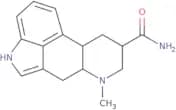
Dihydrolysergamide
CAS:Controlled ProductDihydrolysergamide is a synthetic compound that is an impurity in the synthesis of LYSERGAMIDE. Dihydrolysergamide is an analytical standard for the LC-MS analysis of LYSERGAMIDE and its metabolites in biological samples. Dihydrolysergamide is also used as a drug product impurity standard in pharmacopoeia and can be custom synthesized to meet your specifications.Formula:C16H19N3OPurity:Min. 95%Color and Shape:PowderMolecular weight:269.35 g/mol4’-Chloro clomiphene citrate
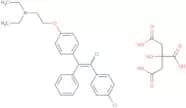
CAS:Controlled Product4’-Chloro clomiphene citrate is a drug product that is used as an analytical standard and impurity in the pharmaceutical industry. This compound is a natural metabolite of clomiphene, and is found in urine, serum, liver, and brain tissue. 4’-Chloro clomiphene citrate has been shown to have anti-inflammatory properties.
Formula:C32H35Cl2NO8Purity:Min. 95%Molecular weight:632.5 g/molNabumetone dimer
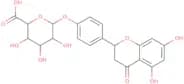
CAS:Nabumetone is a nonsteroidal anti-inflammatory drug that is metabolized by the liver to form a dimer. The major metabolite of nabumetone is the dimer, which has been used as an impurity standard for this drug. Nabumetone has been shown to inhibit prostaglandin synthesis, and its metabolites have been studied for their effects on various enzymes.Formula:C27H26O3Purity:Min. 95%Molecular weight:398.49 g/molNaringenin 4'-o-β-D-glucuronide sodium
CAS:Naringenin 4'-o-β-D-glucuronide sodium salt is an analog of naringenin, a flavonoid found in Chinese herbs and citrus fruits. It has been shown to possess potent anticancer activity by inhibiting cyclin-dependent kinases (CDKs) and inducing apoptosis in cancer cells. Naringenin 4'-o-β-D-glucuronide sodium salt acts as a protein kinase inhibitor that disrupts the signaling pathways involved in tumor growth and metastasis. This compound has been found to be effective against various types of cancer, including breast, lung, prostate, and colon cancer. It is excreted in human urine and can be used as a biomarker for evaluating the efficacy of cancer treatment. Overall, this sodium salt has great potential as an inhibitor of tumor cell proliferation and may be a promising therapeutic agent for cancer treatment.
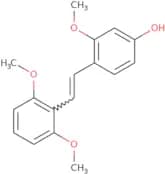
Formula:C21H20O11•NaxPurity:Min. 95%Molecular weight:448.4 g/mol(E)-4-(2,6-Dimethoxystyryl)-3-methoxyphenol-d6
CAS:Please enquire for more information about (E)-4-(2,6-Dimethoxystyryl)-3-methoxyphenol-d6 including the price, delivery time and more detailed product information at the technical inquiry form on this page
Formula:C17H18O4Purity:Min. 95%Molecular weight:286.32 g/mol(S)-Rexamino
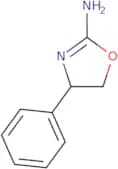
CAS:Controlled Product(S)-Rexamino is an analog of kinases that acts as a potent inhibitor of protein kinase. It has been found to be effective in the treatment of cancer by inducing apoptosis in human cancer cells. (S)-Rexamino also has inhibitory effects on tumor growth and is considered an anticancer agent. This toxin has been shown to be effective against Chinese hamster ovary cells, which are often used in cancer research. Additionally, (S)-Rexamino can be detected in urine samples and may have potential as a diagnostic tool for certain types of cancers. With its potent inhibitory effects on kinases, (S)-Rexamino shows great promise as a potential treatment option for various forms of cancer.Formula:C9H10N2OPurity:Min. 95%Molecular weight:162.19 g/mol3-(tert-Butylsulfinyl)propanoic acid
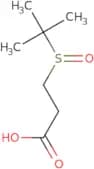
CAS:Please enquire for more information about 3-(tert-Butylsulfinyl)propanoic acid including the price, delivery time and more detailed product information at the technical inquiry form on this page
Formula:C7H14O3SPurity:Min. 95%Molecular weight:178.25 g/molN,N-Dimethyl-N'-(4-methyl-2-nitrophenyl)-urea
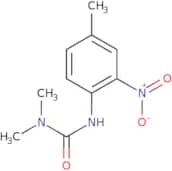
CAS:Please enquire for more information about N,N-Dimethyl-N'-(4-methyl-2-nitrophenyl)-urea including the price, delivery time and more detailed product information at the technical inquiry form on this pageFormula:C10H13N3O3Purity:Min. 95%Molecular weight:223.23 g/molrac N-tert-Butoxycarbonyl viloxazine
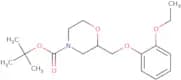
CAS:Please enquire for more information about rac N-tert-Butoxycarbonyl viloxazine including the price, delivery time and more detailed product information at the technical inquiry form on this pageFormula:C18H27NO5Purity:Min. 95%Molecular weight:337.4 g/mol4-(Hydrazinecarbonyl)pyridin-1-ium-1-olate
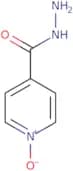
CAS:4-(Hydrazinecarbonyl)pyridin-1-ium-1-olate is a medicinal compound that has been shown to have potent anticancer properties. It is an analog of a kinase inhibitor and has been found to inhibit the activity of several kinases in human cancer cells, leading to apoptosis or programmed cell death. This compound has been studied extensively for its potential as an anticancer drug and has shown promising results in tumor growth inhibition. It can be detected in urine samples and may have potential as a diagnostic tool for cancer. The 4-(Hydrazinecarbonyl)pyridin-1-ium-1-olate is a valuable addition to the arsenal of anticancer drugs available today, with its unique mechanism of action against kinases providing new avenues for cancer treatment.
Formula:C6H7N3O2Purity:Min. 95%Molecular weight:153.14 g/mol(R)-Ofloxacin N-oxide acetic acid salt
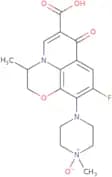
CAS:(R)-Ofloxacin N-oxide acetic acid salt is a medicinal compound that has shown potential as an anticancer agent. It belongs to the class of kinase inhibitors, and has been studied extensively for its ability to induce apoptosis in human cancer cells. (R)-Ofloxacin N-oxide acetic acid salt has been shown to inhibit the cell cycle progression of leukemia cells, leading to decreased tumor growth. Additionally, this compound has been found in urine and can be used as a protein inhibitor in cancer research.Formula:C18H20FN3O5Purity:Min. 95%Molecular weight:377.4 g/molCarvedilol bis(N-benzylalkylpyrocatechol) impurity
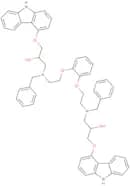
CAS:Please enquire for more information about Carvedilol bis(N-benzylalkylpyrocatechol) impurity including the price, delivery time and more detailed product information at the technical inquiry form on this pageFormula:C54H54N4O6Purity:Min. 95%Molecular weight:855 g/mol5-Amino-2-carboxy-4-cyano-3-thiopheneacetic acid
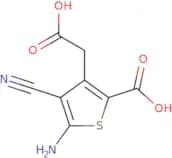
CAS:Please enquire for more information about 5-Amino-2-carboxy-4-cyano-3-thiopheneacetic acid including the price, delivery time and more detailed product information at the technical inquiry form on this pageFormula:C8H6N2O4SPurity:Min. 95%Molecular weight:226.21 g/molZZW-115
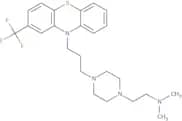
CAS:ZZW-115 is a NUPR-1 inhibitor that induces the accumulation of reactive oxygen species inside cells. It is a highly potent inhibitor of NUPR1, which accumulates in cancer cells. ZZW-115 is therefore an anticancer agent.Formula:C24H31F3N4SPurity:Min. 95%Molecular weight:464.6 g/mol3-Nitro-1-(4-octylphenyl)propan-1-ol
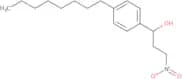
CAS:3-Nitro-1-(4-octylphenyl)propan-1-ol is a chemical compound that has been shown to have various characteristics and uses. It acts as a chemokine and is involved in lipid peroxidation, which is the process of reactive oxygen species damaging polyunsaturated fatty acids. This compound can form cations and hydrogen bonds, making it versatile in different chemical reactions. Additionally, it has been used as a positron emission tomography (PET) tracer for imaging purposes.Formula:C17H27NO3Purity:Min. 95%Molecular weight:293.4 g/molGlyoxime
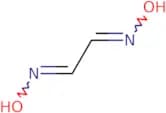
CAS:Glyoxime is an anticancer agent that inhibits the growth of cancer cells by inducing apoptosis, a process of programmed cell death. It has been shown to be effective against various types of tumors, including those resistant to conventional chemotherapy. Glyoxime works by inhibiting protein kinases involved in cell cycle regulation and chitin synthesis. This leads to the disruption of cancer cell growth and proliferation. Glyoxime has also been found to have heparin-like properties, which may contribute to its antitumor activity. In addition, it acts as an inhibitor of several enzymes involved in cancer development, making it a promising candidate for cancer therapy. Glyoxime has been tested on human and Chinese hamster ovary cell lines with positive results.Formula:C2H4N2O2Purity:Min. 95%Molecular weight:88.07 g/mol(-)-Anonaine
CAS:(-)-Anonaine is a natural alkaloid with potential anticancer properties. It has been shown to inhibit the growth of tumor cells by blocking the cell cycle and inducing apoptosis. (-)-Anonaine has also been found to inhibit human kinase activity, which plays a key role in cancer cell proliferation. This compound has been isolated from Chinese medicinal plants and can be detected in urine samples after consumption. (-)-Anonaine may have potential as an inhibitor of leukemia and other cancer cells due to its ability to target specific proteins involved in cancer development. Further research is needed to fully understand the mechanisms behind its anticancer effects.Formula:C17H15NO2Purity:Min. 95%Molecular weight:265.31 g/molOxydeprofos
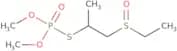
CAS:Oxydeprofos is a potent tumor kinase inhibitor that has shown promising results in the treatment of cancer. It works by inhibiting the activity of specific kinases involved in cell growth and survival, leading to apoptosis or programmed cell death. Oxydeprofos is an analog of chloroquine, which is used to treat malaria and has been found to have anticancer properties. In addition, Oxydeprofos has been shown to inhibit the activity of dabigatran, a drug used to prevent blood clots. Studies have demonstrated that Oxydeprofos can effectively inhibit the growth of human cancer cells in vitro and in vivo, making it a promising candidate for further development as an anticancer agent. Its presence can be detected in urine samples following administration.Formula:C7H17O4PS2Purity:Min. 95%Molecular weight:260.3 g/mol4-Deschloro-4-hydroxy clofazimine
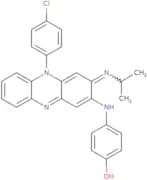
CAS:4-Deschloro-4-hydroxy clofazimine is an analog of clofazimine that has been shown to have potent anticancer properties. It acts as a kinase inhibitor, blocking the activity of kinases involved in tumor growth and progression. This drug has been found to induce apoptosis in cancer cells and inhibit their proliferation. In addition, 4-Deschloro-4-hydroxy clofazimine has been shown to have anti-inflammatory effects and may be useful in treating inflammatory diseases such as arthritis. Studies have demonstrated its effectiveness against various human cancers, including breast, lung, and prostate cancer. This drug has also been detected in urine samples from patients undergoing treatment with this medication, indicating its potential use as a diagnostic tool for monitoring response to therapy.Formula:C27H23ClN4OPurity:Min. 95%Molecular weight:454.9 g/molThymine-d4
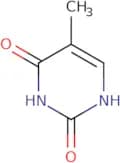
CAS:Thymine-d4 is a medicinal compound that has been found to be an effective inhibitor of cancer cell growth. It is a deuterated analog of thymine, which is a pyrimidine base found in DNA. Thymine-d4 has been shown to induce apoptosis in Chinese hamster ovary (CHO) cells and other cancer cell lines. It is an anticancer agent that works by inhibiting protein kinases, which are enzymes involved in the regulation of cell growth and division. Thymine-d4 has also been detected in human urine, suggesting that it may have potential as a diagnostic marker for certain cancers. This inhibitor has shown promising results in preclinical studies as a potential therapeutic agent for the treatment of tumors.Formula:C5H6N2O2Purity:Min. 95%Molecular weight:130.14 g/mol