


APIs for research and impurities
Subcategories of "APIs for research and impurities"
- Aminoacids and derivatives(12,332 products)
- Anthraquinones and derivatives(404 products)
- Benzimidazole and Imidazole Derivatives(10,439 products)
- Benzodiazepine Derivatives(333 products)
- Carbohydrates and glycoconjugates(5,049 products)
- Esters and Derivatives(42,250 products)
- Fatty Acids and Lypidic Derivatives(32,406 products)
- Flavonoids and Polyphenols(17,081 products)
- Free Radicals and Oxidant/Reducing Agents(212 products)
- Ketones and derivatives(2,399 products)
- Natural and semi-synthetic antibiotics(6,375 products)
- Nitriles and Cyano Derivatives(3,068 products)
- Nitrosamines and Derivatives(55 products)
- Nucleosides and Nucleotides(3,470 products)
- Organic Phosphates and Phosphonates(1,200 products)
- Organic Sulphonates and Sulphates(10,430 products)
- Organometallics(4,421 products)
- Others(6,299 products)
- Peptides and Proteins(3,146 products)
- Polymers and Derivatives(100 products)
- Purines and Pyrimidine Derivatives(8,940 products)
- Quinazoline and Quinoline Derivatives(65,968 products)
- Quinones and Derivatives(24,357 products)
- Salts and Derivatives of Active Pharmaceutical Ingredients (API)(80,646 products)
- Steroids and Derivatives(4,951 products)
- Sulfonamides and Derivatives(2,589 products)
- Terpenoids and Derivatives(3,845 products)
- Thiazolidinediones and Thiopyrans(2,753 products)
- β-Adrenergic Compounds(231 products)
Found 57981 products of "APIs for research and impurities"
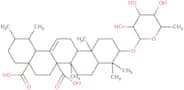
Quinovin
CAS:Quinovin is a Chinese medicinal compound that has been shown to have potent anticancer properties. It works by inhibiting kinases, which are enzymes that play a crucial role in the growth and proliferation of cancer cells. Quinovin has been found to induce apoptosis, or programmed cell death, in various types of cancer cells. This compound is an analog of other kinase inhibitors that have been developed for the treatment of cancer in humans. Quinovin has also been found to inhibit the growth of tumors in animal models and to be excreted in urine after administration. Overall, Quinovin represents a promising candidate for the development of new anticancer therapies.Formula:C36H56O9Purity:Min. 95%Molecular weight:632.8 g/molPf9 tetrasodium
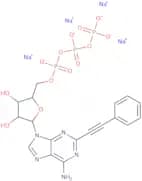
CAS:Pf9 tetrasodium is a high purity, HPLC standard. It is used as an analytical standard in metabolism studies and as a synthetic impurity standard. Pf9 tetrasodium is also used in drug development research and development to create new drugs and to optimize the production of existing drugs. This product is sold in quantities of 100 grams or more. Pf9 tetrasodium has CAS number 851265-78-6.Formula:C18H16N5Na4O13P3Purity:Min. 95%Molecular weight:695.2 g/molVinorelbine N-methiodide
CAS:Vinorelbine N-methiodide is a drug product that is used for the treatment of various types of cancer. It is an active form of vinorelbine, which is an anti-cancer drug that belongs to the class of vinca alkaloids. Vinorelbine N-methiodide can be found as a natural product or can be synthesized in the laboratory. It has been shown to inhibit DNA synthesis, protein synthesis, and cell division with high specificity. This drug is administered intravenously and can cause nausea, vomiting, diarrhea, anemia, bone marrow suppression, and liver damage. The most common side effects are anemia and constipation.Formula:C46H57IN4O8Purity:Min. 95%Molecular weight:920.87 g/mol4'-(Bromomethyl)-[1,1'-biphenyl]-2-carboxylic acid
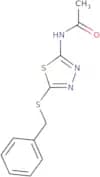
CAS:4'-(Bromomethyl)-[1,1'-biphenyl]-2-carboxylic acid (4BMBCA) is a chemical compound that is used as an analytical method in drug discovery and development. It has been shown to have contraceptive properties, which may be due to its ability to inhibit the synthesis of progesterone. 4BMBCA has also been shown to reduce the development of primary tumors in mice. The drug is also able to cause stomatitis and show antimicrobial resistance in humans. Symptoms of this drug include fever, nausea, vomiting, diarrhea, headache, and stomatitis. 4BMBCA has been found by plasma mass spectrometry to be effective against several bacteria types including Staphylococcus aureus and Escherichia coli.Formula:C14H11BrO2Purity:Min. 95%Molecular weight:291.14 g/molAcetamido-5-benzylthio-1,3,4-thiadiazole
CAS:Acetamido-5-benzylthio-1,3,4-thiadiazole is an impurity that is found in the drug product acetamido-5-(2,6-dichlorobenzyl)thio-1,3,4-thiadiazole. It has been used as an analytical standard for HPLC and as a pharmacopoeia impurity standard. Acetamido-5-benzylthio-1,3,4-thiadiazole is also a metabolite of acetamido-5-(2,6 dichlorobenzyl)thio-1,3,4 thiadiazole. This compound has been detected in natural sources such as plants and animals. Acetamido-5-(2,6 dichlorobenzyl)thio 1,3,4 thiadiazole can be synthesized by reacting 2 chloroacetFormula:C11H11N3OS2Purity:Min. 95%Molecular weight:265.4 g/molGanciclovir mono-o-propionate
CAS:Ganciclovir mono-o-propionate is an analytical reference standard for HPLC analysis. It is also a drug development intermediate, an API impurity, and a metabolite of ganciclovir. Ganciclovir mono-o-propionate is a crystalline solid with a melting point of 119°C and a molecular weight of 312.5. This compound can be found in the USP/NF (2009) as an impurity in the ganciclovir product. Ganciclovir mono-o-propionate has been used by companies to synthesize ganciclovir or other analogues for research purposes. The natural form of this compound can be found in plants such as apple leaves and grape leaves, but it can also be synthesized from chloroacetic acid and propionic acid.Formula:C12H17N5O5Purity:Min. 95%Molecular weight:311.29 g/molrac N-Methyl epinephrine hydrochloride salt
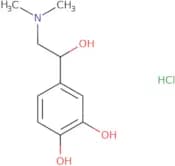
CAS:Rac N-Methyl epinephrine hydrochloride salt is a potential anti-cancer agent that has been used in Chinese medicine for its apoptotic effects on cancer cells. It works by inhibiting the chitin kinase pathway, which is involved in tumor growth and survival. Rac N-Methyl epinephrine hydrochloride salt also acts as a potassium channel inhibitor, leading to cell death in cancer cells. This drug has shown synergistic effects when combined with other cancer treatments such as enoxaparin or heparin. Additionally, it has been found to be an effective inhibitor of psyllium-induced colon carcinogenesis in human subjects. Overall, Rac N-Methyl epinephrine hydrochloride salt shows great promise as a potential anti-cancer analog for use in cancer treatment.
Formula:C10H16ClNO3Purity:Min. 95%Molecular weight:233.69 g/molcis-4-[[[(1,1-Dimethylethoxy)carbonyl]amino]methyl]-cyclohexanecarboxylic acid
CAS:Cis-4-[[[(1,1-Dimethylethoxy)carbonyl]amino]methyl]-cyclohexanecarboxylic acid is a tert-butyl derivative of cis-4-[(dimethylamino)methyl]-cyclohexanecarboxylic acid. It has been shown to interact with plasmin and inhibit both the enzymatic activity and the binding of plasmin to its substrates. Cis-4-[(dimethylamino)methyl]-cyclohexanecarboxylic acid interacts with the side chain of the amino group in plasmin's active site, which is different from other known inhibitors. This compound has also been shown to inhibit urokinase and picolyl plasminogen activator (PPA).Formula:C13H23NO4Purity:Min. 95%Molecular weight:257.33 g/mol2-[3,5-Dichloro-4-(4-chlorobenzoyl)phenyl]-1,2,4-triazine-3,5(2H,4H)-dione
CAS:2-[3,5-Dichloro-4-(4-chlorobenzoyl)phenyl]-1,2,4-triazine-3,5(2H,4H)-dione is a research and development impurity standard. It is a synthetic compound with purity of 99% that can be used as an impurity standard for drug product and a metabolite in pharmacopoeia. 2-[3,5-Dichloro-4-(4-chlorobenzoyl)phenyl]-1,2,4-triazine-3,5(2H,4H)-dione has been used in metabolism studies to demonstrate the formation of 2-[3,5-dichloro-4-(4-fluorobenzoyl)phenyl]-1,2,4-triazine 3,5(2H, 4H)-dione.Formula:C16H8Cl3N3O3Purity:Min. 95%Molecular weight:396.6 g/molDiethatyl
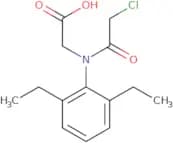
CAS:Diethatyl is an anticancer drug that induces apoptosis in human tumor cells. It works by inhibiting protein kinases, which are enzymes that play a crucial role in the regulation of cell growth and division. Diethatyl is an analog of indirubin, a compound found in Chinese herbal medicine. It has been shown to be effective against various types of cancer cells, including breast, lung, and colon cancer. Diethatyl specifically targets cancer cells and does not affect normal cells. It is a promising new inhibitor in the fight against cancer.Formula:C14H18ClNO3Purity:Min. 95%Molecular weight:283.75 g/molN-Formyl-L-leucine (1S)-1-[[(2R,3R)-3-hexyl-4-oxo-2-oxetanyl] methyl] dodecyl ester
CAS:N-Formyl-L-leucine (1S)-1-[[(2R,3R)-3-hexyl-4-oxo-2-oxetanyl] methyl] dodecyl ester is an impurity in the drug product. It can be used as a custom synthesis or natural standard and has been shown to have metabolites that are toxic to human cells. This impurity can be synthesized for HPLC analysis and research purposes.
Formula:C29H53NO5Purity:Min. 95%Molecular weight:495.73 g/mol(7-(4-{4-[4-(2,3-Dichlorophenyl)piperazin-1-yl]butoxy}butoxy)-3,4-dihydroquinolin-2(1H)-one)
CAS:7-(4-{4-[4-(2,3-Dichlorophenyl)piperazin-1-yl]butoxy}butoxy)-3,4-dihydroquinolin-2(1H)-one is an analytical reference standard for HPLC. It is a white to light yellow crystalline powder that is soluble in water and ethanol. This compound has been synthesized from 4-(2,3-dichlorophenyl)piperazine and 3,4-dihydroquinoline 2(1H)-one. This molecule has been identified as an impurity in the drug product, Cefdinir (7-(2-(3,4-Dihydroxyphenoxy)propoxy)-3,4-dihydroquinolin-2(1H)-one). The purity of this chemical has been shown to be greater than 99.5% by high performance liquid chromatography (HPLC).
Formula:C27H35Cl2N3O3Purity:Min. 95%Molecular weight:520.50 g/molN,N'-Dimethyl-2-nitro-1,1-ethendiamine
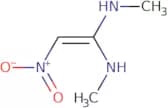
CAS:N,N'-Dimethyl-2-nitro-1,1-ethendiamine is a protonated form of N,N'-dimethyl-2-nitroetheneamine. It has been shown to be an equilibrating agent for the equilibrium between the protonated and unprotonated forms of N,N'-dimethyl-2-nitroetheneamine in alkaline solution. In this way it can be used to determine the pH of an unknown solution. The equilibrium constant is 10^14 at 25 degrees Celsius. This constant varies with temperature and concentration of N,N'-dimethyl-2-nitroetheneamine. The electronic spectra show that this molecule is an anion.Formula:C4H9N3O2Purity:Min. 95%Molecular weight:131.13 g/molFenbufen-d9
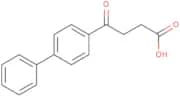
CAS:Please enquire for more information about Fenbufen-d9 including the price, delivery time and more detailed product information at the technical inquiry form on this page
Formula:C16H14O3Purity:Min. 95%Molecular weight:263.33 g/molImpentamine dihydrobromide
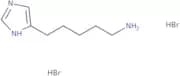
CAS:Impentamine dihydrobromide (IMB) is a research and development drug product that has been synthesized for the treatment of epilepsy. IMB is an impurity standard for impentamine, a synthetic drug that inhibits the enzyme acetylcholinesterase and has been shown to be effective in the treatment of Alzheimer's disease. Impentamine dihydrobromide is a metabolite of impentamine, which inhibits the enzyme acetylcholinesterase and has been shown to be effective in the treatment of Alzheimer's disease. Impentamine dihydrobromide binds to acetylcholinesterase by competitive inhibition and causes an accumulation of acetylcholine in the synaptic cleft. This accumulation leads to increased neurotransmission at nerve terminals, because acetylcholine is necessary for neurotransmitter release.Formula:C8H17Br2N3Purity:Min. 95%Molecular weight:315.05 g/molN-Nitroso N-hydroxy cyclohexanamine
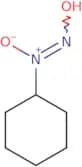
CAS:N-Nitroso N-hydroxy cyclohexanamine is an analog of betamethasone and a potent inhibitor of kinases. It has been shown to have anticancer properties by inducing apoptosis in cancer cells. This compound is excreted in urine and has been studied extensively in Chinese populations for its potential as an anticancer agent. N-Nitroso N-hydroxy cyclohexanamine inhibits the activity of kinases, which are important enzymes involved in cell signaling pathways that regulate cell growth and division. This inhibition leads to the suppression of tumor growth and the induction of apoptosis in cancer cells. Additionally, this compound has been found to be a potent inhibitor of vitamin D receptor (VDR) and may play a role in regulating VDR-mediated gene expression.
Formula:C6H12N2O2Purity:Min. 95%Molecular weight:144.17 g/molOlmesartan methyl ketone
CAS:Olmesartan methyl ketone is a synthetic drug product that is used as an analytical reference standard. It has been shown to be metabolized in vivo to its active form, olmesartan. The chemical structure of this compound is similar to the active metabolite of other angiotensin II receptor blockers, such as losartan and valsartan. This compound is an impurity in the API Olmesartan medoxomil, which is a potent angiotensin II receptor blocker used for the treatment of hypertension (high blood pressure).Formula:C25H28N6O2Purity:Min. 95%Molecular weight:444.5 g/molN-(2,2,2-Trichloroethoxy)carbonyl] bisnor-(cis)-tilidine
CAS:N-(2,2,2-Trichloroethoxy)carbonyl] bisnor-(cis)-tilidine is an analog of dabigatran that has been shown to be a potent inhibitor of human kinases. It has demonstrated anticancer activity by inducing apoptosis in cancer cells and inhibiting tumor growth. This compound has been found in urine samples from Chinese patients with cancer, suggesting that it may have potential as an anticancer agent. N-(2,2,2-Trichloroethoxy)carbonyl] bisnor-(cis)-tilidine acts as a protein kinase inhibitor and may be useful in the development of new cancer therapies. Its mechanism of action is thought to involve the inhibition of various kinases involved in cell proliferation and survival pathways. Overall, this compound holds great promise for its potential use in the treatment of cancer.Formula:C18H20Cl3NO4Purity:Min. 95%Molecular weight:420.7 g/molWarfarin alcohol, mixture of diastereomers
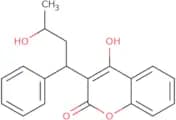
CAS:Warfarin is a clinically used drug that is an anticoagulant and has been shown to have anticancer activity. Warfarin has been shown to inhibit the synthesis of unsaturated ketones by carbonyl reduction and asymmetric synthesis. It also inhibits the growth of cancer cells in animals and human liver cells. Warfarin reduces the production of coagulation factors II, VII, IX, and X by inhibiting protein synthesis in the liver. The anticoagulant effect of warfarin is due to inhibition of the synthesis of vitamin K-dependent clotting factors II, VII, IX, and X. Warfarin also binds to a cytosolic protein called matrix metalloproteinase-9 (MMP-9) which inhibits its proteolytic activity.Formula:C19H18O4Purity:Min. 95%Molecular weight:310.3 g/mol2-[[(4-Methoxy-3-methyl-2-pyridinyl)methyl]sulfinyl]-1H-benzimidazole
CAS:2-[(4-Methoxy-3-methyl-2-pyridinyl)methyl]sulfinyl]-1H-benzimidazole is a synthetic, impurity standard that is used in the synthesis of drug products. It has been shown to inhibit the metabolism of drugs and may be used as a marker for drug metabolism. This compound may also be used as a marker in analytical studies to assess the purity of a drug product. 2-[(4-Methoxy-3-methyl-2-pyridinyl)methyl]sulfinyl]-1H-benzimidazole has not been evaluated for safety or efficacy.Formula:C15H15N3O2SPurity:Min. 95%Molecular weight:301.36 g/mol

![4'-(Bromomethyl)-[1,1'-biphenyl]-2-carboxylic acid](/_next/image/?url=https%3A%2Fstatic.cymitquimica.com%2Fproducts%2F3D%2Fthumb-webp%2FIB19247.webp&w=3840&q=75)
![cis-4-[[[(1,1-Dimethylethoxy)carbonyl]amino]methyl]-cyclohexanecarboxylic acid](/_next/image/?url=https%3A%2Fstatic.cymitquimica.com%2Fproducts%2F3D%2Fthumb-webp%2FID22372.webp&w=3840&q=75)
![2-[3,5-Dichloro-4-(4-chlorobenzoyl)phenyl]-1,2,4-triazine-3,5(2H,4H)-dione](/_next/image/?url=https%3A%2Fstatic.cymitquimica.com%2Fproducts%2F3D%2Fthumb-webp%2FIFA64881.webp&w=3840&q=75)
![N-Formyl-L-leucine (1S)-1-[[(2R,3R)-3-hexyl-4-oxo-2-oxetanyl] methyl] dodecyl ester](/_next/image/?url=https%3A%2Fstatic.cymitquimica.com%2Fproducts%2F3D%2Fthumb-webp%2FIF26581.webp&w=3840&q=75)
![(7-(4-{4-[4-(2,3-Dichlorophenyl)piperazin-1-yl]butoxy}butoxy)-3,4-dihydroquinolin-2(1H)-one)](/_next/image/?url=https%3A%2Fstatic.cymitquimica.com%2Fproducts%2F3D%2Fthumb-webp%2FWWC92863.webp&w=3840&q=75)
![N-(2,2,2-Trichloroethoxy)carbonyl] bisnor-(cis)-tilidine](/_next/image/?url=https%3A%2Fstatic.cymitquimica.com%2Fproducts%2F3D%2Fthumb-webp%2FWZB81995.webp&w=3840&q=75)
![2-[[(4-Methoxy-3-methyl-2-pyridinyl)methyl]sulfinyl]-1H-benzimidazole](/_next/image/?url=https%3A%2Fstatic.cymitquimica.com%2Fproducts%2F3D%2Fthumb-webp%2FIM21228.webp&w=3840&q=75)