APIs for research and impurities
Subcategories of "APIs for research and impurities"
- Aminoacids and derivatives(12,332 products)
- Anthraquinones and derivatives(404 products)
- Benzimidazole and Imidazole Derivatives(10,439 products)
- Benzodiazepine Derivatives(333 products)
- Carbohydrates and glycoconjugates(5,050 products)
- Esters and Derivatives(42,250 products)
- Fatty Acids and Lypidic Derivatives(32,406 products)
- Flavonoids and Polyphenols(17,081 products)
- Free Radicals and Oxidant/Reducing Agents(212 products)
- Ketones and derivatives(2,399 products)
- Natural and semi-synthetic antibiotics(6,375 products)
- Nitriles and Cyano Derivatives(3,068 products)
- Nitrosamines and Derivatives(55 products)
- Nucleosides and Nucleotides(3,470 products)
- Organic Phosphates and Phosphonates(1,200 products)
- Organic Sulphonates and Sulphates(10,430 products)
- Organometallics(4,421 products)
- Others(6,299 products)
- Peptides and Proteins(3,146 products)
- Polymers and Derivatives(100 products)
- Purines and Pyrimidine Derivatives(8,940 products)
- Quinazoline and Quinoline Derivatives(65,968 products)
- Quinones and Derivatives(24,357 products)
- Salts and Derivatives of Active Pharmaceutical Ingredients (API)(80,646 products)
- Steroids and Derivatives(4,951 products)
- Sulfonamides and Derivatives(2,589 products)
- Terpenoids and Derivatives(3,845 products)
- Thiazolidinediones and Thiopyrans(2,753 products)
- β-Adrenergic Compounds(231 products)
Found 57982 products of "APIs for research and impurities"
N-(4-Hydroxyphenyl)propanamide
CAS:The N-(4-hydroxyphenyl)propionamide (HPPA) is a synthetic drug that binds to the human liver. It has been shown to be effective in preventing implantation of fertilized eggs, and can be used as a diagnostic agent for determining the presence of HPPA in human liver tissue. HPPA is also used as a diluent for other drugs. The HPPA binds to chromatographic components and can be detected using electrochemical detection, which allows it to be used as a targetable probe for cancer research. HPPA is also used to study iontophoretic transport of ions across reconstituted membranes in vitro.Formula:C9H11NO2Purity:(%) Min. 97%Molecular weight:165.19 g/mol(S)-Aspartimide
CAS:(S)-Aspartimide is a drug product that is used in the synthesis of pharmaceuticals. Its purity should be greater than 99% and it should be free from detectable impurities. (S)-Aspartimide is metabolized by esterases, glutathione reductase, cytochrome P450 enzymes, and conjugation with glucuronic acid. It has been shown to inhibit the growth of bacteria that are resistant to penicillin, ampicillin, erythromycin, and gatifloxacin. (S)-Aspartimide has been found to have an anti-inflammatory effect due to its inhibition of prostaglandin synthesis.
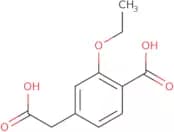
Formula:C4H6N2O2Purity:Min. 95%Molecular weight:114.10 g/mol(4-Carboxy-3-ethoxy)phenyl acetic acid
CAS:4-Carboxy-3-ethoxy)phenyl acetic acid (CPAE) is a fluorescent compound that has been shown to have antidiabetic and luminescence properties. It absorbs light at wavelengths of 340, 405, and 455 nm and emits light at 525 nm. It also absorbs UV light at 310 nm and emits fluorescence at 495 nm. CPAE is formed by the condensation of two molecules of 4-carboxybenzaldehyde with one molecule of ethyl 3-ethoxypropanoate in the presence of a base. The crystals are monoclinic, with space group P2/c and lattice constants a = 12.872(1) Å, b = 7.319(1) Å, c = 17.814(2) Å, β = 98.664(9)°, Z = 2. The molecular weight is 182.24 g/mol and its molecular
Formula:C11H12O5Purity:Min. 95%Molecular weight:224.21 g/molTametraline
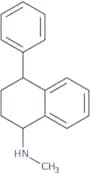
CAS:Tametraline is a medicinal compound that has been used in Chinese traditional medicine to treat tumors. It is an analog of protein kinase inhibitors and has shown potent anticancer activity in preclinical studies. Tametraline is an inhibitor of kinases, which are enzymes involved in the regulation of cell growth and division. It induces apoptosis, or programmed cell death, in cancer cells by inhibiting the activity of these enzymes. Tametraline has also been found to be excreted in urine, indicating that it can be effectively metabolized by the human body. This compound holds great promise as a potential treatment for various types of cancer.Formula:C17H19NPurity:Min. 95%Molecular weight:237.34 g/molFluocortolone Impurity 2
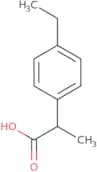
CAS:Controlled ProductFluocortolone Impurity 2 is a by-product of the synthesis of fluocortolone. It is an impurity in the drug product and is specific to HPLC standards. Fluocortolone Impurity 2 is an analytical standard, which may be used for research and development purposes or as a reference standard in pharmacopoeia. Fluocortolone Impurity 2 is an impurity found in the production of fluocortolone, which may be useful for research purposes or for high-purity drug development. Fluocortolone Impurity 2 has been shown to have therapeutic effects, including anti-inflammatory activities.Formula:C27H37FO5Purity:Min. 95%Molecular weight:460.59 g/mol2-(4-Ethylphenyl)-propanoic acid - Racemic
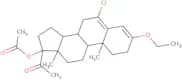
CAS:2-(4-Ethylphenyl)-propanoic acid is a supplement that is used to relieve pain and inflammation. It belongs to the group of non-steroidal anti-inflammatory drugs (NSAIDs). This drug has been shown to be efficacious in the treatment of osteoarthritis, rheumatoid arthritis, and bronchitis. 2-(4-Ethylphenyl)-propanoic acid inhibits both prostaglandin synthesis and leukotriene synthesis by inhibiting cyclooxygenase 1, which converts arachidonic acid into prostaglandins, and 5-lipoxygenase, which converts arachidonic acid into leukotrienes. This drug has also been shown to inhibit COX-2 production in human monocytes. The active form of this drug is metabolized through a number of metabolic transformations including hydrolysis by esterases or glucuronidases, oxidation by cytochrome P450 enzymes,Formula:C11H14O2Purity:Min. 95%Molecular weight:178.23 g/mol17-Acetoxy-6-chloro-3-ethoxypregna-3,5-dien-20-one
CAS:Controlled ProductPlease enquire for more information about 17-Acetoxy-6-chloro-3-ethoxypregna-3,5-dien-20-one including the price, delivery time and more detailed product information at the technical inquiry form on this page
Formula:C25H35ClO4Purity:Min. 95%Molecular weight:435 g/mol1,4-Di-2-furoylpiperazine
CAS:1,4-Di-2-furoylpiperazine is a synthetic compound that has been shown to have anti-inflammatory and analgesic properties. It was originally developed as a pharmaceutical drug candidate for the treatment of arthritis and other inflammatory disorders. 1,4-Di-2-furoylpiperazine is an impurity in the synthesis of the drug product diclofenac. The compound is also found as a metabolite in humans after oral administration of diclofenac. 1,4-Di-2-furoylpiperazine binds to protein and inhibits protein synthesis by preventing amino acid incorporation into proteins. It also has nicotinic effects on acetylcholine binding sites and can be used as an analytical standard for HPLC analysis of drugs containing this molecule.Formula:C14H14N2O4Purity:Min. 95%Molecular weight:274.27 g/mol[9-Glycine]desmopressin
9-Glycine Desmopressin is a drug product that has been custom synthesized for use in research and development. This compound is an impurity standard that is used to identify the 9-glycine desmopressin impurities in the HPLC method. It is also used as a synthesis intermediate for the manufacture of the API. The CAS number for this compound is [CAS NO.]. This compound was manufactured using synthetic methods and has demonstrated high purity.Purity:Min. 95%6-Hydroxydopaquinone
CAS:6-Hydroxydopaquinone (6HDQ) is a drug product that is used as an analytical standard. It is a natural compound and an impurity of the drug product, 6-Hydroxydopamine hydrochloride. The chemical name of 6-Hydroxydopaquinone is 3,4-Dihydroxybenzoic acid methyl ester. The CAS number for this compound is 135791-48-9. Metabolism studies have been conducted on rats to determine whether 6HDQ is metabolized by cytochrome P450 enzymes or conjugated with glucuronic acid. This substance has not been shown to be a substrate for human enzymes and does not form any metabolites in vitro, making it suitable for use as an impurity standard for HPLC analysis. 6HDQ has also been synthesized from commercially available starting materials and can be custom synthesized upon request because it is not commercially available.Formula:C9H9NO5Purity:Min. 95%Molecular weight:211.17 g/mol4-Hydroxy-α1-[[[6-(3-phenylpropoxy)hexyl]amino]methyl]-1,3-benzenedimethanol-d3
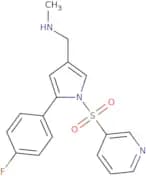
CAS:4-Hydroxy-α1-[[[6-(3-phenylpropoxy)hexyl]amino]methyl]-1,3-benzenedimethanol (4OHBZ) is a metabolite of the drug product 4OHBZ. It is an impurity standard for HPLC analysis of the drug product 4OHBZ. The impurity has been characterized by LCMS and MS studies. The purity of this compound is >99%.Formula:C24H35NO4Purity:Min. 95%Molecular weight:401.5 g/mol1-(5-(4-Fluorophenyl)-1-(pyridin-3-ylsulfonyl)-1H-pyrrol-3-yl)-N-methylmethanamine
CAS:1-(5-(4-Fluorophenyl)-1-(pyridin-3-ylsulfonyl)-1H-pyrrol-3-yl)-N-methylmethanamine (5FPP) is a drug product. It is an impurity standard for HPLC and analytical methods, as well as an API impurity. 5FPP is a synthetic compound that has been studied in metabolism studies. The metabolite of 5FPP is 1-(5-(4-fluorophenyl)-1H-pyrrolo[3,2,1-jk]thiazol-2(3H)-one).
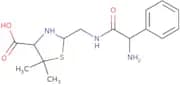
Formula:C17H16FN3O2SPurity:Min. 95%Molecular weight:345.4 g/molAmpicillin desoxyazetidin-2-one
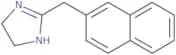
CAS:Please enquire for more information about Ampicillin desoxyazetidin-2-one including the price, delivery time and more detailed product information at the technical inquiry form on this pageFormula:C15H21N3O3SPurity:Min. 95%Molecular weight:323.4 g/mol2-(Naphthalen-2-ylmethyl)-4,5-dihydro-1H-imidazole
CAS:2-(Naphthalen-2-ylmethyl)-4,5-dihydro-1H-imidazole is a medicinal compound that has shown promising results in cancer research. It works as an inhibitor of cyclin-dependent kinases, which are essential for cancer cell proliferation. This compound induces apoptosis in cancer cells by inhibiting the activity of certain proteins involved in tumor growth. Studies have shown that 2-(Naphthalen-2-ylmethyl)-4,5-dihydro-1H-imidazole analogs have potent anticancer activity and can inhibit the growth of human cancer cells. This compound has also been found to be present in urine samples from Chinese patients with cancer. Further research on this compound may lead to the development of new and effective treatments for various types of cancers.
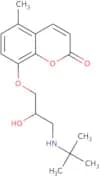
Formula:C14H14N2Purity:Min. 95%Molecular weight:210.27 g/molBucumolol
CAS:Bucumolol is a medicinal compound that has shown promise as an anticancer agent. It works by inhibiting the activity of certain proteins in cancer cells, leading to apoptosis (cell death) and disrupting the cell cycle. Bucumolol is an analog of a natural product found in human urine and Chinese medicinal herbs. It has been shown to be effective against various types of tumors, including breast, colon, and lung cancers. Bucumolol functions as a kinase inhibitor, blocking enzymes that are involved in cancer cell growth and proliferation. Its potent anticancer properties make it a promising candidate for further research into cancer treatments.Formula:C17H23NO4Purity:Min. 95%Molecular weight:305.4 g/molL-Pyroglutamic acid-13C5
CAS:L-Pyroglutamic acid-13C5 is a drug product that is used as an impurity standard in the synthesis of L-pyroglutamic acid, which is an API for the treatment of various diseases. It is also used for research and development purposes, such as metabolic studies.
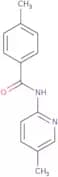
Formula:C5H7NO3Purity:Min. 95%Molecular weight:134.08 g/mol4-Methyl-N-(5-methyl-2-pyridinyl)benzamide
CAS:4-Methyl-N-(5-methyl-2-pyridinyl)benzamide is a birefringent, crystalline compound that is soluble in organic solvents. This compound exhibits liquid crystal composition and can be synthesized by the reaction of 2,4-dimethylbenzoyl chloride with 5-methylpyrimidine. It has been used in the production of photolytic materials such as fluorine. 4-Methylbenzamide has been shown to have a skeleton that is composed of two fused pyridine rings and an amide group. The impurities found in this product are mainly methyl benzoate and methyl pyridine.Formula:C14H14N2OPurity:Min. 95%Molecular weight:226.27 g/molMK-0249
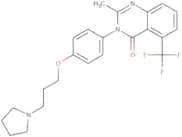
CAS:MK-0249 is a potent inhibitor of hyaluronan-mediated tumor cell proliferation and migration. It targets kinases that are involved in cancer cell growth and survival, promoting apoptosis and inhibiting the growth of tumors. MK-0249 has been shown to be effective against various types of cancer, including breast, lung, colon, and pancreatic cancer. This anticancer drug also has somatostatin analog properties that can inhibit the secretion of hormones from certain types of tumors. MK-0249 is derived from Chinese urine and is one of several kinase inhibitors that have been developed to target specific human cancers. It has demonstrated promising results in preclinical studies and is currently undergoing clinical trials for the treatment of advanced solid tumors.
Formula:C23H24F3N3O2Purity:Min. 95%Molecular weight:431.4 g/molHydrochlorothiazide impurity C
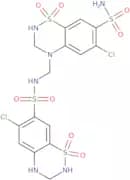
CAS:Hydrochlorothiazide is a sulfonamide that inhibits the activity of the enzyme, angiotensin-converting enzyme (ACE), which is responsible for converting angiotensin I to the potent vasoconstrictor, angiotensin II. It also has antihypertensive effects by blocking the production of aldosterone, which causes sodium retention and leads to high blood pressure. It is a byproduct in reactions with substances such as valsartan. Hydrochlorothiazide may react chemically with other medicines such as ampicillin and cefaclor.
Formula:C15H16Cl2N6O8S4Purity:Min. 95%Color and Shape:White PowderMolecular weight:607.49 g/molSimotinib
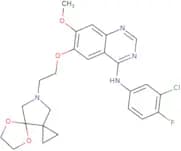
CAS:Simotinib is a kinase inhibitor that has shown promising results in the treatment of various types of cancer. It targets specific proteins that are involved in the growth and survival of tumor cells, leading to apoptosis (cell death) and inhibition of cancer cell proliferation. This medicinal compound is an analog of cyclin-dependent kinases inhibitors and has been extensively studied in Chinese patients with lung cancer. Simotinib works by blocking the activity of certain enzymes that promote tumor growth, making it an effective anticancer agent. It has also been found to have potential therapeutic applications in other types of cancer, including breast and prostate cancer. Overall, Simotinib shows great promise as a targeted therapy for cancer treatment.
Formula:C25H26ClFN4O4Purity:Min. 95%Molecular weight:500.9 g/mol


![[9-Glycine]desmopressin](/_next/image/?url=https%3A%2Fstatic.cymitquimica.com%2Fproducts%2F3D%2Fthumb-webp%2FIG173262.webp&w=3840&q=75)
![4-Hydroxy-α1-[[[6-(3-phenylpropoxy)hexyl]amino]methyl]-1,3-benzenedimethanol-d3](/_next/image/?url=https%3A%2Fstatic.cymitquimica.com%2Fproducts%2F3D%2Fthumb-webp%2FUDA74911.webp&w=3840&q=75)