APIs for research and impurities
Subcategories of "APIs for research and impurities"
- Aminoacids and derivatives(12,332 products)
- Anthraquinones and derivatives(404 products)
- Benzimidazole and Imidazole Derivatives(10,440 products)
- Benzodiazepine Derivatives(333 products)
- Carbohydrates and glycoconjugates(5,048 products)
- Esters and Derivatives(42,250 products)
- Fatty Acids and Lypidic Derivatives(32,411 products)
- Flavonoids and Polyphenols(17,082 products)
- Free Radicals and Oxidant/Reducing Agents(213 products)
- Ketones and derivatives(2,400 products)
- Natural and semi-synthetic antibiotics(6,379 products)
- Nitriles and Cyano Derivatives(3,068 products)
- Nitrosamines and Derivatives(55 products)
- Nucleosides and Nucleotides(3,475 products)
- Organic Phosphates and Phosphonates(1,200 products)
- Organic Sulphonates and Sulphates(10,431 products)
- Organometallics(4,421 products)
- Others(6,302 products)
- Peptides and Proteins(3,146 products)
- Polymers and Derivatives(100 products)
- Purines and Pyrimidine Derivatives(8,946 products)
- Quinazoline and Quinoline Derivatives(66,005 products)
- Quinones and Derivatives(24,359 products)
- Salts and Derivatives of Active Pharmaceutical Ingredients (API)(80,605 products)
- Steroids and Derivatives(4,953 products)
- Sulfonamides and Derivatives(2,592 products)
- Terpenoids and Derivatives(3,847 products)
- Thiazolidinediones and Thiopyrans(2,753 products)
- β-Adrenergic Compounds(231 products)
Found 57909 products of "APIs for research and impurities"
Rotigotine sulfate
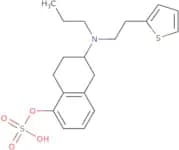
CAS:Rotigotine is a drug that belongs to the group of pharmaceutical formulations. It is an unlabeled drug that has been shown to be effective in the treatment of depression. Rotigotine may be administered through a transdermal patch or by iontophoresis, which is a technique used to administer drugs through the skin. The mechanism of action is not known, but it may involve the inhibition of monoamine reuptake and/or alteration of intracellular levels of catecholamines. Rotigotine sulfate has a high affinity for dopamine receptors and increases plasma concentrations of dopamine by inhibiting its reuptake into presynaptic neurons. This leads to increased concentrations of dopamine in synaptic clefts and an increase in postsynaptic receptor binding.Formula:C19H25NO4S2Purity:Min. 95%Molecular weight:395.5 g/molDapsone N-β-D-glucuronide sodium salt
CAS:Dapsone N-β-D-glucuronide sodium salt is a drug product that is Custom synthesized for your research and development needs. It is available for sale as a white to off-white crystalline powder with a purity of 98%. Dapsone N-β-D-glucuronide sodium salt has CAS No. 54749-81-4, analytical, Metabolism studies, Drug development, Natural, Metabolite, pharmacopoeia, niche, Synthetic, Impurity standard and Research and Development. It is an HPLC standard in the form of a white to off-white crystalline powder with a purity of 98%.Formula:C18H19N2NaO8SPurity:Min. 95%Molecular weight:446.41 g/molOxodesmosine
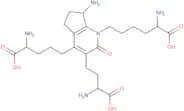
CAS:Oxodesmosine is an analog of a protein found in Chinese urine that has shown promise as an anticancer agent. It works by inhibiting kinases, which are enzymes that play a key role in cancer cell growth and survival. Oxodesmosine has been shown to induce apoptosis, or programmed cell death, in tumor cells both in vitro and in vivo. This compound may be useful as a therapeutic agent for the treatment of various types of cancer in humans. Additionally, Oxodesmosine has been studied for its potential synergistic effects with other kinase inhibitors such as mirtazapine. Overall, Oxodesmosine represents a promising new avenue for the development of novel anticancer therapies.Formula:C23H37N5O7Purity:Min. 95%Molecular weight:495.6 g/molMethyl 4-methyl-3-[2-(propylamino)acetamido)thiophene-2-carboxylate
CAS:Methyl 4-methyl-3-[2-(propylamino)acetamido]thiophene-2-carboxylate is an impurity that can be found in the drug product. It is a metabolite of clozapine, which is used to treat schizophrenia and other psychiatric disorders. This impurity can be detected by HPLC or LC/MS analysis and quantified using a calibration curve generated from standards. Methyl 4-methyl-3-[2-(propylamino)acetamido]thiophene-2-carboxylate may also be found in the urine as an indicator of clozapine use.Formula:C12H18N2O3SPurity:Min. 95%Molecular weight:270.35 g/molTofacitinib impurity 3
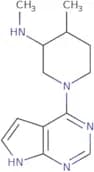
CAS:Please enquire for more information about Tofacitinib impurity 3 including the price, delivery time and more detailed product information at the technical inquiry form on this pageFormula:C13H19N5Purity:Min. 95%Molecular weight:245.32 g/mol2-(3,4-Dimethoxyphenyl)-5-[2-(3,4-dimethoxyphenyl)ethylamino]-2-propan-2-ylpentanenitrile hydrochloride
CAS:2-(3,4-Dimethoxyphenyl)-5-[2-(3,4-dimethoxyphenyl)ethylamino]-2-propan-2-ylpentanenitrile hydrochloride (DMPP) is a fluorescent chemosensor that can be used to detect the presence of phenylacetonitrile. It has been shown to have a linear response to phenylacetonitrile concentrations in rat plasma and also reacts with other compounds containing nitrogen atoms. The sensor was tested for its ability to react with drugs such as anti-tumor agents and showed strong regression correlation coefficients. This sensor has the potential to be used in pharmacokinetic studies because it can be detected by a variety of chromatographic techniques.Formula:C26H36N2O4·HClPurity:Min. 95%Molecular weight:477.04 g/molTrifenofos
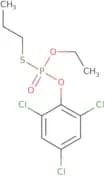
CAS:Trifenofos is a potent protein kinase inhibitor that has shown promising anticancer activity in preclinical studies. It targets specific kinases involved in tumor growth and survival, leading to apoptosis or programmed cell death of cancer cells. Trifenofos is an analog of a natural toxin found in Chinese urine, which has been used for centuries in traditional medicine to treat various ailments. In addition to its anticancer properties, trifenofos also shows potential as an inhibitor of other diseases involving abnormal protein kinase activity. Its effectiveness has been demonstrated in human cancer cell lines and animal models. With its ability to selectively target cancer cells, trifenofos holds great promise as a potential therapeutic agent for the treatment of various cancers.
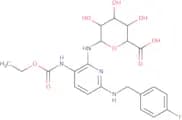
Formula:C11H14Cl3O3PSPurity:Min. 95%Molecular weight:363.6 g/molFlupirtine-N2-β-D-glucuronide
CAS:Please enquire for more information about Flupirtine-N2-β-D-glucuronide including the price, delivery time and more detailed product information at the technical inquiry form on this page
Formula:C21H25FN4O8Purity:Min. 95%Molecular weight:480.4 g/molα-[2-(Dimethylamino)-1-methylethyl]-α-phenyl-benzeneethanol 1-acetate
CAS:Controlled Productα-[2-(Dimethylamino)-1-methylethyl]-α-phenyl-benzeneethanol 1-acetate is a synthetic product. It is also known as α-[2-(dimethylamino)-1-methyl-ethyl]-α-phenylbenzeneethanol acetate. The CAS number for this compound is 53990-51-5, and it has the molecular formula of C19H27NO3. This drug product can be used in research and development, HPLC standard, analytical, pharmacopoeia, metabolic studies, niche and natural drug development.Formula:C21H27NO2Purity:Min. 95%Molecular weight:325.4 g/molCapecitabine 2',3'-cyclic carbonate
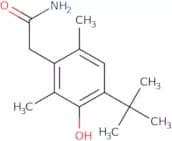
CAS:Capecitabine is a prodrug that is converted to 5-fluorouracil in the body. It has been used for many years in the treatment of breast cancer and colorectal cancer. Capecitabine 2',3'-cyclic carbonate is an analytical standard, research and development tool, high purity drug product, and impurity standard for HPLC analysis. This compound is also used as a pharmacopoeia reference material for quality control testing. Capecitabine 2',3'-cyclic carbonate can be custom synthesized or purified from natural or synthetic sources.Formula:C16H20FN3O7Purity:Min. 95%Molecular weight:385.34 g/mol4-tert-Butyl-2,6-dimethyl-3-hydroxyphenylacetamide
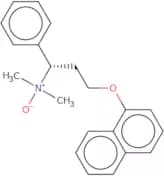
CAS:4-tert-Butyl-2,6-dimethyl-3-hydroxyphenylacetamide is a drug product that is used as an analytical standard. It can be found in the natural environment and may be synthesized for use in research and development of drugs. This substance has been used to study the metabolism of drugs and to produce high purity standards for HPLC analysis. 4-tert-Butyl-2,6-dimethyl-3-hydroxyphenylacetamide has been shown to have niche applications in pharmacopoeia.Formula:C14H21NO2Purity:Min. 95%Molecular weight:235.32 g/molDapoxetine N-oxide
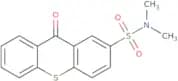
CAS:Dapoxetine N-oxide is a pharmaceutical agent that inhibits serotonin reuptake and has been shown to be effective in the treatment of premature ejaculation. It is a metabolite of dapoxetine, which is an antidepressant drug. Dapoxetine N-oxide has a terminal half-life of about 10 hours, which is shorter than that of its parent compound. Dapoxetine N-oxide also has a lower carcinogenic potential than its parent compound. This agent can inhibit the activity of rat liver microsomes, as well as human liver microsomes at high concentrations. It also has no effect on plasma concentrations at low doses, but does show dose proportionality at higher doses. Dapoxetine N-oxide also does not have any impurities or other drugs added to it.Formula:C21H23NO2Purity:Min. 95%Molecular weight:321.41 g/molN,N-Dimethyl-9-oxo-9H-thioxanthene-2-sulfonamide
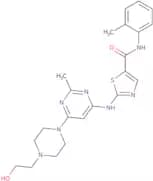
CAS:N,N-Dimethyl-9-oxo-9H-thioxanthene-2-sulfonamide is a medicinal compound that has shown promising results as an anticancer agent. It is an inhibitor of kinases, which are enzymes involved in cell signaling pathways that regulate cell growth and division. This compound has been shown to induce apoptosis, or programmed cell death, in cancer cells. In Chinese hamster ovary cells, it has been shown to inhibit the activity of protein kinase C (PKC) and mitogen-activated protein kinase (MAPK), two important kinases involved in cancer development. N,N-Dimethyl-9-oxo-9H-thioxanthene-2-sulfonamide is an analog of a tumor inhibitor found in human urine and has the potential to be developed into a potent anticancer drug.Formula:C15H13NO3S2Purity:Min. 95%Molecular weight:319.4 g/molDasatinib impurity
CAS:Dasatinib is a cancer drug that is used to treat patients with chronic myeloid leukemia and Philadelphia chromosome-positive acute lymphoblastic leukemia. It inhibits the activity of tyrosine kinases, in particular Bcr-Abl and Src. Dasatinib is a structural analog of imatinib, which has been shown to be effective against chronic myeloid leukemia by inhibiting the activity of Bcr-Abl. Dasatinib impurity is an unwanted substance found in dasatinib. It can be synthesized from formic acid, chloride and chlorine using a series of industrial processes. The salt form of dasatinib impurity is acidic and synthetic.Formula:C22H27N7O2SPurity:Min. 95%Molecular weight:453.56 g/mol2,3-Dichlorobenzoic acid anhydride
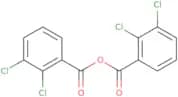
CAS:Please enquire for more information about 2,3-Dichlorobenzoic acid anhydride including the price, delivery time and more detailed product information at the technical inquiry form on this pageFormula:C14H6Cl4O3Purity:Min. 95%Molecular weight:364 g/molOxybutynin EP Impurity E
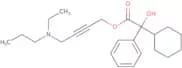
CAS:Oxybutynin EP Impurity E is a research and development impurity standard that is used in the synthesis of Oxybutynin. It can be synthesized by reacting 2-chloro-4-nitroaniline with potassium tert-butoxide, followed by acetylation with acetic anhydride. The purity and structure of this compound have been verified by gas chromatography, mass spectrometry, and melting point analysis. This impurity standard has a CAS number of 1215677-72-7. Oxybutynin EP Impurity E is used as a drug product for the treatment of overactive bladder, urinary incontinence, and painful bladder syndrome/interstitial cystitis. It also helps to reduce pain due to spinal cord injury or multiple sclerosis. The pharmacopoeia name for this compound is 4-(2-Chloroethyl)-1H-imidazoleacetic acid. It has been found to beFormula:C23H33NO3Purity:Min. 95%Molecular weight:371.51 g/molHyoscyamine related compound A
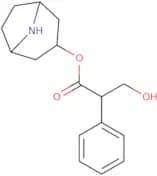
CAS:Hyoscyamine related compound A is a pure, synthetic chemical compound that is used as an impurity standard and can be custom synthesized to meet the requirements of a customer's research and development. Hyoscyamine related compound A is also known as a metabolite in the body, which means it is created from another substance. It is created from the breakdown of Hyoscyamine, which is found in plants such as jimson weed, mandrake, and henbane. Hyoscyamine related compound A has a CAS number of 537-29-1. It can be used to create drug product or pharmacopoeia standards. It has been classified as a custom synthesis by the FDA because it has not been approved for use in humans or animals.Formula:C16H21NO3Purity:Min. 95%Molecular weight:275.35 g/molBlonanserin impurity 1
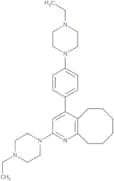
CAS:Blonanserin impurity 1 is a compound that is closely related to blonanserin, a dopamine antagonist used in the treatment of schizophrenia. This impurity is a steroid derivative that contains a benzoate group and forms hydrogen bonds with other molecules. It has been found to emit positron signals, making it useful in positron emission tomography (PET) imaging studies. Blonanserin impurity 1 has also shown antiviral activity and potential as an androgen receptor modulator. Additionally, it has been studied for its bioavailability and interaction with oxysterols, which are oxidized derivatives of cholesterol. This compound may have applications in the development of new therapeutic agents for various conditions, including viral infections and hormonal disorders.Formula:C29H43N5Purity:Min. 95%Molecular weight:461.7 g/molMezlocillin impurity III
CAS:Please enquire for more information about Mezlocillin impurity III including the price, delivery time and more detailed product information at the technical inquiry form on this page
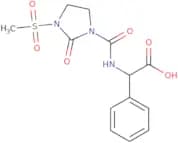
Formula:C13H15N3O6SPurity:Min. 95%Molecular weight:341.34 g/molDespropylrotigotine
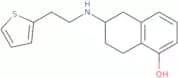
CAS:Despropylrotigotine is a dopamine agonist that is used to treat Parkinson's disease. It is structurally related to rotigotine, which is an active metabolite of the drug. Despropylrotigotine has a long half-life and high potency, making it suitable for once-daily dosing. It has been shown to be well tolerated and effective in clinical trials for the treatment of Parkinson's disease. The pharmacokinetic profile of this drug is similar to that of other drugs in the same class, with despropylrotigotine being able to cross the blood-brain barrier and bind to dopamine receptors in the brain, thereby increasing dopamine levels in Parkinson's patients.
Formula:C16H19NOSPurity:Min. 95%Molecular weight:273.4 g/mol

![2-(3,4-Dimethoxyphenyl)-5-[2-(3,4-dimethoxyphenyl)ethylamino]-2-propan-2-ylpentanenitrile hydrochl…](/_next/image/?url=https%3A%2Fstatic.cymitquimica.com%2Fproducts%2F3D%2Fthumb-webp%2FID26420.webp&w=3840&q=75)
![α-[2-(Dimethylamino)-1-methylethyl]-α-phenyl-benzeneethanol 1-acetate](/_next/image/?url=https%3A%2Fstatic.cymitquimica.com%2Fproducts%2F3D%2Fthumb-webp%2FDCA99051.webp&w=3840&q=75)