APIs for research and impurities
Subcategories of "APIs for research and impurities"
- Aminoacids and derivatives(12,334 products)
- Anthraquinones and derivatives(404 products)
- Benzimidazole and Imidazole Derivatives(10,446 products)
- Benzodiazepine Derivatives(334 products)
- Carbohydrates and glycoconjugates(5,049 products)
- Esters and Derivatives(42,251 products)
- Fatty Acids and Lypidic Derivatives(32,415 products)
- Flavonoids and Polyphenols(17,083 products)
- Free Radicals and Oxidant/Reducing Agents(213 products)
- Ketones and derivatives(2,401 products)
- Natural and semi-synthetic antibiotics(6,382 products)
- Nitriles and Cyano Derivatives(3,068 products)
- Nitrosamines and Derivatives(55 products)
- Nucleosides and Nucleotides(3,480 products)
- Organic Phosphates and Phosphonates(1,201 products)
- Organic Sulphonates and Sulphates(10,433 products)
- Organometallics(4,421 products)
- Others(6,305 products)
- Peptides and Proteins(3,148 products)
- Polymers and Derivatives(100 products)
- Purines and Pyrimidine Derivatives(8,948 products)
- Quinazoline and Quinoline Derivatives(66,032 products)
- Quinones and Derivatives(24,363 products)
- Salts and Derivatives of Active Pharmaceutical Ingredients (API)(80,551 products)
- Steroids and Derivatives(4,955 products)
- Sulfonamides and Derivatives(2,595 products)
- Terpenoids and Derivatives(3,848 products)
- Thiazolidinediones and Thiopyrans(2,753 products)
- β-Adrenergic Compounds(231 products)
Found 57830 products of "APIs for research and impurities"
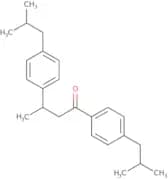
Ibuprofen EP impurity H
CAS:Ibuprofen EP impurity H is an impurity of ibuprofen. It is a white crystalline powder with a melting point of 182-184°C and a molecular weight of 253.3. Ibuprofen EP impurity H can be synthesized in high purity by reacting 4-bromobenzenesulfonyl chloride with 2-hydroxybenzoic acid in the presence of triethylamine. This impurity has been used as a standard for drug product analysis, pharmacopoeia standards, drug development, and metabolism studies. Ibuprofen EP impurity H can be identified by HPLC using a retention time of 17.2 minutes and an UV absorption maximum at 254 nm.
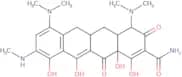
Formula:C24H32OPurity:Min. 95%Molecular weight:336.51 g/mol9-Methylamino minocycline
CAS:9-Methylamino minocycline is a semi-synthetic antibiotic with excellent oral bioavailability. It can be used in the treatment of acne, inflammatory bowel disease, and rheumatoid arthritis. 9-Methylamino minocycline is an impurity that occurs during the synthesis of minocycline. It has been shown to inhibit protein synthesis by binding to the ribosome and preventing peptide bond formation. This impurity also inhibits RNA polymerase activity, which may account for its antimicrobial properties.
Formula:C24H30N4O7Purity:Min. 95%Molecular weight:486.52 g/molRef: 3D-HZA40273
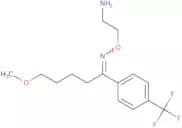
Discontinued product(Z)-Fluvoxamine - EP
CAS:Controlled Product(Z)-Fluvoxamine-EP is a drug product that is used as an analytical standard. It is a synthetic metabolite of fluvoxamine, which is a drug used for the treatment of depression. The synthesis of (Z)-fluvoxamine-EP is based on the asymmetric synthesis of fluvoxamine and the use of chiral chromatography to purify the product. This synthetic process allows for the production of high-purity (Z)-fluvoxamine-EP with a purity greater than 99%.
Formula:C15H21F3N2O2Purity:Min. 95%Molecular weight:318.33 g/molRef: 3D-IF23523
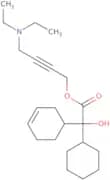
Discontinued productOxybutynin EP impurity A
CAS:Oxybutynin EP impurity A is a metabolite of oxybutynin, an antispasmodic drug. It has been shown to have immunomodulatory effects in a rat model of adjuvant arthritis. Oxybutynin EP impurity A is the major metabolite of oxybutynin and has been shown to be pharmacologically active in humans.
Purity:Min. 95%Ref: 3D-FO171019
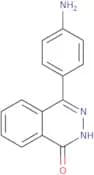
Discontinued product4-(4-Aminophenyl)phthalazin-1(2H)-one
CAS:4-(4-Aminophenyl)phthalazin-1(2H)-one is an antibacterial drug that belongs to the class of amide and minimise. It has a constant, synthetic, and chalcone profile. 4-(4-Aminophenyl)phthalazin-1(2H)-one has been shown to have antiplatelet activity in animals. This drug also inhibits the production of proinflammatory cytokines such as IL-6, IL-8, and TNFα by human monocytes. This drug also has antidiabetic properties and a safety profile similar to other nonsteroidal anti-inflammatory drugs.
Formula:C14H11N3OPurity:Min. 95%Molecular weight:237.26 g/molRef: 3D-GFA74153
Discontinued product5-[(Desloratadine)methyl] rupatadine
CAS:Desloratadine is a drug that belongs to the group of antihistamines and is indicated for the treatment of allergic rhinitis. It has been shown to be as effective as loratadine, cetirizine, and fexofenadine in clinical trials. Desloratadine is metabolized by cytochrome P450 enzymes including CYP2D6 to its active form, desloratadine N-oxide. The metabolites are excreted in the urine.
Formula:C45H43Cl2N5Purity:Min. 95%Molecular weight:724.80 g/molRef: 3D-ZYB51572
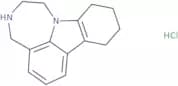
Discontinued productWay 629 hydrochloride
CAS:Way 629 hydrochloride is a chemical compound that belongs to the class of synthetic, pharmacopoeia and drug development. It is used as an impurity standard and a custom synthesis. Way 629 hydrochloride is also used in the study of metabolism. This compound has been shown to be metabolized by cytochrome P450 enzymes, glucuronidases, glutathione reductase, or conjugation with glucuronic acid.
Formula:C15H19ClN2Purity:Min. 95%Molecular weight:262.78 g/molRef: 3D-HCA75644
Discontinued producttert-Butyl 4-(4-amino-6,7-dimethoxyquinazolin-2-yl)piperazine-1-carboxylate
CAS:tert-Butyl 4-(4-amino-6,7-dimethoxyquinazolin-2-yl)piperazine-1-carboxylate is an impurity that is found in the production of tert-butyl 4-(4,5,6,7,8,9,10-hexahydrobenzo[a]pyrido[1,2:4,3]triazin-2(3H)-yl)piperazine-1 carboxylate. It has been used as a reference standard for HPLC. This compound is not active when administered orally and does not exhibit any pharmacological activity.Formula:C19H27N5O4Purity:Min. 95%Molecular weight:389.4 g/molRef: 3D-KAC93966
Discontinued product1,1-Dimethylethyl (3S,5S,6E)-7-[4-(4-fluorophenyl)-6-(1-methylethyl)-2-[methyl(methylsulfonyl)amino]-5-pyrimidinyl]-3,5-dihydroxy-6- heptenoate
CAS:Please enquire for more information about 1,1-Dimethylethyl (3S,5S,6E)-7-[4-(4-fluorophenyl)-6-(1-methylethyl)-2-[methyl(methylsulfonyl)amino]-5-pyrimidinyl]-3,5-dihydroxy-6- heptenoate including the price, delivery time and more detailed product information at the technical inquiry form on this page
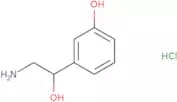
Formula:C26H36FN3O6SPurity:Min. 95%Molecular weight:537.65 g/molrac-Norphenylephrine hydrochloride
CAS:Controlled ProductRacemic norphenylephrine hydrochloride is a sympathomimetic amine. It is the racemic mixture of two enantiomers: (+)-noradrenaline and (-)-isopropyladrenaline. Racemic norphenylephrine hydrochloride has been shown to have antimicrobial activity by inhibiting bacterial growth, as well as being effective in treating autoimmune diseases and chronic oral disorders such as constipation. Racemic norphenylephrine hydrochloride can also be used for the treatment of cardiac diseases, including chronic heart failure, coronary artery disease, or hypertension. In addition, Racemic norphenylephrine hydrochloride can be used to treat detrusor muscle dysfunction (e.g., urinary incontinence).
Formula:C8H12ClNO2Purity:Min. 95%Molecular weight:189.64 g/molRef: 3D-IN27563
Discontinued productPyrrolo[1,2-f][1,2,4]triazin-4-amine
CAS:Pyrrolo[1,2-f][1,2,4]triazin-4-amine is a small molecule that inhibits the proliferation of leukemia cells as well as other tumor cells. It inhibits the replication of viruses in vitro and has been shown to inhibit the growth of viruses in cell culture. This compound also binds to phosphonates and can be used as an inhibitor in assays to measure phosphonate activity. Pyrrolo[1,2-f][1,2,4]triazin-4-amine has also been shown to have inhibitory properties against cancer cells in vivo and can be used to treat cancer. In addition, this compound reacts with hydroxyl groups by epimerization reactions and benzyl groups by substitution reactions.
Formula:C6H6N4Purity:Min. 95%Color and Shape:Off-White PowderMolecular weight:134.14 g/molRef: 3D-FP55646
Discontinued productLeuprolide acetate ep impurity F
CAS:Leuprolide acetate ep impurity F is a drug product that is an impurity standard for the leuprolide acetate API. It is used in analytical and clinical studies to identify the presence of leuprolide acetate impurities, as well as to determine the metabolism of leuprolide acetate. Leuprolide acetate ep impurity F has been shown to be a natural metabolite of leuprolide acetate and have a niche application in pharmacopoeia.
Formula:C61H85F3N16O14Purity:Min. 95%Molecular weight:1,323.4 g/mol3-[2-[4-(5-Fluoro-1,2-benzisoxazol-3-yl)-1-piperidinyl]ethyl]-6,7,8,9-tetrahydro-2-methyl-4H-pyrido[1,2-a]pyrimidin-4-one
CAS:3-[2-[4-(5-Fluoro-1,2-benzisoxazol-3-yl)-1-piperidinyl]ethyl]-6,7,8,9-tetrahydro-2-methyl-4H-pyrido[1,2-a]pyrimidin-4-one is a drug product that can be used as an analytical reference standard. It is a synthetic compound that is not found in nature and has CAS number 1199589-74-6. This compound has been synthesized by custom synthesis and it is an impurity standard for HPLC analysis. 3-[2-[4-(5-Fluoro-1,2-benzisoxazol-3 -yl)-1 -piperidinyl]ethyl]-6,7,8,9 -tetrahydro - 2 methyl - 4H - pyrido[1,2 -a]p
Formula:C23H27FN4O2Purity:Min. 95%Molecular weight:410.48 g/molRef: 3D-IF23360
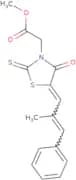
Discontinued product(E,Z)-Epalrestat methyl ester
CAS:(E,Z)-Epalrestat methyl ester is a drug product that is custom-synthesized for research and development purposes. It is a natural metabolite of (E,Z)-epalrestat acid. The chemical name for this compound is 3-[(2-chlorophenyl)methyl]-N-(1H-indol-3-ylmethylene)malonamide. The molecular weight of this compound is 284.87 g/mol and it has an empirical formula of C24H27ClN2O2. It has been found to inhibit the activity of phosphodiesterase (PDE), which plays a role in the breakdown of cyclic nucleotides such as cAMP and cGMP. This product has high purity and analytical data that can be used for metabolism studies or clinical trials.
Formula:C16H15NO3S2Purity:Min. 95%Molecular weight:333.43 g/molRef: 3D-HCB77570
Discontinued product1-Phenyl-1,2,3,4-tetrahydro-isoquinoline
CAS:1-Phenyl-1,2,3,4-tetrahydro-isoquinoline is a synthetic compound which has been used as a lead compound for the development of drugs with dopamine β-hydroxylase inhibitory activity. In vitro studies have shown that 1-phenyl-1,2,3,4-tetrahydro-isoquinoline inhibits human serum dopamine β-hydroxylase and can be used to study the possible role of this enzyme in Parkinson's disease. This drug is racemized in the body and has been found to be effective against Parkinson's disease in rats. It is also an enantiomer that has industrial applications for the production of polyurethane foam insulation coatings.
Formula:C15H15NPurity:Min. 95%Color and Shape:PowderMolecular weight:209.29 g/molRef: 3D-IP14816
Discontinued productMonobenzyl fosaprepitant
CAS:Monobenzyl fosaprepitant is a drug product that is used for research and development purposes. It is an impurity standard for the analysis of API (Active Pharmaceutical Ingredient) impurities, which are synthetic products. Monobenzyl fosaprepitant has been shown to be metabolized in vitro. The metabolism studies have shown that this compound can be hydrolyzed by esterases or glucuronidases, oxidized by cytochrome P450 enzymes, reduced by glutathione reductase, or conjugated with glucuronic acid. Monobenzyl fosaprepitant is a high-purity analytical standard and is used as a pharmacopoeia monograph material.
Formula:C30H28F7N4O6PPurity:Min. 95%Molecular weight:704.50 g/molRef: 3D-PKB85202
Discontinued product(6R)-Folinic acid
CAS:(6R)-Folinic acid is an impurity standard and a metabolite of folic acid. It is synthesized by the body in the liver, where it is converted to 5,10-methylenetetrahydrofolate (5,10-MTHF). This metabolite is used to convert homocysteine into methionine, which can then be converted into S-adenosylmethionine (SAMe), a compound that has been shown to have antidepressant properties. The methylation of folate also helps to regulate DNA synthesis and repair. (6R)-Folinic acid has been used in research as a drug development tool for studying folate metabolism and its effects on the central nervous system. High purity standards are available for use in HPLC analysis of this compound.
Formula:C20H23N7O7Purity:Min. 95%Molecular weight:473.40 g/molRef: 3D-YCA95154
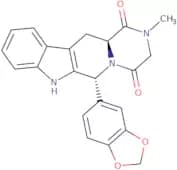
Discontinued productcis-Tadalafil
CAS:Cis-Tadalafil is a potent inhibitor of phosphodiesterase 5, which is used to treat erectile dysfunction (ED) and primary pulmonary hypertension (PPH). It works by increasing blood flow to the penis, allowing men with ED to achieve and maintain an erection. Cis-Tadalafil is also used to treat symptoms of prostatic hyperplasia (enlarged prostate) in men. This drug has been shown to be effective in treating PPH by reducing pulmonary arterial pressure and improving exercise capacity. Cis-Tadalafil belongs to the carboline class of drugs and is a phosphodiesterase 5 inhibitor that selectively inhibits cGMP-specific phosphodiesterase type 5 (PDE5). This drug has been shown to be highly effective in treating both ED and PPH with minimal side effects.
Formula:C22H19N3O4Purity:Min. 95%Color and Shape:White/Off-White SolidMolecular weight:389.4 g/molN-Desacetyl thiocolchicoside
CAS:N-Desacetyl thiocolchicoside is a white crystalline powder that is soluble in water, methanol and acetone. It has a molecular weight of 320.2 and an empirical formula of C6H14O5. N-Desacetyl thiocolchicoside is used as an analytical standard for HPLC analysis, as a Research and Development (R&D) material for drug development, and as an impurity standard for the manufacture of pharmaceutical products. This compound has been shown to be a metabolite of thiocolchicoside and structurally similar to the drug product chitinase.
Formula:C25H31NO9SPurity:Min. 95%Molecular weight:521.58 g/molRef: 3D-CHA99181
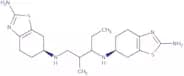
Discontinued productPramipexole EP Impurity C
CAS:Pramipexole EP Impurity C is a synthetic impurity that is used as an impurity standard in the manufacture of Pramipexole EP. It is also used as a research and development tool for drug product, custom synthesis, CAS No. 1973461-14-1, and analytical studies. This compound has been shown to be a metabolite of Pramipexole EP and may have pharmacological properties. Pramipexole EP Impurity C has been found to inhibit the growth of certain bacteria, such as methicillin-resistant Staphylococcus aureus (MRSA) isolates.
Formula:C20H32N6S2Purity:Min. 95%

![5-[(Desloratadine)methyl] rupatadine](/_next/image/?url=https%3A%2Fstatic.cymitquimica.com%2Fproducts%2F3D%2Fthumb-webp%2FZYB51572.webp&w=3840&q=75)


![Pyrrolo[1,2-f][1,2,4]triazin-4-amine](/_next/image/?url=https%3A%2Fstatic.cymitquimica.com%2Fproducts%2F3D%2Fthumb-webp%2FFP55646.webp&w=3840&q=75)
![3-[2-[4-(5-Fluoro-1,2-benzisoxazol-3-yl)-1-piperidinyl]ethyl]-6,7,8,9-tetrahydro-2-methyl-4H-pyrid…](/_next/image/?url=https%3A%2Fstatic.cymitquimica.com%2Fproducts%2F3D%2Fthumb-webp%2FIF23360.webp&w=3840&q=75)