APIs for research and impurities
Subcategories of "APIs for research and impurities"
- Aminoacids and derivatives(12,319 products)
- Anthraquinones and derivatives(402 products)
- Benzimidazole and Imidazole Derivatives(10,390 products)
- Benzodiazepine Derivatives(326 products)
- Carbohydrates and glycoconjugates(5,047 products)
- Esters and Derivatives(42,242 products)
- Fatty Acids and Lypidic Derivatives(32,374 products)
- Flavonoids and Polyphenols(17,073 products)
- Free Radicals and Oxidant/Reducing Agents(211 products)
- Ketones and derivatives(2,399 products)
- Natural and semi-synthetic antibiotics(6,324 products)
- Nitriles and Cyano Derivatives(3,068 products)
- Nitrosamines and Derivatives(55 products)
- Nucleosides and Nucleotides(3,445 products)
- Organic Phosphates and Phosphonates(1,194 products)
- Organic Sulphonates and Sulphates(10,419 products)
- Organometallics(4,417 products)
- Others(6,269 products)
- Peptides and Proteins(3,133 products)
- Polymers and Derivatives(99 products)
- Purines and Pyrimidine Derivatives(8,898 products)
- Quinazoline and Quinoline Derivatives(65,683 products)
- Quinones and Derivatives(24,341 products)
- Salts and Derivatives of Active Pharmaceutical Ingredients (API)(81,260 products)
- Steroids and Derivatives(4,923 products)
- Sulfonamides and Derivatives(2,564 products)
- Terpenoids and Derivatives(3,835 products)
- Thiazolidinediones and Thiopyrans(2,753 products)
- β-Adrenergic Compounds(227 products)
Found 58629 products of "APIs for research and impurities"
2-[[4-(2-Pyridylsulfamoyl)phenyl]azo]hydroxybenzene
CAS:2-[[4-(2-Pyridylsulfamoyl)phenyl]azo]hydroxybenzene is an impurity found in sulfasalazine. It is a metabolite that is formed by the P450 system in the liver. The metabolic process of 2-[[4-(2-Pyridylsulfamoyl)phenyl]azo]hydroxybenzene has been studied in detail and has been shown to be a major contributor to the pharmacokinetic profile of sulfasalazine. This substance also exhibits antimicrobial activity and inhibits the growth of bacteria, fungi, and viruses.
Formula:C17H14N4O3SPurity:Min. 95%Molecular weight:354.38 g/molRef: 3D-IP27340
Discontinued productMesulergine hydrochloride
CAS:Mesulergine hydrochloride is a drug that inhibits the dopamine and serotonin receptors. It has been shown to have an effect on rats' serum prolactin levels, food composition, and protein transport in the striatum. Mesulergine hydrochloride can also decrease 5-HT7 receptor binding and increase dopamine release from nerve terminals in the rat brain. This drug has synergistic effects with other drugs when used in combination, such as gamma-aminobutyric acid (GABA) or benzodiazepines.
Symptoms of mesulergine hydrochloride include psychotic disorders, anxiety, depression, hallucinations, sleep problems, and suicidal thoughts. These symptoms may be due to mesulergine's effect on 5-HT2C receptors.Formula:C18H27ClN4O2SPurity:Min. 95%Molecular weight:399 g/molRef: 3D-XCA78612
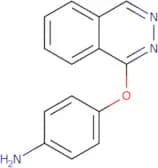
Discontinued product4-(Phthalazin-1-yloxy)aniline
CAS:4-(Phthalazin-1-yloxy)aniline is an analog of cyclin-dependent kinase (CDK) inhibitors that has shown promising anticancer activity. It inhibits the activity of CDKs, which are enzymes involved in regulating cell division and proliferation. This compound has been tested on Chinese hamster ovary cells and has demonstrated potent antiproliferative activity against various cancer cell lines. 4-(Phthalazin-1-yloxy)aniline induces apoptosis in tumor cells, leading to their death. This compound may be a potential candidate for the development of novel anticancer drugs that target CDKs and promote tumor cell death. Additionally, this compound can be detected in urine samples, making it a useful biomarker for cancer diagnosis and monitoring.
Formula:C14H11N3OPurity:Min. 95%Molecular weight:237.26 g/molRef: 3D-ZFA36540
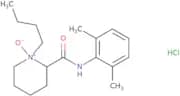
Discontinued productBupivacaine N-oxide hydrochloride
CAS:Bupivacaine N-oxide is a synthetic local anesthetic drug. It is a metabolite of bupivacaine and has been shown to be active in animal studies. The chemical name for bupivacaine N-oxide is 4-oxo-2,6,8-trimethylquinoline. Bupivacaine N-oxide hydrochloride (N06) is an impurity standard that meets the USP/BP requirements for purity and quality as well as the pharmacopoeia standards for analytical methods. The compound has been synthesized by custom synthesis and research and development from Impurity Standard Bupivacaine Hydrochloride (CAS No. 1796927-05-3). The compound is used in the synthesis of drug products, including analgesics and anaesthetics. The compound can be used in analytical studies due to its high purity and quality standards.
Formula:C18H29ClN2O2Purity:Min. 95%Molecular weight:340.9 g/molRef: 3D-WWC92705
Discontinued product2-[[[3-Methyl-4-(methylthio)-2-pyridinyl]methyl]sulfinyl]-1H-benzimidazole
CAS:2-[[[3-Methyl-4-(methylthio)-2-pyridinyl]methyl]sulfinyl]-1H-benzimidazole is a synthetic, nonsteroidal anti-inflammatory drug. It is soluble in methanol and ethanol, not soluble in water. The impurity standard of 2-[[[3-Methyl-4-(methylthio)-2-pyridinyl]methyl]sulfinyl]-1H-benzimidazole is 3-[2-[(3,4,5-trimethoxyphenyl)amino]-1H-benzimidazolium methyl sulfate].
Formula:C15H15N3OS2Purity:Min. 95%Molecular weight:317.43 g/molAmoxicillin EP Impurity L
CAS:Amoxicillin EP Impurity L is an impurity standard for amoxicillin. It is a synthetic compound that is used to ensure the quality of amoxicillin drug products. Amoxicillin EP Impurity L has been shown to be metabolized through a number of metabolic transformations, including hydrolysis by esterases or glucuronidases, oxidation by cytochrome P450 enzymes, reduction by glutathione reductase, or conjugation with glucuronic acid. This impurity has also been shown to have anti-inflammatory properties and may be due to its inhibition of prostaglandin synthesis.
Formula:C24H29N5O7S2Purity:Min. 95%Molecular weight:563.65 g/molRef: 3D-IA180686
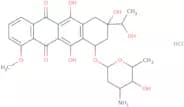
Discontinued productDaunorubicinol hydrochloride
CAS:Daunorubicin metabolite
Formula:C27H31NO10•HClPurity:Min. 95 Area-%Color and Shape:PowderMolecular weight:566 g/molRef: 3D-ID165374
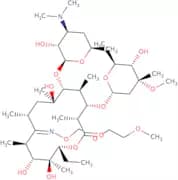
Discontinued product(9Z)-Roxithromycin
CAS:Roxithromycin is a macrolide antibiotic that inhibits protein synthesis in bacteria. It binds to the 50S ribosomal subunit, thereby inhibiting bacterial growth. Roxithromycin has been used to diagnose intestinal and esophageal diseases, inflammatory diseases, and cancer. There are some cardiac effects associated with Roxithromycin that may be related to its ability to inhibit serotonin reuptake. This drug also has anti-inflammatory properties and has been shown to be effective against influenza virus infections as well as other infectious diseases such as tuberculosis and HIV/AIDS.
Formula:C41H76N2O15Purity:Min. 95%Molecular weight:837.05 g/molRef: 3D-IR106421
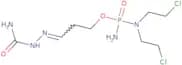
Discontinued productHydroxy cyclophosphamide semicarbazone-d4
CAS:Hydroxy cyclophosphamide semicarbazone-d4 is an analytical standard used to monitor the purity of a drug product. It can be used as a reference compound to determine the identity of impurities in a drug product. Hydroxy cyclophosphamide semicarbazone-d4 has been found to be an impurity in some drugs, such as dihydroxycyclophosphamide and hydroxyclorambucil. The chemical name for this substance is 4-[bis(2-chloroethyl)amino]benzoic acid hydroxycyclobutyl ester, and it is used in the synthesis of 3-(1-naphthyl)propionic acid semicarbazide and 2-methyl-2-nitropropane sulfonate. Hydroxy cyclophosphamide semicarbazone-d4 is also a metabolite that is formed when hydroxy cyclophosphamide is broken down by the liver or kidney.
Formula:C8H18Cl2N5O3PPurity:Min. 95%Molecular weight:334.14 g/molRef: 3D-DCA94846
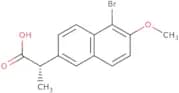
Discontinued productNaproxen Impurity C
CAS:Naproxen Impurity C is an analytical impurity that is found in Naproxen. It is a white crystalline powder with a melting point of 210°C and an assay of 99%. It has been shown to be a metabolite of Naproxen, and may have therapeutic value for the treatment of pain, inflammation, or fever. The purity of this product has been verified by HPLC analysis.
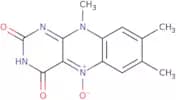
Formula:C14H13BrO3Purity:Min. 95%Molecular weight:309.16 g/molLumiflavin 5-oxide
CAS:Lumiflavin 5-oxide is a metabolite of lumiflavin. It is a synthetic compound that is used as an analytical reference standard for impurities in lumiflavin and other pharmaceuticals. Lumiflavin 5-oxide has been shown to be metabolized through the cytochrome P450 system, with oxidative metabolites being formed by CYP1A2 and CYP3A4. Lumiflavin 5-oxide has also been shown to be a competitive inhibitor of NAD+-dependent enzymes such as glycerol kinase, phosphofructokinase, lactate dehydrogenase, alcohol dehydrogenase, and glucose 6-phosphate dehydrogenase.
Formula:C13H12N4O3Purity:Min. 95%Molecular weight:272.26 g/molRef: 3D-LBA99593
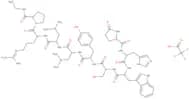
Discontinued productLeuprolide acetate ep impurity F
CAS:Leuprolide acetate ep impurity F is a drug product that is an impurity standard for the leuprolide acetate API. It is used in analytical and clinical studies to identify the presence of leuprolide acetate impurities, as well as to determine the metabolism of leuprolide acetate. Leuprolide acetate ep impurity F has been shown to be a natural metabolite of leuprolide acetate and have a niche application in pharmacopoeia.
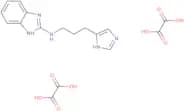
Formula:C61H85F3N16O14Purity:Min. 95%Molecular weight:1,323.4 g/molRos 234 dioxalate
CAS:Ros 234 is a dioxalate salt of rosiglitazone, and is an anti-cancer agent that inhibits the growth of cancer cells. Ros 234 has been shown to inhibit inflammatory conditions such as asthma, rheumatoid arthritis, and colitis. It also modulates immune and autoimmune responses.
Formula:C17H19N5O8Purity:Min. 95%Molecular weight:421.4 g/molRef: 3D-GWC94193
Discontinued productDeschloro amlodipine
CAS:Deschloro amlodipine is a drug that is used for the treatment of high blood pressure. It belongs to a group of drugs called calcium channel blockers. Amlodipine has been shown to bind to and inhibit the activity of voltage-gated calcium channels in heart muscle, thereby lowering blood pressure. Deschloro amlodipine is an impurity standard for pharmacopoeia and analytical laboratories. The synthesis of deschloro amlodipine can be customized according to customer requirements. This product will be shipped as soon as possible after purchase.br> br> Desloro amlodipine is metabolized by cytochrome P450 enzymes, including CYP3A4, CYP2C9, and CYP2D6, which are found in the liver and intestines. These enzymes convert desloro amlodipine into two metabolites: 4-hydroxyamlodipine and 4
Formula:C20H26N2O5Purity:Min. 95%Molecular weight:374.43 g/molRef: 3D-NDA15052
Discontinued product1,1-Dimethylethyl (3S,5S,6E)-7-[4-(4-fluorophenyl)-6-(1-methylethyl)-2-[methyl(methylsulfonyl)amino]-5-pyrimidinyl]-3,5-dihydroxy-6- heptenoate
CAS:Please enquire for more information about 1,1-Dimethylethyl (3S,5S,6E)-7-[4-(4-fluorophenyl)-6-(1-methylethyl)-2-[methyl(methylsulfonyl)amino]-5-pyrimidinyl]-3,5-dihydroxy-6- heptenoate including the price, delivery time and more detailed product information at the technical inquiry form on this page
Formula:C26H36FN3O6SPurity:Min. 95%Molecular weight:537.65 g/molChloromethyl olanzapinium chloride
CAS:Chloromethyl olanzapinium chloride is an analytical reference material that can be used as a standard for HPLC-UV analysis. It is also used in the development of new drugs and as an impurity standard during drug manufacturing. Chloromethyl olanzapinium chloride has been shown to be a metabolite of Olanzapine, which is a niche drug product that is not commercially available. Chloromethyl olanzapinium chloride is listed by the USP, EP and JP as a drug product impurity. It can be synthesized from natural or synthetic sources.
Formula:C18H22Cl2N4SPurity:Min. 95%Color and Shape:PowderMolecular weight:397.37 g/mol(2S,4R)-Fosinopril sodium salt
CAS:(2S,4R)-Fosinopril sodium salt is a prodrug that is converted to the active form fosinopril in the body. It is used to treat high blood pressure and heart failure. Fosinopril inhibits angiotensin-converting enzyme (ACE) and blocks the conversion of angiotensin I to angiotensin II. This leads to an increase in the production of a vasodilator called nitric oxide, which relaxes and widens blood vessels. Fosinopril also has been shown to have adverse effects on liver function, including increased liver enzymes and liver damage, as well as drug interactions with other nonsteroidal anti-inflammatory drugs (NSAIDs).
Formula:C30H45NNaO7PPurity:Min. 95%Molecular weight:585.64 g/molRef: 3D-GEC35341
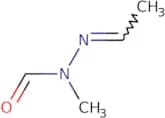
Discontinued productGyromitrin
CAS:Gyromitrin is a potent inhibitor of tumor growth and apoptosis in human cancer cells. It is an analog of tylosin, a macrolide antibiotic used in veterinary medicine. Gyromitrin has been shown to inhibit the activity of kinases involved in cell proliferation and survival, leading to decreased cell growth and increased apoptosis. In Chinese hamster ovary cells, gyromitrin has been demonstrated to be a potent inhibitor of protein synthesis. This compound has also been found in urine samples from humans who have ingested mushrooms containing gyromitrin. Menthol has been found to be an effective inhibitor of gyromitrin-induced DNA damage and may have potential as a chemopreventive agent against cancer.
Formula:C4H8N2OPurity:Min. 95%Molecular weight:100.12 g/molRef: 3D-RAA56802
Discontinued productDexamethasone-17-ketone
CAS:Controlled ProductPlease enquire for more information about Dexamethasone-17-ketone including the price, delivery time and more detailed product information at the technical inquiry form on this page
Formula:C20H25FO3Purity:Min. 95%Molecular weight:332.42 g/molRef: 3D-ID183298
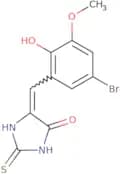
Discontinued product(E/Z)-It-603
CAS:Please enquire for more information about (E/Z)-It-603 including the price, delivery time and more detailed product information at the technical inquiry form on this page
Formula:C11H9BrN2O3SPurity:Min. 95%Molecular weight:329.17 g/mol
![2-[[4-(2-Pyridylsulfamoyl)phenyl]azo]hydroxybenzene](/_next/image/?url=https%3A%2Fstatic.cymitquimica.com%2Fproducts%2F3D%2Fthumb-webp%2FIP27340.webp&w=3840&q=75)


![2-[[[3-Methyl-4-(methylthio)-2-pyridinyl]methyl]sulfinyl]-1H-benzimidazole](/_next/image/?url=https%3A%2Fstatic.cymitquimica.com%2Fproducts%2F3D%2Fthumb-webp%2FIM21229.webp&w=3840&q=75)