APIs for research and impurities
Active Pharmaceutical Ingredients (APIs) are the substances in drugs responsible for their therapeutic effects. In this section, you will find a wide variety of APIs intended for research use. These compounds are essential for the development, testing, and validation of new pharmaceutical formulations. CymitQuimica offers high-quality APIs to support research in drug discovery and development.
Subcategories of "APIs for research and impurities"
- Aminoacids and derivatives(12,328 products)
- Anthraquinones and derivatives(405 products)
- Benzimidazole and Imidazole Derivatives(10,441 products)
- Benzodiazepine Derivatives(335 products)
- Carbohydrates and glycoconjugates(5,017 products)
- Esters and Derivatives(42,240 products)
- Fatty Acids and Lypidic Derivatives(32,400 products)
- Flavonoids and Polyphenols(17,087 products)
- Free Radicals and Oxidant/Reducing Agents(213 products)
- Ketones and derivatives(2,404 products)
- Natural and semi-synthetic antibiotics(6,385 products)
- Nitriles and Cyano Derivatives(3,067 products)
- Nitrosamines and Derivatives(55 products)
- Nucleosides and Nucleotides(3,432 products)
- Organic Phosphates and Phosphonates(1,202 products)
- Organic Sulphonates and Sulphates(10,435 products)
- Organometallics(4,422 products)
- Others(6,294 products)
- Peptides and Proteins(3,159 products)
- Polymers and Derivatives(100 products)
- Purines and Pyrimidine Derivatives(8,948 products)
- Quinazoline and Quinoline Derivatives(65,987 products)
- Quinones and Derivatives(24,349 products)
- Salts and Derivatives of Active Pharmaceutical Ingredients (API)(79,737 products)
- Steroids and Derivatives(4,976 products)
- Sulfonamides and Derivatives(2,595 products)
- Terpenoids and Derivatives(3,846 products)
- Thiazolidinediones and Thiopyrans(2,752 products)
- β-Adrenergic Compounds(230 products)
Show 21 more subcategories
Found 57049 products of "APIs for research and impurities"
Sort by
Purity (%)
0
100
|
0
|
50
|
90
|
95
|
100
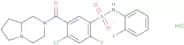
Abt-639 hydrochloride
CAS:<p>Abt-639 hydrochloride is a drug product that is used as a research and development standard. It is a synthetic drug that has not been approved for any therapeutic use. Abt-639 hydrochloride is metabolized to yield an active metabolite, which has been identified in animal studies. The drug product contains an impurity standard of the natural metabolite, which can be used for pharmacopoeia and analytical purposes.</p>Formula:C20H21Cl2F2N3O3SPurity:Min. 95%Molecular weight:492.4 g/molButenachlor
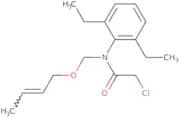
CAS:Butenachlor is a potent anticancer inhibitor that targets tumor kinases. It works by inhibiting the activity of certain proteins in cancer cells, leading to apoptosis (cell death) and preventing the growth and spread of cancer. Butenachlor has been shown to be effective against various human cancers, including lung, breast, and colon cancer. It is an analog of saxagliptin, a drug used to treat type 2 diabetes. Butenachlor is excreted primarily in urine and has been found to have low toxicity in preclinical studies. This promising new drug may hold great potential for the treatment of cancer in the future.Formula:C17H24ClNO2Purity:Min. 95%Molecular weight:309.8 g/molSorafenib impurity 31
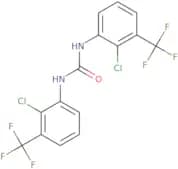
CAS:Sorafenib is a drug that is used to treat cancer. Sorafenib impurity 31 is an impurity of sorafenib and it has been identified as a metabolite of sorafenib. It can be synthesized in the laboratory or found in nature. Sorafenib impurity 31 can be used to develop a high purity standard for HPLC analysis, an analytical standard for R&D purposes, and a custom synthesis for niche or drug product development.Formula:C15H8Cl2F6N2OPurity:Min. 95%Molecular weight:417.1 g/mol3-Chloro-10-[3-(dimethylamino)propyl]-9(10H)-acridinone
CAS:<p>Please enquire for more information about 3-Chloro-10-[3-(dimethylamino)propyl]-9(10H)-acridinone including the price, delivery time and more detailed product information at the technical inquiry form on this page</p>Formula:C18H19ClN2OPurity:Min. 95%Molecular weight:314.8 g/molTivantinib
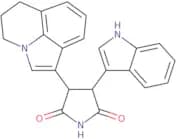
CAS:Tivantinib is a potent inhibitor of the c-Met receptor tyrosine kinase, which plays a role in tumor growth and metastasis. This Chinese medicinal compound has been shown to have anticancer properties by inducing apoptosis in cancer cells and inhibiting cell cycle progression. Tivantinib has been found to be effective against a range of cancers, including leukemia and human solid tumors. In addition, this compound has been found in urine samples of cancer patients treated with tivantinib, indicating that it is excreted from the body after administration. Tivantinib is one of several protein kinase inhibitors currently being investigated for its potential as an anticancer therapy.Formula:C23H19N3O2Purity:Min. 95%Molecular weight:369.4 g/molTirofiban impurity 9
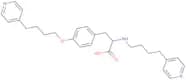
CAS:<p>Please enquire for more information about Tirofiban impurity 9 including the price, delivery time and more detailed product information at the technical inquiry form on this page</p>Formula:C27H33N3O3Purity:Min. 95%Molecular weight:447.6 g/mol1-[(1-Oxotetracosyl)oxy]-2,5-pyrrolidinedione
CAS:Please enquire for more information about 1-[(1-Oxotetracosyl)oxy]-2,5-pyrrolidinedione including the price, delivery time and more detailed product information at the technical inquiry form on this pageFormula:C28H51NO4Purity:Min. 95%Molecular weight:465.7 g/molOlsalazine o-sulfate sodium salt
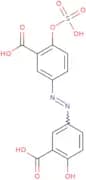
CAS:Olsalazine o-sulfate sodium salt is a medicinal compound that has been shown to have potential as an apoptosis-inducing agent for cancer cells. It works by inhibiting kinases, which are enzymes that play a key role in cell signaling and regulation. Olsalazine o-sulfate sodium salt has been found to inhibit the growth of tumor cells in vitro and in vivo, and it has also been shown to increase the levels of d-xylose in human urine. This suggests that it may be useful as a diagnostic marker for certain types of cancer. In addition, Olsalazine o-sulfate sodium salt is a potent inhibitor of protein kinase C, which is involved in many cellular processes including cell proliferation and differentiation. Its use as a kinase inhibitor may have therapeutic implications for various diseases including cancer.Formula:C14H10N2O9SPurity:Min. 95%Molecular weight:382.3 g/mol2-Benzoylbenzene-1-sulfonyl chloride
CAS:Please enquire for more information about 2-Benzoylbenzene-1-sulfonyl chloride including the price, delivery time and more detailed product information at the technical inquiry form on this pageFormula:C13H9ClO3SPurity:Min. 95%Molecular weight:280.73 g/mol2-tert-Butyl-1,2,3,4-tetrahydro-isoquinoline-4,6,8-triol
CAS:<p>2-tert-Butyl-1,2,3,4-tetrahydro-isoquinoline-4,6,8-triol is an impurity found in the drug product 2-tert-butyl-1,2,3,4-tetrahydroisoquinoline. It is a synthetic compound with pharmacological properties that have been studied in animals and humans. The chemical name for 2-tert-butyl isoquinoline is 4-(2'-methylpropoxy)-isoquinoline. The structure of this compound is shown below:</p>Formula:C13H19NO3Purity:Min. 95%Molecular weight:237.29 g/molPrilocaine hydrochloride
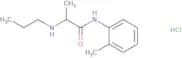
CAS:Prilocaine is a synthetic chemical that is used as an active ingredient in some local anesthetic preparations. It is a metabolite of lidocaine and has been shown to be more potent than lidocaine in animal studies. Prilocaine hydrochloride is the free base form of prilocaine, which is soluble in water and alcohol. This product can be used as a reference standard for quality control purposes or as an analytical impurity standard for the analysis of drug products containing prilocaine.Formula:C13H21ClN2OPurity:Min. 95%Molecular weight:256.77 g/molN-Acetyl-S-(2-carboxypropyl)-L-cysteine disodium salt
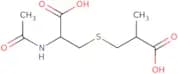
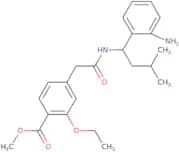
CAS:<p>N-Acetyl-S-(2-carboxypropyl)-L-cysteine disodium salt is an analog of a human kinase inhibitor that has been shown to inhibit cyclin-dependent kinases. This compound induces apoptosis in cancer cells and has been tested in Chinese hamster ovary cells. N-Acetyl-S-(2-carboxypropyl)-L-cysteine disodium salt is a potent anticancer agent that inhibits the growth of tumor cells by blocking protein synthesis. It has been used as a research tool to study the effects of kinase inhibitors on cancer cell growth and may have potential therapeutic applications in cancer treatment. The compound has also been detected in human urine and may serve as a biomarker for the presence of certain types of cancer.</p>Formula:C9H15NO5SPurity:Min. 95%Molecular weight:249.29 g/mol2-Despiperidyl-2-amino repaglinide methyl ester
CAS:Please enquire for more information about 2-Despiperidyl-2-amino repaglinide methyl ester including the price, delivery time and more detailed product information at the technical inquiry form on this pageFormula:C23H30N2O4Purity:Min. 95%Molecular weight:398.5 g/mol(20S)-21-Hydroxy-20-methylpregn-4-en-3-one
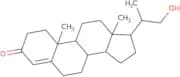
CAS:Controlled Product(20S)-21-Hydroxy-20-methylpregn-4-en-3-one is an analog of a naturally occurring steroid hormone that has been found to have potent anticancer activity. It inhibits the activity of kinases, which are enzymes that play a critical role in the regulation of cell growth and division. This compound has been shown to induce apoptosis, or programmed cell death, in cancer cells by blocking the activity of cyclin-dependent kinases. (20S)-21-Hydroxy-20-methylpregn-4-en-3-one has also been found to inhibit the growth of tumors in Chinese hamsters and human cancer cell lines. This compound may be useful as a potential therapeutic agent for the treatment of various types of cancer.Formula:C22H34O2Purity:Min. 95%Molecular weight:330.5 g/mol3,5-Dimethyl-2-(ethoxycarbonyl)-4-pyrone
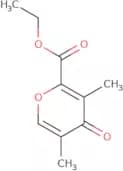
CAS:3,5-Dimethyl-2-(ethoxycarbonyl)-4-pyrone is a drug product that has been used as an HPLC standard. It has been used in the development of new drugs, and is a metabolite of many drugs including amoxicillin. 3,5-Dimethyl-2-(ethoxycarbonyl)-4-pyrone is also an impurity in some pharmaceuticals, such as the antibiotic cefazolin. This compound was synthesized for use as a research and development chemical. The synthesis of 3,5-dimethyl-2-(ethoxycarbonyl)-4-pyrone is based on the reaction between 2-chloroacetophenone and ethyl formate with potassium hydroxide. 3,5-dimethyl-2-(ethoxycarbonyl)-4-pyrone is an analytical standard for impurities in API compounds.Formula:C10H12O4Purity:Min. 95%Molecular weight:196.2 g/molAll-trans-retinal dimer trifluoroacetic acid salt
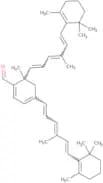
CAS:All-trans-retinal dimer trifluoroacetic acid salt is an analog of methotrexate, which is commonly used as an anticancer drug. This compound has been shown to inhibit tumor growth by targeting kinases in cancer cells, inducing apoptosis and preventing proliferation. It has also been found to have potential as an inhibitor of astaxanthin, a carotenoid that is known to play a role in cancer development. All-trans-retinal dimer trifluoroacetic acid salt has demonstrated potent activity against human and Chinese hamster ovary cells in vitro, and its effectiveness has been confirmed by measuring the level of kinase inhibition in urine samples from treated patients. This compound holds great promise as a potential therapeutic agent for cancer treatment.Formula:C40H54OPurity:Min. 95%Molecular weight:550.9 g/molJNJ-67856633
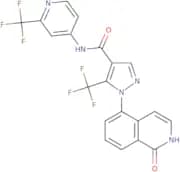
CAS:JNJ-67856633 is a potent inhibitor of a protein found in urine and Chinese hamster ovary cells. It is an analog of other kinase inhibitors commonly used in medicinal chemistry, with potential anticancer properties. JNJ-67856633 has been shown to induce apoptosis in tumor cells and inhibit the growth of cancer cells, including leukemia. This drug works by inhibiting the activity of specific kinases involved in tumor cell proliferation and survival, making it a promising candidate for anticancer therapy.Formula:C20H11F6N5O2Purity:Min. 95%Molecular weight:467.3 g/molSimvastatin 4'-methyl ether
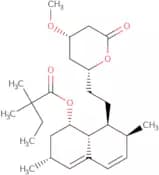
CAS:Simvastatin 4'-methyl ether is a metabolite of simvastatin. It is an impurity in the drug product and can be used as an analytical standard for HPLC. It is not a drug product or a pharmaceutical ingredient, but it can serve as an impurity standard for pharmacopoeia.Formula:C26H40O5Purity:Min. 95%Molecular weight:432.59 g/molRopivacaine N-Oxide
CAS:Ropivacaine N-Oxide is a synthetic drug used to relieve pain during surgery. It is metabolized by the liver, with metabolites excreted in the urine. Ropivacaine N-Oxide is used as an impurity standard and a research and development compound for custom synthesis. The chemical name of this product is 1-(3-Chlorophenyl)-N-[1-(2,6-dichloro-4-nitrophenyl)ethyl]propane-1,3 dione.Formula:C17H26N2O2Purity:Min. 95%Color and Shape:SolidMolecular weight:290.4 g/mol5-Carboxy-N-phenyl-2-1H-pyridone, sodium
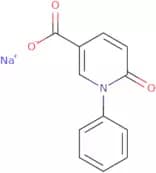
CAS:5-Carboxy-N-phenyl-2-1H-pyridone, sodium is a drug product that is used as an analytical reference in the analysis of impurities. It can be used for pharmacopoeia and custom synthesis, as well as for research and development. 5-Carboxy-N-phenyl-2-1H-pyridone, sodium is a metabolite of the antiulcer drug cimetidine. It is also an impurity in the synthesis of the antibiotic ampicillin. 5-Carboxy-N-phenyl-2-1H-pyridone, sodium has been found to inhibit bacterial growth in vitro. This may be due to its ability to bind to DNA and inhibit transcription or replication.Formula:C12H8NNaO3Purity:Min. 95%Molecular weight:237.19 g/mol

![3-Chloro-10-[3-(dimethylamino)propyl]-9(10H)-acridinone](/_next/image/?url=https%3A%2Fstatic.cymitquimica.com%2Fproducts%2F3D%2Fthumb-webp%2FIWC02821.webp&w=3840&q=75)
![1-[(1-Oxotetracosyl)oxy]-2,5-pyrrolidinedione](/_next/image/?url=https%3A%2Fstatic.cymitquimica.com%2Fproducts%2F3D%2Fthumb-webp%2FPBA78275.webp&w=3840&q=75)