


Amino Acids (AA)
Amino acids (AAs) are the fundamental building blocks of proteins, playing a crucial role in various biological processes. These organic compounds are essential for protein synthesis, metabolic pathways, and cell signaling. In this category, you will find a comprehensive range of amino acids, including essential, non-essential, and modified forms, which are vital for research in biochemistry, molecular biology, and nutritional sciences. At CymitQuimica, we provide high-quality amino acids to support your research and development needs, ensuring accuracy and reliability in your experimental outcomes.
Subcategories of "Amino Acids (AA)"
- Amino Acid Derivatives(3,955 products)
- Amino Acid and Amino Acid Related Compounds(3,464 products)
- Amino Acids with Oxygen or Sulphur(168 products)
- Boc- Amino Acids(351 products)
- Fmoc Amino Acids(1,710 products)
Found 38247 products of "Amino Acids (AA)"
Sort by
Purity (%)
0
100
|
0
|
50
|
90
|
95
|
100
1,2-Dipalmitoyl-sn-Glycero-3-Phosphate Monosodium Salt
CAS:Formula:C35H68O8P·NaMolecular weight:647.89 22.991,2-Dimyristoyl-sn-Glycero-3-Phospho-rac-(1-Glycerol)-d54 Sodium Salt
CAS:Formula:C34H12D54O10P·NaMolecular weight:720.20 22.99N1-N2-Di-N-Nitroso methyl (2S,5S)-5-methylpiperazine-2-carboxylate
Formula:C7H12N4O4Molecular weight:216.20N-Nitroso Histidine Impurity 8 Ditrifluoroacetate (Mixture of Diastereomers)
Formula:C21H22N6O4Molecular weight:422.45L-glutamic acid
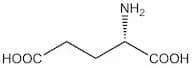
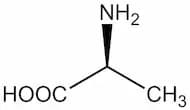
CAS:Glutamic acidFormula:C5H9NO4Purity:≥ 98.0 % (HPLC)Color and Shape:PowderMolecular weight:147.13L-alanine
CAS:Amino acidFormula:C3H7NO2Purity:≥ 98.0 % (HPLC)Color and Shape:PowderMolecular weight:89.095-hydroxy l-tryptophan
CAS:Nitrogen heterocyclic compoundFormula:C11H12N2O3Purity:≥ 98.0 % (HPLC)Color and Shape:PowderMolecular weight:220.23Γ-aminobutyric acid
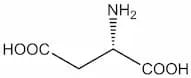
CAS:Amino acidFormula:C4H9NO2Purity:≥ 98.0 % (HPLC)Color and Shape:PowderMolecular weight:103.12L-aspartic acid
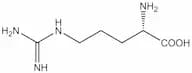
CAS:Amino acidFormula:C4H7NO4Purity:≥ 98.0 % (HPLC)Color and Shape:PowderMolecular weight:133.1L-arginine
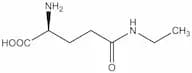
CAS:Amino acidFormula:C6H14N4O2Purity:≥ 98.0 % (HPLC)Color and Shape:PowderMolecular weight:174.2L-theanine
CAS:Acyclic amideFormula:C7H14N2O3Purity:≥ 98.0 % (HPLC)Color and Shape:PowderMolecular weight:174.2N-malonyl dl-tryptophan
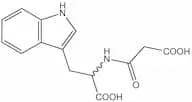
Nitrogen heterocyclic compoundFormula:C14H14N2O5Purity:≥ 98.0 % (HPLC)Color and Shape:PowderMolecular weight:290.28L-methionine
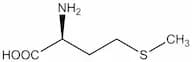
CAS:MethionineFormula:C5H11NO2SPurity:≥ 95.0 % (HPLC)Color and Shape:PowderMolecular weight:149.21L-(+)-ergothioneine
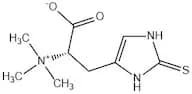
CAS:Nitrogen heterocyclic compoundFormula:C9H15N3O2SPurity:≥ 90.0 % (HPLC)Color and Shape:PowderMolecular weight:229.3L-proline
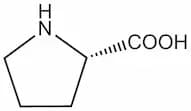
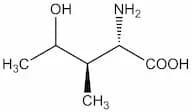
CAS:Amino acidFormula:C5H9NO2Purity:≥ 98.0 % (HPLC)Color and Shape:PowderMolecular weight:115.134-hydroxy l-isoleucine
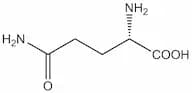
CAS:Amino acidFormula:C6H13NO3Purity:≥ 98.0 % (HPLC)Color and Shape:PowderMolecular weight:147.17L-glutamine
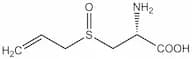
CAS:Amino acidFormula:C5H10N2O3Purity:≥ 98.0 % (HPLC)Color and Shape:PowderMolecular weight:146.14L-(±)-alliin
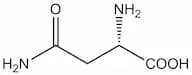
CAS:Organo-sulphur compoundFormula:C6H11NO3SPurity:≥ 95.0 % (HPLC)Color and Shape:PowderMolecular weight:177.22L-asparagine
CAS:Amino acidFormula:C4H8N2O3Purity:≥ 98.0 % (HPLC)Color and Shape:PowderMolecular weight:132.125-Methoxyindole-3-acetic Acid
CAS:Controlled Product<p>Applications 5-Methoxyindole-3-acetic Acid is a chemical reagent used in the analysis of the physiological properties of auxins.<br>References Ferro, N. et al.: J. Clin.Info. Model., 46, 1751 (2006);<br></p>Formula:C11H11NO3Color and Shape:NeatMolecular weight:205.212,5-Dimethyl-3-(2-methylphenyl)-1-propylimidazolini-4-one Hydrochloride
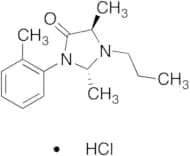
CAS:Controlled Product<p>Applications rac-trans-2,5-Dimethyl-3-(2-methylphenyl)-1-propylimidazolini-4-one Hydrochloride is the salt analogue of 2,5-Dimethyl-3-(2-methylphenyl)-1-propylimidazolini-4-one (D477055), an impurity of Prilocaine (Prilocaine Hydrochloride P725000). Prilocaine is a local anesthetic of the amino amide type and is often used in dentistry. Prilocaine is also often combined with lidocaine as a preparation for dermal anesthesia (lidocaine/prilocaine or EMLA) towards the treatment of conditions like paresthesia.<br>References Caliaro, G., et al.: J. Pharm. Biomed. Anal., 26, 427 (2001), Ulmeanu, S., et al.: Pharm. Res., 20, 1317 (2003)<br></p>Formula:C15H22N2O·HClColor and Shape:NeatMolecular weight:282.80895-Methoxy-2-mercaptobenzimidazole
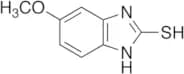
CAS:Controlled Product<p>Impurity Esomeprazol EP Impurity A/ Omeprazole EP Impurity A<br>Applications 5-Methoxy-2-mercaptobenzimidazole (Esomeprazol EP Impurity A) is used in the synthesis of COX-2 inhibitors<br>References Frechette, S., et al.: Bioorg. Med. Chem. Lett., 18, 1502 (2008), Zhang, R., et al.: Eur. J. Med. Chem., 44, 3771 (2009),<br></p>Formula:C8H8N2OSColor and Shape:BeigeMolecular weight:180.23(E)-4-Methyl-2-phenyl-2-pentenal (Stabilized with α-tocopherol)
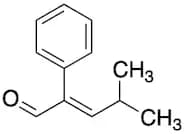
CAS:Controlled Product<p>Applications 4-METHYL-2-PHENYL-2-PENTENAL (cas# 26643-91-4) is a useful research chemical.<br></p>Formula:C12H14OColor and Shape:ColourlessMolecular weight:174.24Ferrous Bisglycinate
CAS:Controlled Product<p>Stability Hygroscopic<br>Applications Ferrous Bisglycinate is used in the fortification of infant formulations and foods.<br>References Fox, T. et al.: Am. J. Clin. Nutri., 67, 664 (1998); Heath, A. et al.: J. Am. Coll. Nutr., 20, 477 (2001);<br></p>Formula:C2H4NO2·FeColor and Shape:NeatMolecular weight:203.962-Methyl-5-nitrobenzenesulfonamide
CAS:Controlled Product<p>Applications 2-Methyl-5-nitrobenzenesulfonamide is a chemical reagent in the synthesis of good inhibitors of cancer-related carbonic anhydrase. Also used in the synthesis of novel deacetylase inhibitors used in anti-tumor therapy.<br>References Moeker, J. et al.: J. Med. Chem., 57, 3522 (2014); Han, L. et al.: Bioorg. Med. Chem., 22, 1529 (2014);<br></p>Formula:C7H8N2O4SColor and Shape:Yellowish SolidMolecular weight:216.212-Methyl-1-phenyl-1-propene (>85%)
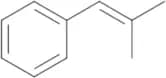
CAS:Controlled Product<p>Applications 2-Methyl-1-phenyl-1-propene can be used in analytical study of analysis and comparison of aroma compounds from traditional Tangshan sorghum liquor and samples of improved fermentation process by GC-MS.<br>References Jiang, X., et al.: Shipin Gongye Keji, 37, 87 (2016)<br></p>Formula:C10H12Purity:>85%Color and Shape:NeatMolecular weight:132.202(2-Hydroxy-4-methoxyphenyl)(4-methylphenyl)methanone
CAS:<p>Applications (2-hydroxy-4-methoxyphenyl)(4-methylphenyl)methanone (cas# 1641-17-4) is a useful research chemical.<br></p>Formula:C15H14O3Color and Shape:NeatMolecular weight:242.275-Methoxy-N-methyl-N-(1-methylethyl)-α-oxo-1H-indole-3-acetamide
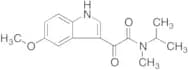
CAS:Controlled Product<p>Applications 5-Methoxy-N-methyl-N-(1-methylethyl)-α-oxo-1H-indole-3-acetamide is an intermediate used in the synthesis of 5-Methoxy-N-methyl-N-isopropyl Tryptamine (M271680), which is a psychedelic tryptamine related to N-methyl-N-isopropyltryptamine. 5-Methoxy MiPT potently inhibits the re-uptake of the monoamines serotonin and norepinephrine but does not affect dopamine re-uptake. 5-Methoxy MiPT has no effect on the release of monoamines from rat brain synaptosomes. This product is intended for forensic and research applications.<br>References Katagi, M., et al.: Jpn. J. Forensic Toxicol., 20, 303 (2002), Meatherall, R., et al.: J. Anal. Toxicol., 27, 313 (2003), Wilson, J., et al.: Forensic Sci. Int., 148, 31 (2005), Kamata, T., et al.: Drug Metab. Dispos., 34, 281 (2006),<br></p>Formula:C15H18N2O3Color and Shape:Beige To Light BrownMolecular weight:274.322'-Deoxy-N-methyl-cytidine
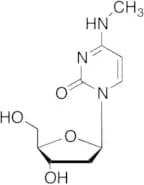
CAS:Controlled Product<p>Applications 2'-Deoxy-N-methyl-cytidine is a nucleotide derivative used as an analytical reagent.<br>References Dupret, D.: Biomed. Health. Res., 23(Human Genome Analysis), 244-255 (1998)<br></p>Formula:C10H15N3O4Color and Shape:NeatMolecular weight:241.2441-Bromo-3-methylbutane
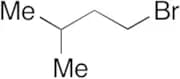
CAS:Controlled Product<p>Applications 1-Bromo-3-methylbutane, is used as an extraction solvent to determine various polycyclic aromatic hydrocarbons in water samples though dispersive liquid-liquid microextraction along with GC-MS (gas chromatography- mass spectrometry).<br> Not a dangerous good if item is equal to or less than 1g/ml and there is less than 100g/ml in the package<br>References Rezaee, M., et al.: J. Chromat. A., 1116, 1 (2006)<br></p>Formula:C5H11BrColor and Shape:NeatMolecular weight:151.04N-(5-Methyl-3-isoxazolyl)benzenesulfonamide
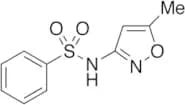
CAS:<p>Applications N-(5-Methyl-3-isoxazolyl)benzenesulfonamide is used in the preparation of isoxazolecarboxylic acid derivatives as agricultural fungicides.<br>References Gomes, J.R.B., et al.: Tetrahedron, 61, 2705 (2005),<br></p>Formula:C10H10N2O3SColor and Shape:Light Yellow SolidMolecular weight:238.26N1-(2-Aminoethyl)-N1-Methylethane-1,2-Diamine
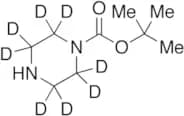
CAS:Controlled Product<p>Applications N1-(2-AMINOETHYL)-N1-METHYLETHANE-1,2-DIAMINE (cas# 4097-88-5) is a useful research chemical.<br></p>Formula:C5H15N3Color and Shape:NeatMolecular weight:117.19N-Boc-piperazine-d8
CAS:Controlled Product<p>Applications N-Boc-piperazine-d8 is a useful synthetic intermediate for the preparation of labelled compounds.<br></p>Formula:C92H8H10N2O2Color and Shape:Light YellowMolecular weight:194.30Isopropyl 2-Bromo-2-methylpropanoate
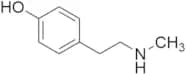
CAS:Controlled Product<p>Applications Isopropyl 2-bromo-2-methylpropanoate (cas# 51368-55-9) is a useful research chemical.<br></p>Formula:C7H13O2BrColor and Shape:NeatMolecular weight:209.08N-Methyl-p-tyramine
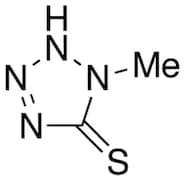
CAS:<p>Applications N-Methyl-p-tyramineúHCl (cas# 370-98-9) is a useful research chemical.<br></p>Formula:C9H13NOColor and Shape:BeigeMolecular weight:151.21N-Methyl-5-tetrazolethiol
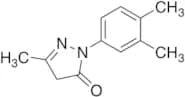
CAS:Controlled Product<p>Impurity Cefoperazone EP Impurity C<br>Applications N-Methyl-5-tetrazolethiol (Cefoperazone EP Impurity C) is an impurity of Cefoperazone.<br>References Kitson, T., et al.: Biochem. J., 175, 83 (1978), Elenbaas, R., et al.: Clin. Pharmacol. Ther., 32, 347(1982),<br></p>Formula:C2H4N4SColor and Shape:NeatMolecular weight:116.141-(3,4-Dimethylphenyl)-3-methyl-1H-pyrazol-5(4H)-one
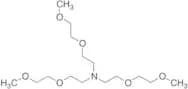
CAS:<p>Applications 1-(3,4-Dimethylphenyl)-3-methyl-1H-pyrazol-5(4H)-one is a reagent used in the enantioselective aminoalkylation of pyrazol-3-ones.<br>References Carceller-Ferrer, L. et al.: Org. Biomol. Chem., 17, 9859 (2019);<br></p>Formula:C12H14N2OColor and Shape:Off-WhiteMolecular weight:202.25Tris(2-(2-methoxyethoxy)ethyl)amine
CAS:Controlled Product<p>Applications Tris(2-(2-methoxyethoxy)ethyl)amine (cas# 70384-51-9) is a useful research chemical.<br></p>Formula:C15H33NO6Color and Shape:NeatMolecular weight:323.43H-Pro-Glu-Oh
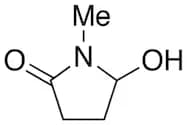
CAS:Controlled Product<p>Applications H-PRO-GLU-OH (cas# 67644-00-2) is a useful research chemical.<br></p>Formula:C10H16N2O5Color and Shape:NeatMolecular weight:244.2445-Hydroxy-N-methyl-2-pyrrolidinone
CAS:Controlled Product<p>Applications 5-Hydroxy-N-methyl-2-pyrrolidinone is a metabolite of N-methylpyrrolidone (NMP).<br>References Payan, J., et al.: Drug Metab. Dispos., 30, 1418 (2002), Carnerup, M., et al.: Food Chem. Toxicol., 43, 1441 (2005), Angerer, J., et al.: Toxicol. Sci., 93, 3 (2006),<br></p>Formula:C5H9NO2Color and Shape:NeatMolecular weight:115.13N-Acetyl Phentermine
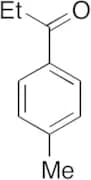
CAS:Controlled Product<p>Applications N-(2-Methyl-1-phenylpropan-2-yl)acetamide is a byproduct from the preparation of benzolactams by palladium-catalyzed carbonylation of arylethylamines and α-amino benzenepropanoates.<br>References Lopez, B., et al.: Chem. Commun., 47, 1054 (2011); Albert, J., et al.: Organometallics, 32, 649 (2013);<br></p>Formula:C12H17NOColor and Shape:NeatMolecular weight:191.274′-Methylpropiophenone
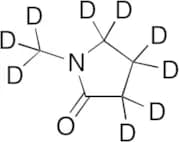
CAS:Controlled Product<p>Applications 4′-Methylpropiophenone is a chemical reagent used in electrocarboxylation reactions.<br>References Zhang, K. et al.: Chin. J. Chem., 28, 509 (2010); Zhao, S. et al.: Tetra. Lett., 52, 2702 (2011);<br></p>Formula:C10H12OColor and Shape:NeatMolecular weight:148.201-Methyl-2-pyrrolidinone-d9
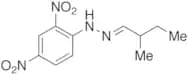
CAS:Controlled Product<p>Applications 1-Methyl-2-pyrrolidinone-d9 is labeled 1-Methyl-2-pyrrolidinone (M326120), which is a versatile industrial solvent. NMP is currently approved for use only in veterinary pharmaceuticals. The determination of the disposition and metabolism of NMP in the rat will contribute toward understanding the toxicology of this exogenous chemical which man may likely be exposed to in increasing amounts.<br>References Southwell, D., et al.: J. Pharm. Pharmacol., 33, 3 (1981), Barry, W., et al.: J. Invest. Dermatol., 82, 49 (1984),<br></p>Formula:C5D9NOColor and Shape:NeatMolecular weight:108.192-Methylbutanal 2,4-Dinitrophenylhydrazone
CAS:<p>Applications 2,4-Dinitrophenylhydrazone (DNPH) derivative.<br>References Lindsay, R.C., et al.: J. Food Sci., 29, 266 (1964),<br></p>Formula:C11H14N4O4Color and Shape:NeatMolecular weight:266.25N-Fmoc-L-tyrosine Benzyl Ester
CAS:Controlled Product<p>Applications N-Fmoc-L-tyrosine Benzyl Ester is used to synthesize truncated analogues of preptin-(1-16) as possible osteoblast proliferation stimulant. It is also an intermediate used to prepare phosphotyrosinyl phosphoramidite derivatives useful in the incorporation of multiple reporter groups on synthetic oligonucleotides.<br>References Kowalczyk, R., et al.: Bioorg. Med. Chem., 22, 3565 (2014); Misiura, K., et al.: Nucl. Acids Res., 18, 4345 (1990)<br></p>Formula:C31H27NO5Color and Shape:NeatMolecular weight:493.55Tetrahydro-5-methyl-2-furanol
CAS:Controlled Product<p>Applications Tetrahydro-5-methyl-2-furanol is an intermediate in synthesizing 2,3-Dihydro-2-methylfuran (D447355), which is a general reagent used in next generation of biofuels. Dihydrofuranyl derivative.<br>References Simmie, J. et al.: J. Phys Chem., 116, 4528 (2012);<br></p>Formula:C5H10O2Color and Shape:NeatMolecular weight:102.132-Ethyl-4-methylpentyl Acrylate
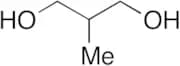
Controlled Product<p>Stability Temperature Sensitive, Light Sensitive<br>Applications 2-Ethyl-4-methylpentyl Acrylate<br></p>Formula:C11H20O2Color and Shape:NeatMolecular weight:184.282-Methyl-1,3-propandiol (b-Hydroxyisobutanol)
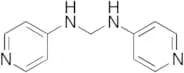
CAS:Controlled Product<p>Applications β-Hydroxyisobutanol is used as a reagent in the synthesis of pyrazolo[1,5-a]pyridinecarbonyl-substituted spirocyclic piperidine ketals as inhibitors of HCV protein NS4B and of hepatitis C viral replication and their lack of cytotoxicity in human cells.<br>References Tai, V.W.-F., et al.: Bioorg. Med. Chem. Lett., 24, 2288 (2014);<br></p>Formula:C4H10O2Color and Shape:ColourlessMolecular weight:90.121N,N'-Di-4-pyridinyl-methanediamine
CAS:<p>Applications N,N'-Di-4-pyridinyl-methanediamine is used to prepare bis(heteroaryl)-imidazolidinediones with oxalyl chloride.<br>References Ghandi, M., et al.: Synth. Comm., 37, 637 (2007)<br></p>Formula:C11H12N4Color and Shape:NeatMolecular weight:200.241,2-Cyclohexanedicarboxylic Acid Mono 4-Methyl-7-carboxy-heptyl Ester
CAS:<p>Stability Hygroscopic<br>Applications 1,2-Cyclohexanedicarboxylic Acid Mono 4-Methyl-7-carboxy-heptyl Ester is a possible metabolite of the di(isononyl)cyclohexane-1,2-dicarboxylate (DINCH) monoester (MINCH).<br>References Koch, H., et al.: Arch. Toxicol., 87, 799 (2013)<br></p>Formula:C17H28O6Color and Shape:Colourless To Light YellowMolecular weight:328.4N-(2-Hydroxyethyl)glycine (~90%)
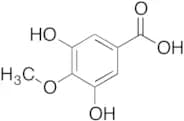
CAS:Controlled Product<p>Applications N-(2-Hydroxyethyl)glycine (~90%) (cas# 5835-28-9) is a compound useful in organic synthesis.<br></p>Formula:C4H9NO3Purity:>85%Color and Shape:NeatMolecular weight:119.123,5-Dihydroxy-4-methoxybenzoic Acid
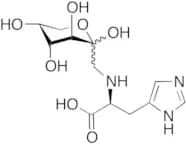
CAS:Controlled Product<p>Applications 3,5-Dihydroxy-4-methoxybenzoic Acid is a useful building block in organic synthesis.<br>References Ghosh, Koushik, et al.: Angewandte Chemie, I.E., 55(27), 7821-7825 (2016);Vergne, Fabrice, et al.: Bioorg. & Medi. Chem. Let., 14(18), 4607-4613 (2004)<br></p>Formula:C8H8O5Color and Shape:NeatMolecular weight:184.15Fructose-histidine
CAS:Controlled Product<p>Applications Fructose-histidine is an amadori compound formed in food.<br>References Wang, J., et al.: J. Mass Spec., 43, 262 (2008); Hashiba, H.: J. Agri. Food Chem., 24, 70 (1976)<br></p>Formula:C12H19N3O7Color and Shape:NeatMolecular weight:317.3Boc-(S)-3-Amino-4-(2,4,5-trifluorophenyl)butyric Acid
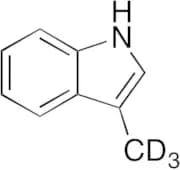
CAS:Controlled Product<p>Applications Boc-(S)-3-Amino-4-(2,4,5-trifluorophenyl)butyric Acid is a reactant used in the preparation of peptidase IV inhibitors.<br>References Park, W. et al.: Bioorg. Med. Chem. Lett., 21, 1366 (2011);<br></p>Formula:C15H18F3NO4Color and Shape:NeatMolecular weight:333.33-Methyl-d3-indole
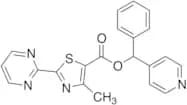
CAS:Controlled Product<p>Applications 3-Methyl-d3-indole has been used to prove that bioactivation of the pulmonary toxin 3-methylindole requires methyl carbon-hydrogen bond breakage in mice. 3-Methyl-d3-indole is the labeled analogue of 3-Methylindole (M313470), A naturally abundant pneumotoxin, found primarily in mammalian feces providing its strong fecal odor.<br> Not a dangerous good if item is equal to or less than 1g/ml and there is less than 100g/ml in the package<br>References Huijzer, J., et. al.: Toxicol. Appl. Pharm., 90, 60 (1987); Nakashima, T., et al.: Biol. Pharm. Bull., 32, 832 (2009); Xu, H., et al.: Chem. Pharm. Bull., 57, 321 (2009); Bodoor, K., et al.: J. Med. Chem., 52, 3753 (2009); Naskar, S., et al.: J. Chem. Res., 3, 174 (2009); Sollner, K., et al.: J. Agric. Food Chem., 57, 4319 (2009)<br></p>Formula:C92H3H6NColor and Shape:NeatMolecular weight:134.19phenyl(pyridin-4-yl)methyl 4-methyl-2-(pyrimidin-2-yl)-1,3-thiazole-5-carboxylate
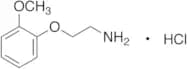
CAS:Controlled Product<p>Applications phenyl(pyridin-4-yl)methyl 4-methyl-2-(pyrimidin-2-yl)-1,3-thiazole-5-carboxylate (cas# 1281055-79-5) is a useful research chemical.<br></p>Formula:C21H16N4O2SColor and Shape:Off-WhiteMolecular weight:388.452-(2-Methoxyphenoxy)ethylamine Hydrochloride
CAS:<p>Impurity Carvedilol EP Impurity E; Carvedilol Impurity E; Carvedilol USP E<br>Applications 2-(2-Methoxyphenoxy)ethylamine Hydrochloride (Carvedilol EP Impurity E; Carvedilol Impurity E; Carvedilol USP E) is an impurity of Carvedilol synthesis.<br>References Smith, L., et al.: J. Med. Chem., 20, 1653 (1977),<br></p>Formula:C9H13NO2·ClHColor and Shape:NeatMolecular weight:203.67Isoferulic Acid-d3 3-O-β-D-Glucuronide
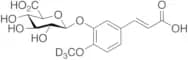
CAS:Controlled Product<p>Applications Labelled Isoferulic Acid 3-O-β-D-Glucuronide, the glucuronide conjugate of Isoferulic Acid (H946180). Isoferulic Acid 3-O-β-D-Glucuronide is one of the circulating metabolites in human plasma after coffee consumption.<br>References Fumeaux, R. et al.: Org. Biomol. Chem., 8, 5199 (2010); Redeuil, K. et al.: J. Chrom. A, 1218, 4678 (2011);<br></p>Formula:C16H15D3O10Color and Shape:NeatMolecular weight:373.332’-Deoxymugineic Acid
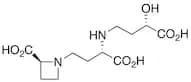
CAS:Controlled Product<p>Applications Phytosiderophores are produced in higher plants as iron chelating amino acids that promote uptake of iron from soil.<br>References Klair, S., et al.: J. Plant Nutr., 19, 1295 (1996),<br></p>Formula:C12H20N2O7Color and Shape:NeatMolecular weight:304.302-Cyano-N-methylacetamide
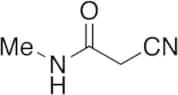
CAS:Controlled Product<p>Applications 2-Cyano-N-methylacetamide is used in the synthesis of pyridone compounds and benzimidazoles, for various pharmaceutical application.<br>References Mijin, D. et al.: Synth. Comm., 36, 193 (2006); Grimmett, M. et al.: Sci. Synth., 12, 529 (2002); Aggarwal, V. et al.: Synth. 3, 214 (1982);<br></p>Formula:C4H6N2OColor and Shape:NeatMolecular weight:98.1L-Citrulline-d6
CAS:Controlled Product<p>Applications Labelled L-Citrulline. An amino acid, first isolated from the juice of watermelon, Citrullus vulgaris Schrad., Cucurbitaceae. Used in the treatment of asthenia.<br>References Kurtz, et al.: J. Biol. Chem., 122, 477 (1938), Rajantie, J., et al.: J. Pediatr., 97, 927 (1980), Carpenter, T.O., et al.: N. Engl. J. Med., 312, 290 (1985),<br></p>Formula:C62H6H7N3O3Color and Shape:NeatMolecular weight:181.22Suberyl Glycine
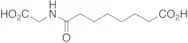
CAS:Controlled Product<p>Applications Suberylglycine is one of the acylglycines, an important class of metabolites that have been used in the diagnosis of several inborn errors of metabolism (IEM).<br>References Costa, C., et al.: J. Pharmaceut. Biomed. Anal., 21, 1215 (2000), Garcia-Villoria, J., et al.: Clin. Biochem., 42, 2 (2009), Scalbert, A., et al.: Metabolomics, 5, 435 (2009),<br></p>Formula:C10H17NO5Color and Shape:Light Yellow To BrownMolecular weight:231.25L-Glutamine-15N
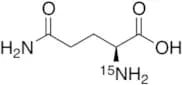
CAS:<p>Applications L-Glutamine (Alpha-15n, 98%) (cas# 80143-57-3) is a useful research chemical.<br></p>Formula:C5H1015NNO3Color and Shape:NeatMolecular weight:147.1384-(4-Methylpiperazinomethyl)benzoic Acid, Dihydrochloride
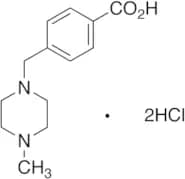
CAS:Controlled Product<p>Stability Hygroscopic<br>Applications 4-(4-Methylpiperazinomethyl)benzoic Acid, Dihydrochloride (cas# 106261-49-8) is a compound useful in organic synthesis.<br></p>Formula:C13H18N2O2·2ClHColor and Shape:NeatMolecular weight:307.22Azido-PEG3-alcohol
CAS:Controlled ProductFormula:C6H13N3O3Color and Shape:NeatMolecular weight:175.19N-ε-acetyl-l-lysine
CAS:Controlled Product<p>Applications N-Epsilon-acetyl-l-lysine is used in the metabolomics study on the combined effect of cocaine and ethanol via liquid chromatography-mass spectrometry metabolomics approach.<br>References Sanchez-Lopez, E., et al.: J. Pharm. Biomed. Anal., 140, 313 (2017)<br></p>Formula:C8H16N2O3Color and Shape:NeatMolecular weight:188.22O-Phospho-L-tyrosine
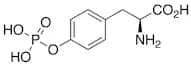
CAS:<p>Applications Useful in the study of tyrosine-phosphorylation, which has been linked with the malignant transformation of cells by some RNA tumour viruses.<br>References Sefton, B.M., et al.: Cell, 20, 807 (1980), Erikson, R., et al.: Perspect. Virol., 11, 93 (1981), Lee, E-S, et al.: J. Org. Chem., 59, 2086 (1994)<br></p>Formula:C9H12NO6PColor and Shape:NeatMolecular weight:261.17Sarcosine-d3 Hydrochloride
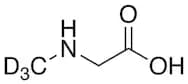
CAS:Controlled ProductFormula:C32H3H4NO2·ClHColor and Shape:NeatMolecular weight:128.57Pantothenic Acid (Technical Grade, Contains Lactone)
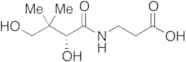
CAS:Controlled Product<p>Stability Hygroscopic<br>Applications Pantothenic Acid is a member of the B complex vitamins; essential vitamin for the biosynthesis of coenzyme A in mammalian cells. Occurs ubiquitously in all animal and plant tissue. The richest common source is liver, but jelly of the queen bee contains 6 times as much as liver. Rice bran and molasses are other good sources.<br>References Gardner, P., et al.: Food Chem., 68, 471 (2000); Ou, B., et al.: J. Agric. Food Chem., 50, 2772 (2002); Bahorun, T., et al.: J. Sci. Food Agric., 84, 1553 (2004)<br></p>Formula:C9H17NO5Color and Shape:NeatMolecular weight:219.244-Aminobutyl-d8 Guanidine Dihydrochloride
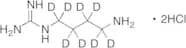
CAS:Controlled Product<p>Applications 4-Aminobutyl-d8 Guanidine is the labelled analog of the decarboxylation product of the amino acid arginine (A769500) and also an intermediate in polyamine biosynthesis.<br>References Golding, B.T., et al.: Biochem. Soc. Trans., 22, 391S (1994);<br></p>Formula:C5H6D8N4·2HClColor and Shape:NeatMolecular weight:211.16263L-Arginine-2,3,3,4,4,5,5-d7 HCl
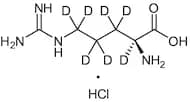
CAS:Controlled Product<p>Applications L-Arginine-2,3,3,4,4,5,5-d7 HCl (CAS# 204244-77-9) is a useful isotopically labeled research compound. It can be used with Raman scattering for imaging living cells and organisms.<br>References Min, W., et al., PCT Int. Appl. (2014), WO 2014205074 A2<br></p>Formula:C6D7H7N4O2·HClColor and Shape:NeatMolecular weight:217.70(2R)-3-Hydroxyisovaleroyl Carnitine
CAS:Controlled Product<p>Stability Very Hygroscopic<br>Applications Hydroxyisovaleroyl Carnitine is used as a diagnostic tool to identify the presence of orofacial clefts. Also used in the screening and diagnostics of inborn errors of metabolism.<br>References Denes, J. et al.: Anal. Chem., 84, 10113 (2012); Budner, M. et al.: Arch. Oral. Biol., 58, 459 (2013);<br></p>Formula:C12H23NO5Color and Shape:NeatMolecular weight:261.31L-2-Aminobutyric Acid-d6
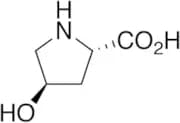
CAS:Controlled Product<p>Applications L-2-Aminobutyric Acid-d6 is the isotope labelled analog of L-2-Aminobutyric Acid (A602930); a receptor antagonist.<br>References Porter, D.J.T., et al.: Biochem. Pharmacol., 50, 1475 (1995)<br></p>Formula:C4D6H3NO2Color and Shape:Off-WhiteMolecular weight:109.16trans-4-Hydroxy-L-proline
CAS:Controlled Product<p>Applications A natural constituent of animal structural proteins such as collagen and elastin. Several microorganisms producing proline trans-4- and cis-3-hydroxylase were discovered and these enzymes were applied to the industrial production of trans-4- and cis-3-hydroxy-L-proline.<br>References Langmaier, F. et al.: Int. J. Cosm. Sci., 24, 273 (2002); Lawrence, C., et al.: Biochem. J., 313, 185 (1996); Mori, H., et al.: J. Bacteriol.; 179, 5677 (1997); Clifton, I., et al.: Eur. J. Biochem., 268, 6625 (2001);<br></p>Formula:C5H9NO3Color and Shape:NeatMolecular weight:131.13N-[(Benzyloxy)carbonyl]glycylglycine
CAS:<p>Applications N-[(Benzyloxy)carbonyl]glycylglycine is a reagent in the synthesis of Glycylglycyl-L-tyrosine (G718500), which is a fungal tyrosinases and their capability to oxidize peptide-bound tyrosine residues is important in a view of applicability of tyrosinases.<br>References Bowness, J., et al.: Biochem. J., 53, 620 (1953), Cuff, M., et al.: J. Mol. Biol., 278, 855 (1998), Kubo, I., et al.: Bioorg. Med. Chem., 12, 5349 (2004),<br></p>Formula:C12H14N2O5Color and Shape:NeatMolecular weight:266.25Ethyl 3-(dimethylamino)-2-(2,4,5-trifluoro-3-methoxybenzoyl)acrylate
CAS:Formula:C15H16F3NO4Color and Shape:NeatMolecular weight:331.287





























![N-[(Benzyloxy)carbonyl]glycylglycine](/_next/image/?url=https%3A%2Fstatic.cymitquimica.com%2Fproducts%2FTR%2Fthumb-webp%2FB287100.webp&w=3840&q=75)
