Amino Acids (AA)
Amino acids (AAs) are the fundamental building blocks of proteins, playing a crucial role in various biological processes. These organic compounds are essential for protein synthesis, metabolic pathways, and cell signaling. In this category, you will find a comprehensive range of amino acids, including essential, non-essential, and modified forms, which are vital for research in biochemistry, molecular biology, and nutritional sciences. At CymitQuimica, we provide high-quality amino acids to support your research and development needs, ensuring accuracy and reliability in your experimental outcomes.
Subcategories of "Amino Acids (AA)"
- Amino Acid Derivatives(3,969 products)
- Amino Acid and Amino Acid Related Compounds(3,474 products)
- Amino Acids with Oxygen or Sulphur(168 products)
- Boc- Amino Acids(351 products)
- Fmoc Amino Acids(1,710 products)
Found 38282 products of "Amino Acids (AA)"
Sort by
Purity (%)
0
100
|
0
|
50
|
90
|
95
|
100
L-Phenylalanine-13C6
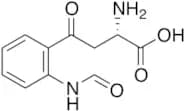
CAS:Controlled Product<p>Applications Labelled analogue of L-Phenylalanine, an essential amino acid. L-Phenylalanine is biologically converted into L-tyrosine, another one of the DNA-encoded amino acids, which in turn is converted to L-DOPA and further converted into dopamine, norepinephrine, and epinephrine. L-Phenylalanine is produced for medical, feed, and nutritional applications such as in the preparation of Aspartame.<br>References Hollunger, G. et al.: Acta Pharmacol. Toxicol., 34, 391 (1974); Bagchi, S.P. et al.: Biochem. Pharmacol., 26, 900 (1977);<br></p>Formula:C313C6H11NO2Color and Shape:White To Off-WhiteMolecular weight:171.15Formylkynurenine
CAS:Controlled ProductFormula:C11H12N2O4Color and Shape:NeatMolecular weight:236.224(E)-Ethyl 4-Bromo-3-methyl-2-butenoate
CAS:Controlled Product<p>Applications (E)-Ethyl 4-Bromo-3-methyl-2-butenoate (cas# 51318-62-8) is a compound useful in organic synthesis.<br></p>Formula:C7H11BrO2Color and Shape:NeatMolecular weight:207.073-([(TERT-BUTOXY)CARBONYL](METHYL)AMINO)CYCLOBUTANE-1-CARBOXYLIC ACID
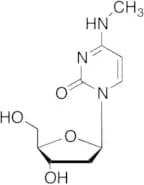
CAS:Purity:95.0%Molecular weight:229.27600097656252'-Deoxy-N-methyl-cytidine
CAS:Controlled Product<p>Applications 2'-Deoxy-N-methyl-cytidine is a nucleotide derivative used as an analytical reagent.<br>References Dupret, D.: Biomed. Health. Res., 23(Human Genome Analysis), 244-255 (1998)<br></p>Formula:C10H15N3O4Color and Shape:NeatMolecular weight:241.244(2S,4R)-4-Hydroxy-L-glutamic Acid
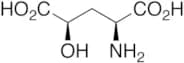
CAS:Controlled Product<p>Applications (2S,4R)-4-Hydroxy-L-glutamic Acid is a metabolite of Glutamic acid (G596960).<br>References Hampson, D., et al.: J. Biol. Chem., 274, 33488 (1999), Jensen, A., et al.: Eur. J. Pharmacol., 397, 247 (2000),<br></p>Formula:C5H9NO5Color and Shape:NeatMolecular weight:163.13D-Isoleucine
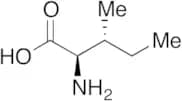
CAS:<p>Applications D-Isoleucine is not biosynthesized in the human body and is therefore categorized as an essential amino acid that must be obtained through diet. It is also an important building block that is used in the formation of hemoglobin in humans.<br>References Albanese, A.: J. Biol. Chem., 157, 613 (1945); Martin, R. & Kirk, K.: Blood, 109, 2217 (2007)<br></p>Formula:C6H13NO2Color and Shape:Off White SolidMolecular weight:131.17292-Chloro-1-methylquinolinium Tetrafluoroborate
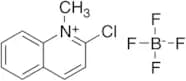
CAS:Controlled Product<p>Applications 2-Chloro-1-methylquinolinium tetrafluoroborate (cas# 16843-24-6) is a useful research chemical.<br></p>Formula:C10H9ClN·BF4Color and Shape:NeatMolecular weight:265.44(S)-3-((tert-Butoxycarbonyl)amino)-3-(6-methoxypyridin-3-yl)propanoic acid
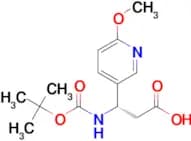
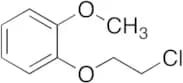
CAS:Purity:95.0%Molecular weight:296.3229980468751-(2-Chloroethoxy)-2-methoxybenzene
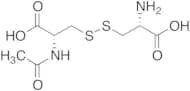
CAS:Controlled Product<p>Applications 1-(2-Chloroethoxy)-2-methoxy benzene, is an impurity of Carvedilol (C184625), a nonselective β-adrenergic blocker with α1-blocking activity. Carvedilol is an antihypertensive used in the treatment of congestive heart failure.<br>References Hirohashi, M., et al.: Arzneim.-Forsch., 40, 735 (1990); Packer, M., et al.: N. Engl. J. Med., 334, 1349 (1996);<br></p>Formula:C9H11ClO2Color and Shape:NeatMolecular weight:186.64N-Acetyl-L-cystine
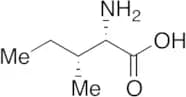
CAS:Controlled Product<p>Applications N-Acetyl-L-cystine is an antioxidant, used in the treatment of influenza A virus pandemic (1). N-Acetyl-L-cystine promotes fertilization by reducing disulfide bonds in zona pellucida of mouse (2).Releases N-Acetyl-L-cysteine, which is an antidote for paracetamol poisoning.<br>References (1) Zhang, R., et al.: (2014) Int. Immunopharmacol. 22: 1-8 (2) Takeo, T., et al.: Biol Reprod. (2015) 92: 1-7<br></p>Formula:C8H14N2O5S2Color and Shape:NeatMolecular weight:282.34L-Isoleucine
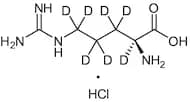
CAS:<p>Applications L-Isoleucine is classified as an essential amino acid, and is also a tumour promoter of bladder cancer in rats.<br>References Hatch, T., et al.: Infect. Immun., 12, 211 (1975); Nishio, Y., et al.: Science, 231, 843 (1986)<br></p>Formula:C6H13NO2Color and Shape:White To Off-WhiteMolecular weight:131.17L-Arginine-2,3,3,4,4,5,5-d7 HCl
CAS:Controlled Product<p>Applications L-Arginine-2,3,3,4,4,5,5-d7 HCl (CAS# 204244-77-9) is a useful isotopically labeled research compound. It can be used with Raman scattering for imaging living cells and organisms.<br>References Min, W., et al., PCT Int. Appl. (2014), WO 2014205074 A2<br></p>Formula:C6D7H7N4O2·HClColor and Shape:NeatMolecular weight:217.702,2-Diselanediyldiethanamine Dihydrochloride
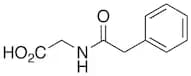
CAS:Controlled Product<p>Stability Hygroscopic<br>Applications 2,2-Diselanediyldiethanamine dihydrochloride (cas# 3542-13-0) is a useful research chemical.<br></p>Formula:C13H16N2O10Color and Shape:NeatMolecular weight:360.274N-Phenylacetylglycine
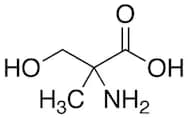
CAS:Controlled Product<p>Applications A metabolite of carboxylic acid.<br>References Bardsley, W., et al.: Biochem. J., 122, 557 (1971), Kim, J., et al.: Biosci. Biotechnol. Biochem., 69, 1331 (2005), Kopka, J., et al.: J. Biotechnol., 124, 312 (2006),<br></p>Formula:C10H11NO3Color and Shape:NeatMolecular weight:193.20α-Methyl-D,L-serine
CAS:Controlled Product<p>Applications A serine derivative. Used in the synthesis of constrained amino acid buildings blocks and their incorporation into biologically active peptidomimetics.<br>References Rew, Y., et al.: J. Med. Chem., 45, 3746 (2002),<br></p>Formula:C4H9NO3Color and Shape:NeatMolecular weight:119.12N1-(2-Aminoethyl)-N1-Methylethane-1,2-Diamine
CAS:Controlled Product<p>Applications N1-(2-AMINOETHYL)-N1-METHYLETHANE-1,2-DIAMINE (cas# 4097-88-5) is a useful research chemical.<br></p>Formula:C5H15N3Color and Shape:NeatMolecular weight:117.194-(3,5-dichlorobenzoyl)-8-methyl-1-oxa-4,8-diazaspiro[4.5]decane-3-carboxylic acid
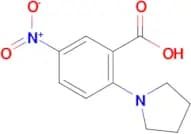
CAS:Purity:95.0%Molecular weight:373.23001098632815-Nitro-2-(pyrrolidin-1-yl)benzoic acid
CAS:Formula:C11H12N2O4Purity:95.0%Color and Shape:SolidMolecular weight:236.227DL-Homocysteic-3,3,4,4-d4 Acid
CAS:Controlled ProductFormula:C4D4H5NO5SColor and Shape:Light YellowMolecular weight:187.045256-Phenyl-5,6,6a,7,8,9,10,10a-octahydro-7,10-methanophenanthridine-2-carboxylic acid
CAS:Purity:98%Molecular weight:319.40399169921875Caerulein (>85%)
CAS:Controlled Product<p>Applications Caerulein is a ten amino acid oligopeptide that stimulates smooth muscle and increases digestive secretions. It is similar in action and composition to cholecystokinin. It stimulates gastric, biliary, and pancreatic secretion; and certain smooth muscle. It is used in paralytic ileus and as diagnostic aid in pancreatic malfunction. It is used to induce pancreatitis in experimental animal models.<br>References Anastasi,E., et al.: Ep., 23, 699 (1997); De Caro, G., et al.: Br. J. Pharmac Chemother., 33, 48 (1968)<br></p>Formula:C58H73N13O21S2Purity:~90%Color and Shape:Off-WhiteMolecular weight:1352.40(2R)-3-Amino-2-fluoropropanoic Acid-13C3
CAS:Controlled ProductFormula:C3H6FNO2Color and Shape:NeatMolecular weight:110.06DL-Serine-2,3,3-d3
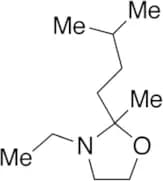
CAS:Controlled Product<p>Applications Labelled DL-Serine is used in the synthesis of novel tryptoline derivatives as IDO (indoleamine 2,3-Deoxygenase) inhibitors, for potential use in Alzheimer’s treatment.<br>References Tanaka, M. et al.: Bioorg. Med. Chem., 21, 1159 (2013);<br></p>Formula:C32H3H4NO3Color and Shape:NeatMolecular weight:108.113-Ethyl-2-methyl-2-(3-methylbutyl)-oxazolidine
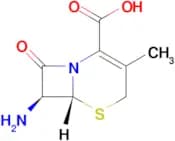
CAS:<p>Applications 3-Ethyl-2-methyl-2-(3-methylbutyl)-oxazolidine is a oxazolidine-based moisture scavenger for use in urethane coatings, sealants and elastomers.<br> Not a dangerous good if item is equal to or less than 1g/ml and there is less than 100g/ml in the package<br></p>Formula:C11H23NOColor and Shape:NeatMolecular weight:185.317-Aminodezacetoxycephalosporanic acid
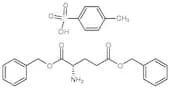
CAS:Purity:98.0%Color and Shape:Solid, PowderMolecular weight:214.24000549316406L-Glutamic acid dibenzyl ester 4-toluenesulfonate
CAS:Controlled Product<p>Applications L-Glutamic acid dibenzyl ester 4-toluenesulfonate<br></p>Formula:C26H29NO7SColor and Shape:NeatMolecular weight:499.582-Amino-5-methylhexanoic Acid
CAS:Controlled Product<p>Applications 2-amino-5-methylhexanoic acid (cas# 3558-32-5) is a useful research chemical.<br></p>Formula:C7H15NO2Color and Shape:NeatMolecular weight:145.24-(4-chlorobenzoyl)-8-propyl-1-oxa-4,8-diazaspiro[4.5]decane-3-carboxylic acid
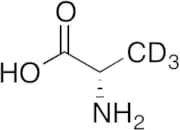
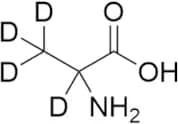
CAS:Purity:95.0%Molecular weight:366.8399963378906L-Alanine-d3
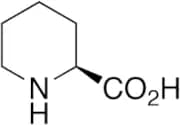
CAS:Controlled Product<p>Applications L-Alanine-d3 is the labeled analogue of L-Alanine (A481500), which is used to make in-vivo measurement of glucose and alanine metabolism in studies of patients with diabetes. L-Alanine is a non-essential amino acid for human development. L-Alanine is one of the 20 amino acids encoded by the genetic code.<br>References Bier, D.M. et al.: Diabetes, 26, 1005 (1977); Capaldo, B. et al.: J. Clin. Endocrinol. Metab., 71, 1220 (1990); Giacca, A. et al.: Diabetes, 47, 1763 (1998)<br></p>Formula:C3D3H4NO2Color and Shape:NeatMolecular weight:92.11L-Pipecolic Acid
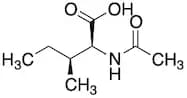
CAS:<p>Applications Pipecolic acid is involved in synaptic transmission in the central nervous system. The l-form occurs in plants.<br>References Nomura Y., et al.: Neurochem. Res., 6, 391 (1981),<br></p>Formula:C6H11NO2Color and Shape:NeatMolecular weight:129.16N-Acetylisoleucine
CAS:Controlled Product<p>Applications N-ACETYLISOLEUCINE (cas# 3077-46-1) is a useful research chemical.<br></p>Formula:C8H15NO3Color and Shape:NeatMolecular weight:173.2Ethyl 3-(dimethylamino)-2-(2,4,5-trifluoro-3-methoxybenzoyl)acrylate
CAS:Formula:C15H16F3NO4Color and Shape:NeatMolecular weight:331.287L-Aspartic Acid
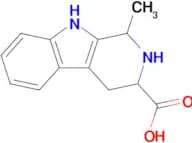
CAS:<p>Applications L-Aspartic Acid is a non-essential amino acid found in food sources. L-Aspartic Acid is one of the 20 proteinogenic amino acids; the building blocks of proteins. Its conjugate base L-aspartate is an excitatory neurotransmitter in the central nervous system.<br>References Ager, D.J. et al.: J. Mol. Catal. Enzym., 11, 199 (2001); Velisek, J. et al.: Cze. J. Food. Sci., 24, 1 (2006); Nagahama, M. et al.: Cell Tiss. Res., 318, 483 (2004);<br></p>Formula:C4H7NO4Color and Shape:WhiteMolecular weight:133.101-methyl-2,3,4,9-tetrahydro-1H-β-carboline-3-carboxylic acid
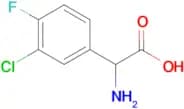
CAS:Purity:95.0%Molecular weight:230.266998291015623-Chloro-4-fluoro-DL-phenylglycine
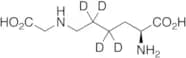
CAS:Formula:C8H7ClFNO2Purity:98+%Color and Shape:SolidMolecular weight:203.6Nε-(1-Carboxymethyl)-L-lysine-d4
CAS:Controlled Product<p>Stability Hygroscopic<br>Applications CEL and CML are two stable, nonenzymatic chemical modifications of protein lysine residues resulting from glycation and oxidation reactions.<br>References Fu, M.X., et al.: J. Biol. Chem., 271, 9982 (1996), Ahmed M.U., et al.: Biochem.J., 324, 565 (1997), Schleicher, E.D., et al.: J. Clin. Invest., 99, 457 (1997), Shibayama, R., et al.: Diabetes, 48, 1842 (1999),<br></p>Formula:C8H12D4N2O4Color and Shape:NeatMolecular weight:208.254-(2-chlorobenzoyl)-8-methyl-1-oxa-4,8-diazaspiro[4.5]decane-3-carboxylic acid
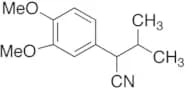
CAS:Purity:95.0%Molecular weight:338.79000854492193,4-Dimethoxy-a-(1-methylethyl)benzeneacetonitrile
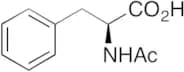
CAS:Controlled Product<p>Impurity Verapamil EP Impurity K<br>Applications (Verapamil EP Impurity K)<br></p>Formula:C13H17NO2Color and Shape:White To Light GreenMolecular weight:219.28N-Acetyl-L-phenylalanine
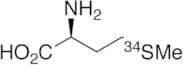
CAS:Controlled Product<p>Applications N-Acetyl-L-phenylalanine is an protected analogue of L-Phenylalanine (P319415), an essential amino acid produced for medical, feed, and nutritional applications such as in the preparation of Aspartame.<br>References Sriram, S., et al.: J. Med. Chem., 56, 2540 (2013); Parker, B.M., et al.: J. Biotech., 155, 396 (2011);<br></p>Formula:C11H13NO3Color and Shape:NeatMolecular weight:207.23L-Methionine-34S
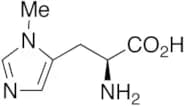
CAS:<p>Applications Labelled L-Methionine, an essential aminoacid for human development. Hepatoprotectant; antidote (acetominophen poisoning); urinary acidifier.<br>References Benevenga, N.J., et al.: J. Agric. Food Chem., 22, 2 (1974), Fleisher, L.D., et al.: Clin. Endocrinol. Metab., 3, 37 (1974), Meinnel, T., et al.: Biochimie, 75, 1061 (1993),<br></p>Formula:C5H11NO234SColor and Shape:NeatMolecular weight:151.113-N-Methyl-L-histidine
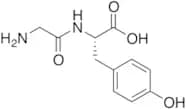
CAS:<p>Applications 3-N-Methyl-L-histidine is a potential compound to be used as a treatment with pharmacological PPARα agonists to stimulate the ubiquitin proteasome pathway and myofibrillar protein breakdown in skeletal muscle of rodents.<br>References Ringseis, R., et al.: Biochem. Biphys. Gen. Subject., 1830, 2105 (2013); Ubhi, B.K., et al.: Molec. Biosys., 8, 3125 (2012);<br></p>Formula:C7H11N3O2Color and Shape:NeatMolecular weight:169.18Glycyl-L-Tyrosine Dihydrate
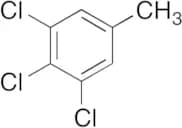
CAS:Controlled Product<p>Applications Glycyl-L-Tyrosine Dihydrate is used in process for producing N-Glycyltyrosine. Glycyl-L-Tyrosine Dihydrate is the anhydrous form of Glycyl-L-tyrosine(G720108); which is used in preparation method of high quality Aspartame and Aspartame crystallization-inducing agent.<br>References Mimura, T., et al.: Eur. Pat. Appl., (1999); Gao, Z., et al.: Faming Zhuanli Shenqing, (2019);<br></p>Formula:C11H14N2O4·2H2OColor and Shape:NeatMolecular weight:274.271,2,3-Trichloro-5-methylbenzene
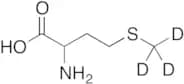
CAS:<p>Applications 1,2,3-Trichloro-5-methylbenzene is useful in calculating 21 physical properties of organic compounds strictly from molecular structure.<br> Not a dangerous good if item is equal to or less than 1g/ml and there is less than 100g/ml in the package<br>References Jain, N., et al.: J. Pharm. Sci., 88, 852-860 (1999)<br></p>Formula:C7H5Cl3Color and Shape:White To Off-WhiteMolecular weight:195.474Methionine-methyl-d3
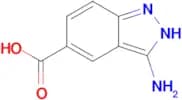
CAS:Controlled Product<p>Applications Methionine-methyl-d3 is the labeled Methionine-methyl, a useful building block.<br></p>Formula:C5D3H8NO2SColor and Shape:NeatMolecular weight:152.233-Amino-1H-indazole-5-carboxylic acid
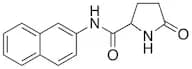
CAS:Formula:C8H7N3O2Purity:95.0%Color and Shape:SolidMolecular weight:177.163L-Pyroglutamic Acid β-Naphthylamide
CAS:Controlled Product<p>Applications A substrate for pyroglutamate aminopeptidase. Used for colorimetric determination of pyrrolidonyl peptidase activity in bacteria.<br> Not a dangerous good if item is equal to or less than 1g/ml and there is less than 100g/ml in the package<br>References Szewczuk, A., et al.: Eur. J. Biochem., 8, 63 (1969), Szewczuk, A., et al.: Anal. Biochem., 39, 268 (1971)<br></p>Formula:C15H14N2O2Color and Shape:NeatMolecular weight:254.28DL-Cystine-2,2',3,3,3',3'-d6
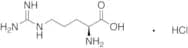
CAS:Controlled Product<p>Applications DL-Cystine-2,2',3,3,3',3'-d6 (CAS# 352431-53-9) is a useful isotopically labeled research compound.<br></p>Formula:C6D6H6N2O4S2Color and Shape:NeatMolecular weight:246.34L-Arginine Hydrochloride
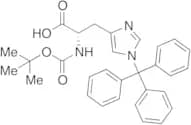
CAS:<p>Applications An essential amino acid for human development. Precursor for nitric oxide. Ammonia detoxicant (hepatic failure); diagnostic aid (pituitary function).<br>References Miura, T., et al.: Anal. Biochem., 139, 432 (1984), Jones, et al.: Adv. Enzyme Regul., 9, 19 (1970), Borders, C.L., et al.: Protein. Sci., 3, 541 (1994),<br></p>Formula:C6H14N4O2·ClHColor and Shape:NeatMolecular weight:210.66Boc-His(Trt)-OH
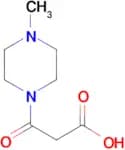
CAS:Controlled Product<p>Applications Boc-His(Trt)-OH was used in the study to prepare and study structure-activity relationship of amino acid amides as selective inhibitors for dipeptidyl peptidases.<br>References Senten, K., et al.: J. Med. Chem., 46, 5005 (2003);<br></p>Formula:C30H31N3O4Color and Shape:White To Off-WhiteMolecular weight:497.583-(4-Methyl-piperazin-1-yl)-3-oxo-propionic acid
CAS:Formula:C8H14N2O3Purity:98.0%Color and Shape:CrystallineMolecular weight:186.211N-Benzyl-L-tyrosine
CAS:Controlled Product<p>Applications Protected L-Tyrosine (T899975), an amino acid, used by cells to synthesize proteins. L-Tyrosine is biologically converted from L-phenylalanine and is in turn is converted to L-DOPA and further converted into the neurotransmitters: dopamine, norepinephrine, and epinephrine.<br>References Rasmussen D.D. et al.: J. Clin. Endocrinol. Metab., 57, 760 (1983); Bagchi, S.P. et al.: Biochem. Pharmacol., 26, 900 (1977)<br></p>Formula:C16H17NO3Color and Shape:NeatMolecular weight:271.32L,L-Dityrosine Dihydrochloride
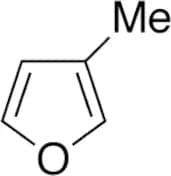
CAS:Controlled Product<p>Stability Hygroscopic<br>Applications Dityrosine (DY), a tyrosine dimer formed by 3,3’-biaryl bond formation can be used as a biomarker to detect oxidative protein damage and selective proteolysis. Fluorescence intensity decays of Dityrosine are generally characterized by two decay components, one with a lifetime in the range of 150 to 800 ps and another between 2.5 and 4.5 ns.<br>References Libertini, L., et al.: Biophys. J., 47, 765 (1985), Huggins, T., et al.: J. Biol. Chem., 268, 12341 (1993), Malencik, D., et al.: Biochemistry, 35, 4375 (1996),<br></p>Formula:C18H20N2O6·2ClHColor and Shape:NeatMolecular weight:433.283-Methylfuran
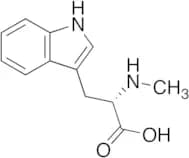
CAS:<p>Stability Very Volatile<br>Applications 3-Methylfuran is a volatile organic compound (VOCs) used as a potential non-intrusive tool for screening of lung cancer.<br> Not a dangerous good if item is equal to or less than 1g/ml and there is less than 100g/ml in the package<br>References McWilliams, et al.: Curr. Oncol. Rep., 4, 487 (2002), Buszewski, B., et al.: Biomed. Chromatogr., 21, 553 (2007), Ligor, T., et al.: J. Breath. Res., 1, 1 (2007),<br></p>Formula:C5H6OColor and Shape:Light YellowMolecular weight:82.10L-Abrine
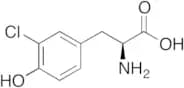
CAS:Controlled Product<p>Applications L-Abrine is an indoleamino acid that displays radical scavenging and antioxidant properties.<br>References Yang, M., et al.: Food. Funct., 5, 2268 (2014);<br></p>Formula:C12H14N2O2Color and Shape:Off-WhiteMolecular weight:218.25183-Chloro-L-tyrosine
CAS:Controlled Product<p>Stability Hygroscopic<br>Applications 3-Chloro-L-tyrosine was used in the enzymatic synthesis of halogen derivatives of aromatic amino acids labeled with hydrogen isotope. 3-Chloro-L-tyrosine exhibited stronger antioxidant properties in Hb-induced oxidative stress as was evident by higher efficiency of reduction of ferryl species.<br>References Winnicka, E., et al.: J. Chem. Eng., 8, 54 (2014); Lu, N., et al.: Toxicol. In Vitro, 28, 847 (2014);<br></p>Formula:C9H10NO3ClColor and Shape:NeatMolecular weight:215.63D-Arginine
CAS:Controlled Product<p>Applications D-Arginine is an unnatural isomer of L-Arginine (A769505), and is used to inhibit glutamate-induced nitric oxide production in rats. Derivatives of D-Arginine are used for pharmaceutical purposes, one example is 1-Deamino-8-D-arginine vasopressin, which is used to treat various bleeding disorders.<br>References Castellano, M., et al.: Neurosci. Lett., 314, 127 (2001); Kobrinsky, N., et al.: Lancet, 323, 1145 (1984); Weyrich, A., et al.: Circulation, 86, 279 (1992)<br></p>Formula:C6H14N4O2Color and Shape:NeatMolecular weight:174.20N-(8-Aminooctyl)-1,8-octanediamine
CAS:Controlled ProductFormula:C16H37N3Color and Shape:NeatMolecular weight:271.485L-Allo-isoleucine
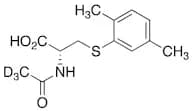
CAS:Controlled Product<p>Applications L-alloisoleucine is a stereo-isomer of L-isoleucine (I820175) and is produced as a byproduct of isoleucine via transamination. L-allo-isoleucine has been suggested to induce epithelial β-defensin expression. In addition, L-allo-isoleucine is utilized in the biosynthesis pathway for coronamic acid.<br>References Fehlbaum, P., et al.: Proc. Natl. Acad. Sci. USA 97, 12723 (2000); Parry, R. J., et al.: J. Am. Chem. Soc. 113, 1849 (1991)<br></p>Formula:C6H13NO2Color and Shape:NeatMolecular weight:131.17N-Acetyl-S-(2,5-dimethylbenzene)-L-cysteine-d3
CAS:Controlled Product<p>Applications N-Acetyl-S-(2,5-dimethylbenzene)-L-cysteine-d3 (cas# 1331909-07-9) is a compound useful in organic synthesis.<br>References Gonzalez-Reche, L., et al.: Arch. Toxicol., 77, 80 (2003),<br></p>Formula:C13H14D3NO3SColor and Shape:NeatMolecular weight:270.36D-Glutamic Acid 1-tert-Butyl Ester
CAS:Controlled Product<p>Applications D-Glutamic acid 1-tert-butyl ester is a protected form of D-Glutamic acid (G596965). D-Glutamic acid is an unnatural isomer of L-Glutamic acid (G596960), and is found in bacterial cell wall peptidoglycan of gram-positive and gram-negative bacteria. D-Glutamic acid also occurs as poly-gamma-Glutamic acid, which is a weak immunogen but is capable of acting as a hapten (a small molecule that induces the production of antibodies, as well as binding to them).<br>References Dougherty, T., et al.: J. Bacteriol., 175, 111 (1993); Goodman, J. & Nitecki, D.: Immunology, 13, 577 (1967); Robinson, T.: Life Sci., 19, 1097 (1976)<br></p>Formula:C9H17NO4Color and Shape:NeatMolecular weight:203.244-(3,4-dichlorophenyl)-3H,4H,5H,6H,7H-imidazo[4,5-c]pyridine-6-carboxylic acid
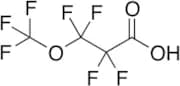
CAS:Purity:95.0%Molecular weight:312.1499938964844Perfluoro-3-methoxypropanoic Acid
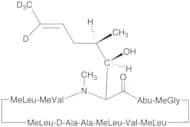
CAS:<p>Applications Perfluoro-3-methoxypropanoic acid (cas# 377-73-1) is a useful research chemical.<br> Not a dangerous good if item is equal to or less than 1g/ml and there is less than 100g/ml in the package<br></p>Formula:C4HF7O3Color and Shape:NeatMolecular weight:230.04Cyclosporin A-d4 (Major)
CAS:Controlled Product<p>Applications An immunosuppressant that has revolutionized organ transplantation through its use in the prevention of graft rejection.A group of nonpolar cyclic oligopeptides with immunosupppressant activity.<br>References van Wartburg, A., et al.: Prog. Med. Chem., 25, 1 (1988), Jorgensen, K.A., et al.: Scand. J. Imunol., 57, 93 (2003), Vollenbroeker, et al.: Transplant. Proc., 37, 1741 (2005),<br></p>Formula:C62H107D4N11O12Color and Shape:NeatMolecular weight:1206.66Nateglinide-d5
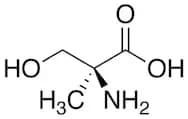
CAS:Controlled Product<p>Applications A labelled version of Nateglinide, an amino-acid derivative that stimulates insulin secretion which is used as an antidiabetic.<br>References Shinkai, H., et al.: J. Med. Chem., 32, 1436 (1989), Sato, Y., et al.: Diabetes Res. Clin. Pract., 12, 53 (1991), Vicent, D., et al.: J. Clin. Invest., 111, 1373 (2003), Ceriello, A., et al.: Diabet. Med., 21, 171 (2004),<br></p>Formula:C192H5H22NO3Color and Shape:NeatMolecular weight:322.45α-Methyl-L-serine
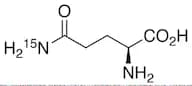
CAS:<p>Applications A potential chiral building blocks for the synthesis of different α -methyl α -amino acids.<br>References Rew, Y., et al.: J. Med. Chem., 45, 3746 (2002),<br></p>Formula:C4H9NO3Color and Shape:Off-WhiteMolecular weight:119.119L-Glutamine-amide-¹⁵N
CAS:Controlled Product<p>Applications Labelled L-Glutamine (G597000). L-Glutamine is an essential amino acid that is a crucial component of culture media that serves as a major energy source for cells in culture. L-Glutamine is very stable as a dry powder and as a frozen solution. In liquid media or stock solutions, however, L-glutamine degrades relatively rapidly. Optimal cell performance usually requires supplementation of the media with L-glutamine prior to use.<br>References Rivett, A., et al.: J. Biol. Chem., 260, 300 (1985), Watford, M., et al.: Metabolism, 49, 141 (2000), Wilmore, D., et al.: J. Nutr., 131, 2543S (2001),<br></p>Formula:C5H1015NNO3Color and Shape:NeatMolecular weight:147.145-Amino-1-methylpyrazole
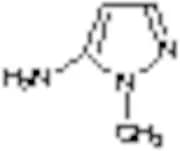
CAS:Controlled ProductFormula:C4H7N3Color and Shape:NeatMolecular weight:97.12Cyclo(L-prolyl-L-leucyl)
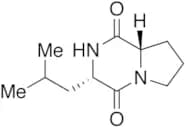
CAS:Controlled Product<p>Applications Sorbicillin analog. A bioactive secondary metabolites from terrestrial Streptomyces species TN262.<br>References Ma, L. et al. : J. Anitibiot. 64, 645 (2011); Elleuch, L. et al.: Appl. Biochem. Biotech. 162, 579 (2010)<br></p>Formula:C11H18N2O2Color and Shape:NeatMolecular weight:210.27N-Acetyl-L-alanine
CAS:Controlled Product<p>Applications N-Acetyl-L-alanine is used as a biomarker for prostate cancer.<br>References Jansen, R., et al.: Clin. Biochem., 38, 362 (2005),<br></p>Formula:C5H9NO3Color and Shape:NeatMolecular weight:131.13H-L-MeThr-OH
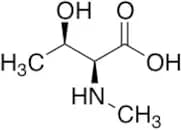
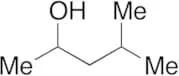
CAS:Controlled Product<p>Applications H-L-METHR-OH (cas# 2812-28-4) is a useful research chemical.<br></p>Formula:C5H11NO3Color and Shape:NeatMolecular weight:133.154-Methyl-2-pentanol
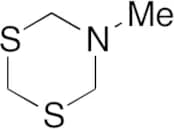
CAS:<p>Applications 4-Methyl-2-pentanol is used in the synthesis of 4-quinolone derivatives as high-affinity ligands for the brain GABAA receptors. Also used in the preparation of antimycotic imadazoles, as antifungals.<br> Not a dangerous good if item is equal to or less than 1g/ml and there is less than 100g/ml in the package<br>References Lager, E. et al.: J. Med. Chem., 49, 2526 (2006); Heeres, J. et al.: J. Med. Chem., 22, 1003 (1979);<br></p>Formula:C6H14OColor and Shape:Clear ColourlessMolecular weight:102.17Dihydro-5-methyl-4H-1,3,5-dithiazine
CAS:Controlled Product<p>Applications Dihydro-5-methyl-4H-1,3,5-dithiazine is used as a reagent in the synthesis of neovibsanin derivatives which have the ability to induce neuronal differentiation in PC12 cells.<br>References Annette, P.-J. C., et al.: Tetrahedron, 66, 6842 (2010)<br></p>Formula:C4H9NS2Color and Shape:NeatMolecular weight:135.2511'-(tert-Butoxycarbonyl)-2-oxospiro[indoline-3,4'-piperidine]-5-carboxylic acid
CAS:Purity:97%Molecular weight:346.382995605468754-(3-chlorobenzoyl)-8-methyl-1-oxa-4,8-diazaspiro[4.5]decane-3-carboxylic acid
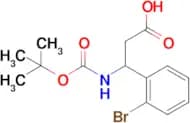
CAS:Purity:95.0%Molecular weight:338.79000854492193-(2-Bromophenyl)-3-((tert-butoxycarbonyl)amino)propanoic acid
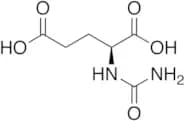
CAS:Purity:97%Molecular weight:344.2049865722656N-Carbamyl-L-glutamic Acid
CAS:Controlled Product<p>Applications N-Carbamyl-L-glutamic Acid has been shown to have protective effects against ammonia intoxication and is used in the treatment of acute hyperammonemia.<br>References Paik, W.K. et al.: Life Sci., 15, 1189 (1974); O'Connor, J.E. et al.: Eur. J. Pediat., 148, 540 (1989); Lee, J.H. et al.: Biochem. Biophys. Res. Chem., 248, 391 (1998);<br></p>Formula:C6H10N2O5Color and Shape:NeatMolecular weight:190.158-tert-butyl-4-[4-(dimethylamino)benzoyl]-1-oxa-4-azaspiro[4.5]decane-3-carboxylic acid
CAS:Purity:95.0%Molecular weight:388.507995605468753-Mercapto-3-methylbutanoic Acid Ethyl Ester
CAS:Controlled Product<p>Applications 3-Mercapto-3-methylbutanoic Acid Ethyl Ester is an intermediate in the synthesis of 3-Mercapto-3-methylbutyl Formate (M253540), which is one of the major odor-active thiol in pan-roasted white sesame seeds.<br>References Czerny, M., et al.: J .Agric. Food Chem., 47, 695 (1999), Steinhaus, M., et al.: Eur. Food Res. Technol., 226, 45 (2007), Tamura, H., et al.: Agric. Food Chem., 2010, 58, 7368 (2010),<br></p>Formula:C7H14O2SColor and Shape:NeatMolecular weight:162.251-Chloro-3-methoxypropane
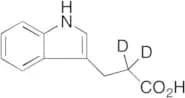
CAS:Controlled Product<p>Applications 1-Chloro-3-methoxypropane (cas# 36215-07-3) is a compound useful in organic synthesis.<br></p>Formula:C4H9ClOColor and Shape:NeatMolecular weight:108.573-Indolepropionic-d2 Acid
CAS:Controlled Product<p>Stability Hygroscopic<br>Applications 3-Indolepropionic-d2 acid is deuterium labelled 3-Indolepropionic acid (I627170). 3-Indolepropionic acid is a deamination product of Tryptophan (T947200) that protects the hippocampus (studied in gerbils) from ischemic damage and oxidative stress. It’s ability to protect the neurons in this way is attributed to its potent antioxidative effects. 3-Indolepropionic acid is also hypothesized to have protective effects on the thyroid gland.<br>References Hwang, I., et al.: J. Neurosci. Res., 87, 2126 (2009); Karbownik, M., et al.: J. Cell. Biochem., 95, 131 (2005)<br></p>Formula:C11D2H9NO2Color and Shape:NeatMolecular weight:191.225-(TERT-BUTOXYCARBONYLAMINO-METHYL)CYCLOHEX-1-ENECARBOXYLIC ACID
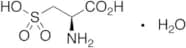
CAS:Purity:95.0%Molecular weight:255.31399536132812L-Cysteic Acid Monohydrate
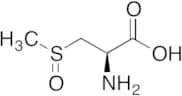
CAS:Controlled Product<p>Applications A major metabolite of non-essential amino acid L-Cysteine.<br>References Parsons, R.B. et al.: Neurotoxicol., 19, 599 (1998);<br></p>Formula:C3H7NO5S·H2OColor and Shape:White To Off-WhiteMolecular weight:187.17S-Methyl-L-cysteine sulfoxide
CAS:Controlled ProductFormula:C4H9NO3SColor and Shape:Off-WhiteMolecular weight:151.18L-Cystine Bis(T-butyl Ester) Dihydrochloride
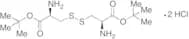
CAS:Controlled Product<p>Applications L-Cystine Bis(T-butyl Ester) Dihydrochloride is used as a reagent in the synthesis of chelate oxorhenium to create new integrin antagonists.<br>References Le Gal, J., et al.: J. Inorg. Biochem., 105, 880 (2011);<br></p>Formula:C14H28N2O4S2Color and Shape:NeatMolecular weight:352.513N-Acetyl-L-cysteine-d3
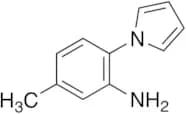
CAS:Controlled Product<p>Stability Hygroscopic<br>Applications A labelled metabolite of Methyl isocyanate.<br>References Slatter, J. G., et al.: Chem. Res. Toxicol., 4, 157 (1991),<br></p>Formula:C52H3H6NO3SColor and Shape:Off-WhiteMolecular weight:166.215-Methyl-2-(1H-pyrrol-1-yl)aniline
CAS:Controlled Product<p>Applications 5-methyl-2-(1H-pyrrol-1-yl)aniline (cas# 59194-21-7) is a useful research chemical.<br></p>Formula:C11H12N2Color and Shape:Orange Colour To Dark OrangeMolecular weight:172.2264-(2-phenylbutanoyl)-8-propyl-1-oxa-4,8-diazaspiro[4.5]decane-3-carboxylic acid
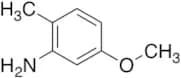
CAS:Purity:95.0%Molecular weight:374.48098754882815-Methoxy-2-methylaniline
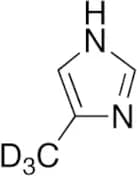
CAS:Controlled Product<p>Applications 5-Methoxy-2-methylaniline (cas# 50868-72-9) is a useful research chemical.<br></p>Formula:C8H11NOColor and Shape:White To Dark BrownMolecular weight:137.1794-Methylimidazole-d3
CAS:Controlled Product<p>Applications Labelled 4-Methylimidazole (M312990). 4-Methylimidazole is a monomethylated imidazole that can be used as a building block in the preparation of a wide range of biologically active compounds. 4-Methylimidazole is a product which results from the interaction of reducing sugars with ammonia. 4-Methylimidazole showed convulsant activity in animals and is listed as a possible carcinogen.<br> Not a dangerous good if item is equal to or less than 1g/ml and there is less than 100g/ml in the package<br>References Nishie, K. et al.: Toxicol. Appl. Pharmacol., 14, 301 (1969): Cunha, S.C. et al.: J. Food Comp. Anal., 24, 609 (2011); Chan, P.C. et al.: Arch. Toxicol., 82, 55 (2008);<br></p>Formula:C4H3D3N2Color and Shape:BeigeMolecular weight:85.125-Amino-2-methylbenzotrifluoride
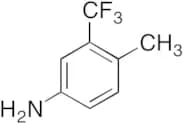
CAS:Controlled Product<p>Applications 5-Amino-2-methylbenzotrifluoride is used to prepare azoles as inhibitors of VEGF receptors 1 and 2 with high intestinal permeability. It can also be used to prepare curcumin analogs conjugated with antiandrogens.<br>References Kiselyov, A., et al.: Bioorg. Med. Chem. Lett., 17, 1369 (2007); Shi, Q., et al.: Bioorg. Med. Chem., 20, 4020 (2012)<br></p>Formula:C8H8F3NColor and Shape:NeatMolecular weight:175.15N-Methyl-N,N-bis(2-pyridylethyl)amine
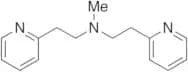
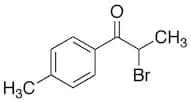
CAS:<p>Impurity Betahistine EP Impurity C (Free Base)<br>Applications N-Methyl-N,N-bis(2-pyridylethyl)amine is used as a reagent in the preparation of copper pyridylmethylethylenediamine dicyanamido polymeric complexes.<br>References Mautner, F.A. et al.: Inorg. Chim. Acta, 362, 4073 (2009);<br></p>Formula:C15H19N3Color and Shape:NeatMolecular weight:241.332-Bromo-4'-methylpropiophenone
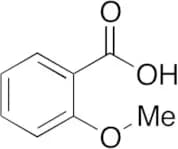
CAS:<p>Applications 2-Bromo-4'-methylpropiophenone (cas# 1451-82-7) is a compound useful in organic synthesis.<br></p>Formula:C10H11BrOColor and Shape:NeatMolecular weight:227.102-Methoxybenzoic Acid
CAS:Controlled Product<p>Applications 2-Methoxybenzoic Acid is used in the preparation of benzohydroxamic acids as potent and selective anti-hepatitis C virus (HCV) agents.<br>References Kozlov, M.V., et al.: Bioorg. Med. Chem. Lett., 23, 5936 (2013)<br></p>Formula:C8H8O3Color and Shape:Off-WhiteMolecular weight:152.15




AMINO)CYCLOBUTANE-1-CARBOXYLIC ACID](/_next/image/?url=https%3A%2Fstatic.cymitquimica.com%2Fproducts%2F10%2Fthumb-webp%2FF504133.webp&w=3840&q=75)




![4-(3,5-dichlorobenzoyl)-8-methyl-1-oxa-4,8-diazaspiro[4.5]decane-3-carboxylic acid](/_next/image/?url=https%3A%2Fstatic.cymitquimica.com%2Fproducts%2F10%2Fthumb-webp%2FF525652.webp&w=3840&q=75)



![4-(4-chlorobenzoyl)-8-propyl-1-oxa-4,8-diazaspiro[4.5]decane-3-carboxylic acid](/_next/image/?url=https%3A%2Fstatic.cymitquimica.com%2Fproducts%2F10%2Fthumb-webp%2FF525719.webp&w=3840&q=75)


![4-(2-chlorobenzoyl)-8-methyl-1-oxa-4,8-diazaspiro[4.5]decane-3-carboxylic acid](/_next/image/?url=https%3A%2Fstatic.cymitquimica.com%2Fproducts%2F10%2Fthumb-webp%2FF525617.webp&w=3840&q=75)





![4-(3,4-dichlorophenyl)-3H,4H,5H,6H,7H-imidazo[4,5-c]pyridine-6-carboxylic acid](/_next/image/?url=https%3A%2Fstatic.cymitquimica.com%2Fproducts%2F10%2Fthumb-webp%2FF522492.webp&w=3840&q=75)


![1'-(tert-Butoxycarbonyl)-2-oxospiro[indoline-3,4'-piperidine]-5-carboxylic acid](/_next/image/?url=https%3A%2Fstatic.cymitquimica.com%2Fproducts%2F10%2Fthumb-webp%2FF608271.webp&w=3840&q=75)
![4-(3-chlorobenzoyl)-8-methyl-1-oxa-4,8-diazaspiro[4.5]decane-3-carboxylic acid](/_next/image/?url=https%3A%2Fstatic.cymitquimica.com%2Fproducts%2F10%2Fthumb-webp%2FF525649.webp&w=3840&q=75)
![8-tert-butyl-4-[4-(dimethylamino)benzoyl]-1-oxa-4-azaspiro[4.5]decane-3-carboxylic acid](/_next/image/?url=https%3A%2Fstatic.cymitquimica.com%2Fproducts%2F10%2Fthumb-webp%2FF525783.webp&w=3840&q=75)




![4-(2-phenylbutanoyl)-8-propyl-1-oxa-4,8-diazaspiro[4.5]decane-3-carboxylic acid](/_next/image/?url=https%3A%2Fstatic.cymitquimica.com%2Fproducts%2F10%2Fthumb-webp%2FF525728.webp&w=3840&q=75)