Amino Acids (AA)
Amino acids (AAs) are the fundamental building blocks of proteins, playing a crucial role in various biological processes. These organic compounds are essential for protein synthesis, metabolic pathways, and cell signaling. In this category, you will find a comprehensive range of amino acids, including essential, non-essential, and modified forms, which are vital for research in biochemistry, molecular biology, and nutritional sciences. At CymitQuimica, we provide high-quality amino acids to support your research and development needs, ensuring accuracy and reliability in your experimental outcomes.
Subcategories of "Amino Acids (AA)"
- Amino Acid Derivatives(3,955 products)
- Amino Acid and Amino Acid Related Compounds(3,451 products)
- Amino Acids with Oxygen or Sulphur(168 products)
- Boc- Amino Acids(351 products)
- Fmoc Amino Acids(1,710 products)
Found 38234 products of "Amino Acids (AA)"
Sort by
Purity (%)
0
100
|
0
|
50
|
90
|
95
|
100
KRN7000
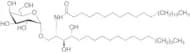
CAS:Controlled Product<p>Stability Hygroscopic<br>Applications Galactosylceramides play an important roles in promoting the regulation of nerve cells, regulating protein kinase C activities and modulating the function of the hormone receptor. It has shown to have significant immunostimulatory and anti-umor activity in mice with liver metastasis of the Colon26 adenocarcinoma.<br>References Morita, M., et al.: J. Med. Chem., 38, 2176 (1995), Sakai, T., et al.: J. Med. Chem., 42, 1836 (1999),<br></p>Formula:C50H99NO9Color and Shape:NeatMolecular weight:858.32Galacto-PUGNAc (>90%)
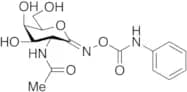
CAS:Controlled Product<p>Stability Moisture and Temperature Sensitive<br>Applications Galacto-PUGNAc is a highly selective inhibitor for β-hexosaminidases HEXA and HEXB is cell-permeable. Galacto-PUGNAc is able to modulate the activity of HEXA and HEXB in tissue culture, increasing ganglioside GM2 levels in neuroblastoma cells<br>References Stubbs, K.A. et al.: Angew. Chem. Int. Ed., 48, 1300 (2009);<br></p>Formula:C15H19N3O7Purity:>90%Color and Shape:NeatMolecular weight:353.33Carbamoyl-guanidine Amidino Urea
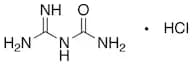
CAS:Controlled Product<p>Applications Carbamoyl-guanidine Amidino Urea Salt, Hydrochloride salt (cas# 926-72-7) is a compound useful in organic synthesis.<br></p>Formula:C2H6N4O·ClHColor and Shape:NeatMolecular weight:138.56S-Methyl-L-cysteine
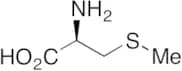
CAS:Controlled Product<p>Applications S-Methyl-L-cysteine is a substrate in the catalytic antioxidant system mediated by methionine sulfoxide reductase A (MSRA). It has been studied as a theurapeutic for neurodegenerative diseases including Parkinson′s.<br>References Wassef, R., et al.: J. Neurosci., 21, 12808 (2007)<br></p>Formula:C4H9NO2SColor and Shape:NeatMolecular weight:135.19L-Histidinol Dihydrochloride
CAS:Controlled ProductFormula:C6H11N3O·2ClHColor and Shape:NeatMolecular weight:214.09H-Pro-Glu-Oh
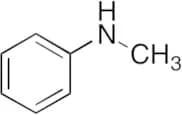
CAS:Controlled Product<p>Applications H-PRO-GLU-OH (cas# 67644-00-2) is a useful research chemical.<br></p>Formula:C10H16N2O5Color and Shape:NeatMolecular weight:244.244N-Methylaniline
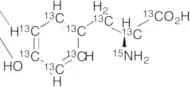
CAS:Controlled Product<p>Applications N-Methylaniline is used as an additive in gasoline because of its antiknock properties.<br> Not a dangerous good if item is equal to or less than 1g/ml and there is less than 100g/ml in the package<br>References Liu, Li-jun, et al.: Huaxue Shiji, 37(1), 53-55, 96 (2015); Qin, Li-xia, et al.: Guangzhou Huagong, 43(8), 138-139, 148 (2015);<br></p>Formula:C7H9NColor and Shape:NeatMolecular weight:107.15L-Tyrosine-13C9,15N
CAS:<p>Applications L-Tyrosine-13C9 ,15N is labelled analogue of L-Tyrosine (T899975), one of the 22 proteinogenic amino acids that are used by cells to synthesize proteins. L-Tyrosine is biologically converted from L-phenylalanine and is in turn is converted to L-DOPA and further converted into the neurotransmitters: dopamine, norepinephrine, and epinephrine.<br>References Rasmussen D.D. et al.: J. Clin. Endocrinol. Metab., 57, 760 (1983); Bagchi, S.P. et al.: Biochem. Pharmacol., 26, 900 (1977)<br></p>Formula:C9H1115NO3Color and Shape:White To Off-WhiteMolecular weight:191.1158Thiodiglycolic Acid-d4
CAS:Controlled Product<p>Applications Thiodiglycolic Acid-d4 acts as a reagent for the synthesis of metabolites of S-carboxymethyl-L-cysteine and S-methyl-L-Cysteine and of some isotoically labelled (2H, 13C) analogs.<br>References Meese, C. O., et al.: Archiv der Pharmazie, 323, 957 (1990)<br></p>Formula:C4D4H2O4SColor and Shape:NeatMolecular weight:154.17Azido-PEG3-alcohol
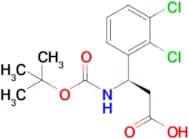
CAS:Controlled ProductFormula:C6H13N3O3Color and Shape:NeatMolecular weight:175.19(R)-3-((Tert-butoxycarbonyl)amino)-3-(2,3-dichlorophenyl)propanoic acid
CAS:Purity:95+%Molecular weight:334.190002441406256-(METHYLAMINO)IMIDAZO[1,2-B]PYRIDAZINE-3-CARBOXYLIC ACID
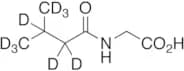
CAS:Purity:95.0%Molecular weight:192.17799377441406N-Iso Valerylglycine-d9
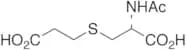
CAS:Controlled Product<p>Applications Isotope labelled N-Isovalerylglycine is a useful diagnostic tool in the diagnosis of many organic acidemias and mitochondrial fatty acid β-oxidation defects. N-Isovalerylglycine is found in the urine of patients with isovaleric acidemia, an inborn error of leucine metabolism.<br>References Tanaka, K. et al.: J. Biol. Chem., 242, 2966 (1967); Bonafe, L. et al.: Mol. Gen. Metab., 69, 311 (2000);<br></p>Formula:C72H9H4NO3Color and Shape:NeatMolecular weight:168.24N-Acetyl-S-(2-carboxyethyl)-L-cysteine Bis(dicyclohexylamine) Salt
CAS:<p>Applications A metabolite of S-propylcysteine.<br>References Jones, A.R., et al.: Xenobiotica, 10, 827 (1980), 25) Ramu, K., et al.: Chem. Res. Toxicol., 8, 515 (1995), Krause, R., et al.: Drug Metab. Dispos., 25, 1013 (1997), Powley, M., et al.: Chem. Res. Toxicol., 16, 1448 (2003),<br></p>Formula:C12H23N·C8H13NO5SColor and Shape:NeatMolecular weight:597.894-(furan-2-carbonyl)-8-methyl-1-oxa-4,8-diazaspiro[4.5]decane-3-carboxylic acid
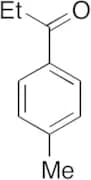
CAS:Purity:95.0%Molecular weight:294.30700683593754′-Methylpropiophenone
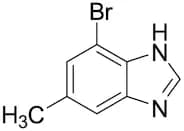
CAS:Controlled Product<p>Applications 4′-Methylpropiophenone is a chemical reagent used in electrocarboxylation reactions.<br>References Zhang, K. et al.: Chin. J. Chem., 28, 509 (2010); Zhao, S. et al.: Tetra. Lett., 52, 2702 (2011);<br></p>Formula:C10H12OColor and Shape:NeatMolecular weight:148.204-Bromo-6-methyl-3H-1,3-benzodiazole
CAS:Controlled Product<p>Applications 4-Bromo-6-methyl-3H-1,3-benzodiazole<br></p>Formula:C8H7BrN2Color and Shape:NeatMolecular weight:211.0582-(1'-(tert-Butoxycarbonyl)spiro[chroman-2,4'-piperidine]-4-yl)acetic acid
CAS:Purity:95.0%Molecular weight:361.43798828125N-des(4-Chlorobenzoyl) Rebamipide
CAS:Formula:C12H13ClN2O3Color and Shape:White To Off-WhiteMolecular weight:268.72-BENZYL-8-CHLORO-1,2,3,4-TETRAHYDROBENZO[B][1,6]NAPHTHYRIDINE-10-CARBOXYLIC ACID
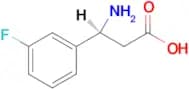
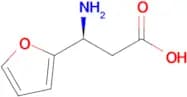
CAS:Purity:95.0%Color and Shape:Liquid, No data available.Molecular weight:352.82000732421875(S)-3-Amino-3-(3-(trifluoromethyl)phenyl)propanoic acid hydrochloride
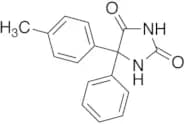
CAS:Purity:95%Molecular weight:269.64999389648445-(p-Methylphenyl)-5-phenylhydantoin
CAS:<p>Applications An antibody agent.<br>References Rowell, F. J., et al.: Immunochemistry, 13, 891 (1976),<br></p>Formula:C16H14N2O2Color and Shape:NeatMolecular weight:266.291-Methyl-2-pyrrolidinone-d9
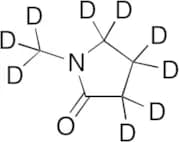
CAS:Controlled Product<p>Applications 1-Methyl-2-pyrrolidinone-d9 is labeled 1-Methyl-2-pyrrolidinone (M326120), which is a versatile industrial solvent. NMP is currently approved for use only in veterinary pharmaceuticals. The determination of the disposition and metabolism of NMP in the rat will contribute toward understanding the toxicology of this exogenous chemical which man may likely be exposed to in increasing amounts.<br>References Southwell, D., et al.: J. Pharm. Pharmacol., 33, 3 (1981), Barry, W., et al.: J. Invest. Dermatol., 82, 49 (1984),<br></p>Formula:C5D9NOColor and Shape:NeatMolecular weight:108.198-benzyl-4-(pyridine-4-carbonyl)-1-oxa-4,8-diazaspiro[4.5]decane-3-carboxylic acid
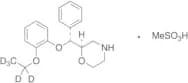
CAS:Purity:95.0%Molecular weight:381.4320068359375Reboxetine-d5 Mesylate
CAS:Controlled ProductFormula:C20H22D5NO6SColor and Shape:Off White SolidMolecular weight:414.538-propyl-4-(pyridine-3-carbonyl)-1-oxa-4,8-diazaspiro[4.5]decane-3-carboxylic acid
CAS:Purity:95.0%Molecular weight:333.388000488281254-(4-chlorophenyl)-3H,4H,5H,6H,7H-imidazo[4,5-c]pyridine-6-carboxylic acid
CAS:Purity:95.0%Molecular weight:277.70999145507814-(thiophen-2-yl)-3H,4H,5H,6H,7H-imidazo[4,5-c]pyridine-6-carboxylic acid
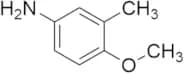
CAS:Purity:95.0%Molecular weight:249.28999328613284-Methoxy-3-methylaniline
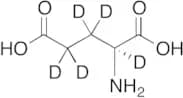
CAS:Controlled Product<p>Applications 4-methoxy-3-methylaniline (cas# 136-90-3) is a useful research chemical.<br></p>Formula:C8H11NOColor and Shape:NeatMolecular weight:137.179L-Glutamic Acid-d5
CAS:Controlled Product<p>Applications L-Glutamic Acid-d5 is an non-essential amino acid. Its salt form (glutamate) is an important neurotransmitter that plays a key role in long-term potentiation and is important for learning and memory. It is also a key molecule in cellular metabolism.<br>References McEntee, W., et al.: Psychopharmacology, 111, 391 (1993), Manev, H., et al.: Mol. Pharmacol., 36, 106 (1989)<br></p>Formula:C52H5H4NO4Color and Shape:NeatMolecular weight:152.168-benzyl-4-hexanoyl-1-oxa-4,8-diazaspiro[4.5]decane-3-carboxylic acid
CAS:Purity:95.0%Molecular weight:374.4809875488281N’-(5-Aminopentyl)-N-(4-methoxybenzyl)-N’-methyl-N-2-pyridinyl-1,2-ethanediamine, Dimaleate Salt
CAS:Controlled Product<p>Applications A synthetic intermediate.<br>References Blakemore, R., et al.: Eur. J. Med. Chem., 22, 91 (1987),<br></p>Formula:C21H32N4O·C4H4O4Color and Shape:NeatMolecular weight:472.58L-Phenylalanine-13C6
CAS:Controlled Product<p>Applications Labelled analogue of L-Phenylalanine, an essential amino acid. L-Phenylalanine is biologically converted into L-tyrosine, another one of the DNA-encoded amino acids, which in turn is converted to L-DOPA and further converted into dopamine, norepinephrine, and epinephrine. L-Phenylalanine is produced for medical, feed, and nutritional applications such as in the preparation of Aspartame.<br>References Hollunger, G. et al.: Acta Pharmacol. Toxicol., 34, 391 (1974); Bagchi, S.P. et al.: Biochem. Pharmacol., 26, 900 (1977);<br></p>Formula:C313C6H11NO2Color and Shape:White To Off-WhiteMolecular weight:171.156-Phenyl-5,6,6a,7,8,9,10,10a-octahydro-7,10-methanophenanthridine-2-carboxylic acid
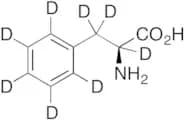
CAS:Purity:98%Molecular weight:319.40399169921875L-Phenylalanine-d8
CAS:Controlled Product<p>Applications Labelled analogue of L-Phenylalanine, an essential amino acid.<br>References Hollunger, G. et al.: Acta Pharmacol. Toxicol., 34, 391 (1974); Bagchi, S.P. et al.: Biochem. Pharmacol., 26, 900 (1977);<br></p>Formula:C9D8H3NO2Color and Shape:NeatMolecular weight:173.243-([(TERT-BUTOXY)CARBONYL](METHYL)AMINO)CYCLOBUTANE-1-CARBOXYLIC ACID
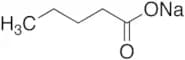
CAS:Purity:95.0%Molecular weight:229.2760009765625Valeric Acid Sodium Salt
CAS:Controlled Product<p>Applications Valeric Acid Sodium Salt (cas# 6106-41-8) is a compound useful in organic synthesis.<br></p>Formula:C5H9O2·NaColor and Shape:NeatMolecular weight:124.114,5-O-(1-Methylethylidene)-β-D-fructopyranose
CAS:Controlled Product<p>Applications Intermediate in the preparation of 2,3-Desisopropylidene Topiramate, a metabolite of Topiramate<br></p>Formula:C9H16O6Color and Shape:NeatMolecular weight:220.221-{[(2-METHYL-2-PROPANYL)OXY]CARBONYL-6-PHENYL-3-PIPERIDINECARBOXYLIC ACID
CAS:Purity:95.0%Molecular weight:305.37399291992191'-(Tert-butoxycarbonyl)spiro[cyclohexane-1,3'-indoline]-4-carboxylic acid
CAS:Purity:97%Molecular weight:331.4119873046875N-Methyl-N-nitroso-1-octadecylamine
CAS:<p>Applications N-Methyl-N-nitroso-1-octadecylamine was found to present in various hair-care products when investigated through thermal energy analyzer.<br>References Morrison, J.B., et al.: Food. Chem. Toxicol., 21, 69 (1983); Rainey, W.T., et al.: Biomed. Mass. Spec., 5, 395 (1978);<br></p>Formula:C19H40N2OColor and Shape:White To Off-WhiteMolecular weight:312.534-(3-methoxybenzoyl)-8-methyl-1-oxa-4,8-diazaspiro[4.5]decane-3-carboxylic acid
CAS:Purity:95.0%Molecular weight:334.37200927734375Rac-(3ar,6ar)-octahydrocyclopenta[c]pyrrole-3a-carboxylic acid
CAS:Purity:98%Molecular weight:155.19700622558594L-Citrulline-d6
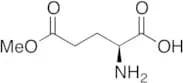
CAS:Controlled Product<p>Applications Labelled L-Citrulline. An amino acid, first isolated from the juice of watermelon, Citrullus vulgaris Schrad., Cucurbitaceae. Used in the treatment of asthenia.<br>References Kurtz, et al.: J. Biol. Chem., 122, 477 (1938), Rajantie, J., et al.: J. Pediatr., 97, 927 (1980), Carpenter, T.O., et al.: N. Engl. J. Med., 312, 290 (1985),<br></p>Formula:C62H6H7N3O3Color and Shape:NeatMolecular weight:181.22L-Glutamic Acid 5-Methyl Ester
CAS:Controlled Product<p>Applications L-Glutamic acid 5-methyl ester is a protected form of L-Glutamic acid (G596960). L-Glutamic acid is a nonessential amino acid that is important to the mammalian central nervous system. L-Glutamic acid is also a neurotransmitter for cone photoreceptors in the human brain and is used as a treatment for patients who have liver disease accompanied by encephalopathy (a condition termed ‘hepatic coma’).<br>References Anderson, H., et al.: J. Nutr., 99, 82 (1969); Brandon, C. & Lam, D.: Proc. Nat. Acad. Sci., 80, 5117 (1983); McDermott Jr, W., et al.: New Engl. J. Med., 253, 1093 (1955)<br></p>Formula:C6H11NO4Color and Shape:NeatMolecular weight:161.1563-Methyl-2,5-dihydrothiophene-1,1-dioxide
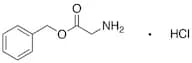
CAS:Controlled Product<p>Applications: 3-Methyl-2,5-dihydrothiophene-1,1-dioxide is a reagent used in Diels-Alder reactions of butadienylpyridinium bromides.<br>References Lee, S., et al.: J. Org. Chem., 62, 7812 (1997);<br></p>Formula:C5H8O2SColor and Shape:Off WhiteMolecular weight:132.181Glycine Benzyl Ester Hydrochloride
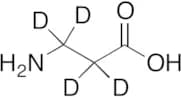
CAS:Controlled Product<p>Applications Potent crosslinking inhibitors.<br>References Sloan, J., et al.: J. Biol. Chem., 274, 23740 (1999).<br></p>Formula:C9H11NO2·ClHColor and Shape:Off-WhiteMolecular weight:201.65β-Alanine-2,2,3,3-D4
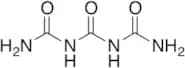
CAS:Controlled Product<p>Applications Isotope labelled β-Alanine is a naturally occurring beta amino acid. β-Alanine is formed in vivo by the degradation of dihydrouracil (D449990) and carnosine. β-Alanine is also the rate-limiting precursor of carnosine, as a result supplementation with β-alanine increases the concentration of carnosine in muscles.<br></p>Formula:C3D4H3NO2Color and Shape:NeatMolecular weight:93.12Triuret
CAS:<p>Applications Triuret is a byproduct of purine degradation in living organisms. It is a product from the pyrolsis of urea.<br>References Sergiu P. P., et al:. HHS Public Access, (2010);<br></p>Formula:C3H6N4O3Color and Shape:NeatMolecular weight:146.10H-Val-Gly-OH
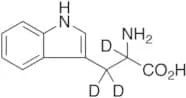
CAS:Controlled Product<p>Applications H-Val-Gly-OH (cas# 686-43-1) is a useful research chemical.<br></p>Formula:C7H14N2O3Color and Shape:NeatMolecular weight:174.2D,L-Tryptophan-d3
CAS:Controlled Product<p>Applications A labelled, essential amino acid.<br>References Liu, F., et al.: Bioorg. Med. Chem., 18, 4167 (2010), Kumar, R., et al.: Eur. J. Med. Chem., 45, 2265 (2010), Cai, W., et al.: Bioorg. Med. Chem., 18, 1899 (2010),<br></p>Formula:C112H3H9N2O2Color and Shape:NeatMolecular weight:207.24N,N-Dimethylglycine Hydrochloride
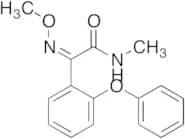
CAS:Controlled Product<p>Applications N,N-Dimethylglycine HCl (cas# 2491-06-07) is a useful research chemical.<br></p>Formula:C4H9NO2·HClColor and Shape:NeatMolecular weight:139.58(Z)-Metominostrobin
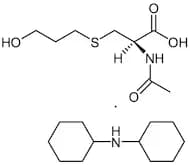
CAS:Controlled Product<p>Stability Moisture Sensitive<br>Applications (Z)-Metominostrobin (cas# 133408-51-2) is a compound useful in organic synthesis.<br></p>Formula:C16H16N2O3Color and Shape:NeatMolecular weight:284.31N-Acetyl-S-(3-hydroxypropyl)-L-cysteine Dicyclohexylamine Salt (unlabelled)
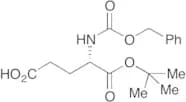
CAS:Controlled Product<p>Applications N-Acetyl-S-(3-hydroxypropyl)-L-cysteine Dicyclohexylamine Salt (unlabelled) (CAS# 14369-42-7) is a useful research compound.<br></p>Formula:C12H23N·C8H15NO4SColor and Shape:NeatMolecular weight:402.59N-(Benzyloxycarbonyl)-L-glutamic Acid α-tert-Butyl Ester
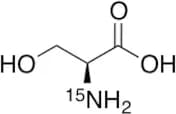
CAS:Controlled Product<p>Applications A protected glutamic acid for use in peptide synthesis.<br>References Takahashi, M., et al.: J. Exp. Biol., 200, 401 (1997), Michaelis, E., et al.: Prog. Neurobiol., 54, 369 (1998), Koch, H., et al.: Mol. Pharmacol., 55, 1044 (1999), O'Kane, R., et al.: J. Biol. Chem., 274, 31891 (1999),<br></p>Formula:C17H23NO6Color and Shape:NeatMolecular weight:337.368L-Serine-15N
CAS:Controlled Product<p>Applications L-Serine (15n, 98%) (cas# 59935-32-9) is a useful research chemical.<br></p>Formula:C3H715NO3Color and Shape:Off-WhiteMolecular weight:106.086(S)-2-((tert-Butoxycarbonyl)amino)-3-cyanopropanoic acid
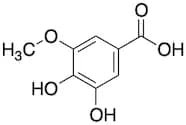
CAS:Formula:C9H14N2O4Purity:95%Color and Shape:SolidMolecular weight:214.2213,4-Dihydroxy-5-methoxybenzoic Acid
CAS:<p>Applications 3,4-Dihydroxy-5-methoxybenzoic acid (cas# 3934-84-7) is a useful research chemical.<br></p>Formula:C8H8O5Color and Shape:NeatMolecular weight:184.15Tetrahydro-5-methyl-2-furanol
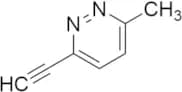
CAS:Controlled Product<p>Applications Tetrahydro-5-methyl-2-furanol is an intermediate in synthesizing 2,3-Dihydro-2-methylfuran (D447355), which is a general reagent used in next generation of biofuels. Dihydrofuranyl derivative.<br>References Simmie, J. et al.: J. Phys Chem., 116, 4528 (2012);<br></p>Formula:C5H10O2Color and Shape:NeatMolecular weight:102.133-Ethynyl-6-methylpyridazine
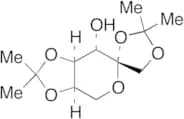
CAS:Controlled ProductFormula:C7H6N2Color and Shape:NeatMolecular weight:118.1361,2:4,5-bis-O-(1-Methylethylidene)-β-D-Fructopyranose
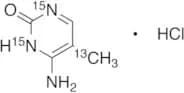
CAS:Controlled Product<p>Applications 1,2:4,5-bis-O-(1-Methylethylidene)-β-D-Fructopyranose is a reagent in the synthesis of antibacterial/antifungal monosaccaride esters. Also used in the synthesis of antihyperlipidemic novel compounds involving glycosyl fructose derivatives.<br>References Shen, Y. et al.: Molecules, 17, 8661 (2012); Tiwari, P. et al.: Bioorg. Med. Chem. Lett., 16, 6028 (2006);<br></p>Formula:C12H20O6Color and Shape:NeatMolecular weight:260.285-Methyl Cytosine-13C,15N2 Hydrochloride
CAS:<p>Applications A labelled derivative of Dibarbituric acid.<br>References Hitchings, G.H., et al.: J. Biol. Chem., 177, 357 (1949),<br></p>Formula:CC4H715N2NO·ClHColor and Shape:NeatMolecular weight:164.574-[2-(4-chlorophenyl)acetyl]-8-methyl-1-oxa-4,8-diazaspiro[4.5]decane-3-carboxylic acid
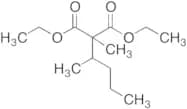
CAS:Purity:95.0%Molecular weight:352.820007324218752-Methyl-2-(1-methylbutyl)-propanedioic Acid 1,3-Diethyl Ester
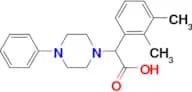
CAS:Controlled Product<p>Applications 2-Methyl-2-(1-Methylbutyl)-propanedioic Acid 1,3-Diethyl Ester is an intermediate in the synthesis of 2,3-Dimethyl-hexanoic Acid (D473405) which is used to prepare Mono-2,3-dimethylhexyl Phthalate (M539400), a metabolite of Dibutyl phthalate (DBP) (D429495), which is widely used in consumer products.<br>References Silva, M., et al.: Arch. Toxicol., 77, 561 (2003), Silva, M., et al.: Toxicology, 210, 123 (2005), Silva, M., et al.: J. Anal. Toxicol., 29, 819, (2005)<br></p>Formula:C8H17NO5Color and Shape:NeatMolecular weight:207.2242-(3-Fluorophenyl)-2-[4-(4-fluorophenyl)piperazin-1-yl]acetic acid
CAS:Molecular weight:332.351013183593754-[2-(4-chlorophenyl)acetyl]-8-propyl-1-oxa-4,8-diazaspiro[4.5]decane-3-carboxylic acid
CAS:Purity:95.0%Molecular weight:380.86999511718754-(2,4-dimethylphenyl)-3H,4H,5H,6H,7H-imidazo[4,5-c]pyridine-6-carboxylic acid
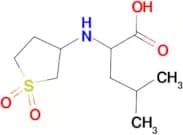
CAS:Purity:95.0%Molecular weight:271.320007324218752-(1,1-Dioxo-tetrahydro-1λ*6*-thiophen-3-ylamino)-4-methyl-pentanoic acid
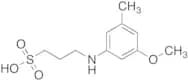
CAS:Purity:95.0%Molecular weight:249.3300018310547N-3-(Sulfopropyl)-3-methoxy-5-methylaniline
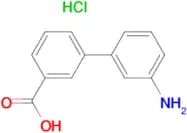
CAS:Controlled Product<p>Applications N-3-(Sulfopropyl)-3-methoxy-5-methylaniline is used as a reagent for the evaluation of basic property and long-term stability of reagents for enzymically assaying triglyceride, cholesterol and uric acid.<br>References Yamaguchi, T., Iryo to Kensa Kiki-Shiyaku., 3, 591-597 (2007).<br></p>Formula:C11H17NO4SColor and Shape:NeatMolecular weight:259.323'-Amino-biphenyl-3-carboxylic acid hydrochloride
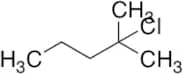
CAS:Purity:95.0%Molecular weight:249.690002441406252-Chloro-2-methylpentane
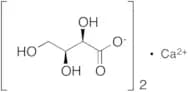
CAS:Controlled Product<p>Stability Volatile<br>Applications 2-Chloro-2-Methylpentane (cas# 4325-48-8) is a useful research chemical.<br></p>Formula:C6H13ClColor and Shape:NeatMolecular weight:120.62L-Threonic Acid Calcium Salt
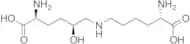
CAS:Controlled Product<p>Applications L-Threonic acid calcium salt is the salt of L-Threonic acid, a naturally occurring compound that can be found in the leaves of Pelargonium crispum. L-Threonic acid is also the degradation product of Dehydroascorbate (DHA), a metabolite of Vitamin C (A786990).<br>References Helsper, J. & Loewus, F.: Plant Phys., 69, 1365 (1982); Koch, C. & Biaglow, J.: J. Cell. Phys., 94, 299 (1978); Nielsen J., et al.: J. Agr. Food Chem., 49, 2998 (2001)<br></p>Formula:C4H7O5·CaColor and Shape:NeatMolecular weight:310.269(2S,2’S,5S)-5-Hydroxy Lysinonorleucine
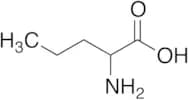
CAS:<p>Stability Hygroscopic<br>Applications 2S,2’S,5S)-5-Hydroxy Lysinonorleucine is one of the stereoisomers of 5-Hydroxylysinonorleucine, reduced collagen cross links.<br>References Astbury, C., et al.: Br. J. Rheumatol., 33, 11 (1994), Watts, N., et al.: Clin. Chem., 45, 1359 (1999), Banse, X., et al.: Bone, 31, 70 (2002),<br></p>Formula:C12H25N3O5Color and Shape:Light Orange to Brown SolidMolecular weight:291.34DL-norvaline
CAS:<p>Applications Norvaline, a hydrogen analogs of an amino acid, was found to be racemates from the Murchison meteorite show. Norvaline was used in chiral separation by electrokinetic chromatography.<br>References Cronin, J., et al.: Science, 275, 951 (1997); Pizzarello, S., et al.: Geochim. Cosmochim. Acta., 64, 329 (2000); Gerabe, S., et al.: J. Chromatogr., 480, 403 (1989);<br></p>Formula:C5H11NO2Color and Shape:NeatMolecular weight:117.151-(2-Methoxyphenethyl)piperazine
CAS:Controlled Product<p>Applications 1-(2-METHOXYPHENETHYL)PIPERAZINE (cas# 6722-54-9) is a useful research chemical.<br></p>Formula:C13H20N2OColor and Shape:NeatMolecular weight:220.324-[3-(benzyloxy)-4-methoxyphenyl]-3H,4H,5H,6H,7H-imidazo[4,5-c]pyridine-6-carboxylic acid
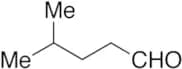
CAS:Purity:95.0%Molecular weight:379.41598510742194-Methylpentanal (up to 75% hydrated form)
CAS:Controlled Product<p>Applications An intermediate used in the synthesis of Pregabalin (P704800) and related compounds.<br> Not a dangerous good if item is equal to or less than 1g/ml and there is less than 100g/ml in the package<br>References Posadas, I., et al.: Br. J. Pharmacol., 142, 331 (2004),<br></p>Formula:C6H12OColor and Shape:Colourless LiquidMolecular weight:100.164-(4-bromobenzoyl)-8-ethyl-1-oxa-4,8-diazaspiro[4.5]decane-3-carboxylic acid
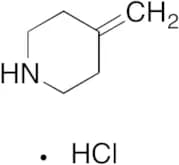
CAS:Purity:95.0%Molecular weight:397.26901245117194-Methylenepiperidine Hydrochloride
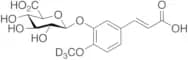
CAS:Controlled Product<p>Applications 4-Methylenepiperidine Hydrochloride is a building block that can be coupled with aryl halides via Suzuki cross-coupling to give benzyl piperidines and related compounds.<br>References Vice, S., et al.: J. Org. Chem., 66, 2487 (2001);<br></p>Formula:C6H11N•(HCl)Color and Shape:NeatMolecular weight:97.163646Isoferulic Acid-d3 3-O-β-D-Glucuronide
CAS:Controlled Product<p>Applications Labelled Isoferulic Acid 3-O-β-D-Glucuronide, the glucuronide conjugate of Isoferulic Acid (H946180). Isoferulic Acid 3-O-β-D-Glucuronide is one of the circulating metabolites in human plasma after coffee consumption.<br>References Fumeaux, R. et al.: Org. Biomol. Chem., 8, 5199 (2010); Redeuil, K. et al.: J. Chrom. A, 1218, 4678 (2011);<br></p>Formula:C16H15D3O10Color and Shape:NeatMolecular weight:373.33N-Methylnitroacetamide
CAS:Controlled Product<p>Impurity Ranitidine EP Impurity H<br>Applications N-Methylnitroacetamide (Ranitidine EP Impurity H) is a degradation product of Ranitidine (R120000).<br>References Sharma, N. et al.: Sci. Pharmac., 79, 309 (2011); Haywood, P.A. et al.: J. Chem. Soc., 5, 951 (1987);<br></p>Formula:C3H6N2O3Color and Shape:NeatMolecular weight:118.091-Boc-4-(carboxy-naphthalen-2-yl-methyl)-[1,4]diazepane
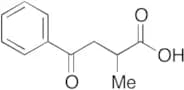
CAS:Purity:96%Molecular weight:384.476013183593752-Methyl-4-oxo-4-phenylbutyric Acid
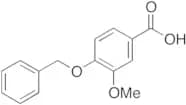
CAS:Controlled Product<p>Applications 2-Methyl-4-oxo-4-phenylbutyric Acid is a chemical reagent used in the synthesis of various pharmaceutically active compounds. Used in the synthesis of Minozac, a suppressor of brain proinflammatory cytokine up-regulation.<br>References Hu, W. et al.: Bioog. Med. Chem. Lett., 17, 414 (2007); Qabaja, G. ET AL.: J. ORG. CHEM., 80, 133 (2015);<br></p>Formula:C11H12O3Color and Shape:NeatMolecular weight:192.214-Benzyloxy-3-methoxybenzoic Acid
CAS:Controlled Product<p>Applications 4-Benzyloxy-3-methoxybenzoic Acid is used in the synthesis of Hsp90 inhibitors as EGCG analogues. Also used in the preparation of vanillates exhibiting cytostatic properties towards cancel cells resistant to pro-apoptotic stimuli.<br>References Khandelwal, A. et al.: J. Org. Chem., 78, 7859 (2013); Lamoral-Theys, D. et al.: Bioorg. Med. Chem., 18, 3823 (2010);<br></p>Formula:C15H14O4Color and Shape:NeatMolecular weight:258.275-(3,4-dihydro-2(1H)-isoquinolinylmethyl)-2-furoic acid
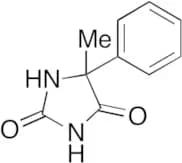
CAS:Purity:95.0%Molecular weight:257.289001464843755-Methyl-5-phenylhydantoin
CAS:Controlled Product<p>Applications 5-Methyl-5-phenylhydantoin is a reactant for synthesis of beta-amino alcohols as inhibitors of anti-tubercular target N-acetyltransferase, chlorohydantoins and specific MMP inhibitors.<br>References Fullam, E., et al.: Bioorg. Med. Chem. Lett., 21, 1185 (2011); Whitehead, D., et al.: Tetrahedron Lett., 50, 3 (2009); Chollet, A., et al.: Bioorg. Med. Chem., 10, 531 (2002)<br></p>Formula:C10H10N2O2Color and Shape:NeatMolecular weight:190.20(4S)-4-METHYL-L-PROLINE HCL
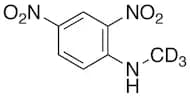
CAS:Formula:C6H12ClNO2Purity:97.0%Color and Shape:SolidMolecular weight:165.62N-Methyl-2,4-dinitroaniline-d3
CAS:Controlled Product<p>Applications N-Methyl-2,4-dinitroaniline-d3 (cas# 91808-45-6) is a compound useful in organic synthesis.<br> Not a dangerous good if item is equal to or less than 1g/ml and there is less than 100g/ml in the package<br></p>Formula:C7H4D3N3O4Color and Shape:BrownMolecular weight:200.17



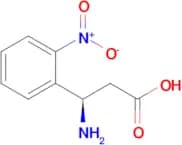

acetic acid](/_next/image/?url=https%3A%2Fstatic.cymitquimica.com%2Fproducts%2F10%2Fthumb-webp%2FF300210.webp&w=3840&q=75)


![6-(METHYLAMINO)IMIDAZO[1,2-B]PYRIDAZINE-3-CARBOXYLIC ACID](/_next/image/?url=https%3A%2Fstatic.cymitquimica.com%2Fproducts%2F10%2Fthumb-webp%2FF530530.webp&w=3840&q=75)
![4-(furan-2-carbonyl)-8-methyl-1-oxa-4,8-diazaspiro[4.5]decane-3-carboxylic acid](/_next/image/?url=https%3A%2Fstatic.cymitquimica.com%2Fproducts%2F10%2Fthumb-webp%2FF525626.webp&w=3840&q=75)
![2-(1'-(tert-Butoxycarbonyl)spiro[chroman-2,4'-piperidine]-4-yl)acetic acid](/_next/image/?url=https%3A%2Fstatic.cymitquimica.com%2Fproducts%2F10%2Fthumb-webp%2FF078168.webp&w=3840&q=75)

![2-BENZYL-8-CHLORO-1,2,3,4-TETRAHYDROBENZO[B][1,6]NAPHTHYRIDINE-10-CARBOXYLIC ACID](/_next/image/?url=https%3A%2Fstatic.cymitquimica.com%2Fproducts%2F10%2Fthumb-webp%2FF306441.webp&w=3840&q=75)

![8-benzyl-4-(pyridine-4-carbonyl)-1-oxa-4,8-diazaspiro[4.5]decane-3-carboxylic acid](/_next/image/?url=https%3A%2Fstatic.cymitquimica.com%2Fproducts%2F10%2Fthumb-webp%2FF525808.webp&w=3840&q=75)
![8-propyl-4-(pyridine-3-carbonyl)-1-oxa-4,8-diazaspiro[4.5]decane-3-carboxylic acid](/_next/image/?url=https%3A%2Fstatic.cymitquimica.com%2Fproducts%2F10%2Fthumb-webp%2FF525740.webp&w=3840&q=75)
![4-(4-chlorophenyl)-3H,4H,5H,6H,7H-imidazo[4,5-c]pyridine-6-carboxylic acid](/_next/image/?url=https%3A%2Fstatic.cymitquimica.com%2Fproducts%2F10%2Fthumb-webp%2FF522485.webp&w=3840&q=75)
![4-(thiophen-2-yl)-3H,4H,5H,6H,7H-imidazo[4,5-c]pyridine-6-carboxylic acid](/_next/image/?url=https%3A%2Fstatic.cymitquimica.com%2Fproducts%2F10%2Fthumb-webp%2FF522494.webp&w=3840&q=75)
![8-benzyl-4-hexanoyl-1-oxa-4,8-diazaspiro[4.5]decane-3-carboxylic acid](/_next/image/?url=https%3A%2Fstatic.cymitquimica.com%2Fproducts%2F10%2Fthumb-webp%2FF525801.webp&w=3840&q=75)


AMINO)CYCLOBUTANE-1-CARBOXYLIC ACID](/_next/image/?url=https%3A%2Fstatic.cymitquimica.com%2Fproducts%2F10%2Fthumb-webp%2FF504133.webp&w=3840&q=75)

![1-{[(2-METHYL-2-PROPANYL)OXY]CARBONYL-6-PHENYL-3-PIPERIDINECARBOXYLIC ACID](/_next/image/?url=https%3A%2Fstatic.cymitquimica.com%2Fproducts%2F10%2Fthumb-webp%2FF513063.webp&w=3840&q=75)
![1'-(Tert-butoxycarbonyl)spiro[cyclohexane-1,3'-indoline]-4-carboxylic acid](/_next/image/?url=https%3A%2Fstatic.cymitquimica.com%2Fproducts%2F10%2Fthumb-webp%2FF734299.webp&w=3840&q=75)

![4-(3-methoxybenzoyl)-8-methyl-1-oxa-4,8-diazaspiro[4.5]decane-3-carboxylic acid](/_next/image/?url=https%3A%2Fstatic.cymitquimica.com%2Fproducts%2F10%2Fthumb-webp%2FF525644.webp&w=3840&q=75)
![Rac-(3ar,6ar)-octahydrocyclopenta[c]pyrrole-3a-carboxylic acid](/_next/image/?url=https%3A%2Fstatic.cymitquimica.com%2Fproducts%2F10%2Fthumb-webp%2FF661542.webp&w=3840&q=75)






![4-[2-(4-chlorophenyl)acetyl]-8-methyl-1-oxa-4,8-diazaspiro[4.5]decane-3-carboxylic acid](/_next/image/?url=https%3A%2Fstatic.cymitquimica.com%2Fproducts%2F10%2Fthumb-webp%2FF525660.webp&w=3840&q=75)
![2-(3-Fluorophenyl)-2-[4-(4-fluorophenyl)piperazin-1-yl]acetic acid](/_next/image/?url=https%3A%2Fstatic.cymitquimica.com%2Fproducts%2F10%2Fthumb-webp%2FF300392.webp&w=3840&q=75)
![4-[2-(4-chlorophenyl)acetyl]-8-propyl-1-oxa-4,8-diazaspiro[4.5]decane-3-carboxylic acid](/_next/image/?url=https%3A%2Fstatic.cymitquimica.com%2Fproducts%2F10%2Fthumb-webp%2FF525746.webp&w=3840&q=75)
![4-(2,4-dimethylphenyl)-3H,4H,5H,6H,7H-imidazo[4,5-c]pyridine-6-carboxylic acid](/_next/image/?url=https%3A%2Fstatic.cymitquimica.com%2Fproducts%2F10%2Fthumb-webp%2FF522510.webp&w=3840&q=75)

![4-[3-(benzyloxy)-4-methoxyphenyl]-3H,4H,5H,6H,7H-imidazo[4,5-c]pyridine-6-carboxylic acid](/_next/image/?url=https%3A%2Fstatic.cymitquimica.com%2Fproducts%2F10%2Fthumb-webp%2FF522502.webp&w=3840&q=75)
![4-(4-bromobenzoyl)-8-ethyl-1-oxa-4,8-diazaspiro[4.5]decane-3-carboxylic acid](/_next/image/?url=https%3A%2Fstatic.cymitquimica.com%2Fproducts%2F10%2Fthumb-webp%2FF525691.webp&w=3840&q=75)

![1-Boc-4-(carboxy-naphthalen-2-yl-methyl)-[1,4]diazepane](/_next/image/?url=https%3A%2Fstatic.cymitquimica.com%2Fproducts%2F10%2Fthumb-webp%2FF736020.webp&w=3840&q=75)