


Amino Acids (AA)
Amino acids (AAs) are the fundamental building blocks of proteins, playing a crucial role in various biological processes. These organic compounds are essential for protein synthesis, metabolic pathways, and cell signaling. In this category, you will find a comprehensive range of amino acids, including essential, non-essential, and modified forms, which are vital for research in biochemistry, molecular biology, and nutritional sciences. At CymitQuimica, we provide high-quality amino acids to support your research and development needs, ensuring accuracy and reliability in your experimental outcomes.
Subcategories of "Amino Acids (AA)"
- Amino Acid Derivatives(3,955 products)
- Amino Acid and Amino Acid Related Compounds(3,466 products)
- Amino Acids with Oxygen or Sulphur(168 products)
- Boc- Amino Acids(351 products)
- Fmoc Amino Acids(1,710 products)
Found 38249 products of "Amino Acids (AA)"
Sort by
Purity (%)
0
100
|
0
|
50
|
90
|
95
|
100
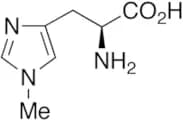
1-Methyl-L-histidine
CAS:Controlled Product<p>Applications The urinary 1- and 3-methylhistidine (1- and 3-MH) metabolites as potential biomarkers of skeletal muscle toxicity. These metabolites were highly correlated to sex-, dose-, and time-dependent development of cerivastatin-induced myotoxicity. Natural but non-proteinogenic amino acid; employed as index of muscle protein breakdown.<br>References Berna, M., et al.: Anal. Chem., 79, 4199 (2007), Pritt, M., et al.: Toxicol. Sci., 103, 382 (2008), Tonomura, Y., et al.: Toxicology, 266, 48 (2009),<br></p>Formula:C7H11N3O2Color and Shape:NeatMolecular weight:169.18L-Arginine-13C,d4 Dihydrochloride
CAS:Controlled Product<p>Stability Extremely Hygroscopic<br>Applications Labelled L-Arginine (A769500). An essential amino acid for human development. Precursor for nitric oxide. Ammonia detoxicant (hepatic failure); diagnostic aid (pituitary function).<br>References Miura, T., et al.: Anal. Biochem., 139, 432 (1984), Jones, et al.: Adv. Enzyme Regul., 9, 19 (1970), Borders, C.L., et al.: Protein. Sci., 3, 541 (1994),<br></p>Formula:C5CH10D4N4O2·2HClColor and Shape:NeatMolecular weight:252.144-(2-ethoxyphenyl)-3H,4H,5H,6H,7H-imidazo[4,5-c]pyridine-6-carboxylic acid
CAS:Purity:95.0%Molecular weight:287.3190002441406N-(8-Aminooctyl)-1,8-octanediamine
CAS:Controlled ProductFormula:C16H37N3Color and Shape:NeatMolecular weight:271.4855-Aminolevulinic Acid Methyl Ester Hydrochloride
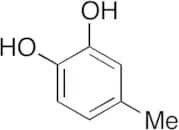
CAS:Controlled Product<p>Applications 5-Aminolevulinic Acid Methyl Ester Hydrochloride, is the methyl ester of Aminolevulinic Acid (ALA) (A611780), which has been shown to have higher lipophilicity, and to be highly efficient at inducing protoporphyrin IX (PpIX) production in cell culture.<br>References Morrow, D. I. J., et al.: J. Pharmac. Sci., 99, 3486 (2010); Peng, Q., et al.: Cancer, 79, 2282 (1997);<br></p>Formula:C6H11NO3·HClColor and Shape:NeatMolecular weight:181.624-Methylcatechol
CAS:<p>Applications 4-Methylcatechol is a potent inducer of nerve growth factor (NGF) synthesis in vitro and in vivo.<br>References Kaechi, K., et al.: J. Pharmacol. Exp. Ther., 272, 1300 (1995); Hanaoka, Y., et al.: J. Neurol. Sci., 122, 28 (1994)<br></p>Formula:C7H8O2Color and Shape:NeatMolecular weight:124.141-Boc-4-(carboxy-naphthalen-2-yl-methyl)-[1,4]diazepane
CAS:Purity:96%Molecular weight:384.476013183593752,2,2-Trifluoroacetic acid compound with 2-(8-azabicyclo[3.2.1]Octan-3-yl)acetic acid (1:1)
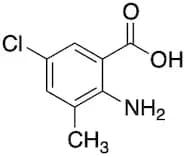
CAS:Purity:98%Molecular weight:283.247009277343752-Amino-5-chloro-3-methylbenzoic Acid
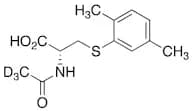
CAS:Controlled Product<p>Applications 2-Amino-5-chloro-3-methylbenzoic Acid is a useful research chemical for the preparation of benzoyl urea containing anthranillic acid groups with insecticidal activity.<br>References Peng, Y., et al.: Nongyao, 48, 326 (2009);<br></p>Formula:C8H8NO2ClColor and Shape:NeatMolecular weight:185.6N-Acetyl-S-(2,5-dimethylbenzene)-L-cysteine-d3
CAS:Controlled Product<p>Applications N-Acetyl-S-(2,5-dimethylbenzene)-L-cysteine-d3 (cas# 1331909-07-9) is a compound useful in organic synthesis.<br>References Gonzalez-Reche, L., et al.: Arch. Toxicol., 77, 80 (2003),<br></p>Formula:C13H14D3NO3SColor and Shape:NeatMolecular weight:270.361-(4-morpholinyl)cyclohexanecarboxylic acid hydrochloride hydrate
Purity:95.0%Molecular weight:267.75Isopropyl 2-Bromo-2-methylpropanoate
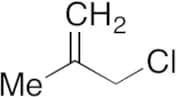
CAS:Controlled Product<p>Applications Isopropyl 2-bromo-2-methylpropanoate (cas# 51368-55-9) is a useful research chemical.<br></p>Formula:C7H13O2BrColor and Shape:NeatMolecular weight:209.083-Chloro-2-methyl-1-propene
CAS:<p>Applications 3-Chloro-2-methyl-1-propene has been used in the synthesis of 2-S-substituted pyrimidines as antimetabolites of nucleic acid precursors for cancer therapy.<br> Not a dangerous good if item is equal to or less than 1g/ml and there is less than 100g/ml in the package<br>References Kaldrikyan, M.A., Melik-Ohanjanyan, R.G.: Hayastani Kimiakan Handes, 67, 321 (2014)<br></p>Formula:C4H7ClColor and Shape:NeatMolecular weight:90.553-Methyl-thiopropanal
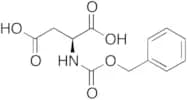
CAS:<p>Applications 3-Methyl-thiopropanal is used as an analytical standard for the quanitiative determination of 2-Furfurylthiol.<br> Not a dangerous good if item is equal to or less than 1g/ml and there is less than 100g/ml in the package<br>References Sen, A. and Grosch, W.: Z. lebensm Unters Forsch, 192, 541 (1991)<br></p>Formula:C4H8OSColor and Shape:NeatMolecular weight:104.17N-Cbz-L-aspartic Acid
CAS:Controlled Product<p>Applications N-Cbz-L-aspartic acid is an N-Cbz-protected form of L-Aspartic acid (A790024). L-Aspartic acid is a nonessential amino acid that is used to biosynthesize other amino acids within the human body. L-Aspartic acid also increases membrane conductance of mammalian neurons by voltage-dependent means, causing depolarization and nerve impulses that travel to key areas of the central nervous system.<br>References Anderson, H., et al.: J. Nutr., 99, 82 (1969); Honey, C., et al.: Neurosci. Lett., 61, 135 (1985); MacDonald, J., et al.: Brain Res., 237, 248 (1982)<br></p>Formula:C12H13NO6Color and Shape:White To Off-WhiteMolecular weight:267.23D-Lysine Methyl Ester Dihydrochloride
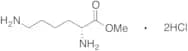
CAS:Controlled Product<p>Applications D-Lysine Methyl Ester is a protected form of D-Lysine (L468930). D-Lysine is the unnatural isomer of L-Lysine (L468895) that has the ability to reduce non-enzymatic glycation in vitro. D-Lysine also exists as polypeptide chains of poly-D-lysine, a nonspecific adhesion-promoting molecule that has the potential to be a polymeric drug carrier.<br>References Chen, Q. et al.: J. Biol. Chem., 269, 26602 (1994); Sensi, M., et al.: Diabetologia, 36, 797 (1993); Vermeersch, H. & Remon, J.: J. Control. Rel., 32, 225 (1994)<br></p>Formula:C7H16N2O2HClColor and Shape:NeatMolecular weight:233.1368-ethyl-4-(3-methylbenzoyl)-1-oxa-4,8-diazaspiro[4.5]decane-3-carboxylic acid
CAS:Purity:95.0%Molecular weight:332.39999389648448-benzyl-4-(2-fluorobenzoyl)-1-oxa-4,8-diazaspiro[4.5]decane-3-carboxylic acid
CAS:Purity:95.0%Molecular weight:398.4339904785156Ac-lys(ac)-OH
CAS:Controlled Product<p>Applications Ac-lys(ac)-oh was used in the reaction of HOCl with amino acids and peptides with ESR evidence for rapid rearrangement and fragmentation reactions of nitrogen-centered radicals.<br>References Hawkins, C., et al.: J. Chem. Soc. Perkin Trans. 2, 9, 1937 (1998);<br></p>Formula:C10H18N2O4Color and Shape:NeatMolecular weight:237.768DL-glutamine
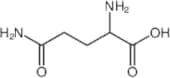
CAS:Controlled Product<p>Applications DL-glutamine<br></p>Formula:C5H10N2O3Color and Shape:NeatMolecular weight:146.14N3-Ethylthymidine
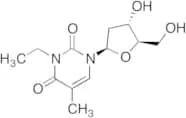
CAS:Controlled Product<p>Applications E677525<br>References Shimizu, T., et al.: Chem. Pharm. Bull., 53, 313 (2005)<br></p>Formula:C12H18N2O5Color and Shape:NeatMolecular weight:270.121574-Methoxy-6-(trifluoromethyl)-1,3,5-triazin-2-amine
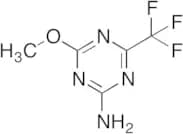
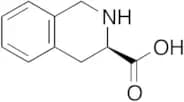
CAS:<p>Applications 4-Methoxy-6-(trifluoromethyl)-1,3,5-triazin-2-amine can be used as reactant/reagent in preparation of N-phenylsulfony-N'-pyrimidinylureas as herbicides.<br>References Hamprecht, G., et al.: Ger. Offen., DE 4322726 A1 19950112 (1995)<br></p>Formula:C5H5F3N4OColor and Shape:NeatMolecular weight:194.11(R)-1,2,3,4-Tetrahydroisoquinoline-3-carboxylic Acid
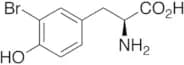
CAS:Controlled Product<p>Applications (R)-1,2,3,4-Tetrahydroisoquinoline-3-carboxylic Acid, is an amino acid building block used in peptide synthesis. With a growing peptide drug market the fast, reliable synthesis of peptides is of great importance.<br></p>Formula:C10H11NO2Color and Shape:NeatMolecular weight:177.203-Bromo-L-tyrosine
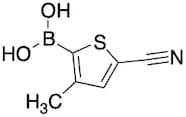
CAS:Controlled Product<p>Applications 3-Bromo-L-tyrosine is used in the preparation and synthesis of polyclonal antibodies that work against brominated protein related allergic responses and afflictions. Also effective in asthma control and prediction in children.<br>References Kambayashi, Y. et al.: J. Clin. Biochem., 44, 95 (2009); Wedes, S. et al.: J. Ped., 159, 248 (2011);<br></p>Formula:C9H10BrNO3Color and Shape:White To Light BrownMolecular weight:260.08(5-Cyano-3-methylthiophen-2-yl)boronic Acid
CAS:Controlled ProductFormula:C6H6BNO2SColor and Shape:NeatMolecular weight:166.9938-ethyl-4-(furan-2-carbonyl)-1-oxa-4,8-diazaspiro[4.5]decane-3-carboxylic acid
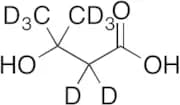
CAS:Purity:95.0%Molecular weight:308.3340148925781β-Hydroxyisovaleric Acid-d8
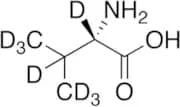
CAS:Controlled ProductFormula:C5H2D8O3Color and Shape:Colourless To YellowMolecular weight:126.18L-Valine-d8
CAS:Controlled Product<p>Applications Labelled analogue of L-Vailne. L-Valine is an essential amino acid and one of 20 proteinogenic amino acids. L-Valine cannot be manufactured by the body and must be acquired through diet or supplementation. L-valine is found in grains, dairy products, mushrooms, meats, peanuts and soy proteins. L-Valine has been used in studies to attenuate arrhythmias and induce hypotensive effects.<br>References Choi, C.W. et al.: Anim. Feed Sci. Technol., 102, 15 (2002); Kolarski, D. et al.: Krmiva, 30, 155 (1988); Oba, M. et al.: J. Dairy Sci., 93, 2044 (2010); Mitrega, K. et al.: Pharmacol. Res., 64, 218 (2011);<br></p>Formula:C52H8H3NO2Color and Shape:NeatMolecular weight:125.204-(4-bromobenzoyl)-8-ethyl-1-oxa-4,8-diazaspiro[4.5]decane-3-carboxylic acid
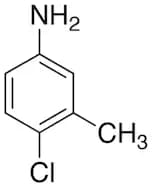
CAS:Purity:95.0%Molecular weight:397.26901245117194-Chloro-3-methylaniline
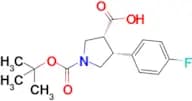
CAS:Controlled Product<p>Applications 4-Chloro-3-methylaniline (cas# 7149-75-9) is a compound useful in organic synthesis.<br></p>Formula:C7H8ClNColor and Shape:NeatMolecular weight:141.60(3R,4R)-1-(tert-Butoxycarbonyl)-4-(4-fluorophenyl)pyrrolidine-3-carboxylic acid
CAS:Purity:97%Molecular weight:309.33700561523442-(((1S,2R,4S)-4-(DIMETHYLCARBAMOYL)-2-(5-METHYL-4,5,6,7-TETRAHYDROTHIAZOLO[5,4-C]PYRIDINE-2-CARBOXAMIDO)CYCLOHEXYL)AMINO)-2-OXOACETIC ACID
CAS:Purity:95%Molecular weight:437.51998901367193-Mercapto-3-methylbutanoic Acid Ethyl Ester
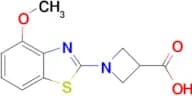
CAS:Controlled Product<p>Applications 3-Mercapto-3-methylbutanoic Acid Ethyl Ester is an intermediate in the synthesis of 3-Mercapto-3-methylbutyl Formate (M253540), which is one of the major odor-active thiol in pan-roasted white sesame seeds.<br>References Czerny, M., et al.: J .Agric. Food Chem., 47, 695 (1999), Steinhaus, M., et al.: Eur. Food Res. Technol., 226, 45 (2007), Tamura, H., et al.: Agric. Food Chem., 2010, 58, 7368 (2010),<br></p>Formula:C7H14O2SColor and Shape:NeatMolecular weight:162.251-(4-methoxy-1,3-benzothiazol-2-yl)azetidine-3-carboxylic acid
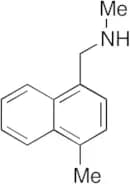
CAS:Purity:95.0%Molecular weight:264.29998779296875Methyl(4-methylnaphthalen-1-ylmethyl)amine
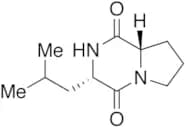
CAS:Controlled Product<p>Applications Methyl(4-methylnaphthalen-1-ylmethyl)amine is a reagent in the preparation of heterocyclic compounds as enoyl-acyl carrier protein reductase FabI inhibitors and antibacterial agents.<br>References Stuetz, A., et al.: J. Med. Chem., 29, 112 (1986); Berman, J., et al.: PCT Int. Appl., 2004:515512 (2004)<br></p>Formula:C13H15NColor and Shape:NeatMolecular weight:185.26Cyclo(L-prolyl-L-leucyl)
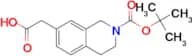
CAS:Controlled Product<p>Applications Sorbicillin analog. A bioactive secondary metabolites from terrestrial Streptomyces species TN262.<br>References Ma, L. et al. : J. Anitibiot. 64, 645 (2011); Elleuch, L. et al.: Appl. Biochem. Biotech. 162, 579 (2010)<br></p>Formula:C11H18N2O2Color and Shape:NeatMolecular weight:210.272-(2-(TERT-BUTOXYCARBONYL)-1,2,3,4-TETRAHYDROISOQUINOLIN-7-YL)ACETIC ACID
CAS:Purity:95.0%Molecular weight:291.346984863281258-methyl-4-(naphthalene-1-carbonyl)-1-oxa-4,8-diazaspiro[4.5]decane-3-carboxylic acid
CAS:Purity:95.0%Molecular weight:354.4060058593754-(3-chlorobenzoyl)-8-propyl-1-oxa-4,8-diazaspiro[4.5]decane-3-carboxylic acid
CAS:Purity:95.0%Molecular weight:366.8399963378906L-Leucine
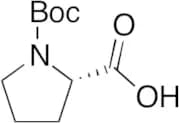
CAS:Controlled Product<p>Applications L-Leucine is an essential amino acid. L-Leucine acts as a nutrient signal to stimulate protein synthesis. It has also activates the mammalian target of rapamycin kinase that regulates cell growth.<br>References Demant, T. et al.: Am. J. Physiol., 270, E1022 (1996); Diraison, F. et al.: Am. J. Physiol., 277, E529 (1999); Suryawan, A. et al.: J. Anim. Sci., 89, 2004 (2011); Peyrollier, K. et al.: Biochem. J., 350, 361 (2000);<br></p>Formula:C6H13NO2Color and Shape:NeatMolecular weight:131.17N-Boc-L-proline
CAS:Controlled Product<p>Applications N-Boc-L-proline is a useful synthetic intermediate. It is used to synthesize Daclatasvir (D101500) which nhibits the HCV protein NS5A. Daclatasvir (D101500) can be used as a drug candidate for the treatment of hepatitis C (HCV).<br>References Gao, M., et al.: Nature, 465(7294), 96 (2010); Bell, T. W., Chem. Med. Chem., 5(10), 1663 (2010);<br></p>Formula:C10H17NO4Color and Shape:NeatMolecular weight:215.25N-Acetyl-L-alanine
CAS:Controlled Product<p>Applications N-Acetyl-L-alanine is used as a biomarker for prostate cancer.<br>References Jansen, R., et al.: Clin. Biochem., 38, 362 (2005),<br></p>Formula:C5H9NO3Color and Shape:NeatMolecular weight:131.131-[6-(methylsulfonyl)-1,3-benzothiazol-2-yl]azetidine-3-carboxylic acid
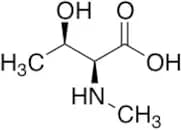
CAS:Purity:95.0%Molecular weight:312.3599853515625H-L-MeThr-OH
CAS:Controlled Product<p>Applications H-L-METHR-OH (cas# 2812-28-4) is a useful research chemical.<br></p>Formula:C5H11NO3Color and Shape:NeatMolecular weight:133.156-methyl-8-nitro-3a,4,5,9b-tetrahydro-3H-cyclopenta[c]quinoline-4-carboxylic acid
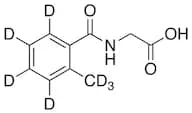
CAS:Purity:95.0%Molecular weight:274.27600097656252-Methyl Hippuric Acid-d7
CAS:Controlled Product<p>Applications The main labelled metabolite of o-xylene.<br>References Gregus, Z., et al.: Drug Metab. Dispos., 26, 1082 (1998), Gregus, Z., et al.: Xenobiotica, 29, 547 (1999), Gonzalez-Reche, L., et al.: Arch. Toxicol., 77, 80 (2003),<br></p>Formula:C10D7H4NO3Color and Shape:NeatMolecular weight:200.24N-Methyl-p-toluenesulfonamide
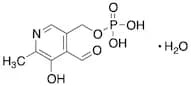
CAS:Controlled Product<p>Applications N-Methyl-p-toluenesulfonamide is an intermediate used in the synthesis of vicinal haloamino ketone derivative.<br>References Sun, H., et al.: Chem. Biol. Drug Design, 75, 269 (2010)<br></p>Formula:C8H11NO2SColor and Shape:NeatMolecular weight:185.243(4-Formyl-5-hydroxy-6-methylpyridin-3-yl)methyl Dihydrogen Phosphate Hydrate
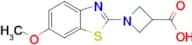
CAS:<p>Stability Air Sensitive, Moisture Sensitive<br>Applications (4-Formyl-5-hydroxy-6-methylpyridin-3-yl)methyl dihydrogen phosphate hydrate (cas# 41468-25-1) is a useful research chemical.<br></p>Formula:C8H10NO6P·H2OColor and Shape:White To Off-WhiteMolecular weight:265.161-(6-methoxy-1,3-benzothiazol-2-yl)azetidine-3-carboxylic acid
CAS:Purity:95.0%Molecular weight:264.299987792968752-Ethyl-4-methylpentyl Acrylate
Controlled Product<p>Stability Temperature Sensitive, Light Sensitive<br>Applications 2-Ethyl-4-methylpentyl Acrylate<br></p>Formula:C11H20O2Color and Shape:NeatMolecular weight:184.28L-Homoarginine Hydrochloride
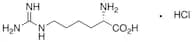
CAS:Controlled Product<p>Stability Moisture Sensitive<br>Applications An inhibitor of alkaline phosphatase isoenzymes. An analog of Homoarginine (H585000).<br>References Muth, W., et al.: J. Biol. Chem., 249, 7463 (1974), Hanukoglu, I., et al.: Eur. J. Biochem., 180, 479 (1989), Khaw, L., et al.: J. Bacteriol. 180, 809 (1998), Gallagher, D., et al.: J. Mol. Biol., 342, 119 (2004),<br></p>Formula:C7H16N4O2·ClHColor and Shape:NeatMolecular weight:224.69N-Acetyl-S-benzyl-d5-L-cysteine
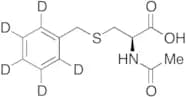
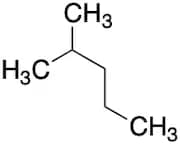
CAS:Controlled Product<p>Applications N-Acetyl-S-benzyl-d5-L-cysteine is deuterium labelled N-Acetyl-S-benzyl-L-cysteine, which is a metabolite of toluene.<br>References Gargas, M., et al.: Toxicol. Appl. Pharmacol., 98, 87 (1989), Commandeur, J., et al.: Pharmacol. Rev., 47(2), 271 (1995), Campo, P., et al.: Neurotoxicol. Teratol., 21, 427 (1999), Lohse, C., et al.: J. Agr. Food Chem., 48, 5913 (2000),<br></p>Formula:C12D5H10NO3SColor and Shape:NeatMolecular weight:258.352-Methylpentane
CAS:<p>Applications 2-Methylpentane is used as a raw material/intermediate in organic synthesis, rubber solvent, and vegetable oil extraction solvent.<br>References Choi, D., et al.: Adv. Funct. Mater. 25, 920 (2015)<br></p>Formula:C6H14Color and Shape:ColourlessMolecular weight:86.181-(3-Methoxypropyl)-4-piperidinamine
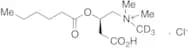
CAS:Controlled Product<p>Applications 1-(3-Methoxypropyl)-4-piperidinamine is a useful synthetic intermediate in the synthesis of Prucalopride Succinate (P838950); a selective 5-HT4 receptor agonist used effective for chronic constipation, but is not currently approved in the U.S. Prucalopride is approved for the treatment of chronic constipation in Europe.<br>References Shah, N., et al.: Am. J. Gastroenterol., 103, 1746 (2008); McKinnell, R., et al.: J. Med. Chem., 52, 5330 (2009); Shah, N., et al.: Am. J. Gastroenterol., 103, 1746 (2008); Yuan, Y., et al.: Zhongguo Yiyao Gongye Zazhi, 43, 5 (2012)<br></p>Formula:C9H20N2OColor and Shape:Colourless To Light YellowMolecular weight:172.268Hexanoyl-L-carnitine-(N-methyl-d3) Chloride
Controlled Product<p>Stability Hygroscopic<br>Applications Hexanoyl-L-carnitine-(N-methyl-d3) Chloride, is the labeled analogue of Hexanoyl-L-carnitine Hydrochloride (H294440), which is used as reactant in the synthesis of carnitine benzyl esters as prodrugs.<br>References Gong, X., et. al.: J. Chem. Res., 6, 327 (2008)<br></p>Formula:C13H23D3ClNO4Color and Shape:NeatMolecular weight:298.828-methyl-4-(2,4,6-trimethylbenzoyl)-1-oxa-4,8-diazaspiro[4.5]decane-3-carboxylic acid
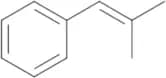
CAS:Purity:95.0%Molecular weight:346.4270019531252-Methyl-1-phenyl-1-propene (>85%)
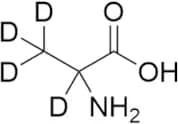
CAS:Controlled Product<p>Applications 2-Methyl-1-phenyl-1-propene can be used in analytical study of analysis and comparison of aroma compounds from traditional Tangshan sorghum liquor and samples of improved fermentation process by GC-MS.<br>References Jiang, X., et al.: Shipin Gongye Keji, 37, 87 (2016)<br></p>Formula:C10H12Purity:>85%Color and Shape:NeatMolecular weight:132.202β-Methylamino-L-alanine Hydrochloride
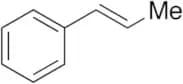
CAS:Controlled Product<p>Stability Hygroscopic<br>Applications β-Methylamino-L-alanine Hydrochloride is a useful intermediate in the synthesis of β-N-methylamino-L-alanine and other amino acid derivatives.<br>References Arevalo-Garcia, E. B., et al.: Tetrahedron Lett., 55, 2335 (2014); Sagiyan, A. S., et al.: Hayastani Kimiakan Handes, 61, 424 (2008); Sagiyan, A. S., et al.: Russ. Chem. Bull., 46, 483 (1997)<br></p>Formula:C4H10N2O2•(HCl)Color and Shape:NeatMolecular weight:118.133646trans-β-Methylstyrene (Stabilized with 3,5-di-tert-butylcatechol)
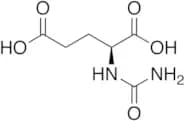
CAS:Controlled Product<p>Stability Light Sensitive<br>Applications trans-β-Methylstyrene is an isomer of β-Methylstyrene (M301155), a styrene derivative that is used as a chemical intermediate in the manufacture of plasticizers, resins and polymers. trans-β-Methylstyrene is also produced from the combustion of methamphetamine (M258795).<br> Not a dangerous good if item is equal to or less than 1g/ml and there is less than 100g/ml in the package<br>References Lin, H., et al.: Tetrahedron, Asym., 22, 134 (2011); Hirata, T., et al.: Tetrahedron., 54, 15993 (1998);<br></p>Formula:C9H10Color and Shape:NeatMolecular weight:118.18N-Carbamyl-L-glutamic Acid
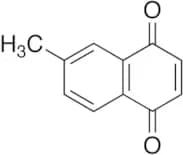
CAS:Controlled Product<p>Applications N-Carbamyl-L-glutamic Acid has been shown to have protective effects against ammonia intoxication and is used in the treatment of acute hyperammonemia.<br>References Paik, W.K. et al.: Life Sci., 15, 1189 (1974); O'Connor, J.E. et al.: Eur. J. Pediat., 148, 540 (1989); Lee, J.H. et al.: Biochem. Biophys. Res. Chem., 248, 391 (1998);<br></p>Formula:C6H10N2O5Color and Shape:NeatMolecular weight:190.156-Methyl-1,4-naphthoquinone
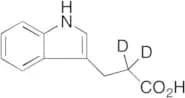
CAS:Controlled Product<p>Applications 6-Methyl-1,4-naphthoquinone (cas# 605-93-6) is a compound useful in organic synthesis.<br></p>Formula:C11H8O2Color and Shape:NeatMolecular weight:172.183-Indolepropionic-d2 Acid
CAS:Controlled Product<p>Stability Hygroscopic<br>Applications 3-Indolepropionic-d2 acid is deuterium labelled 3-Indolepropionic acid (I627170). 3-Indolepropionic acid is a deamination product of Tryptophan (T947200) that protects the hippocampus (studied in gerbils) from ischemic damage and oxidative stress. It’s ability to protect the neurons in this way is attributed to its potent antioxidative effects. 3-Indolepropionic acid is also hypothesized to have protective effects on the thyroid gland.<br>References Hwang, I., et al.: J. Neurosci. Res., 87, 2126 (2009); Karbownik, M., et al.: J. Cell. Biochem., 95, 131 (2005)<br></p>Formula:C11D2H9NO2Color and Shape:NeatMolecular weight:191.22L-(+)-2-Phenylglycine
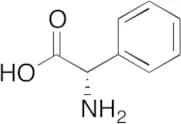
CAS:<p>Applications L-(+)-2-Phenylglycine is a derivative of Glycine (G615990), the smallest of all the amino acids, and is also used to treat schizophrenia, stroke, and benign prostatic hyperplasia. L-(+)-2-Phenylglycine is also used as an N-linked side chain of an SMTP (Stachybotrys microspora tripenyl phenols) congener, which was potent in enhancing plasminogen activation in S. microspora.<br>References Gusev, E., et al.: Cerebrovasc. Dis., 10, 49 (2000); Koide, H., et al.: J. Antibiot., 65, 91 (2012); Rosse, R., et al.: Clin. Neuropharmacol., 12, 416 (1989); Tuszynski, G., et al.: Lab. Invest., 70, 228 (1994)<br></p>Formula:C8H9NO2Color and Shape:Off White Crystalline PowderMolecular weight:151.16263-(4-((3-Phenoxybenzyl)amino)phenyl)propanoic acid
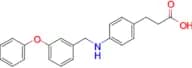
CAS:Purity:95.0%Color and Shape:SolidMolecular weight:347.41400146484375(2R)-2-Hydroxyglutaric Acid Disodium Salt
CAS:<p>Stability Hygroscopic<br>Applications A potential inhibitor of glutamate carboxypeptidase.<br>References Wolcott, T.G., et al.: Biochem. Biophys. Res. Commun., 57, 709 (1974), Knowles, P.F., et al.: Eur. J. Biochem., 114, 139 (1981),<br></p>Formula:C5H6O5·2NaColor and Shape:NeatMolecular weight:192.086-(METHYLAMINO)IMIDAZO[1,2-B]PYRIDAZINE-3-CARBOXYLIC ACID
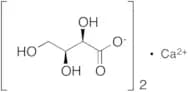
CAS:Purity:95.0%Molecular weight:192.17799377441406L-Threonic Acid Calcium Salt
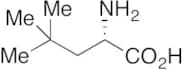
CAS:Controlled Product<p>Applications L-Threonic acid calcium salt is the salt of L-Threonic acid, a naturally occurring compound that can be found in the leaves of Pelargonium crispum. L-Threonic acid is also the degradation product of Dehydroascorbate (DHA), a metabolite of Vitamin C (A786990).<br>References Helsper, J. & Loewus, F.: Plant Phys., 69, 1365 (1982); Koch, C. & Biaglow, J.: J. Cell. Phys., 94, 299 (1978); Nielsen J., et al.: J. Agr. Food Chem., 49, 2998 (2001)<br></p>Formula:C4H7O5·CaColor and Shape:NeatMolecular weight:310.269(S)-2-Amino-4-methylpentanol
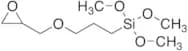
CAS:Controlled Product<p>Applications (S)-2-Amino-4-methylpentanol is a starting material for the synthesis of aminopeptidase N and phospholipase A2 inhibitors.<br>References Fournié-Zaluski, M., et al.: J. Med. Chem., 35, 1259 (1992); Bennion, C., et al.: J. Med. Chem., 35, 2939 (1992)<br></p>Formula:C6H15NOColor and Shape:NeatMolecular weight:117.1893-Glycidoxypropyltrimethoxysilane
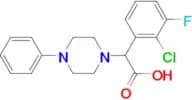
CAS:Controlled Product<p>Stability Moisture Sensitive<br>Applications 3-Glycidoxypropyltrimethoxysilane (cas# 2530-83-8) is a useful research chemical.<br></p>Formula:C9H20O5SiColor and Shape:NeatMolecular weight:236.342-(2-Chloro-3-fluorophenyl)-2-(4-phenylpiperazin-1-yl)acetic acid
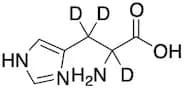
CAS:Molecular weight:348.79998779296875DL-Histidine-α,β,β-d3
CAS:Controlled Product<p>Applications DL-Histidine-alpha,beta,beta-d3 (CAS# 344299-50-9) is a useful isotopically labeled research compound.<br></p>Formula:C6D3H6N3O2Color and Shape:Off-White To BeigeMolecular weight:158.18(S)-(+)-2-Methylbutyric Acid
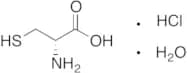
CAS:Controlled Product<p>Stability Hygroscopic<br>Applications (S)-(+)-2-Methylbutyric Acid is a chiral starting reagent used in various synthetic preparations.<br> Not a dangerous good if item is equal to or less than 1g/ml and there is less than 100g/ml in the package<br>References Neves, F., et al.: Beilstein. J. Org. Chem., 7, 1504 (2011); King, A.M., et al.: J. Medn. Chem., 54, 6432 (2011); Ferrarni, A., et al.: Chirality., 26, 9 (2011);<br></p>Formula:C5H10O2Color and Shape:NeatMolecular weight:102.132D-Cysteine Hydrochloride Monohydrate
CAS:Controlled Product<p>Applications D-Cysteine Hydrochloride Monohydrate is used as a reactant in the expedient synthesis of electronically modified luciferins for bioluminescence imaging.<br>References McCutcheon, D., et al.: J. Am. Chem. Soc., 134, 7604 (2012);<br></p>Formula:C3H7NO2S·HCl·H2OColor and Shape:NeatMolecular weight:121.16+(36.46)+(18.02)2-Methoxy-4-nitroaniline
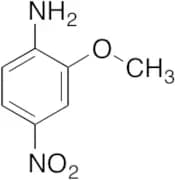
CAS:<p>Applications 2-Methoxy-4-nitroaniline is a derivative of 4-Nitroaniline (N491770), which is used in the synthesis of photorefractive polymers, as novel chromophores in analytical study. As well, due to the absorption spectrum associated with 4-Nitroaniline, it is used to determine catechol derivatives in syntheses.<br>References Nagaraja, P. et al.: J. Pharm. Biomed. Anal., 25, 417 (2001);<br></p>Formula:C7H8N2O3Color and Shape:YellowMolecular weight:168.153-Hydroxy-4-methyl-2(5H)-thiophenone
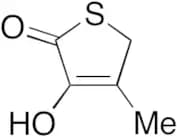
CAS:Controlled Product<p>Impurity Cefalexin EP Impurity D<br>Applications 3-Hydroxy-4-methyl-2(5H)-thiophenone (Cefalexin EP Impurity D) is an acid degradation product of Cephalexin (C256800) and Cefaclor (C235250), antibiotics.<br>References Dinner, A.: J. Med. Chem. 20, 963 (1977); Baetschi, S.W., et. al.: J. Pharmaceut., Sci., 86, 526 (1997)<br></p>Formula:C5H6O2SColor and Shape:NeatMolecular weight:130.1654-Methylenepiperidine Hydrochloride
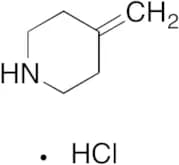
CAS:Controlled Product<p>Applications 4-Methylenepiperidine Hydrochloride is a building block that can be coupled with aryl halides via Suzuki cross-coupling to give benzyl piperidines and related compounds.<br>References Vice, S., et al.: J. Org. Chem., 66, 2487 (2001);<br></p>Formula:C6H11N•(HCl)Color and Shape:NeatMolecular weight:97.1636462-(4-aminopiperidin-1-yl)propanoic acid dihydrochloride
CAS:Purity:95.0%Molecular weight:245.13999938964844H-Gly-OH
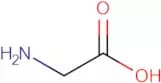
CAS:<p>M03001 - H-Gly-OH</p>Formula:C2H5NO2Purity:98%Color and Shape:Solid, White crystallineMolecular weight:75.0672'-Amino-5'-(4-carboxyphenyl)-[1,1':3',1''-terphenyl]-4,4''-dicarboxylic acid
CAS:Purity:97%Molecular weight:453.45001220703125(S)-3-((tert-Butoxycarbonyl)amino)-3-(2-hydroxyphenyl)propanoic acid
CAS:Purity:95.0%Molecular weight:281.3080139160156N-Methyl-L-alanine
CAS:Controlled Product<p>Applications N-Methyl-L-alanine is a reactant used in the preparation of site-specific trastuzumab maytansinoid antibody-drug conjugates with improved therapeutic activity.<br>References Pillow, T.H., et. al.: J. Med. Chem., 57, 7890 (2014)<br></p>Formula:C4H9NO2Color and Shape:NeatMolecular weight:103.128-methyl-4-(pyridine-4-carbonyl)-1-oxa-4,8-diazaspiro[4.5]decane-3-carboxylic acid
CAS:Purity:95.0%Molecular weight:305.3340148925781Ethyl 5-Methyl-6-oxo-5,6-dihydro-4H-benzo[f]imidazo[1,5-a][1,4]diazepine-3-carboxylate
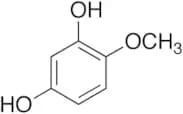
CAS:Controlled Product<p>Impurity Flumazenil EP Impurity E<br>Applications Ethyl 5-Methyl-6-oxo-5,6-dihydro-4H-benzo[f]imidazo[1,5-a][1,4]diazepine-3-carboxylate (Flumazenil EP Impurity E) is used in the biological studies and preparation of imidazobenzodiazepines as probes for diazepaminsensitive receptor pharmacophore.<br>References Zhang, P., et al.: J. Med. Chem., 38, 1679 (1995)<br></p>Formula:C15H15N3O3Color and Shape:NeatMolecular weight:285.304-Methoxyresorcinol
CAS:Controlled Product<p>Applications 4-Methoxyresorcinol (cas# 6100-60-3) is a compound useful in organic synthesis.<br></p>Formula:C7H8O3Color and Shape:NeatMolecular weight:140.145'-O-[Bis(4-methoxyphenyl)phenylmethyl]-N-(2-methyl-1-oxopropyl)-guanosine
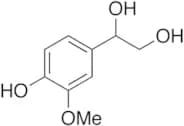
CAS:Controlled Product<p>Applications 5'-O-[Bis(4-methoxyphenyl)phenylmethyl]-N-(2-methyl-1-oxopropyl)-guanosine is used to prepare ppGpp analogs as inhibitors of RelA from Gram-negative/-positive bacteria. It is also used to synthesize guanosine 5'-conjugates as initiator molecules for transcription priming.<br>References Wexselblatt, E., et al.: Bioorg. Med. Chem., 18, 4485 (2010); Wolf, J., et al.:Org. Biomol. Chem., 6, 899 (2008)<br></p>Formula:C35H37N5O8Color and Shape:NeatMolecular weight:655.697rac 4-Hydroxy-3-methoxyphenylethylene Glycol
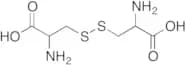
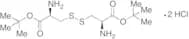
CAS:Controlled Product<p>Stability Hygroscopic<br>Applications A metabolite of Catecholamines.<br>References Kopin, I.J., et al.: J. Biol. Chem., 236, 2109 (1961), Short, F.W., et al.: J. Med. Pharm. Chem., 5, 642 (1962)<br></p>Formula:C9H12O4Color and Shape:White To Off-WhiteMolecular weight:184.19L-Cystine Bis(T-butyl Ester) Dihydrochloride
CAS:Controlled Product<p>Applications L-Cystine Bis(T-butyl Ester) Dihydrochloride is used as a reagent in the synthesis of chelate oxorhenium to create new integrin antagonists.<br>References Le Gal, J., et al.: J. Inorg. Biochem., 105, 880 (2011);<br></p>Formula:C14H28N2O4S2Color and Shape:NeatMolecular weight:352.5131'-(tert-Butoxycarbonyl)-4-oxospiro[chroman-2,4'-piperidine]-7-carboxylic acid
CAS:Purity:97%Molecular weight:361.3940124511719Spiro[cyclohexane-1,3'-indoline]-5'-carboxylic acid
CAS:Purity:98+%Molecular weight:231.2949981689453


![4-(2-ethoxyphenyl)-3H,4H,5H,6H,7H-imidazo[4,5-c]pyridine-6-carboxylic acid](/_next/image/?url=https%3A%2Fstatic.cymitquimica.com%2Fproducts%2F10%2Fthumb-webp%2FF522522.webp&w=3840&q=75)



![1-Boc-4-(carboxy-naphthalen-2-yl-methyl)-[1,4]diazepane](/_next/image/?url=https%3A%2Fstatic.cymitquimica.com%2Fproducts%2F10%2Fthumb-webp%2FF736020.webp&w=3840&q=75)
![2,2,2-Trifluoroacetic acid compound with 2-(8-azabicyclo[3.2.1]Octan-3-yl)acetic acid (1:1)](/_next/image/?url=https%3A%2Fstatic.cymitquimica.com%2Fproducts%2F10%2Fthumb-webp%2FF771892.webp&w=3840&q=75)



![8-ethyl-4-(3-methylbenzoyl)-1-oxa-4,8-diazaspiro[4.5]decane-3-carboxylic acid](/_next/image/?url=https%3A%2Fstatic.cymitquimica.com%2Fproducts%2F10%2Fthumb-webp%2FF525702.webp&w=3840&q=75)
![8-benzyl-4-(2-fluorobenzoyl)-1-oxa-4,8-diazaspiro[4.5]decane-3-carboxylic acid](/_next/image/?url=https%3A%2Fstatic.cymitquimica.com%2Fproducts%2F10%2Fthumb-webp%2FF525804.webp&w=3840&q=75)

![8-ethyl-4-(furan-2-carbonyl)-1-oxa-4,8-diazaspiro[4.5]decane-3-carboxylic acid](/_next/image/?url=https%3A%2Fstatic.cymitquimica.com%2Fproducts%2F10%2Fthumb-webp%2FF525676.webp&w=3840&q=75)
![4-(4-bromobenzoyl)-8-ethyl-1-oxa-4,8-diazaspiro[4.5]decane-3-carboxylic acid](/_next/image/?url=https%3A%2Fstatic.cymitquimica.com%2Fproducts%2F10%2Fthumb-webp%2FF525691.webp&w=3840&q=75)
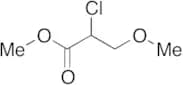
![2-(((1S,2R,4S)-4-(DIMETHYLCARBAMOYL)-2-(5-METHYL-4,5,6,7-TETRAHYDROTHIAZOLO[5,4-C]PYRIDINE-2-CARBO…](/_next/image/?url=https%3A%2Fstatic.cymitquimica.com%2Fproducts%2F10%2Fthumb-webp%2FF816177.webp&w=3840&q=75)

![(3-methylphenyl)[4-(4-methylphenyl)piperazin-1-yl]acetic acid](/_next/image/?url=https%3A%2Fstatic.cymitquimica.com%2Fproducts%2F10%2Fthumb-webp%2FF300221.webp&w=3840&q=75)
![8-methyl-4-(naphthalene-1-carbonyl)-1-oxa-4,8-diazaspiro[4.5]decane-3-carboxylic acid](/_next/image/?url=https%3A%2Fstatic.cymitquimica.com%2Fproducts%2F10%2Fthumb-webp%2FF525637.webp&w=3840&q=75)
![4-(3-chlorobenzoyl)-8-propyl-1-oxa-4,8-diazaspiro[4.5]decane-3-carboxylic acid](/_next/image/?url=https%3A%2Fstatic.cymitquimica.com%2Fproducts%2F10%2Fthumb-webp%2FF525738.webp&w=3840&q=75)

![1-[6-(methylsulfonyl)-1,3-benzothiazol-2-yl]azetidine-3-carboxylic acid](/_next/image/?url=https%3A%2Fstatic.cymitquimica.com%2Fproducts%2F10%2Fthumb-webp%2FF495394.webp&w=3840&q=75)
![6-methyl-8-nitro-3a,4,5,9b-tetrahydro-3H-cyclopenta[c]quinoline-4-carboxylic acid](/_next/image/?url=https%3A%2Fstatic.cymitquimica.com%2Fproducts%2F10%2Fthumb-webp%2FF314554.webp&w=3840&q=75)



![8-methyl-4-(2,4,6-trimethylbenzoyl)-1-oxa-4,8-diazaspiro[4.5]decane-3-carboxylic acid](/_next/image/?url=https%3A%2Fstatic.cymitquimica.com%2Fproducts%2F10%2Fthumb-webp%2FF525662.webp&w=3840&q=75)


![6-(METHYLAMINO)IMIDAZO[1,2-B]PYRIDAZINE-3-CARBOXYLIC ACID](/_next/image/?url=https%3A%2Fstatic.cymitquimica.com%2Fproducts%2F10%2Fthumb-webp%2FF530530.webp&w=3840&q=75)



![2'-Amino-5'-(4-carboxyphenyl)-[1,1':3',1''-terphenyl]-4,4''-dicarboxylic acid](/_next/image/?url=https%3A%2Fstatic.cymitquimica.com%2Fproducts%2F10%2Fthumb-webp%2FF621990.webp&w=3840&q=75)


![8-methyl-4-(pyridine-4-carbonyl)-1-oxa-4,8-diazaspiro[4.5]decane-3-carboxylic acid](/_next/image/?url=https%3A%2Fstatic.cymitquimica.com%2Fproducts%2F10%2Fthumb-webp%2FF525650.webp&w=3840&q=75)
![Ethyl 5-Methyl-6-oxo-5,6-dihydro-4H-benzo[f]imidazo[1,5-a][1,4]diazepine-3-carboxylate](/_next/image/?url=https%3A%2Fstatic.cymitquimica.com%2Fproducts%2FTR%2Fthumb-webp%2FE923525.webp&w=3840&q=75)
![5'-O-[Bis(4-methoxyphenyl)phenylmethyl]-N-(2-methyl-1-oxopropyl)-guanosine](/_next/image/?url=https%3A%2Fstatic.cymitquimica.com%2Fproducts%2FTR%2Fthumb-webp%2FB415160.webp&w=3840&q=75)
![1'-(tert-Butoxycarbonyl)-4-oxospiro[chroman-2,4'-piperidine]-7-carboxylic acid](/_next/image/?url=https%3A%2Fstatic.cymitquimica.com%2Fproducts%2F10%2Fthumb-webp%2FF634374.webp&w=3840&q=75)
![Spiro[cyclohexane-1,3'-indoline]-5'-carboxylic acid](/_next/image/?url=https%3A%2Fstatic.cymitquimica.com%2Fproducts%2F10%2Fthumb-webp%2FF607991.webp&w=3840&q=75)
