Amino Acids (AA)
Subcategories of "Amino Acids (AA)"
- Amino Acid Derivatives(4,012 products)
- Amino Acid and Amino Acid Related Compounds(3,490 products)
- Amino Acids with Oxygen or Sulphur(168 products)
- Boc- Amino Acids(351 products)
- Fmoc Amino Acids(1,710 products)
Found 38365 products of "Amino Acids (AA)"
Ac-Gly-Leu-OH
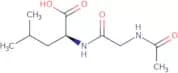
CAS:L-phenylalanine is an amino acid that has a sweet taste. It is one of the 20 amino acids encoded by the universal genetic code, and is classified as a polar amino acid because it has a hydroxyl group on its side chain. L-Phenylalanine is used in the food industry as a sweetener and to enhance salty or acidic flavors. Phenylalanine has been shown to be an important precursor for several important neurotransmitters in the brain. This includes serotonin, dopamine, and norepinephrine. Phenylalanine also plays a role in protein metabolism and enzyme activity, including aminopeptidases and racemases, which are enzymes that catalyze reactions involving racemic mixtures.
Formula:C10H18N2O4Purity:Min. 95%Molecular weight:230.26 g/mol2-Methylthio-cis-zeatin
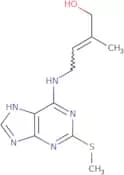
CAS:2-Methylthio-cis-zeatin is a corynebacterium metabolite that is produced by the oxidative deamination of 2-methylthioadenosine. It can be used as an indicator for the presence of corynebacteria in various plant species and has been found to have physiological functions such as multiple-reaction monitoring, biochemical analysis, and chemical structures. The production of 2-methylthio-cis-zeatin has been detected in tissue culture and explants from plants. Chemical analyses have shown that this metabolite is an impurity or contaminant in some pharmaceuticals and food products. 2-Methylthio-cis-zeatin can be identified using chromatographic methods with a mass spectrometric detection (MS) method, which allows for the identification of its isomers. This metabolite can also be analyzed using chromatographic methods with MS detection, which allows for the identification of its isomersFormula:C11H15N5OSPurity:Min. 95%Molecular weight:265.34 g/molH-Met-Thr-OH
CAS:Met-Thr-OH is a peptide binding inhibitor that is used as a research tool for determining the role of metalloproteins in vivo. Methionine aminopeptidase (MetAP) is an enzyme that cleaves methionine from protein and peptides and has been shown to play a vital role in cancer progression. MetAP has been shown to be inhibited by Met-Thr-OH, which binds to the enzyme's active site and blocks its activity. The inhibition of MetAP limits the production of proteins involved in cell growth and proliferation, leading to reductions in tumor size. This inhibition may also be due to the inhibition of other functional groups such as phosphorylation, dephosphorylation, or nitrosylation.
Formula:C9H18N2O4SPurity:Min. 95%Molecular weight:250.32 g/molFITC-b-Ala-Amyloid b-Protein (1-42) ammonium salt
CAS:Please enquire for more information about FITC-b-Ala-Amyloid b-Protein (1-42) ammonium salt including the price, delivery time and more detailed product information at the technical inquiry form on this page
Formula:C227H327N57O66S2Purity:Min. 95%Molecular weight:4,974.5 g/mol3-Bromo-2-methylaniline
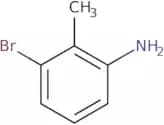
CAS:3-Bromo-2-methylaniline is a six membered, planar, planar conformation with a dihedral angle of 120°. The molecule has two dimers that are connected by hydrogen bonds. It has a crystal structure that is made up of molecules arranged in a hexagonal grid. The molecule is made up of three atoms: one carbon atom, one nitrogen atom, and one bromine atom. The three atoms are arranged in the following order: bromine, carbon, nitrogen.
Formula:C7H8BrNPurity:Min. 95%Color and Shape:Clear Colourless To Yellow To Brown Or Red-BrownMolecular weight:186.05 g/mol1-O-Hexadecyl-sn-glycerol
CAS:1-O-Hexadecyl-sn-glycerol is a glycol ether that is used as a surfactant and emulsifier in cosmetic products. It has been shown to have minimal toxicity, and to not be carcinogenic or teratogenic. 1-O-Hexadecyl-sn-glycerol has been shown to increase the stability of proteins in rat liver microsomes, and it also prevents the hydrolysis of carbohydrates. The surface glycoprotein adsorbed by 1-O-Hexadecyl-sn-glycerol may play an important role in the binding of monoclonal antibodies. This compound affects cellular calcium levels, with high concentrations resulting in increased cytosolic calcium concentrations. Zirconium oxide can replace calcium ions in 1-O-Hexadecyl-sn-glycerol for this purpose, although this substitution reduces enzyme activity.Formula:C19H40O3Purity:Min. 95%Molecular weight:316.52 g/molZ-Ala-Phe-OMe
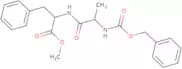
CAS:Z-Ala-Phe-OMe is a model amide that has been used to study the serine protease catalysed hydrolysis of peptides. This compound is a water molecule analogue that is immobilized on an ion exchange resin, which can be used as a support for experiments in catalysis and thermodynamics. Z-Ala-Phe-OMe has shown to be more efficient than other substrates and can be used to study kinetic data and thermodynamic properties.Formula:C21H24N2O5Purity:Min. 95%Molecular weight:384.43 g/molH-Lys(isopropyl)-OH
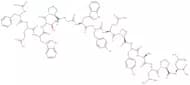
CAS:Please enquire for more information about H-Lys(isopropyl)-OH including the price, delivery time and more detailed product information at the technical inquiry form on this pageFormula:C9H20N2O2Purity:Min. 95%Molecular weight:188.27 g/molAc-Phe-Glu-Trp-Thr-Pro-Gly-Trp-Tyr-Gln-L-azetidine-2-carbonyl-Tyr-Ala-Leu-Pro-Leu-NH2
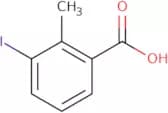
CAS:The peptide Ac-Phe-Glu-Trp-Thr-Pro-Gly-Trp-Tyr-Gln-L-azetidine-2-carbonyl-Tyr-Ala-Leu-Pro-Leu (AFGP) is a small molecule that has been shown to be effective in the prophylaxis and treatment of infectious diseases. AFGP is used as an excipient in intravenous solutions, such as antibiotics, vaccines, and other injectable drugs. It also functions as a diluent for lyophilized products. In addition to its use in the pharmaceutical industry, AFGP is also used as an excipient for vaccine preparations and other injectable drugs. AFGP has been shown to reduce the symptoms of inflammatory diseases, such as asthma and rheumatoid arthritis. This peptide has also been shown to have antiinflammatory and antifibrotic properties.Formula:C96H123N19O22Purity:Min. 95%Molecular weight:1,895.12 g/mol3-Iodo-2-methylbenzoic acid
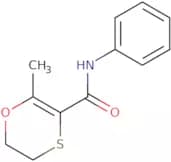
CAS:3-Iodo-2-methylbenzoic acid is a reagent that is used as an intermediate in the synthesis of complex compounds and fine chemicals. 3-Iodobenzoic acid is classified as a speciality chemical, which means it can be used for research purposes only. 3-Iodo-2-methylbenzoic acid has many uses, including being a versatile building block in chemical reactions and a reaction component in the synthesis of useful scaffolds and building blocks.Formula:C8H7IO2Purity:Min. 95%Color and Shape:SolidMolecular weight:262.04 g/mol2-Methyl-N-phenyl-5,6-dihydro-1,4-oxathiine-3-carboxamide
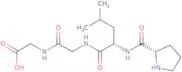
CAS:2-Methyl-N-phenyl-5,6-dihydro-1,4-oxathiine-3-carboxamide is a signal molecule that has antimicrobial activity. It inhibits the proliferation of cells and is used as an antifungal agent. 2,5,6-Trimethyloxathiinium ion has been shown to induce apoptosis in human leukemia cells and inhibit the growth of erythrocytes infected with Plasmodium falciparum. This compound also inhibits wild type strains of bacteria and fungi and can be used as a natural fungicide. 2,5,6-Trimethyloxathiinium ion has been found to be effective in treating autoimmune diseases such as diabetes mellitus type II, which may be due to its ability to regulate glucose metabolism and suppress inflammatory responses.Formula:C12H13NO2SPurity:Min. 95%Molecular weight:235.3 g/molH-Pro-Leu-Gly-Gly-OH
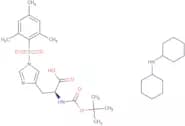
CAS:Please enquire for more information about H-Pro-Leu-Gly-Gly-OH including the price, delivery time and more detailed product information at the technical inquiry form on this pageFormula:C15H26N4O5Purity:Min. 95%Molecular weight:342.39 g/molBoc-His(1-Mts)-OH·DCHA
CAS:Controlled ProductPlease enquire for more information about Boc-His(1-Mts)-OH·DCHA including the price, delivery time and more detailed product information at the technical inquiry form on this pageFormula:C20H27N3O6S·C12H23NPurity:Min. 95%Molecular weight:618.83 g/molLHRH (free acid) trifluoroacetate salt
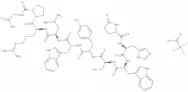
CAS:LHRH (free acid) trifluoroacetate salt Pyr-His-Trp-Ser-Tyr-Gly-Leu-Arg-Pro-Gly-OH trifluoroacetate salt is a decapeptide that is the most potent form of the hormone luteinizing hormone releasing hormone (LHRH). It has been shown to bind to surface receptors and activate a G protein, which activates adenyl cyclase. This leads to increased levels of cyclic adenosine monophosphate (cAMP) in cells. LHRH also binds to blood vessels and causes vasodilation. LHRH also binds to pyroglutamic acid, which is an amino acid found in peptides that have affinity for peptidases. This binding causes the release of peptidases from the cell membrane, uncovers receptor sites, and increases cAMP production. LHRH has also been shown to inhibit kidney functionFormula:C55H74N16O14Purity:Min. 95%Molecular weight:1,183.28 g/molUrocortin (human) trifluoroacetate salt
CAS:Trifluoroacetate saltFormula:C204H337N63O64Purity:Min. 95%Molecular weight:4,696.24 g/molGM-CSF (17-31)
CAS:Please enquire for more information about GM-CSF (17-31) including the price, delivery time and more detailed product information at the technical inquiry form on this pageFormula:C73H129N27O24Purity:Min. 95%Molecular weight:1,768.97 g/molN-[3-Fluoro-4-[6-(2-methyl-2H-tetrazol-5-yl)-3-pyridinyl]phenyl]carbamic acid phenylmethyl ester
CAS:Intermediate in the synthesis of tedizolidFormula:C21H17FN6O2Purity:Min. 95%Molecular weight:404.4 g/mol(D-Trp6,D-Leu7)-LHRH trifluoroacetate salt
CAS:Please enquire for more information about (D-Trp6,D-Leu7)-LHRH trifluoroacetate salt including the price, delivery time and more detailed product information at the technical inquiry form on this pageFormula:C64H82N18O13Purity:Min. 95%Molecular weight:1,311.45 g/molH-Gln(Trt)-2-chlorotrityl resin (200-400 mesh)
Please enquire for more information about H-Gln(Trt)-2-chlorotrityl resin (200-400 mesh) including the price, delivery time and more detailed product information at the technical inquiry form on this pagePurity:Min. 95%H-Arg-Glu-OH
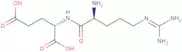
CAS:H-Arg-Glu-OH is a small molecule that is used as a pharmacological agent for the treatment of diabetes. It has been shown to have anti-inflammatory properties, which may be due to its ability to inhibit the production of inflammatory mediators such as prostaglandin E2 and nitric oxide. H-Arg-Glu-OH also induces apoptosis in human monocytes and macrophages by binding to toll-like receptor 4 (TLR4) on the cell surface. This binding activates NFκB and JNK pathways, leading to the induction of apoptosis. H-Arg-Glu-OH binds with high affinity to monoclonal antibodies against glutamic acid and glycine, which are not present in humans. The compound may be toxic at a neutral pH because it is highly reactive due to intramolecular hydrogen bonding between carbonyl oxygens and amide hydrogens.Formula:C11H21N5O5Purity:Min. 95%Molecular weight:303.32 g/mol





![N-[3-Fluoro-4-[6-(2-methyl-2H-tetrazol-5-yl)-3-pyridinyl]phenyl]carbamic acid phenylmethyl ester](/_next/image/?url=https%3A%2Fstatic.cymitquimica.com%2Fproducts%2F3D%2Fthumb-webp%2FFF102200.webp&w=3840&q=75)