Amino Acids (AA)
Subcategories of "Amino Acids (AA)"
- Amino Acid Derivatives(4,017 products)
- Amino Acid and Amino Acid Related Compounds(3,490 products)
- Amino Acids with Oxygen or Sulphur(168 products)
- Boc- Amino Acids(351 products)
- Fmoc Amino Acids(1,710 products)
Found 38384 products of "Amino Acids (AA)"
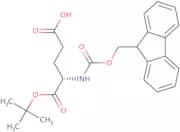
Fmoc-L-Glu-OtBu
CAS:Fmoc-L-Glu-OtBu is a synthetic ligand that is used as a fluorescent probe in vivo. It has been shown to bind to semaglutide with high affinity, and it can be used to study the function of semaglutide in the cell. Fmoc-L-Glu-OtBu has also been found to have an inhibitory effect on cancer cells. This ligand can be synthesized by solid-phase synthesis and purified by column chromatography. The purity of Fmoc-L-Glu-OtBu is confirmed by elemental analysis, and its impurities are determined by fluorescence spectroscopy. The carboxylate group of Fmoc-L-Glu-OtBu is activated with sulfuric acid to form the corresponding active ester, which can then be conjugated with other molecules.
Formula:C24H27NO6Purity:Min. 95%Color and Shape:White PowderMolecular weight:425.47 g/molRef: 3D-FF15874
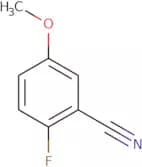
Discontinued product2-Fluoro-5-methoxybenzonitrile
CAS:2-Fluoro-5-methoxybenzonitrile is a metal catalyst that has been shown to be effective in the synthesis of various organic compounds. The use of ultrasound can increase the yields of reactions involving 2-fluoro-5-methoxybenzonitrile. 2-Fluoro-5-methoxybenzonitrile has also been demonstrated as a pharmacological agent with a number of potential applications. It inhibits the activity of phosphodiesterase 4, which may lead to an improved therapeutic profile for conditions such as asthma and erectile dysfunction. 2-Fluoro-5-methoxybenzonitrile is also used in photochemical reactions, where it acts as an inhibitor to prevent the formation of undesired products.
Formula:C8H6FNOPurity:Min. 95%Color and Shape:PowderMolecular weight:151.14 g/molRef: 3D-FF64148
Discontinued productL-Alanine-β-naphthylamide
CAS:L-alanine-β-naphthylamide is an amino acid that is synthesized by the action of β-Naphtholactamase on l-alanine. It is used as a substrate for enzyme studies and to determine the uptake of substances by cells. L-Alanine-β-naphthylamide has been shown to inhibit the activity of some enzymes, such as aminopeptidases and peptidases. The inhibition may be due to its ability to bind to lysine residues in the active site of these enzymes. This amino acid also inhibits the growth of bacteria at neutral pH and has a bacteriostatic effect at a pH range from 4.5 to 5.5.
Formula:C13H14N2OPurity:Min. 95%Color and Shape:PowderMolecular weight:214.26 g/molRef: 3D-FA66171
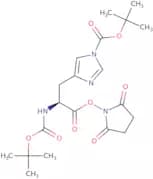
Discontinued productN-alpha,Nim-Bis-Boc-L-histidine N-hydroxysuccinimide ester
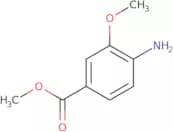
CAS:N-alpha,Nim-Bis-Boc-L-histidine N-hydroxysuccinimide ester is a reagent that is used in organic chemistry for the synthesis of complex compounds. It is a versatile building block that can be used as a reaction component or intermediate in chemical reactions. This compound has been registered under CAS number 25616-02-8.Formula:C20H28N4O8Purity:Min. 95%Color and Shape:PowderMolecular weight:452.46 g/mol4-Amino-3-methoxybenzoic acid methyl ester
CAS:4-Amino-3-methoxybenzoic acid methyl ester is a reactive molecule that has been used as a radiotracer for positron emission tomography (PET). It is also used in the synthesis of oligodeoxynucleotides and hybridization probes. 4-Amino-3-methoxybenzoic acid methyl ester is not soluble in water, but it can be dissolved in organic solvents such as acetone or methanol. This compound has shown to have anticancer activity and may be useful for treating cancers of the brain, breast, colon, lung, prostate, and stomach.Formula:C9H11NO3Purity:Min. 95%Color and Shape:PowderMolecular weight:181.19 g/molRef: 3D-FA70673
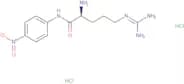
Discontinued productH-Arg-pNA 2HCl
CAS:Chromogenic substrate for Cathepsin H and aminopeptidases. Release of pNA is monitored at 405-410 nm. This substrate is useful for inhibitor screening and kinetic analysis.
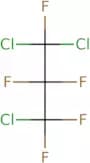
Formula:C12H18N6O3·2HClPurity:Min. 95%Color and Shape:PowderMolecular weight:367.23 g/molα-Chloro-ω-(2,2-Dichloro-1,1,2-Trifluoroethyl)-Poly(Difluoromethylene)
CAS:Controlled ProductAlpha-Chloro-Omega-(2,2-Dichloro-1,1,2-Trifluoroethyl)-Poly(Difluoromethylene) is a fluorinated polymer that has been shown to be effective in removing chlorine atoms from the atmosphere. The production of this polymer requires an irradiation process with a magnetic field. Alpha-Chloro-Omega-(2,2-Dichloro-1,1,2-Trifluoroethyl)-Poly(Difluoromethylene) is produced by the reaction of alpha chlorohydrin and trifluoroethylene. This polymer is insoluble in water and is not flammable or explosive. It can be used as a chemical precursor for other fluoropolymers or as an additive for polyurethane. Alpha Chloro Omega - ( 2 , 2 - Dichloro - 1 , 1 , 2 - Trifluoroethyl )
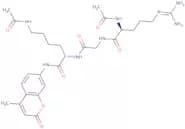
Formula:C3Cl3F5Purity:Min. 95%Molecular weight:237.38 g/molAc-Arg-Gly-Lys(Ac)-AMC trifluoroacetate salt
CAS:Ac-Arg-Gly-Lys(Ac)-AMC is a potent apoptotic agent that induces the apoptosis of cancer cells by binding to the caspase-9, which is an enzyme that initiates the process of apoptosis. Ac-Arg-Gly-Lys(Ac)-AMC has been shown to inhibit the growth of cancer cells in cell culture and also shows potent antitumor activity against MDA-MB-231 breast cancer cells. This drug can be used as a potential therapeutic agent for cancers such as colorectal, prostate, and pancreatic cancer. Ac-Arg-Gly-Lys(Ac)-AMC is also able to induce apoptosis in human leukemia cells and may have a potential role in therapy for acute myelogenous leukemia (AML).
Formula:C28H40N8O7•C2HF3O2Purity:Min. 98 Area-%Color and Shape:PowderMolecular weight:714.69 g/molRef: 3D-FA110598
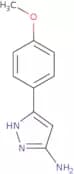
Discontinued product5-Amino-3-(4-methoxyphenyl)pyrazole
CAS:5-Amino-3-(4-methoxyphenyl)pyrazole (5AMPAP) is an anti-cancer agent that is effective against a number of different cancers, including breast, lung, and prostate. It selectively inhibits the growth of cancer cells by targeting enzymes in the mitochondria that are required for ATP production. 5AMPAP binds to the enzyme pyruvate dehydrogenase kinase, which has been shown to be involved in regulating cell proliferation and apoptosis. In addition, it has been demonstrated that this compound has anti-inflammatory properties. The regioselectivity of 5AMPAP was determined by x-ray crystallography and was found to form a pyrazolopyrimidine ring with two nitrogens on opposite sides of the ring. This regioselectivity is necessary for its anti-cancer activity.
Formula:C10H11N3OPurity:Min. 95%Molecular weight:189.21 g/molRef: 3D-FA50829
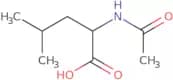
Discontinued productN-Acetyl-DL-leucine
CAS:N-Acetyl-DL-leucine is a non-protein amino acid that has been shown to have a variety of pharmacological effects. It has been found to reduce neuronal death and protect against cerebellar damage. N-Acetyl-DL-leucine acts by binding to the alpha subunit of the glutamate receptor, which increases its affinity for glutamate. This leads to an increased response in neuronal cells, and the prevention of neurotoxicity. N-acetyl-l-leucine has also been shown to be effective as a treatment for vestibular disorders. However, it is only soluble at high concentrations in water, so it cannot be taken orally without first being dissolved in alcohol or another solvent.
Formula:C8H15NO3Purity:Min. 95%Color and Shape:PowderMolecular weight:173.21 g/molRef: 3D-FA48956
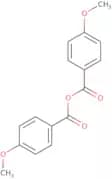
Discontinued product4-Methoxybenzoic anhydride
CAS:4-Methoxybenzoic anhydride is a nonsteroidal anti-inflammatory drug (NSAID) that has a hydroxy group, which makes it susceptible to nucleophilic attack. The reaction mechanism of 4-methoxybenzoic anhydride involves hydroxyl group and phosphorus pentachloride. Kinetic data for the reaction was obtained from kinetic studies. The kinetic study found that the rate of the reaction increased with increasing concentration of amines and amides in the reaction mixture. 4-Methoxybenzoic anhydride has been shown to have antiinflammatory activity in various tests on animals, including rats, guinea pigs, and rabbits. The mechanism of this activity may be due to its ability to inhibit prostaglandin synthesis by blocking cyclooxygenase enzyme activity.
Formula:C16H14O5Purity:Min. 95%Color and Shape:PowderMolecular weight:286.28 g/molRef: 3D-FM35899
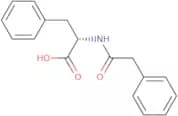
Discontinued productPhenylac-Phe-OH
CAS:Phenylac-Phe-OH is an amphipathic molecule that has been shown to exhibit potent antagonistic activity against proton pumps. This compound also has the potential use in retinoid acid assays, where it was found to be a potent antagonist of retinoic acid. Phenylac-Phe-OH can be used as a probe for magnetic resonance analysis and its metabolic profiles have been studied extensively.
Formula:C17H17NO3Purity:Min. 95%Color and Shape:PowderMolecular weight:283.32 g/molRef: 3D-FP111841
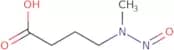
Discontinued productN-Nitroso-N-methyl-4-aminobutyric acid
CAS:N-Nitroso-N-methyl-4-aminobutyric acid (NMBA) is a solid with a low melting point which has been identified as a potentially carcinogenic component of both tobacco and tobacco smoke. NMBA is also one of a number of nitrosamine impurities which have been found to be present in angiotensin II receptor blocker (ARB) drugs used to treat high blood pressure.
Formula:C5H10N2O3Purity:Min. 98 Area-%Color and Shape:Slightly Yellow PowderMolecular weight:146.14 g/molBenzyl glycinate hydrochloride
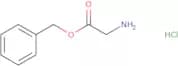
CAS:Benzyl glycinate hydrochloride is a piperidinecarboxylic acid ester that is bound to a benzyl group. It is chemically stable and has biological properties that are similar to those of oxytocin. This drug may be used as an antiviral agent or in the treatment of infectious diseases, such as hepatitis. The binding of benzyl glycinate hydrochloride to the ns3 protease prevents the conversion of amide-containing prodrugs into active form. The ester hydrochloride moiety in this molecule may act as a competitive inhibitor against carboxylesterases found in erythrocytes, which are responsible for the hydrolysis of oxytocin. Benzyl glycinate hydrochloride also binds to the oxytocin receptor and may be used as an oxytocin mimetic.
Formula:C9H11NO2•HClPurity:Min. 97 Area-%Color and Shape:PowderMolecular weight:201.65 g/molH-Pro-Ile-OH
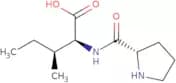
CAS:H-Pro-Ile-OH is an amino acid that is found in the mitochondria of cells. It is a prodrug that binds to angiotensin and blocks its conversion to angiotensin II, which has been shown to have blood pressure lowering effects. H-Pro-Ile-OH has been shown to be a competitive inhibitor of oligopeptidase, with a half maximal inhibitory concentration (IC50) of 0.5 mM, and has also been shown to have antihypertensive properties.
Formula:C11H20N2O3Purity:Min. 95%Color and Shape:PowderMolecular weight:228.29 g/molRef: 3D-FP108157
Discontinued productGly-Gly-Gly-Gly-OH
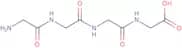
CAS:Gly-Gly-Gly-Gly-OH is a peptide that is used as an absorption enhancer. It has been shown to absorb ultraviolet light and convert it into visible light, which can increase the effectiveness of photosensitive drugs in the treatment of cancer. Gly-Gly-Gly-Gly-OH has also been shown to have protonation properties and can hydrogen bond with other molecules, including proteins. This molecule is activated by oxidation, which converts it from its amide form to its imine form. This activation process can be catalyzed by an oxidation catalyst such as manganese dioxide or nickel chloride. The imine form reacts with an electron donor such as hydrogen peroxide to produce an aromatic ring compound, which then undergoes intramolecular hydrogen transfer reactions to produce a second aromatic ring compound. These two compounds react with each other and release a water molecule (H2O) and energy in the form of heat or light. The frequency shift
Formula:C8H14N4O5Purity:Min. 95%Color and Shape:PowderMolecular weight:246.22 g/molRef: 3D-FG49308
Discontinued productH-Pro-Arg-bNA·HCl
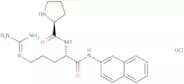
CAS:H-Pro-Arg-bNA·HCl is a reagent, complex compound and useful intermediate with the CAS number 201998-83-6. It is a fine chemical that is used as a useful scaffold or building block for the synthesis of other chemicals. This product can be used in research and as a versatile building block for reactions.
Formula:C21H28N6O2·HClPurity:Min. 95%Color and Shape:PowderMolecular weight:432.95 g/molRef: 3D-FP110680
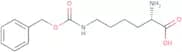
Discontinued productN6-Cbz-L-lysine
CAS:N6-Cbz-L-lysine is a compound that has been shown to inhibit the activity of enzymes involved in disulfide bond formation, such as protein tyrosine phosphatase (PTP), and other enzymes implicated in cancer. N6-Cbz-L-lysine binds to the enzyme bromoacetic acid complex, which is involved in the uptake of substances into cells. This compound also has a high resistance to ring-opening, making it a good candidate for cancer therapy. The structural biology and molecular modelling of N6-Cbz-L-lysine has shown that this drug may be an active substance with anti-cancer activities. Magnetic resonance spectroscopy studies have revealed that N6-Cbz-L-lysine may have potential as an antihypertensive agent.
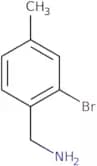
Formula:C14H20N2O4Purity:Min. 95%Color and Shape:White/Off-White SolidMolecular weight:280.32 g/mol2-Bromo-4-methylbenzylamine hydrochloride
CAS:2-Bromo-4-methylbenzylamine hydrochloride is a fine chemical that is used as a building block for other chemicals or as a reagent in research. It has CAS No. 1293323-97-3 and can be used in reactions where an amine is needed. This product is high quality, versatile, and useful for many different types of reactions.
Formula:C8H10BrN·HClPurity:Min. 95%Color and Shape:PowderMolecular weight:236.54 g/molRef: 3D-FB67361
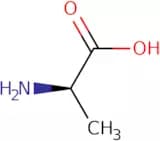
Discontinued productD-Alanine
CAS:D-Alanine is a small-molecule drug that inhibits the hepatitis B virus. It has been shown to decrease the levels of HBV-DNA in chronic hepatitis patients. D-Alanine may be effective for reducing hepatic steatosis and improving liver function, which may be due to its ability to reduce the expression of δ receptors. D-Alanine can inhibit viral replication by interfering with the polymerase chain reaction and inhibiting human serum albumin from binding to HBV-DNA. D-alanine also has an antioxidant effect and can scavenge anion radicals.
Formula:C3H7NO2Purity:Min. 98 Area-%Color and Shape:White PowderMolecular weight:89.09 g/molRef: 3D-FA00678
Discontinued product