Amino Acids (AA)
Subcategories of "Amino Acids (AA)"
- Amino Acid Derivatives(4,012 products)
- Amino Acid and Amino Acid Related Compounds(3,490 products)
- Amino Acids with Oxygen or Sulphur(168 products)
- Boc- Amino Acids(351 products)
- Fmoc Amino Acids(1,710 products)
Found 38366 products of "Amino Acids (AA)"
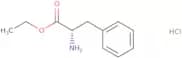
L-Phenylalanine ethyl ester hydrochloride
CAS:L-Phenylalanine ethyl ester hydrochloride is a chemical compound that is the ethyl ester of L-phenylalanine. It has been shown to have anticancer activity in vitro, and has been studied as a potential treatment for leukemia. The anticancer effects of L-phenylalanine ethyl ester hydrochloride are thought to be due to its ability to disrupt the DNA replication machinery by attacking amines and other nucleophilic groups. L-Phenylalanine ethyl ester hydrochloride was found to induce apoptosis in human hepatoma cells through the generation of reactive oxygen species and activation of caspases. This compound also has an absorption peak at 260 nm, which makes it suitable for use as a UV light absorber.
Formula:C11H15NO2·HClPurity:Min. 95%Color and Shape:White PowderMolecular weight:229.7 g/mol1-(2-Chlorophenyl)-5-phenyl-1-H-pyrazole-3-carboxylic acid
CAS:Controlled Product1-(2-Chlorophenyl)-5-phenyl-1H-pyrazole-3-carboxylic acid is a high quality, reagent, complex compound that has been shown to be useful as an intermediate in the synthesis of a number of different compounds. It has been shown to be useful as a speciality chemical and research chemicals with versatile building blocks that can be used for the synthesis of other compounds. The CAS number for 1-(2-chlorophenyl)-5-phenyl-1H-pyrazole-3-carboxylic acid is 116572-69-1.
Formula:C16H11ClN2O2Purity:Min. 95%Molecular weight:298.72 g/molMethyl 3,5-dibromo-2-methoxybenzoate
CAS:Methyl 3,5-dibromo-2-methoxybenzoate is a fine chemical that is useful as a scaffold for the preparation of a variety of compounds. It is also used as an intermediate in the synthesis of pharmaceuticals and research chemicals. Methyl 3,5-dibromo-2-methoxybenzoate can be used as a reaction component to generate complex compounds with high purity and quality. This compound has been classified as a speciality chemical and may be reclassified due to its usefulness in research.
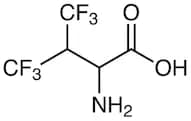
Formula:C9H8Br2O3Purity:Min. 95%Molecular weight:323.97 g/mol4,4,4,4',4',4'-Hexafluoro-DL-valine
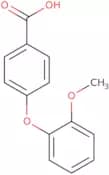
CAS:Formula:C5H5F6NO2Purity:>98.0%(T)Color and Shape:White to Almost white powder to crystalMolecular weight:225.094-(2-Methoxyphenoxy)benzoic acid
CAS:4-(2-Methoxyphenoxy)benzoic acid is a white crystalline solid with a melting point of 50°C. It is soluble in water, ethanol, ether, and chloroform. 4-(2-Methoxyphenoxy)benzoic acid has been used as a starting material for the synthesis of pharmaceuticals such as carbamazepine (Tegretol). The compound has two methoxy groups on the phenyl ring that are susceptible to nucleophilic attack by strong bases. This reaction occurs at room temperature and can be reversed by heating the solution to 150°C. The compound also undergoes polycondensation reactions when heated in the presence of an oxidizing agent.
Formula:C14H12O4Purity:Min. 95%Color and Shape:White PowderMolecular weight:244.24 g/molRef: 3D-FM52928
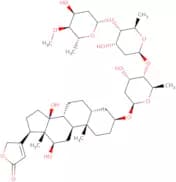
Discontinued productβ-Methyldigoxin
CAS:B-methyldigoxin is a drug that can be used to study the role of P-gp in drug transport. It has been shown to inhibit P-gp function and thus increase the amount of digoxin transported into the cells. This drug also inhibits cyclooxygenase, which is responsible for the production of prostaglandins, leading to anti-inflammatory effects. B-methyldigoxin has been shown to lower systolic pressure in rats with bowel disease and has been found to have cardiac effects in rats with congestive heart failure. The clinical relevance of this drug is not known, but it may be useful for treating geriatric patients or those with autoimmune diseases, as well as those who have had a cardiac event or are at risk for congestive heart failure.Formula:C42H66O14Purity:Min. 95%Color and Shape:PowderMolecular weight:794.97 g/molRef: 3D-FM09709
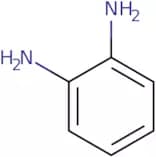
Discontinued product1,2-Phenylenediamine
CAS:1,2-Phenylenediamine is an aromatic amine that can be used as a precursor for the synthesis of various heterocyclic compounds. It has been shown to have an acidic character, which is due to its coordination geometry with three of its nitrogen atoms in the form of pyramidal nitrogen atoms. 1,2-Phenylenediamine is also a ligand for toll-like receptor (TLR) 4 and TLR9. It has been shown to activate these receptors by binding and activating downstream signaling pathways such as NF-κB and MAPK. This compound also has the ability to induce apoptosis in HL60 cells through inhibition of protein synthesis and activation of caspases.
Formula:C6H8N2Purity:Min. 98 Area-%Color and Shape:White PowderMolecular weight:108.14 g/molRef: 3D-FP26951
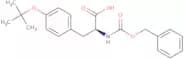
Discontinued productZ-O-tert-Butyl-L-tyrosine
CAS:Z-O-tert-Butyl-L-tyrosine is a fine chemical that is soluble in water and has a wide range of uses. It is a versatile scaffold for the synthesis of complex compounds, and can be used as a building block or reaction component in research chemicals. Z-O-tert-Butyl-L-tyrosine is an important reagent for organic synthesis, especially when combined with other chemicals. This chemical can also be used as a speciality chemical to produce high quality products.
Formula:C21H25NO5Purity:Min. 95%Color and Shape:White PowderMolecular weight:371.43 g/molRef: 3D-FB49847
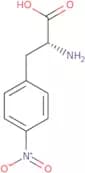
Discontinued product4-Nitro-D-phenylalanine hydrate
CAS:4-Nitro-D-phenylalanine hydrate is a cytosolic enzyme that catalyzes the conversion of phenylpropionic acid to its conjugate base, 4-nitrophenol. This reaction is important in the synthesis of antimicrobial peptides and extractants. The enzyme also has hemolytic activity and can be used as an extractant for pancreatic juice. 4-Nitro-D-phenylalanine hydrate is a catalyst for acylation reactions, which are involved in the production of various pharmaceuticals. 4-Nitro-D-phenylalanine hydrate binds to receptors on the surface of bacterial cells, making it an effective antibacterial agent.
Formula:C9H10N2O4·H2OPurity:Min. 95%Color and Shape:PowderMolecular weight:228.2 g/molRef: 3D-FN26301
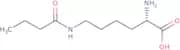
Discontinued productLysine(butyryl)-OH
CAS:Lysine(butyryl)-OH is a high-quality reagent that is useful in the synthesis of a variety of complex compounds, including fine chemicals and research chemicals. This compound can also be used as an intermediate for the production of other substances and is a versatile building block for reactions involving amino acids. It has CAS number 75396-30-4.
Formula:C10H20N2O3Purity:Min. 95%Color and Shape:White PowderMolecular weight:216.28 g/molRef: 3D-FL76838
Discontinued productGlycine t-butyl ester hydrochloride
CAS:Glycine t-butyl ester hydrochloride is a glycine prodrug that is converted to the neurotransmitter, cinchonidine, by carboxylesterase. It has been shown to be effective in resistant cancer cells and has good bioavailability in humans. Glycine t-butyl ester hydrochloride is synthesized from glycine and butyric acid with sodium carbonate as a catalyst and then reacted with anhydrous hydrogen chloride to form the final product. This synthesis requires an asymmetric reaction solution, which can be achieved by using a chiral reactant such as potassium carbonate or magnesium chloride. The dehydration of the ester group can be performed by heating in vacuum at 120°C for 2 hours.
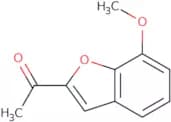
Formula:C6H14ClNO2Purity:Min. 95%Color and Shape:White PowderMolecular weight:167.63 g/mol2-Acetyl-7-methoxybenzofuran
CAS:2-Acetyl-7-methoxybenzofuran is an antibacterial agent that has potent inhibitory activity against methicillin-resistant Staphylococcus aureus and other bacterial species. It also inhibits the growth of endophytic fungus in plants. 2-Acetyl-7-methoxybenzofuran is synthesized by the fungus Cereus, which is used in traditional medicine to treat various ailments. This compound binds to the 16S ribosomal RNA, which inhibits protein synthesis and cell division. 2-Acetyl-7-methoxybenzofuran also shows potent inhibitory activity against methicillin-resistant Staphylococcus aureus, as well as other bacterial species. This antibiotic binds to the 16S ribosomal RNA, inhibiting protein synthesis and cell division.
Purity:Min. 95%Color and Shape:PowderMolecular weight:190.2 g/molRef: 3D-FA00332
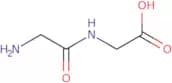
Discontinued productGlycylglycine
CAS:Glycyl-glycine is a biological buffer with a pH range of 7.5-8.9 and a pKa of 8.2. It is a zwitterionic compound and is low in toxicity, meaning it is suitable for many applications
Formula:C4H8N2O3Purity:Min. 95%Color and Shape:PowderMolecular weight:132.12 g/molRef: 3D-FG40134
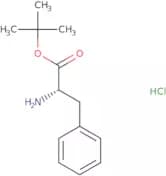
Discontinued product(S)-3-Phenylalanine t-butyl ester HCl
CAS:(S)-3-Phenylalanine t-butyl ester HCl is a solute with the molecular formula of C9H11NO2. It is an ester that has been hydrochloride to produce a solute that is soluble in water and alcohols. (S)-3-Phenylalanine t-butyl ester HCl is also a provitamin, which means it can be converted into vitamin B6 in the body. This compound has been shown to reduce the viscosity of fluids at high temperatures and low pressure, making it useful in thermally labile solutes. The solubility of (S)-3-phenylalanine t-butyl ester HCl in various solvents depends on its concentration. The fluorescence properties of this compound depend on the concentration and temperature. These properties have been used for deconvolution purposes in amide studies.
Formula:C13H19NO2·HClPurity:Min. 95%Color and Shape:White PowderMolecular weight:257.76 g/molRef: 3D-FP40262
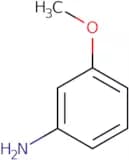
Discontinued product3-Methoxybenzenamine
CAS:3-Methoxybenzenamine is a molecule that can be synthesized by an asymmetric reaction. It has carcinogenic potential and is classified as a chemical substance. 3-Methoxybenzenamine reacts with hydrochloric acid to form hydrogen chloride gas and methoxybenzene. The hydroxyl group on the molecule reacts with l-tartaric acid to form an ester, which then undergoes hydrolysis to produce 3-hydroxybutanoic acid. This reaction also produces water, which may result in a decrease of the concentration of the reactants. 3-Methoxybenzenamine can also react with amines to form quaternary ammonium salts, which are highly soluble in water and have a high detection sensitivity.
Formula:C7H9NOPurity:Min. 95%Color and Shape:Clear LiquidMolecular weight:123.15 g/molRef: 3D-FM41595
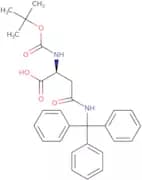
Discontinued productN-a-t-Boc-N-g-trityl-L-asparagine
CAS:N-a-t-Boc-N-g-trityl-L-asparagine is a recombinant human protein that has been synthesized in E. coli. It is a peptide with 17β-estradiol at its C terminus, and it binds to the oestrogen receptor α (ERα) via hydrogen bonding interactions. The linker between the asparagine and estradiol is a Boc group that can be removed by protease activity, revealing the active form of 17β-estradiol. ERα ligates to N-a-t-Boc-N-g-trityl L asparagine with high affinity, and this interaction is reversible. The linker also contains a functional group for surface attachment, which may be used to attach this peptide to a solid support or tissue culture substrate for use in cell cultures.
br>Formula:C28H30N2O5Purity:Min. 95%Color and Shape:White PowderMolecular weight:474.55 g/molRef: 3D-FB39381
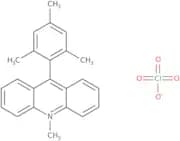
Discontinued product9-Mesityl-10-methylacridinium perchlorate
CAS:9-Mesityl-10-methylacridinium perchlorate is a cross-coupling reagent that can be used to form amines from alkenes via bond cleavage. The mechanism of this reaction involves irradiation, which generates radical species, and the use of molecular probes to rationalize the rate of the reaction. 9-Mesityl-10-methylacridinium perchlorate is a highly reactive compound with a short half life, which makes it an ideal candidate for generating radicals in order to study mechanistic studies on acridinium.Formula:C23H22ClNO4Purity:Min. 95%Color and Shape:PowderMolecular weight:411.88 g/molRef: 3D-FM60362
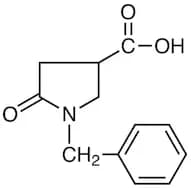
Discontinued product1-Benzyl-5-oxopyrrolidine-3-carboxylic Acid
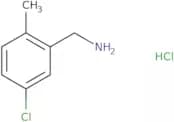
CAS:Formula:C12H13NO3Purity:>98.0%(GC)(T)Color and Shape:White to Almost white powder to crystalMolecular weight:219.245-Chloro-2-methylbenzylamine hydrochloride
CAS:5-Chloro-2-methylbenzylamine hydrochloride is a chemical reagent used in the production of pharmaceuticals and other chemicals. It is also known as 5-Chloro-2-methylbenzaldehyde, or 5-Methoxyindole. 5-Chloro-2-methylbenzylamine hydrochloride is an important building block for the synthesis of many complex compounds with high purity and quality. This compound is also versatile and can be used as a reaction component or as a reagent. CAS No: 28096-37-9.
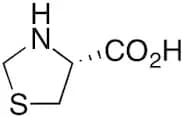
Formula:C8H10ClN·HClPurity:Min. 95%Molecular weight:192.09 g/molL-Thioproline extrapure, 98%
CAS:Formula:C4H7NO2SPurity:min. 98%Color and Shape:White to off - white, Crystalline powderMolecular weight:133.17