Amino Acids (AA)
Amino acids (AAs) are the fundamental building blocks of proteins, playing a crucial role in various biological processes. These organic compounds are essential for protein synthesis, metabolic pathways, and cell signaling. In this category, you will find a comprehensive range of amino acids, including essential, non-essential, and modified forms, which are vital for research in biochemistry, molecular biology, and nutritional sciences. At CymitQuimica, we provide high-quality amino acids to support your research and development needs, ensuring accuracy and reliability in your experimental outcomes.
Subcategories of "Amino Acids (AA)"
- Amino Acid Derivatives(3,955 products)
- Amino Acid and Amino Acid Related Compounds(3,465 products)
- Amino Acids with Oxygen or Sulphur(168 products)
- Boc- Amino Acids(351 products)
- Fmoc Amino Acids(1,710 products)
Found 38248 products of "Amino Acids (AA)"
Sort by
Purity (%)
0
100
|
0
|
50
|
90
|
95
|
100
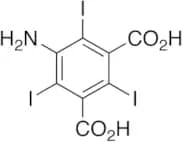
5-Amino-2,4,6-triiodoisophthalic Acid
CAS:Controlled Product<p>Impurity Iohexol EP Impurity K<br>Applications 5-Amino-2,4,6-triiodoisophthalic Acid (Iohexol EP Impurity K) is an intermediate for nonionic iodinated X-ray contrast agents.<br></p>Formula:C8H4I3NO4Color and Shape:NeatMolecular weight:558.84Ammonium Perfluoro(2-methyl-3-oxahexanoate)
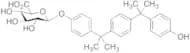
CAS:Controlled Product<p>Applications AMMONIUM PERFLUORO(2-METHYL-3-OXAHEXANOATE) (cas# 62037-80-3) is a useful research chemical.<br></p>Formula:C6F11O3·H4NColor and Shape:White To Off-WhiteMolecular weight:347.08Bisphenol P Mono-β-D-glucuronide (>90%)
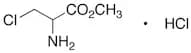
<p>Applications Bisphenol P Mono-β-D-glucuronide is a metabolite of Bisphenol P (B519475), which is a derivative of Bisphenol A (B519495), monomer used for policarbonate and epoxy resins.<br>References Krishnan, A.V., et al.: Endocrinology, 132, 2279 (1993); Steinmetz, R., et al.: Trends Endocrinol. Metab., 9, 124 (1998); Petersen, H., et al.: Eur. Food Res. Technol., 216, 355 (2003);<br></p>Formula:C30H34O8Purity:>90%Color and Shape:NeatMolecular weight:522.586D,L-b-Chloroalanine Methyl Ester Hydrochloride
CAS:Controlled Product<p>Applications D,L-β-Chloroalanine Methyl Ester Hydrochloride (cas# 33646-31-0) is a compound useful in organic synthesis.<br></p>Formula:C4H8ClNO2·ClHColor and Shape:NeatMolecular weight:174.038-ethyl-4-(3-fluorobenzoyl)-1-oxa-4,8-diazaspiro[4.5]decane-3-carboxylic acid
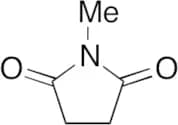
CAS:Purity:95.0%Molecular weight:336.3630065917969N-Methylsuccinimide
CAS:<p>Applications N-Methylsuccinimide is used as a model compound to investigate the mechanism of enolization step by density-functional theory (DFT) calculations. N-Methylsuccinimide is a metabolite of N-methyl-2-pyrrolidone (NMP) and its presence in plasma and urine can be used as a biomarker of exposure to NMP<br>References Takahashi, O., et al.: Chem. Biodivers., 7, 1349 (2010)<br></p>Formula:C5H7NO2Color and Shape:Off-WhiteMolecular weight:113.11N-(2-Hydroxyethyl)glycine (~90%)
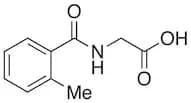
CAS:Controlled Product<p>Applications N-(2-Hydroxyethyl)glycine (~90%) (cas# 5835-28-9) is a compound useful in organic synthesis.<br></p>Formula:C4H9NO3Purity:>85%Color and Shape:NeatMolecular weight:119.122-Methyl Hippuric Acid
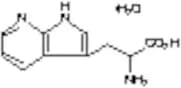
CAS:Controlled Product<p>Applications The main metabolite of o-xylene.<br>References Gregus, Z., et al.: Drug Metab. Dispos., 26, 1082 (1998), Gregus, Z., et al.: Xenobiotica, 29, 547 (1999), Gonzalez-Reche, L., et al.: Arch. Toxicol., 77, 80 (2003),<br></p>Formula:C10H11NO3Color and Shape:White To Off-WhiteMolecular weight:193.20D,L-Azatryptophan Hydrate
CAS:Controlled ProductFormula:C10H13N3O3Color and Shape:NeatMolecular weight:223.23(E)-Ethyl 4-Bromo-3-methyl-2-butenoate
CAS:Controlled Product<p>Applications (E)-Ethyl 4-Bromo-3-methyl-2-butenoate (cas# 51318-62-8) is a compound useful in organic synthesis.<br></p>Formula:C7H11BrO2Color and Shape:NeatMolecular weight:207.071,2-Cyclohexanedicarboxylic Acid Mono 4-Methyloctyl Ester
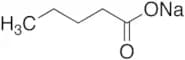
CAS:<p>Applications 1,2-Cyclohexanedicarboxylic Acid Mono 4-Methyloctan-1-ol Ester is a possible metabolite of the di(isononyl)cyclohexane-1,2-dicarboxylate (DINCH) monoester (MINCH).<br>References Koch, H., et al.: Arch. Toxicol., 87, 799 (2013)<br></p>Formula:C17H30O4Color and Shape:NeatMolecular weight:298.42Valeric Acid Sodium Salt
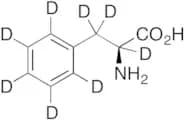
CAS:Controlled Product<p>Applications Valeric Acid Sodium Salt (cas# 6106-41-8) is a compound useful in organic synthesis.<br></p>Formula:C5H9O2·NaColor and Shape:NeatMolecular weight:124.11L-Phenylalanine-d8
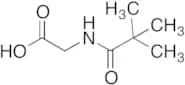
CAS:Controlled Product<p>Applications Labelled analogue of L-Phenylalanine, an essential amino acid.<br>References Hollunger, G. et al.: Acta Pharmacol. Toxicol., 34, 391 (1974); Bagchi, S.P. et al.: Biochem. Pharmacol., 26, 900 (1977);<br></p>Formula:C9D8H3NO2Color and Shape:NeatMolecular weight:173.24N-Pivaloylglycine
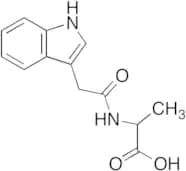
CAS:Controlled Product<p>Applications N-Pivaloylglycine is used in the biological study between dogs and rats. In a high dose toxicity study of pivalic acid (PA), PA caused skeletal muscle disorder in dog, and a significant increase of pivaloyl carnitine (PC) was observed in canine muscle, but not in rat muscle.<br>References Yamaguchi, T., et al.: Toxicol. Appl. Pharmacol., 214, 61-68 (2006)<br></p>Formula:C7H13NO3Color and Shape:NeatMolecular weight:159.18Indole-3-acetic-L-alanine
CAS:Controlled Product<p>Applications Indole-3-acetic-L-alanine is a derivative of the phytohormone indole-3-acetic acid (I577340) used in studies for the isolation and characterization of Arabdopsis thaliana mutants.<br>References Rampey, R.A., et al.: G3 (Bethesda), 3, 131-141 (2013)<br></p>Formula:C13H14N2O3Color and Shape:NeatMolecular weight:246.26N-Cinnamylglycine
CAS:<p>Applications N-Cinnamylglycine is a derivative of ferulic acid (F308900), a widely distributed compound in plants that is used as an antioxidant and food preservative.<br>References Jellum,E., et al.: J. Pharma. Biomed. Anal., 9, 663 (1991); Kayahara, H., et al.: Anticancer. Res., 19, 3763 (1999); Bollina, V., et al.: Plant. Molec. Biol., 77, 355 (2011);<br></p>Formula:C11H11NO3Color and Shape:NeatMolecular weight:205.212,6-Di-tert-butyl-4-methyl-d3-phenol
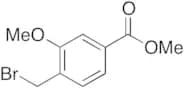
CAS:Controlled Product<p>Applications 2,6-Di-tert-butyl-4-methyl-d3-phenol (CAS# 86819-59-2) is a useful isotopically labeled research compound. This compound has been shown to significantly have lower toxic potency in mice compared to butylated hydroxytolune (BHT).<br>References Mizutani, T., et.al., Toxicol. Appl. Pharmacol. 69,283-290,(1983);<br></p>Formula:C15D3H21OColor and Shape:NeatMolecular weight:223.37Methyl 4-(Bromomethyl)-3-methoxybenzoate
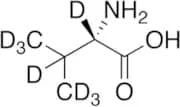
CAS:Controlled Product<p>Applications Methyl 4-(Bromomethyl)-3-methoxybenzoate is an intermediate used to prepare heteroarylphenyloxoacetyl and heteroarylphenylsulfonyl benzoylpiperazine analogs of BMS 378806 as HIV entry inhibitors. It is also used to synthesize steroid 5α-reductase inhibiting acylpiperidines.<br> Not a dangerous good if item is equal to or less than 1g/ml and there is less than 100g/ml in the package<br>References Lu, R., et al.: J. Med. Chem., 52, 4481 (2009); Picard, F., et al.: J. Med. Chem., 45, 3406 (2002)<br></p>Formula:C10H11BrO3Color and Shape:NeatMolecular weight:259.096L-Valine-d8
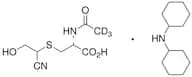
CAS:Controlled Product<p>Applications Labelled analogue of L-Vailne. L-Valine is an essential amino acid and one of 20 proteinogenic amino acids. L-Valine cannot be manufactured by the body and must be acquired through diet or supplementation. L-valine is found in grains, dairy products, mushrooms, meats, peanuts and soy proteins. L-Valine has been used in studies to attenuate arrhythmias and induce hypotensive effects.<br>References Choi, C.W. et al.: Anim. Feed Sci. Technol., 102, 15 (2002); Kolarski, D. et al.: Krmiva, 30, 155 (1988); Oba, M. et al.: J. Dairy Sci., 93, 2044 (2010); Mitrega, K. et al.: Pharmacol. Res., 64, 218 (2011);<br></p>Formula:C52H8H3NO2Color and Shape:NeatMolecular weight:125.20N-Acetyl-S-(1-cyano-2-hydroxyethyl)-L-cysteine-d3 Dicyclohexylamine Salt (Mixture of Diastereomers)
CAS:Controlled Product<p>Stability Hygroscopic<br>Applications A labelled metabolite of Acrylonitrile (ACN).<br>References Guengerich, F., et al.: Cancer Res., 41, 4925 (1981), Leonard, A., et al.: Mutation Res., 436, 263 (1999), Stadler, R., et al.: J. Agric. Food Chem., 52, 5550 (2004), Dybing, E., et al.: Food Chem. Toxicol., 43, 365 (2005), Rice, J., et al.: Mutation Res., 580, 3 (2005),<br></p>Formula:C20H32D3N3O4SColor and Shape:White To Off-WhiteMolecular weight:416.593a,4,5,9b-Tetrahydro-3 H -cyclopenta[ c ]quinoline-4-carboxylic acid
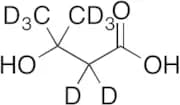
CAS:Purity:95.0%Color and Shape:SolidMolecular weight:215.2519989013672β-Hydroxyisovaleric Acid-d8
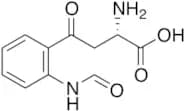
CAS:Controlled ProductFormula:C5H2D8O3Color and Shape:Colourless To YellowMolecular weight:126.18Formylkynurenine
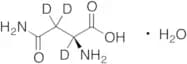
CAS:Controlled ProductFormula:C11H12N2O4Color and Shape:NeatMolecular weight:236.224L-Asparagine-d3 Hydrate
CAS:Controlled Product<p>Applications L-Asparagine-d3 Hydrate is an isotope labelled L-Asparagine Hydrate, a naturally occurring amino acid that is not a essential for humans and can be synthesized from central metabolic pathway intermediates.<br>References Burda, P., et al.: Biochim. Biophys. Acta., 1426, 239 (1999); Yamane, H., et al.: Animal. Sci. J., 80, 286 (2009);<br></p>Formula:C4D3H5N2O3·H2OColor and Shape:White To Off-WhiteMolecular weight:153.15171-Methoxy-2-propanol
CAS:Controlled Product<p>Applications 1-Methoxy-2-propanol is used as a reagent in the synthesis of 2-amino-3-carboxy-4-phenylthiophenes as novel atypical protein kinase C inhibitors. Also used as a reagent in the synthesis of Metolachlor (M338700); a selective pre-emergence herbicide.<br> Not a dangerous good if item is equal to or less than 1g/ml and there is less than 100g/ml in the package<br>References Titchenell, P.M., et al.: Bioorg. Med. Chem. Lett., 23, 3034 (2013); Zhang, H.: Nongyao Kexue Yu Guanli, 32, 26 (2011)<br></p>Formula:C4H10O2Color and Shape:ColourlessMolecular weight:90.126-((tert-Butoxycarbonyl)amino)-2-fluoronicotinic acid
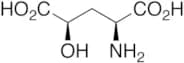
CAS:Purity:97%Molecular weight:256.2330017089844(2S,4R)-4-Hydroxy-L-glutamic Acid
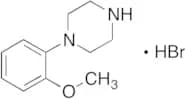
CAS:Controlled Product<p>Applications (2S,4R)-4-Hydroxy-L-glutamic Acid is a metabolite of Glutamic acid (G596960).<br>References Hampson, D., et al.: J. Biol. Chem., 274, 33488 (1999), Jensen, A., et al.: Eur. J. Pharmacol., 397, 247 (2000),<br></p>Formula:C5H9NO5Color and Shape:NeatMolecular weight:163.131-(2-Methoxyphenyl)piperazine Hydrobromide
CAS:Controlled Product<p>Stability Hygroscopic<br>Applications 1-(2-Methoxyphenyl)piperazine Hydrobromide is a useful reagent for improving the synthesis of Eapidil.<br>References Wang, H., et al.: Anhui Huagong, 37, 23 (2011)<br></p>Formula:C11H16N2O·HBrColor and Shape:NeatMolecular weight:192.26 +(80.91)L-Ornithine Hydrochloride
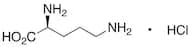
CAS:Controlled Product<p>Stability Hygroscopic<br>Applications L-Ornithine is a non-essential amino acid for human development but is required intermediate in arginine biosynthesis. L-Ornithine is found in virtually all vertebrate tissues as well as incorporated into proteins, such as tyrocidine. Isolation from chicken excreta.<br>References Fattori, D., et al.: J. Med. Chem., 50, 550 (2007), Gomez-Alonso, S., et al.: J. Agric. Food Chem., 55, 608 (2007), Subramaniam, R., et al.: Bioorg. Med. Chem. Lett., 18, 3333 (2008),<br></p>Formula:C5H12N2O2·ClHColor and Shape:White To Off-WhiteMolecular weight:168.624-(4-nitrobenzoyl)-8-propyl-1-oxa-4,8-diazaspiro[4.5]decane-3-carboxylic acid
CAS:Purity:95.0%Molecular weight:377.39700317382813-Chloro-2-methyl-1-propene
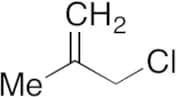
CAS:<p>Applications 3-Chloro-2-methyl-1-propene has been used in the synthesis of 2-S-substituted pyrimidines as antimetabolites of nucleic acid precursors for cancer therapy.<br> Not a dangerous good if item is equal to or less than 1g/ml and there is less than 100g/ml in the package<br>References Kaldrikyan, M.A., Melik-Ohanjanyan, R.G.: Hayastani Kimiakan Handes, 67, 321 (2014)<br></p>Formula:C4H7ClColor and Shape:NeatMolecular weight:90.552',3',5',6'-Tetrahydrospiro[indoline-3,4'-pyran]-5-carboxylic acid
CAS:Purity:95%Molecular weight:233.26699829101562D-Aspartic Acid Dimethyl Ester Hydrochloride
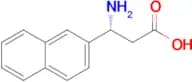
CAS:<p>Applications D-Aspartic Acid Dimethyl Ester Hydrochloride is a useful synthetic intermediate in the synthesis of MK-7246 (M425045); a potent and selective CRTH2 antagonist for the treatment of respiratory diseases.<br>References Molinaro, C., et al.: J. Org. Chem., 77, 2299 (2012); Gervais, F.G., et al.: Mol. Pharmacol., 79, 69 (2011); Gallant, M, et al.: Bioorg. Med. Chem. Lett., 21, 288 (2011)<br></p>Formula:C6H12ClNO4Color and Shape:NeatMolecular weight:197.62(S)-(-)-3-Amino-3-phenylpropionic acid hydrochloride
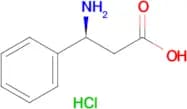
CAS:Formula:C9H12ClNO2Purity:95.0%Color and Shape:SolidMolecular weight:201.65Folcysteine
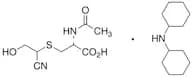
CAS:Controlled Product<p>Applications A cysteine derivative as potential antitumor agent. (A609645)A vitamin needed to synthesize DNA, conduct DNA repair and methylate DNA, it also acts as a cofactor in biological reactions involving folate. (F680300)<br>References Paul, B., et al.: J. Med. Chem., et al.: 19, 1002 (1976), Xu, L., et al.: Mol. Pharm., 7, 1311 (2010), Everette, J., et al.: J. Agric. Food Chem., 58, 8139 (2010), Alshatwi, A., et al.: Food, Chem., Toxicol., 48, 1881 (2010), McKay, D., et al.: Nut. J., 9 (2010),<br></p>Formula:C19H19N7O6·C6H9NO3SColor and Shape:YellowMolecular weight:616.17N-Acetyl-S-(1-cyano-2-hydroxyethyl)-L-cysteine Dicyclohexylamine Salt (Mixture of Diastereomers)
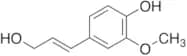
CAS:<p>Applications A metabolite of Acrylonitrile (ACN).<br>References Guengerich, F., et al.: Cancer Res., 41, 4925 (1981), Leonard, A., et al.: Mutation Res., 436, 263 (1999), Stadler, R., et al.: J. Agric. Food Chem., 52, 5550 (2004), Dybing, E., et al.: Food Chem. Toxicol., 43, 365 (2005), Rice, J., et al.: Mutation Res., 580, 3 (2005),<br></p>Formula:C12H23N·C8H12N2O4SColor and Shape:NeatMolecular weight:413.574-(3-Hydroxyprop-1-en-1yl)-2-methoxyphenol
CAS:<p>Applications 4-(3-HYDROXYPROP-1-EN-1-YL)-2-METHOXYPHENOL (cas# 458-35-5) is a useful research chemical.<br></p>Formula:C10H12O3Color and Shape:NeatMolecular weight:180.20L-Histidinol Dihydrochloride
CAS:Controlled ProductFormula:C6H11N3O·2ClHColor and Shape:NeatMolecular weight:214.098-methyl-4-(pyridine-3-carbonyl)-1-oxa-4,8-diazaspiro[4.5]decane-3-carboxylic acid
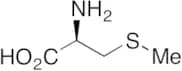
CAS:Purity:95.0%Molecular weight:305.3340148925781S-Methyl-L-cysteine
CAS:Controlled Product<p>Applications S-Methyl-L-cysteine is a substrate in the catalytic antioxidant system mediated by methionine sulfoxide reductase A (MSRA). It has been studied as a theurapeutic for neurodegenerative diseases including Parkinson′s.<br>References Wassef, R., et al.: J. Neurosci., 21, 12808 (2007)<br></p>Formula:C4H9NO2SColor and Shape:NeatMolecular weight:135.194-benzoyl-8-propyl-1-oxa-4,8-diazaspiro[4.5]decane-3-carboxylic acid
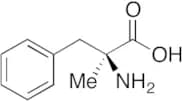
CAS:Purity:95.0%Molecular weight:332.3999938964844α-Methyl-L-phenylalanine
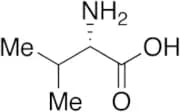
CAS:Controlled Product<p>Applications α-Methyl-L-phenylalanine is used to prepare hippuryl-α-methylphenylalanine and hippuryl-α-methylphenyllactic acid as substrates for carboxypeptidase A. It is also used in the synthesis of high affinity tachykinin NK2 receptor antagonists.<br>References Lee, M., et al.: Bioorg. Med. Chem., 8, 815 (2000); Boyle, S., et al.: Bioorg. Med. Chem., 2, 101 (1994)<br></p>Formula:C10H13NO2Color and Shape:NeatMolecular weight:179.22L-Valine
CAS:Controlled Product<p>Applications L-Valine is an essential amino acid and one of 20 proteinogenic amino acids. L-Valine cannot be manufactured by the body and must be acquired through diet or supplementation. L-valine is found in grains, dairy products, mushrooms, meats, peanuts and soy proteins. L-Valine has been used in studies to attenuate arrhythmias and induce hypotensive effects.<br>References Choi, C.W. et al.: Anim. Feed Sci. Technol., 102, 15 (2002); Kolarski, D. et al.: Krmiva, 30, 155 (1988); Oba, M. et al.: J. Dairy Sci., 93, 2044 (2010); Mitrega, K. et al.: Pharmacol. Res., 64, 218 (2011);<br></p>Formula:C5H11NO2Color and Shape:NeatMolecular weight:117.15Linoleoyl Carnitine
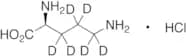
CAS:Controlled Product<p>Stability Hygroscopic, Temperature Sensitive<br>Applications A carnitine ester of unsaturated fatty acid. Used in the studies of fibroblasts in long-chain 3-hydroxyacyl-CoA dehydrogenase deficiency and fatty acid oxidation disorders.<br>References Gross R.W., et al.: J. Biol. Chem., 258, 5221 (1983),<br></p>Formula:C25H45NO4Color and Shape:NeatMolecular weight:423.63L-Ornithine-d6 Hydrochloride
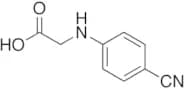
CAS:Controlled Product<p>Applications Labelled L-Ornithine. A non-essential amino acid for human development but is required intermediate in arginine biosynthesis. L-Ornithine is found in virtually all vertebrate tissues as well as incorporated into proteins, such as tyrocidine. Isolation from chicken excreta.<br>References Fattori, D. et al.: J. Med. Chem., 50, 550 (2007); Gomez-Alonso, S. et al.: J. Agric. Food Chem., 55, 608 (2007); Subramaniam, R. et al.: Bioorg. Med. Chem. Lett., 18, 3333 (2008);<br></p>Formula:C52H6H6N2O2·ClHColor and Shape:White To Off-WhiteMolecular weight:174.66N-(4-Cyanophenyl)-glycine
CAS:Controlled Product<p>Applications N-(4-Cyanophenyl)-glycine (cas# 42288-26-6) is a compound useful in organic synthesis.<br></p>Formula:C9H8N2O2Color and Shape:NeatMolecular weight:176.17


![8-ethyl-4-(3-fluorobenzoyl)-1-oxa-4,8-diazaspiro[4.5]decane-3-carboxylic acid](/_next/image/?url=https%3A%2Fstatic.cymitquimica.com%2Fproducts%2F10%2Fthumb-webp%2FF525685.webp&w=3840&q=75)






![3a,4,5,9b-Tetrahydro-3 H -cyclopenta[ c ]quinoline-4-carboxylic acid](/_next/image/?url=https%3A%2Fstatic.cymitquimica.com%2Fproducts%2F10%2Fthumb-webp%2FF028952.webp&w=3840&q=75)


![4-(4-nitrobenzoyl)-8-propyl-1-oxa-4,8-diazaspiro[4.5]decane-3-carboxylic acid](/_next/image/?url=https%3A%2Fstatic.cymitquimica.com%2Fproducts%2F10%2Fthumb-webp%2FF525720.webp&w=3840&q=75)
![2',3',5',6'-Tetrahydrospiro[indoline-3,4'-pyran]-5-carboxylic acid](/_next/image/?url=https%3A%2Fstatic.cymitquimica.com%2Fproducts%2F10%2Fthumb-webp%2FF609567.webp&w=3840&q=75)



![8-methyl-4-(pyridine-3-carbonyl)-1-oxa-4,8-diazaspiro[4.5]decane-3-carboxylic acid](/_next/image/?url=https%3A%2Fstatic.cymitquimica.com%2Fproducts%2F10%2Fthumb-webp%2FF525651.webp&w=3840&q=75)
![4-benzoyl-8-propyl-1-oxa-4,8-diazaspiro[4.5]decane-3-carboxylic acid](/_next/image/?url=https%3A%2Fstatic.cymitquimica.com%2Fproducts%2F10%2Fthumb-webp%2FF525714.webp&w=3840&q=75)