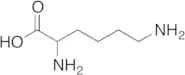
Amino Acids (AA)
Amino acids (AAs) are the fundamental building blocks of proteins, playing a crucial role in various biological processes. These organic compounds are essential for protein synthesis, metabolic pathways, and cell signaling. In this category, you will find a comprehensive range of amino acids, including essential, non-essential, and modified forms, which are vital for research in biochemistry, molecular biology, and nutritional sciences. At CymitQuimica, we provide high-quality amino acids to support your research and development needs, ensuring accuracy and reliability in your experimental outcomes.
Subcategories of "Amino Acids (AA)"
- Amino Acid Derivatives(3,955 products)
- Amino Acid and Amino Acid Related Compounds(3,471 products)
- Amino Acids with Oxygen or Sulphur(168 products)
- Boc- Amino Acids(351 products)
- Fmoc Amino Acids(1,710 products)
Found 38262 products of "Amino Acids (AA)"
Sort by
Purity (%)
0
100
|
0
|
50
|
90
|
95
|
100
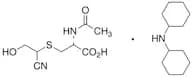
N-Acetyl-S-(1-cyano-2-hydroxyethyl)-L-cysteine Dicyclohexylamine Salt (Mixture of Diastereomers)
CAS:<p>Applications A metabolite of Acrylonitrile (ACN).<br>References Guengerich, F., et al.: Cancer Res., 41, 4925 (1981), Leonard, A., et al.: Mutation Res., 436, 263 (1999), Stadler, R., et al.: J. Agric. Food Chem., 52, 5550 (2004), Dybing, E., et al.: Food Chem. Toxicol., 43, 365 (2005), Rice, J., et al.: Mutation Res., 580, 3 (2005),<br></p>Formula:C12H23N·C8H12N2O4SColor and Shape:NeatMolecular weight:413.57Kynurenic Acid-d5
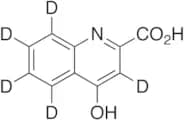
CAS:Controlled Product<p>Applications A labelled product of L-Tryptophan metabolism, possessing neruoactive activity having antiexcitotoxic and anticonvulsant properties.<br>References Wejksza, K., et al.: Pharmacol. Rep., 61, 751 (2009), Gohil, V., et al.: Nat. Biotechnol., 28, 249 (2010), Di Natale, B., et al.: Toxicol. Sci., 115, 89 (2010),<br></p>Formula:C102H5H2NO3Color and Shape:BeigeMolecular weight:194.20N-Pyrazinylcarbonyl-L-phenylalanine Methyl Ester
CAS:<p>Applications Used for the synthesis of Bortezomib from L-phenylalanine via dipeptidyl boronic acid ester intermediates.<br>References Zhu, Y., et al.: J. Med. Chem., 52, 4192 (2009),<br></p>Formula:C15H15N3O3Color and Shape:NeatMolecular weight:285.30(±)-Aspartic Acid
CAS:<p>Applications (±)-Aspartic Acid, is a non-essential amino acid found in food sources. Its conjugate base D-aspartate has potential use as a a therapeutic agent in the treatment of schizophrenia-related symptoms.<br>References Errico, F. et al.: J. Neurosci., 28, 10404 (2008); Denu, J.M. et al.: Biochem., 34, 3396 (1995); Chen, P.E. et al.: Mol. Pharmacol., 67, 1470 (2005);<br></p>Formula:C4H7NO4Color and Shape:NeatMolecular weight:133.101,2,3,9-Tetrahydro-9-methyl-4H-carbazol-4-one
CAS:<p>Impurity Ondansetron EP Impurity C<br>Applications 1,2,3,9-Tetrahydro-9-(methyl-d3)-4H-carbazol-4-one (Ondansetron EP Impurity C) is used in the preparation of 5-HT3 modulators useful in the treatment and prevention of 5-HT3 receptor-mediated diseases. 1,2,3,9-Tetrahydro-9-methyl-4H-carbazol-4-one is an impurity of Ondansetron (O655000).<br> Not a dangerous good if item is equal to or less than 1g/ml and there is less than 100g/ml in the package<br>References Huang, W. et al.: Zhong. Yao. Dax. Xueb., 30, 1 (1999); Kim, M. et al.: Heterocycles, 45, 2041 (1997); Feng, R. et al.: Zhong. Yaox. Zaz., 46, 1436 (2011);<br></p>Formula:C13H13NOColor and Shape:Off-WhiteMolecular weight:199.25Carbamoyl-guanidine Amidino Urea
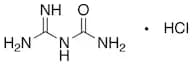
CAS:Controlled Product<p>Applications Carbamoyl-guanidine Amidino Urea Salt, Hydrochloride salt (cas# 926-72-7) is a compound useful in organic synthesis.<br></p>Formula:C2H6N4O·ClHColor and Shape:NeatMolecular weight:138.56S-Phenylmercapturic Acid-d5
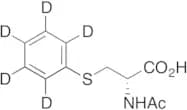
CAS:Controlled Product<p>Applications S-Phenylmercapturic Acid-d5 is the labelled analogue of S-Phenylmercapturic Acid (P335600), an important metabolite of Benzene.<br>References Qu, Q., et al.: Am. J. Ind. Med., 37, 522 (2000); Ghittori, S., et al.: Int. Arch. Occup. Environ. Health, 67, 195 (1995);<br></p>Formula:C11H8D5NO3SColor and Shape:NeatMolecular weight:244.32Pantothenic Acid (Technical Grade, Contains Lactone)
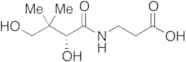
CAS:Controlled Product<p>Stability Hygroscopic<br>Applications Pantothenic Acid is a member of the B complex vitamins; essential vitamin for the biosynthesis of coenzyme A in mammalian cells. Occurs ubiquitously in all animal and plant tissue. The richest common source is liver, but jelly of the queen bee contains 6 times as much as liver. Rice bran and molasses are other good sources.<br>References Gardner, P., et al.: Food Chem., 68, 471 (2000); Ou, B., et al.: J. Agric. Food Chem., 50, 2772 (2002); Bahorun, T., et al.: J. Sci. Food Agric., 84, 1553 (2004)<br></p>Formula:C9H17NO5Color and Shape:NeatMolecular weight:219.244-Methyldibenzothiophene
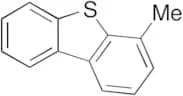
CAS:<p>Applications 4-Methyldibenzothiophene, is an alkyldibenzothiophene present in crude oil. Research concerning the biodegradation of Dibenzothiophene by different types of bacteria is a currently being carried out, as these bacteria have the ability to breakdown other harmful PAH’s as well. This may be used in removing spilled oil from marine and terrestrial environments.<br> Not a dangerous good if item is equal to or less than 1g/ml and there is less than 100g/ml in the package<br>References Boberg, F., et al.: Erdoel & Kohle, Erdgas, Petrochemie, 47, 187 (1994); Tanaka, Y., et al.: Applied Microbiology and Biotech., 59 (2), 325 (2002); Prince, R., Spill Sci. Tech. Bulletin, 8 (2), 145 (2003);<br></p>Formula:C13H10SColor and Shape:White SolidMolecular weight:198.284-Aminobutyl-d8 Guanidine Dihydrochloride
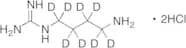
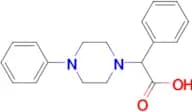
CAS:Controlled Product<p>Applications 4-Aminobutyl-d8 Guanidine is the labelled analog of the decarboxylation product of the amino acid arginine (A769500) and also an intermediate in polyamine biosynthesis.<br>References Golding, B.T., et al.: Biochem. Soc. Trans., 22, 391S (1994);<br></p>Formula:C5H6D8N4·2HClColor and Shape:NeatMolecular weight:211.162632-(3-Chlorophenyl)-2-[4-(4-fluorophenyl)piperazin-1-yl]acetic acid
CAS:Molecular weight:348.79998779296875L-Arginine-2,3,3,4,4,5,5-d7 HCl
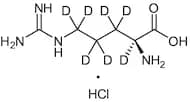
CAS:Controlled Product<p>Applications L-Arginine-2,3,3,4,4,5,5-d7 HCl (CAS# 204244-77-9) is a useful isotopically labeled research compound. It can be used with Raman scattering for imaging living cells and organisms.<br>References Min, W., et al., PCT Int. Appl. (2014), WO 2014205074 A2<br></p>Formula:C6D7H7N4O2·HClColor and Shape:NeatMolecular weight:217.70rac (8-Hydroxyquinolin-3-yl)alanine Dihydrochloride
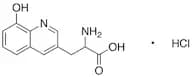
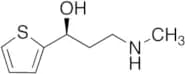
CAS:Controlled Product<p>Stability Hygroscopic<br>Applications Genetic incorporation of a metal-ion chelating amino acid into proteins as a biophysical probe.<br>References McRee, D., et al.: J. Struct. Biol., 125, 156 (1999), Wang, L., et al.: Science, 292, 498 (2001), Ioerger, T., et al.: Methods Enzymol., 374, 244 (2003),<br></p>Formula:C12H12N2O3·2ClHColor and Shape:NeatMolecular weight:305.16(S)-1-b-Hydroxy-1-(2-thienyl)-3-methylaminopropane
CAS:Controlled Product<p>Impurity Duloxetine EP Impurity B<br>Applications A Duloxetine intermediate. Duloxetine EP Impurity B.<br></p>Formula:C8H13NOSColor and Shape:NeatMolecular weight:171.262-[4-(2-Methylpropenyl)phenyl]propionic Acid
CAS:<p>Applications 2-[4-(2-Methylpropenyl)phenyl]propionic Acid is a byproduct of Ibuprofen (I140000(P)), which is an anti-inflammatory drug.<br>References Sharma, K., et al.: Int. J. Environ. Sci. Tech., 16, 8315 (2019)<br></p>Formula:C13H16O2Color and Shape:Light YellowMolecular weight:204.264-{[1,1'-biphenyl]-4-carbonyl}-8-ethyl-1-oxa-4,8-diazaspiro[4.5]decane-3-carboxylic acid
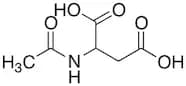
CAS:Purity:95.0%Molecular weight:394.47100830078125N-Acetyl-DL-aspartic Acid
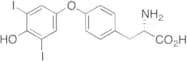
CAS:Controlled Product<p>Applications N-Acetyl-DL-aspartic acid (cas# 2545-40-6) is a useful research chemical.<br></p>Formula:C6H9NO5Color and Shape:NeatMolecular weight:175.1393’,5’-Diiodo-L-thyronine
CAS:Controlled Product<p>Applications 3’,5’-Diiodo-L-thyronine is a thyroid hormone that has been shown to increase malic enzyme activity, and the activity of glucose-6-phosphate dehydrogenase in teleost Anabas testudineus. Thus, showing short term effect on lipid metabolism.<br>References Davey, K.G.: Insect Biochem. Mol. Bio., 30, 877 (2000); Shameena, B., et. al.: Endocr. Res., 26, 431 (2000)<br></p>Formula:C15H13I2NO4Color and Shape:NeatMolecular weight:525.08(R)-3-Amino-4-(3-fluorophenyl)butanoic acid hydrochloride
CAS:Purity:95.0%Molecular weight:233.6699981689453DL-Homocysteic-3,3,4,4-d4 Acid
CAS:Controlled ProductFormula:C4D4H5NO5SColor and Shape:Light YellowMolecular weight:187.045252,4,8,10-Tetraoxaspiro[5.5]undecane-3,9-diylbis(2-methylpropane-2,1-diyl) bis(3-(3-(tert-butyl)-4-hydroxy-5-methylphenyl)propanoate)
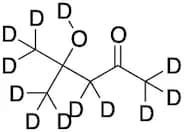
CAS:Controlled Product<p>Applications 2,4,8,10-Tetraoxaspiro[5.5]undecane-3,9-diylbis(2-methylpropane-2,1-diyl) bis(3-(3-(tert-butyl)-4-hydroxy-5-methylphenyl)propanoate) (cas# 90498-90-1) is a useful compound used as a modifier for the thermo-oxidative stabilization of synthesized meterials such as polypropylene-based materials, and spider silk.<br>References Matta, A.; et al.: Polym. Degrad. Stab., 142, 50 (2017); Dao, A. T.; et al.: Polym. Degrad. Stab., 153, 37 (2018).<br></p>Formula:C43H64O10Color and Shape:NeatMolecular weight:740.964-Hydroxy-4-methyl-2-pentanone-d12
CAS:Controlled Product<p>Applications 4-Hydroxy-4-methyl-2-pentanone-d12 (CAS# 114253-85-9) is a useful isotopically labeled research compound.<br></p>Formula:C6D12O2Color and Shape:NeatMolecular weight:128.237-(tert-Butoxycarbonyl)-5,6,7,8-tetrahydroimidazo[1,2-a]pyrazine-3-carboxylic acid
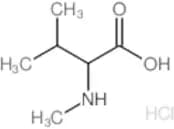
CAS:Purity:98%Molecular weight:267.2850036621094N-Methyl-dl-valine Hydrochloride
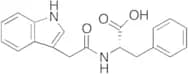
CAS:Controlled Product<p>Applications N-Methyl-dl-valine, HCl<br></p>Formula:C6H13NO2Color and Shape:NeatMolecular weight:131.173indole-3-acetyl-L-phenylalanine
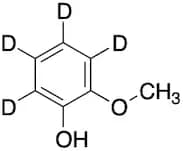
CAS:Controlled Product<p>Applications Indole-3-acetyl-L-phenylalanine is an indole-3-acetyl-amino acid conjugate involved in regulatory mechanisms for the control of auxin activity during physiological and pathophysiological responses.<br>References Ostrowski, M., et al.: J Plant Physiol, 191, 63-72 (2016)<br></p>Formula:C19H18N2O3Color and Shape:NeatMolecular weight:322.3582-Methoxyphenol-3,4,5,6-d4
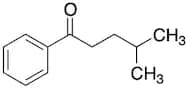
CAS:Controlled Product<p>Applications 2-Methoxyphenol-3,4,5,6-d4 (CAS# 7329-52-4) is a useful isotopically labeled research compound.<br></p>Formula:C7D4H4O2Color and Shape:NeatMolecular weight:128.164-Methyl-valerophenone
CAS:Controlled Product<p>Applications 4-Methyl-valerophenone is an intermediate used in the synthesis of a-Pyrrolidinoisohexanophenone (Hydrochloride) (P841230), which is a phenone derivative used for research purposes.<br>References Guo, Z.K., et al.: Marine Drugs, 16, 45/1 (2018)<br></p>Formula:C12H16OColor and Shape:NeatMolecular weight:176.252-(2,3-Dimethylphenyl)-2-[4-(4-fluorophenyl)piperazin-1-yl]acetic acid
CAS:Molecular weight:342.414001464843752-(4-(Benzo[d][1,3]dioxol-5-ylmethyl)piperazine-1-carbonyl)cyclohexane-1-carboxylic acid
CAS:Purity:90%Molecular weight:374.437011718753-(2-(4-METHOXYPHENYLAMINO)BENZO[D]OXAZOL-5-YL)PROPANOIC ACID HCL
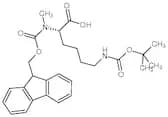
CAS:Purity:95.0%Molecular weight:348.7799987792969Fmoc-n-me-lys(boc)-oh
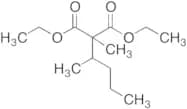
CAS:Controlled Product<p>Applications Fmoc-n-me-lys(boc)-oh<br></p>Formula:C27H34N2O6Color and Shape:NeatMolecular weight:482.5692-Methyl-2-(1-methylbutyl)-propanedioic Acid 1,3-Diethyl Ester
CAS:Controlled Product<p>Applications 2-Methyl-2-(1-Methylbutyl)-propanedioic Acid 1,3-Diethyl Ester is an intermediate in the synthesis of 2,3-Dimethyl-hexanoic Acid (D473405) which is used to prepare Mono-2,3-dimethylhexyl Phthalate (M539400), a metabolite of Dibutyl phthalate (DBP) (D429495), which is widely used in consumer products.<br>References Silva, M., et al.: Arch. Toxicol., 77, 561 (2003), Silva, M., et al.: Toxicology, 210, 123 (2005), Silva, M., et al.: J. Anal. Toxicol., 29, 819, (2005)<br></p>Formula:C8H17NO5Color and Shape:NeatMolecular weight:207.2244-(2,4-dimethylphenyl)-3H,4H,5H,6H,7H-imidazo[4,5-c]pyridine-6-carboxylic acid
CAS:Purity:95.0%Molecular weight:271.320007324218754-{[1,1'-biphenyl]-4-carbonyl}-8-methyl-1-oxa-4,8-diazaspiro[4.5]decane-3-carboxylic acid
CAS:Purity:95.0%Molecular weight:380.4440002441406DL-Serine-2,3,3-d3
CAS:Controlled Product<p>Applications Labelled DL-Serine is used in the synthesis of novel tryptoline derivatives as IDO (indoleamine 2,3-Deoxygenase) inhibitors, for potential use in Alzheimer’s treatment.<br>References Tanaka, M. et al.: Bioorg. Med. Chem., 21, 1159 (2013);<br></p>Formula:C32H3H4NO3Color and Shape:NeatMolecular weight:108.11D,L-Cystathionine-d4
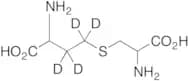
CAS:Controlled Product<p>Applications Isotope labelled Intermediate for transsulfuration whereby a mammal transfers the sulfur of methionine via homocysteine to cysteine.<br>References Thompson, J.W., et al.: J. Biol. Chem., 266, 17011 (1991), Yoshida, Y., et al.: Microbiol., 148, 3961 (2002), Jiracek, J., et al.: J. Med. Chem., 49, 3982 (2006),<br></p>Formula:C72H4H10N2O4SColor and Shape:White To Light BrownMolecular weight:226.29N-[(Benzyloxy)carbonyl]glycylglycine
CAS:<p>Applications N-[(Benzyloxy)carbonyl]glycylglycine is a reagent in the synthesis of Glycylglycyl-L-tyrosine (G718500), which is a fungal tyrosinases and their capability to oxidize peptide-bound tyrosine residues is important in a view of applicability of tyrosinases.<br>References Bowness, J., et al.: Biochem. J., 53, 620 (1953), Cuff, M., et al.: J. Mol. Biol., 278, 855 (1998), Kubo, I., et al.: Bioorg. Med. Chem., 12, 5349 (2004),<br></p>Formula:C12H14N2O5Color and Shape:NeatMolecular weight:266.25Fmoc-Ser(TBDMS)-OH
CAS:Controlled Product<p>Applications Fmoc-Ser(TBDMS)-OH (cas# 146346-81-8) is a useful research chemical.<br></p>Formula:C24H31NO5SiColor and Shape:NeatMolecular weight:441.5925-(tert-Butoxycarbonyl)octahydrofuro[3,2-c]pyridine-7-carboxylic acid
CAS:Purity:98+%Molecular weight:271.312988281253,5-Dichloro-4-methylaniline
CAS:Controlled Product<p>Applications 3,5-Dichloro-4-methylaniline<br></p>Formula:C7H7Cl2NColor and Shape:NeatMolecular weight:176.043Ethyl 3-(dimethylamino)-2-(2,4,5-trifluoro-3-methoxybenzoyl)acrylate
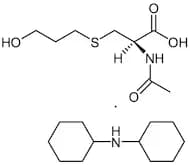
CAS:Formula:C15H16F3NO4Color and Shape:NeatMolecular weight:331.287N-Acetyl-S-(3-hydroxypropyl)-L-cysteine Dicyclohexylamine Salt (unlabelled)
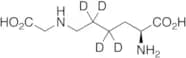
CAS:Controlled Product<p>Applications N-Acetyl-S-(3-hydroxypropyl)-L-cysteine Dicyclohexylamine Salt (unlabelled) (CAS# 14369-42-7) is a useful research compound.<br></p>Formula:C12H23N·C8H15NO4SColor and Shape:NeatMolecular weight:402.59Nε-(1-Carboxymethyl)-L-lysine-d4
CAS:Controlled Product<p>Stability Hygroscopic<br>Applications CEL and CML are two stable, nonenzymatic chemical modifications of protein lysine residues resulting from glycation and oxidation reactions.<br>References Fu, M.X., et al.: J. Biol. Chem., 271, 9982 (1996), Ahmed M.U., et al.: Biochem.J., 324, 565 (1997), Schleicher, E.D., et al.: J. Clin. Invest., 99, 457 (1997), Shibayama, R., et al.: Diabetes, 48, 1842 (1999),<br></p>Formula:C8H12D4N2O4Color and Shape:NeatMolecular weight:208.25



![1-[(3-methoxythien-2-yl)methyl]piperidine-4-carboxylic acid](/_next/image/?url=https%3A%2Fstatic.cymitquimica.com%2Fproducts%2F10%2Fthumb-webp%2FF518818.webp&w=3840&q=75)

![2-(3-Chlorophenyl)-2-[4-(4-fluorophenyl)piperazin-1-yl]acetic acid](/_next/image/?url=https%3A%2Fstatic.cymitquimica.com%2Fproducts%2F10%2Fthumb-webp%2FF300385.webp&w=3840&q=75)


![2-[4-(2-Methylpropenyl)phenyl]propionic Acid](/_next/image/?url=https%3A%2Fstatic.cymitquimica.com%2Fproducts%2FTR%2Fthumb-webp%2FM325929.webp&w=3840&q=75)
![4-{[1,1'-biphenyl]-4-carbonyl}-8-ethyl-1-oxa-4,8-diazaspiro[4.5]decane-3-carboxylic acid](/_next/image/?url=https%3A%2Fstatic.cymitquimica.com%2Fproducts%2F10%2Fthumb-webp%2FF525684.webp&w=3840&q=75)


![2,4,8,10-Tetraoxaspiro[5.5]undecane-3,9-diylbis(2-methylpropane-2,1-diyl) bis(3-(3-(tert-butyl)-4-…](/_next/image/?url=https%3A%2Fstatic.cymitquimica.com%2Fproducts%2FTR%2Fthumb-webp%2FT306005.webp&w=3840&q=75)
![7-(tert-Butoxycarbonyl)-5,6,7,8-tetrahydroimidazo[1,2-a]pyrazine-3-carboxylic acid](/_next/image/?url=https%3A%2Fstatic.cymitquimica.com%2Fproducts%2F10%2Fthumb-webp%2FF613619.webp&w=3840&q=75)
![2-(2,3-Dimethylphenyl)-2-[4-(4-fluorophenyl)piperazin-1-yl]acetic acid](/_next/image/?url=https%3A%2Fstatic.cymitquimica.com%2Fproducts%2F10%2Fthumb-webp%2FF300390.webp&w=3840&q=75)
![2-(4-(Benzo[d][1,3]dioxol-5-ylmethyl)piperazine-1-carbonyl)cyclohexane-1-carboxylic acid](/_next/image/?url=https%3A%2Fstatic.cymitquimica.com%2Fproducts%2F10%2Fthumb-webp%2FF729921.webp&w=3840&q=75)
![3-(2-(4-METHOXYPHENYLAMINO)BENZO[D]OXAZOL-5-YL)PROPANOIC ACID HCL](/_next/image/?url=https%3A%2Fstatic.cymitquimica.com%2Fproducts%2F10%2Fthumb-webp%2FF534865.webp&w=3840&q=75)
![4-(2,4-dimethylphenyl)-3H,4H,5H,6H,7H-imidazo[4,5-c]pyridine-6-carboxylic acid](/_next/image/?url=https%3A%2Fstatic.cymitquimica.com%2Fproducts%2F10%2Fthumb-webp%2FF522510.webp&w=3840&q=75)
![4-{[1,1'-biphenyl]-4-carbonyl}-8-methyl-1-oxa-4,8-diazaspiro[4.5]decane-3-carboxylic acid](/_next/image/?url=https%3A%2Fstatic.cymitquimica.com%2Fproducts%2F10%2Fthumb-webp%2FF525635.webp&w=3840&q=75)


![N-[(Benzyloxy)carbonyl]glycylglycine](/_next/image/?url=https%3A%2Fstatic.cymitquimica.com%2Fproducts%2FTR%2Fthumb-webp%2FB287100.webp&w=3840&q=75)

![5-(tert-Butoxycarbonyl)octahydrofuro[3,2-c]pyridine-7-carboxylic acid](/_next/image/?url=https%3A%2Fstatic.cymitquimica.com%2Fproducts%2F10%2Fthumb-webp%2FF601430.webp&w=3840&q=75)