Amino Acids (AA)
Amino acids (AAs) are the fundamental building blocks of proteins, playing a crucial role in various biological processes. These organic compounds are essential for protein synthesis, metabolic pathways, and cell signaling. In this category, you will find a comprehensive range of amino acids, including essential, non-essential, and modified forms, which are vital for research in biochemistry, molecular biology, and nutritional sciences. At CymitQuimica, we provide high-quality amino acids to support your research and development needs, ensuring accuracy and reliability in your experimental outcomes.
Subcategories of "Amino Acids (AA)"
- Amino Acid Derivatives(3,955 products)
- Amino Acid and Amino Acid Related Compounds(3,469 products)
- Amino Acids with Oxygen or Sulphur(168 products)
- Boc- Amino Acids(351 products)
- Fmoc Amino Acids(1,710 products)
Found 38260 products of "Amino Acids (AA)"
Sort by
Purity (%)
0
100
|
0
|
50
|
90
|
95
|
100
3-Chloromethyl-5-methylpyridine Hydrochloride
CAS:Controlled Product<p>Applications 3-Chloromethyl-5-methylpyridine is an intermediate in the synthesis of Rupatadine (R701650).<br>References Merlos, M., et al.: Pharmacol. Exp. Therap., 280, 114 (1997), Bell, I., et al.: J. Med. Chem., 41, 2146 (1998),<br></p>Formula:C7H8ClN·ClHColor and Shape:White To BeigeMolecular weight:178.06β-Alanine-2,2,3,3-D4
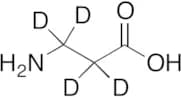
CAS:Controlled Product<p>Applications Isotope labelled β-Alanine is a naturally occurring beta amino acid. β-Alanine is formed in vivo by the degradation of dihydrouracil (D449990) and carnosine. β-Alanine is also the rate-limiting precursor of carnosine, as a result supplementation with β-alanine increases the concentration of carnosine in muscles.<br></p>Formula:C3D4H3NO2Color and Shape:NeatMolecular weight:93.12D-Homotyrosine Hydrobromide
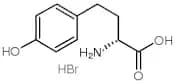
CAS:Controlled Product<p>Applications D-Homotyrosine hydrobromide<br></p>Formula:C10H13NO3·HBrColor and Shape:White To Off-WhiteMolecular weight:276.1274-(4-bromobenzoyl)-8-ethyl-1-oxa-4,8-diazaspiro[4.5]decane-3-carboxylic acid
CAS:Purity:95.0%Molecular weight:397.2690124511719Ac-lys(ac)-OH
CAS:Controlled Product<p>Applications Ac-lys(ac)-oh was used in the reaction of HOCl with amino acids and peptides with ESR evidence for rapid rearrangement and fragmentation reactions of nitrogen-centered radicals.<br>References Hawkins, C., et al.: J. Chem. Soc. Perkin Trans. 2, 9, 1937 (1998);<br></p>Formula:C10H18N2O4Color and Shape:NeatMolecular weight:237.768[4-(2-fluorophenyl)piperazin-1-yl](phenyl)acetic acid
CAS:Color and Shape:SolidMolecular weight:314.359985351563Fmoc N-Hydroxysuccinimide Ester
CAS:<p>Stability Moisture Sensitive<br>Applications Used in conjunction with Isothiocyanate to conduct partial Edman Degradation on biologically active peptides.<br> Not a dangerous good if item is equal to or less than 1g/ml and there is less than 100g/ml in the package<br>References Heidenreich, O., et al.: J. Biol. Chem., 269, 2131 (1994), Kothe, U., et al.: Anal. Biochem., 356, 148 (2006), Thakkar, A., et al.: Anal. Chem., 78, 5935 (2006),<br></p>Formula:C19H15NO5Color and Shape:NeatMolecular weight:337.33Bisphenol P Mono-β-D-glucuronide (>90%)
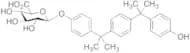
<p>Applications Bisphenol P Mono-β-D-glucuronide is a metabolite of Bisphenol P (B519475), which is a derivative of Bisphenol A (B519495), monomer used for policarbonate and epoxy resins.<br>References Krishnan, A.V., et al.: Endocrinology, 132, 2279 (1993); Steinmetz, R., et al.: Trends Endocrinol. Metab., 9, 124 (1998); Petersen, H., et al.: Eur. Food Res. Technol., 216, 355 (2003);<br></p>Formula:C30H34O8Purity:>90%Color and Shape:NeatMolecular weight:522.5862-Azido-2-deoxy-D-glucose
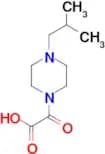
CAS:<p>Applications 2-Azido-2-deoxy-D-glucose is a glucose derivative that have been used to study the substrate specificity of galactokinase.<br>References Zou, W., et al.: Bioorg. Med. Chem. Lett., 22, 3540 (2012);<br></p>Formula:C6H11N3O5Color and Shape:White PowderMolecular weight:205.17(4-Isobutyl-piperazin-1-yl)-oxo-acetic acid
CAS:Purity:98.0%Color and Shape:SolidMolecular weight:214.26499938964844N-(Azetidin-3-yl)-N-methylacetamide Hydrochloride
CAS:Controlled Product<p>Applications N-(Azetidin-3-yl)-N-methylacetamide Hydrochloride (cas# 935668-15-8) is a useful research chemical.<br></p>Formula:C6H12N2O·HClColor and Shape:GreyMolecular weight:164.6334-(4-methyl-3-nitrobenzoyl)-8-propyl-1-oxa-4,8-diazaspiro[4.5]decane-3-carboxylic acid
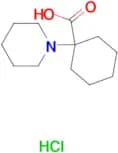
CAS:Purity:95.0%Molecular weight:391.424011230468751-(1-piperidinyl)cyclohexanecarboxylic acid hydrochloride
CAS:Purity:95.0%Molecular weight:247.75999450683594H-Pro-Glu-Oh
CAS:Controlled Product<p>Applications H-PRO-GLU-OH (cas# 67644-00-2) is a useful research chemical.<br></p>Formula:C10H16N2O5Color and Shape:NeatMolecular weight:244.2444-(2,3,4-trimethoxyphenyl)-3H,4H,5H,6H,7H-imidazo[4,5-c]pyridine-6-carboxylic acid
CAS:Purity:95.0%Molecular weight:333.3439941406252-((3-Oxocyclohex-1-enyl)amino)benzoic acid
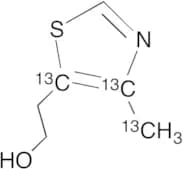
CAS:Formula:C13H13NO3Purity:98.0%Color and Shape:SolidMolecular weight:231.2514-Methyl-5-thiazoleethanol-13C3 (~90%)
CAS:Controlled Product<p>Applications 4-Methyl-5-thiazoleethanol-13C3 is used in the synthesis of novel HldE kinase inhibitors used against gram negative bacteria. Also used in the synthesis of potential antimalarial agents from bis-thiazolium analogues. Refer to M330235.<br> Not a dangerous good if item is equal to or less than 1g/ml and there is less than 100g/ml in the package<br>References Desroy, N. et al.: J. Med. CHem., 56, 1418 (2013); Caldarelli, S. et al.: J. Med. CHem., 496, (2013);<br></p>Formula:C3C3H9NOSPurity:~90%Color and Shape:NeatMolecular weight:146.1854-[3-(benzyloxy)-4-methoxyphenyl]-3H,4H,5H,6H,7H-imidazo[4,5-c]pyridine-6-carboxylic acid
CAS:Purity:95.0%Molecular weight:379.41598510742194-(2-fluorobenzoyl)-8-propyl-1-oxa-4,8-diazaspiro[4.5]decane-3-carboxylic acid
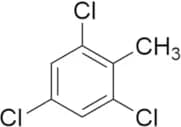
CAS:Purity:95.0%Molecular weight:350.39001464843751,3,5-Trichloro-2-methylbenzene
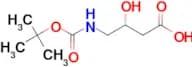
CAS:<p>Applications 1,3,5-Trichloro-2-methylbenzene can be used as reactant/reagent in hydrodechlorination process and catalysts for the production of 2,6-dichlorotoluene from polychlorotoluene-containing mixtures. Also, it is derived from 2,4,6-Trichlorobenzoic Acid (T774715), which is a possible degradation intermediate of Polychlorinated Biphenyls (PCBs) in contaminated soil, suggesting the occurrence of microbial transformation processes over time.<br> Not a dangerous good if item is equal to or less than 1g/ml and there is less than 100g/ml in the package<br>References Eichinger, W., et al.: PCT Int. Appl., WO 2001017932 A1 20010315 (2001); Stella, T., et al.: Sci Total Environ, 533, 177-186 (2015)<br></p>Formula:C7H5Cl3Color and Shape:White To Off-WhiteMolecular weight:195.47(R)-4-(BOC-AMINO)-3-HYDROXYBUTANOIC ACID
CAS:Purity:97.0%Color and Shape:SolidMolecular weight:219.236999511718753-Methylbutyric-2,2-d2 Acid
CAS:Controlled Product<p>Applications 3-Methylbutyric-2,2-d2 Acid (CAS# 95927-02-9) is a useful isotopically labeled research compound.<br></p>Formula:C5H8D2O2Color and Shape:NeatMolecular weight:104.158-ethyl-4-(3-methylbenzoyl)-1-oxa-4,8-diazaspiro[4.5]decane-3-carboxylic acid
CAS:Purity:95.0%Molecular weight:332.39999389648442-(3,4-Diethoxyphenyl)ethanamine
CAS:Controlled Product<p>Applications 2-(3,4-Diethoxyphenyl)ethanamine is a useful intermediate in the preparation of Drotaverine hydrochloride, an antispasmodic drug arising from papaverine class of biologically active compounds.<br>References Turks, M., et al.: Rigas Tehniskas Universitates Zinatniskie Raksti, Serija 1: Materialzinatne un Lietiska Kimija, 23, 107 (2011)<br></p>Formula:C12H19NO2Color and Shape:NeatMolecular weight:209.28Methyl 2,3,4-Tri-O-isobutyryl-D-glucopyranuronate
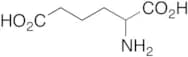
CAS:Controlled Product<p>Stability Temperature Sensitive<br>Applications Methyl 2,3,4-Tri-O-isobutyryl-D-glucopyranuronate (cas# 1190403-86-1) is a compound useful in organic synthesis.<br></p>Formula:C19H30O10Color and Shape:NeatMolecular weight:418.44rac α-Aminoadipic Acid
CAS:<p>Applications An amino acid isolated from Cholera vibrio.<br>References Windsor, et al.: J. Biol. Chem., 192, 595 (1951), Scott, A.I., et al.: Synth. Commun., 10, 127 (1980),<br></p>Formula:C6H11NO4Color and Shape:Off White PowderMolecular weight:161.164-(4-Chloro-2-methylphenoxy-d3)butyric Acid
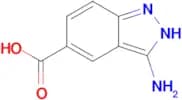
CAS:Controlled Product<p>Applications 4-(4-Chloro-2-methylphenoxy-d3)butyric Acid (CAS# 1219803-42-5) is a useful isotopically labeled research compound.<br></p>Formula:C11D3H10ClO3Color and Shape:White To Off-WhiteMolecular weight:231.6913-Amino-1H-indazole-5-carboxylic acid
CAS:Formula:C8H7N3O2Purity:95.0%Color and Shape:SolidMolecular weight:177.1638-benzyl-4-(2-fluorobenzoyl)-1-oxa-4,8-diazaspiro[4.5]decane-3-carboxylic acid
CAS:Purity:95.0%Molecular weight:398.43399047851563-(2,3-Dihydro-1H-indol-1-yl)propanoic acid
CAS:Formula:C11H13NO2Purity:95.0%Color and Shape:SolidMolecular weight:191.23(6R,7R)-7-Amino-8-oxo-3-(prop-1-en-1-yl)-5-thia-1-azabicyclo[4.2.0]oct-2-ene-2-carboxylic acid
CAS:Purity:95.0%Color and Shape:SolidMolecular weight:240.056863244Rac-(3ar,6ar)-octahydrocyclopenta[c]pyrrole-3a-carboxylic acid
CAS:Purity:98%Molecular weight:155.197006225585948-methyl-4-(4-methyl-3-nitrobenzoyl)-1-oxa-4,8-diazaspiro[4.5]decane-3-carboxylic acid
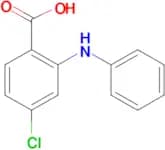
CAS:Purity:95.0%Molecular weight:363.36999511718754-Chloro-2-phenylamino-benzoic acid
CAS:Formula:C13H10ClNO2Purity:95.0%Color and Shape:SolidMolecular weight:247.68(4R,6S)-rel-5,6-Dihydro-4-hydroxy-6-methyl-4H-thieno[2,3-b]thiopyran-2-sulfonamide 7,7-Dioxide
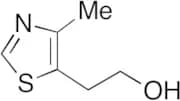
CAS:Controlled Product<p>Applications (4R,6S)-rel-5,6-Dihydro-4-hydroxy-6-methyl-4H-thieno[2,3-b]thiopyran-2-sulfonamide 7,7-Dioxide is used as a reactant in the preparation of Dorzolamide Hydrochloride (D535100), which is a carbonic anhydrase inhibitor; antiglaucoma agent.<br>References Lippa, E.A., et al.: Ophthalmology, 98, 308 (1991); Wang, R.-F., et al.: Arch. Ophthalmol., 109, 1297 (1991); Whikehart, D., et al.: J. Ocul. Pharmacol., 7, 195 (1991); Sjoquist, B., et al.: Drug Metab. Dispos., 26, 745 (1998);<br></p>Formula:C8H11NO5S3Color and Shape:NeatMolecular weight:297.374-Methyl-5-thiazoleethanol
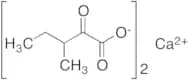
CAS:<p>Applications 4-Methyl-5-thiazoleethanol is used in the synthesis of novel HldE kinase inhibitors used against gram negative bacteria. Also used in the synthesis of potential antimalarial agents from bis-thiazolium analogues.<br> Not a dangerous good if item is equal to or less than 1g/ml and there is less than 100g/ml in the package<br>References Desroy, N. et al.: J. Med. CHem., 56, 1418 (2013); Caldarelli, S. et al.: J. Med. CHem., 496, (2013);<br></p>Formula:C6H9NOSColor and Shape:NeatMolecular weight:143.213-Methyl-2-oxovaleric acid calcium salt
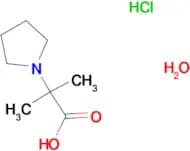
CAS:<p>Stability Hygroscopic<br>Applications 3-Methyl-2-oxovaleric acid calcium salt (cas# 66872-75-1) is a useful research chemical.<br></p>Formula:C6H9O3·CaColor and Shape:NeatMolecular weight:298.352-methyl-2-(1-pyrrolidinyl)propanoic acid hydrochloride hydrate
CAS:Purity:95.0%Color and Shape:SolidMolecular weight:211.69000244140625Ethyl 1-Thio-β-D-glucuronide
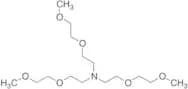
CAS:Controlled ProductFormula:C8H14O6SColor and Shape:NeatMolecular weight:654.615Tris(2-(2-methoxyethoxy)ethyl)amine
CAS:Controlled Product<p>Applications Tris(2-(2-methoxyethoxy)ethyl)amine (cas# 70384-51-9) is a useful research chemical.<br></p>Formula:C15H33NO6Color and Shape:NeatMolecular weight:323.432-[4-(4-Chlorophenyl)piperazin-1-yl]-2-(4-fluorophenyl)acetic acid
CAS:Molecular weight:348.79998779296875β-Alanine-13C3,15N
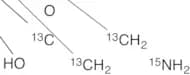
CAS:Controlled Product<p>Applications β-Alanine-13C3,15N is the isotope labeled analogue of β-Alanine (A637320), which is a naturally occurring beta amino acid. β-Alanine is formed in vivo by the degradation of Dihydro Uracil (D449990) and Carnosine. β-Alanine is also the rate-limiting precursor of Carnosine, as a result supplementation with β-Alanine increases the concentration of Carnosine in muscles.<br>References Derave, W. et al.: J. Appl. Physiol., 103, 1736 (2007); Xia, J.-F. et al.: J. Chrom. B Anal. Technol. Biomed. Life Sci., 977, 1930 (2009); Artioli, G.G. et al.: Med. Sci. Sports Exer.,42, 1162 (2010);<br></p>Formula:C3H715NO2Color and Shape:NeatMolecular weight:93.062-Methyl-4-nitroaniline-d3
CAS:Controlled Product<p>Applications A red azoic dye.<br> Not a dangerous good if item is equal to or less than 1g/ml and there is less than 100g/ml in the package<br>References Hoover, K., et al.: Chem. Res. Toxicol., 18, 1497 (2005), Altenburger, R., et al.: Environ. Toxicol. Chem., 24, 324 (2005), Gonzalez, M., et al.: Bioorg. Med. Chem., 13, 1775 (2005),<br></p>Formula:C7H5D3N2O2Color and Shape:NeatMolecular weight:155.17


![4-(4-bromobenzoyl)-8-ethyl-1-oxa-4,8-diazaspiro[4.5]decane-3-carboxylic acid](/_next/image/?url=https%3A%2Fstatic.cymitquimica.com%2Fproducts%2F10%2Fthumb-webp%2FF525691.webp&w=3840&q=75)


acetic acid](/_next/image/?url=https%3A%2Fstatic.cymitquimica.com%2Fproducts%2F10%2Fthumb-webp%2FF300215.webp&w=3840&q=75)



![4-(4-methyl-3-nitrobenzoyl)-8-propyl-1-oxa-4,8-diazaspiro[4.5]decane-3-carboxylic acid](/_next/image/?url=https%3A%2Fstatic.cymitquimica.com%2Fproducts%2F10%2Fthumb-webp%2FF525734.webp&w=3840&q=75)

![4-(2,3,4-trimethoxyphenyl)-3H,4H,5H,6H,7H-imidazo[4,5-c]pyridine-6-carboxylic acid](/_next/image/?url=https%3A%2Fstatic.cymitquimica.com%2Fproducts%2F10%2Fthumb-webp%2FF522519.webp&w=3840&q=75)

![4-[3-(benzyloxy)-4-methoxyphenyl]-3H,4H,5H,6H,7H-imidazo[4,5-c]pyridine-6-carboxylic acid](/_next/image/?url=https%3A%2Fstatic.cymitquimica.com%2Fproducts%2F10%2Fthumb-webp%2FF522502.webp&w=3840&q=75)

![4-[(4-PHENYLQUINAZOLIN-2-YL)AMINO]BENZOIC ACID](/_next/image/?url=https%3A%2Fstatic.cymitquimica.com%2Fproducts%2F10%2Fthumb-webp%2FF531237.webp&w=3840&q=75)
![4-(2-fluorobenzoyl)-8-propyl-1-oxa-4,8-diazaspiro[4.5]decane-3-carboxylic acid](/_next/image/?url=https%3A%2Fstatic.cymitquimica.com%2Fproducts%2F10%2Fthumb-webp%2FF525729.webp&w=3840&q=75)

![8-ethyl-4-(3-methylbenzoyl)-1-oxa-4,8-diazaspiro[4.5]decane-3-carboxylic acid](/_next/image/?url=https%3A%2Fstatic.cymitquimica.com%2Fproducts%2F10%2Fthumb-webp%2FF525702.webp&w=3840&q=75)



![8-benzyl-4-(2-fluorobenzoyl)-1-oxa-4,8-diazaspiro[4.5]decane-3-carboxylic acid](/_next/image/?url=https%3A%2Fstatic.cymitquimica.com%2Fproducts%2F10%2Fthumb-webp%2FF525804.webp&w=3840&q=75)

![(6R,7R)-7-Amino-8-oxo-3-(prop-1-en-1-yl)-5-thia-1-azabicyclo[4.2.0]oct-2-ene-2-carboxylic acid](/_next/image/?url=https%3A%2Fstatic.cymitquimica.com%2Fproducts%2F10%2Fthumb-webp%2FF243052.webp&w=3840&q=75)
![Rac-(3ar,6ar)-octahydrocyclopenta[c]pyrrole-3a-carboxylic acid](/_next/image/?url=https%3A%2Fstatic.cymitquimica.com%2Fproducts%2F10%2Fthumb-webp%2FF661542.webp&w=3840&q=75)
![8-methyl-4-(4-methyl-3-nitrobenzoyl)-1-oxa-4,8-diazaspiro[4.5]decane-3-carboxylic acid](/_next/image/?url=https%3A%2Fstatic.cymitquimica.com%2Fproducts%2F10%2Fthumb-webp%2FF525643.webp&w=3840&q=75)
![(4R,6S)-rel-5,6-Dihydro-4-hydroxy-6-methyl-4H-thieno[2,3-b]thiopyran-2-sulfonamide 7,7-Dioxide](/_next/image/?url=https%3A%2Fstatic.cymitquimica.com%2Fproducts%2FTR%2Fthumb-webp%2FD678970.webp&w=3840&q=75)



![2-[4-(4-Chlorophenyl)piperazin-1-yl]-2-(4-fluorophenyl)acetic acid](/_next/image/?url=https%3A%2Fstatic.cymitquimica.com%2Fproducts%2F10%2Fthumb-webp%2FF300204.webp&w=3840&q=75)