Amino Acids (AA)
Amino acids (AAs) are the fundamental building blocks of proteins, playing a crucial role in various biological processes. These organic compounds are essential for protein synthesis, metabolic pathways, and cell signaling. In this category, you will find a comprehensive range of amino acids, including essential, non-essential, and modified forms, which are vital for research in biochemistry, molecular biology, and nutritional sciences. At CymitQuimica, we provide high-quality amino acids to support your research and development needs, ensuring accuracy and reliability in your experimental outcomes.
Subcategories of "Amino Acids (AA)"
- Amino Acid Derivatives(3,955 products)
- Amino Acid and Amino Acid Related Compounds(3,466 products)
- Amino Acids with Oxygen or Sulphur(168 products)
- Boc- Amino Acids(351 products)
- Fmoc Amino Acids(1,710 products)
Found 38249 products of "Amino Acids (AA)"
Sort by
Purity (%)
0
100
|
0
|
50
|
90
|
95
|
100
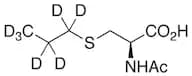
N-Acetyl-S-(propyl-d7)-L-cysteine
CAS:Controlled ProductFormula:C8D7H8NO3SColor and Shape:Off-WhiteMolecular weight:212.328-ethyl-4-(4-methylbenzoyl)-1-oxa-4,8-diazaspiro[4.5]decane-3-carboxylic acid
CAS:Purity:95.0%Molecular weight:332.3999938964844L,L-Dityrosine Dihydrochloride
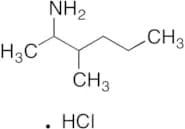
CAS:Controlled Product<p>Stability Hygroscopic<br>Applications Dityrosine (DY), a tyrosine dimer formed by 3,3’-biaryl bond formation can be used as a biomarker to detect oxidative protein damage and selective proteolysis. Fluorescence intensity decays of Dityrosine are generally characterized by two decay components, one with a lifetime in the range of 150 to 800 ps and another between 2.5 and 4.5 ns.<br>References Libertini, L., et al.: Biophys. J., 47, 765 (1985), Huggins, T., et al.: J. Biol. Chem., 268, 12341 (1993), Malencik, D., et al.: Biochemistry, 35, 4375 (1996),<br></p>Formula:C18H20N2O6·2ClHColor and Shape:NeatMolecular weight:433.283-Methyl-2-hexanamine Hydrochloride Salt
CAS:<p>Applications 3-Methyl-2-hexanamine HCl Salt is more stable and easier to purify compared to the free base.<br></p>Formula:C7H17N·HClColor and Shape:Off-White To BeigeMolecular weight:115.2236461-Methylimidazole
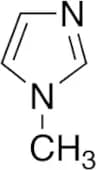
CAS:Controlled Product<p>Stability Hygroscopic<br>Applications A metabolite of 1-methyl-2-thioimidazole (methimazole). It inhibits bone resorption.<br> Not a dangerous good if item is equal to or less than 1g/ml and there is less than 100g/ml in the package<br>References Paterson, J.R., et al.: Biochem. Biophys. Res. Comm., 116, 449 (1983), Taurog, A., et al.: Endocrinology, 124, 30 (1989).<br></p>Formula:C4H6N2Color and Shape:Colourless To Light YellowMolecular weight:82.101-Methyl-4-nitro-1H-imidazole-5-carboxylic Acid
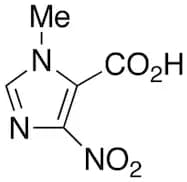
CAS:Controlled Product<p>Applications A derivative of imidazole used in the synthesis of heteroxanthine.<br>References Sarasin, J., et al.: Helv. Chim. Acta, 7, 713 (1924),<br></p>Formula:C5H5N3O4Color and Shape:NeatMolecular weight:171.112-Fluoro-3-methoxyphenylboronic acid
CAS:Controlled Product<p>Applications 2-Fluoro-3-methoxyphenylboronic acid<br></p>Formula:C7H8BFO3Color and Shape:NeatMolecular weight:169.951,2-Cyclohexanedicarboxylic Acid Mono 4-Methyloctyl Ester
CAS:<p>Applications 1,2-Cyclohexanedicarboxylic Acid Mono 4-Methyloctan-1-ol Ester is a possible metabolite of the di(isononyl)cyclohexane-1,2-dicarboxylate (DINCH) monoester (MINCH).<br>References Koch, H., et al.: Arch. Toxicol., 87, 799 (2013)<br></p>Formula:C17H30O4Color and Shape:NeatMolecular weight:298.422-Methylbutyrylglycine
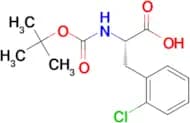
CAS:Controlled Product<p>Applications 2-Methylbutyrylglycine is one of the acylglycines, an important class of metabolites that have been used in the diagnosis of several “inborn errors of metabolism” (IEM).<br>References Costa, C., et al.: J. Pharmaceut. Biomed. Anal., 21, 1215 (2000), Garcia-Villoria, J., et al.: Clin. Biochem., 42, 2 (2009), Scalbert, A., et al.: Metabolomics, 5, 435 (2009),<br></p>Formula:C7H13NO3Color and Shape:NeatMolecular weight:159.18Boc-2-chloro-L-phenylalanine
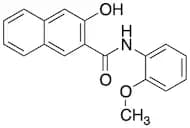
CAS:Formula:C14H18ClNO4Purity:98%Color and Shape:SolidMolecular weight:299.753-Hydroxy-2'-methoxy-2-naphthanilide
CAS:Controlled Product<p>Applications 3-Hydroxy-2'-methoxy-2-naphthanilide (cas# 135-62-6) is a useful research chemical.<br></p>Formula:C18H15NO3Color and Shape:NeatMolecular weight:293.31N-[(9H-Fluoren-9-ylmethoxy)carbonyl]-N-methyl-L-alloisoleucine
CAS:Controlled Product<p>Applications N-[(9H-Fluoren-9-ylmethoxy)carbonyl]-N-methyl-L-alloisoleucine, is a building block used in the synthesis of Ecumicin, which is a the potent anti-mycobacterial cyclic depsipeptide natural product.<br>References Hawkins, P. et al.: Organic Letters, Vol. 20, P: 1019-1022 (2018)<br></p>Formula:C22H25NO4Color and Shape:NeatMolecular weight:367.441-[6-(methylsulfonyl)-1,3-benzothiazol-2-yl]azetidine-3-carboxylic acid
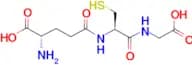
CAS:Purity:95.0%Molecular weight:312.3599853515625L-Glutathione (reduced form)
CAS:Formula:C10H17N3O6SPurity:98.0%Color and Shape:PowderMolecular weight:307.32N-Methyltaurine Sodium Salt (>50% in Water)
CAS:Controlled Product<p>Applications N-Methyltaurine Sodium Salt is used in the analysis of the changing properties of anionic surfactants and the development of new skin cleansers or soaps. It is the salt of N-Methyltaurine, a compound used in sperm cryopreservation studies. N-Methyltaurine is also used in the studies relating to effects on oxidative damage to erythrocytes via phenylhydrazine.<br> Not a dangerous good if item is equal to or less than 1g/ml and there is less than 100g/ml in the package<br>References Pokhrel, P.K. et al.: Adv. Exp. Med. Biol., 483, 503 (2000); Miyahara, R. et al.: Fragr. J., 28, 11 (2000); Garde, J.J. et al.: Bio. Repro., 69, 602 (2003);<br></p>Formula:C3H8NO3S·NaColor and Shape:ColourlessMolecular weight:161.16D-Arginine
CAS:Controlled Product<p>Applications D-Arginine is an unnatural isomer of L-Arginine (A769505), and is used to inhibit glutamate-induced nitric oxide production in rats. Derivatives of D-Arginine are used for pharmaceutical purposes, one example is 1-Deamino-8-D-arginine vasopressin, which is used to treat various bleeding disorders.<br>References Castellano, M., et al.: Neurosci. Lett., 314, 127 (2001); Kobrinsky, N., et al.: Lancet, 323, 1145 (1984); Weyrich, A., et al.: Circulation, 86, 279 (1992)<br></p>Formula:C6H14N4O2Color and Shape:NeatMolecular weight:174.20L-Lysine L-Malate
CAS:Controlled Product<p>Applications L-Lysine L-Malate is used in the preparation of amino acid ionic liquids for use in food and medical field.<br></p>Formula:C6H14N2O2·C4H6O5Color and Shape:NeatMolecular weight:280.27N-Boc-L-cis-4,5-Methanoprolineamide
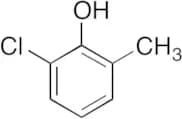
CAS:Controlled Product<p>Applications N-Boc-L-cis-4,5-Methanoprolineamide is an intermediate used to prepare methanoprolinenitrile-contg. dipeptide mimetics as DPP-IV inhibitors and as antidiabetic agents.<br>References Magnin, D., et al.: J. Med. Chem., 47, 2587 (2004)<br></p>Formula:C11H18N2O3Color and Shape:NeatMolecular weight:226.2722-Chloro-6-methylphenol
CAS:Controlled ProductFormula:C7H7ClOColor and Shape:NeatMolecular weight:142.58(R)-D-Methioninol
CAS:Controlled Product<p>Applications (R)-D-Methioninol<br></p>Formula:C5H13NOSColor and Shape:NeatMolecular weight:135.235-Aminolevulinic Acid Methyl Ester Hydrochloride
CAS:Controlled Product<p>Applications 5-Aminolevulinic Acid Methyl Ester Hydrochloride, is the methyl ester of Aminolevulinic Acid (ALA) (A611780), which has been shown to have higher lipophilicity, and to be highly efficient at inducing protoporphyrin IX (PpIX) production in cell culture.<br>References Morrow, D. I. J., et al.: J. Pharmac. Sci., 99, 3486 (2010); Peng, Q., et al.: Cancer, 79, 2282 (1997);<br></p>Formula:C6H11NO3·HClColor and Shape:NeatMolecular weight:181.628-ethyl-4-(2-phenylbutanoyl)-1-oxa-4,8-diazaspiro[4.5]decane-3-carboxylic acid
CAS:Purity:95.0%Molecular weight:360.45401000976562-(1-Methyl-1H-imidazol-5-yl)acetic Acid Hydrochloride
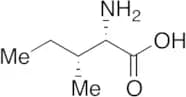
CAS:Controlled ProductFormula:C6H8N2O2·HClColor and Shape:NeatMolecular weight:176.601L-Allo-isoleucine
CAS:Controlled Product<p>Applications L-alloisoleucine is a stereo-isomer of L-isoleucine (I820175) and is produced as a byproduct of isoleucine via transamination. L-allo-isoleucine has been suggested to induce epithelial β-defensin expression. In addition, L-allo-isoleucine is utilized in the biosynthesis pathway for coronamic acid.<br>References Fehlbaum, P., et al.: Proc. Natl. Acad. Sci. USA 97, 12723 (2000); Parry, R. J., et al.: J. Am. Chem. Soc. 113, 1849 (1991)<br></p>Formula:C6H13NO2Color and Shape:NeatMolecular weight:131.171'-(tert-Butoxycarbonyl)-[1,4'-bipiperidine]-3-carboxylic acid
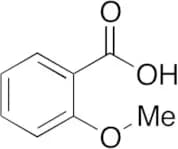
CAS:Purity:98+%Molecular weight:312.41000366210942-Methoxybenzoic Acid
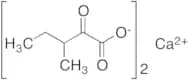
CAS:Controlled Product<p>Applications 2-Methoxybenzoic Acid is used in the preparation of benzohydroxamic acids as potent and selective anti-hepatitis C virus (HCV) agents.<br>References Kozlov, M.V., et al.: Bioorg. Med. Chem. Lett., 23, 5936 (2013)<br></p>Formula:C8H8O3Color and Shape:Off-WhiteMolecular weight:152.153-Methyl-2-oxovaleric acid calcium salt
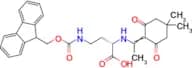
CAS:<p>Stability Hygroscopic<br>Applications 3-Methyl-2-oxovaleric acid calcium salt (cas# 66872-75-1) is a useful research chemical.<br></p>Formula:C6H9O3·CaColor and Shape:NeatMolecular weight:298.35(S)-4-((((9H-Fluoren-9-yl)methoxy)carbonyl)amino)-2-((1-(4,4-dimethyl-2,6-dioxocyclohexylidene)ethyl)amino)butanoic acid
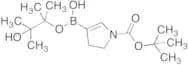
CAS:Purity:97%Molecular weight:504.58300781251-BOC-2,3-Dihydropyrrole-4-boronic acid, pinacol ester
CAS:Controlled Product<p>Applications 1-BOC-2,3-Dihydropyrrole-4-boronic acid, pinacol ester is a useful research chemical for organic synthesis and other chemical processes.<br>References Lewis, R. T., et al.: From PCT Int. Appl. (2017), WO 2017004359 A1 20170105<br></p>Formula:C15H26BNO4Color and Shape:White To Off-WhiteMolecular weight:295.1824-(2-Hydroxy-phenyl)-4,5,6,7-tetrahydro-1H-imidazo[4,5-c]pyridine-6-carboxylic acid
CAS:Purity:95.0%Molecular weight:259.26501464843752-methyl-1-[4-(trifluoromethyl)phenyl]propan-1-one
CAS:Controlled Product<p>Applications 2-methyl-1-[4-(trifluoromethyl)phenyl]propan-1-one (cas# 64436-58-4) is a useful research chemical.<br></p>Formula:C11H11OF3Color and Shape:NeatMolecular weight:216.192-Methoxy-4-nitroaniline
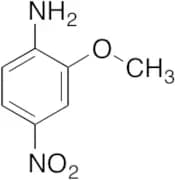
CAS:<p>Applications 2-Methoxy-4-nitroaniline is a derivative of 4-Nitroaniline (N491770), which is used in the synthesis of photorefractive polymers, as novel chromophores in analytical study. As well, due to the absorption spectrum associated with 4-Nitroaniline, it is used to determine catechol derivatives in syntheses.<br>References Nagaraja, P. et al.: J. Pharm. Biomed. Anal., 25, 417 (2001);<br></p>Formula:C7H8N2O3Color and Shape:YellowMolecular weight:168.153-(2-Methoxy-5-methylphenyl)-3-phenyl-propanoic Acid
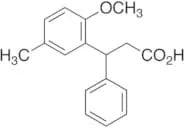
CAS:Controlled Product<p>Applications 3-(2-Methoxy-5-methylphenyl)-3-phenyl-propanoic Acid (cas# 109089-77-2) is a compound useful in organic synthesis.<br></p>Formula:C17H18O3Color and Shape:NeatMolecular weight:270.321-(3-Methyl-1-phenyl-1H-pyrazol-5-yl)piperazine
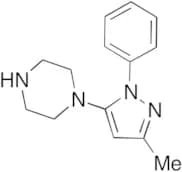
CAS:Controlled Product<p>Applications 1-(3-Methyl-1-phenyl-1H-pyrazol-5-yl)piperazine is an intermediate used to prepare nonracemic γ-bicyclic heteroarylpiperazine- and heteroarylpiperidine-substituted prolinylthiazolidines as selective and orally active dipeptidylpeptidase 4 inhibitors for use as antidiabetic agents.<br>References Yoshida, T., et al.: Bioorg. Med. Chem., 20, 5705 (2012)<br></p>Formula:C14H18N4Color and Shape:NeatMolecular weight:242.323-Chloro-2-methyl-1-propene
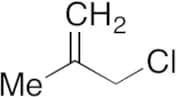
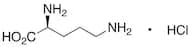
CAS:<p>Applications 3-Chloro-2-methyl-1-propene has been used in the synthesis of 2-S-substituted pyrimidines as antimetabolites of nucleic acid precursors for cancer therapy.<br> Not a dangerous good if item is equal to or less than 1g/ml and there is less than 100g/ml in the package<br>References Kaldrikyan, M.A., Melik-Ohanjanyan, R.G.: Hayastani Kimiakan Handes, 67, 321 (2014)<br></p>Formula:C4H7ClColor and Shape:NeatMolecular weight:90.55L-Ornithine Hydrochloride
CAS:Controlled Product<p>Stability Hygroscopic<br>Applications L-Ornithine is a non-essential amino acid for human development but is required intermediate in arginine biosynthesis. L-Ornithine is found in virtually all vertebrate tissues as well as incorporated into proteins, such as tyrocidine. Isolation from chicken excreta.<br>References Fattori, D., et al.: J. Med. Chem., 50, 550 (2007), Gomez-Alonso, S., et al.: J. Agric. Food Chem., 55, 608 (2007), Subramaniam, R., et al.: Bioorg. Med. Chem. Lett., 18, 3333 (2008),<br></p>Formula:C5H12N2O2·ClHColor and Shape:White To Off-WhiteMolecular weight:168.624,6,7,8-Tetrahydro-8-hydroxy-6-methylpyrimido[1,2-a]purin-10(3H)-one (Mixture of Diastereomers)
CAS:Controlled Product<p>Applications Cyclic propano guanine adduct DNA acetaldehyde histone.<br>References Nath, R., et al.: Cancer Res., 58, 581 (1998), Wang, M., et al.: Chem. Res., 13, 1065 (2000), Terashima, I., et al.: Biochemistry, 40, 4106 (2001), Yokoyama, A., et al.: Carcinogenesis, 23, 1851 (2002),<br></p>Formula:C9H11N5O2Color and Shape:Off-WhiteMolecular weight:221.225-Bromo-2-(2-methyl-2H-tetrazol-5-yl)pyridine
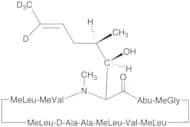
CAS:Controlled Product<p>Applications 5-Bromo-2-(2-methyl-2H-tetrazol-5-yl)pyridine is a reagent in the synthesis and structure-activity relationship studies of highly potent novel benzoxazinyl-oxazolidinone which is an antibacterial agent. Benzoxazinyl-oxazolidinone had potent activity against Gram-positive pathogens. 5-Bromo-2-(2-methyl-2H-tetrazol-5-yl)pyridine is also an intermediate in the synthesis of Tedizolid (T013750).<br>References Xin, Q., et al.: J. Med. Chem., 54, 7493 (2011)<br></p>Formula:C7H6BrN5Color and Shape:NeatMolecular weight:240.06Cyclosporin A-d4 (Major)
CAS:Controlled Product<p>Applications An immunosuppressant that has revolutionized organ transplantation through its use in the prevention of graft rejection.A group of nonpolar cyclic oligopeptides with immunosupppressant activity.<br>References van Wartburg, A., et al.: Prog. Med. Chem., 25, 1 (1988), Jorgensen, K.A., et al.: Scand. J. Imunol., 57, 93 (2003), Vollenbroeker, et al.: Transplant. Proc., 37, 1741 (2005),<br></p>Formula:C62H107D4N11O12Color and Shape:NeatMolecular weight:1206.66Nateglinide-d5
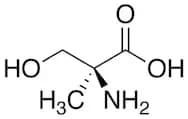
CAS:Controlled Product<p>Applications A labelled version of Nateglinide, an amino-acid derivative that stimulates insulin secretion which is used as an antidiabetic.<br>References Shinkai, H., et al.: J. Med. Chem., 32, 1436 (1989), Sato, Y., et al.: Diabetes Res. Clin. Pract., 12, 53 (1991), Vicent, D., et al.: J. Clin. Invest., 111, 1373 (2003), Ceriello, A., et al.: Diabet. Med., 21, 171 (2004),<br></p>Formula:C192H5H22NO3Color and Shape:NeatMolecular weight:322.45α-Methyl-L-serine
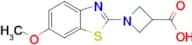
CAS:<p>Applications A potential chiral building blocks for the synthesis of different α -methyl α -amino acids.<br>References Rew, Y., et al.: J. Med. Chem., 45, 3746 (2002),<br></p>Formula:C4H9NO3Color and Shape:Off-WhiteMolecular weight:119.1191-(6-methoxy-1,3-benzothiazol-2-yl)azetidine-3-carboxylic acid
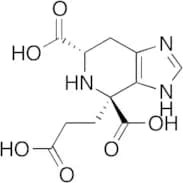
CAS:Purity:95.0%Molecular weight:264.29998779296875Cucumopine
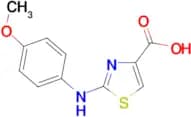
CAS:Controlled Product<p>Applications Cucumopine is used in biological studies to evaluate Agrobacterium rhizogenes cucumopine strain T-DNA ORF8 and its effects on transgenic tobacco root cultures.<br>References Bonfill, M., et al.: Curr. Top. Plant Biol., 3, 223 (2002);<br></p>Formula:C11H13N3O6Color and Shape:NeatMolecular weight:283.242-(4-Methoxy-phenylamino)-thiazole-4-carboxylic acid
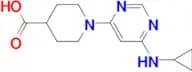
CAS:Formula:C11H10N2O3SPurity:95.0%Color and Shape:SolidMolecular weight:250.271-(6-Cyclopropylamino-pyrimidin-4-yl)-piperidine-4-carboxylic acid
CAS:Purity:95.0%Molecular weight:262.31298828125(3aS,4S,6R,6aR)-6-(6-Amino-2-chloro-9H-purin-9-yl)-2,2-dimethyltetrahydrofuro[3,4-d][1,3]dioxole-4-carboxylic acid
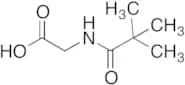
CAS:Purity:97.0%Molecular weight:355.739990234375N-Pivaloylglycine
CAS:Controlled Product<p>Applications N-Pivaloylglycine is used in the biological study between dogs and rats. In a high dose toxicity study of pivalic acid (PA), PA caused skeletal muscle disorder in dog, and a significant increase of pivaloyl carnitine (PC) was observed in canine muscle, but not in rat muscle.<br>References Yamaguchi, T., et al.: Toxicol. Appl. Pharmacol., 214, 61-68 (2006)<br></p>Formula:C7H13NO3Color and Shape:NeatMolecular weight:159.18

![8-ethyl-4-(4-methylbenzoyl)-1-oxa-4,8-diazaspiro[4.5]decane-3-carboxylic acid](/_next/image/?url=https%3A%2Fstatic.cymitquimica.com%2Fproducts%2F10%2Fthumb-webp%2FF525674.webp&w=3840&q=75)




![N-[(9H-Fluoren-9-ylmethoxy)carbonyl]-N-methyl-L-alloisoleucine](/_next/image/?url=https%3A%2Fstatic.cymitquimica.com%2Fproducts%2FTR%2Fthumb-webp%2FF588715.webp&w=3840&q=75)
![1-[6-(methylsulfonyl)-1,3-benzothiazol-2-yl]azetidine-3-carboxylic acid](/_next/image/?url=https%3A%2Fstatic.cymitquimica.com%2Fproducts%2F10%2Fthumb-webp%2FF495394.webp&w=3840&q=75)






![8-ethyl-4-(2-phenylbutanoyl)-1-oxa-4,8-diazaspiro[4.5]decane-3-carboxylic acid](/_next/image/?url=https%3A%2Fstatic.cymitquimica.com%2Fproducts%2F10%2Fthumb-webp%2FF525680.webp&w=3840&q=75)

![1'-(tert-Butoxycarbonyl)-[1,4'-bipiperidine]-3-carboxylic acid](/_next/image/?url=https%3A%2Fstatic.cymitquimica.com%2Fproducts%2F10%2Fthumb-webp%2FF736450.webp&w=3840&q=75)
![4-(2-Hydroxy-phenyl)-4,5,6,7-tetrahydro-1H-imidazo[4,5-c]pyridine-6-carboxylic acid](/_next/image/?url=https%3A%2Fstatic.cymitquimica.com%2Fproducts%2F10%2Fthumb-webp%2FF055093.webp&w=3840&q=75)
![2-methyl-1-[4-(trifluoromethyl)phenyl]propan-1-one](/_next/image/?url=https%3A%2Fstatic.cymitquimica.com%2Fproducts%2FTR%2Fthumb-webp%2FB489000.webp&w=3840&q=75)
![4,6,7,8-Tetrahydro-8-hydroxy-6-methylpyrimido[1,2-a]purin-10(3H)-one (Mixture of Diastereomers)](/_next/image/?url=https%3A%2Fstatic.cymitquimica.com%2Fproducts%2FTR%2Fthumb-webp%2FT293685.webp&w=3840&q=75)


![(3aS,4S,6R,6aR)-6-(6-Amino-2-chloro-9H-purin-9-yl)-2,2-dimethyltetrahydrofuro[3,4-d][1,3]dioxole-4…](/_next/image/?url=https%3A%2Fstatic.cymitquimica.com%2Fproducts%2F10%2Fthumb-webp%2FF053671.webp&w=3840&q=75)