Amino Acids (AA)
Amino acids (AAs) are the fundamental building blocks of proteins, playing a crucial role in various biological processes. These organic compounds are essential for protein synthesis, metabolic pathways, and cell signaling. In this category, you will find a comprehensive range of amino acids, including essential, non-essential, and modified forms, which are vital for research in biochemistry, molecular biology, and nutritional sciences. At CymitQuimica, we provide high-quality amino acids to support your research and development needs, ensuring accuracy and reliability in your experimental outcomes.
Subcategories of "Amino Acids (AA)"
- Amino Acid Derivatives(3,957 products)
- Amino Acid and Amino Acid Related Compounds(3,472 products)
- Amino Acids with Oxygen or Sulphur(168 products)
- Boc- Amino Acids(351 products)
- Fmoc Amino Acids(1,710 products)
Found 38265 products of "Amino Acids (AA)"
Sort by
Purity (%)
0
100
|
0
|
50
|
90
|
95
|
100
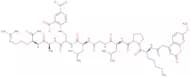
Mca-Lys-Pro-Leu-Gly-Leu-Dap (Dnp)-Ala-Arg-NH2 trifluoroacetate salt
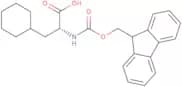
CAS:<p>Please enquire for more information about Mca-Lys-Pro-Leu-Gly-Leu-Dap (Dnp)-Ala-Arg-NH2 trifluoroacetate salt including the price, delivery time and more detailed product information at the technical inquiry form on this page</p>Formula:C55H80N16O16Purity:Min. 95%Molecular weight:1,221.32 g/molFmoc-β-cyclohexyl-D-alanine
CAS:<p>Fmoc-beta-cyclohexyl-D-alanine is a fragment of the cyclic peptide cyclohexylalanine and has been shown to inhibit cell growth in culture. It binds to DNA in a transcriptional manner and induces apoptosis, which is characterized by dna fragmentation. Fmoc-beta-cyclohexyl-D-alanine also inhibits extracellular signal-regulated kinase (ERK) activity, leading to reduced expression of antiapoptotic proteins such as Bcl2 and BclXL. This drug has been shown to induce apoptosis in cells that have been transfected with an antiapoptotic vector.</p>Formula:C24H27NO4Purity:Min. 95%Molecular weight:393.48 g/molApelin-36 (1-16) amide (human) trifluoroacetate salt
CAS:<p>Please enquire for more information about Apelin-36 (1-16) amide (human) trifluoroacetate salt including the price, delivery time and more detailed product information at the technical inquiry form on this page</p>Formula:C74H117N27O20Purity:Min. 95%Molecular weight:1,704.89 g/molH-Arg(Pmc)-2-chlorotrityl resin (200-400 mesh)
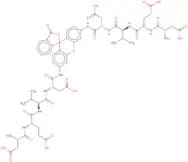
<p>Please enquire for more information about H-Arg(Pmc)-2-chlorotrityl resin (200-400 mesh) including the price, delivery time and more detailed product information at the technical inquiry form on this page</p>Purity:Min. 95%(H-Asp-Glu-Val-Asp)2-Rhodamine 110 trifluoroacetate salt
CAS:<p>Please enquire for more information about (H-Asp-Glu-Val-Asp)2-Rhodamine 110 trifluoroacetate salt including the price, delivery time and more detailed product information at the technical inquiry form on this page</p>Formula:C56H66N10O23Purity:Min. 95%Molecular weight:1,247.18 g/mol4-[4-(4-Methyloxy-phenyl)-piperazin-1-yl]-phenylamine
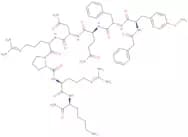
CAS:<p>4-Methyloxy-phenyl)-piperazin-1-yl]-phenylamine is an organic compound that has a reactive silicon group. It contains two phenyl groups, one of which is attached to the silicon. This compound exhibits phase equilibrium in water and can be used as a monomer for fabricating inorganic materials with orderly patterns, such as glass and metal oxides. This product also has impurities and can be grown at different rates depending on the conditions, such as temperature. The optical properties of 4-methyloxy-phenyl)-piperazin-1-yl]-phenylamine are dependent on its environment and it has been shown to have exothermic properties when reacting with iron powder.</p>Formula:C17H21N3OPurity:Min. 95%Molecular weight:283.37 g/mol(Phenylac 1,D-Tyr(Me)2,Arg6·8,Lys-NH29)-Vasopressin
CAS:<p>Please enquire for more information about (Phenylac 1,D-Tyr(Me)2,Arg6·8,Lys-NH29)-Vasopressin including the price, delivery time and more detailed product information at the technical inquiry form on this page</p>Formula:C59H86N18O12Purity:Min. 95%Molecular weight:1,239.43 g/molH-Glu(OtBu)-2-chlorotrityl resin (200-400 mesh) (Low Substitution)
<p>Please enquire for more information about H-Glu(OtBu)-2-chlorotrityl resin (200-400 mesh) (Low Substitution) including the price, delivery time and more detailed product information at the technical inquiry form on this page</p>Purity:Min. 95%H-Gly-Arg-Ala-Asp-Ser-Pro-Lys-OH acetate salt
CAS:<p>Glycine-arginine-aspartate (GAA) is a mimic of the endothelium-derived vasoactive peptide, nitric oxide (NO). It has been shown to attenuate the inflammatory response by decreasing leukocyte adhesion and migration. GAA is also a potent inhibitor of vascular permeability and can attenuate edema in animal models. Studies have shown that GAA prevents microvascular damage following brain infarction. The mechanism of action for GAA is not fully understood, but it may be due to its ability to inhibit fibronectin breakdown, which leads to cerebral edema. GAA's activity on the endothelium may be due to its ability to mimic NO or inhibit sulfate synthesis.</p>Formula:C29H51N11O11Purity:Min. 95%Molecular weight:729.78 g/molGLP-2 (1-34) (human) trifluoroacetate salt
CAS:<p>Structure/Function: human; Trifluoroacetate salt</p>Formula:C171H266N48O56SPurity:Min. 95%Molecular weight:3,922.3 g/molL-allo-Threoninol
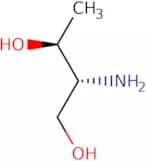
CAS:<p>Please enquire for more information about L-allo-Threoninol including the price, delivery time and more detailed product information at the technical inquiry form on this page</p>Formula:C4H11NO2Purity:Min. 95%Color and Shape:Colourless To Pale Yellow LiquidMolecular weight:105.14 g/molEndothelin-1 (11-21) trifluoroacetate salt
CAS:<p>Endothelin-1 (11-21) trifluoroacetate salt H-Cys-Val-Tyr-Phe-Cys-His-Leu-Asp-Ile-Ile-Trp is a peptide that is derived from endothelin. It has been shown to have an inhibitory effect on insulin stimulated glucose uptake in Sprague Dawley rats. This peptide has also been shown to bind to the endothelin receptor and act as a nonselective agonist. Endothelin 1 (11–21) trifluoroacetate salt H-Cys Val Tyr Phe Cys His Leu Asp Ile Ile Trp, when incubated with cells, had a maximal response at micron concentrations.</p>Formula:C68H92N14O15S2Purity:Min. 95%Molecular weight:1,409.68 g/molZ-Leu-Tyr-chloromethylketone
CAS:<p>Z-Leu-Tyr-chloromethylketone is a peptide that binds to the reticulum and prevents the release of calcium ions. It is a chloromethyl ketone, which inhibits the L-type calcium channels in cells. Z-Leu-Tyr-chloromethylketone has been shown to block the influx of calcium ions into cytosolic compartments. This process leads to inhibition of protein synthesis and cell death by apoptosis.</p>Formula:C24H29ClN2O5Purity:Min. 95%Molecular weight:460.95 g/molH-D-Leu-Tyr-OH
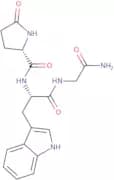
CAS:<p>H-D-Leu-Tyr-OH is a biochemically reactive compound that can undergo a number of reactions with other substrates. It is an amide that is converted to the tripeptides, H-D-leu-tyr and H-D-Phe-Lys, by hydrolysis in the liver. It is also converted to the condensation products, H-D-leu and H2NCH2COOH, by hydrochloric acid or metal ions. The formation rate of this compound depends on its concentration. The rate of reaction increases with increased substrate concentrations. This compound has an acidic pH and binds to a bidentate ligand, histidine.</p>Formula:C15H22N2O4Purity:Min. 95%Molecular weight:294.35 g/molPyr-Trp-Gly-NH2
CAS:<p>Please enquire for more information about Pyr-Trp-Gly-NH2 including the price, delivery time and more detailed product information at the technical inquiry form on this page</p>Formula:C18H21N5O4Purity:Min. 95%Molecular weight:371.39 g/molAngiotensin A trifluoroacetate salt
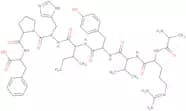
CAS:<p>Angiotensin A trifluoroacetate salt H-Ala-Arg-Val-Tyr-Ile-His-Pro-Phe-OH is a drug that has been shown to be effective in treating chronic kidney disease and heart failure. It is a synthetic peptide that mimics the activity of angiotensin II, an important regulator of blood pressure. Angiotensin A trifluoroacetate salt H-Ala-Arg-Val-Tyr-Ile-His-Pro-Phe-OH binds to the angiotensin receptor, which causes vasoconstriction and increases the release of soluble guanylate cyclase. This drug also inhibits the production of matrix metalloproteinases, which break down collagen and other extracellular proteins.</p>Formula:C49H71N13O10Purity:Min. 95%Molecular weight:1,002.17 g/molH-Pro-Asn-OH
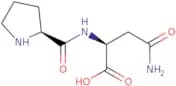
CAS:<p>H-Pro-Asn-OH is a reactive functional group that is activated by the presence of acidic conditions. It can react with epoxides to form cyclic ethers. H-Pro-Asn-OH can be used in vitro studies to assess the activation of caspases, which are proteolytic enzymes that play a role in cell apoptosis. It has also been used for molecular imaging and as an antigen for immunotherapy in cancer treatment. This molecule has a reactive functional group on its side chain and reacts with epoxides to form cyclic ethers.</p>Formula:C9H15N3O4Purity:Min. 95%Molecular weight:229.23 g/molH-Lys(Z)-AMC·HCl
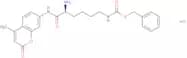
CAS:<p>Please enquire for more information about H-Lys(Z)-AMC·HCl including the price, delivery time and more detailed product information at the technical inquiry form on this page</p>Formula:C24H27N3O5·HClPurity:Min. 95%Molecular weight:473.95 g/molDynorphin B (1-9)
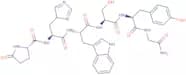
CAS:<p>Please enquire for more information about Dynorphin B (1-9) including the price, delivery time and more detailed product information at the technical inquiry form on this page</p>Formula:C54H78N16O12Purity:Min. 95%Molecular weight:1,143.3 g/molLHRH (1-6) amide Pyr-His-Trp-Ser-Tyr-Gly-NH2
CAS:<p>Please enquire for more information about LHRH (1-6) amide Pyr-His-Trp-Ser-Tyr-Gly-NH2 including the price, delivery time and more detailed product information at the technical inquiry form on this page</p>Formula:C36H42N10O9Purity:Min. 95%Molecular weight:758.78 g/molH-Tyr-Lys-OH
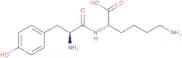
CAS:<p>H-Tyr-Lys-OH is a small drug molecule that has been shown to inhibit protein synthesis. It binds to the active site of the transcription-polymerase chain and competitively inhibits the binding of RNA polymerase. H-Tyr-Lys-OH has also been shown to have anti-inflammatory properties, which may be due to its ability to inhibit prostaglandin synthesis. H-Tyr-Lys-OH's conformational properties are similar to those found in proteins such as glutamic acid and lysine.</p>Formula:C15H23N3O4Purity:Min. 95%Molecular weight:309.36 g/mol2-Methoxy-6-picolinic acid
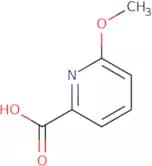
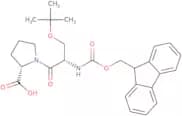
CAS:<p>2-Methoxy-6-picolinic acid (2MPA) is a picolinate that has been shown to be an effective catalyst for the conversion of alcohols into allylic alcohols. 2MPA is able to catalyze the reaction by abstracting hydrogen from the carbonyl group, and then adding it to the adjacent carbon. This reaction can produce peroxide as a byproduct, which is subsequently hydrolyzed to form water and alcohol. The β-unsaturated carbonyl group of 2MPA provides additional stability for this catalytic process.<br>2MPA can also be used as a catalyst in other reactions, such as the oxidation of benzylic alcohols with hydrogen peroxide to form benzylic carbonyl compounds.</p>Formula:C7H7NO3Purity:Min. 95%Color and Shape:PowderMolecular weight:153.14 g/molFmoc-Ser(tBu)-Pro-OH
CAS:<p>Please enquire for more information about Fmoc-Ser(tBu)-Pro-OH including the price, delivery time and more detailed product information at the technical inquiry form on this page</p>Formula:C27H32N2O6Purity:Min. 95%Molecular weight:480.55 g/molH-D-Ala-D-Ala-D-Ala-D-Ala-D-Ala-D-Ala-OH
CAS:<p>Please enquire for more information about H-D-Ala-D-Ala-D-Ala-D-Ala-D-Ala-D-Ala-OH including the price, delivery time and more detailed product information at the technical inquiry form on this page</p>Formula:C18H32N6O7Purity:Min. 95%Molecular weight:444.48 g/molAc-Phe-pNA
CAS:<p>Ac-Phe-pNA is a synthetic substrate that can be used to study the role of serine proteases in collagenolysis. It has been shown to have a high affinity for collagen, which makes it an excellent candidate for use as a probe for studying the interaction of proteases with collagen. This substrate binds to the enzyme and is cleaved by the serine protease at neutral pH. The reaction mixture turns yellow and fluoresces under UV light. Ac-Phe-pNA is reactive to epimastigotes and displays a ph optimum of 7.5.</p>Formula:C17H17N3O4Purity:Min. 95%Molecular weight:327.33 g/molPAR-1 (1-6) (mouse, rat) trifluoroacetate salt
CAS:<p>Please enquire for more information about PAR-1 (1-6) (mouse, rat) trifluoroacetate salt including the price, delivery time and more detailed product information at the technical inquiry form on this page</p>Formula:C37H54N10O9Purity:Min. 95%Molecular weight:782.89 g/mol(Nle 8·18,Tyr34)-pTH (1-34) (human)
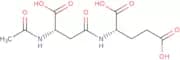
CAS:<p>Please enquire for more information about (Nle 8·18,Tyr34)-pTH (1-34) (human) including the price, delivery time and more detailed product information at the technical inquiry form on this page</p>Formula:C183H295N55O52Purity:Min. 95%Molecular weight:4,097.64 g/molAc-Asp(Glu-OH)-OH
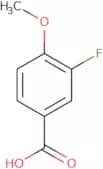
CAS:<p>Ac-Asp(Glu-OH)-OH is a low potency, but potentiating compound that binds to the cell cytoplasm. It inhibits the uptake of glutamate into the synaptic cleft by binding to acidic granules. This compound may be neuroprotective and inhibit prostate carcinoma growth. Ac-Asp(Glu-OH)-OH has also been shown to inhibit postsynaptic potentials and decrease glutamate release in cerebellar granule cells.</p>Formula:C11H16N2O8Purity:Min. 95%Molecular weight:304.25 g/mol3-Fluoro-4-methoxybenzoic acid
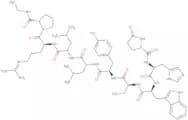
CAS:<p>3-Fluoro-4-methoxybenzoic acid is a dipolar molecule with a fluorine atom. It has been synthesized experimentally and the yields are determined by the experimental conditions. 3-Fluoro-4-methoxybenzoic acid has two isomers, which can be differentiated by their resonances. The molecule also has an asymmetric C3(CF)2Cl group in the middle of its structure that can rotate freely.</p>Formula:C8H7FO3Purity:Min. 95%Color and Shape:PowderMolecular weight:170.14 g/mol(Des-Gly10,D-Tyr5,D-Leu6,Pro-NHEt 9)-LHRH
CAS:<p>Please enquire for more information about (Des-Gly10,D-Tyr5,D-Leu6,Pro-NHEt 9)-LHRH including the price, delivery time and more detailed product information at the technical inquiry form on this page</p>Formula:C59H84N16O12Purity:Min. 95%Molecular weight:1,209.4 g/molFibronectin Fragment (1376-1380) trifluoroacetate salt
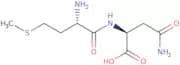
CAS:<p>Please enquire for more information about Fibronectin Fragment (1376-1380) trifluoroacetate salt including the price, delivery time and more detailed product information at the technical inquiry form on this page</p>Formula:C24H39N11O8Purity:Min. 95%Molecular weight:609.64 g/molH-Met-Asn-OH
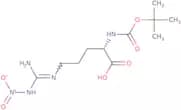
CAS:<p>H-Met-Asn-OH is a peptide that is composed of the amino acids methionine, asparagine, and hydroxyproline. It has been found to be specific for influenza and has been proposed as a potential drug target for this virus. The constant and resonance energies of H-Met-Asn-OH have been determined by NMR spectroscopy. The amino acid composition of H-Met-Asn-OH is typical of many proteins. Structural isomers are molecules that differ only in their spatial arrangement but share the same chemical formula. H-Met-Asn-OH can be considered a structural isomer because it differs by its chirality, which means that it rotates plane polarized light in one direction while its mirror image, L-methionine asparagine hydroxyproline (LMAHP), rotates light in the opposite direction. Gene products are molecules that are responsible for converting information from DNA into proteins via</p>Formula:C9H17N3O4SPurity:Min. 95%Molecular weight:263.32 g/molBoc-L-Nitroarginine
CAS:<p>Boc-L-Nitroarginine is a nitric oxide synthase inhibitor that belongs to the class of drugs called nitric oxide inhibitors. It is a potent inhibitor of nitric oxide synthase, preventing the production of nitric oxide from arginine. The drug has been shown to have therapeutic effects in the treatment of cancer, diabetes mellitus, and other diseases. Boc-L-Nitroarginine inhibits tumor angiogenesis by blocking endothelial cell proliferation and migration. It also inhibits insulin secretion, leading to an improved glycemic control in diabetic patients. Boc-L-Nitroarginine can be used as a hydrogenation reducing agent for the synthesis of imatinib and palladium catalysts for hydrogenation reactions.</p>Formula:C11H21N5O6Purity:Min. 95%Color and Shape:PowderMolecular weight:319.31 g/mol(Des-Ser3)-ACTH (1-24) (human, bovine, rat) trifluoroacetate salt
<p>Please enquire for more information about (Des-Ser3)-ACTH (1-24) (human, bovine, rat) trifluoroacetate salt including the price, delivery time and more detailed product information at the technical inquiry form on this page</p>Formula:C133H205N39O29SPurity:Min. 95%Molecular weight:2,846.36 g/molAcetyl-Amylin (8-37) (human)
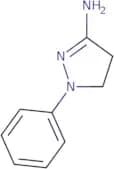
CAS:<p>Please enquire for more information about Acetyl-Amylin (8-37) (human) including the price, delivery time and more detailed product information at the technical inquiry form on this page</p>Formula:C140H218N42O46Purity:Min. 95%Molecular weight:3,225.48 g/mol1-Phenyl-4,5-dihydro-1H-pyrazol-3-amine
CAS:<p>1-Phenyl-4,5-dihydro-1H-pyrazol-3-amine is an organic compound that is used as a reagent in the synthesis of other compounds. It is a dimeric compound that can be synthesized by electrolysis. It has been shown to have kinetic and potential properties, which are determined by its anilines and pyridines. 1-Phenyl-4,5-dihydro-1H-pyrazol-3-amine can also be synthesized from ethanolamine and copper (II) salts. This technique involves the electrochemical oxidation of copper, followed by reduction with acetonitrile. The resulting 1-(aminomethyl)-4,5 dihydro pyrazole 3 amine can then be used for further reactions.</p>Formula:C9H11N3Purity:Min. 95%Molecular weight:161.2 g/molBoc-Lys(2-chloro-Z)-PAM resin (200-400 mesh)
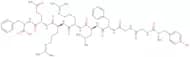
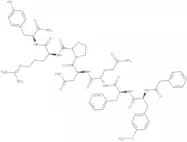
<p>Please enquire for more information about Boc-Lys(2-chloro-Z)-PAM resin (200-400 mesh) including the price, delivery time and more detailed product information at the technical inquiry form on this page</p>Purity:Min. 95%(Phenylac 1,D-Tyr(Me)2,Arg6·8,Tyr-NH29)-Vasopressin trifluoroacetate salt Phenylac-D-Tyr(Me)-Phe-Gln-Asn-Arg-Pro-Arg-Tyr-NH2 tri
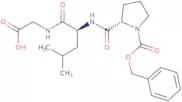
CAS:<p>Please enquire for more information about (Phenylac 1,D-Tyr(Me)2,Arg6·8,Tyr-NH29)-Vasopressin trifluoroacetate salt Phenylac-D-Tyr(Me)-Phe-Gln-Asn-Arg-Pro-Arg-Tyr-NH2 tri including the price, delivery time and more detailed product information at the technical inquiry form on this page</p>Formula:C62H83N17O13Purity:Min. 95%Color and Shape:PowderMolecular weight:1,274.43 g/molZ-Pro-Leu-Gly-OH
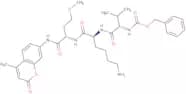
CAS:<p>Z-Pro-Leu-Gly-OH is a peptide that belongs to the class of amides, oxalate salts, and grignard reagents. It can be synthesized from the reaction between an oxalate salt and a grignard reagent. The synthesis of Z-Pro-Leu-Gly-OH is usually done by reacting an oxalate salt with a grignard reagent in presence of a ketone or ketomethylene.</p>Formula:C21H29N3O6Purity:Min. 95%Molecular weight:419.47 g/molZ-Val-Lys-Met-AMC acetate salt
CAS:<p>Bortezomib is a proteasome inhibitor that binds to the catalytic site of the proteasome and inhibits its activity. Bortezomib is used as an anticancer agent to treat multiple myeloma, T-cell lymphomas, and other cancers. It has been shown to inhibit the growth of cancer cells and slow tumor progression in animal models. The drug has also been shown to decrease insulin resistance in mice with high blood sugar levels by inhibiting histone deacetylase (HDAC). This inhibition leads to increased expression of genes that are involved in glucose metabolism and decreased expression of genes that regulate fat production.<br>The drug also binds tightly to the insulin receptor, which may lead to improved glucose uptake into cells.</p>Formula:C34H45N5O7SPurity:Min. 95%Molecular weight:667.82 g/molH-Gly-Gly-Glu-Ala-OH
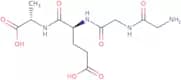
CAS:<p>H-Gly-Gly-Glu-Ala-OH is a carboxylate. It has been shown to be an ionizable molecule with a proton that can exist in either the hydrated or dehydrated form. The proton of the carboxylate group can move between the two forms and the ionization state depends on pH and temperature. H-Gly-Gly-Glu-Ala-OH is a linear peptide, which means it has an amide group and a residue at each end of the chain. Each of these residues has specific conformations, which are impacted by intramolecular hydrogen bonds. These conformations play a role in determining its pharmacological properties, as well as its function in structural biology and magnetic resonance techniques. H-Gly-Gly-Glu-Ala-OH also has population distribution studies that have been used for diffraction analyses, as well as for titration experiments.</p>Formula:C12H20N4O7Purity:Min. 95%Molecular weight:332.31 g/mol(Asp371)-Tyrosinase (369-377) (human) trifluoroacetate salt
CAS:<p>Trifluoroacetate salt</p>Formula:C42H66N10O16S2Purity:Min. 95%Molecular weight:1,031.16 g/molTyr-α-CGRP (human) trifluoroacetate salt
CAS:<p>Please enquire for more information about Tyr-alpha-CGRP (human) trifluoroacetate salt including the price, delivery time and more detailed product information at the technical inquiry form on this page</p>Formula:C172H276N52O51S2Purity:Min. 95%Molecular weight:3,952.48 g/molMet(O)14-Exenatide trifluoroacetate salt
CAS:<p>Please enquire for more information about Met(O)14-Exenatide trifluoroacetate salt including the price, delivery time and more detailed product information at the technical inquiry form on this page</p>Formula:C184H282N50O61SPurity:Min. 95%Molecular weight:4,202.57 g/mol3-Acetyl-1-methylpyrrole
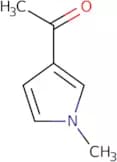
CAS:<p>3-Acetyl-1-methylpyrrole is an activating agent that can be used to synthesize methyl ketones. It has been shown to react with acid solutions and proton, which are generated by the reaction of a metal ion (such as Al) with hydrochloric acid. This reaction leads to the formation of enolate ions, which can then react with carbonyl groups to form alkylation products. 3-Acetyl-1-methylpyrrole is also able to catalyze reactions in both acidic and basic conditions. The kinetic of this reaction is fast, efficient, and does not require expensive equipment.</p>Formula:C7H9NOPurity:Min. 95%Color and Shape:Clear LiquidMolecular weight:123.15 g/molAc-His-His-Gly-His-OH
CAS:<p>Ac-His-His-Gly-His-OH is a lysine ligand with an acetyl group and two histidine residues. Acetylation of the hydroxyl group on the lysine residue is necessary for binding to metal ions, such as protonation. This molecule has been shown to have five different protonation states at neutral pH. The protonated form has been found to be more soluble in water than the deprotonated form. Acetylation of both lysines in the molecule leads to hydrolytic cleavage of the amide bond, which causes it to become insoluble in water. Acetylation also alters chemical properties, such as changes in color; for example, this molecule exhibits dichroism when viewed under polarized light.</p>Formula:C22H28N10O6Purity:Min. 95%Molecular weight:528.52 g/molN-(Fmoc-5-amino-3-oxa-pentyl)succinamic acid
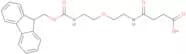
CAS:<p>N-(Fmoc-5-amino-3-oxa-pentyl)succinamic acid is a high quality chemical that is used as an intermediate in the production of pharmaceuticals and other fine chemicals. It is also a reagent for use in peptide synthesis. N-(Fmoc-5-amino-3-oxa-pentyl)succinamic acid has a CAS No. 669073-62-5 and can be used as a useful scaffold for the production of complex compounds. This compound is also useful for research purposes, due to its versatility as a building block with speciality chemical applications.</p>Formula:C23H26N2O6Purity:Min. 95%Molecular weight:426.46 g/molZ-L-Alanine
CAS:<p>Z-L-Alanine is a cytosolic enzyme inhibitor that inhibits the activity of enzymes involved in protein catalysis. This inhibition is stereoselective, with the L-enantiomer having the stronger inhibitory effect. Z-L-Alanine has been shown to be an effective inhibitor of proteolytic enzymes and has been used as an additive in buffers to prevent enzymatic degradation. Molecular modeling studies have demonstrated that Z-L-Alanine can bind to the active site of these enzymes and inhibit their activity by binding to the catalytic triad of serine, aspartate, and histidine residues. The molecular structure of Z-L-Alanine resembles that of a natural substrate for these enzymes, which may account for its effectiveness in inhibiting them. FTIR spectroscopy has confirmed the presence of Z-L-alanine in a sample obtained from a bacterial culture. Liquid chromatography has shown that this amino acid is present at high levels in various</p>Formula:C11H13NO4Purity:Min. 95%Color and Shape:White Off-White PowderMolecular weight:223.23 g/mol2-Phenyl-5-benzimidazolesulfonic acid
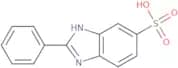
CAS:<p>2-Phenyl-5-benzimidazolesulfonic acid is a chemical compound that has been shown to have stability in vitro. It was used as a skin cancer treatment in the past, but is now mainly used as an analytical reagent. It has been shown to be effective against coumarin derivatives and enzyme activities. 2-Phenyl-5-benzimidazolesulfonic acid can be used as a chelating agent for metals and also binds to zirconium oxide, which is one of the materials used in radiation shielding. The compound can also be used for wastewater treatment and polymerase chain reaction (PCR) analysis. This compound can be synthesized using sodium salts, solid phase microextraction (SPME), and sodium citrate in order to form the benzene ring. The synthesis can then be completed by adding two phenyl groups onto the benzene ring with various reactions such as transfer reactions or radiation. Finally,</p>Formula:C13H10N2O3SPurity:Min. 95%Molecular weight:274.3 g/molBoc-Thr(Bzl)-Merrifield resin (200-400 mesh)
<p>Please enquire for more information about Boc-Thr(Bzl)-Merrifield resin (200-400 mesh) including the price, delivery time and more detailed product information at the technical inquiry form on this page</p>Purity:Min. 95%

![4-[4-(4-Methyloxy-phenyl)-piperazin-1-yl]-phenylamine](/_next/image/?url=https%3A%2Fstatic.cymitquimica.com%2Fproducts%2F3D%2Fthumb-webp%2FFM25923.webp&w=3840&q=75)