Amino Acids (AA)
Amino acids (AAs) are the fundamental building blocks of proteins, playing a crucial role in various biological processes. These organic compounds are essential for protein synthesis, metabolic pathways, and cell signaling. In this category, you will find a comprehensive range of amino acids, including essential, non-essential, and modified forms, which are vital for research in biochemistry, molecular biology, and nutritional sciences. At CymitQuimica, we provide high-quality amino acids to support your research and development needs, ensuring accuracy and reliability in your experimental outcomes.
Subcategories of "Amino Acids (AA)"
- Amino Acid Derivatives(3,955 products)
- Amino Acid and Amino Acid Related Compounds(3,472 products)
- Amino Acids with Oxygen or Sulphur(168 products)
- Boc- Amino Acids(351 products)
- Fmoc Amino Acids(1,710 products)
Found 38263 products of "Amino Acids (AA)"
Sort by
Purity (%)
0
100
|
0
|
50
|
90
|
95
|
100
Band 3 Protein (824-829) (human)
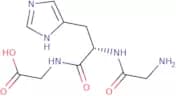
CAS:<p>Please enquire for more information about Band 3 Protein (824-829) (human) including the price, delivery time and more detailed product information at the technical inquiry form on this page</p>Formula:C37H65N11O8Purity:Min. 95%Molecular weight:791.98 g/molH-Gly-His-Gly-OH
CAS:<p>H-Gly-His-Gly-OH is an amino acid that belongs to the class of peptide science. It is a protonated molecule with a histidine side chain, which has been shown to have enzyme inhibition properties. This amino acid has been used in model studies to determine the effect of acidic and basic ternary mixtures on the stability of proteins. H-Gly-His-Gly-OH has also been found to be effective as a chelate ring, which is a ring that binds metals such as iron and copper. Enzymes can form when this amino acid is present in solution with metal ions.</p>Formula:C10H15N5O4Purity:Min. 95%Molecular weight:269.26 g/molMAGE-3 Antigen (168-176) (human) acetate salt
CAS:<p>Please enquire for more information about MAGE-3 Antigen (168-176) (human) acetate salt including the price, delivery time and more detailed product information at the technical inquiry form on this page</p>Formula:C48H71N11O15Purity:Min. 95%Molecular weight:1,042.14 g/mol3-Methyldihydrofuran-2,5-dione
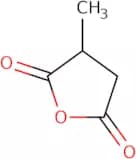
CAS:<p>3-Methyldihydrofuran-2,5-dione is a diterpenoid alkaloid found in the plant Dictamnus albus. This compound has been shown to have metal chelating properties and can be used as an asymmetric synthesis intermediate. 3-Methyldihydrofuran-2,5-dione reacts with diazonium salt to form a high resistance molecule that is highly reactive. This chemical reacts with hydroxyl groups, amide groups, or methyl ethyl groups. The structure of this compound consists of nitrogen atoms and anhydride bonds. 3-Methyldihydrofuran-2,5-dione has been shown to exhibit electrochemical impedance spectroscopy (EIS) characteristics similar to those of other molecules that are known to be reactive.</p>Formula:C5H6O3Purity:Min. 95%Molecular weight:114.1 g/molStaphylococcus Aureus Protein A (SpA)-Derived Peptide
CAS:<p>Please enquire for more information about Staphylococcus Aureus Protein A (SpA)-Derived Peptide including the price, delivery time and more detailed product information at the technical inquiry form on this page</p>Formula:C68H118N20O22Purity:Min. 95%Molecular weight:1,567.79 g/molAngiotensin II acetate salt
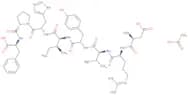
CAS:Controlled Product<p>Angiotensin II is a hormone that is produced in the kidneys and acts on the blood vessels, heart, and other tissues. It is also known as angiotensin II acetate salt H-Asp-Arg-Val-Tyr-Ile-His-Pro-Phe-OH acetate salt. Angiotensin II can increase blood pressure by constricting blood vessels and causing the release of aldosterone from the adrenal glands. This hormone also causes smooth muscle contraction in various organs, including the intestines. The synthesis of angiotensin II occurs through two different pathways: one involving renin and another involving prorenin. The renin pathway begins with renin converting angiotensinogen into angiotensin I, which is then converted to angiotensin II by angiotensins I converting enzyme (ACE). Angiotensin II has been shown to increase protein phosphorylation in myosin, leading to increased</p>Formula:C50H71N13O12·xC2H4O2Purity:Min. 95%Color and Shape:White SolidMolecular weight:1,046.18 g/mol(Ala1)-PAR-4 (1-6) (mouse) trifluoroacetate salt
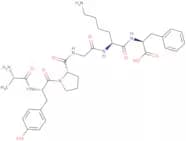
CAS:<p>(Ala1)-PAR-4 (1-6) (mouse) trifluoroacetate salt H-Ala-Tyr-Pro-Gly-Lys-Phe-OH trifluoroacetate salt is a potent inhibitor of protein kinase C, and has been shown to inhibit the growth of prostate cancer cells. It also inhibits phosphorylation of epidermal growth factor receptors, which leads to lower levels of epidermal growth factor in the cell. This drug also has antiplatelet effects and may be used as an antiplatelet agent for patients with vascular disease or diabetes.</p>Formula:C34H47N7O8Purity:Min. 95%Molecular weight:681.78 g/molBoc-Leu-Ser-Thr-Arg-AMC trifluoroacetate salt
CAS:<p>Boc-Leu-Ser-Thr-Arg-AMC trifluoroacetate salt is a synthetic substrate that is used in enzyme assays. The hydrolysis of the peptidyl ester bond by the enzyme results in release of AMC and an unstable intermediate, which reacts with AMC to form a stable fluorescent product. This product can be detected using various chromatographic techniques. Boc-Leu-Ser-Thr-Arg-AMC trifluoroacetate salt has been shown to be an effective anticoagulant for blood clotting and it is also used as a second order rate constant in the determination of coagulation factors.</p>Formula:C34H52N8O10Purity:Min. 95%Molecular weight:732.82 g/mol3-Hydroxy-3-methylglutaric acid
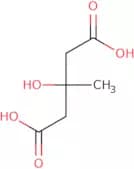
CAS:<p>3-Hydroxy-3-methylglutaric acid is an organic acid that is a valuable intermediate in the chemical production of epidermal growth factor. 3-Hydroxy-3-methylglutaric acid also has been shown to be useful as a reagent for the detection of bacterial strains, including E. coli, Salmonella enterica, and Pseudomonas aeruginosa. The enzyme activities of 3-hydroxy-3-methylglutaric acid are not well understood, but it has been shown to have effects on congestive heart failure and bowel disease. 3-Hydroxy-3-methylglutaric acid may be used in the treatment of inflammatory bowel disease due to its ability to inhibit certain enzymes responsible for inflammation and pain. The long term toxicity and symptoms associated with 3-hydroxy-3-methylglutaric acid have not yet been studied, but it has been shown to have no effect on cardiac function</p>Formula:C6H10O5Purity:Min. 95%Molecular weight:162.14 g/molBuccalin trifluoroacetate salt
CAS:<p>Buccalin is a cholinergic pharmaceutical drug that has been shown to have metabolic, growth factor, and chemotactic activities. It has been used in the treatment of various autoimmune diseases and infectious diseases. The mechanism of action for buccalin is unknown. Buccalin has been shown to have receptor activity in a variety of diagnostic agents such as monoclonal antibodies and fatty acids. It binds to acetylcholine receptors at the neuromuscular junction, leading to activation of muscle fibers by acetylcholine release from nerve endings.</p>Formula:C45H72N12O15SPurity:Min. 95%Molecular weight:1,053.19 g/molFluorescein-6-carbonyl-Asp(OMe)-Glu(OMe)-Val-DL-Asp(OMe)-fluoromethylketone
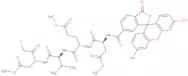
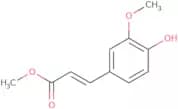
CAS:<p>Please enquire for more information about Fluorescein-6-carbonyl-Asp(OMe)-Glu(OMe)-Val-DL-Asp(OMe)-fluoromethylketone including the price, delivery time and more detailed product information at the technical inquiry form on this page</p>Formula:C43H45FN4O16Purity:Min. 95%Molecular weight:892.83 g/molMethyl (2E)-3-(4-hydroxy-3-methoxyphenyl)acrylate
CAS:<p>Methyl (2E)-3-(4-hydroxy-3-methoxyphenyl)acrylate is a natural compound, which belongs to the group of ferulate esters. It has been shown that methyl (2E)-3-(4-hydroxy-3-methoxyphenyl)acrylate inhibits the activity of esterases, which are enzymes that hydrolyze esters. This inhibition leads to an accumulation of ferulic acid in the blood, which is associated with bowel disease. Methyl (2E)-3-(4-hydroxy-3-methoxyphenyl)acrylate has been shown to be effective against murine hepatoma cells and polymorphonuclear leucocytes, which are white blood cells that can be found in the blood and other tissues. The inhibitory effect on these cells may be due to its ability to bind to ferulic acid and caffeic acids.</p>Formula:C11H12O4Purity:Min. 95%Color and Shape:White PowderMolecular weight:208.21 g/molZ-Asp-Met-OH
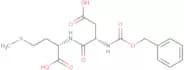
CAS:<p>Please enquire for more information about Z-Asp-Met-OH including the price, delivery time and more detailed product information at the technical inquiry form on this page</p>Formula:C17H22N2O7SPurity:Min. 95%Molecular weight:398.43 g/molZ-Gly-Ala-OH
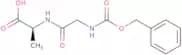
CAS:<p>Z-Gly-Ala-OH is an amide that is synthesized by the solid-phase synthesis of a protected amino acid. The amino acid sequence was determined by sequencing the product and comparing it to the amino acid composition of known glycyl-amides. The enzyme active site was found to be located on the side chain of Gly, which is a polar residue. This catalytic site is only occupied in one orientation, with Ala occupying the opposite side chain position. The yields for this reaction are very high and are not affected by changes in temperature or pH. Z-Gly-Ala-OH has a chiral center at position 3 and can exist as two enantiomers, Z-(+)-glycylalanine and its mirror image, Z-(−)-glycylalanine.</p>Formula:C13H16N2O5Purity:Min. 95%Molecular weight:280.28 g/molH-D-Ile-Phe-Lys-pNA trifluoroacetate salt
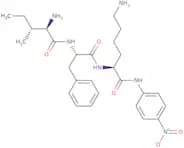
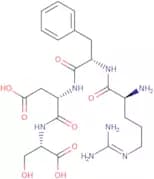
CAS:<p>Please enquire for more information about H-D-Ile-Phe-Lys-pNA trifluoroacetate salt including the price, delivery time and more detailed product information at the technical inquiry form on this page</p>Formula:C27H38N6O5Purity:Min. 95%Molecular weight:526.63 g/molH-Arg-Phe-Asp-Ser-OH
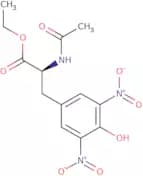
CAS:<p>H-Arg-Phe-Asp-Ser-OH is a sequence of amino acids that is found in the protein collagen. It has been shown to be an inhibitor of human immunodeficiency virus type 1 (HIV1) and human insulin-like growth factor 2 (IGF2). In addition, H-Arg-Phe-Asp-Ser-OH is an important molecule for the production of monoclonal antibodies. H-Arg-Phe-Asp-Ser-OH is expressed in mammalian cells, including human cells, which are used as models to study the molecular interactions with HIV1 and IGF2. Monoclonal antibodies against H-Arg-Phe-Asp have been shown to inhibit the replication of HIV1.</p>Formula:C22H33N7O8Purity:Min. 95%Molecular weight:523.54 g/molAc-3,5-dinitro-Tyr-OEt
CAS:<p>Please enquire for more information about Ac-3,5-dinitro-Tyr-OEt including the price, delivery time and more detailed product information at the technical inquiry form on this page</p>Formula:C13H15N3O8Purity:Min. 95%Molecular weight:341.27 g/molOvokinin trifluoroacetate salt
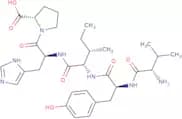
CAS:<p>Please enquire for more information about Ovokinin trifluoroacetate salt including the price, delivery time and more detailed product information at the technical inquiry form on this page</p>Formula:C48H67N13O11Purity:Min. 95%Molecular weight:1,002.13 g/molAngiotensin I/II (3-7)
CAS:<p>Angiotensin I/II (3-7) H-Val-Tyr-Ile-His-Pro-OH is an antagonist of the angiotensin II receptor. It has been shown to be a cognitive enhancer by statistically improving treatments for behavioural problems in rats and mice. Angiotensin I/II (3-7) H-Val-Tyr-Ile-His-Pro-OH has also been shown to inhibit nicotinic acetylcholine receptors, which are involved in mediating the effects of neurotransmitters on muscle cells. This agent also inhibits angiotensin II receptors, leading to vasodilation and reduced blood pressure. The mechanism of action is not yet clear but may involve inhibition of protein kinase C. In preclinical studies, it has been shown that this drug facilitates behavioural effects such as memory retention and motor performance in rats when given before treatment with peptides such as substance P or calcitonin gene related pept</p>Formula:C31H45N7O7Purity:Min. 95%Molecular weight:627.73 g/molN-Tritylglycine
CAS:<p>N-Tritylglycine is an acidic amino acid that can be protonated in a highly acidic environment. It has been shown to inhibit the growth of tumor tissue by inducing apoptosis and inhibiting protein synthesis. N-Tritylglycine is used as a reagent for analytical chemistry, where it is used to detect amines such as histamine and serotonin. N-Tritylglycine also has been shown to be potent inhibitor of kinesin.</p>Formula:C21H19NO2Purity:Min. 95%Molecular weight:317.38 g/molH-Pro-Gly-Pro-OH
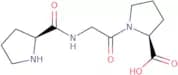
CAS:<p>H-Pro-Gly-Pro-OH is a peptide that is derived from the sequence of human proline-glycine-proline (HGP). It has been shown to have a number of physiological activities, including anti-inflammatory effects. This peptide can be used as a model compound for inflammatory genes and proteins. H-Pro-Gly-Pro-OH has been shown to inhibit the synthesis of inflammatory cytokines in mouse splenocytes and neutrophil recruitment in wild type mice. HGP also suppresses chemotactic activity and inhibits neutrophil migration in an experimental model. HGP has also been shown to reduce intracellular calcium concentration in cerebellar granule cells, which may be due to its ability to inhibit protein synthesis.</p>Formula:C12H19N3O4Purity:Min. 95%Molecular weight:269.3 g/molCyclo(-D-His-Pro)
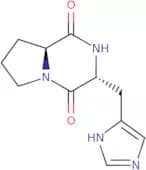
CAS:<p>Please enquire for more information about Cyclo(-D-His-Pro) including the price, delivery time and more detailed product information at the technical inquiry form on this page</p>Formula:C11H14N4O2Purity:Min. 95%Molecular weight:234.25 g/molIGF-II (33-40)
CAS:<p>This is a synthetic IGF-II peptide fragment (33-40) that has been immunized with an antiserum against the human growth hormone. It is used to measure the level of IGF-II in blood or serum. The immunizing antiserum cross-reacts with IgF-I and can also be used as a control for deficiency.</p>Formula:C38H74N20O12Purity:Min. 95%Molecular weight:1,003.12 g/molH-DL-Met-bNA·HCl
CAS:<p>Please enquire for more information about H-DL-Met-bNA·HCl including the price, delivery time and more detailed product information at the technical inquiry form on this page</p>Formula:C15H18N2OS·HClPurity:Min. 95%Molecular weight:310.84 g/molMyristoyl-Arg-Lys-Arg-Thr-Leu-Arg-Arg-Leu-OH
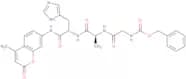
CAS:<p>Myristoyl-Arg-Lys-Arg-Thr-Leu-Arg-Arg-Leu-OH is a potent inhibitor of protein kinases. It has been shown to have an inhibitory concentration 50% (IC50) of 0.5 μM and inhibits the activity of ATPase in cells. This compound is a synthetic, multidrug protein kinase inhibitor that inhibits the activity of various kinases including adriamycin, atpase, and myristic acid. Myristoyl Arg Lys Arg Thr Leu Arg Arg Leu OH has been shown to be potent and effective against cell resistance to chemotherapy.</p>Formula:C60H117N21O11Purity:Min. 95%Molecular weight:1,308.71 g/molZ-Gly-Ala-His-AMC
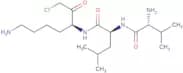
CAS:<p>Please enquire for more information about Z-Gly-Ala-His-AMC including the price, delivery time and more detailed product information at the technical inquiry form on this page</p>Formula:C29H30N6O7Purity:Min. 95%Molecular weight:574.58 g/molH-D-Val-Leu-Lys-chloromethylketone trifluoroacetate salt
CAS:<p>Please enquire for more information about H-D-Val-Leu-Lys-chloromethylketone trifluoroacetate salt including the price, delivery time and more detailed product information at the technical inquiry form on this page</p>Formula:C18H35ClN4O3Purity:Min. 95%Molecular weight:390.95 g/molN-α,ε-bis-Z-L-Lysine N-hydroxysuccinimide ester
CAS:<p>N-alpha,epsilon-bis-Z-L-Lysine N-hydroxysuccinimide ester is a methyl ester of the amino acid Lysine. This drug has been shown to have antinociceptive effects in animal models and may be useful for the treatment of inflammatory pain. The active conformation of this drug is dependent on the presence of hydroxybenzimidazole (HOBt). In the absence of HOBt, the compound does not have any activity. Acetylation or amidation may also affect its activity. The reaction with nitric acid yields a nitro derivative, which can be reduced back to the original compound by catalytic hydrogenation using palladium on carbon. A carboxylic acid group at the amino terminus can be converted to an amide or amido group by treatment with an appropriate reagent such as acetonitrile. This drug binds to a catalytic site on</p>Formula:C26H29N3O8Purity:Min. 95%Color and Shape:White Off-White PowderMolecular weight:511.52 g/molTRAF6 Peptide trifluoroacetate salt
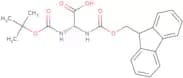
CAS:<p>Please enquire for more information about TRAF6 Peptide trifluoroacetate salt including the price, delivery time and more detailed product information at the technical inquiry form on this page</p>Formula:C145H238N34O44Purity:Min. 95%Molecular weight:3,161.64 g/molFmoc-α-amino-D-Gly(Boc)-OH
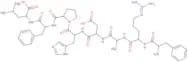
CAS:<p>Please enquire for more information about Fmoc-α-amino-D-Gly(Boc)-OH including the price, delivery time and more detailed product information at the technical inquiry form on this page</p>Formula:C22H24N2O6Purity:Min. 95%Molecular weight:412.44 g/molFormyl-LHRH (2-10) trifluoroacetate salt
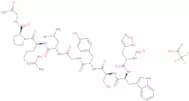
CAS:<p>Please enquire for more information about Formyl-LHRH (2-10) trifluoroacetate salt including the price, delivery time and more detailed product information at the technical inquiry form on this page</p>Formula:C51H70N16O12Purity:Min. 95%Molecular weight:1,099.2 g/mol(1-Methyl-1H-pyrazol-4-yl)boronic acid
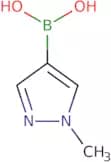
CAS:<p>(1-Methyl-1H-pyrazol-4-yl)boronic acid is a boronic acid that has been used for the synthesis of a number of heterocyclic compounds. Boronic acids are commonly used to synthesize phosphine ligands, which are reactive and can be used in cross-coupling reactions with organic halides, triflates, and tosylates. The efficiency of the reaction depends on the functional group present on the boron atom. (1-Methyl-1H-pyrazol-4-yl)boronic acid can inhibit the activity of many types of enzymes, including those involved in bacterial DNA synthesis and protein synthesis. (1-Methyl-1H-pyrazol-4-yl)boronic acid has been shown to have pharmacokinetic properties that depend on its ionization state.</p>Formula:C4H7BN2O2Purity:Min. 95%Molecular weight:125.92 g/molH-Ala-Ala-Ala-OMe acetate salt
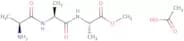
CAS:Controlled Product<p>Please enquire for more information about H-Ala-Ala-Ala-OMe acetate salt including the price, delivery time and more detailed product information at the technical inquiry form on this page</p>Formula:C10H19N3O4Purity:Min. 95%Molecular weight:245.28 g/molAc-Arg-Cys-Met-5-aminopentanoyl-Arg-Val-Tyr-5-aminopentanoyl-Cys-NH2 trifluoroacetate salt (Disulfide bond)
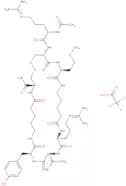
CAS:<p>Please enquire for more information about Ac-Arg-Cys-Met-5-aminopentanoyl-Arg-Val-Tyr-5-aminopentanoyl-Cys-NH2 trifluoroacetate salt (Disulfide bond) including the price, delivery time and more detailed product information at the technical inquiry form on this page</p>Formula:C49H82N16O11S3Purity:Min. 95%Molecular weight:1,167.47 g/molH-Gly-Leu-Gly-Leu-OH
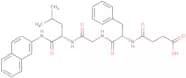
CAS:<p>Please enquire for more information about H-Gly-Leu-Gly-Leu-OH including the price, delivery time and more detailed product information at the technical inquiry form on this page</p>Formula:C16H30N4O5Purity:Min. 95%Molecular weight:358.43 g/molSuc-Phe-Gly-Leu-betaNA
CAS:<p>Suc-Phe-Gly-Leu-betaNA is a synthetic peptide that has been shown to bind to glutathione, an antioxidant. It is used in a method for determining the concentration of antioxidants in a sample by injection into the gas phase. The chemical ionisation (CI) and electrospray ionisation (ESI) are used to produce ions from the peptide. The compounds are then separated using chromatography before being quantified by measuring their mass using a mass spectrometer. This process is repeated until all of the antioxidant has been eluted from the column.</p>Formula:C31H36N4O6Purity:Min. 95%Molecular weight:560.64 g/molMART-1 (27-35) (human) trifluoroacetate salt
CAS:Controlled Product<p>Please enquire for more information about MART-1 (27-35) (human) trifluoroacetate salt including the price, delivery time and more detailed product information at the technical inquiry form on this page</p>Formula:C37H67N9O11Purity:Min. 95%Molecular weight:813.98 g/mol1-O-Octadecyl-sn-glycero-3-phosphocholine
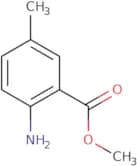
CAS:<p>Edelfosine is a phospholipid analog that has been shown to inhibit insulin-induced glucose uptake in adipocytes. It is a potent inhibitor of the insulin receptor tyrosine kinase and can also act as an allosteric inhibitor of protein kinase C (PKC). Edelfosine inhibits the growth of mammary carcinomas by inhibiting PKC, which leads to a decrease in cell proliferation. This drug also interacts with sulfonic acids, forming hydrogen bonds, which may be the reason for its high-performance liquid chromatography. The molecular weight of edelfosine is 582.3 g/mol.</p>Formula:C26H56NO6PPurity:Min. 95%Molecular weight:509.7 g/molMethyl 2-amino-5-methylbenzoate
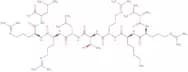
CAS:<p>Methyl 2-amino-5-methylbenzoate is a chemical substance that is a precursor for the synthesis of picolinic acid. It also has an antitumor activity against various cancer cell lines and microcapsules. In addition, methyl 2-amino-5-methylbenzoate can be used as a reagent in the preparation of amines and sample preparation. The chemical reactions of methyl 2-amino-5-methylbenzoate are catalyzed by hydrochloric acid and sulfamoyl chloride. This chemical substance reacts with carbonyl groups to form nitro compounds.</p>Formula:C9H11NO2Purity:Min. 95%Molecular weight:165.19 g/molH-Val-Arg-Lys-Arg-Thr-Leu-Arg-Arg-Leu-OH
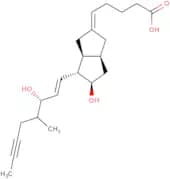
CAS:<p>H-Val-Arg-Lys-Arg-Thr-Leu-Arg-Arg-Leu (HVLAHR) is a synthetic peptide that has been shown to have antiinflammatory properties. The peptide binds to the epidermal growth factor receptor (EGFR) and inhibits the production of proinflammatory cytokines and chemokines, such as IL1α, IL6, IL8, and TNFα. HVLAHR also binds to calmodulin and inhibits protein kinase C (PKC) activity. It has been shown that this peptide has neuroprotective effects in vitro by binding to neurogranin and inhibiting protein phosphorylation. HVLAHR can be used as a model organism in vitro to study protein kinase activity.</p>Formula:C51H100N22O11Purity:Min. 95%Molecular weight:1,197.48 g/molIloprost
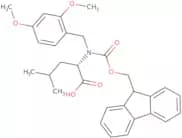
CAS:<p>Iloprost is a cyclase inhibitor that is used to treat pulmonary hypertension. It relaxes the smooth muscle cells in the lungs, which causes an increase in blood flow and oxygen levels to the heart and other organs. Iloprost also decreases the production of PGE2 and lowers blood pressure. Iloprost has been shown to be effective in treating chronic viral hepatitis and pulmonary diseases such as primary pulmonary hypertension. This drug can cause hypotension, so it should not be taken by patients with low blood pressure or those who are taking other drugs that can cause hypotension.</p>Formula:C22H32O4Purity:Min. 95%Color and Shape:Solidified MassMolecular weight:360.49 g/molFmoc-(Dmb)Leu-OH
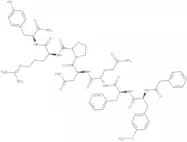
CAS:<p>Please enquire for more information about Fmoc-(Dmb)Leu-OH including the price, delivery time and more detailed product information at the technical inquiry form on this page</p>Formula:C30H33NO6Purity:Min. 95%Molecular weight:503.59 g/mol(Phenylac 1,D-Tyr(Me)2,Arg6·8,Tyr-NH29)-Vasopressin trifluoroacetate salt Phenylac-D-Tyr(Me)-Phe-Gln-Asn-Arg-Pro-Arg-Tyr-NH2 tri
CAS:<p>Please enquire for more information about (Phenylac 1,D-Tyr(Me)2,Arg6·8,Tyr-NH29)-Vasopressin trifluoroacetate salt Phenylac-D-Tyr(Me)-Phe-Gln-Asn-Arg-Pro-Arg-Tyr-NH2 tri including the price, delivery time and more detailed product information at the technical inquiry form on this page</p>Formula:C62H83N17O13Purity:Min. 95%Color and Shape:PowderMolecular weight:1,274.43 g/molN-[(RS)-1-Carboxy-3-phenyl-propyl]-Ala-Ala-Phe-4-Abz-OH trifluoroacetate salt
CAS:<p>The N-[(RS)-1-carboxy-3-phenyl-propyl]-Ala-Ala-Phe-4-Abz-OH trifluoroacetate salt is a synthetic substrate for the study of metalloendopeptidase. This compound was used to develop a model system to study the function of human liver, and has been shown to inhibit the growth of PC12 cells. The N-[(RS)-1-Carboxy-3-phenyl-propyl]-Ala-Ala-Phe-4-Abz-OH trifluoroacetate salt is also an experimental model for congestive heart failure. This compound has been shown to increase glomerular filtration rate in experimental animals as well as basic fibroblast growth factor activity in cell culture by increasing intracellular calcium levels.</p>Formula:C32H36N4O7Purity:Min. 95%Molecular weight:588.65 g/molFmoc-Asn(Trt)-Wang resin (100-200 mesh)
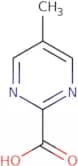
<p>Please enquire for more information about Fmoc-Asn(Trt)-Wang resin (100-200 mesh) including the price, delivery time and more detailed product information at the technical inquiry form on this page</p>Purity:Min. 95%5-Methylpyrimidine-2-carboxylic acid
CAS:<p>Please enquire for more information about 5-Methylpyrimidine-2-carboxylic acid including the price, delivery time and more detailed product information at the technical inquiry form on this page</p>Formula:C6H6N2O2Purity:Min. 95%Molecular weight:138.12 g/molFmoc-Ile-Thr(Psi(Me ,Me)pro)-OH
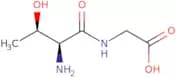
CAS:<p>Please enquire for more information about Fmoc-Ile-Thr(Psi(Me ,Me)pro)-OH including the price, delivery time and more detailed product information at the technical inquiry form on this page</p>Formula:C28H34N2O6Purity:Min. 95%Molecular weight:494.58 g/molH-Thr-Gly-OH
CAS:<p>H-Thr-Gly-OH is a synthetic polymerase chain reaction product. It is a mixture of H-Thr and Gly, which are two amino acids that are involved in the replication of DNA. The sequences of these two amino acids have been determined and found to be phylogenetically related to each other. H-Thr-Gly-OH was synthesized by the ethyl esterification of H-Thr with Gly. This reaction product has been shown to have locomotor activity in Drosophila melanogaster and may also possess some other properties that are unknown at this time.</p>Formula:C6H12N2O4Purity:Min. 95%Molecular weight:176.17 g/molPrion Protein (118-135) (human) trifluoroacetate salt
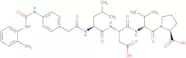
CAS:<p>Please enquire for more information about Prion Protein (118-135) (human) trifluoroacetate salt including the price, delivery time and more detailed product information at the technical inquiry form on this page</p>Formula:C68H112N18O22S2Purity:Min. 95%Molecular weight:1,597.86 g/mol(4-((2-Methylphenyl)aminocarbonyl)-aminophenyl)acetyl-Fibronectin CS-1 Fragment (1980-1983)
CAS:<p>Please enquire for more information about (4-((2-Methylphenyl)aminocarbonyl)-aminophenyl)acetyl-Fibronectin CS-1 Fragment (1980-1983) including the price, delivery time and more detailed product information at the technical inquiry form on this page</p>Formula:C36H48N6O9Purity:Min. 95%Molecular weight:708.8 g/mol










![N-[(RS)-1-Carboxy-3-phenyl-propyl]-Ala-Ala-Phe-4-Abz-OH trifluoroacetate salt](/_next/image/?url=https%3A%2Fstatic.cymitquimica.com%2Fproducts%2F3D%2Fthumb-webp%2FFR111118.webp&w=3840&q=75)