Amino Acids (AA)
Amino acids (AAs) are the fundamental building blocks of proteins, playing a crucial role in various biological processes. These organic compounds are essential for protein synthesis, metabolic pathways, and cell signaling. In this category, you will find a comprehensive range of amino acids, including essential, non-essential, and modified forms, which are vital for research in biochemistry, molecular biology, and nutritional sciences. At CymitQuimica, we provide high-quality amino acids to support your research and development needs, ensuring accuracy and reliability in your experimental outcomes.
Subcategories of "Amino Acids (AA)"
- Amino Acid Derivatives(3,955 products)
- Amino Acid and Amino Acid Related Compounds(3,451 products)
- Amino Acids with Oxygen or Sulphur(168 products)
- Boc- Amino Acids(351 products)
- Fmoc Amino Acids(1,710 products)
Found 38234 products of "Amino Acids (AA)"
Sort by
Purity (%)
0
100
|
0
|
50
|
90
|
95
|
100
Z-Ile-Glu(OtBu)-Ala-Leu-aldehyde
CAS:<p>Z-Ile-Glu(OtBu)-Ala-Leu-aldehyde, also known as ZILEAL, is a potent immunosuppressant that binds to the Toll-like receptor (TLR) and inhibits NF-κB binding activity. It has been shown to reduce the activation of macrophages by inhibiting the production of proinflammatory cytokines such as tumor necrosis factor alpha (TNFα), IL-1β, and IL-6. This drug has been shown to inhibit HIV replication in vitro and was also found to have an antiviral effect against herpes simplex virus type 1 in vivo. ZILEAL also inhibits dsDNA binding activity, which may have potential applications in cancer treatment.</p>Formula:C32H50N4O8Purity:Min. 95%Molecular weight:618.76 g/molAcetyl-ACTH (7-24) (human, bovine, rat) trifluoroacetate salt
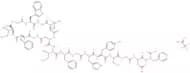
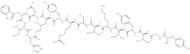
CAS:<p>Please enquire for more information about Acetyl-ACTH (7-24) (human, bovine, rat) trifluoroacetate salt including the price, delivery time and more detailed product information at the technical inquiry form on this page</p>Formula:C107H170N32O21Purity:Min. 95%Molecular weight:2,240.7 g/molZ-Lys-Pro-4MbNA formiate salt
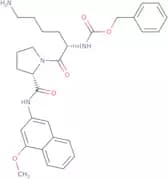
CAS:<p>Please enquire for more information about Z-Lys-Pro-4MbNA formiate salt including the price, delivery time and more detailed product information at the technical inquiry form on this page</p>Formula:C30H36N4O5Purity:Min. 95%Molecular weight:532.63 g/molPeptide WE-14
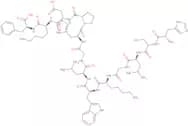
CAS:<p>Peptide WE-14 H-Trp-Ser-Lys-Met-Asp-Gln-Leu-Ala-Lys-Glu-Leu-Thr-Ala-Glu is a tetradecapeptide that is a candidate for the diagnosis of pancreatic cancer. It has been shown to localize to the pancreas and other tissues in immunohistochemical studies. This peptide was found to be present in chromaffin cells and ileal tissue, which are associated with pancreatic cancer. Peptide WE14 H Trp Ser Lys Met Asp Gln Leu Ala Lys Glu Leu Thr Ala Glu also binds to markers expressed at high levels in pancreatic cancers such as insulinoma, endocrine tumor, and neuroendocrine tumor.</p>Formula:C72H116N18O24SPurity:Min. 95%Molecular weight:1,649.86 g/mol(Met(O)35)-Amyloid b-Protein (1-40) trifluoroacetate salt
CAS:<p>Please enquire for more information about (Met(O)35)-Amyloid b-Protein (1-40) trifluoroacetate salt including the price, delivery time and more detailed product information at the technical inquiry form on this page</p>Formula:C194H295N53O59SPurity:Min. 95%Molecular weight:4,345.81 g/molHistogranin
CAS:<p>Histogranin H is a glycoprotein that is secreted by gland cells. Histogranin H has been shown to have pharmacological effects on locomotor activity and pain in animal models. This protein has also been shown to inhibit cancer growth in vitro and in vivo. In addition, it has a protective effect on the central nervous system, which may be due to its ability to increase the expression of brain-derived neurotrophic factor (BDNF). It also inhibits the proliferation of glioma cells, which are cancerous tumors that originate from glial cells in the brain. Histogranin H binds to histone proteins and glutamate receptors, which leads to an antinociceptive effect when injected into rats. The antinociceptive effect of this protein is attenuated by trypsin treatment. Histogranin H has also been shown to have an analgesic effect when injected into rats with chronic pain models.</p>Formula:C78H119N21O21SPurity:Min. 95%Molecular weight:1,718.97 g/mol(Fmoc-Glu70,Ala71·72,Lys74)-C3a (70-77)
CAS:<p>Please enquire for more information about (Fmoc-Glu70,Ala71·72,Lys74)-C3a (70-77) including the price, delivery time and more detailed product information at the technical inquiry form on this page</p>Formula:C53H80N12O13Purity:Min. 95%Molecular weight:1,093.28 g/molZ-Ala-Asp-OH
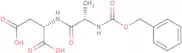
CAS:<p>Methyl ester of z-alanine and aspartic acid. The methyl ester is the reaction product of z-alanine and aspartic acid, which are modified amino acids. The methyl ester is a modification of an amino acid at its carboxyl group. This active site is found in the profile of a number of enzymes, including those that catalyze the hydrolysis of amides or esters. It may also be involved in the catalytic activity of alcohols. Z-Ala-Asp-OH can act as an inhibitor to certain enzymes that break down proteins, such as peptidases and proteases. It has been shown to be resistant to hydrolysis by amide and c-terminal amidases.</p>Formula:C15H18N2O7Purity:Min. 95%Molecular weight:338.31 g/molCART (55-76) (rat) trifluoroacetate salt
CAS:<p>Please enquire for more information about CART (55-76) (rat) trifluoroacetate salt including the price, delivery time and more detailed product information at the technical inquiry form on this page</p>Formula:C107H166N26O33S3Purity:Min. 95%Molecular weight:2,440.82 g/molActivated Protein C (390-404) (human)
CAS:<p>Please enquire for more information about Activated Protein C (390-404) (human) including the price, delivery time and more detailed product information at the technical inquiry form on this page</p>Formula:C91H130N22O23Purity:Min. 95%Molecular weight:1,900.14 g/molHymenistatin I Cyclo(-Pro-Pro-Tyr-Val-Pro-Leu-Ile-Ile)
CAS:<p>Hymenistatin I is a cyclic peptide that is synthesized from the natural amino acid L-proline. It has been shown to inhibit tumor growth and is used in the treatment of bladder cancer. The synthesis of Hymenistatin I begins with the protection of proline as an N-tert-butyloxycarbonyl derivative, followed by a sequence of coupling reactions. This synthetic process involves the use of a linker, such as tetrazole or succinimidyl ester, for example. The final product can then be purified by HPLC analysis. Hymenistatin I inhibits calcineurin inhibitor, which are immunosuppressive agents that are used to treat lymphocytic leukemia and other autoimmune diseases.</p>Formula:C47H72N8O9Purity:Min. 95%Molecular weight:893.12 g/molN-Boc-glycine
CAS:<p>N-Boc-glycine is a chemical compound used in the synthesis of cyclic peptides. N-Boc-glycine is synthesized by the reaction of glycine with methanol and hydrochloric acid in the presence of an activated form of carbon monoxide. The pharmacokinetic properties of N-Boc-glycine are similar to those for human immunoglobulin, and it can be used as a reference compound for preparative high performance liquid chromatography (HPLC). It has been shown that the nitrogen atoms in N-Boc-glycine are chemically stable, which makes it suitable for asymmetric synthesis. N-Boc-glycine also has potent antagonist effects on biochemical properties such as calcium channel blockade, inhibition of platelet aggregation, and inhibition of neutrophil chemotaxis.</p>Formula:C7H13NO4Purity:Min. 95%Color and Shape:White PowderMolecular weight:175.18 g/molFmoc-Ile-OH
CAS:<p>Fmoc-Ile-OH is a cyclic peptide that has shown cytotoxic activity against cultured human brain cells. It is also an inhibitor of dipeptidyl peptidase IV (DPP-IV) and inhibits the breakdown of proteins in the brain, such as insulin. Fmoc-Ile-OH binds to the active site of DPP-IV and prevents it from binding to its substrate, thereby inhibiting the enzyme's activity. The inhibition of DPP-IV leads to increased levels of protein in the brain, which may be beneficial for people with Alzheimer's disease. Fmoc-Ile-OH is synthesized on a solid phase by coupling an amino acid with a protected carboxylic acid to yield a protected amide. This product can be used as an encapsulating agent for atosiban, a drug that is used to treat preterm labor.END>></p>Formula:C21H23NO4Purity:Min. 98 Area-%Color and Shape:White Off-White PowderMolecular weight:353.41 g/molAc-Arg-Ser-Leu-Lys-AMC trifluoroacetate salt
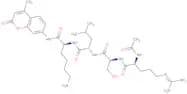
CAS:<p>Please enquire for more information about Ac-Arg-Ser-Leu-Lys-AMC trifluoroacetate salt including the price, delivery time and more detailed product information at the technical inquiry form on this page</p>Formula:C33H51N9O8•C2HF3O2Purity:Min. 95 Area-%Color and Shape:PowderMolecular weight:815.83 g/mol(H-Gly-Cys-OH)2 (Disulfide bond)
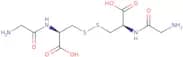
CAS:<p>Please enquire for more information about (H-Gly-Cys-OH)2 (Disulfide bond) including the price, delivery time and more detailed product information at the technical inquiry form on this page</p>Formula:C10H18N4O6S2Purity:Min. 95%Color and Shape:PowderMolecular weight:354.41 g/molL-Cysteine hydrochloride anhydrous
CAS:<p>L-Cysteine hydrochloride anhydrous is an amino acid that is used in the treatment of bowel disease. It is also a precursor for glutathione, which has antioxidant properties and helps maintain iron homeostasis. L-Cysteine hydrochloride anhydrous has been shown to inhibit the oxidation of proteins by reacting with reactive oxygen species (ROS) such as nitric oxide, superoxide, and hydrogen peroxide. This amino acid also interacts with toll-like receptor 4 (TLR4), which may account for its natural anti-inflammatory properties. L-Cysteine hydrochloride anhydrous can be synthesized from cysteine and glutamic acid using a CDNA clone encoding the enzyme cystathionine β-synthase. The synthesis of this amino acid requires a number of biochemical reactions including hydrogen bonding interactions with inhibitor molecules such as dihydrofolate reductase, metalloproteases, and thiored</p>Formula:C3H7NO2S·HClColor and Shape:White Off-White PowderMolecular weight:157.62 g/molGly-Neuroendocrine Regulatory Peptide-3 (human, mouse, rat) trifluoroacetate salt
CAS:<p>Please enquire for more information about Gly-Neuroendocrine Regulatory Peptide-3 (human, mouse, rat) trifluoroacetate salt including the price, delivery time and more detailed product information at the technical inquiry form on this page</p>Formula:C146H234N46O52Purity:Min. 95%Molecular weight:3,465.7 g/molH-Lys(Abz)-Pro-Pro-pNA
CAS:<p>H-Lys(Abz)-Pro-Pro-pNA is a potent and selective DPP-IV inhibitor that has been shown to be active in humans. This drug binds to the DPP-IV enzyme and prevents it from breaking down the incretin hormone, GLP-1, which is released by the intestine in response to food intake. This leads to increased insulin production and an improved glycemic profile in people with type 2 diabetes. H-Lys(Abz)-Pro-Pro-pNA also inhibits endoproteolysis of dipeptidyl peptidase IV (DPPIV), which reduces its activity against other enzymes such as amyloid beta protein precursor protein (APP) and angiotensin II receptor type 1 (AT1R).</p>Formula:C29H37N7O6Purity:Min. 95%Molecular weight:579.65 g/molH-D-Arg-Gly-Asp-Trp-OH
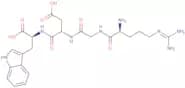
CAS:<p>H-D-Arg-Gly-Asp-Trp-OH is a cyclic peptide that has been shown to bind to staphylococcal cells, inhibiting their growth. The peptide was found to have proton binding and membrane interactions. This drug has shown efficacy in biological samples such as collagen and fibrinogen. H-D-Arg-Gly-Asp-Trp-OH also can be activated by a disulfide bond. It has been found to bind with monoclonal antibodies and model systems.</p>Formula:C23H32N8O7Purity:Min. 95%Molecular weight:532.55 g/mol4-[(4-Nitrophenyl)-azo]-phenol
CAS:<p>4-[(4-Nitrophenyl)-azo]-phenol is a molecular compound that has a nitro group, an azo group, and a phenolic hydroxyl group. It's also known as nitrophenyl diazonium salt. 4-[(4-Nitrophenyl)-azo]-phenol is used in the synthesis of other compounds such as dyes and pharmaceuticals. The magnetic resonance spectroscopy and optical microscope techniques were used to study the chemical structure of 4-[(4-Nitrophenyl)-azo]-phenol. The titration method was used to determine the purity of this compound. 4-[(4-Nitrophenyl)-azo]-phenol has been shown to have mesomorphic properties, which are exhibited by its ability to be either solid or liquid at room temperature (25°C). This property may be due to its functional groups that stabilize it in both states.</p>Purity:Min. 95%Neuropeptide Y (2-36) (porcine) trifluoroacetate salt
CAS:<p>Please enquire for more information about Neuropeptide Y (2-36) (porcine) trifluoroacetate salt including the price, delivery time and more detailed product information at the technical inquiry form on this page</p>Formula:C181H278N54O55Purity:Min. 95%Molecular weight:4,090.47 g/molZ-Val-Ala-Asp-AMC
CAS:<p>Z-Val-Ala-Asp-AMC is a photoactive peptide that is activated by light exposure. This drug has cytostatic and cardiotoxic effects, which may be due to its ability to induce autophagy. Z-Val-Ala-Asp-AMC induces cell death in cancer cells through the activation of caspase independent pathways. It also inhibits nitroprusside induced apoptosis in cultured skin cells, suggesting that it may have therapeutic potential for the treatment of cancer.</p>Formula:C30H34N4O9Purity:Min. 95%Molecular weight:594.61 g/mol2-Phenylpyridine
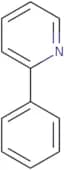
CAS:<p>2-Phenylpyridine is a heterocyclic organic compound that has been shown to have x-ray crystal structures. It has redox potentials, nitrogen atoms, and a fatty acid group attached. 2-Phenylpyridine has been shown to have nmr spectra that are characteristic of a transfer reaction mechanism. The steric interactions and the biphenyl groups have been shown to have ancillary effects on the reaction mechanism. 2-Phenylpyridine is also known to coordinate in a geometric shape called octahedral, which is most likely due to hydrogen bonding and photophysical properties. The analytical chemistry of this molecule consists of determining its melting point, boiling point, and density. 2-phenylpyridine</p>Formula:C11H9NPurity:Min. 95%Molecular weight:155.2 g/molBoc-Val-Arg-AMC•HCl
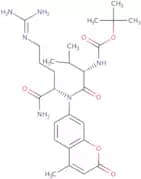
CAS:<p>Please enquire for more information about Boc-Val-Arg-AMC•HCl including the price, delivery time and more detailed product information at the technical inquiry form on this page</p>Formula:C26H38N6O6•HClPurity:Min. 95%Color and Shape:PowderMolecular weight:567.08 g/molCholecystokinin Octapeptide (1-4) (sulfated)
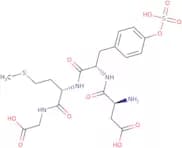
CAS:<p>Please enquire for more information about Cholecystokinin Octapeptide (1-4) (sulfated) including the price, delivery time and more detailed product information at the technical inquiry form on this page</p>Formula:C20H28N4O11S2Purity:Min. 95%Molecular weight:564.59 g/molH-β-Ala-Gly-OH
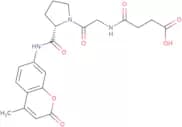
CAS:<p>H-beta-Ala-Gly-OH is a monoclinic crystalline compound. It is soluble in water and slightly soluble in ethanol, acetone, and benzene. The solubility of this compound depends on the pH of the solution as well as the presence of glycine. H-beta-Ala-Gly-OH has an upfield shift when protonated, making it useful for analytical purposes. This compound can be used to prepare glycine methyl ester by reacting with methanol or hydrochloric acid.</p>Formula:C5H10N2O3Purity:Min. 95%Molecular weight:146.14 g/molSuc-Gly-Pro-AMC
CAS:<p>AMC-conjugated molecule targeting the fibroblast activation protein (FAP)</p>Formula:C21H23N3O7Purity:Min. 95%Molecular weight:429.42 g/molMyelin Proteolipid Protein (139-151) (depalmitoylated) (human, bovine, dog, mouse, rat) trifluoroacetate salt
CAS:<p>MPLP(139-151) is a peptide that is derived from the myelin proteolipid protein (PLP). MPLP(139-151) has been shown to inhibit macrophage inflammatory in vitro and brain inflammation in vivo. The inhibition of macrophages was mediated by the induction of apoptosis and inhibition of NF-κB. MPLP(139-151) also induced regression of experimental autoimmune encephalomyelitis in mice, which suggests that it might be useful as a therapeutic agent for multiple sclerosis or other inflammatory diseases.</p>Formula:C72H104N20O16SPurity:Min. 95%Molecular weight:1,537.79 g/molBiotinyl-epsilonAhx-ω-Conotoxin GVIA trifluoroacetate salt
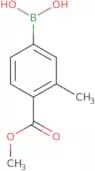
CAS:Controlled Product<p>Please enquire for more information about Biotinyl-epsilonAhx-omega-Conotoxin GVIA trifluoroacetate salt including the price, delivery time and more detailed product information at the technical inquiry form on this page</p>Formula:C136H207N41O46S7Purity:Min. 95%Molecular weight:3,376.81 g/mol(4-(Methoxycarbonyl)-3-Methylphenyl)boronic acid
CAS:<p>Please enquire for more information about (4-(Methoxycarbonyl)-3-Methylphenyl)boronic acid including the price, delivery time and more detailed product information at the technical inquiry form on this page</p>Formula:C9H11BO4Purity:Min. 95%Molecular weight:193.99 g/molH-Phe-Pro-Arg-OH
CAS:<p>H-Phe-Pro-Arg-OH is an active analogue of the natural amino acid, lysine. It has been shown to inhibit protein synthesis by binding to the lysine residues in proteins. This inhibition blocks the hydrophobic effect that is necessary for proper folding of newly synthesized proteins. Lysine's role in protein synthesis also extends to spermatozoa and blood clotting, which are inhibited by H-Phe-Pro-Arg-OH. The inhibition of lysine residues in human serum fibrinogen and thrombin may lead to a reduction in their ability to form clots. H-Phe-Pro-Arg-OH has also been shown to be an anticoagulant and thermodynamic data supports this conclusion. X ray crystal structures and titration calorimetry have confirmed that this compound binds to lysine residues with high affinity and specificity.</p>Formula:C20H30N6O4Purity:Min. 95%Molecular weight:418.49 g/molCaerulein (desulfated)
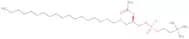
CAS:<p>Caerulein (desulfated) Pyr-Gln-Asp-Tyr-Thr-Gly-Trp-Met-Asp-Phe-NH2 is a decapeptide that is found in the Australian frog, Caerulea. It has been shown to be a potent extractant of ionic materials and can be used in the separation of proteins by ion exchange chromatography. The sequence is as follows: Caerulein (desulfated) Pyr-Gln-Asp-Tyr-Thr-Gly-Trp-Met-Asp-Phe. It has an acid composition of Cys, Asp, Tyr, Glu, Pro, Gly, Phe and Met. The amino acid composition is Pro, Ala, Gly, Val, Gln and Leu. Caerulein (desulfated) Pyr-Gln has been shown to have antihypertensive effects due to</p>Formula:C58H73N13O18SPurity:Min. 95%Molecular weight:1,272.34 g/mol1-O-Octadecyl-2-O-acetyl-sn-glycero-3-phosphocholine
CAS:<p>1-O-Octadecyl-2-O-acetyl-sn-glycero-3-phosphocholine (OGPC) is a phospholipid that has been shown to be an effective drug in the treatment of chronic arthritis. It is a potent antagonist of the inflammatory response, and has been shown to inhibit the production of inflammatory cytokines such as tumour necrosis factor alpha (TNFα). OGPC has been used in cell culture studies, which have shown that it inhibits IL2 receptor binding and TNFα release by human monocytes. Clinical studies have also shown that OGPC can be used to treat arthritis.</p>Formula:C28H58NO7PPurity:Min. 95%Molecular weight:551.74 g/molPrepro-Atrial Natriuretic Factor (104-123) (human)
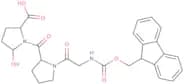
CAS:<p>Prepro-Atrial Natriuretic Factor (104-123) (human) H-Ser-Ser-Asp-Arg-Ser-Ala-Leu-Leu-Lys-Ser-Lys-Leu-Arg-Ala-Leu-Leu -Thr-Ala Pro Arg -OH is a natriuretic peptide hormone that belongs to the family of hormones called atrial natriuretic peptides. It is produced in the heart and has been shown to lower blood pressure by dilating blood vessels. Prepronatrial atrial natriuretic factor can also be used as a marker for colorectal adenocarcinoma, with high levels found in the serum of patients suffering from this disease.</p>Formula:C94H171N31O28Purity:Min. 95%Molecular weight:2,183.56 g/molFmoc-Gly-Pro-Hyp-OH
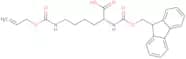
CAS:<p>Fmoc-Gly-Pro-Hyp-OH is a synthetic single-stranded amide with a stepwise hydrogen bond. The synthesis of this compound starts with the creation of an ester by reacting an acid and alcohol in the presence of catalysts. The ester is then reacted with a primary amine to form an amide, which can be hydrolyzed to release the desired product. This synthetic process has been used for the production of collagen and cyclic peptides. Fmoc-Gly-Pro-Hyp-OH has been modified to include modifications such as alkene and modifications such as strategies, synthons, and isosteres.</p>Formula:C27H29N3O7Purity:Min. 95%Molecular weight:507.54 g/molN-α-Fmoc-Nε-allyloxycarbonyl-D-lysine
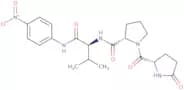
CAS:<p>N-alpha-Fmoc-Nepsilon-allyloxycarbonyl-D-lysine is a medicament that is modified with an amino group at the alpha position. It is synthesized by modification of the chain with a ganirelix acetate. N-alpha-Fmoc-Nepsilon-allyloxycarbonyl-D-lysine can be used to produce ganirelix, which inhibits the release of follicle stimulating hormone (FSH). The chemical synthesis of this drug has been shown to be successful in large scale production, and it has been shown to be effective in treating patients with prostate cancer. Impurities in this drug have been found and treated by removing the methyl ester group from the lysine residue.</p>Formula:C25H28N2O6Purity:Min. 95%Molecular weight:452.5 g/molPyr-Pro-Val-pNA trifluoroacetate salt
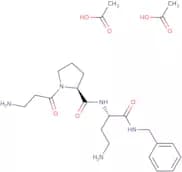
CAS:<p>Pyr-Pro-Val-pNA is a synthetic peptide that is structurally homologous to the proteases serine and chymotrypsin. This peptide has been shown to have proteolytic activity on fibronectin, n-terminal of angiotensin, and epithelium. Pyr-Pro-Val-pNA also causes an inflammatory response in leukocytes and shigella.</p>Formula:C21H27N5O6Purity:Min. 95%Molecular weight:445.47 g/mol(2S)-β-Alanyl-L-prolyl-2,4-diamino-N-(phenylmethyl)butanamideacetate
CAS:Controlled Product<p>(2S)-beta-Alanyl-L-prolyl-2,4-diamino-N-(phenylmethyl)butanamideacetate (BAP) is a skin care product that can be applied topically to the skin. BAP is an amino acid derivative that has been shown in clinical studies to hydrate the skin. It acts as a humectant and binds to water molecules, thus increasing the moisture content of the skin. This product also has antioxidant and anti-inflammatory properties, as well as anti-aging effects. BAP is often used in cosmetic products for its film forming properties and ability to form polymeric films on the surface of cells.</p>Formula:C21H33N5O5Purity:Min. 95%Molecular weight:435.52 g/molH-Ala-Ala-Ala-Tyr-Ala-Ala-OH
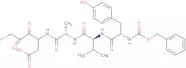
CAS:<p>Please enquire for more information about H-Ala-Ala-Ala-Tyr-Ala-Ala-OH including the price, delivery time and more detailed product information at the technical inquiry form on this page</p>Formula:C24H36N6O8Purity:Min. 95%Molecular weight:536.58 g/molZ-Tyr-Val-Ala-DL-Asp-fluoromethylketone
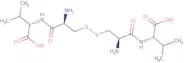
CAS:<p>Please enquire for more information about Z-Tyr-Val-Ala-DL-Asp-fluoromethylketone including the price, delivery time and more detailed product information at the technical inquiry form on this page</p>Formula:C30H37FN4O9Purity:Min. 95%Molecular weight:616.63 g/mol(H-Cys-Val-OH)2 (Disulfide bond)
CAS:<p>Please enquire for more information about (H-Cys-Val-OH)2 (Disulfide bond) including the price, delivery time and more detailed product information at the technical inquiry form on this page</p>Formula:C16H30N4O6S2Purity:Min. 95%Molecular weight:438.56 g/molAloc-OSu
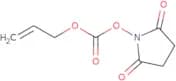
CAS:<p>Aloc-OSu is a glycosylated glycopeptide antibiotic that belongs to the class of degradable antibiotics. The drug binds to the enzyme UDP-N-acetylglucosamine:glycoprotein glucosyltransferase, thereby inhibiting bacterial cell wall synthesis. Aloc-OSu has been shown to be effective against methicillin resistant Staphylococcus aureus (MRSA) and Clostridium perfringens, although is not active against acid-fast bacteria such as Mycobacterium tuberculosis or Mycobacterium avium complex. Aloc-OSu has shown anti-inflammatory properties, which may be due to its inhibition of prostaglandin synthesis.</p>Formula:C8H9NO5Purity:Min. 95%Molecular weight:199.16 g/molBoc-trans-4-aminocyclohexane acetic acid
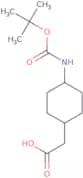
CAS:<p>Please enquire for more information about Boc-trans-4-aminocyclohexane acetic acid including the price, delivery time and more detailed product information at the technical inquiry form on this page</p>Formula:C13H23NO4Molecular weight:257.33 g/molAc-Ala-Ala-OMe
CAS:<p>Ac-Ala-Ala-OMe is a molecule that has conformational and interaction properties. It is an amide residue found in proteins. The amino acid sequence of Ac-Ala-Ala-OMe contains an elongating residue with a specific profile, which can be used as a molecule to study acylases. Acetamide, the precursor of Ac-Ala-Ala-OMe, is an acid methyl ester that has been shown to interact with chloride ions. When acetamide interacts with chloride ions, it undergoes a shift in its structure and produces the product Ac-Ala-Ala-OMe. This process may be due to solvent effects (i.e., the effect of water).</p>Formula:C9H16N2O4Purity:Min. 95%Molecular weight:216.23 g/molHippuryl-Cys(2-aminoethyl)-OH hydrochloride salt
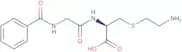
CAS:<p>Please enquire for more information about Hippuryl-Cys(2-aminoethyl)-OH hydrochloride salt including the price, delivery time and more detailed product information at the technical inquiry form on this page</p>Formula:C14H19N3O4SPurity:Min. 95%Molecular weight:325.38 g/molAc-Thr-Ile-Nle-psi(CH2NH) Nle-Gln-Arg-NH2
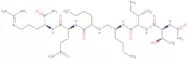
CAS:<p>Ac-Thr-Ile-Nle-psi(CH2NH) Nle-Gln-Arg-NH2 is a protease inhibitor that prevents the breakdown of proteins by inhibiting the activity of proteases. It binds to the active site of these enzymes and blocks the access of other substrates. Ac-Thr-Ile-Nle-psi(CH2NH) Nle-Gln-Arg-NH2 has been shown to bind to a number of proteases, including serine, cysteine, aspartic acid, and metalloendoproteases. It inhibits the hydrolysis of peptide bonds in proteins by binding to the active site and blocking access to other substrates. The chemical structure is hydrophobic due to presence of a hydroxy group that can interact with hydrophobic regions on proteins. Acetylation at position Thr1 is important for its inhibitory activity against certain proteases such as</p>Formula:C35H67N11O8Purity:Min. 95%Molecular weight:769.98 g/molAnantin (linear sequence) trifluoroacetate salt
CAS:<p>Please enquire for more information about Anantin (linear sequence) trifluoroacetate salt including the price, delivery time and more detailed product information at the technical inquiry form on this page</p>Formula:C90H113N21O25Purity:Min. 95%Molecular weight:1,888.99 g/molH-Arg-Gly-OH·HCl
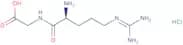
CAS:<p>Please enquire for more information about H-Arg-Gly-OH·HCl including the price, delivery time and more detailed product information at the technical inquiry form on this page</p>Formula:C8H17N5O3·HClPurity:Min. 95%Molecular weight:267.71 g/mol(Des-Gly10,D-His(Bzl)6,D-Leu7,Pro-NHEt 9)-LHRH acetate salt
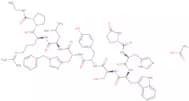
CAS:Controlled Product<p>Please enquire for more information about (Des-Gly10,D-His(Bzl)6,D-Leu7,Pro-NHEt 9)-LHRH acetate salt including the price, delivery time and more detailed product information at the technical inquiry form on this page</p>Formula:C66H86N18O12Purity:Min. 95%Molecular weight:1,323.5 g/molSyndyphalin SD-33
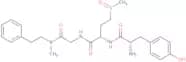
CAS:<p>Please enquire for more information about Syndyphalin SD-33 including the price, delivery time and more detailed product information at the technical inquiry form on this page</p>Formula:C25H34N4O5SPurity:Min. 95%Molecular weight:502.63 g/mol









![4-[(4-Nitrophenyl)-azo]-phenol](/_next/image/?url=https%3A%2Fstatic.cymitquimica.com%2Fproducts%2F3D%2Fthumb-webp%2FFN31052.webp&w=3840&q=75)