Amino Acids (AA)
Amino acids (AAs) are the fundamental building blocks of proteins, playing a crucial role in various biological processes. These organic compounds are essential for protein synthesis, metabolic pathways, and cell signaling. In this category, you will find a comprehensive range of amino acids, including essential, non-essential, and modified forms, which are vital for research in biochemistry, molecular biology, and nutritional sciences. At CymitQuimica, we provide high-quality amino acids to support your research and development needs, ensuring accuracy and reliability in your experimental outcomes.
Subcategories of "Amino Acids (AA)"
- Amino Acid Derivatives(3,957 products)
- Amino Acid and Amino Acid Related Compounds(3,472 products)
- Amino Acids with Oxygen or Sulphur(168 products)
- Boc- Amino Acids(351 products)
- Fmoc Amino Acids(1,710 products)
Found 38265 products of "Amino Acids (AA)"
Sort by
Purity (%)
0
100
|
0
|
50
|
90
|
95
|
100
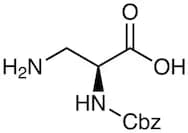
3-Amino-N-benzyloxycarbonyl-L-alanine
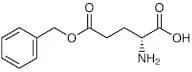
CAS:Formula:C11H14N2O4Purity:>98.0%(T)(HPLC)Color and Shape:White to Almost white powder to crystalMolecular weight:238.245-Benzyl D-Glutamate
CAS:Formula:C12H15NO4Purity:>98.0%(T)(HPLC)Color and Shape:White to Almost white powder to crystalMolecular weight:237.26Ref: 4Z-C-77119
Discontinued productRef: 4Z-A-767
Discontinued productD-Threo-Methylphenidate EP Impurity A-d9 (D-Threo-Methylphenidate USP Related Compound A-d9 (Free Form), D-Threo-Ritalinic Acid-d9)
Formula:C13H8D9NO2Molecular weight:228.34Ref: 4Z-M-137037
Discontinued productRef: 4Z-A-331069
Discontinued productRef: 4Z-P-212058
Discontinued productRef: 4Z-C-77150
Discontinued productRef: 4Z-C-77151
Discontinued productRef: 4Z-P-219016
Discontinued productRef: 4Z-C-77143
Discontinued productRef: 4Z-P-57150
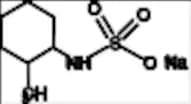
Discontinued productSodium N-(2-Methylcyclohexyl)sulfamate
CAS:Formula:C7H14NO3S·NaColor and Shape:White To Off-White SolidMolecular weight:192.25 22.99Ref: 4Z-S-054005
Discontinued productRef: 4Z-G-1310
Discontinued productRef: 4Z-C-418026
Discontinued productVitamin E Related Compound 1 (2-Methyl-2-(4,8,12-Trimethyltridecyl)-6-Chromanol)
CAS:Formula:C26H44O2Molecular weight:388.64Ref: 4Z-V-086
Discontinued productRef: 4Z-P-228085
Discontinued product(Z)-4-Hydroxy-N-Desmethyl Tamoxifen (Endoxifen) β-D-Glucuronide
CAS:Formula:C31H35NO8Molecular weight:549.62Ref: 4Z-T-0133
Discontinued productRef: 4Z-G-1311
Discontinued productRef: 4Z-A-155046
Discontinued productRef: 4Z-P-212022
Discontinued productRef: 4Z-I-091003
Discontinued productRef: 4Z-A-155020
Discontinued productRef: 4Z-C-77136
Discontinued product2,3,4,9-Tetrahydro-2-methyl-9-phenyl-1H-pyrido[3,4-b]indol-1-one
CAS:Formula:C18H16N2OMolecular weight:276.34Ref: 4Z-H-153
Discontinued productRef: 4Z-C-77138
Discontinued productRef: 4Z-P-147057
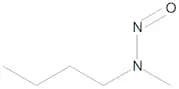
Discontinued productN-Butyl-N-methylnitrosamine
CAS:<p>Applications N-Butyl-N-methylnitrosamine, is an nitroso impurity found in “Sartans” , a class of drugs that block the action of angiotensin.<br> Not a dangerous good if item is equal to or less than 1g/ml and there is less than 100g/ml in the package<br></p>Formula:C5H12N2OColor and Shape:Light YellowMolecular weight:116.16(S)-2-(4-(2-(2-Amino-4-oxo-4,7-dihydro-1H-pyrrolo[2,3-d]pyrimidin-5-yl)ethyl)benzamido)pentanedioic acid
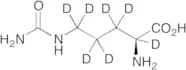
CAS:Purity:95.0%Color and Shape:Solid, Blue powderMolecular weight:427.4169921875L-Citrulline-d7
CAS:Controlled Product<p>Applications L-Citrulline-d7, is the labeled analogue of L-Citrulline (C535700), which is an amino acid, first isolated from the juice of watermelon, Citrullus vulgaris Schrad., Cucurbitaceae. It is also used in the treatment of asthenia.<br>References Kurtz, et al.: J. Biol. Chem., 122, 477 (1938), Rajantie, J., et al.: J. Pediatr., 97, 927 (1980), Carpenter, T.O., et al.: N. Engl. J. Med., 312, 290 (1985),<br></p>Formula:C6D7H6N3O3Color and Shape:NeatMolecular weight:182.23DL-Methionine Methylsulfonium Chloride
CAS:Controlled Product<p>Applications DL-Methionine methylsulfonium chloride (cas# 3493-12-07) is a useful research chemical.<br></p>Formula:C6H14ClNO2SColor and Shape:NeatMolecular weight:199.7Ref: 10-F693590
Discontinued product(1R,4R)-rel-2-Benzyl-5-(tert-butoxycarbonyl)-2,5-diazabicyclo[2.2.1]heptane-3-carboxylic acid
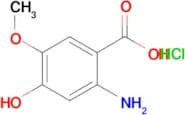
CAS:Molecular weight:332.42-amino-4-hydroxy-5-methoxybenzoic acid hydrochloride
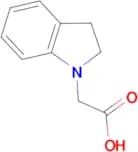
CAS:Purity:95.0%Molecular weight:219.6199951171875(2,3-Dihydro-1H-indol-1-yl)acetic acid
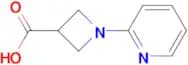
CAS:Purity:95.0%Color and Shape:SolidMolecular weight:177.20300292968751-(Pyridin-2-yl)azetidine-3-carboxylic acid
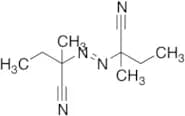
CAS:Color and Shape:SolidMolecular weight:178.19099426269532,2'-Azobis-(2-methylbutyronitrile)
CAS:<p>Applications 2,2'-AZOBIS-(2-METHYLBUTYRONITRILE) (cas# 13472-08-7) is a useful research chemical.<br>Dangerous Goods Info This compound is forbidden to ship by air under IATA regulations.<br></p>Formula:C10H16N4Color and Shape:White to Off-White SolidMolecular weight:192.27(1R,2S,3S,5S)-3-(4-Iodophenyl)-8-methyl-8-azabicyclo[3.2.1]octane-2-carboxylicacid methyl ester
CAS:Controlled Product<p>(1R,2S,3S,5S)-3-(4-Iodophenyl)-8-methyl-8-azabicyclo[3.2.1]octane-2-carboxylicacid methyl ester is a molecule that has been shown to be effective in lowering the symptoms of Parkinson's disease. It also prevents the uptake of dopamine and serotonin in the brain by binding to dopamine and serotonin transporters on the cell membrane. This drug has been shown to be safe at doses up to 100 mg/kg/day in rats, but has not been tested in humans. The drug is stable in neutral pH environments and does not degrade upon exposure to light or oxygen.</p>Formula:C16H20INO2Purity:Min. 95%Molecular weight:385.24 g/mol7-[5-(Fluoro-methyl-phosphoryl)oxypentyl]-4-nitro-2,1,3-benzoxadiazole
CAS:Controlled Product<p>7-[5-(Fluoro-methyl-phosphoryl)oxypentyl]-4-nitro-2,1,3-benzoxadiazole is a reactivator of the central nervous system. It is a noncompetitive antagonist at muscarinic receptors and blocks postsynaptic acetylcholine release from cholinergic neurons. It has been shown to have no effect on blood pressure but does cause an increase in locomotor activity in animals. This drug binds to the hippocampal formation and the ventral hippocampus, which are areas of the brain that are involved in memory and spatial navigation. The distribution of this drug postulated to be due to its ability to penetrate micron sized openings in cell membranes.</p>Formula:C12H15FN3O5PPurity:Min. 95%Molecular weight:331.24 g/molGly-Asp-OH
CAS:<p>Gly-Asp-OH is a medicine that has proliferative activity. It is also an immunoregulatory and biologically active substance, which suppresses the production of cytokines IL-10 in mononuclear cells. Gly-Asp-OH is a synthetic compound with medicinal properties. The structure of this compound was elucidated by chemical analysis and spectroscopic methods. It can be used as an anti-inflammatory agent or to prevent cell death induced by necrosis or apoptosis.</p>Formula:C6H10N2O5Purity:Min. 95 Area-%Color and Shape:PowderMolecular weight:190.15 g/mol(Fluoro-Methylphosphoryl)Oxycyclohexane
CAS:Controlled Product<p>(Fluoro-Methylphosphoryl)Oxycyclohexane is an organophosphorus compound that acts as a nerve agent. It inhibits the enzyme acetylcholinesterase, which is responsible for breaking down acetylcholine, leading to excess cholinergic stimulation. This can cause excessive contraction of muscles or even death. The exposure to (Fluoro-Methylphosphoryl)Oxycyclohexane can be detected by analytical methods such as gas chromatography/mass spectrometry. Oximes are used in the reactivation of acetylcholinesterase and are effective in preventing neuronal death. They bind to the phosphonyl group in (Fluoro-Methylphosphoryl)Oxycyclohexane and prevent it from inhibiting the enzyme acetylcholinesterase.</p>Formula:C7H14FO2PPurity:Min. 95%Molecular weight:180.16 g/mol5-Methylindole-3-acetic acid
CAS:<p>5-Methylindole-3-acetic acid (5MI3A) is a molecule that has been shown to have antiproliferative properties in bladder cancer cells. 5MI3A binds to the receptor for GABA, which is an inhibitory neurotransmitter. It also inhibits the production of proinflammatory mediators and reactive oxygen species in cancer cells. 5MI3A has anticancer activity in prostate cancer cells and may act by inducing apoptosis and inhibiting cell proliferation. Consumption of 5MI3A may reduce the risk of cancer development by preventing DNA damage from carcinogens, suppressing inflammation, and regulating cell growth through its antagonistic properties.</p>Formula:C11H11NO2Purity:Min. 95%Color and Shape:PowderMolecular weight:189.21 g/molRef: 3D-FM30491
Discontinued product1-[3-(Fluoro-Methylphosphoryl)Oxypropyl]Pyrene
CAS:Controlled Product<p>1-[3-(Fluoro-Methylphosphoryl)Oxypropyl]Pyrene is a fluorescent derivative of pyrene. It has been used to label DNA and proteins for experiments involving fluorescence. The fluorophores in 1-[3-(Fluoro-Methylphosphoryl)Oxypropyl]Pyrene are activated by laser light, which causes emission of light at a wavelength of 590 nm. The emission spectrum of 1-[3-(Fluoro-Methylphosphoryl)Oxypropyl]Pyrene is sensitive to the environment and changes with chemical modification.</p>Formula:C20H18FO2PPurity:Min. 95%Molecular weight:340.33 g/mol1-(3,4-Methylenedioxyphenyl) 2-nitropropene
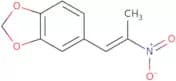
CAS:<p>1-(3,4-Methylenedioxyphenyl) 2-nitropropene (1-MPNP) is a phosphatase inhibitor that is active against gram-negative bacteria by inhibiting enterotoxins and chlamydia. 1-MPNP inhibits the activity of tyrosine phosphatases, which are enzymes that play a major role in bacterial virulence. 1-MPNP competitively inhibits the activity of tyrosine phosphatases and prevents them from catalyzing the hydrolysis of polyphosphate substrates. This inhibition leads to an accumulation of polyphosphates in the bacterial cell membrane, which disrupts its permeability and leads to cell death.</p>Formula:C10H9NO4Purity:Min. 97.5 Area-%Color and Shape:Yellow PowderMolecular weight:207.18 g/molRef: 3D-FM67977
Discontinued product







![2,3,4,9-Tetrahydro-2-methyl-9-phenyl-1H-pyrido[3,4-b]indol-1-one](/_next/image/?url=https%3A%2Fstatic.cymitquimica.com%2Fproducts%2F4Z%2Fthumb-webp%2FH-153.webp&w=3840&q=75)




![2-[4-(methylamino)-3-nitrobenzoyl]benzoic acid](/_next/image/?url=https%3A%2Fstatic.cymitquimica.com%2Fproducts%2F10%2Fthumb-webp%2FF518183.webp&w=3840&q=75)
![(S)-2-(4-(2-(2-Amino-4-oxo-4,7-dihydro-1H-pyrrolo[2,3-d]pyrimidin-5-yl)ethyl)benzamido)pentanedioi…](/_next/image/?url=https%3A%2Fstatic.cymitquimica.com%2Fproducts%2F10%2Fthumb-webp%2FF079404.webp&w=3840&q=75)

![(1R,4R)-rel-2-Benzyl-5-(tert-butoxycarbonyl)-2,5-diazabicyclo[2.2.1]heptane-3-carboxylic acid](/_next/image/?url=https%3A%2Fstatic.cymitquimica.com%2Fproducts%2F10%2Fthumb-webp%2FF986861.webp&w=3840&q=75)
![(1R,2S,3S,5S)-3-(4-Iodophenyl)-8-methyl-8-azabicyclo[3.2.1]octane-2-carboxylicacid methyl ester](/_next/image/?url=https%3A%2Fstatic.cymitquimica.com%2Fproducts%2F3D%2Fthumb-webp%2FFI76761.webp&w=3840&q=75)

![7-[5-(Fluoro-methyl-phosphoryl)oxypentyl]-4-nitro-2,1,3-benzoxadiazole](/_next/image/?url=https%3A%2Fstatic.cymitquimica.com%2Fproducts%2F3D%2Fthumb-webp%2FFF98971.webp&w=3840&q=75)


![1-[3-(Fluoro-Methylphosphoryl)Oxypropyl]Pyrene](/_next/image/?url=https%3A%2Fstatic.cymitquimica.com%2Fproducts%2F3D%2Fthumb-webp%2FFF89825.webp&w=3840&q=75)