Amino Acids (AA)
Amino acids (AAs) are the fundamental building blocks of proteins, playing a crucial role in various biological processes. These organic compounds are essential for protein synthesis, metabolic pathways, and cell signaling. In this category, you will find a comprehensive range of amino acids, including essential, non-essential, and modified forms, which are vital for research in biochemistry, molecular biology, and nutritional sciences. At CymitQuimica, we provide high-quality amino acids to support your research and development needs, ensuring accuracy and reliability in your experimental outcomes.
Subcategories of "Amino Acids (AA)"
- Amino Acid Derivatives(3,957 products)
- Amino Acid and Amino Acid Related Compounds(3,472 products)
- Amino Acids with Oxygen or Sulphur(168 products)
- Boc- Amino Acids(351 products)
- Fmoc Amino Acids(1,710 products)
Found 38265 products of "Amino Acids (AA)"
Sort by
Purity (%)
0
100
|
0
|
50
|
90
|
95
|
100
N-Methyl mesoporphyrin IX
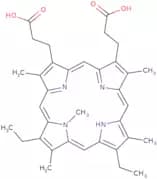
CAS:<p>N-Methyl mesoporphyrin IX is a molecule that inhibits the activity of enzymes such as carboxylesterases, proteases, and aminopeptidases. It binds to the active site of these enzymes and blocks the enzyme's activity. N-Methyl mesoporphyrin IX has been shown to inhibit cancer cells in humans and can be used as an adjunct treatment for cancer. This drug also has anti-inflammatory properties due to its ability to inhibit prostaglandins synthesis. N-Methyl mesoporphyrin IX has been shown to have an effect on plant physiology by inhibiting plant growth and photosynthesis. N-Methyl mesoporphyrin IX is also able to enhance hybridization reactions between dsDNA duplexes, which may be useful in research involving DNA sequencing or gene mapping.</p>Formula:C35H40N4O4Purity:Min. 95%Color and Shape:PowderMolecular weight:580.72 g/molFmoc-S-tert-butoxycarbonylmethyl-L-cysteine
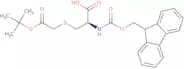
CAS:<p>Fmoc-S-tert-butoxycarbonylmethyl-L-cysteine is a polylactic residue with a propenone cyclic structure. It is soluble in organic solvents and has an aromatic heterocyclic ring. Fmoc-S-tert-butoxycarbonylmethyl-L-cysteine can be used to synthesize pesticides, nicotine, and immunogens.</p>Formula:C24H27NO6SPurity:Min. 97 Area-%Color and Shape:White PowderMolecular weight:457.54 g/mol7-Methoxy-1-tetralone
CAS:<p>7-Methoxy-1-tetralone is a synthetic compound that inhibits the activity of hepg2 cells. It has been shown to induce apoptosis in these cells and inhibit tumor growth in vivo. This substance is a fatty acid derivative that can be synthesized by Friedel-Crafts acylation of 7-methoxycoumarin with oleic acid. 7-Methoxy-1 tetralone has been shown to have antitumor effects in vitro, as well as in vivo animal studies. The inhibition of hepg2 cells may be due to damage to the cell membrane, which leads to the release of lysosomal enzymes and cell death.</p>Formula:C11H12O2Purity:Min. 95%Color and Shape:PowderMolecular weight:176.21 g/molBoc-N-methyl-D-isoleucine
CAS:<p>Boc-N-methyl-D-isoleucine is a useful building block and research chemical. It is a high quality, complex compound that is versatile for use as a reaction component or scaffold. Boc-N-methyl-D-isoleucine can be used to produce fine chemicals, pharmaceuticals, herbicides, pesticides, and other products.</p>Formula:C12H23NO4Purity:Min. 95%Color and Shape:PowderMolecular weight:245.32 g/mol5-Phenyl-1,2,3-triazine
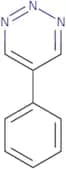
CAS:<p>5-Phenyl-1,2,3-triazine is an isomer of the 1,2,3-triazine class of heterocyclic compounds. It has been experimentally shown to exist in four conformations: two dihedral and two conformational. The dihedral isomers have a planar conformation with a plane of symmetry through the five-membered ring. The conformational isomers are nonplanar and possess a boat or chair conformation. These different conformations can lead to different optical properties. 5-Phenyl-1,2,3-triazine has a dipole moment due to its nitrogen atoms. This molecule also exhibits optical activity due to its asymmetric carbon atoms and the presence of hydroxyl groups on one side of the molecule. The relative orientation of these groups can also create anisotropy in the molecule's optical properties.</p>Formula:C9H7N3Purity:Min. 95%Color and Shape:PowderMolecular weight:157.17 g/mol1,10-Phenanthroline monohydrate
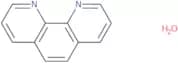
CAS:<p>1,10-Phenanthroline monohydrate is a metal chelate that binds to DNA by hydrogen bonds. It has been shown to have an intramolecular hydrogen and a linear calibration curve with a coefficient of determination (r2) of 0.998. The rate constant for the reaction of 1,10-phenanthroline monohydrate with DNA is 5.00 x 10 M-1 s-1 at 25°C in water and pH 7.4 buffer. The coordination geometry for 1,10-phenanthroline monohydrate is octahedral with the axial ligands occupying the equatorial positions and the equatorial ligands occupying the axial positions. This compound has been shown to be active against HL-60 cells, which causes cancerous transformations in vitro. Fluorescence spectrometry data shows that 1,10-phenanthroline monohydrate can bind to DNA in vitro but not in vivo.</p>Formula:C12H10N2OPurity:Min. 95%Color and Shape:Off-White PowderMolecular weight:198.22 g/molSuc-Ala-Ala-Ala-AMC
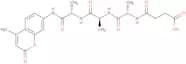
CAS:<p>Suc-Ala-Ala-Ala-AMC is a fluorogenic substrate that can be used to measure the activity of serine proteases. Suc-Ala-Ala-Ala-AMC has been shown to have high values in mammalian tissue. It also has high activity against many bacteria and fungi, as well as proteolytic enzymes such as collagenase and matrix metalloproteinase. This substrate is activated by phorbol esters and has an optimum pH of 5.5. Suc-Ala-Ala-Ala AMC is a model protein for determining the antibacterial efficacy of various antibiotics.</p>Formula:C23H28N4O8Purity:Min. 95%Color and Shape:PowderMolecular weight:488.49 g/mol2-fluoro-5-methoxybenzaldehyde
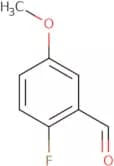
CAS:<p>2-fluoro-5-methoxybenzaldehyde is an asymmetric synthesis that has been shown to inhibit the growth of cancer cells by inhibiting a protein called MT2. 2-Fluoro-5-methoxybenzaldehyde is a nucleophilic compound and reacts with the electrophilic carbon in the enolate to form a sulfoxide, which can be hydrolyzed by acid. This reaction inhibits cancer cell growth as it prevents cellular metabolism and amino acid biosynthesis.</p>Formula:C8H7FO2Purity:Min. 95%Molecular weight:154.14 g/molBoc-S-acetamidomethyl-L-cysteine 4-nitrophenyl ester
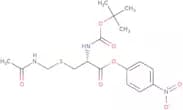
CAS:<p>Please enquire for more information about Boc-S-acetamidomethyl-L-cysteine 4-nitrophenyl ester including the price, delivery time and more detailed product information at the technical inquiry form on this page</p>Formula:C17H23N3O7SPurity:Min. 95%Color and Shape:PowderMolecular weight:413.45 g/mol2-Phenyl-2-(2-piperidy)acetic acid
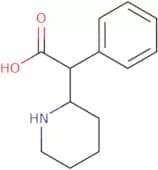
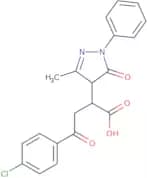
CAS:Controlled Product<p>Methylphenidate is a psychostimulant drug used to treat attention deficit hyperactivity disorder (ADHD) and narcolepsy. It is a prodrug of the active compound, 2-phenyl-2-(2-piperidin)acetic acid (Ritalinic acid), which inhibits the reuptake of dopamine and norepinephrine into the presynaptic neuron. Methylphenidate can be detected by LC-MS/MS in wastewater, providing an analytical method for predicting the presence of this substance in wastewater treatment plants. This drug has minimal toxicity in model organisms and can be metabolized by methylation to form a glucuronide conjugate. Methylphenidate has been shown to increase locomotor activity when administered at low doses, but not at high doses. At high doses, it increases locomotor activity up to 3 hours after administration and decreases locomotor activity 1 hour after administration.</p>Formula:C13H17NO2Purity:Min 98%Color and Shape:White PowderMolecular weight:219.28 g/mol4-(4-Chlorophenyl)-2-(3-methyl-5-oxo-1-phenyl(2-pyrazolin-4-yl))-4-oxobutanoic acid
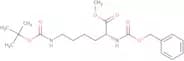
CAS:<p>Please enquire for more information about 4-(4-Chlorophenyl)-2-(3-methyl-5-oxo-1-phenyl(2-pyrazolin-4-yl))-4-oxobutanoic acid including the price, delivery time and more detailed product information at the technical inquiry form on this page</p>Purity:Min. 95%Nα-Z-Nε-Boc-D-lysine methyl ester
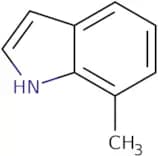
CAS:<p>Please enquire for more information about Nα-Z-Nε-Boc-D-lysine methyl ester including the price, delivery time and more detailed product information at the technical inquiry form on this page</p>Formula:C20H30N2O6Purity:Min. 95%Color and Shape:PowderMolecular weight:394.46 g/mol7-Methylindole
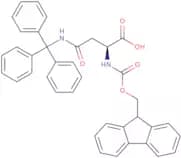
CAS:<p>7-Methylindole is a biochemical substance that is synthesized in the body. It is produced in the liver, and it can be found in the brain, heart, and kidney. 7-Methylindole has been shown to have cancer-fighting properties. 7-Methylindole binds to DNA by methylating nucleic acid bases, which causes a change in the genetic code. This leads to tumor cells being more sensitive to treatment with other substances that inhibit DNA synthesis or repair, such as anthranilate and 5-methoxyindole.</p>Formula:C9H9NPurity:Min 98%Color and Shape:PowderMolecular weight:131.17 g/molFmoc-Asn(Trt)-OH
CAS:<p>Fmoc-Asn(Trt)-OH is a pegylated molecule synthesized by attaching a polyethylene glycol (PEG) to the terminal amino acids. It has been shown that Fmoc-Asn(Trt)-OH inhibits peptide synthesis by inhibiting the formation of an enzyme-substrate complex. This inhibition prevents the transfer of an amino acid from one protein chain to another, preventing the formation of a new chain and subsequent polymerization. Fmoc-Asn(Trt)-OH also has an inhibitory effect on polypeptide synthesis. The molecular weight of this compound is about 535 Daltons.</p>Formula:C38H32N2O5Purity:Min. 98 Area-%Color and Shape:White PowderMolecular weight:596.67 g/mol2-Amino-4-methylthiophene-3-carboxamide
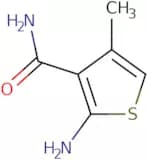
CAS:<p>2-Amino-4-methylthiophene-3-carboxamide is a small molecule that is a potent inhibitor of the JAK2 kinase. This enzyme is associated with human fibrosis and has been shown to be involved in the development of liver fibrosis in rats. 2-Amino-4-methylthiophene-3-carboxamide inhibits the production of cytokines such as IL1α, IL6, and TNFα. It also blocks the activation of transcription factors such as NFκB, which are involved in inflammation. The compound has been shown to be orally active and has demonstrated efficacy in animal studies. Analogues have also been synthesized for this compound that show similar activity.</p>Formula:C6H8N2OSPurity:(%) Min. 85%Color and Shape:PowderMolecular weight:156.21 g/molFmoc-O-allyl-L-tyrosine
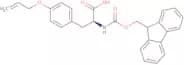
CAS:<p>Please enquire for more information about Fmoc-O-allyl-L-tyrosine including the price, delivery time and more detailed product information at the technical inquiry form on this page</p>Formula:C27H25NO5Purity:Min. 95%Color and Shape:PowderMolecular weight:443.49 g/molN-Propyl-1-ene-2,6-diethyl-4-phenylpyridinium tetrafluoroborate
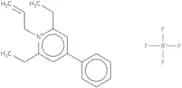
CAS:<p>N-Propyl-1-ene-2,6-diethyl-4-phenylpyridinium tetrafluoroborate (NPEEDPBF) is a fine chemical that has been used as a building block in research and industrial chemistry. The synthesis of NPEEDPBF typically involves the reaction of diethyl phenylpyridinium bromide with n propyl iodide. It can be used as a reagent for organic syntheses and as an intermediate for other compounds. NPEEDPBF is also a versatile building block for complex compounds.</p>Formula:C18H22N•BF4Purity:Min. 95%Molecular weight:339.18 g/molH-Glu(Abu-OH)-OH
CAS:<p>H-Glu(Abu-OH)-OH is a reaction component that is used in the synthesis of peptides, proteins, and other complex compounds. It has been shown to be an effective scaffold for the synthesis of a variety of useful compounds. H-Glu(Abu-OH)-OH can be used as a building block in the synthesis of peptides, proteins, and other complex molecules. This chemical also has many different applications in the pharmaceutical industry.</p>Formula:C9H16N2O5Purity:Min. 95 Area-%Color and Shape:Colorless PowderMolecular weight:232.23 g/mol2-Phenyl-1,3-indandione
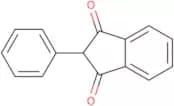
CAS:<p>2-Phenyl-1,3-indandione is a coumarin derivative that is used as an anti-inflammatory drug. It inhibits the release of arachidonic acid from phospholipids in the cell membrane and consequently inhibits the formation of prostaglandins. The drug has been shown to inhibit light-induced tumor promotion in mice with cervical cancer, which may be due to its ability to inhibit the activity of oxidative enzymes such as cytochrome P450. 2-Phenyl-1,3-indandione also inhibits sodium-dependent glucose transport and energy metabolism by binding to potassium channels. This drug also has immunosuppressive effects on lymphocyte transformation and autoimmune diseases through hydrogen bonding interactions with protein molecules.</p>Formula:C15H10O2Purity:Min. 95%Color and Shape:PowderMolecular weight:222.24 g/molH-Gly-Phe-AMC
CAS:<p>H-Gly-Phe-AMC is a synthetic substrate that is used in homogeneous enzyme assays. This product has been shown to have inhibitory properties against proteolytic enzymes such as peptidases, which are enzymes that break down proteins. H-Gly-Phe-AMC is also reactive with collagen and has been shown to be useful in the study of biochemical properties of peptide hormones.</p>Formula:C21H21N3O4Purity:Min. 98 Area-%Color and Shape:PowderMolecular weight:379.41 g/mol