Amino Acids (AA)
Amino acids (AAs) are the fundamental building blocks of proteins, playing a crucial role in various biological processes. These organic compounds are essential for protein synthesis, metabolic pathways, and cell signaling. In this category, you will find a comprehensive range of amino acids, including essential, non-essential, and modified forms, which are vital for research in biochemistry, molecular biology, and nutritional sciences. At CymitQuimica, we provide high-quality amino acids to support your research and development needs, ensuring accuracy and reliability in your experimental outcomes.
Subcategories of "Amino Acids (AA)"
- Amino Acid Derivatives(3,971 products)
- Amino Acid and Amino Acid Related Compounds(3,477 products)
- Amino Acids with Oxygen or Sulphur(168 products)
- Boc- Amino Acids(351 products)
- Fmoc Amino Acids(1,710 products)
Found 38321 products of "Amino Acids (AA)"
Sort by
Purity (%)
0
100
|
0
|
50
|
90
|
95
|
100
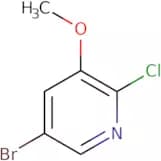
5-Bromo-2-chloro-3-methoxypyridine
CAS:<p>5-Bromo-2-chloro-3-methoxypyridine is a kinase inhibitor that belongs to the class of compounds called analogues. This compound has been shown to be an efficient, selective and potent inhibitor of the csf1R protein kinase. 5-Bromo-2-chloro-3-methoxypyridine has also been shown to inhibit the activity of other kinases such as cdc2, cdk4, cdk6 and cdk7. The structure of this compound was used as a starting point in the development of a new class of kinase inhibitors.</p>Formula:C6H5BrClNOPurity:Min. 95%Color and Shape:SolidMolecular weight:222.47 g/molN-Acetyl-L-tyrosine
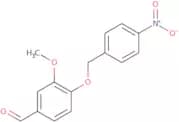
CAS:<p>N-Acetyl-L-tyrosine is a tyrosine derivative with a chemical structure similar to that of an amino acid. It is used as a model system in biochemistry and molecular biology to study the transfer reactions of tyrosine, which are important for energy metabolism, protein synthesis, and metal chelation. N-Acetyl-L-tyrosine is also an effective substrate molecule for many analytical methods, such as thin layer chromatography or liquid chromatography.</p>Formula:C11H13NO4Purity:Min. 95%Color and Shape:White PowderMolecular weight:223.23 g/mol3-Methoxy-4-(4-nitrobenzyloxy)benzaldehyde
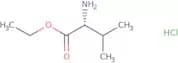
CAS:<p>3-Methoxy-4-(4-nitrobenzyloxy)benzaldehyde is a chemical intermediate that is used in the synthesis of complex compounds. It has been shown to be an effective reagent for the synthesis of various organic compounds, such as pharmaceuticals and pesticides. 3-Methoxy-4-(4-nitrobenzyloxy)benzaldehyde is also used as a research chemical or as a speciality chemical in laboratories. This compound can be used as a building block in the synthesis of other compounds with interesting properties, such as 3-methoxy-4-(2,5-dichlorobenzyloxy)benzaldehyde.</p>Formula:C15H13NO5Purity:Min. 95%Color and Shape:PowderMolecular weight:287.27 g/molD-Valine ethyl ester hydrochloride
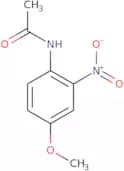
CAS:<p>D-Valine ethyl ester hydrochloride is a reagent that is used in the synthesis of complex compounds. It can be used as an intermediate for fine chemicals and research chemicals, or as a building block for versatile building blocks. D-Valine ethyl ester hydrochloride can also be used in reactions to form other compounds, such as pharmaceuticals.</p>Formula:C7H15NO2·HClPurity:Min. 95%Color and Shape:PowderMolecular weight:181.66 g/mol4-Methoxy-2-nitroacetanilide
CAS:<p>4-Methoxy-2-nitroacetanilide is a byproduct of the manufacture of 4-methoxyacetanilide, which is used in the production of analgesics. It has been shown to be an environmental pollutant that is toxic to animals and plants. The toxicity of 4-methoxy-2-nitroacetanilide is due to its ability to react with amines and form nitrosamines. The rate of acetylation is determined by the kinetics of the reaction, while substituent effects on the molecule determine its reactivity as an electrophile.</p>Formula:C9H10N2O4Purity:Min. 95%Color and Shape:PowderMolecular weight:210.19 g/molN-Benzyloxycarbonyl-L-leucine
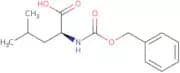
CAS:N-Benzyloxycarbonyl-L-leucine is a peptidomimetic that has been shown to be effective against P. aeruginosa. The peptidyl amino group has a nucleophilic character, which allows it to react with the carboxyl group of L-lysine and form an amide bond. N-Benzyloxycarbonyl-L-leucine was found to be effective at low doses in inhibiting the growth of P. aeruginosa, and may also have therapeutic potential for treating lymphocytic leukemia. This compound is racemized into its two stereoisomers, D-N-benzyloxycarbonyl-L-leucine and L-N-benzyloxycarbonyl-L-leucine, which have different effects on cell membranes.Formula:C14H19NO4Purity:Min. 98 Area-%Color and Shape:Clear LiquidMolecular weight:265.31 g/molFmoc-6-chloro L-tryptophan
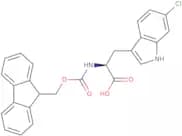
CAS:<p>Fmoc-6-chloro L-tryptophan is a heterocycle with methylene and active methylene groups that can be used as a building block for 1,3-dipolar cycloadditions. It has been shown to react with perchlorates in the presence of catalysts such as dibromodifluoromethane (DBDM) and perchloric acid to form an exocyclic azomethine imine. This reaction generates a proton, which shifts the equilibrium to the right, forming more product. The optimal conditions for this reaction are pH 8, 50% DBDM, and 10% HClO4.</p>Formula:C26H21ClN2O4Purity:Min. 97 Area-%Color and Shape:White PowderMolecular weight:460.91 g/molN-alpha-tert-BOC-N-epsilon-formyl-L-lysine
CAS:<p>N-alpha-tert-BOC-N-epsilon-formyl-L-lysine is a dry weight of 4.1g/100g. It's diameter is 2.5mm with a growth rate of 0.3mm per day. This compound has been statistically shown to have no effect on the growth rates of bacteria in the presence of zinc bacitracin. The leucaena plant, which is a natural source of antibiotics, can be used as a sustainable treatment for bacterial infections because it contains N-alpha-tert-BOC-N-epsilon-formyl-L-lysine and other compounds that are effective against infections. This compound also catalyses energy efficiency, by providing an alternative to antibiotics, which may lead to more sustainable treatments for bacterial infections.</p>Formula:C12H22N2O5Purity:Min. 95%Color and Shape:White PowderMolecular weight:274.31 g/mol5-Fluoro-4-hydroxy-2-methoxypyrimidine
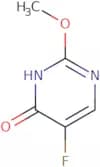
CAS:5-Fluoro-4-hydroxy-2-methoxypyrimidine (5FMMP) is a chemical intermediate that is used in the synthesis of various pharmaceuticals, including antibiotics. It can be obtained by reacting phosphorus oxychloride with activated 2-methoxybenzaldehyde. This chemical intermediate is highly reactive and has been shown to be virulent against some strains of bacteria, such as E. coli and Proteus mirabilis. 5FMMP binds to the bacterial cell wall using its primary amine group, which prevents the formation of an antibiotic-inhibitor complex with the enzyme cell wall synthesis that is required for cell wall biosynthesis, inhibiting protein synthesis and cell division. The chlorinating reaction between 5FMMP and sodium hypochlorite results in hydrochloric acid generation. This chemical intermediate can also be synthesized from recycled chemicals such as ethyl chloride or chloroform.Formula:C5H5FN2O2Purity:Min. 95%Color and Shape:PowderMolecular weight:144.1 g/molAc-Arg-Gly-Lys(Ac)-AMC trifluoroacetate salt
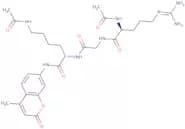
CAS:<p>Ac-Arg-Gly-Lys(Ac)-AMC is a potent apoptotic agent that induces the apoptosis of cancer cells by binding to the caspase-9, which is an enzyme that initiates the process of apoptosis. Ac-Arg-Gly-Lys(Ac)-AMC has been shown to inhibit the growth of cancer cells in cell culture and also shows potent antitumor activity against MDA-MB-231 breast cancer cells. This drug can be used as a potential therapeutic agent for cancers such as colorectal, prostate, and pancreatic cancer. Ac-Arg-Gly-Lys(Ac)-AMC is also able to induce apoptosis in human leukemia cells and may have a potential role in therapy for acute myelogenous leukemia (AML).</p>Formula:C28H40N8O7•C2HF3O2Purity:Min. 98 Area-%Color and Shape:PowderMolecular weight:714.69 g/molO-tert-Butyl-D-serine t-butyl ester hydrochloride
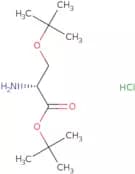
CAS:<p>O-tert-Butyl-D-serine t-butyl ester hydrochloride is a reaction component that can be used as a reagent in research and chemical synthesis. This compound is useful for the synthesis of complex compounds, such as pharmaceuticals and agrochemicals. It is also used in the production of fine chemicals, such as dyes and perfumes. CAS No. 179559-35-4</p>Formula:C11H23NO3·HClPurity:Min. 95%Color and Shape:PowderMolecular weight:253.77 g/molα-Chloro-ω-(2,2-Dichloro-1,1,2-Trifluoroethyl)-Poly(Difluoromethylene)
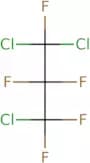
CAS:Controlled Product<p>Alpha-Chloro-Omega-(2,2-Dichloro-1,1,2-Trifluoroethyl)-Poly(Difluoromethylene) is a fluorinated polymer that has been shown to be effective in removing chlorine atoms from the atmosphere. The production of this polymer requires an irradiation process with a magnetic field. Alpha-Chloro-Omega-(2,2-Dichloro-1,1,2-Trifluoroethyl)-Poly(Difluoromethylene) is produced by the reaction of alpha chlorohydrin and trifluoroethylene. This polymer is insoluble in water and is not flammable or explosive. It can be used as a chemical precursor for other fluoropolymers or as an additive for polyurethane. Alpha Chloro Omega - ( 2 , 2 - Dichloro - 1 , 1 , 2 - Trifluoroethyl )</p>Formula:C3Cl3F5Purity:Min. 95%Molecular weight:237.38 g/mol2-Methyl-3-nitrophenylacetic acid
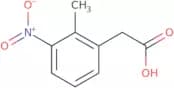
CAS:<p>2-Methyl-3-nitrophenylacetic acid is an alkali metal, which is obtained by the condensation of 2-methylphenol and nitric acid. The synthesis of this compound can be achieved through catalytic reduction of the nitro group with hydrogen in the presence of a nickel catalyst. This method has been shown to produce high yields. 2-Methyl-3-nitrophenylacetic acid is mildly toxic to humans and animals. It is a dopaminergic agent that has been used as a precursor for the production of ropinirole hydrochloride, which is used in the treatment of Parkinson's disease.</p>Formula:C9H9NO4Purity:Min. 95%Color and Shape:PowderMolecular weight:195.17 g/mol(S)-2-Amino-5-methoxytetralin (S)-mandelate
CAS:Controlled Product<p>Please enquire for more information about (S)-2-Amino-5-methoxytetralin (S)-mandelate including the price, delivery time and more detailed product information at the technical inquiry form on this page</p>Formula:C19H23NO4Purity:Min. 95%Molecular weight:329.39 g/mol3-Methoxy-2-methylbenzoic acid
CAS:<p>3-Methoxy-2-methylbenzoic acid is a diazotization agent that is used to produce bromoethane. It is also used as an initiator in the synthesis of dimethylformamide and tetrahydrofuran. 3-Methoxy-2-methylbenzoic acid can be recycled and is used to synthesize methylbenzene, chloroanisole, and grignard reaction products such as chlorobenzene and low yield. 3-Methoxy-2-methylbenzoic acid has been shown to have a high yield for these reactions in comparison to other diazotization agents.</p>Formula:C9H10O3Purity:Min. 95%Color and Shape:White PowderMolecular weight:166.17 g/mol4-Methoxybenzyl alcohol
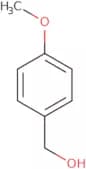
CAS:<p>4-Methoxybenzyl alcohol is an inhibitor that inhibits the enzyme hydroxylase, which catalyzes the conversion of 4-methylphenol to 4-hydroxymandelic acid. The inhibition of this enzyme leads to a decrease in the production of pro-inflammatory factors, such as leukotrienes and prostaglandins. The inhibition of this enzyme also prevents the release of lysosomal enzymes, which may be a therapeutic target for degenerative diseases. Kinetic data has been collected by measuring the rate at which 4-methoxybenzyl alcohol reacts with hydroxylase in vitro and in vivo. This reaction was found to be second order with respect to substrate concentration, with a half-life of 2.8 hours at 37 degrees Celsius and pH 7.4.</p>Formula:C8H10O2Purity:Min. 98%Color and Shape:Clear LiquidMolecular weight:138.16 g/mol2-Methoxyphenylacetonitrile
CAS:<p>2-Methoxyphenylacetonitrile is a chemical that is used in the manufacture of pharmaceuticals. It has antibacterial activity and can be used to treat typhoid fever, staphylococcal infections, and mental disorders such as schizophrenia. 2-Methoxyphenylacetonitrile is an alkylating agent that reacts with nucleophiles in proteins, DNA, and RNA. These reactions lead to the destruction of the bacterial cell wall and inhibition of protein synthesis. The mechanism by which 2-methoxyphenylacetonitrile exerts its antibacterial effect may involve formation of a reactive intermediate that inhibits bacterial ribonucleotide reductase. The addition of an electron to this intermediate leads to the formation of a covalent bond with one or more amino acids in the protein acceptor, thereby preventing further growth and division of bacteria.</p>Formula:C9H9NOPurity:Min. 90%Color and Shape:White PowderMolecular weight:147.17 g/molH-D-Glu-OtBu
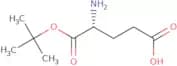
CAS:<p>H-D-Glu-OtBu is a fine chemical that is useful as a scaffold for the synthesis of complex compounds. It is used as a versatile building block in the preparation of research chemicals and speciality chemicals, and as an intermediate in the preparation of complex compounds. H-D-Glu-OtBu has been shown to be highly reactive and can be used in reactions involving metal salt or organic reagents. This compound is used as a reaction component, which can be produced by reacting acetyl chloride with D-glucamine. H-D-Glu-OtBu is also known by CAS No. 25456-76-2 and has a high quality purity level of 99%.</p>Formula:C9H17NO4Purity:Min. 95%Color and Shape:PowderMolecular weight:203.24 g/mol2-Methyl-1H-imidazole-1-propanamine
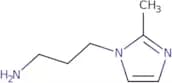
CAS:<p>2-Methyl-1H-imidazole-1-propanamine is a byproduct of the reaction that produces acrylonitrile. It is a polar compound that has been shown to be an effective viscosity modifier for various types of formulations. 2-Methyl-1H-imidazole-1-propanamine can be used as an additive in pharmaceutical formulations, such as those for thiamine pyrophosphate, and is nonpolluting. The optimum concentration for this product is between 0.5% and 1%.</p>Formula:C7H13N3Purity:Min. 95 Area-%Color and Shape:Clear LiquidMolecular weight:139.2 g/molLY2112688 trifluoroacetate
CAS:<p>Please enquire for more information about LY2112688 trifluoroacetate including the price, delivery time and more detailed product information at the technical inquiry form on this page</p>Formula:C51H70N18O11S2•(C2HF3O2)xPurity:Min. 95%Color and Shape:PowderMolecular weight:1,175.35 g/mol