Amino Acids (AA)
Amino acids (AAs) are the fundamental building blocks of proteins, playing a crucial role in various biological processes. These organic compounds are essential for protein synthesis, metabolic pathways, and cell signaling. In this category, you will find a comprehensive range of amino acids, including essential, non-essential, and modified forms, which are vital for research in biochemistry, molecular biology, and nutritional sciences. At CymitQuimica, we provide high-quality amino acids to support your research and development needs, ensuring accuracy and reliability in your experimental outcomes.
Subcategories of "Amino Acids (AA)"
- Amino Acid Derivatives(3,957 products)
- Amino Acid and Amino Acid Related Compounds(3,472 products)
- Amino Acids with Oxygen or Sulphur(168 products)
- Boc- Amino Acids(351 products)
- Fmoc Amino Acids(1,710 products)
Found 38265 products of "Amino Acids (AA)"
Sort by
Purity (%)
0
100
|
0
|
50
|
90
|
95
|
100
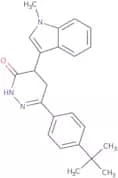
3-(4-(tert-butyl)phenyl)-5-(1-methylindol-3-yl)-1H,4H,5H-1,2-diazin-6-one
CAS:<p>Please enquire for more information about 3-(4-(tert-butyl)phenyl)-5-(1-methylindol-3-yl)-1H,4H,5H-1,2-diazin-6-one including the price, delivery time and more detailed product information at the technical inquiry form on this page</p>Formula:C23H25N3OPurity:Min. 95%Molecular weight:359.46 g/mol4-(Benzyloxy)-3-methoxyphenylacetonitrile
CAS:<p>4-(Benzyloxy)-3-methoxyphenylacetonitrile is an anti-cancer drug that belongs to the class of dihydroisoquinolines. It is used as a monomer in the synthesis of other drugs and it has been shown to be an effective inhibitor of cancer cells when used with carbamic acid. 4-(Benzyloxy)-3-methoxyphenylacetonitrile is synthesised through the reaction of 2,4-dichloroisonicotinic acid and 3-fluoroacetamide in the presence of a strong acid catalyst. This compound has been shown to have a high level of stereoselectivity, which makes it useful for synthesising other compounds.</p>Formula:C16H15NO2Purity:Min. 95%Color and Shape:PowderMolecular weight:253.3 g/mol3-((4-Acetylphenyl)amino)-2-phenylinden-1-one
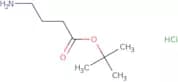
CAS:<p>Please enquire for more information about 3-((4-Acetylphenyl)amino)-2-phenylinden-1-one including the price, delivery time and more detailed product information at the technical inquiry form on this page</p>Formula:C23H17NO2Purity:Min. 95%Color and Shape:PowderMolecular weight:339.39 g/molγ-Aminobutyric acid tert-butyl ester HCl
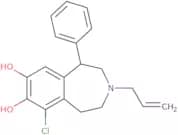
CAS:<p>GABA is a neurotransmitter that is found in the brain and spinal cord. It is an analog of the amino acid gamma-aminobutyric acid and can be synthesized from glutamic acid. GABA has been shown to have anti-inflammatory properties by inhibiting prostaglandin synthesis, which may be due to its ability to decrease the proliferation of T cells and macrophages. GABA also has been shown to promote growth of hybridomas, which are immune cells that produce antibodies.</p>Formula:C8H17NO2·HClPurity:Min. 95%Color and Shape:White PowderMolecular weight:195.69 g/mol(+/-)-6-Chloro-7,8-dihydroxy-3-allyl-1-phenyl-2,3,4,5-tetrahydro-1H-3-benzazepine HBr
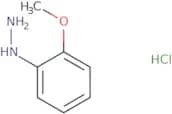
CAS:<p>(+/-)-6-Chloro-7,8-dihydroxy-3-allyl-1-phenyl-2,3,4,5-tetrahydro-1H-3-benzazepine HBr is a model system for Parkinson's disease that has been shown to have similar effects on locomotor activity as the dopamine antagonist haloperidol. The drug enhances dopaminergic and cholinergic transmission in the brain by binding to kappa opioid receptors. This leads to an increased release of dopamine and acetylcholine that can be blocked by drugs such as naloxone and atropine respectively. (+/-)-6-Chloro-7,8-dihydroxy 3-(allyl)-1-(phenyl) 2,3,4,5 tetrahydro 1H 3 benzazepine HBr has been shown to decrease camp levels in the caudate putamen region of rats</p>Formula:C19H20ClNO2·HBrPurity:Min. 95%Color and Shape:PowderMolecular weight:410.73 g/mol2-Methoxyphenylhydrazine hydrochloride
CAS:<p>2-Methoxyphenylhydrazine hydrochloride is a chemical that is used as a research scaffold, building block, or intermediate. It can be used in the synthesis of complex compounds with high quality and purity. This product is soluble in water and alcohols. 2-Methoxyphenylhydrazine hydrochloride has CAS No. 6971-45-5 and a molecular weight of 183.2 g/mol.</p>Formula:C7H10N2O·HClPurity:Min. 95%Color and Shape:PowderMolecular weight:174.63 g/molL-Cysteine hydrochloride monohydrate
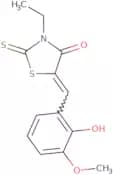
CAS:<p>L-Cysteine is a nonessential amino acid that has the ability to disrupt bacterial cell membranes. It can be produced by hydrolysis of human hair, feathers, and animal hides. L-Cysteine is used as a food additive and flavouring agent in human food and animal feed. It is also used as an additive in the manufacture of plastics, adhesives, and rubber products. L-Cysteine hydrochloride monohydrate (L-Cys HCl) is a white crystalline powder that dissolves readily in water. L-Cys HCl has been shown to have anti-inflammatory properties due to its ability to inhibit the production of prostaglandins.</p>Formula:C3H7NO2S·HCl·H2OPurity:Min. 95%Color and Shape:White Off-White PowderMolecular weight:175.64 g/mol3-ethyl-5-((2-hydroxy-3-methoxyphenyl)methylene)-2-thioxo-1,3-thiazolidin-4-one
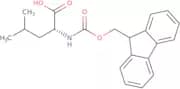
CAS:<p>Please enquire for more information about 3-ethyl-5-((2-hydroxy-3-methoxyphenyl)methylene)-2-thioxo-1,3-thiazolidin-4-one including the price, delivery time and more detailed product information at the technical inquiry form on this page</p>Purity:Min. 95%Fmoc-D-Leu-OH
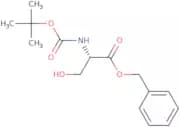
CAS:<p>Fmoc-D-Leu-OH is a disulfide bond containing molecule with an intracellular Ca2+ chelating activity. It has been shown to have cytoprotective effects against oxidative stress and cell death, and has also been found to have antiinflammatory properties. Fmoc-D-Leu-OH can inhibit the activities of various enzymes such as cyclooxygenase, lipoxygenase, phospholipases, and diamine oxidase. This molecule also exhibits cytotoxic activity against bladder cancer cells in vitro. The pharmacokinetic properties of Fmoc-D-Leu-OH are similar to other molecules that are used as antibiotics.<br>Fmoc-D-Leu-OH is a cyclic peptide with antimicrobial peptide (AMP) activity that inhibits bacterial growth by disrupting their cell membranes or inhibiting protein synthesis. It binds to bacterial 16S ribosomal RNA and inhibits protein synthesis, leading</p>Formula:C21H23NO4Purity:Min. 98 Area-%Color and Shape:White PowderMolecular weight:353.41 g/molBoc-L-serine benzyl ester
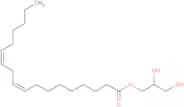
CAS:<p>Boc-L-serine benzyl ester is a potent inhibitor of bacterial enzymes that has been shown to inhibit the binding of galactose to liposomes, an important step in bacterial cell wall synthesis. Boc-L-serine benzyl ester also inhibits several bacterial enzymes including β-galactosidase, β-glucuronidase, and α-chymotrypsin. This drug is a synthetic compound that can be used as a diagnostic tool for the identification of commensal bacteria. It has been shown to inhibit the growth of oral streptococci, E. coli and clostridia species such as C. perfringens. In addition, Boc-L-serine benzyl ester inhibits the production of amyloidogenic protein fragments from peptide substrates and has been shown to have potent inhibitory activities against these enzyme substrates identified by mass spectrometry analysis.</p>Formula:C15H21NO5Purity:Min. 95%Color and Shape:White PowderMolecular weight:295.33 g/mol1-Linoleoyl-rac-glycerol
CAS:<p>1-Linoleoyl-rac-glycerol is a lipid with a structure similar to that of linoleic acid. The compound is used as a substrate for the study of the effects of oxygenation on lipid metabolism. 1-Linoleoyl-rac-glycerol has been shown to have anti-inflammatory properties in chronic kidney disease and pancreatitis models, which may be due to its inhibition of pancreatic lipase. 1-Linoleoyl-rac-glycerol is also used as a reaction product in sample preparation techniques, such as thin layer chromatography and high performance liquid chromatography. A variety of reactions can be performed with this compound, including hydrolysis by thrombin or trypsin, esterification with methanol or chloroform, or oxidation by potassium permanganate. 1-Linoleoyl-rac-glycerol has been shown to inhibit the growth of human lung epithelial cells (thp1</p>Formula:C21H38O4Purity:Min. 95 Area-%Color and Shape:Clear LiquidMolecular weight:354.52 g/mol4-Bromo-2-methylbenzoic acid ethyl ester
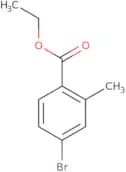
CAS:<p>4-Bromo-2-methylbenzoic acid ethyl ester is a high quality and versatile building block. It is a useful intermediate in the synthesis of organic compounds, and can be used as a reaction component in the synthesis of complex compounds. 4-Bromo-2-methylbenzoic acid ethyl ester is also a useful scaffold for the construction of new chemical entities. It has been shown to react with potassium tert-butoxide to produce 4-(2,6-dimethylphenyl)piperidine (CAS No. 220389-34-4).</p>Formula:C10H11BrO2Purity:Min. 95%Color and Shape:Clear LiquidMolecular weight:243.1 g/mol2,6-Di-tert-butyl-4-methylpyridine
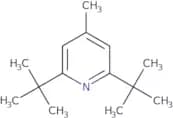
CAS:<p>2,6-Di-tert-butyl-4-methylpyridine (2,6-DBMP) is a thianthrene derivative that has been used in asymmetric synthesis and transfer reactions. 2,6-DBMP is synthesized by reacting the appropriate carbonyl chloride with the corresponding 2,6-di-tert butylpyridine. It can also be prepared by the palladium catalyzed coupling of a benzyl halide and an allyl bromide. The compound's stereoselectivity depends on the reactants' configuration at C2. This property makes it useful for the preparation of chiral molecule such as oligosaccharides and methyl glycosides. 2,6-DBMP has shown to have immunomodulatory activity against mutant strains of human erythrocytes in vitro.</p>Formula:C14H23NPurity:Min. 97%Color and Shape:Solidified MassMolecular weight:205.34 g/mol2-Methoxy-5-(2-oxopropyl)benzenesulfonamide
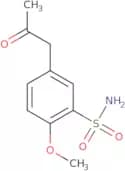
CAS:<p>2-Methoxy-5-(2-oxopropyl)benzenesulfonamide is a metal catalyst that can be used in the synthesis of tamsulosin hydrochloride, an alpha blocker that is used to treat benign prostatic hyperplasia. It catalyzes the reaction between 2-methoxybenzenesulfonyl chloride and 3-amino-1,2,4-triazole. The industrial importance of this compound is due to its ability to be used as a catalyst for various chemical reactions.</p>Formula:C10H13NO4SPurity:Min. 95%Color and Shape:PowderMolecular weight:243.28 g/molH-Pro-Arg-bNA·HCl
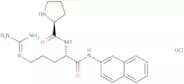
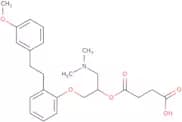
CAS:<p>H-Pro-Arg-bNA·HCl is a reagent, complex compound and useful intermediate with the CAS number 201998-83-6. It is a fine chemical that is used as a useful scaffold or building block for the synthesis of other chemicals. This product can be used in research and as a versatile building block for reactions.</p>Formula:C21H28N6O2·HClPurity:Min. 95%Color and Shape:PowderMolecular weight:432.95 g/mol(S)-Sarpogrelate
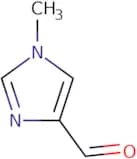
CAS:<p>Serotonin receptor 5-HT2A antagonist</p>Formula:C24H31NO6Purity:Min. 95%Molecular weight:429.51 g/mol1-Methyl-1H-imidazole-4-carbaldehyde
CAS:<p>1-Methyl-1H-imidazole-4-carbaldehyde is an Imidazole derivative. Imidazoles are the most prominent heterocyclic scaffolds found in medical molecules and natural products. Due to the peculiar structural characteristics of imidazole, it is advantageous for imidazole groups to combine with various receptors and enzymes in biological systems, through diverse weak interactions. 1-Methyl-1H-imidazole-4-carbaldehyde is one of many imidazole derivatives that are used as building blocks for a wide variety of target compounds.</p>Formula:C5H6N2OPurity:Min. 95%Color and Shape:Slightly Yellow PowderMolecular weight:110.11 g/molTris(4,7-diphenyl-1,10-phenanthroline)ruthenium bis(hexafluorophosphate)
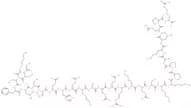
CAS:<p>Tris(4,7-diphenyl-1,10-phenanthroline)ruthenium bis(hexafluorophosphate) is a fluorescent dye that can be used to measure oxygen concentration. It has been shown to inhibit the transfer of oxygen at low concentrations. Tris(4,7-diphenyl-1,10-phenanthroline)ruthenium bis(hexafluorophosphate) is used as a calibration standard for the measurement of oxygen concentration in liquids by fluorescence.</p>Formula:C72H48N6Ru·2F6PPurity:(¹H-Nmr) Min. 95 Area-%Color and Shape:Orange PowderMolecular weight:1,388.19 g/molGhrelin trifluoroacetate
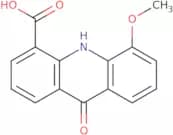
CAS:<p>Ghrelin is a peptide hormone that regulates appetite and has been shown to have potent anti-cachectic effects in animal models. It is thought to be an important regulator of body weight, insulin resistance, and metabolism. Ghrelin is synthesized in the stomach and released into the bloodstream when the stomach is empty. Ghrelin binds to ghrelin receptors in the hypothalamus, which stimulate growth hormone release from the pituitary gland. This hormone also binds to other cells in the hypothalamus, such as neurons that produce orexin, which may account for its effects on sleep patterns. Ghrelin has been shown to inhibit tumor growth by suppressing angiogenesis and inducing apoptosis. The molecular weight of ghrelin is 3497 Da. The sequence of ghrelin consists of 28 amino acids: Gly-Ser-Ser(octanoyl)-Phe-Leu-Ser-Pro-Glu-His-Gln-Lys-Ala</p>Formula:C147H245N45O42•(C2HO2F3)xPurity:Min. 95 Area-%Color and Shape:PowderMolecular weight:3,314.8 g/mol9,10-Dihydro-5-methoxy-9-oxo-4-acridinecarboxylic acid
CAS:<p>Please enquire for more information about 9,10-Dihydro-5-methoxy-9-oxo-4-acridinecarboxylic acid including the price, delivery time and more detailed product information at the technical inquiry form on this page</p>Formula:C15H11NO4Purity:Min. 95%Color and Shape:PowderMolecular weight:269.25 g/mol