Amino Acids (AA)
Amino acids (AAs) are the fundamental building blocks of proteins, playing a crucial role in various biological processes. These organic compounds are essential for protein synthesis, metabolic pathways, and cell signaling. In this category, you will find a comprehensive range of amino acids, including essential, non-essential, and modified forms, which are vital for research in biochemistry, molecular biology, and nutritional sciences. At CymitQuimica, we provide high-quality amino acids to support your research and development needs, ensuring accuracy and reliability in your experimental outcomes.
Subcategories of "Amino Acids (AA)"
- Amino Acid Derivatives(3,957 products)
- Amino Acid and Amino Acid Related Compounds(3,472 products)
- Amino Acids with Oxygen or Sulphur(168 products)
- Boc- Amino Acids(351 products)
- Fmoc Amino Acids(1,710 products)
Found 38265 products of "Amino Acids (AA)"
Sort by
Purity (%)
0
100
|
0
|
50
|
90
|
95
|
100
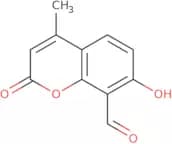
7-Hydroxy-4-methyl-2-oxo-2H-chromene-8-carbaldehyde
CAS:<p>7-Hydroxy-4-methyl-2-oxo-2H-chromene-8-carbaldehyde is an activated molecule that exhibits significant cytotoxicity to human liver cancer cells. It inhibits the mitochondrial membrane potential, leading to the release of cytochrome c and apoptosis induction. 7HMOCA has been shown to be a reactive molecule with benzimidazole derivative properties. This compound depletes cellular glutathione levels and increases intracellular reactive oxygen species (ROS) levels, which leads to DNA fragmentation, cell cycle arrest, and ultimately apoptosis induction when combined with other agents. The fluorescence properties of this molecule have enabled its detection in living cells without the need for additional reagents or labeling.</p>Formula:C11H8O4Purity:Min. 95 Area-%Color and Shape:White PowderMolecular weight:204.18 g/molH-Asp-Phe-OH
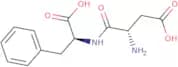
CAS:<p>H-Asp-Phe-OH is a diagnostic agent that contains the amino acid aspartame and a hydroxyl group. It is hydrolyzed in the body to form aspartic acid, phenylalanine, and methanol. The methyl ester of H-Asp-Phe-OH is hydrochloride. This compound has been used to study locomotor activity in mice and rats. Aspartame has also been shown to be an inhibitor of certain enzymes, such as fatty acid synthase, which is associated with human pathogens. The lc-ms/ms method has been used to detect H-Asp-Phe-OH metabolites in human serum samples. In addition, this compound can be used for the diagnosis of diseases such as diabetes mellitus type 2 and Alzheimer’s disease by measuring uptake into cells at enzyme activities.</p>Formula:C13H16N2O5Purity:Min. 95%Color and Shape:White PowderMolecular weight:280.28 g/mol(3-(2,6-dichlorophenyl)-5-methylisoxazol-4-yl)-N-(2,5-dimethoxyphenyl)formamide
CAS:<p>Please enquire for more information about (3-(2,6-dichlorophenyl)-5-methylisoxazol-4-yl)-N-(2,5-dimethoxyphenyl)formamide including the price, delivery time and more detailed product information at the technical inquiry form on this page</p>Purity:Min. 95%4-Bromo-L-phenylalanine
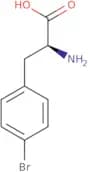
CAS:<p>4-Bromo-L-phenylalanine is a potent inhibitor of the enzyme dehydrogenase. It is used in the synthesis of β-amino acids, which are precursors for peptides and proteins. 4-Bromo-L-phenylalanine has been shown to be an acceptor for the enzyme diacetate and it inhibits tryptic activity at low concentrations. 4-Bromo-L-phenylalanine has also been shown to be a potent antagonist of acid dehydrogenase from endophytic fungus. This compound has also been found to inhibit biosynthesis of proteins in thermodynamic studies. In validation studies, this compound was found to have low energy barriers.</p>Formula:C9H10BrNO2Purity:Min. 95%Color and Shape:PowderMolecular weight:244.09 g/molL-Aspartic acid b-methyl ester hydrochloride
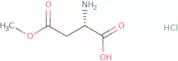
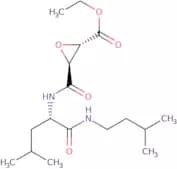
CAS:<p>L-Aspartic acid b-methyl ester hydrochloride is a high quality, versatile building block that can be used as a reaction component in the synthesis of complex compounds. L-Aspartic acid b-methyl ester hydrochloride is a useful scaffold for the preparation of novel fine chemicals and research chemicals with potential uses as pharmaceuticals, pesticides, and agricultural chemicals. It can also be used as an intermediate in the preparation of some natural products or industrial chemicals. L-Aspartic acid b-methyl ester hydrochloride has a CAS number of 16856-13-6.</p>Formula:C5H9NO4·HClColor and Shape:White PowderMolecular weight:183.59 g/mol(2S,3S)-trans-Epoxysuccinyl-L-leucylamido-3-methylbutane ethyl ester
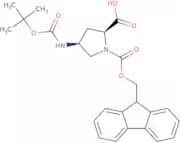
CAS:<p>Inhibitor of cathepsins</p>Formula:C17H30N2O5Purity:Min. 95%Color and Shape:PowderMolecular weight:342.43 g/molBoc-(2S,4S)-4-amino-1-Fmoc-pyrrolidine-2-carboxylic acid
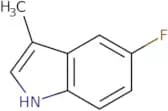
CAS:<p>Useful chiral building block</p>Formula:C25H28N2O6Purity:Min. 95%Molecular weight:452.5 g/mol5-Fluoro-3-methylindole
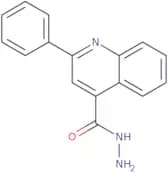
CAS:<p>5-Fluoro-3-methylindole is a reactive compound that is not soluble in water. It has a molecular weight of 288.5 and an ionization potential of 7.8 eV. 5-Fluoro-3-methylindole can act as a potent antagonist by binding to the pharmacophore, which is the three hydrogen bonding sites on the benzodiazepine receptor. This drug has been shown to be reactive with halides, nitro, and magnesium, as well as with some endogenous compounds such as nitroarenes and amides. 5-Fluoro-3-methylindole also reacts with fluorescence ligands and transfer agents.</p>Formula:C9H8FNPurity:Min. 95%Molecular weight:149.16 g/mol2-Phenylquinoline-4-carbohydrazide
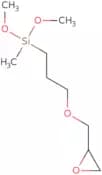
CAS:<p>2-Phenylquinoline-4-carbohydrazide is an antibacterial agent that binds to bacterial DNA gyrase and topoisomerase, which are enzymes that maintain the integrity of bacterial DNA. It also has significant anti-inflammatory activity and can be used for the treatment of skin disorders, such as acne. 2-Phenylquinoline-4-carbohydrazide has been shown to induce apoptosis in human dermal fibroblast cells. This drug has been shown to have anticancer activity in vitro and in vivo. The anticancer activity of this drug may be due to its ability to inhibit cancer cell proliferation by binding to DNA gyrase and topoisomerase, which are enzymes that maintain the integrity of bacterial DNA.</p>Formula:C16H13N3OPurity:Min. 95%Molecular weight:263.29 g/mol(3-glycidoxypropyl)methyldimethoxysilane
CAS:<p>3-Glycidoxypropyl methyldimethoxysilane (3-GPMDMS) is a compound that belongs to the group of organosilicon compounds. It is an organic solvent that has been used for the activation energy of ring-opening reactions. 3-GPMDMS is also suitable for immobilizing polysaccharides, proteins, and enzymes on surfaces or in polymer matrices. 3-GPMDMS has been used to produce polymers with high molecular weight and a wide range of molecular weights by polymerization. 3-GPMDMS can be synthesized by reacting glycidoxypropyltrimethoxysilane with methanol in the presence of hydrochloric acid. The chemical structure includes methoxy groups connected to silicon atoms via methylphenyl groups. 3-GPMDMS has been shown to exhibit excellent magnetic resonance properties and be a potential candidate for use as nanomaterials. It</p>Formula:C9H20O4SiPurity:Min. 95%Molecular weight:220.34 g/molN-Methyl-N-phenylglycine hydrochloride
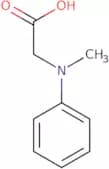
CAS:<p>N-Methyl-N-phenylglycine hydrochloride (NMPG) is a glycopeptide antibiotic and immunosuppressant that is used to treat inflammatory bowel disease. NMPG binds to the D-alanyl-D-alanine moiety of bacterial cell wall peptidoglycan, inhibiting the synthesis of bacterial cell wall and leading to bacterial death. NMPG has been shown to be active against Escherichia coli, Klebsiella pneumoniae, and Helicobacter pylori. NMPG also has antibacterial activity against Acinetobacter baumannii and Enterococcus faecalis. The asymmetric synthesis of NMPG is enhanced by the presence of acrylonitrile.</p>Formula:C9H11NO2·HClPurity:Min. 95%Color and Shape:PowderMolecular weight:201.65 g/mol[(2-Methylimidazo[2,1-b][1,3,4]thiadiazol-6-yl)methyl]amine dihydrochloride
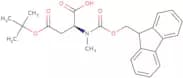
CAS:<p>[(2-Methylimidazo[2,1-b][1,3,4]thiadiazol-6-yl)methyl]amine dihydrochloride is a high quality reagent with many uses. It is a complex compound that is used as an intermediate in the synthesis of many other compounds. This chemical has been shown to be useful as a scaffold for drug design and development. It also has been found to be a valuable building block for the synthesis of speciality chemicals and pharmaceuticals. This chemical can be used in reactions as a versatile building block and reaction component.</p>Formula:C6H8N4S·2HClPurity:Min. 95%Color and Shape:White PowderMolecular weight:241.14 g/molFmoc-N-Me-Asp(OtBu)-OH
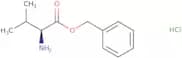
CAS:<p>Fmoc-N-Me-Asp(OtBu)-OH is a synthetic peptide with potential immunosuppressive properties. It has been shown to inhibit the proliferation of human lymphocytes in response to lipopolysaccharides (LPS) and also to suppress the release of cytokines such as IL-1β, IL-6, and TNFα. The effects were dose dependent and could be reversed by the addition of a neutralizing antibody. This peptide can be used as an immunosuppressant in clinical trials that are investigating treatments for myasthenia gravis. Fmoc-N-Me-Asp(OtBu)-OH has been synthesised using chemical synthesis methods from commercially available reagents.</p>Formula:C24H27NO6Purity:Min. 98 Area-%Color and Shape:PowderMolecular weight:425.47 g/molL-Valine benzyl ester hydrochloride
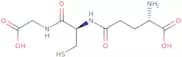
CAS:<p>L-Valine benzyl ester hydrochloride (LVEH) is a tetradecapeptide that is used as an analog of the natural peptide angiotensinogen. This synthetic compound has low molecular weight and hydrophobicity, which makes it an efficient drug for inducing hypertension in rats. LVEH has been shown to inhibit the production of angiotensin I and II, leading to a decrease in blood pressure. It also inhibits the degradation of endoplasmic reticulum protein angiotensinogen, which may be due to its inhibition of piperazine and piperidine. LVEH binds to mitochondria with high affinity, inhibiting ATP production and mitochondrial respiration.</p>Formula:C12H17NO2•HClPurity:Min. 95%Color and Shape:PowderMolecular weight:243.73 g/molL-Glutathione, reduced, tested to USP spec
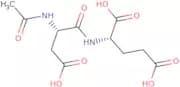
CAS:<p>Glutathione is a tripeptide cysteine-glycine-glutamic acid which exists in cells in the reduced form (this product) or oxidised form. Reduced glutathione (GSH) is an antioxidant protecting cell components from endogenous and exogeneous reactive oxygen and nitrogen species. Reduced glutathione has also been intensely used in the affinity purification of proteins with glutathione S-transferase (GST) tag. In the protein purification process, glutathione is used for the elution of GST-fused recombinant proteins from a glutathione-immobilised resins. In the elution buffers, reduced glutathione is typically used in the 10 â 40 mM concentration range.</p>Formula:C10H17N3O6SPurity:(Titration) 98.0 To 101.0%Color and Shape:White Off-White Crystalline PowderMolecular weight:307.32 g/molN-Acetyl-L-aspartyl-L-glutamic acid
CAS:<p>N-Acetyl-L-aspartyl-L-glutamic acid is an amino acid that is used as a substrate in the biochemical assay for glutamate. It is also used to measure brain functions. NAAG is a low potency agonist of the NMDA receptor, which may contribute to neuronal death. NAAG is used as a model system to study bowel disease and eosinophil cationic protein. It has been shown to be effective in vitro against cancer cells and fungi. The structural analysis of NAAG has revealed that it contains an acidic group on its side chain, which can be detected with a pH indicator such as phenol red or bromocresol purple.</p>Formula:C11H16N2O8Purity:Min. 95 Area-%Color and Shape:White Off-White PowderMolecular weight:304.25 g/molL-threo-Phenylserine
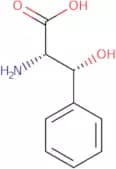
CAS:<p>L-threo-Phenylserine is a naturally occurring amino acid that is synthesized in the human body. It can be found in the brain and muscles, where it is used for protein synthesis. L-threo-phenylserine has been shown to be an effective oxygen nucleophile and can catalyze the hydrolysis of hydrogen fluoride. This compound has also been shown to have biological activity in vitro as well as structural properties that are useful for conformational analysis and structural biology research. L-threo-phenylserine may also have potential medical applications, such as its use as a treatment for mental disorders and epilepsy.</p>Formula:C9H11NO3Purity:Min. 95%Color and Shape:White To Off-White SolidMolecular weight:181.19 g/molAc-Asp-Glu-Val-Asp-pNA
CAS:<p>Ac-Asp-Glu-Val-Asp-pNA is a peptide that is derived from the human tumor necrosis factor (TNF) precursor protein. It has been shown to inhibit the growth of tumor cells in vitro by inducing apoptosis. Ac-Asp-Glu-Val-Asp-pNA binds to and activates caspase 3, which leads to cleavage of the proapoptotic protein Bid into Bax and Bak, leading to mitochondrial membrane potential collapse and cell death. The peptide also inhibits DNA synthesis in HL60 cells and hemocytes. Ac-Asp-Glu-Val-Asp-pNA also inhibits proliferation of K562 cells through proteolytic degradation of the antiapoptotic protein Bcl2L11.</p>Formula:C26H34N6O13Purity:Min. 95%Color and Shape:PowderMolecular weight:638.58 g/mol2-Bromo-4'-methylpropiophenone
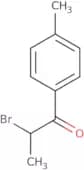
CAS:Controlled Product<p>2-Bromo-4'-methylpropiophenone is a chemical compound that belongs to the group of phenols. It is used as a solvent in silicone rubber and as a colorant in plastics, paints, and enamels. 2-Bromo-4'-methylpropiophenone has been shown to be an effective antioxidant for china, silica gel, and silicone rubber. This chemical also produces red color when heated and can be used as a connector or monochrome panel on copper plates. 2-Bromo-4'-methylpropiophenone is soluble in water but insoluble in organic solvents such as alcohols and ethers. This chemical has been found to have the ability to produce solar modules with high efficiency by converting sunlight into electricity.</p>Formula:C10H11BrOPurity:(%) Min. 85%Color and Shape:PowderMolecular weight:227.1 g/mol4-Iodo-2-methoxybenzoic acid methyl ester
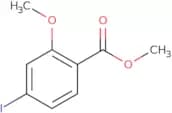
CAS:<p>4-Iodo-2-methoxybenzoic acid methyl ester is a high quality chemical that can be used as a versatile building block in chemical synthesis. It is a complex compound that has been shown to be an effective reagent for research, which can be used in the synthesis of new complex compounds. 4-Iodo-2-methoxybenzoic acid methyl ester is also useful as an intermediate or reaction component in organic syntheses. This chemical is available for purchase at a CAS number of 148490-97-5.</p>Formula:C9H9IO3Purity:Min. 95%Color and Shape:PowderMolecular weight:292.07 g/mol


![[(2-Methylimidazo[2,1-b][1,3,4]thiadiazol-6-yl)methyl]amine dihydrochloride](/_next/image/?url=https%3A%2Fstatic.cymitquimica.com%2Fproducts%2F3D%2Fthumb-webp%2FFM123820.webp&w=3840&q=75)