Amino Acids (AA)
Amino acids (AAs) are the fundamental building blocks of proteins, playing a crucial role in various biological processes. These organic compounds are essential for protein synthesis, metabolic pathways, and cell signaling. In this category, you will find a comprehensive range of amino acids, including essential, non-essential, and modified forms, which are vital for research in biochemistry, molecular biology, and nutritional sciences. At CymitQuimica, we provide high-quality amino acids to support your research and development needs, ensuring accuracy and reliability in your experimental outcomes.
Subcategories of "Amino Acids (AA)"
- Amino Acid Derivatives(3,971 products)
- Amino Acid and Amino Acid Related Compounds(3,477 products)
- Amino Acids with Oxygen or Sulphur(168 products)
- Boc- Amino Acids(351 products)
- Fmoc Amino Acids(1,710 products)
Found 38321 products of "Amino Acids (AA)"
Sort by
Purity (%)
0
100
|
0
|
50
|
90
|
95
|
100
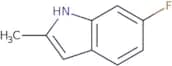
6-Fluoro-2-methylindole
CAS:<p>6-Fluoro-2-methylindole is a member of the group of aromatic ketones. It is an organic compound that can be synthetized from 2,6-dichloroindole and methyl iodide. There are two types of photodimerization reactions for 6-fluoro-2-methylindole: one is an aerobic reaction and the other is an anaerobic reaction. The mechanistic study of 6-fluoro-2-methylindole has been investigated using bond cleavage and transformation reactions. This organic compound reacts with amines to form polycycles with high yields. It also undergoes Diastereomeric Control in chemistry.</p>Formula:C9H8FNPurity:Min. 95%Color and Shape:Brown PowderMolecular weight:149.16 g/molN-α-Z-L-arginine hydrochloride
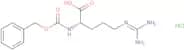
CAS:<p>N-a-Z-L-Arginine HCl is a molecule that is the dihydrochloride salt of L-arginine. It has been shown to increase the permeability of cell membranes by interacting with the phospholipids, thus allowing more water to enter into the cell. N-a-Z-L-Arginine HCl has also been shown to interact with surfactants and positioning agents, which may be important for its function in model membranes. The mechanism by which this molecule works is not well understood, but it has been proposed that it may be due to its bonding properties and interactions with other molecules such as arginine.</p>Formula:C14H20N4O4•HClPurity:Min. 95%Molecular weight:344.79 g/mol2-Fluoro-4-methoxybenzonitrile
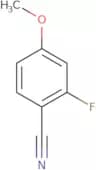
CAS:<p>2-Fluoro-4-methoxybenzonitrile is a tetracyclic molecule with two electron deficient rings. It has intramolecular coupling, yielding four stereoisomers that show different biological activities. 2-Fluoro-4-methoxybenzonitrile is an electron deficient compound that can be synthesized by reacting dioxane with amines. It also reacts with alcohols to form ethers. This heteroaromatic compound has electron withdrawing groups that make it less stable than other heteroaromatic compounds and more reactive. 2-Fluoro-4-methoxybenzonitrile can be used in the Buchwald reaction to produce aryl chlorides from alkyl halides and aryl bromides.</p>Purity:Min. 95%7-Methoxy-1-naphthaldehyde
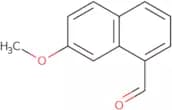
CAS:<p>7-Methoxy-1-naphthaldehyde is an aldehyde that is synthesized from acetaldehyde and 7-methoxy-1-naphthol. It has been shown to inhibit the cytosolic aldehyde dehydrogenase, which converts acetaldehyde to acetate. This reaction is one of the major routes for the metabolism of alcohol in humans. 7-Methoxy-1-naphthaldehyde can be used as a substrate in immunochemical assays, and its synthetic scheme has been published. 7MNA was also found to have cytotoxic effects on human liver cells in vitro.</p>Formula:C12H10O2Purity:Min. 95%Molecular weight:186.21 g/mol2-Bromo-4-fluoro-5-methylaniline hydrochloride
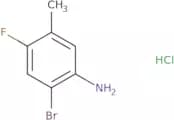
CAS:<p>2-Bromo-4-fluoro-5-methylaniline hydrochloride is a versatile building block that can be used in the synthesis of complex compounds. It has two bromine atoms, two chlorine atoms, and one fluorine atom and is classified as a research chemical. This compound is used as a reagent in organic chemistry and as a speciality chemical. 2-Bromo-4-fluoro-5-methylaniline hydrochloride is also an intermediate for the synthesis of other chemicals and has been shown to be useful for the synthesis of new scaffolds.</p>Formula:C7H7BrFN·HClPurity:Min. 95%Color and Shape:PowderMolecular weight:240.5 g/mol(5-Methyl-1,3-thiazol-2-yl)acetonitrile
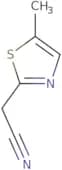
CAS:<p>5-Methyl-1,3-thiazol-2-yl)acetonitrile is a chemical that is used as a building block in organic synthesis. It has been shown to be an intermediate in the preparation of other compounds and has been used as a research chemical. This chemical has also been shown to have useful properties, such as high quality and versatility. 5-Methyl-1,3-thiazol-2-yl)acetonitrile can be used as a reaction component or a reagent for synthesizing other chemicals.</p>Formula:C6H6N2SPurity:Min. 95%Color and Shape:Clear LiquidMolecular weight:138.19 g/molMethyl 2,6-dihydroxy-4-methylbenzoate
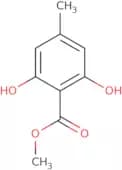
CAS:<p>Methyl 2,6-dihydroxy-4-methylbenzoate is a compound that can be used to treat cancer. It inhibits the growth of cancer cells by binding to DNA and RNA molecules, which prevents transcription and replication. The drug also inhibits the production of usnic acid, an antioxidant that has been shown to have anticancer effects in vitro. Methyl 2,6-dihydroxy-4-methylbenzoate has been tested against a number of cancer cell lines including MDA-MB231 breast cancer cells and MCF7 breast cancer cells. This drug is not toxic to healthy cells at concentrations of up to 250 µM. At higher concentrations, methyl 2,6-dihydroxy-4-methylbenzoate may cause denaturation or cell death of cells due to its ability to attack DNA and RNA molecules.</p>Formula:C9H10O4Purity:Min. 95%Color and Shape:PowderMolecular weight:182.17 g/mol(S)-(+)-4-Methyl-1-hexanol
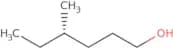
CAS:(S)-(+)-4-Methyl-1-hexanol is a synthetic compound that has been shown to have antibacterial activity against Staphylococcus aureus. The (R)-enantiomer of the compound, which has been synthesized in the past, has also shown activity against S. aureus. However, this enantiomer is not commercially available. The (S)-enantiomer is soluble in organic solvents and can be used as an attractant for S. aureus monitoring purposes. In addition, it has antioxidant potential and may be useful as a medicine for short-chain fatty acid production disorders.Formula:C7H16OPurity:Min. 95%Molecular weight:116.2 g/mol7-Fluoro-5-Phenyl-1,3-Dihydro-1,4-Benzodiazepin-2-One
CAS:Controlled Product<p>7-Fluoro-5-phenyl-1,3-dihydro-1,4-benzodiazepin-2-one is a potential drug candidate that has been found to have high affinity for the benzodiazepine receptor. It was synthesized by reacting 7-fluoro-5-(chloromethyl)benzo[b]thiophene with 2,5-dimethoxybenzaldehyde in the presence of sodium hydroxide and acetic acid. The compound was characterized using techniques such as nuclear magnetic resonance (NMR), mass spectrometry (MS) and infrared spectroscopy (IR). The affinity of 7FDBZ was measured at 4 nM. The parameters used for predicting binding affinity were hydrophobicity and hydrogen bond acceptor properties. A predictive model was generated based on these parameters that shows good agreement with experimental data. The probe is hydrophobic in nature and may bind to the receptor due to</p>Formula:C15H11FN2OPurity:Min. 95%Molecular weight:254.26 g/mol4-Methoxy-2-nitroacetanilide
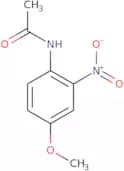
CAS:<p>4-Methoxy-2-nitroacetanilide is a byproduct of the manufacture of 4-methoxyacetanilide, which is used in the production of analgesics. It has been shown to be an environmental pollutant that is toxic to animals and plants. The toxicity of 4-methoxy-2-nitroacetanilide is due to its ability to react with amines and form nitrosamines. The rate of acetylation is determined by the kinetics of the reaction, while substituent effects on the molecule determine its reactivity as an electrophile.</p>Formula:C9H10N2O4Purity:Min. 95%Color and Shape:PowderMolecular weight:210.19 g/mol3-((2-chlorophenyl)methyl)-4-phenyl-1,2,4-triazoline-5-thione
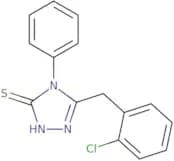
CAS:<p>Please enquire for more information about 3-((2-chlorophenyl)methyl)-4-phenyl-1,2,4-triazoline-5-thione including the price, delivery time and more detailed product information at the technical inquiry form on this page</p>Purity:Min. 95%Fmoc-S-[2,3-bis(palmitoyloxy)propyl]-L-cysteine
CAS:<p>Fmoc-S-[2,3-bis(palmitoyloxy)propyl]-L-cysteine is a fine chemical that is used as a building block in the synthesis of complex natural products and pharmaceuticals. It has versatile applications in both research and industry. Fmoc-S-[2,3-bis(palmitoyloxy)propyl]-L-cysteine is an intermediate or scaffold for the synthesis of many types of compounds, including antibiotics, anti-cancer agents, hormones, and anti-inflammatory drugs. This compound is soluble in organic solvents such as DMSO and DMF.</p>Formula:C53H83NO8SPurity:Min. 95 Area-%Color and Shape:White Off-White PowderMolecular weight:894.29 g/molethyl 2-(4-((4-phenoxyphenyl)amino)-3,5-thiazolyl)acetate
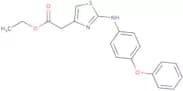
CAS:<p>Please enquire for more information about ethyl 2-(4-((4-phenoxyphenyl)amino)-3,5-thiazolyl)acetate including the price, delivery time and more detailed product information at the technical inquiry form on this page</p>Purity:Min. 95%Fmoc-(R)-4-amino-5-methylhexanoic acid
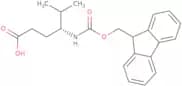
CAS:<p>Fmoc-(R)-4-amino-5-methylhexanoic acid is a versatile building block, useful scaffold, and useful intermediate. It can be used in the synthesis of complex compounds with high quality and purity. Fmoc-(R)-4-amino-5-methylhexanoic acid is also an important reaction component for research chemicals, speciality chemicals, and many other chemical reactions. It can be used as a reagent in organic synthesis.</p>Formula:C22H25NO4Purity:Min. 95%Color and Shape:PowderMolecular weight:367.44 g/mol8-Methoxy-2-methyl-2,3,4,5-tetrahydro-1H-pyrido[4,3-b]indole
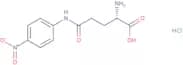
CAS:<p>8-Methoxy-2-methyl-2,3,4,5-tetrahydro-1H-pyrido[4,3-b]indole is a versatile building block that can be used as a reagent or speciality chemical. It has been used in research and development of pharmaceuticals and as a useful intermediate for the synthesis of other compounds. 8-Methoxy-2-methyl-2,3,4,5-tetrahydro-1H-pyrido[4,3-b]indole is an important reaction component for the synthesis of many types of compounds such as indoles, coumarins, and quinazolinones.</p>Formula:C13H16N2OPurity:Min. 95%Color and Shape:PowderMolecular weight:216.28 g/molL-Glutamic acid gamma-(p-nitroanilide) hydrochloride
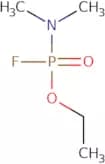
CAS:<p>Please enquire for more information about L-Glutamic acid gamma-(p-nitroanilide) hydrochloride including the price, delivery time and more detailed product information at the technical inquiry form on this page</p>Formula:C11H13N3O5·HClPurity:Min. 95%Color and Shape:SolidMolecular weight:303.7 g/molN-(Ethoxy-Fluorophosphoryl)-N-Methylmethanamine
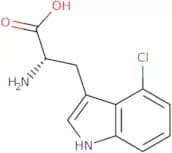
CAS:Controlled Product<p>Ethoxy-Fluorophosphoryl-N-Methylmethanamine is a chemical that belongs to the class of nerve agents. It can be used as an antidote for sarin poisoning. This compound reacts with the enzyme butyrylcholinesterase, which breaks down acetylcholine in the synapses. In this way, it blocks the transmission of nerve impulses and causes muscle paralysis. Ethoxy-Fluorophosphoryl-N-Methylmethanamine acts as an antagonist of acetylcholine receptors in both animals and humans. It also inhibits cholinesterase activity in blood pressure regulation, which leads to increased blood pressure levels. When administered at sublethal doses, this compound induces a long lasting sensitization of the central nervous system to other cholinergic drugs such as atropine or nerve gases such as sarin.</p>Formula:C4H11FNO2PPurity:Min. 95%Molecular weight:155.11 g/mol4-Chloro-L-tryptophan
CAS:<p>4-Chloro-L-tryptophan is an indole alkaloid that belongs to the group of 2-d nmr. It has a chiral carbon atom and two enantiomers, D and L. 4-Chloro-L-tryptophan is used in the synthesis of serotonin in the brain. Synthesis of serotonin involves a two-step process: first, L-tyrosine is converted to 4-hydroxyphenylpyruvic acid by an aminotransferase enzyme (e.g., phenylalanine aminotransferase), then 4-hydroxyphenylpyruvic acid is converted to 4-chloro-L-tryptophan by a decarboxylase enzyme (e.g., pyridoxal phosphate). The biosynthesis of serotonin also requires an intermediate molecule called indole pyruvic acid.</p>Formula:C11H11ClN2O2Purity:Min. 94 Area-%Color and Shape:PowderMolecular weight:238.67 g/molCalcitonin (8-32) (salmon I) trifluoroacetate salt
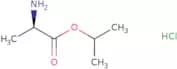
CAS:<p>Please enquire for more information about Calcitonin (8-32) (salmon I) trifluoroacetate salt including the price, delivery time and more detailed product information at the technical inquiry form on this page</p>Formula:C119H198N36O37·C2HF3O2Purity:Min. 98 Area-%Color and Shape:PowderMolecular weight:2,725.07 g/molD-Alanine isopropyl ester HCl
CAS:<p>D-Alanine isopropyl ester HCl is a synthetic compound that has been used as a diagnostic tool for detecting the presence of molybdenum in urine. It has been shown to have a high affinity for the receptor, and acts as an agonist. D-Alanine isopropyl ester HCl has also been shown to induce malignant growth in fibroblast cells.</p>Formula:C6H13NO2·ClHPurity:Min. 95%Color and Shape:White PowderMolecular weight:167.63 g/mol


![Fmoc-S-[2,3-bis(palmitoyloxy)propyl]-L-cysteine](/_next/image/?url=https%3A%2Fstatic.cymitquimica.com%2Fproducts%2F3D%2Fthumb-webp%2FFF47755.webp&w=3840&q=75)
![8-Methoxy-2-methyl-2,3,4,5-tetrahydro-1H-pyrido[4,3-b]indole](/_next/image/?url=https%3A%2Fstatic.cymitquimica.com%2Fproducts%2F3D%2Fthumb-webp%2FFM117858.webp&w=3840&q=75)