Amino Acids (AA)
Amino acids (AAs) are the fundamental building blocks of proteins, playing a crucial role in various biological processes. These organic compounds are essential for protein synthesis, metabolic pathways, and cell signaling. In this category, you will find a comprehensive range of amino acids, including essential, non-essential, and modified forms, which are vital for research in biochemistry, molecular biology, and nutritional sciences. At CymitQuimica, we provide high-quality amino acids to support your research and development needs, ensuring accuracy and reliability in your experimental outcomes.
Subcategories of "Amino Acids (AA)"
- Amino Acid Derivatives(3,955 products)
- Amino Acid and Amino Acid Related Compounds(3,436 products)
- Amino Acids with Oxygen or Sulphur(168 products)
- Boc- Amino Acids(351 products)
- Fmoc Amino Acids(1,710 products)
Found 38216 products of "Amino Acids (AA)"
Sort by
Purity (%)
0
100
|
0
|
50
|
90
|
95
|
100
H-Val-Gly-Ser-Glu-OH
CAS:<p>H-Val-Gly-Ser-Glu-OH is a model system for the study of uptake and distribution of fluorescently labeled peptides. It is made up of four amino acids that are found in various proteins, and also have been shown to be potent inducers of inflammation. H-Val-Gly-Ser-Glu-OH has an acidic side chain and can be cleaved by proteases, which may account for its ability to enhance cell proliferation. H-Val-Gly-Ser-Glu-OH is localized to the epidermal growth factor receptor (EGFR) on the surface membrane of cells and shows chemotactic activity towards hl60 cells, which are human promyelocytic leukemia cells. This peptide also increases light emission from hl60 cells when cultured with monoclonal antibodies against EGFR.</p>Formula:C15H26N4O8Purity:Min. 95%Color and Shape:PowderMolecular weight:390.39 g/molAluminiumHydroxybis[2,2'-methylen-bis(4,6-di-tert-butylphenyl)phosphate]
CAS:<p>Please enquire for more information about AluminiumHydroxybis[2,2'-methylen-bis(4,6-di-tert-butylphenyl)phosphate] including the price, delivery time and more detailed product information at the technical inquiry form on this page</p>Formula:C58H85AlO9P2Purity:Min. 95%Color and Shape:PowderMolecular weight:1,015.22 g/molN-(4-Methylphenyl)-2-phenylacetamide
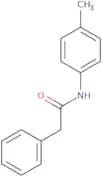
CAS:<p>2-Phenylacetamide is a solvent that can be used as a component in alkylation reactions. It is commonly used as a component of chlorinated solvents and has been shown to catalyze the reaction with benzyl chloride. 2-Phenylacetamide can be used to produce solar cells by sensitizing the surface of silicon wafers with this solvent. Researchers have also studied the alkylation reaction of phenylacetamide with methyl iodide and benzyl chloride, which can be carried out at room temperature and does not require any catalyst. This reaction was found to proceed well under gas chromatographic conditions.</p>Formula:C15H15NOPurity:Min. 95%Molecular weight:225.29 g/mol5-Fluoro-2-methylphenol
CAS:<p>The fluoroquinolone 5-Fluoro-2-methylphenol (5FM) is an inhibitor of angiotensin, an enzyme that is involved in the regulation of blood pressure and fluid balance. The structure of this compound was optimized to make it more potent and selective for angiotensin, while minimizing its adverse effects. This optimization was achieved using high throughput screening and x-ray crystallography. The fluorine atom in 5FM binds to aspartyl protease, which prevents the protease from breaking down proteins into smaller amino acid chains. This binding also inhibits the activity of other enzymes that are involved in protein synthesis, such as aspartyl proteases and salicylic acid esterases. 5FM has been shown to inhibit the growth of bacteria such as Staphylococcus aureus at concentrations that are not toxic to mammalian cells.</p>Formula:C7H7FOPurity:Min. 95%Color and Shape:Clear LiquidMolecular weight:126.13 g/mol3-Methylbenzaldehyde
CAS:<p>3-Methylbenzaldehyde is a diphenolase that is found in a Chinese medicinal plant, Acalypha wilkesiana. 3-Methylbenzaldehyde has been shown to have anti-inflammatory properties and can be used as a complementary therapy for inflammatory diseases. The chemical ionization technique was used to measure the production rate of 3-methylbenzaldehyde from the acetate extract of A. wilkesiana. The linear regression analysis showed that there was an increase in the production rate with increased concentration of hydrogen bonding interactions with 3-methylbenzaldehyde. Hydrogen bonding interactions are due to the presence of hydroxyl groups on the benzene ring and methyl group on the side chain. This chemical reaction forms glyoxal, which is then metabolized through p450 isozymes in order to produce 3-methylbenzaldehyde or other metabolites.</p>Formula:C8H8OPurity:Min. 98 Area-%Color and Shape:Colorless Clear LiquidMolecular weight:120.15 g/molN-Acetyl-S-(trichlorovinyl)-L-cysteine
CAS:<p>N-Acetyl-S-(trichlorovinyl)-L-cysteine is a recombinant protein that is produced by the chemical ionization of human cytochrome P450 1A1 (CYP1A1) using trichloroacetic acid. The reactive intermediate is conjugated to an anti-bacterial antibody that binds to bacterial enzymes, such as bacterial cytosolic enzymes, and prevents their activity. This treatment has been shown to be effective in experimental infection models in mice. N-Acetyl-S-(trichlorovinyl)-L-cysteine is also capable of increasing the antibody response in humans. It can be used for the diagnosis of chronic exposure to perchloroethylene, which is a chemical that can cause liver damage.</p>Formula:C7H8Cl3NO3SPurity:Min. 95 Area-%Color and Shape:PowderMolecular weight:292.57 g/mol2-(S)-Hydroxy-4-oxo-4-phenylbutyric acid
CAS:<p>2-(S)-Hydroxy-4-oxo-4-phenylbutyric acid is a useful building block that can be used in the production of many fine chemicals, research chemicals, and reagents. It is a versatile building block that can be used as a reaction component in a wide range of reactions. 2-(S)-Hydroxy-4-oxo-4-phenylbutyric acid is also an intermediate or scaffold for complex compounds that are valuable in many fields such as pharmaceuticals, agrochemicals, and polymers. This compound has been shown to have high quality and purity.</p>Formula:C10H10O4Purity:Min. 95%Color and Shape:PowderMolecular weight:194.18 g/molH-Glu(pNA)-OH
CAS:<p>Gamma-GPNA is a highly specific and sensitive substrate commonly employed for assessing gamma-glutamyl transferase activity in both serum and tissues, particularly through automated colorimetric methods. In this context, the dipeptide Gly-Gly serves as the glutamyl acceptor, facilitating the enzymatic reaction and subsequent detection of gamma-glutamyl transferase activity. This substrate has been widely utilized in enzymatic assays due to its specificity and sensitivity, allowing for accurate determination of gamma-glutamyl transferase levels in various biological samples.</p>Formula:C11H13N3O5Purity:Min. 95%Color and Shape:PowderMolecular weight:267.24 g/mol4-Methyl-1H-1,2,3-benzotriazole
CAS:<p>4-Methyl-1H-1,2,3-benzotriazole is a corrosion inhibitor that is used in the treatment of wastewater. It has been shown to have synergic effects with other corrosion inhibitors such as benzotriazole, glycol ethers, and sodium citrate. 4-Methyl-1H-1,2,3-benzotriazole also inhibits organic matter degradation by acting as an inhibitor. This compound has been shown to adsorb on Langmuir monolayers at low concentrations and can be used as an analytical method for copper ions. The adsorption of 4-methylbenzotriazole onto metal hydroxides was found to be dependent on pH and the presence of other ions in solution.</p>Formula:C7H7N3Purity:Min. 95%Color and Shape:PowderMolecular weight:133.15 g/mol1,4-Phenylenediacrylic acid diethyl ester
CAS:<p>1,4-Phenylenediacrylic acid diethyl ester (PDAD) is an organic molecule that is used as a template molecule in polymerizations. It can be used to coat surfaces with polymers, which makes them more resistant to corrosion and wear. PDAD interacts with an electron beam in the presence of oxygen, generating excimers and supercritical CO2. These interactions are responsible for the red shift that occurs when PDAD interacts with the electron beam. The absorption spectrum of PDAD has been shown to change depending on its morphology: alpha-type PDAD absorbs at lower wavelengths than beta-type PDAD.</p>Formula:C16H18O4Purity:Min. 95%Color and Shape:PowderMolecular weight:274.31 g/molMethyl 4-chloro-3-methylbenzoate
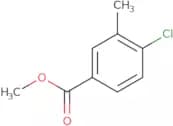
CAS:<p>Please enquire for more information about Methyl 4-chloro-3-methylbenzoate including the price, delivery time and more detailed product information at the technical inquiry form on this page</p>Formula:C9H9ClO2Purity:Min. 95%Molecular weight:184.62 g/molN3-L-Leu-OH·BHA
CAS:<p>N3-L-Leu-OH·BHA is a complex compound that has been used as a precursor to other compounds, such as pyrrolidines. It is an intermediate in the synthesis of various pharmaceuticals and research chemicals, such as 4-methylpiperidine. N3-L-Leu-OH·BHA has been shown to be useful in the preparation of various speciality chemicals, including building blocks for polymers and reagents for organic synthesis.</p>Formula:C13H13N·C6H11N3O2Purity:Min. 95%Color and Shape:PowderMolecular weight:340.42 g/mol3-Methoxy-4-nitrobenzoic acid
CAS:<p>3-Methoxy-4-nitrobenzoic acid is a potent and selective inhibitor of aromatase that can be used for the treatment of breast cancer. 3-Methoxy-4-nitrobenzoic acid inhibits the activity of serine proteases, which are enzymes important in protein degradation and cellular signaling. This drug has been shown to inhibit the activity of many other types of kinases, and this makes it a good candidate for use as an anti-cancer agent. 3-Methoxy-4-nitrobenzoic acid also has been shown to inhibit the formation and development of brain tumors when administered via whole body or brain uptake techniques. In addition to inhibiting tumor growth, this drug can prevent metastasis by preventing circulating tumor cells from entering new tissues. The inhibition of estrogen synthesis by 3methoxy-4 nitrobenzoic acid leads to breast cancer cell death in vitro and in vivo.</p>Formula:C8H7NO5Purity:Min. 95%Color and Shape:PowderMolecular weight:197.14 g/mol1-(4-Bromophenyl)-4-methylpiperazine
CAS:Controlled Product<p>Please enquire for more information about 1-(4-Bromophenyl)-4-methylpiperazine including the price, delivery time and more detailed product information at the technical inquiry form on this page</p>Formula:C11H15BrN2Purity:Min. 95%Color and Shape:PowderMolecular weight:255.15 g/mol2-Ethoxy-3-methoxybenzaldehyde
CAS:<p>2-Ethoxy-3-methoxybenzaldehyde is a coordination compound that contains two thiolate ligands, one carbonyl group, and a chelate ring with sulfur. The compound has been shown to bind to the active site of thiosemicarbazide in the enzyme sulfite oxidase, which catalyzes the oxidation of sulfite to sulfate. 2-Ethoxy-3-methoxybenzaldehyde has also been shown to be an effective ligand for rhenium.</p>Formula:C10H12O3Purity:Min. 95%Molecular weight:180.2 g/mol6-(3-(Adamantan-1-yl)-4-methoxyphenyl)-2-naphthoic acid
CAS:Controlled Product<p>Agonist of retinoic acid receptors (RAR-? and RAR-?); pro-apoptotic</p>Formula:C28H28O3Purity:Min. 95%Color and Shape:PowderMolecular weight:412.52 g/molProlintane hydrochloride
CAS:Controlled Product<p>Prolintane hydrochloride is a drug that has been shown to inhibit the activity of enzymes in the inflammatory and immune responses. It also inhibits the uptake of caffeine, which may be due to its ability to bind with the toll-like receptor (TLR) and CB2 receptor. Prolintane hydrochloride has been used to treat bowel disease, depression, and autoimmune diseases such as rheumatoid arthritis. This drug has a depressant effect on the central nervous system, which may lead to symptoms such as drowsiness and fatigue. The drug is metabolized through a synthetic pathway that involves N-deacetylation by acetyltransferase enzymes. Prolintane hydrochloride also inhibits inflammatory bowel disease by reducing cytokine production in mice with colitis.</p>Purity:Min. 95%5-Fluoro-2-methylphenylhydrazine hydrochloride
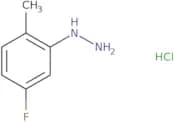
CAS:<p>5-Fluoro-2-methylphenylhydrazine hydrochloride is a crystalline solid that is soluble in water. It is used as a reagent in organic synthesis, but it also has application as an intermediate in the production of calcium hydroxide and calcium fluoride. 5-Fluoro-2-methylphenylhydrazine hydrochloride reacts with methacrylate to produce an ultrafine powder, which can be difficult to hydrate because of its high molecular weight. The hydration reaction requires the addition of large amounts of water and heat. This process can be accelerated by adding a solution of calcium ions or calcium hydroxide to the reaction mixture. Hydrogen fluoride gas (HF) may also be generated during this process. Crystallization occurs when the solids are heated or placed in contact with a nonpolar solvent such as hexane.</p>Formula:C7H9FN2•HClPurity:Min. 95%Color and Shape:PowderMolecular weight:176.62 g/molD-Norvaline
CAS:<p>D-Norvaline is a non-protein amino acid that is an intermediate in the biosynthesis of L-norvaline. It is synthesized from D-alanine by the racemase enzyme and converted to L-norvaline by the hydrolysis of an acetyl group. D-Norvaline has shown inhibitory effects on gamma-aminobutyric acid (GABA) and chloride ion channels, which may be helpful for treating t2d patients. Norvaline binds to GABA with high affinity and inhibits the opening of chloride ion channels in the central nervous system.</p>Formula:C5H11NO2Purity:Min. 95%Color and Shape:White PowderMolecular weight:117.15 g/molFmoc-L-homotyrosine
CAS:<p>Fmoc-L-homotyrosine is a tyrosine kinase inhibitor. Tyrosine kinases are enzymes that catalyze the transfer of phosphate groups from ATP to tyrosine residues in proteins, which play a role in many cellular processes. Fmoc-L-homotyrosine binds to the ATP binding site in the active site of these enzymes, preventing phosphorylation and thus preventing protein function. This compound has been shown to inhibit neurotensin receptors in vitro and has also been shown to be an endogenous ligand for this receptor. Fmoc-L-homotyrosine binds to allosteric sites on the neurotensin receptor, causing conformational changes that activate transduction pathways and increase signaling. The mechanism of inhibition is not yet fully understood but is thought to be due to steric hindrance or allosteric binding.</p>Formula:C25H23NO5Purity:Min. 95%Molecular weight:417.45 g/mol


![AluminiumHydroxybis[2,2'-methylen-bis(4,6-di-tert-butylphenyl)phosphate]](/_next/image/?url=https%3A%2Fstatic.cymitquimica.com%2Fproducts%2F3D%2Fthumb-webp%2FFA150593.webp&w=3840&q=75)