Amino Acids (AA)
Amino acids (AAs) are the fundamental building blocks of proteins, playing a crucial role in various biological processes. These organic compounds are essential for protein synthesis, metabolic pathways, and cell signaling. In this category, you will find a comprehensive range of amino acids, including essential, non-essential, and modified forms, which are vital for research in biochemistry, molecular biology, and nutritional sciences. At CymitQuimica, we provide high-quality amino acids to support your research and development needs, ensuring accuracy and reliability in your experimental outcomes.
Subcategories of "Amino Acids (AA)"
- Amino Acid Derivatives(3,957 products)
- Amino Acid and Amino Acid Related Compounds(3,472 products)
- Amino Acids with Oxygen or Sulphur(168 products)
- Boc- Amino Acids(351 products)
- Fmoc Amino Acids(1,710 products)
Found 38265 products of "Amino Acids (AA)"
Sort by
Purity (%)
0
100
|
0
|
50
|
90
|
95
|
100
N-α-Boc-L-ornithine tert-butyl ester hydrochloride
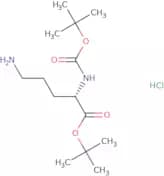
CAS:<p>Please enquire for more information about N-α-Boc-L-ornithine tert-butyl ester hydrochloride including the price, delivery time and more detailed product information at the technical inquiry form on this page</p>Formula:C14H28N2O4•HClPurity:Min. 95%Color and Shape:PowderMolecular weight:324.84 g/molBoc-L-prolinal
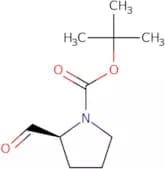
CAS:<p>Boc-L-prolinal is a stereoselective enolate that has been used in the synthesis of organometallic compounds. It is also used in the preparation of monoclonal antibodies, which are proteins that are produced by the immune system to help fight off infections. Boc-L-prolinal has been shown to be an effective agent for treating many cancers, including breast cancer and melanoma. In addition, it has been shown to inhibit epidermal growth factor (EGF) and other growth factors, which may be due to its ability to induce apoptotic signaling. Boc-L-prolinal also contains a carbonyl group, which can undergo acidolysis reactions with nucleophiles such as water or alcohols.</p>Formula:C10H17NO3Purity:Min. 95%Color and Shape:Colorless Clear LiquidMolecular weight:199.25 g/mol1,2-Dioleoyl-sn-glycero-3-phosphatidylethanolamino (+)-biotin
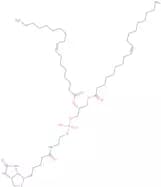
CAS:<p>This is a speciality chemical and is not intended for use in food, drug, or cosmetic applications. This fine chemical is a useful building block, which can be used to synthesize complex compounds. It has been shown to have high reactivity with a variety of reagents, making it an excellent research component.</p>Formula:C51H92N3O10PSPurity:Min. 95%Color and Shape:PowderMolecular weight:970.33 g/molTriethylene glycol bis(3-tert-butyl-4-hydroxy-5-methylphenyl)propionate
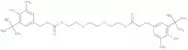
CAS:<p>Triethylene glycol bis(3-tert-butyl-4-hydroxy-5-methylphenyl)propionate is a water soluble, nonvolatile, and reactive chemical that is used as a sealant and antioxidant in polyvinyl chloride production. Triethylene glycol bis(3-tert-butyl-4-hydroxy-5-methylphenyl)propionate is also used as a synergistic interaction agent for water permeability in fatty acid esters. It has been shown to have an effect on the metabolic rate of rats, which may be due to its ability to react with free radicals.</p>Formula:C34H50O8Purity:Min. 95%Color and Shape:White Off-White PowderMolecular weight:586.76 g/mol6-Methyl-DL-tryptophan
CAS:<p>6-Methyl-DL-tryptophan is a useful intermediate and building block for the synthesis of natural products, pharmaceuticals, and agrochemicals. It is also a versatile building block for organic synthesis as it can be used in the preparation of various types of compounds. 6-Methyl-DL-tryptophan has been shown to inhibit the production of nitric oxide by macrophages and microglia cells in response to proinflammatory cytokines. It is an inhibitor of protein biosynthesis, which may be due to its ability to inhibit tryptophan synthase.</p>Formula:C12H14N2O2Molecular weight:218.26 g/mol5-Methylcytosine hydrochloride salt
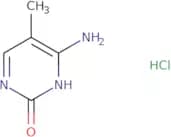
CAS:<p>5-Methylcytosine hydrochloride salt is a metabolite of cytosine that occurs naturally in the body. It is used as an inhibitor of DNA methylation to study the effect of this process on gene expression. 5-Methylcytosine hydrochloride salt has been shown to inhibit the production of growth factors, such as insulin-like growth factor 1, and radiation energy. It also causes oxidative damage to DNA and inhibits the oxidation of urea nitrogen in lettuce. The matrix effect may interfere with the analysis of 5-methylcytosine hydrochloride salt by spectrometry.</p>Formula:C5H7N3O·HClPurity:Min. 95%Color and Shape:PowderMolecular weight:161.59 g/mol3,6-Bis(1,1-dimethylethyl)-10-phenyl-9-(2,4,6-trimethylphenyl)-acridinium tetrafluoroborate
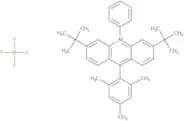
CAS:<p>3,6-Bis(1,1-dimethylethyl)-10-phenyl-9-(2,4,6-trimethylphenyl)-acridinium tetrafluoroborate is a high quality reagent that is used as an intermediate in the synthesis of other compounds. It has CAS No. 1810004-87-5 and a molecular weight of 345.7 g/mol. This compound is useful for the synthesis of complex compounds and can be used in fine chemicals. 3,6-Bis(1,1-dimethylethyl)-10-phenyl-9-(2,4,6-trimethylphenyl)-acridinium tetrafluoroborate is also useful for research purposes and can be used as a scaffold for drug discovery. It is also a versatile building block that can be used in reactions to produce speciality chemicals and reaction components such as esters or amides.</p>Formula:C36H40BF4NPurity:Min 95%Color and Shape:PowderMolecular weight:573.51 g/mol5-Methoxy-2-[[(4-methoxy-3,5-dimethyl-2-pyridinyl)methyl]thio]-1H-benzimidazole N-oxide
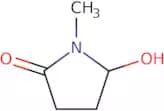
CAS:<p>5-Methoxy-2-[[(4-methoxy-3,5-dimethyl-2-pyridinyl)methyl]thio]-1H-benzimidazole N-oxide is a sulfoxide that belongs to the family of medicines called proton pump inhibitors. It is a stereoselective proton pump inhibitor due to its cyclic nature and has been used as a pharmaceutical preparation for the treatment of gastroesophageal reflux disease. 5-Methoxy-2-[(4-methoxy-3,5-dimethylpyridinium) methylthio]-1H benzimidazole N oxide has been shown to be an enantiomerically pure salt form with magnesium chloride.</p>Formula:C17H19N3O3SPurity:Min. 95%Color and Shape:White to off-white solid.Molecular weight:345.42 g/mol5-Hydroxy-N-methyl-2-pyrrolidinone
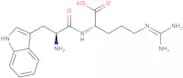
CAS:<p>5-Hydroxy-N-methyl-2-pyrrolidinone (5HMP) is a metabolite that is produced in the body after ingestion of pyrrolidinones. It can be detected in urine and blood samples to assess the exposure to these compounds. 5HMP is also used as an analytical method for detecting the presence of pyrrolidinones in biological samples, such as urine and blood. The reaction products are measured using a spectrometer at 270 nm. The monoclonal antibody can be used to detect 5HMP in human liver cells. In animal experiments, 5HMP was found to have no significant effect on the uptake of glucose by the liver or other organs.</p>Formula:C5H9NO2Purity:Min. 95%Color and Shape:PowderMolecular weight:115.13 g/molH-Trp-Arg-OH·2 HCl
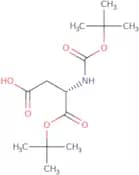
CAS:<p>H-Trp-Arg-OH·2 HCl is a reagent that is used in the synthesis of peptides and other organic compounds. It is a complex compound with CAS No. 276880-00-3. This chemical has been shown to be useful as an intermediate, a fine chemical, and a speciality chemical for research purposes. H-Trp-Arg-OH·2 HCl has been found to be a versatile building block or reaction component in the preparation of various pharmaceuticals and other organic compounds.</p>Formula:C17H24N6O3·2HClPurity:Min. 95%Color and Shape:SolidMolecular weight:433.33 g/molN-tert-Boc-L-aspartic acid tert-butyl ester
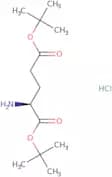
CAS:<p>N-tert-Boc-L-aspartic acid tert-butyl ester is a chemical compound that is synthesized in the laboratory. It has been shown to have an insulinotropic effect on plasma samples and may be used in the treatment of cancer. The ring opening of N-tert-Boc-L-aspartic acid tert-butyl ester yields L-aspartic acid, which can be used for the synthesis of collagen or glycopeptide. This chemical is also found to stimulate T cells and has been shown to inhibit proliferation of cancer cells in vitro.</p>Formula:C13H23NO6Purity:Min. 95%Color and Shape:White PowderMolecular weight:289.32 g/molL-Glutamic acid di-tert-butyl ester hydrochloride
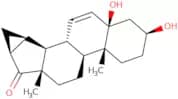
CAS:<p>L-glutamic acid di-tert-butyl ester hydrochloride is a synthetic glutamic acid conjugate that can be used in the treatment of cancer. L-Glutamic acid di-tert-butyl ester hydrochloride is a substrate for many enzymes, such as glutamate transporters and glutaminase, which are found in tumor cells. It has been shown to decrease the uptake of docetaxel by tumor xenografts in mice. The expression of L-Glutamic acid di-tert-butyl ester hydrochloride has been observed in tissues during cancerous growth and it is expressed at higher levels than in normal tissues.</p>Formula:C13H25NO4·HClPurity:Min. 95%Color and Shape:White PowderMolecular weight:295.8 g/mol3β,5-Dihydroxy-15β,16β-methylene-5β-androst-6-en-17-one
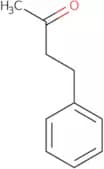
CAS:Controlled Product<p>3b,5-Dihydroxy-15b,16b-methylene-5b-androst-6-en-17-one is a steroid hormone that has been shown to have antihypertensive properties. It has been shown to reduce the production of angiotensin II by inhibiting the enzyme angiotensin converting enzyme (ACE). 3b,5-Dihydroxy-15b,16b-methylene-5b-androst-6-en 17 one has also been shown to be a potent inhibitor of the enzyme 3beta hydroxysteroid dehydrogenase type 1 (3betaHSD1) and 5alpha reductase type 2 (5alphaRD2), which are enzymes that convert cortisone to cortisol and dihydrotestosterone to testosterone respectively. These effects on steroidogenesis may account for its observed antihypertensive activity.</p>Formula:C20H28O3Purity:Min. 95%Color and Shape:PowderMolecular weight:316.43 g/mol4-Phenyl-2-butanone
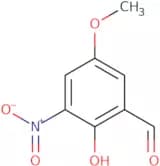
CAS:<p>4-Phenyl-2-butanone is an organic compound that is used as a solvent. It has been shown to be effective against a wide range of bacteria, including Gram positive and Gram negative bacteria. 4-Phenyl-2-butanone disrupts the cell membrane by binding to glycol ether, which is an important part of the lipid bilayer. It also inhibits the synthesis of two important molecules in bacterial cells, dinucleotide phosphate and phospholipids. This process leads to bacterial cell death. 4-Phenyl-2-butanone also has antimicrobial properties due to its ability to destroy water vapor and inhibit growth of microorganisms on skin.</p>Formula:C10H12OPurity:Min. 97.5 Area-%Color and Shape:Colorless Clear LiquidMolecular weight:148.2 g/mol2-Hydroxy-5-methoxy-3-nitrobenzaldehyde
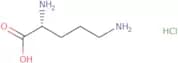
CAS:<p>2-Hydroxy-5-methoxy-3-nitrobenzaldehyde is a 6-membered aromatic compound that has been shown to have anti-cancer properties. It has been shown to inhibit the proliferation of cancer cells by inhibiting protein synthesis, as well as inducing apoptosis. This compound also inhibits the growth of colon cancer cells and cervical cancer cells in culture. 2-Hydroxy-5-methoxy-3-nitrobenzaldehyde has an inhibitory effect on the growth of cancer cells and may be used for treatment against tumors.</p>Formula:C8H7NO5Purity:Min. 95%Color and Shape:PowderMolecular weight:197.14 g/molD-Ornithine hydrochloride
CAS:<p>D-Ornithine hydrochloride is a synthetic amino acid that is used as a precursor for the synthesis of polyamines in the body. It is also used as an additive in food and animal feed. This amino acid has been shown to inhibit gramicidin production by inhibiting the enzyme acylase. D-Ornithine hydrochloride has also been shown to stimulate the production of ornithine by increasing ATP levels and activating enzymes such as pyruvate kinase, glutamic pyruvate transaminase, and phosphoenolpyruvate carboxykinase. In addition, it has been shown to have chemoenzymatic properties that allow for its use in reactions with fatty acids as substrates. The reaction yield increases with higher substrate concentrations, which can be achieved using immobilized cells or by adding cyclic peptides such as ornithine to the reaction mixture.</p>Formula:C5H12N2O2•HClPurity:Min. 95%Color and Shape:PowderMolecular weight:168.62 g/molN-Me-D-Tyr-OH·HCl
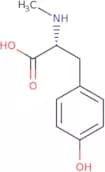
CAS:<p>N-Me-D-Tyr-OH·HCl is an antibiotic that belongs to the group of esters. It has been shown to inhibit the growth of bacteria by binding to the 50S ribosomal subunit. N-Me-D-Tyr-OH·HCl was analyzed using gas chromatography and found to have a retention time of 3.6 minutes. This antibiotic has been used as a substrate for chemical analysis and identification of methyl esters, which are derivatives of carboxylic acids with methyl groups added to the molecule.</p>Formula:C10H13NO3·HClPurity:Min. 95%Color and Shape:PowderMolecular weight:231.68 g/mol3-Methyl-5-Isothiazolamine
CAS:<p>3-Methyl-5-isothiazolamine is a linear molecule with a molecular weight of 122.1. 3-Methyl-5-isothiazolamine has an interaction with chloride and can be used as a reagent for the identification of disulfides. Disulfide bonds are formed by the oxidation of sulfhydryl groups in proteins, which are reduced by glutathione reductase to produce sulfhydryl groups. 3-Methyl-5-isothiazolamine has been shown to react with molecular ions that are characteristic of isothiazoles and isothiazole derivatives, as well as aromatic compounds such as 4-hydroxybenzoic acid. This product also reacts with dehydrogenase enzymes, such as alcohol dehydrogenase, which produces oxidized products from carbohydrates and other organic molecules that contain hydroxyl groups.</p>Formula:C4H6N2SPurity:Min. 95%Color and Shape:PowderMolecular weight:114.17 g/molH-Lys-Thr-OH trifluroacetate
CAS:<p>Please enquire for more information about H-Lys-Thr-OH trifluroacetate including the price, delivery time and more detailed product information at the technical inquiry form on this page</p>Formula:C10H21N3O4•(C2HF3O2)xPurity:Min. 95%N-a-Benzoyl-L-arginine
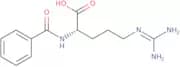
CAS:<p>N-a-Benzoyl-L-arginine is a fluorescent substrate for soybean trypsin. It is hydrolyzed by the enzyme to release an amide and p-nitrophenyl phosphate. The amide is then hydrolyzed by esterase to produce caproic acid, which can be detected at an excitation wavelength of 340 nm and emission wavelength of 495 nm. N-a-Benzoyl-L-arginine has been shown to have proteolytic activity in cell culture, with a pH optimum of 6.8 and temperature optimum of 37 degrees Celsius. This product has been shown to be effective in women as well as in men.</p>Formula:C13H18N4O3Purity:Min. 95%Color and Shape:White PowderMolecular weight:278.31 g/mol


![5-Methoxy-2-[[(4-methoxy-3,5-dimethyl-2-pyridinyl)methyl]thio]-1H-benzimidazole N-oxide](/_next/image/?url=https%3A%2Fstatic.cymitquimica.com%2Fproducts%2F3D%2Fthumb-webp%2FFM63432.webp&w=3840&q=75)