Amino Acids (AA)
Amino acids (AAs) are the fundamental building blocks of proteins, playing a crucial role in various biological processes. These organic compounds are essential for protein synthesis, metabolic pathways, and cell signaling. In this category, you will find a comprehensive range of amino acids, including essential, non-essential, and modified forms, which are vital for research in biochemistry, molecular biology, and nutritional sciences. At CymitQuimica, we provide high-quality amino acids to support your research and development needs, ensuring accuracy and reliability in your experimental outcomes.
Subcategories of "Amino Acids (AA)"
- Amino Acid Derivatives(3,969 products)
- Amino Acid and Amino Acid Related Compounds(3,474 products)
- Amino Acids with Oxygen or Sulphur(168 products)
- Boc- Amino Acids(351 products)
- Fmoc Amino Acids(1,710 products)
Found 38282 products of "Amino Acids (AA)"
Sort by
Purity (%)
0
100
|
0
|
50
|
90
|
95
|
100
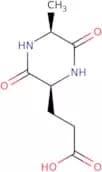
Cyclo(-L-Ala-L-Glu)
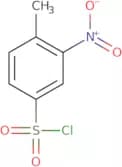
CAS:Cyclo(-L-Ala-L-Glu) is a versatile building block that belongs to the class of complex compounds. It can be used as a reagent, speciality chemical, or useful building block in organic synthesis. Cyclo(-L-Ala-L-Glu) has been shown to participate in a wide range of reactions, including condensation, esterification, and oxidation. Cyclo(-L-Ala-L-Glu) also has interesting properties that make it useful as an intermediate for the synthesis of other compounds. Cyclo(-L-Ala-L-Glu) can be heated with a strong acid such as nitric acid to produce cyclopropane derivatives. The high quality and usefulness of Cyclo(-L-Ala-L-Glu) makes it an excellent scaffold for synthetic chemistry.Formula:C8H12N2O4Purity:Min. 95%Color and Shape:PowderMolecular weight:200.19 g/mol4-Methyl-3-nitrobenzenesulfonyl chloride
CAS:<p>4-Methyl-3-nitrobenzenesulfonyl chloride (4MNBS) is a fungicide that inhibits the growth of fungi, such as Plasmodiophora brassicae, by inhibiting the enzyme dehydrogenase. 4MNBS has also been shown to inhibit mammalian pyridine nucleotide dehydrogenase and to have low toxicity in mammals. 4MNBS has been found to be an inhibitor of human cytochrome P450 isoforms CYP1A2, CYP2B6, and CYP3A4 with IC50 values ranging from 10 μM to 100 μM. 4MNBS was also shown to be a potent inhibitor of chloroplast dehydrogenases from cruciferous plants with IC50 values between 0.1 μM and 100 nM. This compound has low phytotoxicity and does not accumulate in the leaves of cruciferous plants at a concentration of 500 ppm or higher.</p>Formula:C7H6ClNO4SPurity:Min. 95%Molecular weight:235.65 g/molHO-PEG10-OH
CAS:<p>HO-PEG10-OH is a glycol ether that is used as a surfactant in the formulation of intravenous lipid emulsions. It is also used in chromatographic analysis and is capable of reducing the redox potential of biological samples. HO-PEG10-OH has been shown to have pharmacokinetic properties and to be effective against inflammation. HO-PEG10-OH has been shown to inhibit hepcidin, an important regulator of iron metabolism, which may explain its antiinflammatory activity.</p>Formula:C20H42O11Purity:Min. 95%Color and Shape:Colourless To Pale Yellow Clear LiquidMolecular weight:458.54 g/mol4--Methylacetophenone azine
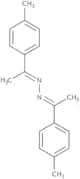
CAS:<p>4-Methylacetophenone azine is a useful chemical with a variety of applications. It is a versatile building block, which can be used as an intermediate for the synthesis of complex compounds and as a reaction component in organic synthesis. 4-Methylacetophenone azine has been shown to be effective in the production of research chemicals and speciality chemicals. This product is high quality and can be used as a reagent in organic synthesis.</p>Formula:C18H20N2Purity:Min. 95%Color and Shape:PowderMolecular weight:264.36 g/molAc-Gly-Lys-OMe acetate
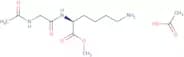
CAS:Controlled Product<p>Ac-Gly-Lys-OMe acetate salt is a reactive chemical compound that is used in the synthesis of peptides. This salt is synthesized by reacting glycine with lysine and formaldehyde. Ac-Gly-Lys-OMe acetate salt has been shown to have hemolytic activity and can be used as a synthetic substrate for kinetic studies. It has also been found to activate complement, which may be due to its disulfide bond formation. Ac-Gly-Lys-OMe acetate salt has been shown to inhibit fibrinogen and nitrosylation, which may result in thrombotic disorders.</p>Formula:C11H21N3O4•C2H4O2Purity:Min. 95%Color and Shape:PowderMolecular weight:319.35 g/molH-Cys-Gly-OH
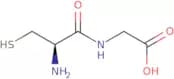
CAS:<p>H-Cys-Gly-OH is a cyclic peptide that has potent antitumor activity. It was synthesized from glutathione and cysteine, which are naturally occurring amino acids in the human body. The mechanism of action of H-Cys-Gly-OH is not well understood, but it may be due to its ability to bind to α1-acid glycoprotein and other proteins in the blood. The compound also has a redox potential, fluorescence spectra, and structural analysis that can be used for identification purposes. This molecule is stable at acid pH and is easily soluble in water or organic solvents. H-Cys-Gly-OH can be analyzed by titration calorimetry or cyclic voltammetry methods.</p>Formula:C5H10N2O3SPurity:Min. 95%Molecular weight:178.21 g/molH-Glu-Val-OH
CAS:<p>H-Glu-Val-OH is a coordination complex that contains the metal scandium. It is used as a ligand to form complexes with other metals and organic molecules. This compound is also used in peptide synthesis and has been shown to have a strong interaction with nitrate, serine, and formiate. H-Glu-Val-OH is soluble in solutions such as water or formiate. The tripeptide Ser-Gly-Val can be formed from this compound by hydrolysis of the hydroxo group.</p>Formula:C10H18N2O5Purity:Min. 95 Area-%Color and Shape:PowderMolecular weight:246.26 g/molCbz-L-glutamine
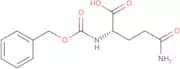
CAS:<p>Cbz-L-glutamine is a water soluble compound that is used in the synthesis of pomalidomide. It is synthesized through a stepwise amide formation from methylamine and ethylene diamine. Cbz-L-glutamine has been shown to have an inhibitory effect on cancer cells, which may be due to its ability to break down hydroxamic acids. This chemical reaction causes the release of hydrogen ions, which leads to the disruption of various cellular processes, such as DNA replication and protein synthesis. The uptake of Cbz-L-glutamine by cancer cells has been shown in tissue culture experiments.</p>Formula:C13H16N2O5Purity:Min. 95%Color and Shape:PowderMolecular weight:280.28 g/mol8-Methoxy-2-methyl-2,3,4,5-tetrahydro-1H-pyrido[4,3-b]indole
CAS:<p>8-Methoxy-2-methyl-2,3,4,5-tetrahydro-1H-pyrido[4,3-b]indole is a versatile building block that can be used as a reagent or speciality chemical. It has been used in research and development of pharmaceuticals and as a useful intermediate for the synthesis of other compounds. 8-Methoxy-2-methyl-2,3,4,5-tetrahydro-1H-pyrido[4,3-b]indole is an important reaction component for the synthesis of many types of compounds such as indoles, coumarins, and quinazolinones.</p>Formula:C13H16N2OPurity:Min. 95%Color and Shape:PowderMolecular weight:216.28 g/mol1,10-Phenanthroline monohydrate
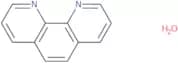
CAS:<p>1,10-Phenanthroline monohydrate is a metal chelate that binds to DNA by hydrogen bonds. It has been shown to have an intramolecular hydrogen and a linear calibration curve with a coefficient of determination (r2) of 0.998. The rate constant for the reaction of 1,10-phenanthroline monohydrate with DNA is 5.00 x 10 M-1 s-1 at 25°C in water and pH 7.4 buffer. The coordination geometry for 1,10-phenanthroline monohydrate is octahedral with the axial ligands occupying the equatorial positions and the equatorial ligands occupying the axial positions. This compound has been shown to be active against HL-60 cells, which causes cancerous transformations in vitro. Fluorescence spectrometry data shows that 1,10-phenanthroline monohydrate can bind to DNA in vitro but not in vivo.</p>Formula:C12H10N2OPurity:Min. 95%Color and Shape:Off-White PowderMolecular weight:198.22 g/molSuc-Ala-Ala-Ala-AMC
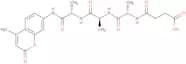
CAS:<p>Suc-Ala-Ala-Ala-AMC is a fluorogenic substrate that can be used to measure the activity of serine proteases. Suc-Ala-Ala-Ala-AMC has been shown to have high values in mammalian tissue. It also has high activity against many bacteria and fungi, as well as proteolytic enzymes such as collagenase and matrix metalloproteinase. This substrate is activated by phorbol esters and has an optimum pH of 5.5. Suc-Ala-Ala-Ala AMC is a model protein for determining the antibacterial efficacy of various antibiotics.</p>Formula:C23H28N4O8Purity:Min. 95%Color and Shape:PowderMolecular weight:488.49 g/molLuteolin-4'-O-glucoside
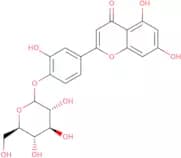
CAS:<p>Luteolin-4'-O-glucoside is a flavonol glycoside that is found in plants such as licorice, celery, and parsley. Luteolin-4'-O-glucoside has been shown to inhibit the growth of Coccidioides neoformans by binding to the cell membrane surface and blocking the synthesis of phospholipids. It also inhibits cancer cells in culture by reducing their viability. The structural analysis of luteolin-4'-O-glucoside revealed an hydroxyl group on its aromatic ring, which may be responsible for its anti-inflammatory effects. Luteolin-4'-O-glucoside has been shown to be effective against inflammatory diseases, such as rheumatoid arthritis and asthma, and may also have a protective effect against certain types of cancer, such as cervical cancer. Luteolin-4'-O-glucoside has also been shown to</p>Formula:C21H20O11Purity:Min. 95%Color and Shape:PowderMolecular weight:448.38 g/molBoc-Asp(OBzl)-Pro-Arg-AMC·HCl
CAS:<p>Boc-Asp(OBzl)-Pro-Arg-AMC·HCl is a high quality, reagent, complex compound and useful intermediate. It is a fine chemical with the CAS Number 201849-39-0 that is used in research and development. Boc-Asp(OBzl)-Pro-Arg-AMC·HCl is also a versatile building block that can be used in reactions for the synthesis of other compounds.</p>Formula:C37H47N7O9·HClPurity:Min. 98 Area-%Color and Shape:White PowderMolecular weight:770.27 g/mol2-Phenyl-2-(2-piperidy)acetic acid
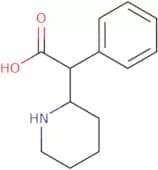
CAS:Controlled Product<p>Methylphenidate is a psychostimulant drug used to treat attention deficit hyperactivity disorder (ADHD) and narcolepsy. It is a prodrug of the active compound, 2-phenyl-2-(2-piperidin)acetic acid (Ritalinic acid), which inhibits the reuptake of dopamine and norepinephrine into the presynaptic neuron. Methylphenidate can be detected by LC-MS/MS in wastewater, providing an analytical method for predicting the presence of this substance in wastewater treatment plants. This drug has minimal toxicity in model organisms and can be metabolized by methylation to form a glucuronide conjugate. Methylphenidate has been shown to increase locomotor activity when administered at low doses, but not at high doses. At high doses, it increases locomotor activity up to 3 hours after administration and decreases locomotor activity 1 hour after administration.</p>Formula:C13H17NO2Purity:Min 98%Color and Shape:White PowderMolecular weight:219.28 g/molL-Valinol
CAS:<p>L-Valinol is a model system that is used to study the reaction of aziridines with oxygen nucleophiles. It has been shown that this reaction proceeds through the formation of an intermediate, hydrogen tartrate, followed by a second step with nitrogen atoms as the nucleophile and alcohol residue as the substrate. The use of L-valinol in asymmetric synthesis was also demonstrated. In this process, amides were obtained with high enantioselectivity by reacting L-valinol with amines in acidic conditions. This synthetic pathway was found to be synergic with other reactions, such as nitroolefination and benzoylation.</p>Formula:C5H13NOPurity:Min. 95%Color and Shape:Solidified MassMolecular weight:103.16 g/molFmoc-O-tert-butyl-D-threonine
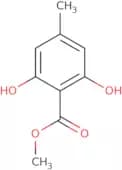
CAS:<p>Fmoc-O-tert-butyl-D-threonine is an ion pair that is synthesized using an asymmetric synthesis process. The molecule has been shown to have antiproliferative effects in animals and humans and can inhibit neutrophil function. This synthetic compound has a glycan (a carbohydrate) attached to the side chain, which may be important for its biological activity. Fmoc-O-tert-butyl-D-threonine was synthesized on a solid phase and functional groups were introduced as part of the synthesis process. This molecule also has an inhibitory effect on ulceration in animals.</p>Formula:C23H27NO5Purity:Min. 95%Color and Shape:PowderMolecular weight:397.46 g/molMethyl 2,6-dihydroxy-4-methylbenzoate
CAS:<p>Methyl 2,6-dihydroxy-4-methylbenzoate is a compound that can be used to treat cancer. It inhibits the growth of cancer cells by binding to DNA and RNA molecules, which prevents transcription and replication. The drug also inhibits the production of usnic acid, an antioxidant that has been shown to have anticancer effects in vitro. Methyl 2,6-dihydroxy-4-methylbenzoate has been tested against a number of cancer cell lines including MDA-MB231 breast cancer cells and MCF7 breast cancer cells. This drug is not toxic to healthy cells at concentrations of up to 250 µM. At higher concentrations, methyl 2,6-dihydroxy-4-methylbenzoate may cause denaturation or cell death of cells due to its ability to attack DNA and RNA molecules.</p>Formula:C9H10O4Purity:Min. 95%Color and Shape:PowderMolecular weight:182.17 g/mol5-Methylthiophene-3-carbohydrazide
CAS:<p>5-Methylthiophene-3-carbohydrazide is a white powder that is soluble in water and ethanol. It is used as a reagent for organic synthesis, especially for the production of heterocycles. The chemical name for 5-methylthiophene-3-carbohydrazide is methyl 3-(aminocarbonyl)-5-methylthiophenecarboxylate. It has a molecular weight of 160.06 grams per mole and a melting point of 35°C. It reacts with acid to form an N-methylthiophthalimide, which can then be reacted with various amines to produce diverse products. This compound is also used as a building block in the synthesis of complex molecules such as pharmaceuticals, agrochemicals, or fragrances.</p>Formula:C6H8N2OSPurity:Min. 95 Area-%Color and Shape:PowderMolecular weight:156.21 g/molN3-L-Leu-OH·BHA
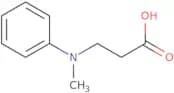
CAS:<p>N3-L-Leu-OH·BHA is a complex compound that has been used as a precursor to other compounds, such as pyrrolidines. It is an intermediate in the synthesis of various pharmaceuticals and research chemicals, such as 4-methylpiperidine. N3-L-Leu-OH·BHA has been shown to be useful in the preparation of various speciality chemicals, including building blocks for polymers and reagents for organic synthesis.</p>Formula:C13H13N·C6H11N3O2Purity:Min. 95%Color and Shape:PowderMolecular weight:340.42 g/molN-Methyl-N-phenyl-β-alanine
CAS:<p>Please enquire for more information about N-Methyl-N-phenyl-β-alanine including the price, delivery time and more detailed product information at the technical inquiry form on this page</p>Formula:C10H13NO2Purity:Min. 95%Color and Shape:Clear LiquidMolecular weight:179.22 g/mol


![8-Methoxy-2-methyl-2,3,4,5-tetrahydro-1H-pyrido[4,3-b]indole](/_next/image/?url=https%3A%2Fstatic.cymitquimica.com%2Fproducts%2F3D%2Fthumb-webp%2FFM117858.webp&w=3840&q=75)