Peptides
Subcategories of "Peptides"
Found 29634 products of "Peptides"
t-boc-N-Amido-dPEG®23-Amine
t-boc-N-Amido-dPEG®23-Amine is a PEG compound with two different functional groups (also known as heterobifunctional). Unlike homobifunctional PEG compounds (same functional group on both ends), this type of compounds are more versatile as have two different anchor points. t-boc-N-Amido-dPEG®23-Amine is used as a linker and spacer to add a PEG moiety, via pegylation (a bioconjugation technique) to proteins, peptides, oligonucleotides, small molecules and nanoparticles.Formula:C53H108N2O25Purity:Min. 95%Molecular weight:1,173.44 g/molUrotensin II (Rat)
A potent vasoconstrictor (Source rat, 110-123) containing disulfide bonds between Cys8-Cys13 and available as a 0.5mg vial.
Urotensin II is a peptide involved in biological systems such as the nervous, endocrine, cardiovascular and renal and in rats it is primarily found in brainstem and spinal cord motor neurons. Like that of urotensin II-related peptide, urotensin II contains the hexapeptide -CYS-TYR-LYS-TRP-PHE-CYS- known as the core and this is crucial to its biological function.
Urotensin II can also increase the concentration of intercellular calcium through binding to its G protein coupled receptor: urotensin-II receptor which causes the activation of Protein kinase C followed by the activation of Phospholipase C.
UT-II has been shown to have a wide range of physiological effects in rats, including vasoconstriction, modulation of blood pressure, and stimulation of the release of aldosterone and vasopressin.
In addition to its physiological effects, UT-II has also been implicated in the pathogenesis of various cardiovascular and metabolic disorders, including hypertension, heart failure, and diabetes. Inhibition of UT-II signaling has been suggested as a potential therapeutic target for these conditions.Formula:C77H102N18O20S2Purity:Min. 95%Molecular weight:1,663.9 g/molChromogranin A (Human, 286-301 Amide)
CAS:Chromogranin A (Human, 286-301 Amide) is a protein that belongs to the class of peptides. It is a major component of the chromaffin granules in the adrenal medulla and in neuroendocrine cells in various parts of the brain. There are two types of chromogranin A, which have 286-301 amino acids. Chromogranin A is an activator for G-protein coupled receptors, ion channels, and ligands. This protein has been used as a research tool in Cell Biology and as an inhibitor in Pharmacology.
Formula:C78H123N21O27SPurity:Min. 95%Molecular weight:1,819 g/molRGL3 Blocking Peptide
A synthetic peptide for use as a blocking control in assays to test for specificity of RGL3 antibody, catalog no. 70R-9377Purity:Min. 95%AIP-I
CAS:AIP-I is a peptide that is an activator of ion channels. The AIP-I peptide is a synthetic analog of the natural ligand, AIP-II. It has been shown to be a potent inhibitor of voltage-gated potassium channels in human embryonic kidney cells and has also been used as a research tool for studying protein interactions and receptor pharmacology.Formula:C43H60N8O13S2Purity:Min. 95%Molecular weight:961.12 g/molBNP-26 (Porcine)
CAS:BNP-26 is a non-peptide, small molecule that regulates ion channels. It binds to the receptor site of ligand-gated ion channels and inhibits the binding of neurotransmitters to the receptor. BNP-26 is an inhibitor that blocks the activation of phospholipase C (PLC) and protein kinase C (PKC), which are enzymes that regulate cell proliferation, differentiation, and apoptosis. BNP-26 is also an antibody cross-linker with high purity and CAS No. 114547-28-3.Formula:C120H198N42O36S2Purity:Min. 95%Molecular weight:2,869.2 g/molAc-Val-Asp-Val-Ala-Asp-H (aldehyde)
CAS:Ac-Val-Asp-Val-Ala-Asp-H (aldehyde) is a peptide that is a cell biology research tool. It is an inhibitor of protein interactions, activator, ligand or receptor. Ac-Val-Asp-Val-Ala-Asp-H (aldehyde) has high purity and is suitable for life science research. Ac-Val-Asp-Val-Ala-Asp-H (aldehyde) can be used as an ion channel inhibitor in pharmacology studies. Ac Val Asp Val Ala Asp H (aldehyde) also functions as an antibody to a protein of interest.Formula:C23H37N5O10Purity:Min. 95%Molecular weight:543.57 g/molGlt-Ala-Ala-Pro-Leu-pNA hydrate
Glt-Ala-Ala-Pro-Leu-pNA hydrate is a peptide substrate that is used in the study of elastase activity. This compound has been shown to be hydrolyzed by human pancreatic elastase and human recombinant elastase. Glt-Ala-Ala-Pro-Leu-pNA hydrate also has a high affinity for proteases, such as chymotrypsin, trypsin, and pepsin.Formula:C28H40N6O9•H2OPurity:Min. 95%Molecular weight:622.67 g/molBis-dPEG®25-Acid
CAS:Bis-dPEG®25-Acid is a PEG polymer categorised as homobifunctional PEG (X-PEG X). Used as a linker, bis-dPEG®25-Acid is used to attached PEG to proteins, peptides, oligonucleotides, nanoparticles and small molecules via pegylation, a bioconjugation technique.Formula:C54H106O29Purity:Min. 95%Molecular weight:1,219.4 g/molAzido-dPEG® 11-amine
CAS:Azido-dPEG® 11-amine is a PEG compound with two different functional groups (also known as heterobifunctional). Unlike homobifunctional PEG compounds (same functional group on both ends), this type of compounds are more versatile as have two different anchor points. Azido-dPEG® 11-amine is used as a linker and spacer to add a PEG moiety, via pegylation (a bioconjugation technique) to proteins, peptides, oligonucleotides, small molecules and nanoparticles.
Purity:Min. 95%Molecular weight:570.67 g/molTransglutaminase 3 Blocking Peptide
A synthetic peptide for use as a blocking control in assays to test for specificity of TGM3 antibody, catalog no. 70R-3925
Purity:Min. 95%Azido-dPEG®24-Alcohol
CAS:Azido-dPEG®24-Alcohol is a PEG polymer categorised as monofunctional (OH-PEG-X). Used as a linker, azido-dPEG®24-Alcohol is used to attached PEG to proteins, peptides, oligonucleotides, nanoparticles and small molecules via pegylation, a bioconjugation technique.Purity:Min. 95%Molecular weight:1,100.29 g/molOxytocin (Human, Porcine, Bovine, Rat, Ovine)
CAS:Oxytocin is a peptide hormone that is produced by the hypothalamus and released by the pituitary gland. It is used to induce labor, control postpartum bleeding and stimulate milk production. Oxytocin also plays a role in sexual arousal, social recognition, and trust. It has been shown to have an inhibitory effect on many types of ion channels, including those found in the heart, central nervous system, and blood vessels. Oxytocin binds to receptors that are found throughout the body and brain. The receptor for oxytocin is known as OXT. This receptor belongs to the G-protein coupled receptor family of receptors. Oxytocin was first isolated from sheep serum in 1906 by Henry Dale and Charles Robert Harington. It was later synthesized in 1953 by Vincent du Vigneaud. This product has disulfide bonds between Cys1-Cys6.
Formula:C43H66N12O12S2Purity:Min. 95%Molecular weight:1,007.2 g/molFmoc-Phe-OH (Ring-D5)
CAS:Fmoc-Phe-OH is a peptide that has been used as a research tool to study protein interactions. This molecule can be used in the inhibition of cellular processes and has been shown to activate the ATPase activity of Na,K-ATPase. Fmoc-Phe-OH is also a ligand that binds to receptors, such as the GABA receptor, through ion channels. This compound may also be used in antibody production or as an immunogen.Formula:C24H26D5NOPurity:Min. 95%Molecular weight:392.48 g/molMAL-dPEG®12-NHS Ester
CAS:MAL-dPEG®12-NHS Ester is a PEG compound with two different functional groups (also known as heterobifunctional). Unlike homobifunctional PEG compounds (same functional group on both ends), this type of compounds are more versatile as have two different anchor points. MAL-dPEG®12-NHS Ester is used as a linker and spacer to add a PEG moiety, via pegylation (a bioconjugation technique) to proteins, peptides, oligonucleotides, small molecules and nanoparticles.Formula:C32H52F4O14Purity:Min. 95%Molecular weight:736.75 g/molCyclo(Arg-Gly-Asp-D-Phe-Val)
CAS:Cyclo(Arg-Gly-Asp-D-Phe-Val) is a peptide inhibitor of protein interactions. It binds to the ligand binding site of receptor and inhibits the activation of this receptor. Cyclo(Arg-Gly-Asp-D-Phe-Val) also binds to antibodies and can be used as a research tool for identifying antibody targets.Formula:C26H38N8O7•CH3COOH•2H2OPurity:Min. 95%Molecular weight:670.91 g/molAlpha-Endorphin
CAS:An opioid peptide derived from the polypeptide pro-opiomelanocortin and binds to opioid receptors. It is involved in morphinomimetic behavior and physiologic activities. This product is available as a 0.5mg vial.Formula:C77H120N18O26SPurity:Min. 95%Molecular weight:1,745.9 g/molACOT9 Blocking Peptide
A synthetic peptide for use as a blocking control in assays to test for specificity of ACOT9 antibody, catalog no. 70R-10191Purity:Min. 95%Angiotensin III (Human)
CAS:Angiotensin III (Human) is a peptide that is an inhibitor of angiotensin-converting enzyme. It has been used in research to study protein interactions and receptor binding, as well as to isolate antibodies against this protein. The peptide is a high purity product with a CAS number of 13602-53-4.Formula:C46H66N12O9Purity:Min. 95%Molecular weight:931.09 g/molMAGEA6 Blocking Peptide
A synthetic peptide for use as a blocking control in assays to test for specificity of MAGEA6 antibody, catalog no. 70R-3558Purity:Min. 95%ZNF709 Blocking Peptide
A synthetic peptide for use as a blocking control in assays to test for specificity of ZNF709 antibody, catalog no. 20R-1111Purity:Min. 95%...Bis-ACV
CAS:Bis-ACV is a synthetic compound that has the ability to act as a carbon source for filamentous fungi. It can also be used to regulate the expression of genes and enzymes in filamentous fungi. Bis-ACV has been shown to increase the production of cytosolic calcium, thereby stimulating enzyme activities in various organisms. It is an oligosaccharide with a molecular weight of 548 Daltons and contains two acetyl groups, which are attached to glucose residues on the same side of the molecule. The biological sample was purified by HPLC and the subunits were identified by mass spectrometry. The sequence analysis revealed that Bis-ACV is composed of repeating units that have the structure of N-acetylglucosamine linked via alpha (1->4) glycosidic bonds.
Purity:Min. 95%Molecular weight:724.27 g/molALDH3A1 Blocking Peptide
A synthetic peptide for use as a blocking control in assays to test for specificity of ALDH3A1 antibody, catalog no. 70R-9874Purity:Min. 95%Omega-Agatoxin TK
CAS:A synthetic spider toxin, sourced from the Funnel Web Spider, Agelenopsis aperta. This toxin can be applied as a P-type Ca2+ channel selective blocker and has disulfide bonds between Cys4-Cys20, Cys12-Cys25,Cys19-Cys36 and Cys27-Cys34. This product is available as a 0.1mg vial.Formula:C215H337N65O70S10Purity:Min. 95%Molecular weight:5,273 g/molSETD4 Blocking Peptide
A synthetic peptide for use as a blocking control in assays to test for specificity of SETD4 antibody, catalog no. 70R-8041Purity:Min. 95%PPP1R2 Blocking Peptide
A synthetic peptide for use as a blocking control in assays to test for specificity of PPP1R2 antibody, catalog no. 70R-10305Purity:Min. 95%OR2AT4 Blocking Peptide
A synthetic peptide for use as a blocking control in assays to test for specificity of OR2AT4 antibody, catalog no. 70R-6776Purity:Min. 95%CBR4 Blocking Peptide
A synthetic peptide for use as a blocking control in assays to test for specificity of CBR4 antibody, catalog no. 70R-10142Purity:Min. 95%Diamido-dPEG®11-Diamine
CAS:Diamido-dPEG®11-Diamine is a PEG compound with two different functional groups (also known as heterobifunctional). Unlike homobifunctional PEG compounds (same functional group on both ends), this type of compounds are more versatile as have two different anchor points. Diamido-dPEG®11-Diamine is used as a linker and spacer to add a PEG moiety, via pegylation (a bioconjugation technique) to proteins, peptides, oligonucleotides, small molecules and nanoparticles.Formula:C31H49N3O13S2Purity:Min. 95%Molecular weight:735.87 g/molMAL-dPEG®4-TFP Ester
CAS:MAL-dPEG®4-TFP Ester is a PEG compound with two different functional groups (also known as heterobifunctional). Unlike homobifunctional PEG compounds (same functional group on both ends), this type of compounds are more versatile as have two different anchor points. MAL-dPEG®4-TFP Ester is used as a linker and spacer to add a PEG moiety, via pegylation (a bioconjugation technique) to proteins, peptides, oligonucleotides, small molecules and nanoparticles.Formula:C42H59N5O11SPurity:Min. 95%Molecular weight:842.01 g/molGM CSF Mouse
GM-CSF is a cytokine that stimulates the production of neutrophils, macrophages, and other cells of the immune system. GM-CSF is a glycoprotein with a molecular weight of about 26 kD. It has been purified from human blood by RP-HPLC and found to have a sequence of 551 amino acids. The protein is active as freeze dried material or after desiccation at -70°C for 12 months. GM-CSF is commercially available in lyophilized form (Cytokine) or as recombinant proteins (Proteins).Purity:Min. 95%EMX1 Blocking Peptide
A synthetic peptide for use as a blocking control in assays to test for specificity of EMX1 antibody, catalog no. 70R-8698Purity:Min. 95%C15ORF26 Blocking Peptide
A synthetic peptide for use as a blocking control in assays to test for specificity of C15orf26 antibody, catalog no. 70R-4410Purity:Min. 95%CREB3L1 Blocking Peptide
A synthetic peptide for use as a blocking control in assays to test for specificity of CREB3L1 antibody, catalog no. 20R-1103Purity:Min. 95%MAL-dPEG®2-Acid
CAS:MAL-dPEG®2-Acid is a PEG compound with two different functional groups (also known as heterobifunctional). Unlike homobifunctional PEG compounds (same functional group on both ends), this type of compounds are more versatile as have two different anchor points. MAL-dPEG®2-Acid is used as a linker and spacer to add a PEG moiety, via pegylation (a bioconjugation technique) to proteins, peptides, oligonucleotides, small molecules and nanoparticles.Formula:C38H63N3O19Purity:Min. 95%Molecular weight:865.92 g/molBradykinin Receptor B2 Blocking Peptide
A synthetic peptide for use as a blocking control in assays to test for specificity of BDKRB2 antibody, catalog no. 70R-1662Purity:Min. 95%RNASEH2A Blocking Peptide
A synthetic peptide for use as a blocking control in assays to test for specificity of RNASEH2A antibody, catalog no. 70R-1626
Purity:Min. 95%Rhebl1 Blocking Peptide
A synthetic peptide for use as a blocking control in assays to test for specificity of Rhebl1 antibody, catalog no. 70R-9197Purity:Min. 95%ALDOB Blocking Peptide
A synthetic peptide for use as a blocking control in assays to test for specificity of ALDOB antibody, catalog no. 70R-2209Purity:Min. 95%GOLGA7 Blocking Peptide
A synthetic peptide for use as a blocking control in assays to test for specificity of ACSL5 antibody, catalog no. 70R-6556Purity:Min. 95%Troponin I Type 3 Blocking Peptide
A synthetic peptide for use as a blocking control in assays to test for specificity of TNNI3 antibody, catalog no. 70R-4597Purity:Min. 95%2-NBDLG
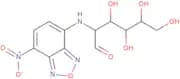
CAS:2-NBDLG is a potent activator of ion channels, which are membrane proteins that allow the passage of ions across biological membranes. It binds to receptor sites on the cell surface and opens ligand-gated ion channels in the plasma membrane, thereby increasing the permeability of the membrane to sodium ions. 2-NBDLG has been shown to inhibit voltage-gated potassium channels and calcium ion (Ca2+) currents in vitro. This drug also has an affinity for various peptides such as bradykinin and substance P. 2-NBDLG is a high purity product with a CAS number of 174844-42-9.Formula:C12H14N4O8Purity:Min. 95%Molecular weight:342.26 g/molCl-Ac-(OH)Leu-Ala-Gly-NH₂
CAS:Cl-Ac-(OH)Leu-Ala-Gly-NH₂ is a peptide with a molecular weight of 736.2 Da. It is an inhibitor of the enzyme protein kinase C (PKC). Cl-Ac-(OH)Leu-Ala-Gly-NH₂ has been shown to activate PKC by binding to specific domains in the enzyme, which leads to the phosphorylation and activation of PKC's regulatory subunits. This peptide can be used as a research tool in studies involving PKC and also as an antibody carrier for Western blotting and immunohistochemistry.
Formula:C13H23N4O5ClPurity:Min. 95%Molecular weight:350.8 g/molBis-MAL-Lysine-dPEG®4-Acid
CAS:Bis-MAL-Lysine-dPEG®4-Acid is a peptide containing polyethylene glycol (PEG) as spacer to alter their pharmacokinetic properties and pharmodynamics.Formula:C20H28N2O12Purity:Min. 95%Molecular weight:488.44 g/molt-boc-N-Amido-dPEG®8-Acid
CAS:t-boc-N-Amido-dPEG®8-Acid is a PEG compound with two different functional groups (also known as heterobifunctional). Unlike homobifunctional PEG compounds (same functional group on both ends), this type of compounds are more versatile as have two different anchor points. t-boc-N-Amido-dPEG®8-Acid is used as a linker and spacer to add a PEG moiety, via pegylation (a bioconjugation technique) to proteins, peptides, oligonucleotides, small molecules and nanoparticles.Formula:C34H64N6O13SPurity:Min. 95%Molecular weight:796.97 g/molCalpain 4 Blocking Peptide
A synthetic peptide for use as a blocking control in assays to test for specificity of CAPNS1 antibody, catalog no. 70R-3500
Purity:Min. 95%ZNF227 Blocking Peptide
A synthetic peptide for use as a blocking control in assays to test for specificity of ZNF227 antibody, catalog no. 20R-1119Purity:Min. 95%GRF (Human)
CAS:Growth hormone-releasing factor (GRF) or GHRH (growth hormone-releasing hormone).Binds to the growth hormone-releasing hormone receptor (GHRH-R), causing growth hormone secretion. See also GRF (1-29); sermorelin, a shorter fragment. Sequence alignments: porcine: H-YADAIFTNSYRKVLGQLSARKLLQDIMSRQQGERNQEQGARVRL-NH2bovine: H-YADAIFTNSYRKVLGQLSARKLLQDIMNRQQGERNQEQGAKVRL-NH2ovine: H-YADAIFTNSYRKILGQLSARKLLQDIMNRQQGERNQEQGAKVRL-NH2human: H-YADAIFTNSYRKVLGQLSARKLLQDIMSRQQGESNQERGARARL-NH2Formula:C215H358N72O66SPurity:Min. 95%Molecular weight:5,039.7 g/molAngiotensin II (Human)
CAS:Angiotensin II (Human) is a peptide that is produced by the renin-angiotensin system. It has been shown to be an effective inhibitor of the cell adhesion molecule CD44, and can also stimulate the proliferation of cells in culture. Angiotensin II (Human) is a ligand for angiotensin receptors, which are found on many different types of cells. The binding of angiotensin II to these receptors stimulates the production of cyclic AMP, which causes vasoconstriction and increased blood pressure.Formula:C50H71N13O12Purity:Min. 95%Molecular weight:1,046.2 g/molBiotin-dPEG®23-NH2
CAS:Biotin-dPEG®23-NH2 is a PEG compound with two different functional groups (also known as heterobifunctional). Unlike homobifunctional PEG compounds (same functional group on both ends), this type of compounds are more versatile as have two different anchor points. Biotin-dPEG®23-NH2 is used as a linker and spacer to add a PEG moiety, via pegylation (a bioconjugation technique) to proteins, peptides, oligonucleotides, small molecules and nanoparticles.Formula:C58H114N4O25SPurity:Min. 95%Molecular weight:1,299.6 g/mol