Peptides
Peptides are short chains of amino acids linked by peptide bonds, serving as important biological molecules that play key roles in cellular processes. They function as hormones, neurotransmitters, and signaling molecules, and are widely used in therapeutic and diagnostic applications. Peptides are also crucial in research for studying protein interactions, enzyme activities, and cell signaling pathways. At CymitQuimica, we provide a diverse selection of high-quality peptides to support your research and development needs in biotechnology and pharmaceuticals.
Subcategories of "Peptides"
Found 30318 products of "Peptides"
Sort by
Purity (%)
0
100
|
0
|
50
|
90
|
95
|
100
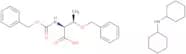
Z-Thr(Bzl)-OH·DCHA
CAS:Controlled ProductPlease enquire for more information about Z-Thr(Bzl)-OH·DCHA including the price, delivery time and more detailed product information at the technical inquiry form on this pageFormula:C19H21NO5·C12H23NPurity:Min. 95%Molecular weight:524.69 g/molAmylin (human) trifluoroacetate salt
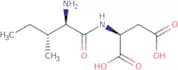
CAS:<p>Amylin is a hormone that regulates the release of insulin from the pancreas. Amylin is a protein that consists of 39 amino acids, and in its natural form it is not soluble in water. The amyloid fibrils are insoluble aggregates of proteins that can be found in the brain tissue of patients with Alzheimer's disease. Amylin has been shown to have an entrapment efficiency greater than 96% by using polymeric particles with a diameter less than 50 microns. These particles are able to increase water solubility and nutrient metabolism, as well as improve evaporation rates. They also provide an increased surface area for absorption and pharmacological properties. Amylin has been shown to lower postprandial glycemia when used with insulin in type II diabetes mellitus patients, and may also be an anorectic agent.</p>Formula:C165H261N51O55S2Purity:Min. 95%Molecular weight:3,903.28 g/molH-D-Ile-Asp-OH
CAS:<p>Please enquire for more information about H-D-Ile-Asp-OH including the price, delivery time and more detailed product information at the technical inquiry form on this page</p>Formula:C10H18N2O5Purity:Min. 95%Molecular weight:246.26 g/molZ-Ala-Ser-OH
CAS:<p>Z-Ala-Ser-OH is a basic protein with a sequence of Z-Ala-Ser. It has a hydrophobic section and carboxylic acid group, which is why it is soluble in organic solvents. The dichroic spectra of this protein are characteristic for its secondary structure. This protein can be analyzed using the technique of dichroism, which allows one to determine its analogs as well as analyze its enzyme preparations. The amino acid residues found in this protein are Ala and Ser, which are basic and polar respectively.</p>Formula:C14H18N2O6Purity:Min. 95%Color and Shape:PowderMolecular weight:310.3 g/molFmoc-D-Ser(BSi)-OH
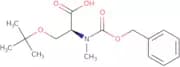
CAS:<p>Please enquire for more information about Fmoc-D-Ser(BSi)-OH including the price, delivery time and more detailed product information at the technical inquiry form on this page</p>Formula:C24H31NO5SiPurity:Min. 95%Molecular weight:441.59 g/molZ-N-Me-Ser(tBu)-OH·DCHA
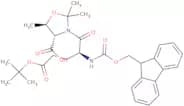
CAS:Please enquire for more information about Z-N-Me-Ser(tBu)-OH·DCHA including the price, delivery time and more detailed product information at the technical inquiry form on this pageFormula:C16H23NO5·C12H23NPurity:Min. 95%Molecular weight:490.68 g/molFmoc-Glu(OtBu)-Thr(psi(Me,Me)pro)-OH
CAS:Fmoc-glu(otbu)-thr(psi(Me,Me)pro)-OH is a c1-6 alkoxy, expressed, alkenyl, linker, c1-6 alkyl, efficiency, sequence that can be used for peptide synthesis. It is an efficient linker for the synthesis of peptides and has been shown to yield high yields with few side products. The hydroxyl group on the side chain of the amino acid residue provides an additional site for acylation. This product also contains an aralkyl and alkoxy group that can be used in further reactions.Formula:C31H38N2O8Purity:Min. 95%Color and Shape:PowderMolecular weight:566.64 g/molGAP 26 trifluoroacetate salt
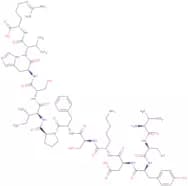
CAS:<p>13-mer connexin mimetic peptide, composed of residue numbers 63-75 of the first extracellular loop of connexin 43 (gap junction blocker), containing the SHVR amino acid motif.</p>Formula:C70H107N19O19SPurity:Min. 95%Molecular weight:1,550.78 g/molWRW4
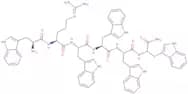
CAS:<p>Please enquire for more information about WRW4 including the price, delivery time and more detailed product information at the technical inquiry form on this page</p>Formula:C61H65N15O6Purity:Min. 95%Molecular weight:1,104.27 g/molZ-D-Phe-Phe-Gly-OH
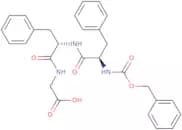
CAS:Z-D-Phe-Phe-Gly-OH is a lysosomal carboxypeptidase that hydrolyzes peptides at the C terminus of proteins. It has a wide substrate specificity and can hydrolyze Z-D-Phe-Phe-Gly, Z-Arg-Lys, and L-Arg. This enzyme has been shown to have ion exchange chromatography activity. The elution profile for this enzyme on a sephadex G-100 column was found to have an optimum pH of 7.5 and elutes at a salt concentration of 0.5M NaCl. Carboxypeptidases are enzymes that cleave at the C terminus of proteins to produce smaller peptides or amino acids. They are involved in digestion, blood clotting, and cell signaling processes.Formula:C28H29N3O6Purity:Min. 95%Color and Shape:White Off-White PowderMolecular weight:503.55 g/molAmyloid beta-Protein (25-35) trifluoroacetate salt
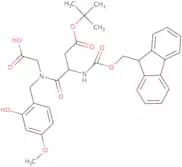
CAS:<p>Amyloid beta-protein (Aβ) is a protein that is a major component of amyloid plaques in the brains of people with Alzheimer's disease. Aβ-Protein (25-35) trifluoroacetate salt, also known as Aβ(25-35), is an amyloid beta protein fragment that has been shown to inhibit neuronal death and increase antioxidative properties in human serum. It has been shown to have anti-apoptotic effects by inhibiting the activation of caspases and the release of cytochrome C from mitochondria. This drug may have physiological effects on the central nervous system due to its ability to induce apoptosis through mitochondrial membrane depolarization and cytosolic calcium levels. It has been shown to be active against Chinese herb Pueraria lobata and cell lysis, as well as granule neurons in culture. It may also stimulate phosphorylation of p38mapk and induce logarithmic growth</p>Formula:C45H81N13O14SPurity:Min. 95%Color and Shape:PowderMolecular weight:1,060.27 g/molFmoc-D-Asp(OtBu)-(Hmb)Gly-OH
CAS:<p>Please enquire for more information about Fmoc-D-Asp(OtBu)-(Hmb)Gly-OH including the price, delivery time and more detailed product information at the technical inquiry form on this page</p>Formula:C33H36N2O9Purity:Min. 95%Molecular weight:604.65 g/molHSV-gB2 (498-505) acetate
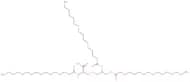
CAS:<p>Custom research peptide; min purity 95%.</p>Formula:C41H67N11O13•(C2H4O2)xPurity:Min. 95%Molecular weight:922.06 g/molPalmitoyl-Cys((RS)-2,3-di(palmitoyloxy)-propyl)-OH
CAS:<p>Palmitoyl-Cys((RS)-2,3-di(palmitoyloxy)-propyl)-OH is a synthetic cytochalasin that has been shown to have bactericidal activity against Gram-positive bacteria. It inhibits the growth of bacteria by binding to extracellular anions, such as diacylglycerol and aluminium ions. Palmitoyl-Cys((RS)-2,3-di(palmitoyloxy)-propyl)-OH also synergizes with phorbol esters and lipoprotein. This drug has been shown to be effective in treating human serum infections at doses of 100 µg/mL and higher.</p>Formula:C54H103NO7SPurity:Min. 95%Molecular weight:910.46 g/molbeta-Amyloid (1-34)
<p>Catalogue peptide; min. 95% purity</p>Formula:C170H253N47O52Molecular weight:3,787.20 g/molbeta-Amyloid (17-40)
<p>Catalogue peptide; min. 95% purity</p>Formula:C110H178N26O31SMolecular weight:2,392.86 g/molNeurotensin (8-13), N-Acetyl
<p>Catalogue peptide; min. 95% purity</p>Formula:C40H66N12O9Molecular weight:859.05 g/molPeptide M
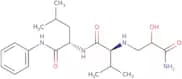
CAS:Peptide M is a synthetic peptide made up of the amino acid sequence: DTNLASSTIIKEGIDKTV. It is an immunogenic component corresponding to amino acids 303-320 of the photoreceptor cell protein, retinal S-antigen. During studies, it has been found to induce experimental autoimmune uveitis (EAU) in animals which is a T-cell mediated disease causing retina, pineal gland and uveal tract inflammation. EAU successfully models ocular autoimmune diseases such as birdshot retinochoroidopathy and sympathetic ophthalmia. Therefore peptide M can be used in research into these diseases. Structural studies have demonstrated peptide M to form macromolecular assemblies and then an intermolecular beta-sheet structure between a pH range of 4-9.5. It has been suggested, that when the peptide M adopts the monomeric state its structure and beta sheets become disordered. It is also thought that through its extended beta-type conformation peptide M is able to position itself between the major histocompatibility complex and the T-cell receptor.Formula:C81H141N21O31Purity:Min. 95%Molecular weight:1,905.11 g/molN-(3-Amino-2-hydroxy-3-oxopropyl)-L-valyl-N-phenyl-L-leucinamide
CAS:<p>Please enquire for more information about N-(3-Amino-2-hydroxy-3-oxopropyl)-L-valyl-N-phenyl-L-leucinamide including the price, delivery time and more detailed product information at the technical inquiry form on this page</p>Formula:C20H32N4O4Purity:Min. 95%Color and Shape:PowderMolecular weight:392.49 g/molPreproenkephalin B (186-204), human
<p>Catalogue peptide; min. 95% purity</p>Formula:C78H115N21O36SMolecular weight:1,954.97 g/molOV-1, Sheep
<p>Catalogue peptide; min. 95% purity</p>Formula:C105H188N34O21Molecular weight:2,262.88 g/molγ-Bag Cell Peptide
<p>Catalogue peptide; min. 95% purity</p>Formula:C31H51N11O8Molecular weight:705.82 g/molSRC Kinase Substrate, amide
<p>Catalogue peptide; min. 95% purity</p>Formula:C64H108N23O23PMolecular weight:1,598.71 g/molMARCKS Protein (159-165)
<p>Catalogue peptide; min. 95% purity</p>Formula:C45H72N10O9Molecular weight:897.14 g/mol[D-His26]-Neuropeptide Y, human, rat
<p>Catalogue peptide; min. 95% purity</p>Formula:C189H285N55O57S1Molecular weight:4,271.67 g/molα-Bag Cell Peptide (1-9)
<p>Catalogue peptide; min. 95% purity</p>Formula:C53H83N15O12Molecular weight:1,122.35 g/mol[Met5, Lys6,7] a-Neo-Endorphin (1-7)
<p>Catalogue peptide; min. 95% purity</p>Formula:C39H59N9O9SMolecular weight:830.02 g/molpp60(v-SRC) Autophosphorylation Site, Tyrosine Phosphopeptide
<p>Catalogue peptide; min. 95% purity</p>Formula:C66H110N23O27PMolecular weight:1,672.74 g/molgp100 (619-627)
<p>Catalogue peptide; min. 95% purity</p>Formula:C49H82N14O14SMolecular weight:1,123.35 g/molBiotin-Parathyroid Hormone (1-34), human
<p>Catalogue peptide; min. 95% purity</p>Formula:C191H305N57O53S3Molecular weight:4,344 g/mol[Arg0] Met-Enkephalin
<p>Catalogue peptide; min. 95% purity</p>Formula:C33H47N9O8SMolecular weight:729.86 g/molProsaptide, wild type
<p>Catalogue peptide; min. 95% purity</p>Formula:C72H127N19O25Molecular weight:1,658.93 g/mol3/4A, Dengue Protease Substrate
<p>Catalogue peptide; min. 95% purity</p>Molecular weight:810.9 g/molDynorphin A (3-8), porcine
<p>Catalogue peptide; min. 95% purity</p>Formula:C35H60N12O7Molecular weight:760.94 g/molDynorphin A (2-12), porcine
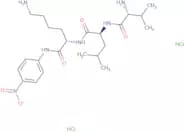
<p>Catalogue peptide; min. 95% purity</p>Formula:C60H105N21O12Molecular weight:1,312.64 g/molH-D-Val-Leu-Lys-pNA·2 HCl
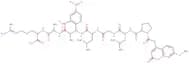
CAS:D-Val-Leu-Lys-p-nitroanilide is a selective colorimetric substrate for plasmin used to determine plasmin formation from plasminogen in amidolytic activity assays and plasminogen activating assays. Plasmin is a plasma serine protease whose main role is to dissolve fibrin blood clots. After cleavage by plasmin, the protease activity is quantified by the release of p-nitroaniline (pNA) from the substrate.Formula:C23H38N6O5·2HClPurity:Min. 95%Molecular weight:551.51 g/molMca-Pro-Leu-Ala-Cys(Mob)-Trp-Ala-Arg-Dap (Dnp)-NH2 trifluoroacetate salt
CAS:<p>Please enquire for more information about Mca-Pro-Leu-Ala-Cys(Mob)-Trp-Ala-Arg-Dap (Dnp)-NH2 trifluoroacetate salt including the price, delivery time and more detailed product information at the technical inquiry form on this page</p>Formula:C66H82N16O17SPurity:Min. 95%Molecular weight:1,403.52 g/mol(D-Arg2, Sar 4)-Dermorphin (1-4) trifluoroacetate salt
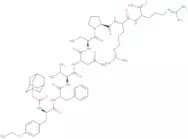
CAS:Please enquire for more information about (D-Arg2, Sar 4)-Dermorphin (1-4) trifluoroacetate salt including the price, delivery time and more detailed product information at the technical inquiry form on this pagePurity:Min. 95%Molecular weight:555.63(1-Adamantaneacetyl1,D-Tyr(Et)2,Val4, Abu 6, Arg8·9)-vasopressin
CAS:<p>(1-Adamantaneacetyl1,D-Tyr(Et)2,Val4, Abu 6, Arg8·9)-vasopressin is a vasopressor analog that has been shown to be an effective treatment for congestive heart failure by acting as an agonist at the V1 receptor. It has been shown to stimulate cyclase activity and increase levels of adenosine 3',5'-cyclic monophosphate (cAMP). This drug also stimulates the production of immunoglobulin A antibodies in mice and increases the expression of leucine aminopeptidase and immunofluorescence in rat kidney cells. Vasopressin analogs are used primarily for their vasoconstrictive properties.</p>Formula:C62H94N16O11Purity:Min. 95%Color and Shape:White Off-White PowderMolecular weight:1,239.51 g/molVesicular Stomatitis Virus Nucleoprotein (52-59) trifluoroacetate salt
CAS:<p>Please enquire for more information about Vesicular Stomatitis Virus Nucleoprotein (52-59) trifluoroacetate salt including the price, delivery time and more detailed product information at the technical inquiry form on this page</p>Formula:C44H66N12O12Purity:Min. 95%Molecular weight:955.07 g/molFluorescein-6-carbonyl-Tyr-Val-Ala-DL-Asp(OMe)-fluoromethylketone
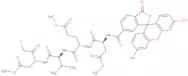
CAS:<p>Please enquire for more information about Fluorescein-6-carbonyl-Tyr-Val-Ala-DL-Asp(OMe)-fluoromethylketone including the price, delivery time and more detailed product information at the technical inquiry form on this page</p>Formula:C45H50FN5O15Purity:Min. 95%Molecular weight:919.9 g/molCarbamoyl-Asp-OH·magnesium salt/Carbamoyl-Asp-OH·dipotassium salt (1:1)
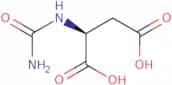
CAS:Carbamoyl-Asp-OH·magnesium salt/Carbamoyl-Asp-OH·dipotassium salt (1:1) is a derivate of p-hydroxybenzoic acid that has been shown to inhibit leukotriene receptor antagonists and basic proteins. It has been found in urine samples, but its function is not yet known. The uptake of this molecule may be a potential biomarker for the diagnosis of orotic aciduria and HIV infection. Carbamoyl-Asp-OH·magnesium salt/Carbamoyl-Asp-OH·dipotassium salt (1:1) has also been shown to be an inhibitor of intramolecular hydrogen transfer reactions in model systems.Formula:C10H12K2MgN4O10Purity:Min. 95%Molecular weight:450.72 g/mol1-(Fmoc-aminomethyl)-b-D-galacturonic acid
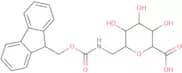
CAS:Please enquire for more information about 1-(Fmoc-aminomethyl)-b-D-galacturonic acid including the price, delivery time and more detailed product information at the technical inquiry form on this pageFormula:C22H23NO8Purity:Min. 95%Molecular weight:429.42 g/molFluorescein-6-carbonyl-Asp(OMe)-Glu(OMe)-Val-DL-Asp(OMe)-fluoromethylketone
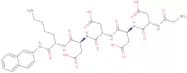
CAS:<p>Please enquire for more information about Fluorescein-6-carbonyl-Asp(OMe)-Glu(OMe)-Val-DL-Asp(OMe)-fluoromethylketone including the price, delivery time and more detailed product information at the technical inquiry form on this page</p>Formula:C43H45FN4O16Purity:Min. 95%Molecular weight:892.83 g/molH-Gly-Asp-Asp-Asp-Asp-Lys-bNA trifluoroacetic acid
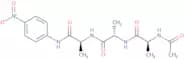
CAS:<p>H-Gly-Asp-Asp-Asp-Asp-Lys-bNA trifluoroacetic acid is a peptide that is used as a biocatalyst in the production of microspheres. It is also known as enterokinase, and cleaves proteins at their N termini. This enzyme has been immobilized on silica gel and then applied to the production of microspheres. The half life of this enzyme is 1 hour at 37°C, but it can be increased to 8 hours by immobilizing it on silica gel using glutaraldehyde. HGAASDAAKLysBNAtrifluoroacetic acid has been shown to have a high specific activity with an efficiency of 60% and a pH range between 4 and 10. It has been shown to have high protein cleavage rates at 30°C, 37°C, and 40°C, with bovine serum albumin being the</p>Formula:C38H45N8O16F3Purity:Min. 95%Molecular weight:788.76 g/molAc-Ala-Ala-Ala-pNA
CAS:<p>Ac-Ala-Ala-Ala-pNA is a synthetic peptide that is derived from the natural amino acid sequence of cholecystokinin. It has been shown to have high affinity for phospholipid bilayers, which are lipid membranes that form the boundaries of cells and organelles. Ac-Ala-Ala-Ala-pNA can be used as a substrate molecule to study membrane permeability and selectivity in bioreactors. Ac-Ala-Ala-Ala-pNA also acts as a modulator of liposomal membranes, increasing the permeability of these membranes in order to allow more substrate molecules to pass through them.</p>Formula:C17H23N5O6Purity:Min. 95%Color and Shape:PowderMolecular weight:393.39 g/molMca-Pro-Leu-Gly-Leu-Dap (Dnp)-Ala-Arg-NH2 trifluoroacetate salt
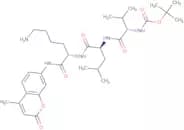
CAS:<p>Please enquire for more information about Mca-Pro-Leu-Gly-Leu-Dap (Dnp)-Ala-Arg-NH2 trifluoroacetate salt including the price, delivery time and more detailed product information at the technical inquiry form on this page</p>Formula:C49H68N14O15Purity:Min. 95%Molecular weight:1,093.15 g/molBoc-Val-Leu-Lys-AMC acetate salt
CAS:<p>Boc-Val-Leu-Lys-AMC acetate salt is a protease inhibitor that binds to the active site of trypsin and inhibits its proteolytic activity. It has been shown to protect neuronal cells from death caused by amyloid beta (Aβ) peptide. Boc-Val-Leu-Lys-AMC acetate salt also inhibits the secretion of proinflammatory cytokines and reduces the permeability of mitochondrial membranes in human neutrophils. This drug is stable in acidic environments, with a pH optimum of 2.0, but is sensitive to alkaline conditions with a pH optimum of 8.5. Boc-Val-Leu-Lys-AMC acetate salt has been shown to bind to casein, which may result in high values on sephadex g100 chromatography.</p>Formula:C32H49N5O7•C2H4O2Purity:Min. 98 Area-%Color and Shape:PowderMolecular weight:675.81 g/molH-Gly-Glu-Gly-OH trifluoroacetic acid
CAS:<p>H-Gly-Glu-Gly-OH trifluoroacetic acid is a dilute buffer solution of amino acids. It has been used to study the thermodynamic stability of polypeptides and their sensitivity to acidic conditions. Experiments have shown that H-Gly-Glu-Gly-OH trifluoroacetic acid is more stable than glycine, glutamic acid, histidine, aspartic acid, or aspartyl. This compound is an amino acid with a high concentration of glutamic acid.</p>Formula:C9H15N3O6•(CF3CO2H)xPurity:Min. 95%Molecular weight:261.23 g/mol









![[D-His26]-Neuropeptide Y, human, rat](/_next/image/?url=https%3A%2Fstatic.cymitquimica.com%2Fproducts%2F3D%2Fthumb-webp%2FVAC-00910.webp&w=3840&q=75)

![[Met5, Lys6,7] a-Neo-Endorphin (1-7)](/_next/image/?url=https%3A%2Fstatic.cymitquimica.com%2Fproducts%2F3D%2Fthumb-webp%2FVAC-00874.webp&w=3840&q=75)


![[Arg0] Met-Enkephalin](/_next/image/?url=https%3A%2Fstatic.cymitquimica.com%2Fproducts%2F3D%2Fthumb-webp%2FVAC-00699.webp&w=3840&q=75)